Lead puffball
Bovista plumbeasyn. Lycoperdon plumbeum, Globaria plumbea
 © Massimiliano Marcelli (CC BY 4.0)
 © Corin (CC BY)
 © Zac (CC BY)
 Žan Babič (CC0)
 Žan Babič (CC0)
 © Corin (CC BY)
 © Corin (CC BY)
 © Corin (CC BY)© Massimiliano Marcelli (CC BY 4.0)© Corin (CC BY)
Good to eat, once you have identified it with certainty and cooked it through.
Never eat a mushroom you are not 100% sure of - check the look-alikes below, and always cook wild mushrooms.
How to recognise it
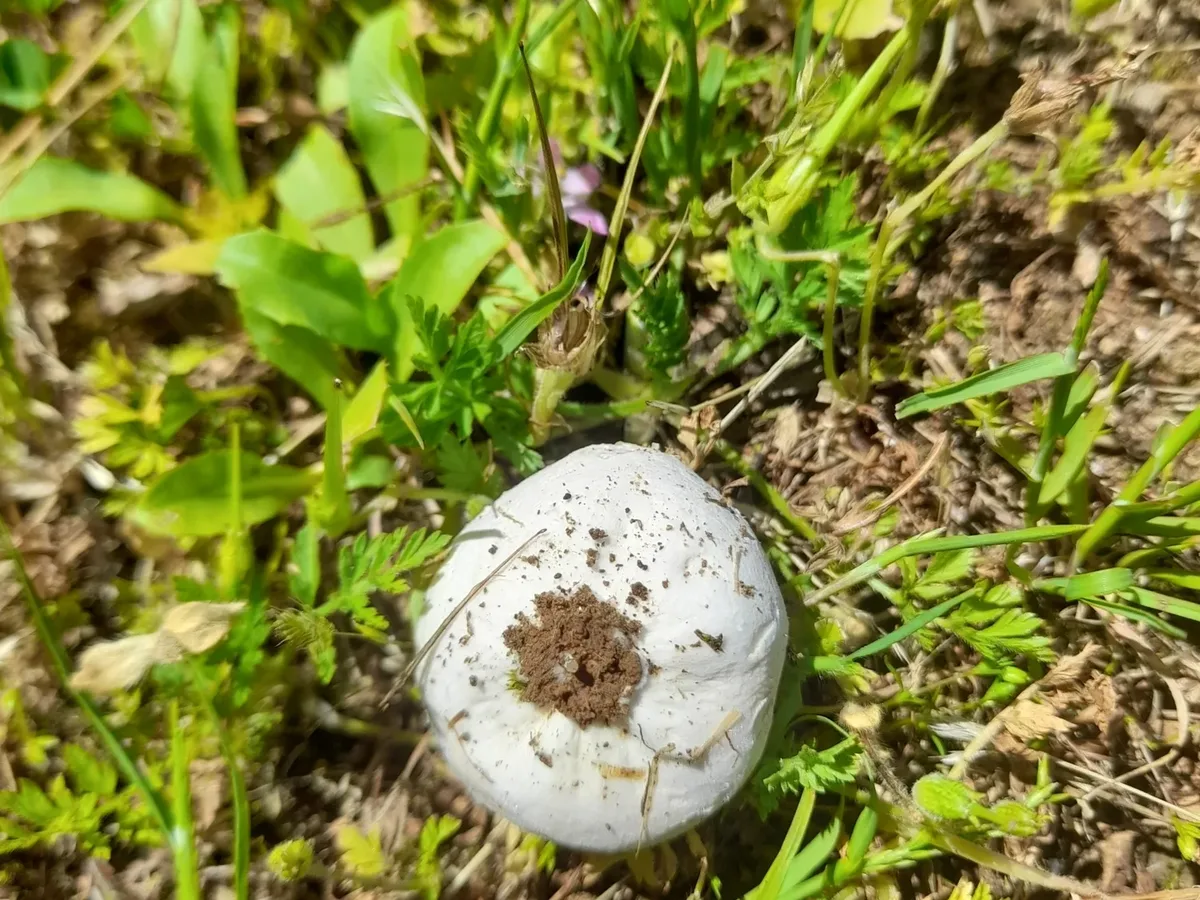
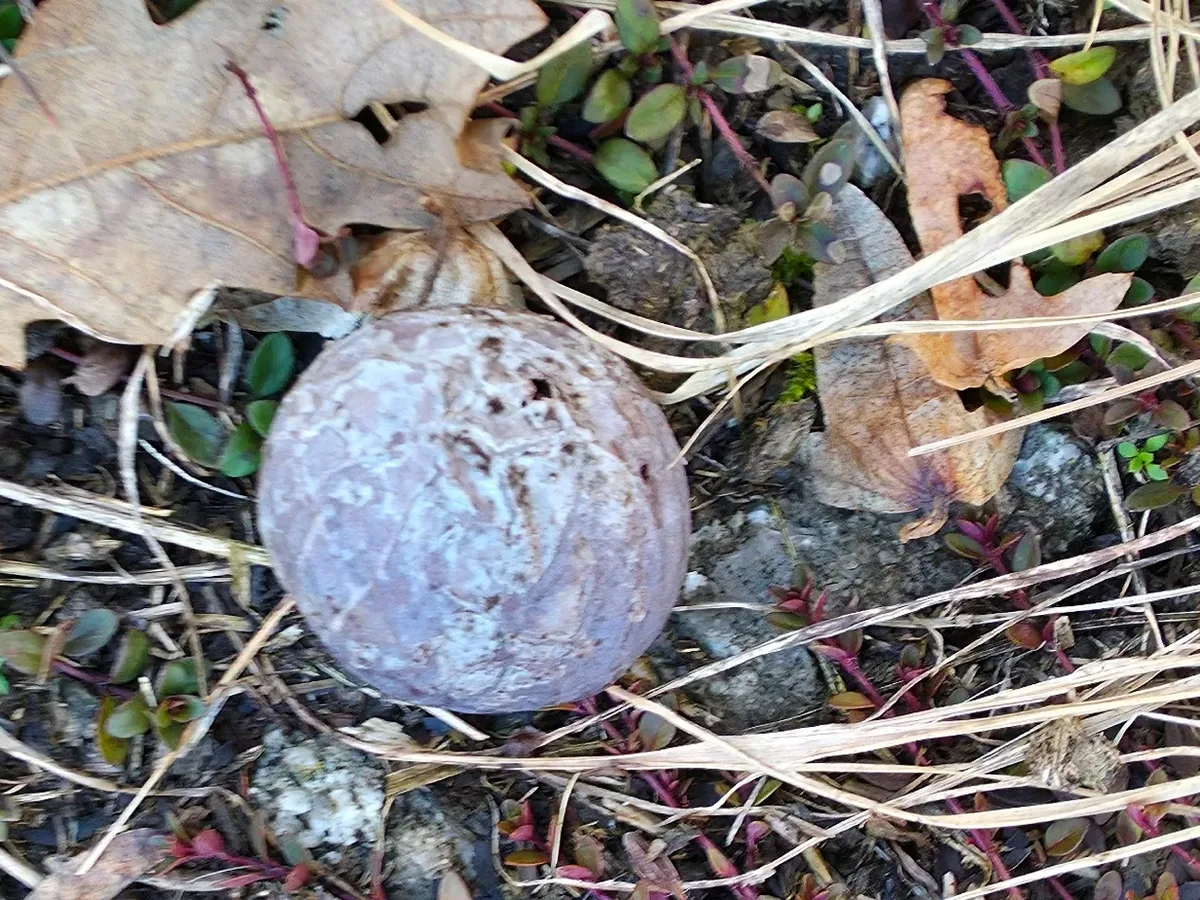
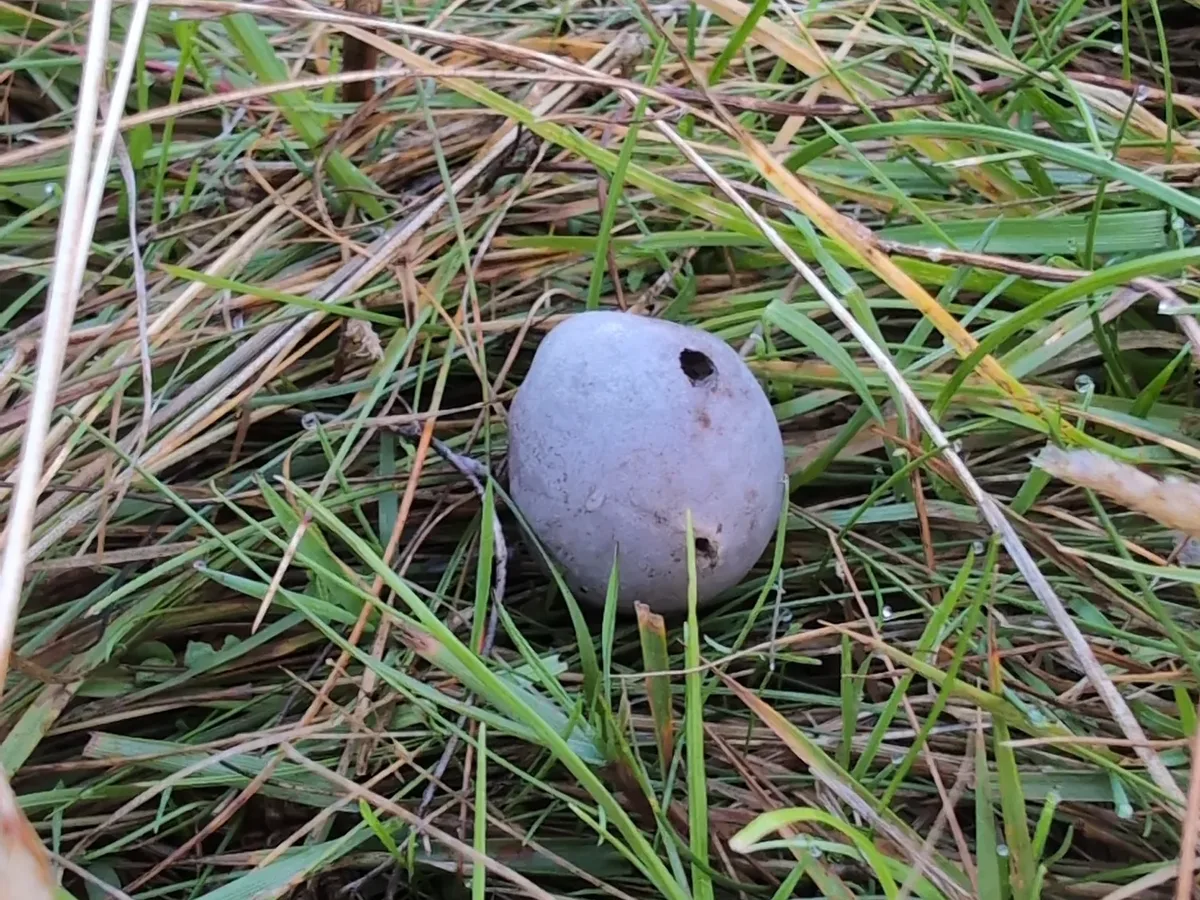
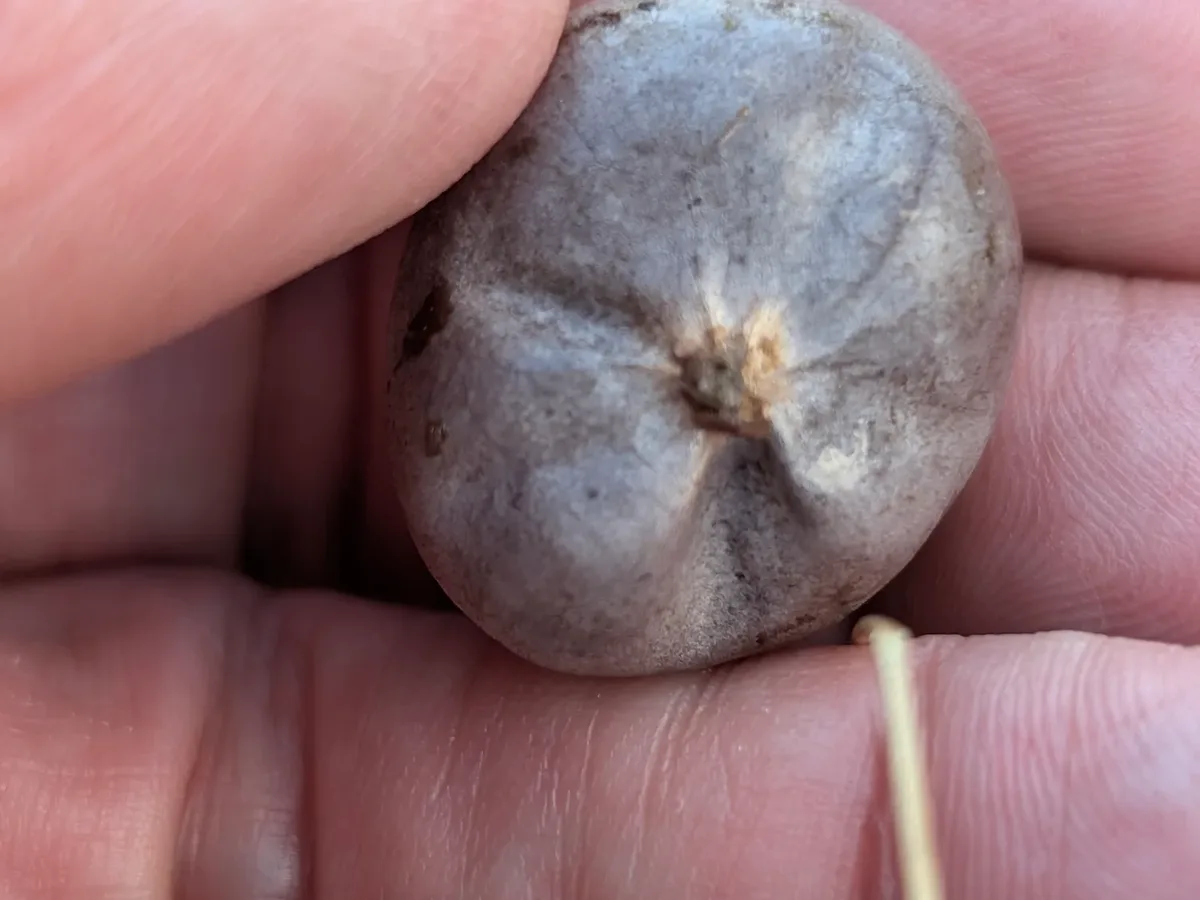
Bovista plumbea is a small, round to slightly depressed puffball, typically 1.5-4 cm across, that passes through a striking sequence of colours during its lifetime.
When young and at the button stage, it is snow-white, smooth, and nearly spherical, attached loosely to the ground by a thin cord of white mycelium - it is almost ball-like and can roll freely once the mycelial strand breaks at maturity.
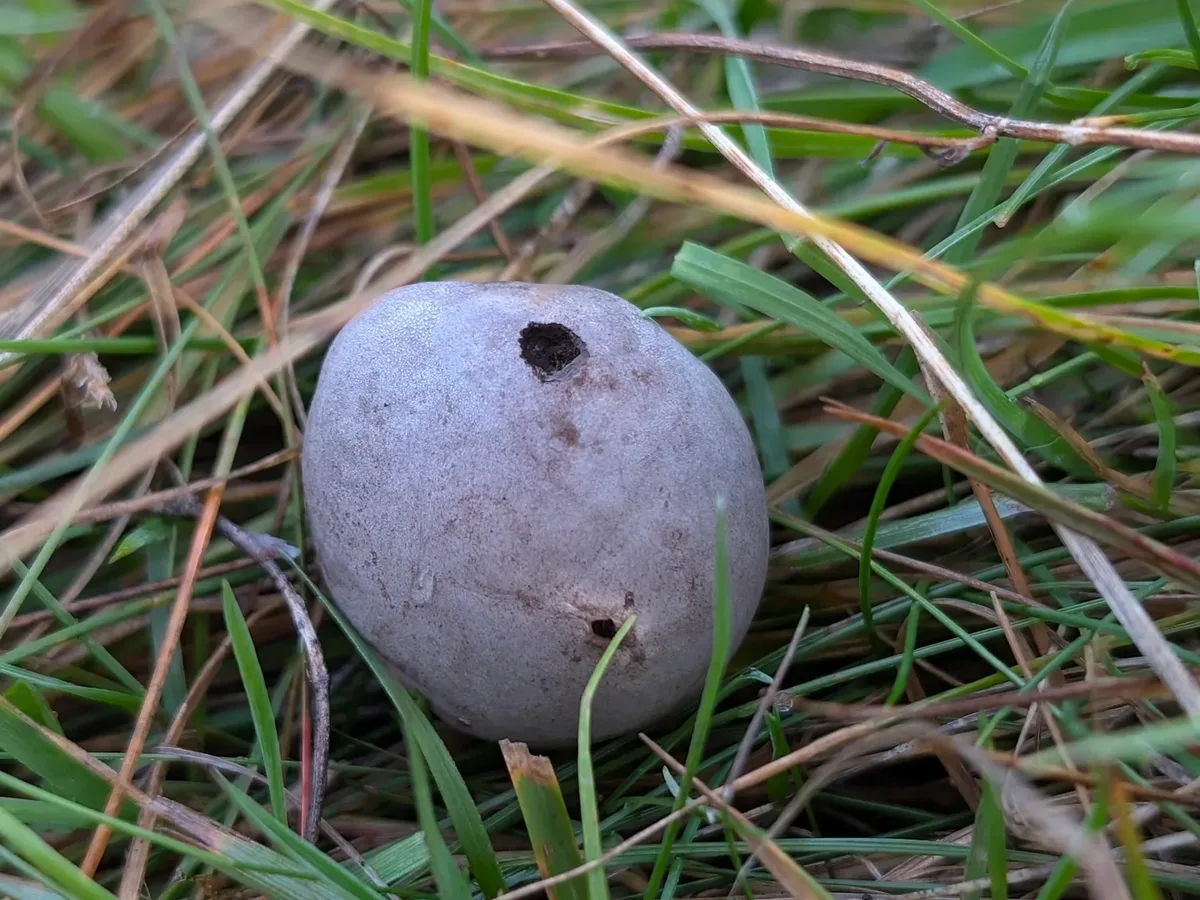
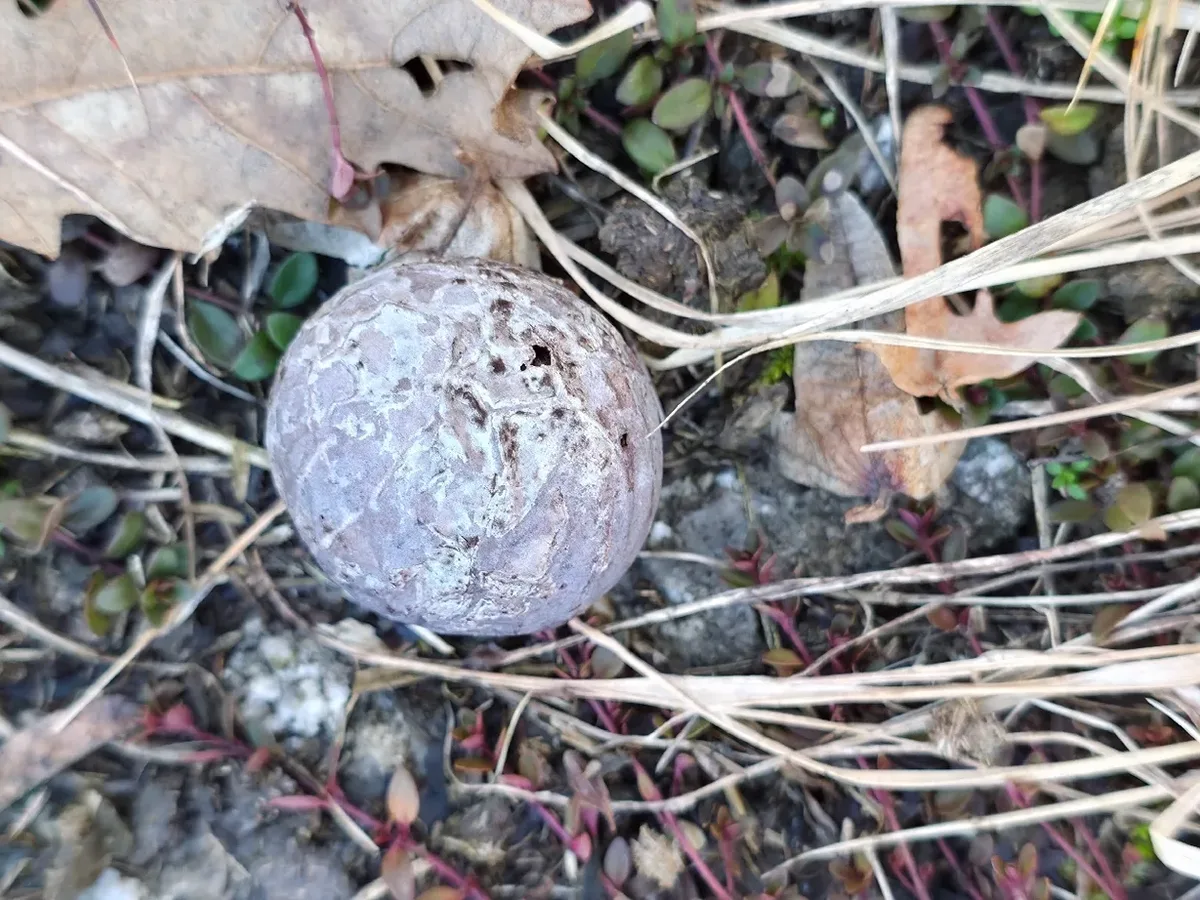
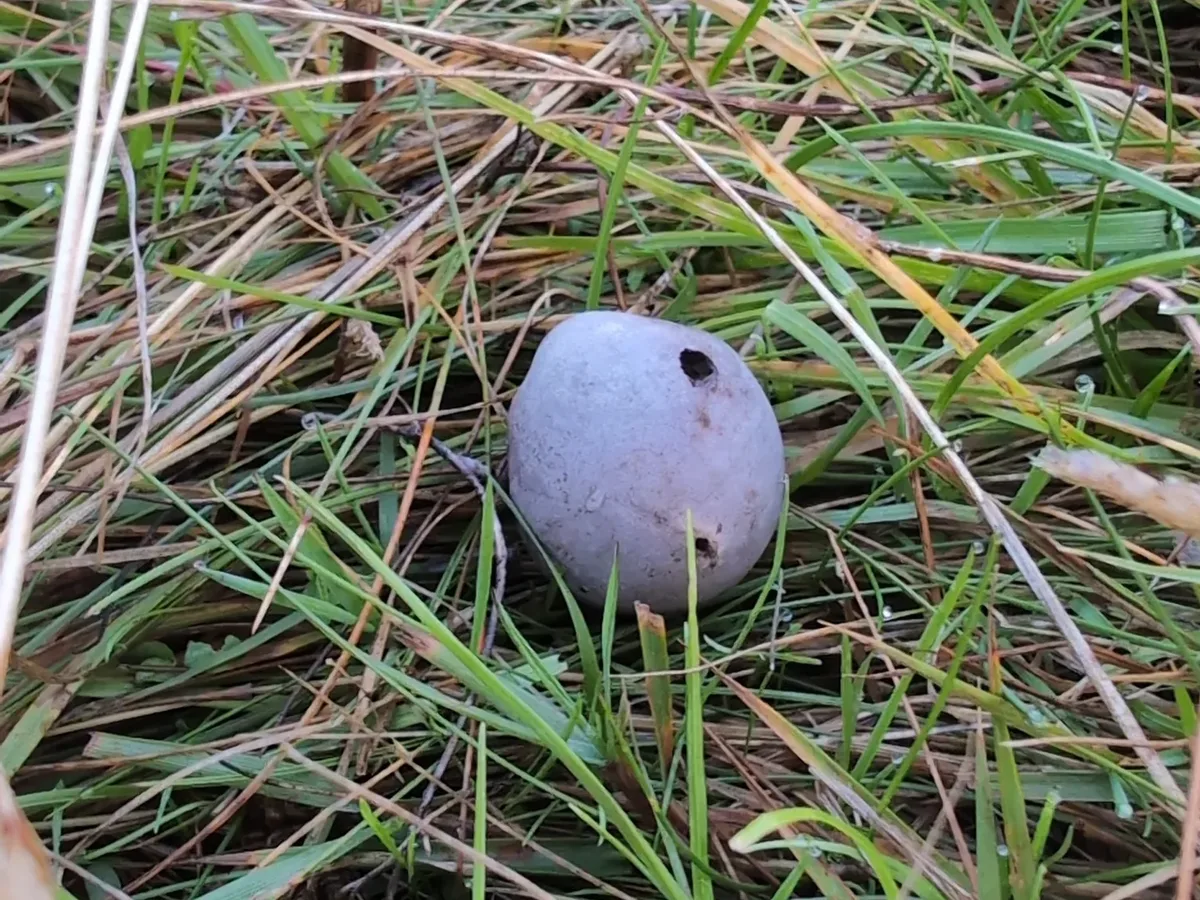
As it matures, the white outer skin (exoperidium) develops a dry, flaky, papery texture and soon cracks and peels away irregularly, exposing the characteristic lead-grey to dull steel-grey inner wall (endoperidium) that gives the species its common and Latin names.
The inner wall (endoperidium) is papery and persistent, eventually developing a small apical pore at the top from which wind disperses the spores in puffs.
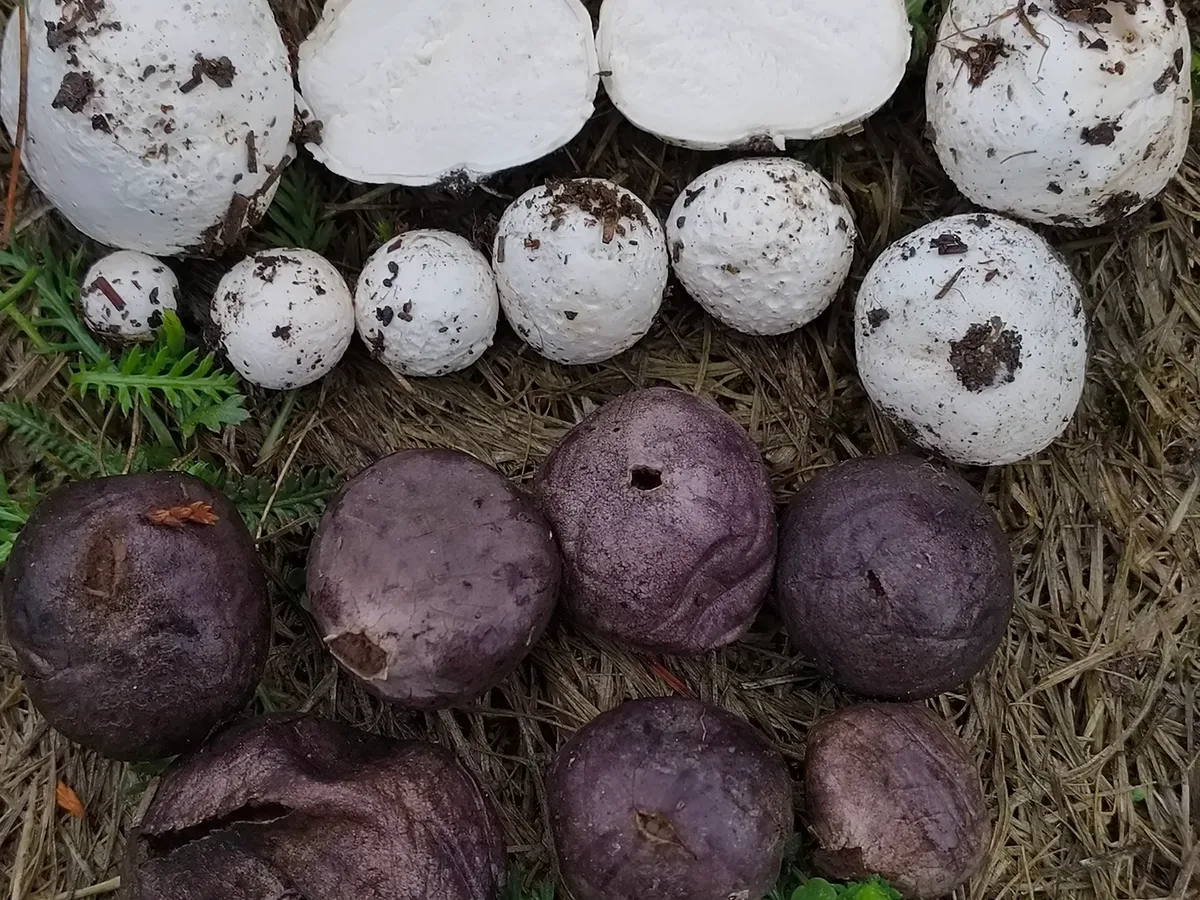
The interior flesh (gleba) is the key edibility indicator: it must be uniformly pure white throughout before consumption.
As it ages, the gleba passes through cream, yellow, olive-yellow, and finally dark purplish-brown as the spores ripen.
The spore mass at maturity is purplish-brown to dark umber - a useful colour diagnostic distinguishing it from some lookalikes.
No distinct stem is present, only fine rhizomorphs at the base.
Where & when it grows
Habitat
A true open-ground species - you will rarely, if ever, find it under a closed forest canopy.
Its home is the sunlit grassland:
- permanent pastures
- hay meadows
- heathlands
- lawns
- road verges
- golf courses
- the grassy fringes of paths and tracks
It grows on a wide range of soil types but favours well-drained, often thin soils.
In the Nordic region it is a reliable autumn grassland species, and some of the best finds come from ancient, unimproved meadows that have never been ploughed or heavily fertilised.
It also turns up in subalpine meadows and moorland at considerable elevation.
Usually seen singly or in loose groups; after a good soaking of late-summer rain, larger numbers can appear in a short stretch of grassland.
It is saprotrophic - breaking down organic matter in the soil - with no mycorrhizal tie to trees.
When
In northern Europe and Scandinavia the season runs from June to November, with the primary flush concentrated from August to October.
Warm, wet late-summer conditions trigger the largest flushes.
In central Europe the window is similar but may start slightly earlier (May in warm years).
The leathery mature bodies can persist on the ground long after spore dispersal is complete, meaning old grey balls are often seen well into winter.
Foragers should target the early button stage when the flesh is still fully white - this window may be quite short (days to a couple of weeks) once fruitbodies emerge.
How it grows
Bovista plumbea is saprotrophic, living off decaying plant material and humus threaded through the soil.
Each fruitbody starts its life anchored to the ground by a slender cord of white mycelium - almost like a tether holding a tiny balloon.
Once the spores ripen and the cord dries out, that bond breaks and the leaden-grey ball is free to roll.
A stiff breeze or even a passing animal can send it tumbling across a meadow, puffing spores through its apical pore as it goes - a neat dispersal trick perfectly suited to open, windy grassland.
Fruitbodies emerge quickly after rainfall, often appearing in numbers within days of a good soaking.
Fruiting conditions
Fruiting is triggered by late-summer and autumn rainfall combined with mild soil temperatures. The fruitbody emerges rapidly once conditions are met, but the edible white stage is brief - check sites frequently after rain.
Look-alikes
The chief safety concern with all edible puffballs is confusion with the egg stage (button) of deadly Amanita species, particularly Amanita phalloides (death cap) and Amanita virosa (destroying angel).
Amanita buttons are roughly similar in size but are NOT freely detached - they are firmly rooted and when bisected show the outline of a future cap, gills, and stem enclosed within the egg, often with a distinctly layered appearance.
Bovista plumbea bisected shows only homogeneous white flesh throughout, with no internal structure. This is the single most reliable distinguishing feature.
A second critical lookalike is the earthball Scleroderma citrinum: it grows in similar open or grassy habitats, but its skin is thicker and scaly, and the interior turns dark purple-black when bisected even when young - never the pure white of an edible puffball. Scleroderma is poisonous and must be rejected.
Within the puffballs:
- Bovista nigrescens is very similar but generally larger (up to 6 cm), turns darker brown to nearly black at maturity, and has different microscopic features.
- Calvatia excipuliformis (pestle puffball) is larger and club-shaped with a sterile base.
- Lycoperdon perlatum (common puffball) is larger, has a distinct warty exoperidium and a narrower sterile base, and grows preferentially in woodland rather than open grassland.
- Apioperdon pyriforme (stump puffball) is distinctly pear-shaped and grows in clusters on or near wood.
- Vascellum pratense (meadow puffball) also grows in grassland and is similar, but the gleba is separated from the sterile base by a distinct membrane, and the exoperidium is finely granular or cracked rather than peeling in large flakes.
None of the puffball confusions are dangerous, but Amanita buttons and Scleroderma earthballs are, and the bisection rule is the only reliable safeguard.
Bisect every specimen: Amanita buttons show a layered internal structure with the outline of cap, gills, and stem clearly visible within a membrane; Bovista plumbea is uniformly pure white with no internal structure. Amanita buttons are also firmly rooted, not freely detached.
Same bisection test applies: destroying angel buttons show internal gill and cap differentiation; the true puffball has completely undifferentiated white flesh. The destroying angel button has a smooth, white volva visible around the base.
The principal deadly white Amanita of eastern North America. Its veiled egg button can be mistaken for a small puffball; a vertical cut reveals an embryonic cap, gills, and stem within a membranous veil, whereas Bovista plumbea is pure white and structureless inside. Contains lethal amatoxins.
Poisonous. Has a much thicker, harder, ochre-coloured scaly rind. The interior turns dark purple to near-black even when young - never the pure white of an edible puffball. Grows in woodland edges and disturbed ground, sometimes in similar habitats. Reject any puffball-like body with a thick rind and dark interior.
Has a distinctly warty or spiny exoperidium leaving a reticulate pattern when warts fall away; club-shaped with a narrow sterile base; typically woodland rather than open grassland. Edible when young, not a dangerous confusion.
Larger (3-6 cm), turns very dark brown to near-black at maturity (darker than B. plumbea's leaden grey), with slightly different spore and capillitium morphology under microscope. Also edible when young and white.
Very similar appearance in grassland; Vascellum pratense has a finely granular or warty exoperidium and a distinct membrane (diaphragm) separating the spore mass from the sterile base when bisected. Edible when young and white, so confusion is not dangerous but the species are distinct.
Larger and distinctly club-shaped or pestle-shaped with a pronounced sterile base; grows in woodland or woodland edges rather than open grassland. Edible when white inside.
Pear-shaped; grows in dense clusters on or at the base of decaying wood or buried wood; not typically found in open grassland. Edible when white inside.
In the kitchen
Picking & cleaning
Collect only those fruitbodies that are solid white all the way through when sliced in half vertically - this is the single most important rule for safe harvest of any puffball.
Use a clean knife to bisect each specimen before placing it in your basket.
Discard any specimen showing the faintest tinge of yellow, grey, or purple in the interior, or any sign of an internal structure (gills, cap outline, or coloured zone) that would indicate an immature Amanita button.
The small size of Bovista plumbea means they are most useful gathered in quantity.
The skin is edible and need not be peeled if young, though the thin papery outer skin of older specimens is tough and best removed.
Handle gently as the mature skin is fragile.
Cooking
Young lead puffballs with fully white flesh taste mild and pleasantly earthy, with a firm, slightly rubbery texture that holds its shape in the pan.
They are small, so gather a good handful to make a meaningful dish.
- 1Peel away the thin outer skin if it has turned papery.
- 2Slice in half or leave whole.
- 3Fry in butter or olive oil over medium-high heat until the cut sides turn golden - they absorb fat readily and build a satisfying savoury crust.
Garlic, fresh thyme, or a pinch of smoked paprika all complement their gentle flavour well.
They sit happily in omelettes, risottos, creamy soups, and mixed mushroom sautés.
They can be dried, though their small size means the yield shrinks considerably.
Unlike a giant puffball, they are too small to slice into steaks - their charm is as part of an ensemble.
Good to know
Bovista plumbea is considered edible and safe when gathered correctly at the pure-white button stage.
The critical protocol is to bisect every specimen:
- White flesh throughout with no internal structure = safe.
- Any other colour, any internal structure, any sign of gills or a stem rudiment = do not eat.
This protocol is non-negotiable and is the only reliable safeguard against accidentally harvesting a deadly Amanita button.
Also reject any specimen with a very thick, hard rind and a dark purple or black interior - this is a Scleroderma earthball, which is poisonous.
Never eat puffballs that have not been sliced and confirmed white throughout.
As with all wild fungi, some individuals may experience mild gastrointestinal sensitivity, particularly if specimens are eaten in large quantities or are slightly past their prime.
Do not eat raw. The mature, spore-filled body should not be consumed. Individuals with known sensitivity to fungi should exercise caution.
A reference guide - never an edibility guarantee. When in doubt, leave it out.