Mesenteric polypore
Bondarzewia mesentericasyn. Polyporus mesentericus Schaeff., Polyporus radicatus Sow., Trametes mesenterica (Schaeff.) Fr., Grifola mesenterica (Schaeff.) Donk
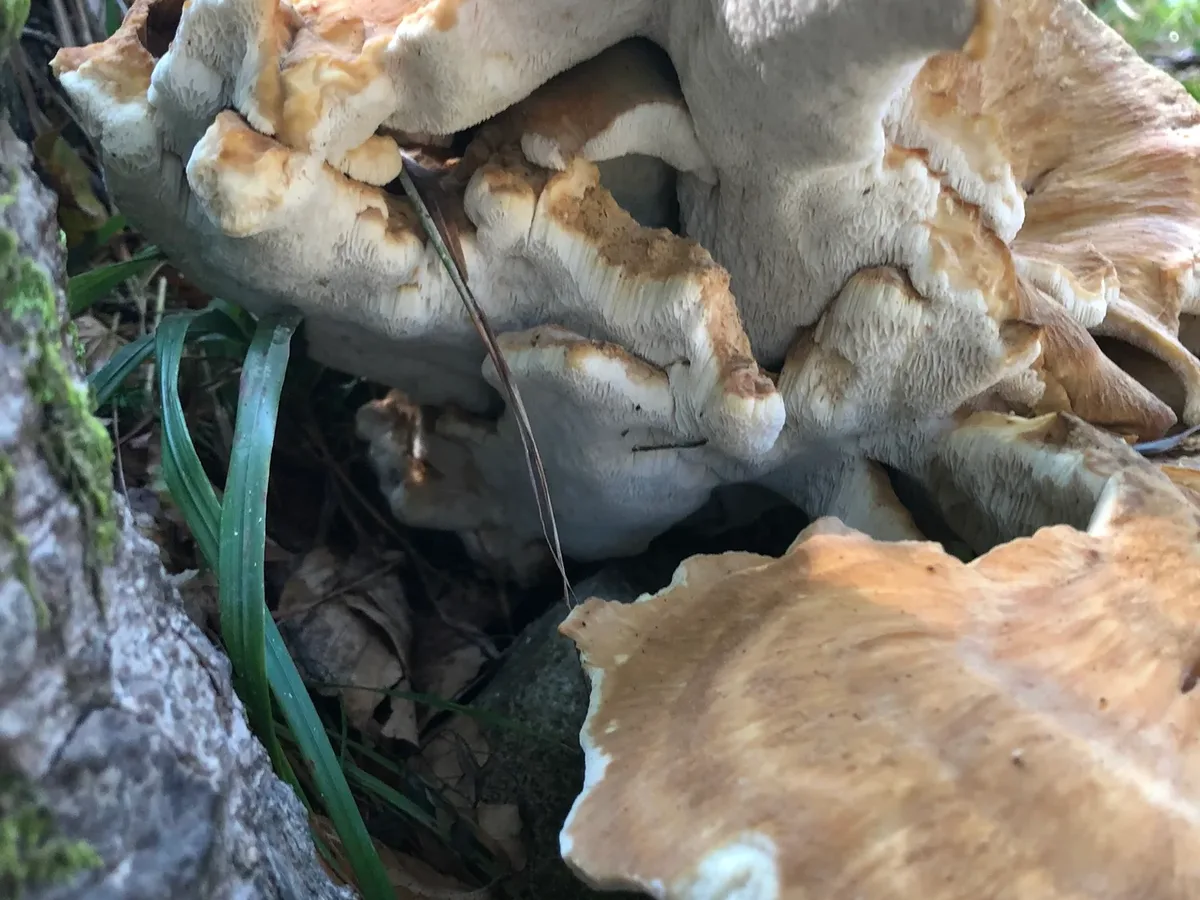 © Conrad Altmann (CC BY)
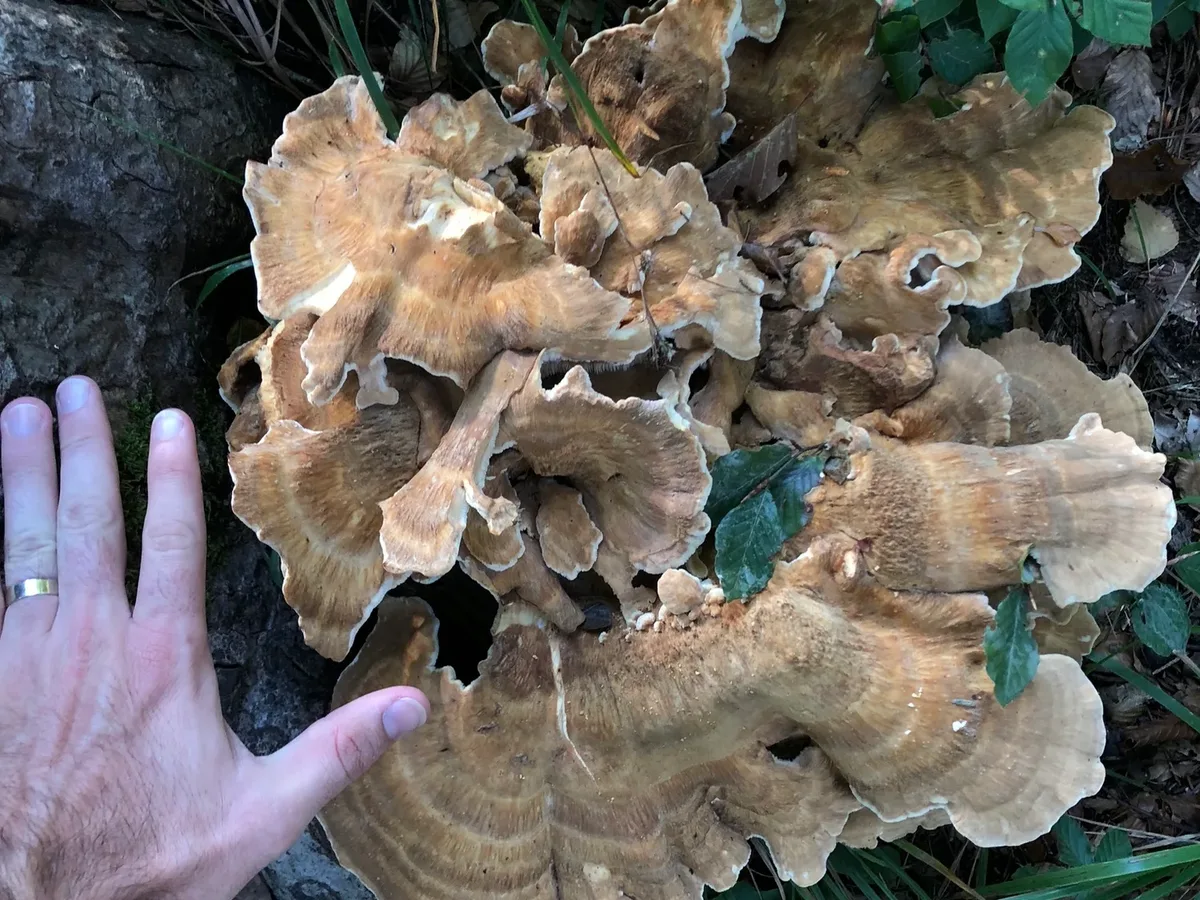 © Conrad Altmann (CC BY)
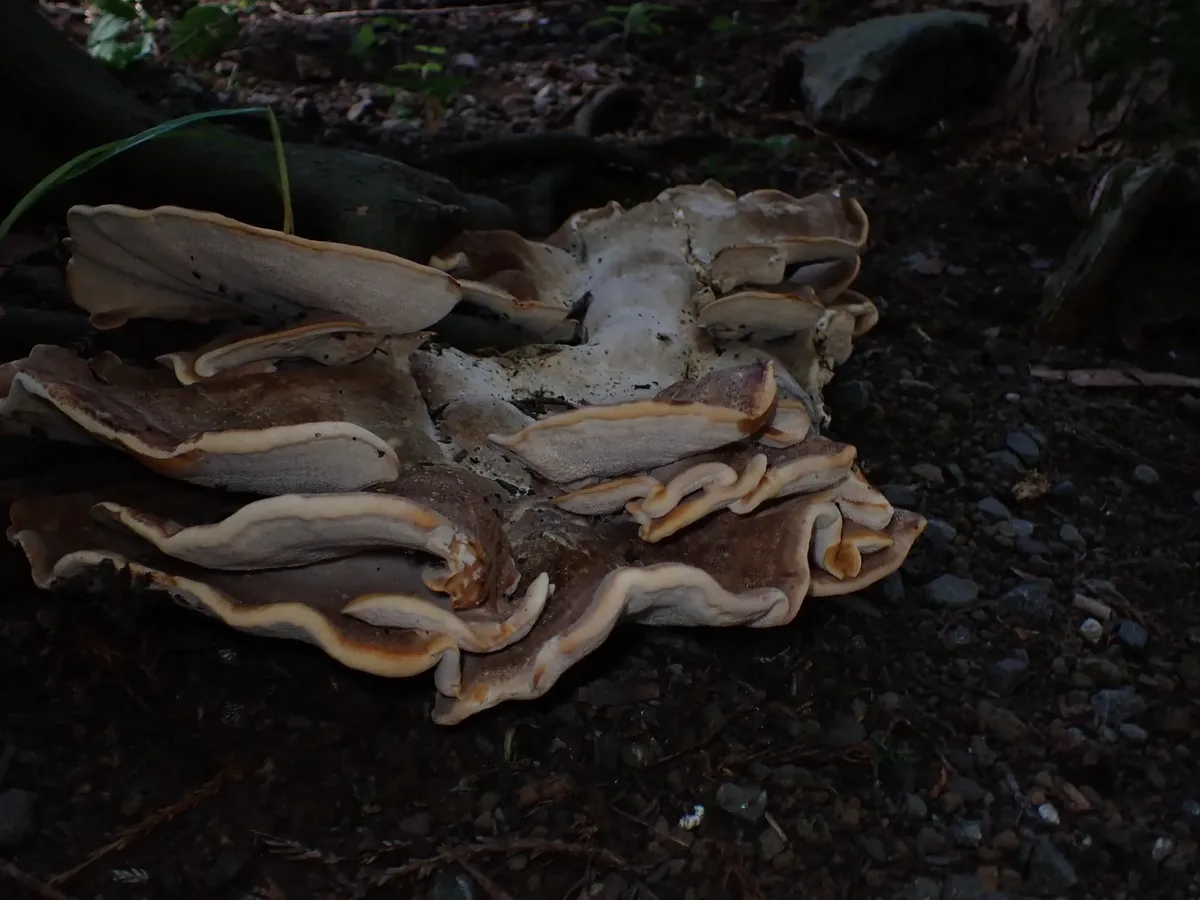 © W Rao (CC BY)
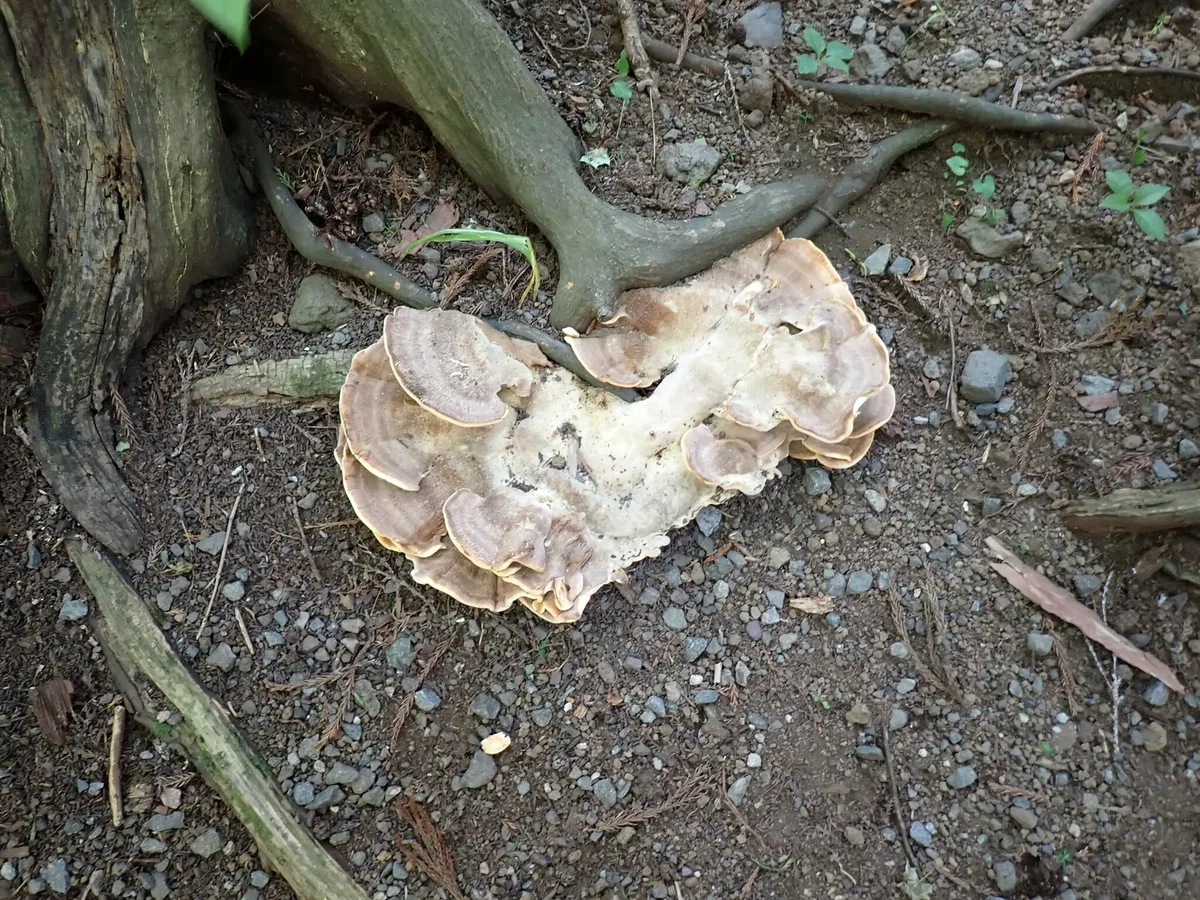 © W Rao (CC BY)
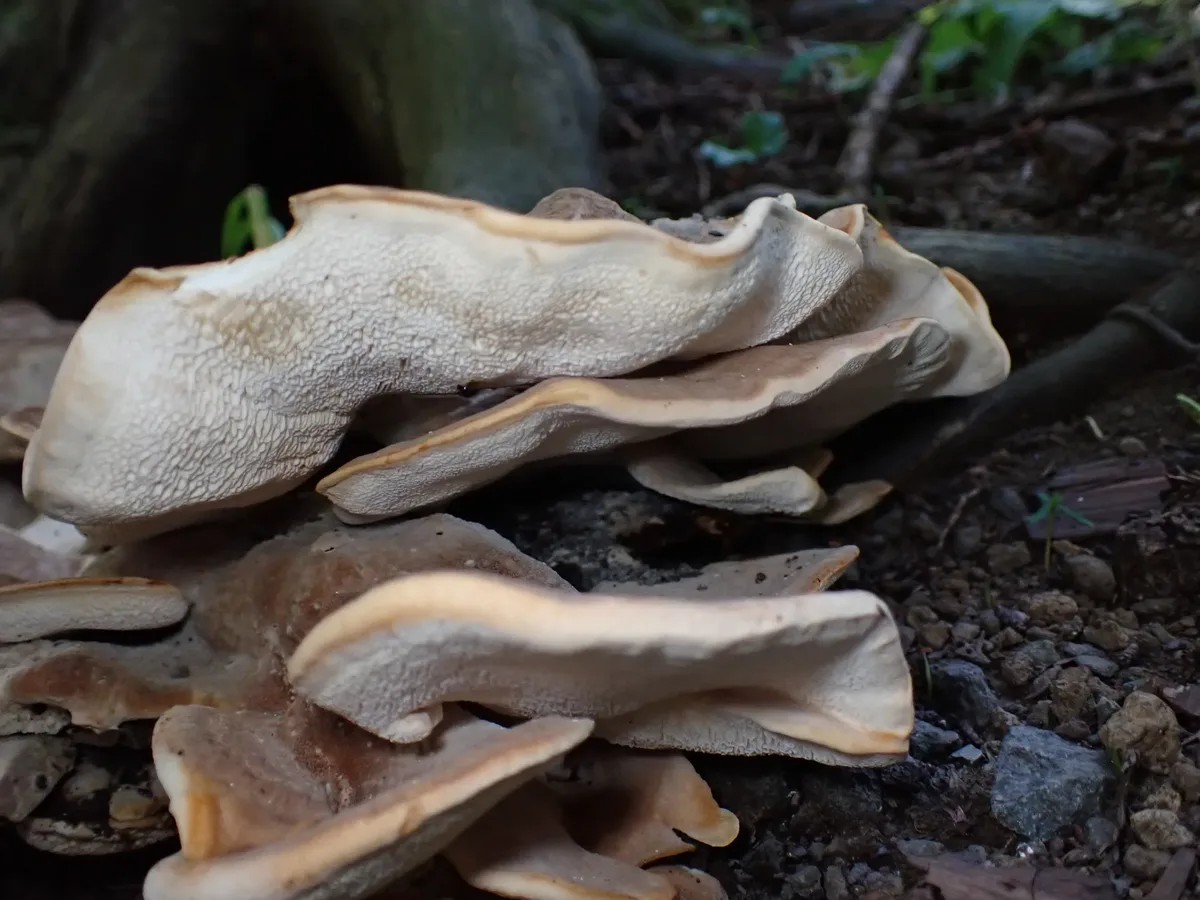 © W Rao (CC BY)
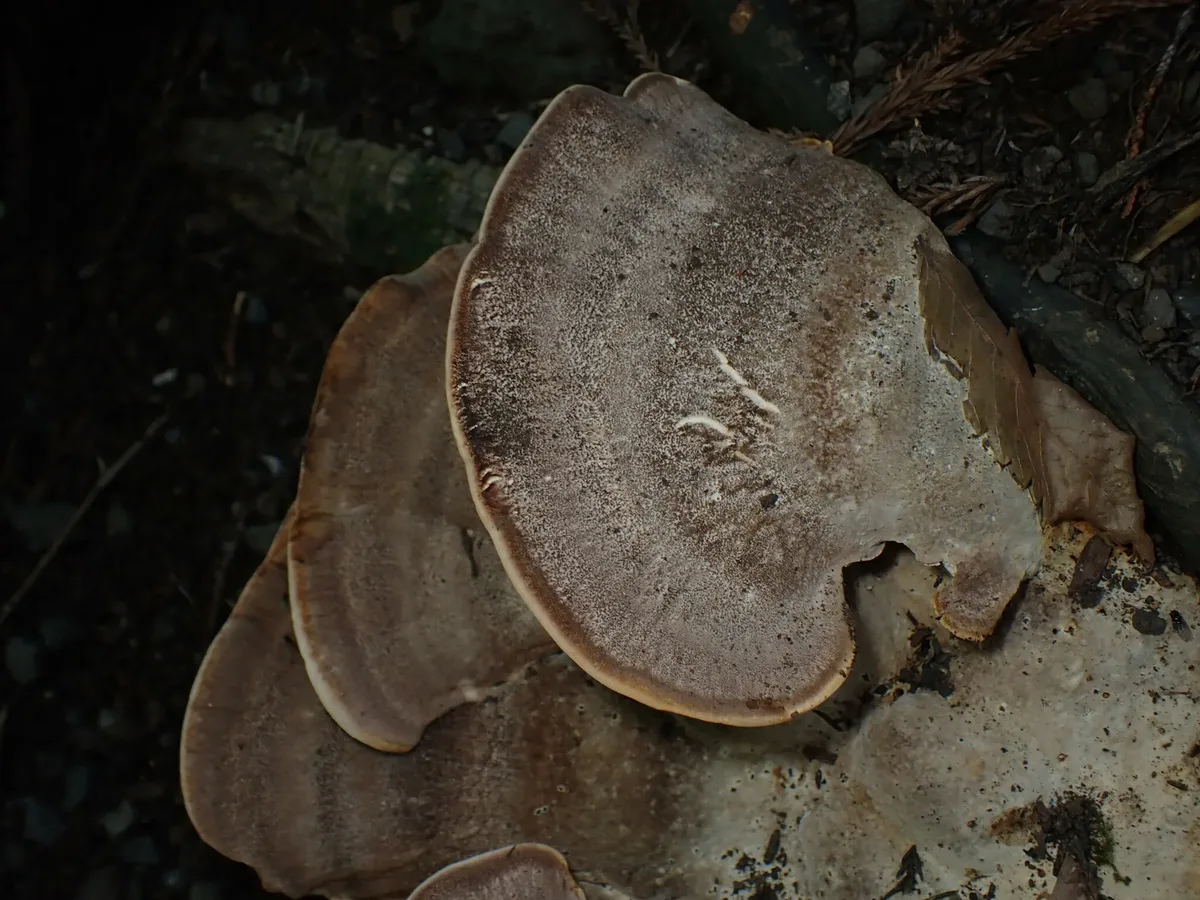 © W Rao (CC BY)
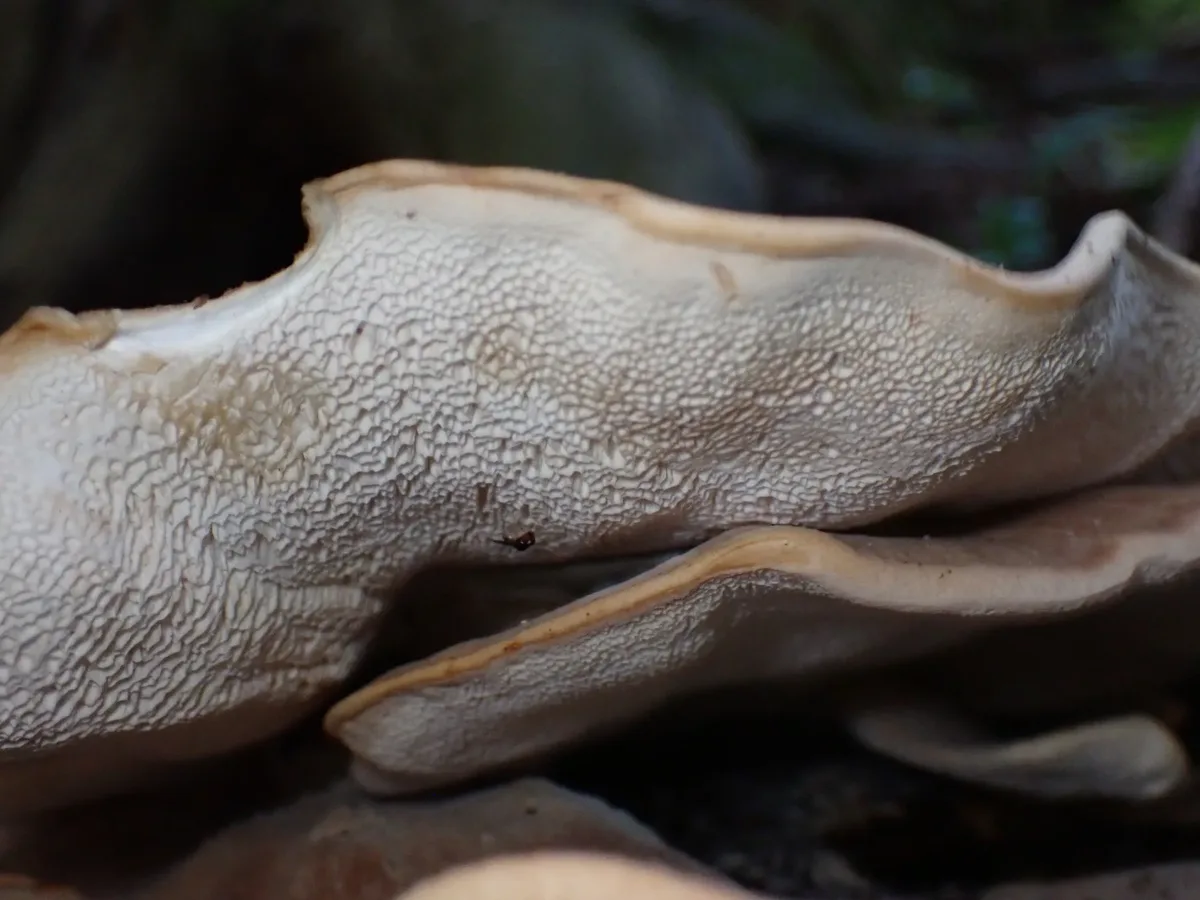 © W Rao (CC BY)
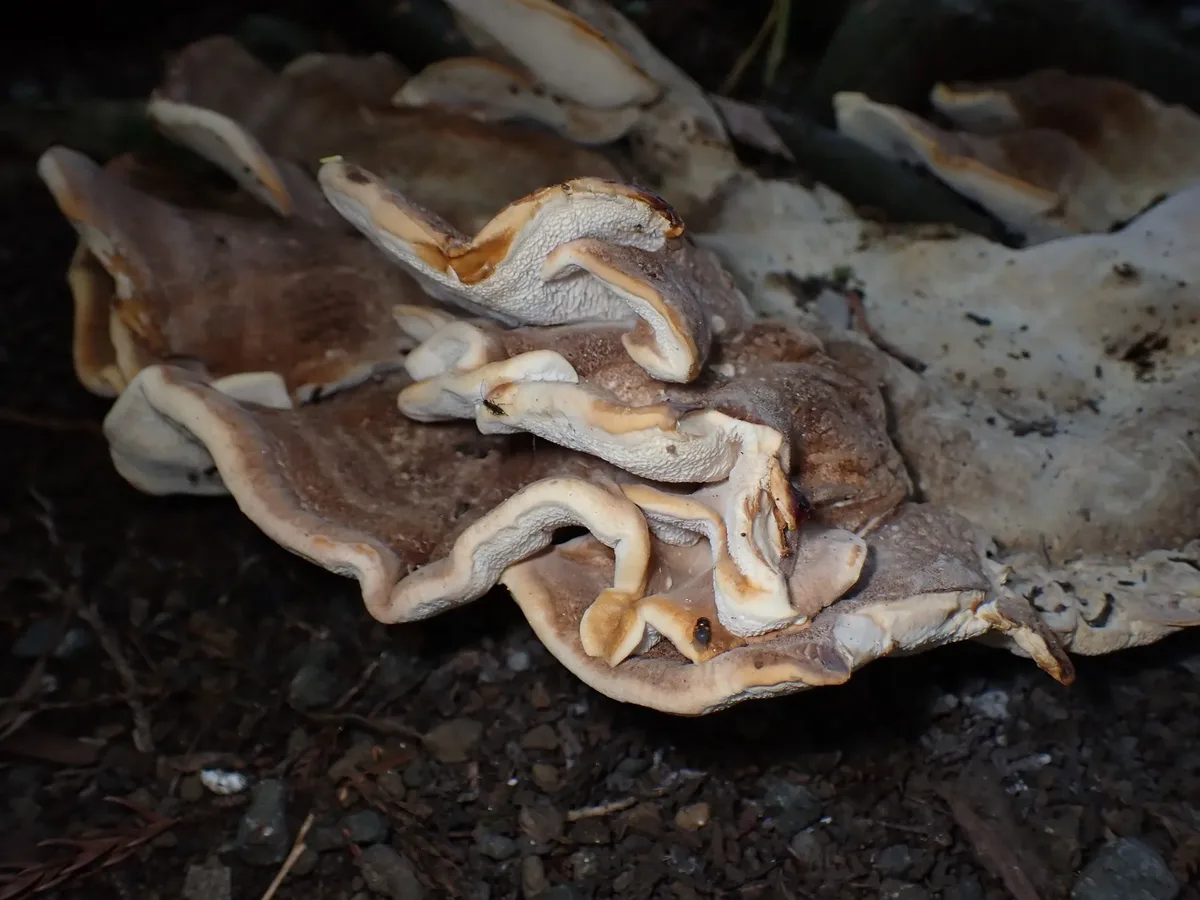 © W Rao (CC BY)© Conrad Altmann (CC BY)© Conrad Altmann (CC BY)
Good to eat, once you have identified it with certainty and cooked it through.
How to recognise it
When you find Bondarzewia mesenterica for the first time, its sheer scale is the first thing that registers - a dense, ground-hugging rosette of overlapping fan- to kidney-shaped caps that can spread 30-60 cm across and weigh 2-8 kg, all rising from a single cream-coloured, stump-like base anchored deep in buried fir or spruce roots.
It is the principal European rosette polypore of coniferous mountain forests, filling the same ecological role that B. berkeleyi occupies in North American oak forests.
Cap
Individual caps are typically 5-25 cm wide and 1-3 cm thick. Their surfaces are smooth to radially fibrous, pale cream or ochre-buff when young, ageing to tawny-ochre or pale brown, with a paler, lobed margin that is the last area to mature.
Pores
Flip a cap over to see the most important diagnostic character: the pore layer is cream to white, with angular pores of 1-2 per mm - conspicuously wider than those of most European polypores, giving the underside a coarse, almost honeycomb-like texture. Crucially, these pores do not change colour when pressed or cut.
Flesh
Flesh is dense, white, and fibrous throughout - firm enough in young specimens to resist tearing, but becoming progressively tougher with age.
Stem
The stem is a robust, pale cream, multi-branched structure that tapers into a deep rooting base.
Spore print white; spores subglobose, warted with amyloid ridges under microscopy.
Where & when it grows
Habitat
Bondarzewia mesenterica is a specialist of mature montane conifer forest, almost always found growing from or immediately adjacent to the base of silver fir (Abies alba) or related fir species.
It acts as a root and butt-rot pathogen, enzymatically breaking down the lignocellulose of structural roots and heartwood through selective delignification (white rot). The mycelium extends through root systems, and the visible fruiting body is only the reproductory expression of a large, perennial underground network.
Characteristic sites include old-growth silver fir forests and fir-beech mixed stands at 500-1600 m elevation in the Alps, Apennines, Carpathians, Pyrenees, Black Forest, and Jura. It is also recorded across the Caucasus and into Turkey, Siberia, and East Asia wherever abietoid conifers grow in cool montane zones.
In the montane forest, look at the base of large, mature firs - particularly those that may already show signs of reduced vitality - since this rot organism often colonises trees that are decades old. The fruiting body tends to re-emerge at the same root zone year after year.
When
The fruiting season spans late July through October, driven by the temperature and moisture regime of the montane zone.
The optimal window is typically August through September, when soil temperatures at altitude remain above 12-15 °C and summer rainfall provides sufficient moisture.
In Alpine valleys, first fruit bodies may appear as early as late July; at higher elevations, peak fruiting shifts toward September.
Once triggered, a rosette can expand from a few centimetres to full size within 10-14 days. Individual fruiting bodies persist for two to four weeks before becoming tough and unpalatable.
Because the mycelium is perennial, experienced foragers maintain records of productive sites - a reliable fir base can produce a large rosette annually for a decade or more. Drought years suppress or delay fruiting without permanently eliminating the site.
How it grows
Unlike the mycorrhizal fungi that quietly partner with tree roots, Bondarzewia mesenterica makes its living differently: it breaks wood apart.
It is a white-rot butt-rot fungus - meaning it secretes enzymes that dissolve the lignin binding a tree's woody fibres together, leaving behind a bleached, fibrous cellulose residue.
It can act as a facultative parasite on living conifers or continue feeding on dead roots and stumps long after the tree is gone. This rot progressively weakens structural roots and the lower trunk, making heavily colonised trees more susceptible to windthrow.
What you see at the surface is only one season's expression of a much larger story: the mycelium beneath is perennial, threading through the root zone for years, sometimes decades, and it fruits only when temperature and moisture conditions align.
A productive site can yield a fresh rosette most summers without any sign above ground in between. It is not commercially cultivated.
Fruiting conditions
Responds to warm, moist late-summer conditions in montane conifer forest. Soil temperatures above 10 °C and at least 20 mm of rainfall in the preceding two weeks favour fruiting. The perennial mycelium at an established site requires less rainfall trigger than a newly colonised one. Drought suppresses but rarely permanently prevents fruiting at known sites.
Look-alikes
No deadly species closely resembles Bondarzewia mesenterica. The most important confusion risk in Europe is with Meripilus giganteus (giant polypore), which forms similar large rosettes at tree bases but grows on hardwoods (beech, oak), not conifers, and whose pore surface turns instantly and permanently grey-black when pressed or bruised - Bondarzewia does not change colour.
If you are uncertain, press the pore surface firmly with a thumb: blackening = Meripilus, no change = Bondarzewia.
- Grifola frondosa (hen of the woods / maitake) also forms overlapping cap rosettes at the base of hardwoods, but its individual caps are much smaller (3-10 cm), distinctly grey-brown, thinner, and the whole structure is lighter and less massive; it also does not grow on conifers.
- Albatrellus ovinus and related species produce solitary or partially fused caps on conifer forest floors but lack the large rosette growth form, have solid rather than poroid stems, and are much smaller overall.
No polypore that could realistically be confused with B. mesenterica is dangerous.
Albatrellus ovinus grows in conifer forests and has pale, cream to buff cap surfaces with white angular pores, but it forms individual or loosely clustered single caps rather than a fused rosette growing from a common rooting base. Caps are smaller (5-12 cm), convex to irregularly lobed, and arise from a short, solid central stem - quite different from the large, multi-capped, ground-level rosette of Bondarzewia.
The North American sister species is morphologically very similar - large, pale cream rosette, non-blackening pores, amyloid spores - but grows on hardwoods (predominantly oak) rather than conifers and is essentially absent from Europe. Where ranges overlap in East Asia, habitat association (hardwood vs. conifer) remains the primary separator.
Meripilus giganteus forms a similar large rosette of overlapping fan-shaped caps at tree bases but grows exclusively on hardwoods (beech, oak, chestnut) rather than conifers. The definitive separator: press the pore surface firmly - Meripilus pores and flesh turn instantly and irreversibly grey-black; Bondarzewia mesenterica shows no colour change. Habitat alone (conifer vs. hardwood base) is a reliable primary filter.
Grifola frondosa also forms overlapping rosettes at tree bases but favours oak and beech, not conifers. Its individual caps are much smaller (3-10 cm), distinctly grey-brown or grey, and thinner; the whole cluster is lighter, more delicate, and more finely branched than the massive cream-coloured B. mesenterica rosette. Grifola pores do not blacken on bruising.
In the kitchen
Picking & cleaning
Harvest only the youngest, freshest parts of the rosette: cap lobes whose pore surface is still clean white and flesh yields slightly but springs back when pressed. In a large, multi-aged rosette, younger lobes at the periphery may still be prime even when the central portions have already toughened.
Use a sharp knife to cut individual lobes or wedges cleanly, leaving the rooting base undisturbed so the site may re-fruit in subsequent years.
Discard the tough, fibrous central stalk and any portions where the flesh has become leathery or where the pore surface is yellowed or discoloured. A large specimen can still yield 1-3 kg of usable tender flesh.
Transport in an open basket without compression; the dense flesh keeps reasonably well in a cool place for 1-2 days but should be processed promptly.
Cooking
The firm, white, fibrous flesh of young Bondarzewia mesenterica is culinary-grade and behaves much like its close relative B. berkeleyi. The texture most closely resembles pulled chicken or dense pork - genuinely meaty, holding its shape well through cooking and absorbing flavours readily.
Slice individual cap lobes 3-5 mm thick across the grain and sauté in butter or olive oil over medium-high heat until golden-brown on both sides. The high moisture content means it benefits from cooking in uncrowded batches to promote browning rather than steaming.
It pairs well with alpine herbs - thyme, rosemary, juniper - and stands up to robust flavours like garlic and aged cheese. Braising or slow-cooking in broth also works well, yielding a tender, meaty texture in sauces and ragùs.
The fibrous texture becomes an asset in preparations that call for shredding or tearing.
Drying is possible but tends to intensify any residual bitterness; blanching before freezing is preferred for long-term storage.
Good to know
Bondarzewia mesenterica has no dangerous lookalikes in its montane conifer habitat. All species that could plausibly be confused with it - Meripilus giganteus and Grifola frondosa - are themselves non-toxic edibles, though Meripilus carries its own GI-upset caveat.
The primary safety consideration with B. mesenterica itself is textural: older specimens are fibrous, tough, and develop a mild bitterness that can cause gastrointestinal discomfort in sensitive individuals if consumed in quantity.
Always collect young, firm specimens and cook thoroughly - the raw flesh is not palatable and should never be eaten uncooked.
As with any polypore new to your diet, begin with a modest portion to gauge individual tolerance. There are no documented cases of serious toxicity attributable to this species.
A reference guide - never an edibility guarantee. When in doubt, leave it out.