Berkeley's polypore
Bondarzewia berkeleyisyn. Polyporus berkeleyi Fr., Grifola berkeleyi (Fr.) Murrill, Bondarzewia berkeleyi var. berkeleyi
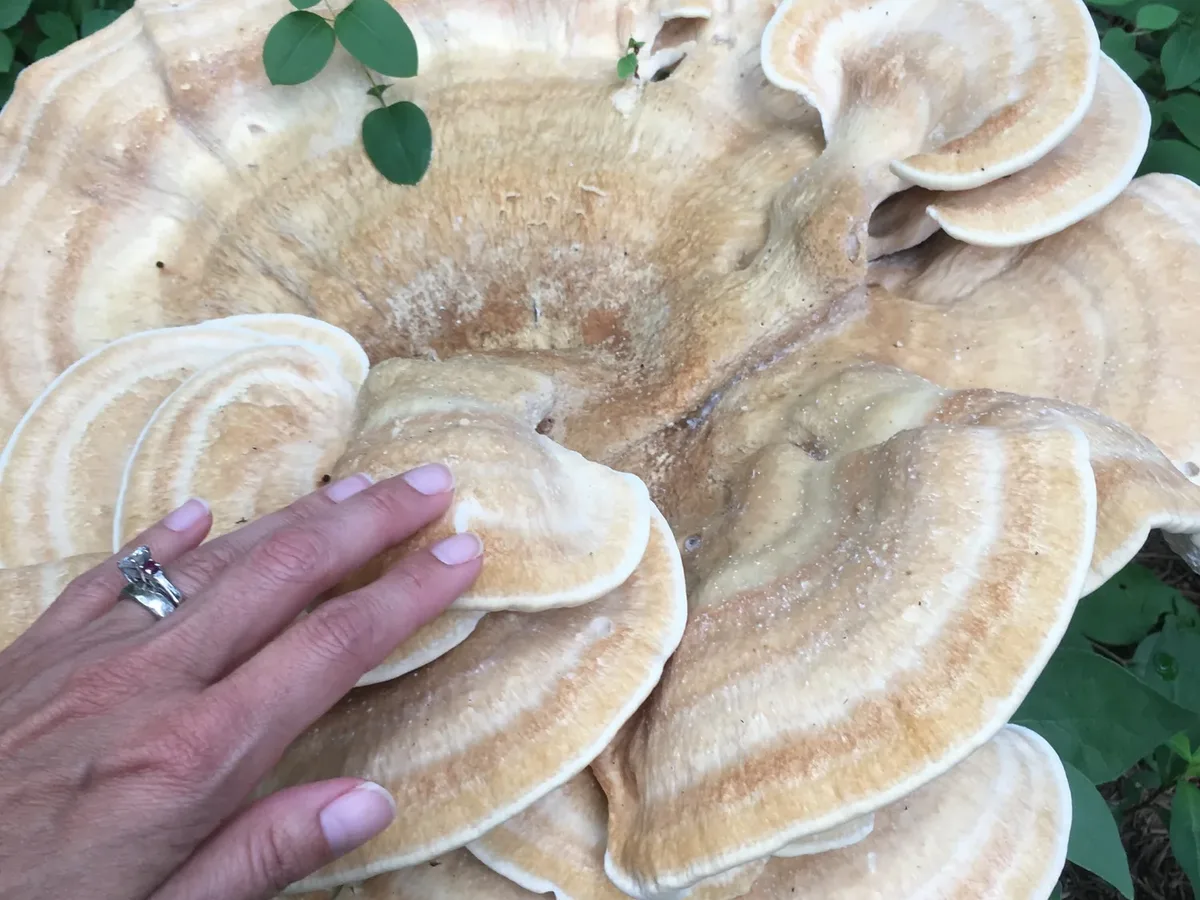 © Elissa Totin (CC BY 4.0)
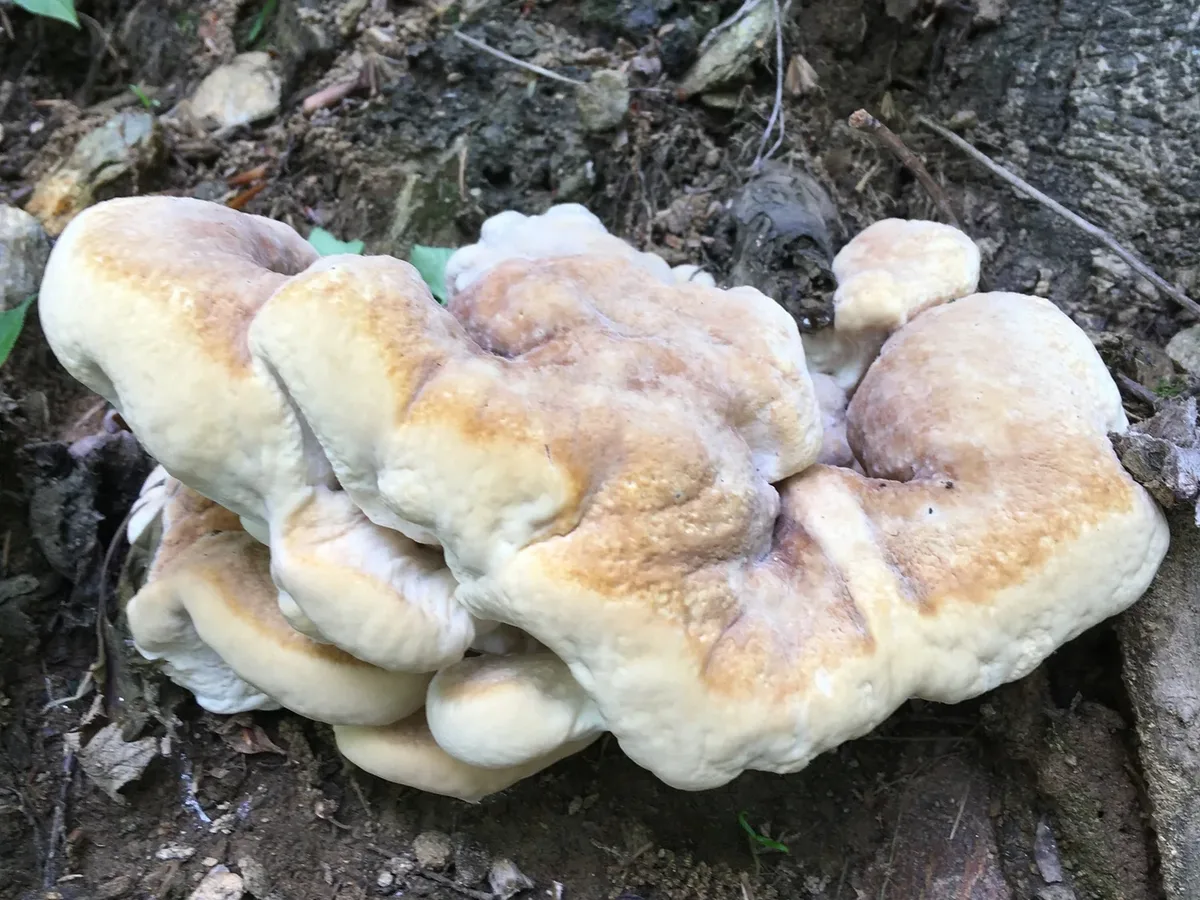 ira (CC0)
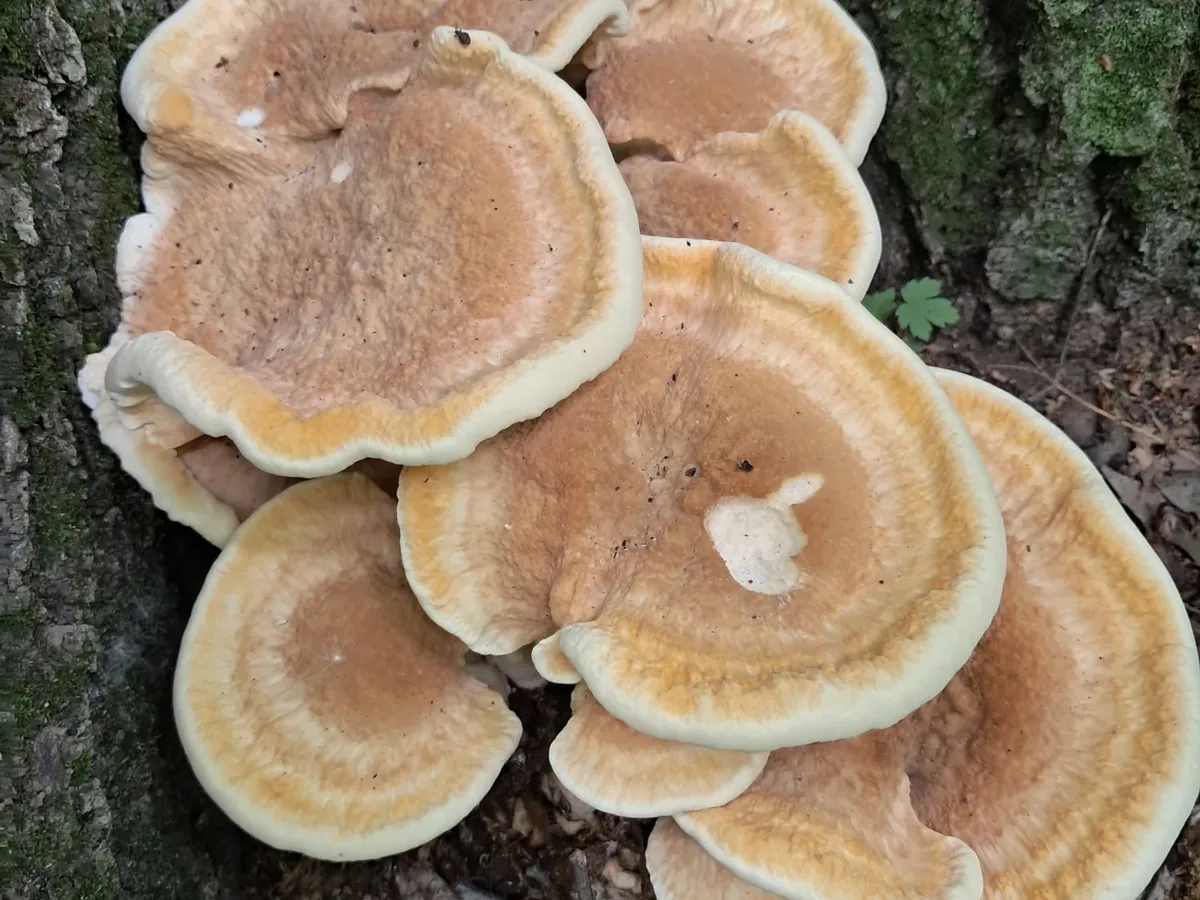 © Alex Reitan (CC BY)
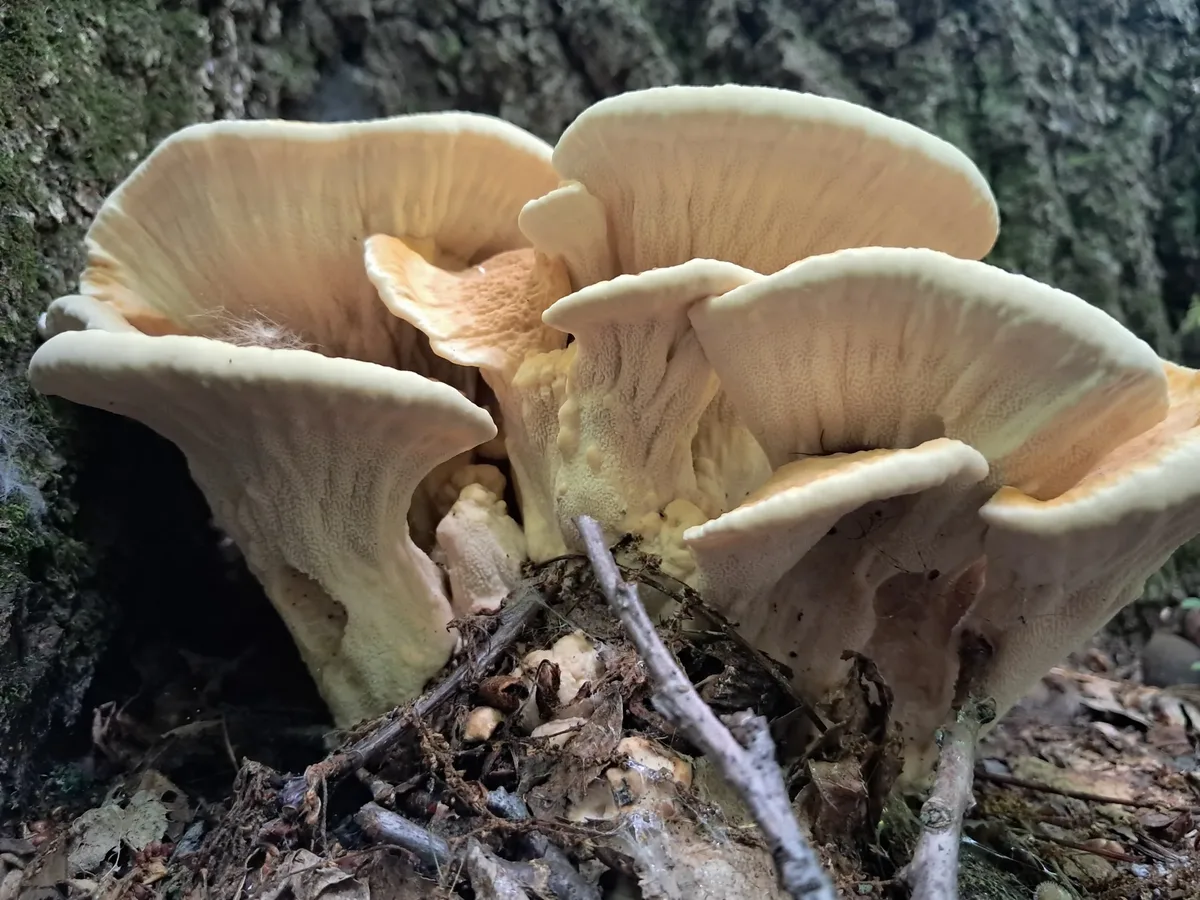 © Alex Reitan (CC BY)
 © Alex Reitan (CC BY)
 © Bryan Connolly (CC BY)
 © Bryan Connolly (CC BY)
 © Bryan Connolly (CC BY)
 © Mark Richman (CC BY)
 Wren L. (CC0)
 © José Garrido (CC BY 4.0)© Elissa Totin (CC BY 4.0)ira (CC0)
Good to eat, once you have identified it with certainty and cooked it through.
How to recognise it
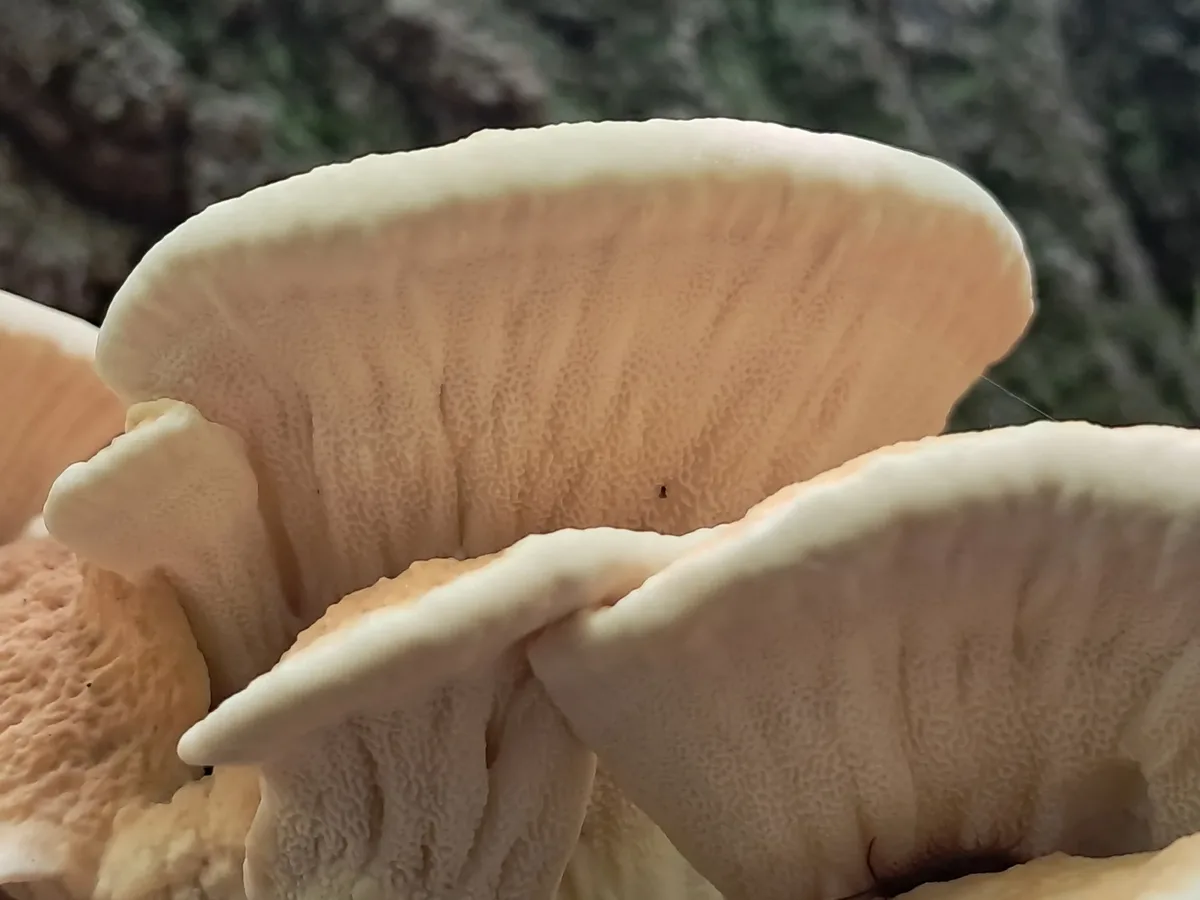
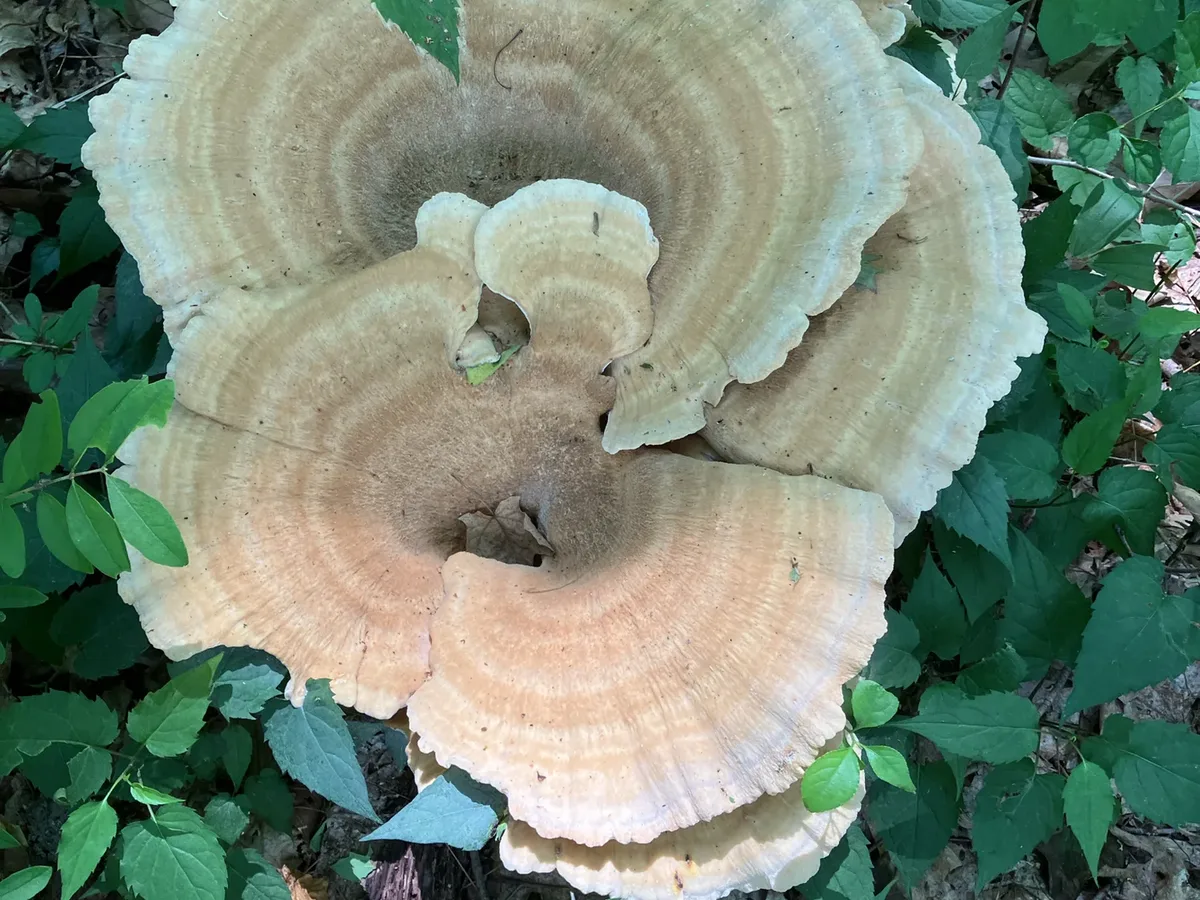
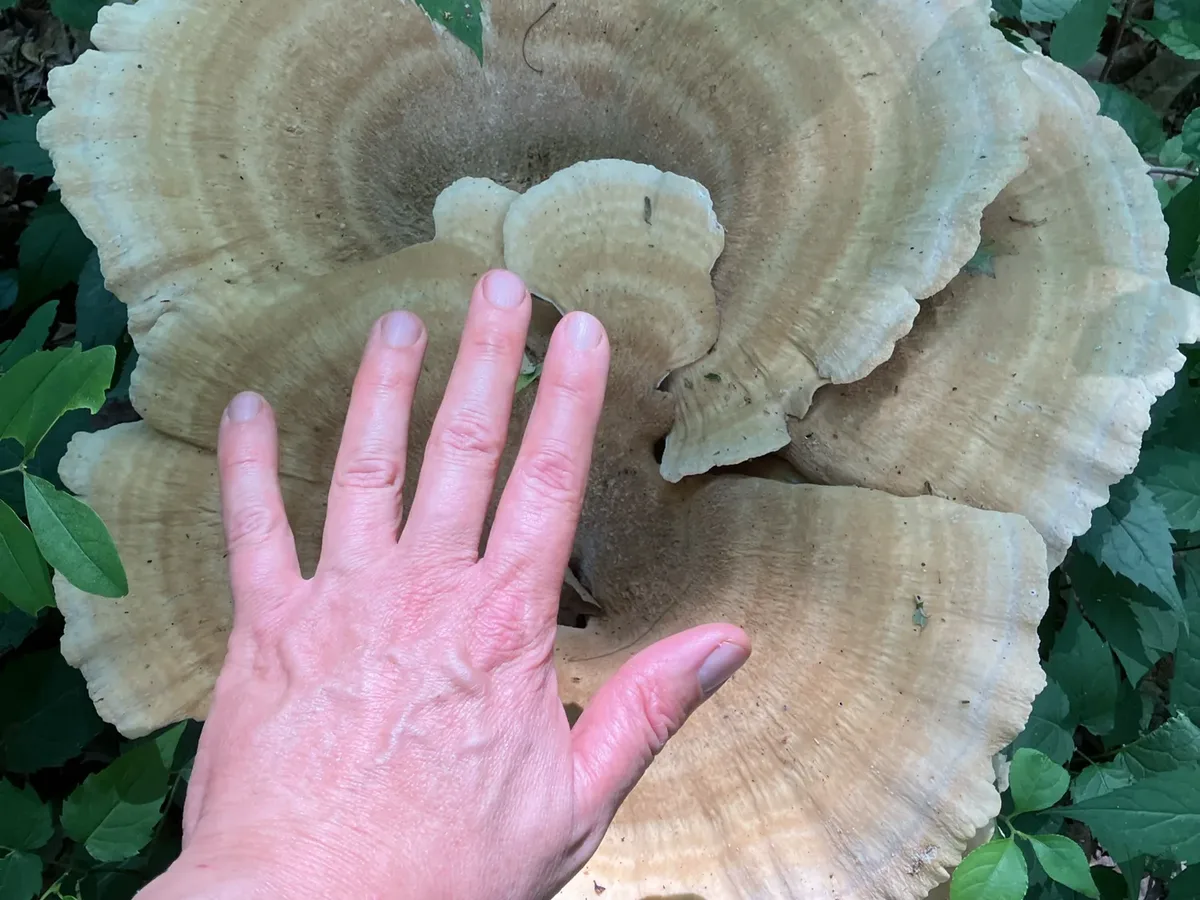
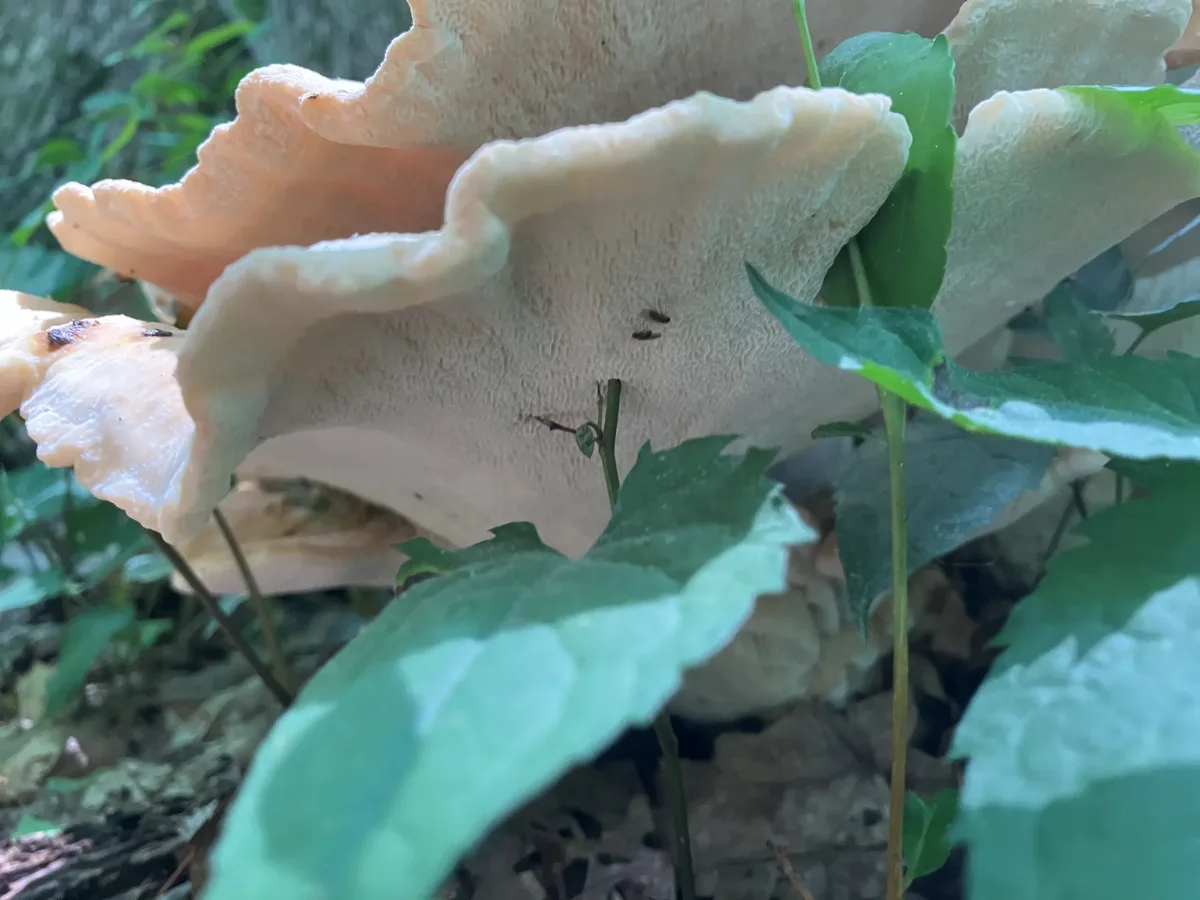
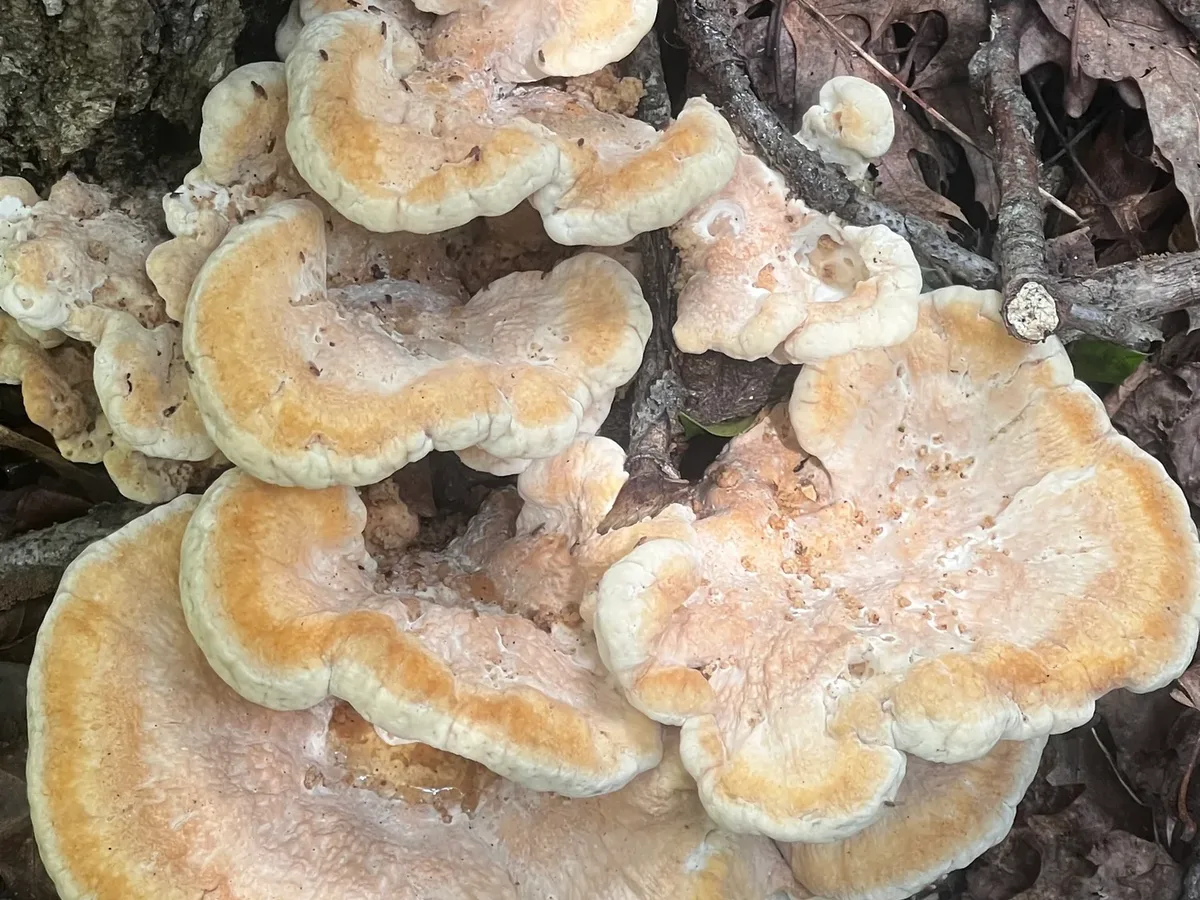
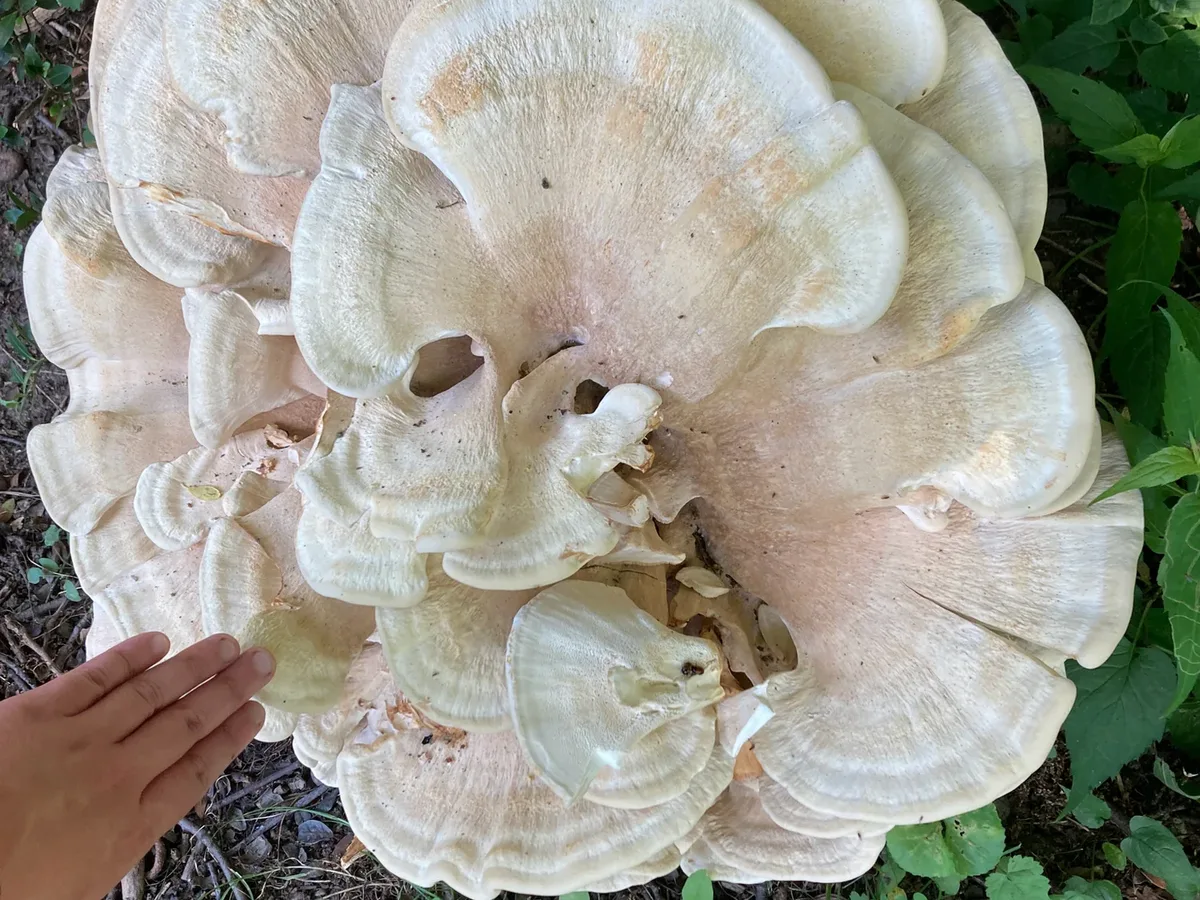
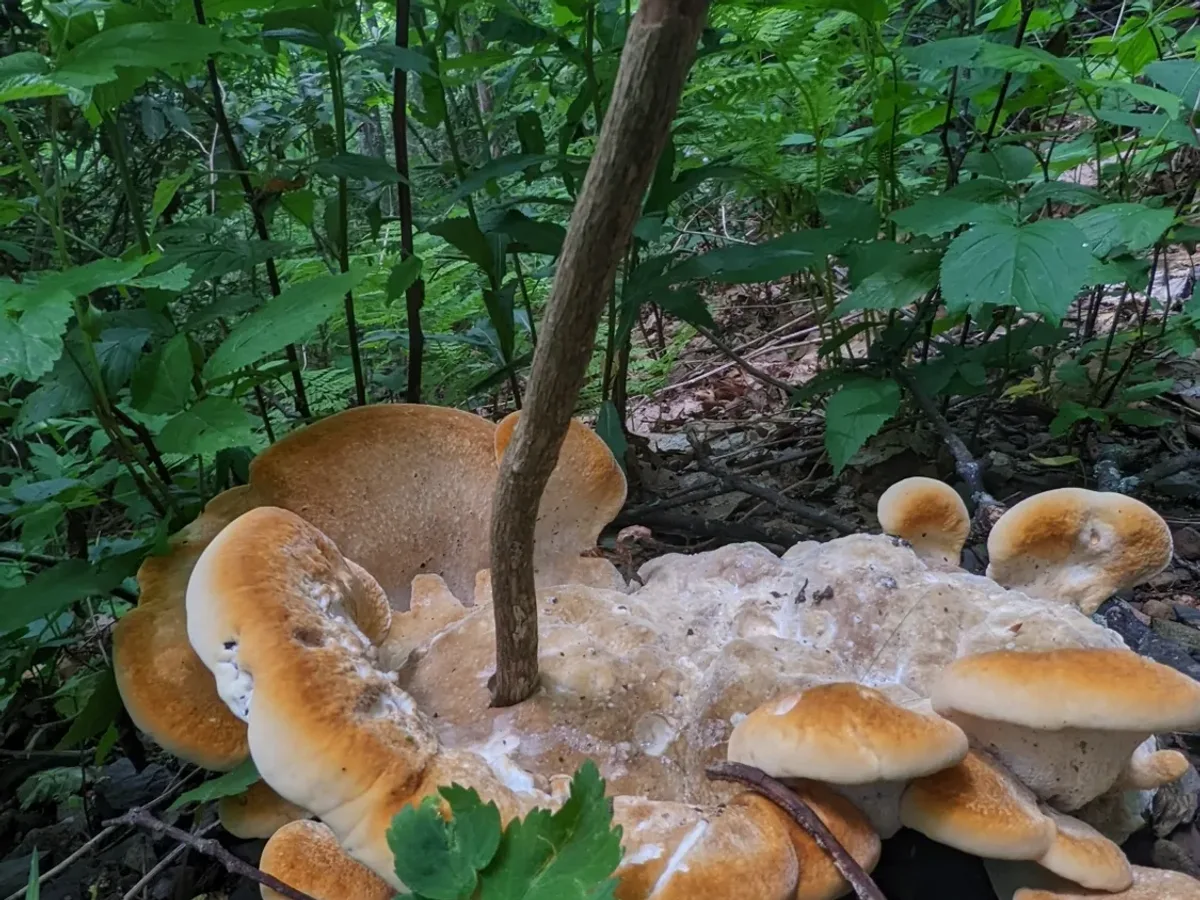
Berkeley's polypore is one of the largest polypores in North America, forming spectacular rosettes at the base of oaks and other hardwoods. The fruiting body consists of numerous overlapping, fan- to spoon-shaped caps - each 8-30 cm across - arranged in a dense, radiating cluster that can measure 30-90 cm in total diameter and weigh 5-15 kg. All caps arise from a shared, thick, pale cream central stump-like base that branches upward.
Cap
Individual cap surfaces range from smooth to finely felty, pale cream to buff or tan, sometimes faintly zonate, darkening to ochre-brown with age or on handling.
Gills / Pores
The undersurface bears fine, angular cream-white pores (1-3 per mm) that run slightly down the stem (decurrent); pores bruise yellowish when scratched.
Flesh
Flesh is thick (2-4 cm), pure white, firm, and fibrous - like a dense, cooked chicken breast in young specimens, but becoming increasingly tough and acrid-tasting in age.
Stem
The stem base is massive, white to cream, solid.
Spore print white. Microscopically, spores are subglobose, 6-9 µm, covered with amyloid ridges - a reliable laboratory character separating Bondarzewia from superficially similar species.
Where & when it grows
Habitat
Found exclusively at the base of mature hardwoods - overwhelmingly oaks (Quercus spp.) in eastern North America, but also recorded on chestnut, maple, hickory, and beech.
It is a white-rot butt-rot pathogen causing a characteristic string-and-ray rot in oaks, degrading heartwood and roots through selective delignification; infected trees may stand for many years before toppling. The rot is typically confined to the lower 1-1.5 m of the trunk and root zone.
Fruit bodies push through the soil 10-50 cm from the trunk base, often appearing to emerge from bare ground when actually connected to deeply buried roots.
It favors rich, mature, mesic to dry-mesic deciduous forest:
- bottomland oak forest
- ridgetop oak-hickory
- mixed hardwood stands
Repeated flushes from the same stump or root zone are typical; once a host is found, revisit each late-summer through fall.
When
Berkeley's polypore is a late-summer to autumn species, fruiting July through October with a clear peak in August and September across most of its range. It emerges after sustained warm weather and adequate soil moisture.
The timing correlates well with soil and air temperatures remaining above 18-20 °C combined with rainfall; drought suppresses fruiting even from established mycelium.
Because the same root system is colonized for years, experienced foragers maintain 'Berkeley spots' - specific trees or stumps visited annually.
Young, freshly emerged specimens with white pore surfaces and firm flesh are the prime target; within days older parts develop a leathery texture and increasingly bitter, acrid taste that makes them unpleasant to eat.
How it grows
Bondarzewia berkeleyi is a parasitic and saprotrophic polypore causing white butt rot of living and dead hardwoods. It derives nutrition by enzymatically breaking down the lignin and cellulose of the host's heartwood and root tissue - selectively dismantling the wood's structure while leaving a paler, fibrous residue.
The mycelium threads extensively through the root system underground, and the visible fruit body is merely the reproductive tip of that hidden network.
A single individual may fruit repeatedly at the same spot for decades, returning each favourable season from the same perennial mycelium - the mushroom is annual, but the organism beneath it is not.
Once initiated, a rosette can expand from a few centimetres to full size within one to two weeks under warm, moist conditions.
Fruiting conditions
Responds to sustained warmth (soil > 17 °C) combined with meaningful rainfall; drought-tolerant mycelium still suppresses fruiting without moisture. Established root-zone mycelium may fruit with less rain trigger than newly colonised sites.
Look-alikes
The most important confusion risk in North America is with Meripilus sumstinei (black-staining polypore), which also forms large basal rosettes on hardwoods. It stains instantly black when cut or bruised - Bondarzewia does not - and has somewhat thinner, more wavy caps with a browner surface.
In Europe, the closely parallel Meripilus giganteus behaves identically: press the pore surface firmly with a thumb - if it turns grey-black within minutes, it is Meripilus.
Grifola frondosa (hen of the woods) forms similar multi-capped clusters at oak bases but has much smaller, darker grey-brown individual caps, thinner flesh, and a highly branched stem; it never reaches the enormous single-rosette form of Bondarzewia.
Laetiporus sulphureus and related species (chicken of the woods) share the large, overlapping bracket habit but differ dramatically in colour - vivid yellow-orange - and lack the cream-coloured, fused-stalk base.
None of the common lookalikes are toxic, but correct identification ensures culinary quality since Meripilus is considered less palatable and may cause mild GI upset in some individuals.
Meripilus sumstinei stains instantly black when the flesh or pores are cut, pressed, or bruised - Bondarzewia berkeleyi does not change colour. Meripilus caps are also thinner, more wavy-margined, and browner on top. Both grow at oak bases as large rosettes. The primary North American black-staining lookalike.
Laetiporus grows as overlapping shelf brackets with vivid yellow-orange cap surfaces and bright sulphur-yellow pores - entirely different colouration from the cream-to-buff, white-pored Bondarzewia. Laetiporus lacks a fused central stalk base and does not form ground-level rosettes.
The European Meripilus giganteus closely parallels M. sumstinei: it also blackens strongly on cutting and handling, caps are browner and more numerous, and flesh is thinner. A reliable separation from Bondarzewia: press the pore surface firmly with a thumb - if it goes grey-black within minutes, it is Meripilus. Relevant for the European part of Bondarzewia's range.
Grifola frondosa has numerous small (3-10 cm), thin, grey-brown individual caps with fan-shaped lobes on a highly branched white stem. It never forms the massive pale-cream single rosette of Berkeley's polypore. The pores are fine and white in both, but Grifola is distinctly darker-capped and much lighter in overall build.
In the kitchen
Picking & cleaning
Harvest only young, vigorous specimens. Look for three signs of freshness:
- caps that feel firm and springy
- a pore surface that is clean white (not yellowed or discolored)
- flesh that snaps rather than tears
Older portions of a rosette may already be deteriorating while the growing edges remain tender - trim and use only the fresh margins and tender inner caps.
A large Berkeley's polypore can yield several kilograms of usable flesh even after discarding tough central stalks and overmature areas.
Cut at ground level with a sharp knife rather than pulling, to minimise soil contamination.
The fibrous, chicken-like flesh benefits from being sliced thin across the grain or torn into strips; marinating before cooking reduces any residual bitterness.
Return to the same site in subsequent years - Berkeley's polypore is loyal to its host.
Cooking
The firm, fibrous, white flesh of young Berkeley's polypore is its most remarkable culinary attribute - the texture genuinely resembles pulled chicken or pork, making it one of the best meaty-textured edible fungi.
- Slice thin across the grain (2-4 mm) and sauté in butter or oil over high heat until golden; it holds its shape far better than most mushrooms.
- For best flavour, marinate briefly in soy sauce, garlic, and herbs before cooking.
- Pulled or shredded, it makes an exceptional meat substitute in tacos, sandwiches, or stews.
- Slow braising or pressure cooking also works well for tougher portions.
Avoid older, leathery caps, which remain bitter despite prolonged cooking. Drying intensifies the bitterness, so fresh preparation or blanching-then-freezing is preferred for storage.
Good to know
Bondarzewia berkeleyi has no known dangerous lookalikes - all superficially similar species (Meripilus, Grifola, Laetiporus) are non-toxic.
The main safety consideration is edibility quality. Older specimens develop an acrid, bitter character that can cause gastrointestinal upset in sensitive individuals if eaten in quantity.
Always harvest young, white-pored individuals and cook thoroughly - the flesh is not palatable raw. Some individuals report mild digestive discomfort from even young specimens; as with any new wild food, begin with a small portion.
There are no records of serious or fatal poisoning attributable to this species.
A reference guide - never an edibility guarantee. When in doubt, leave it out.