Yunnan Bolete
Boletus yunnanensis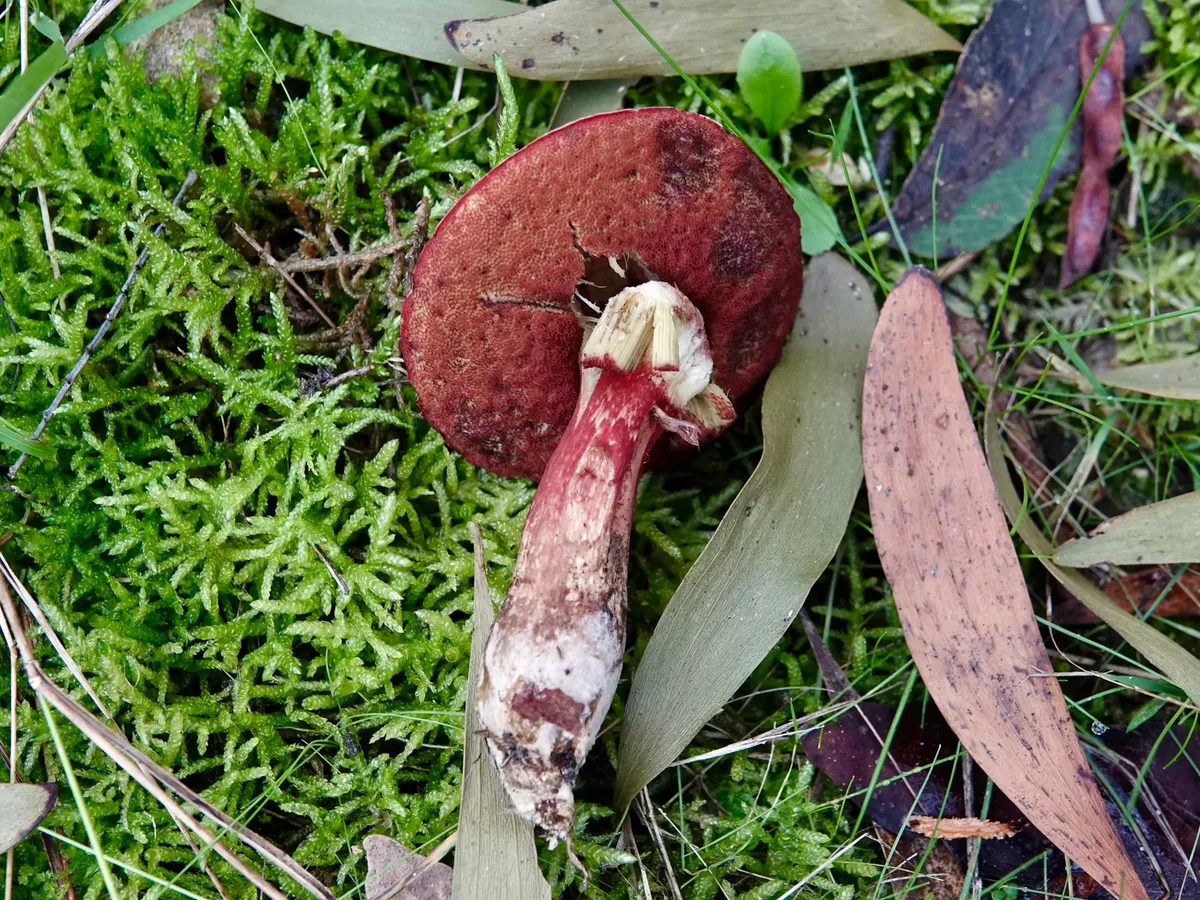 Atlas of Living Australia (CC0)
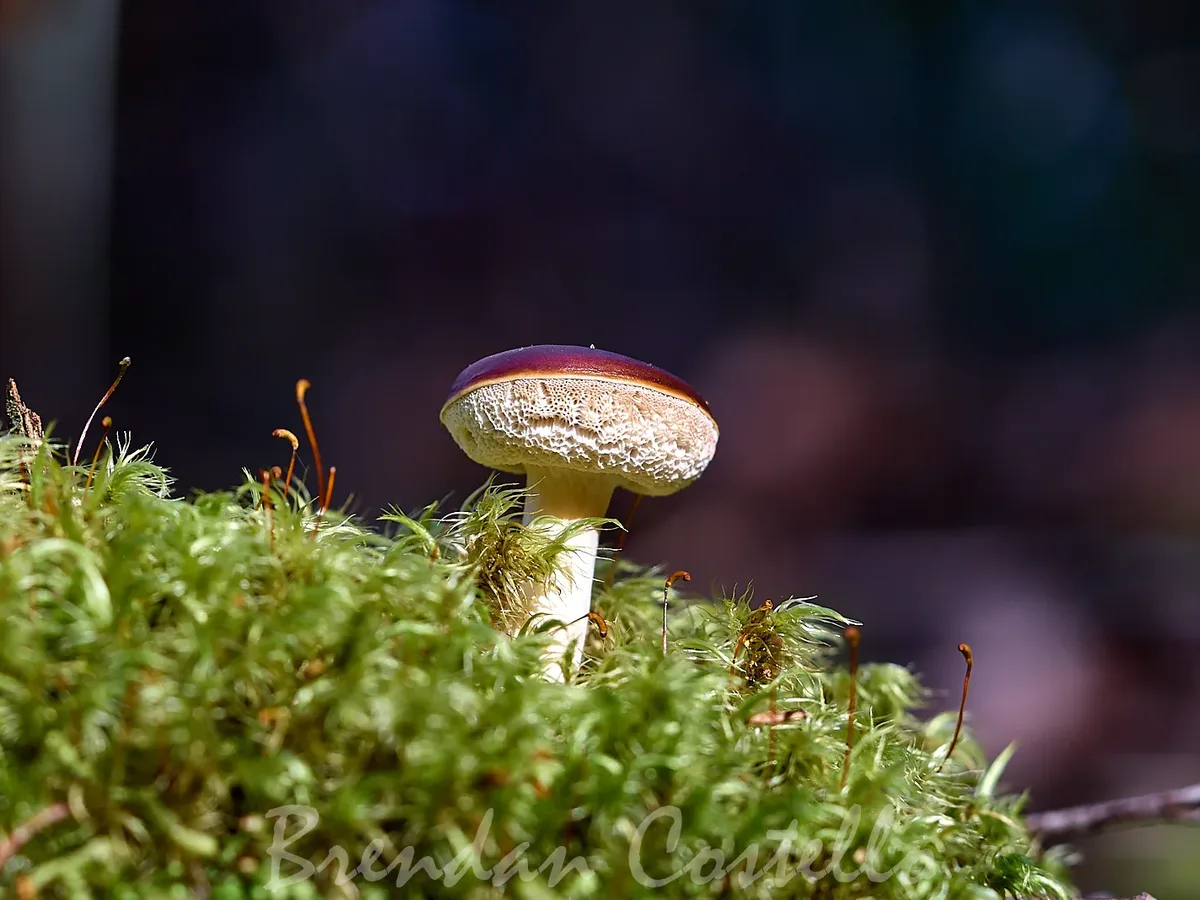 Atlas of Living Australia (CC0)Atlas of Living Australia (CC0)Atlas of Living Australia (CC0)
One of the best mushrooms you can bring home - once you are certain of the identification.
How to recognise it
Boletus yunnanensis is a stout, handsomely proportioned bolete that belongs squarely in the culinary aristocracy of Yunnan's celebrated mushroom trade.
Cap
The cap starts as a tight hemisphere - the classic 'penny bun' silhouette - and opens gradually to a broad convex cushion that may reach 18 cm across in healthy specimens on good ground.
The surface is dry and slightly felty rather than greasy, coloured a warm chestnut-brown to tan-brown with occasional paler tones toward the margin; unlike some related species it does not develop pronounced cracking in ordinary conditions.
Pores
Underneath the cap is not a mat of gills but a dense sponge of fine tubes opening as small, round, neat pores. These pores begin white, ripen to cream, and in older specimens shift to pale yellow-white - but critically they never turn red, orange, or blue-green, and pressing the surface with a fingertip produces no colour change.
Stem
The stipe is robustly built, clavate to sub-cylindrical and often wider at the base, clad over at least the upper portion in a pale buff-to-white raised net (reticulation) that is somewhat finer and less bold than in Boletus reticuloceps but still clearly visible on good specimens.
Flesh
The flesh is firm, dense, and white throughout; slicing the cap and stipe reveals uniformly white tissue that does not blue, redden, or darken - the flesh stays white.
Smell & taste
The smell is pleasant and inviting, the flavour mild and gently nutty.
Where & when it grows
Habitat
The Yunnan Bolete is a warmth-loving species tied completely to living tree roots - it is an obligate mycorrhizal partner and cannot be separated from its host-tree ecosystem.
Its home ground is the subtropical and warm-temperate montane broadleaved forest of Yunnan Province, primarily between 1200 and 2800 m elevation.
The dominant forest types are rich in:
- subtropical oaks (especially Quercus yunnanensis, Q. semecarpifolia)
- chinquapins (Castanopsis delavayi, C. orthacantha)
- stone oaks (Lithocarpus)
- sometimes mixed with Yunnan Pine (Pinus yunnanensis)
Soils are deep, humus-rich, moderately acidic, and free-draining - the kind of dark forest earth that holds warmth from the sun even as it drains overnight rains.
Fruit bodies emerge singly or in small, scattered groups, not in tight clusters, and tend to appear consistently under the same trees year after year once a productive spot is found.
Seek them:
- on shaded forest slopes with a thick but open leaf-litter layer
- along forest paths and ridge edges
- near the base of large old host trees, where the mycelial network is most established
When
The season is choreographed by the Yunnan summer monsoon. As the monsoon rains roll in from late June, they soak soils that have been warming through May and early June, and within one to two weeks the first fruit bodies begin to push through the leaf litter.
Fruiting runs from late June or early July through to October, with the heart of the season in late July through September. Above 2200 m the window is tighter - August to September - because soils take longer to warm.
The reliable fruiting trigger is a warm spell with several consecutive days of rain: soils above roughly 15 °C combined with 30 mm or more of rain over 14 days produces the best flushes, typically 7-14 days after the key rain event.
In a good monsoon year, the Yunnan markets are well supplied from July onward.
How it grows
Fruit bodies arise singly or in scattered small groups, never in dense sociable clusters. The mycelium lives in the soil around host-tree roots, potentially for decades, and the mushroom is merely the brief reproductive structure of a long-lived underground organism.
Under optimal monsoon conditions a tight young button can expand to full size within 3-5 days. Established mycelial networks at known sites fruit dependably in similar conditions year after year, making site memory the most productive foraging strategy.
Fruit bodies are often collected young - at the firm button or early convex stage - both for quality and because they resist insect infestation better than open, mature caps.
Fruiting conditions
Fruiting is controlled by the summer monsoon. Requires warm soils (roughly 15-25 °C) with sustained rainfall totals of at least 30 mm over 14 days. Flushes typically appear 7-14 days after the key rain event. In Yunnan, monsoon onset in late June marks the season start; peak fruiting is mid-July through September.
Look-alikes
Yunnan's forests are home to both magnificent edible boletes and genuinely dangerous ones, so lookalike awareness is essential. The most important risks:
- 1Red-pored boletes (Rubroboletus sinicus and relatives) - these occur in the same subtropical forests and at first glance a young specimen with a brownish cap might be confused. Immediately diagnostic: the pore surface is orange-red to blood-red, and the flesh turns intense blue within seconds of being cut or bruised. Even modest ingestion causes violent gastrointestinal poisoning requiring hospitalisation. Boletus yunnanensis has cream to pale-yellow pores and white, unchanging flesh; any redness in the pores or any blueing in the flesh is an immediate and absolute disqualifier.
- 2Bitter Boletes (Tylopilus species) - several species in East Asian broadleaf forest share a similar brown cap and stout netted stipe. Their pores begin white but turn distinctly pink with age, and the taste of even a tiny raw fragment is intensely bitter. Not toxic, but a single piece ruins any dish. A taste-test (tiny fragment, then spit out completely without swallowing) resolves the question immediately.
- 3Boletus bainiugan and related 'white-cap porcini' - closely related choice edibles sold at the same Yunnan markets; confusion is harmless from a safety viewpoint as both are choice edibles. Told apart by fine morphological details best left to specialists.
- 4Caloboletus and other mild-blueing boletes - these have pale pores that turn clearly blue when pressed; avoid any specimen showing blueing.
Pores white at first, becoming distinctly pink to dirty pink with age; net on stipe is dark-brown on pale background (contrasting dark-on-pale, the opposite of the pale net on tan stipe of B. yunnanensis); flesh intensely bitter - a tiny raw fragment (spit out immediately without swallowing) is unmistakably unpleasant. Not toxic but inedible; even one piece ruins an entire pot.
Pores pale yellowish but turn instantly and strongly blue when pressed or cut; stipe often shows reddish colouring toward the base; flesh blues prominently on cutting. Causes gastrointestinal distress. The strong, immediate blueing distinguishes these species from Boletus yunnanensis, whose flesh stays white at all times.
Pores red to blood-red or orange-red; flesh turns intensely and rapidly blue within seconds of cutting or bruising. Causes severe gastrointestinal poisoning requiring hospitalisation (violent vomiting, diarrhoea, cramps); not documented as lethal but capable of causing serious harm. Boletus yunnanensis has cream to pale-yellow pores and white flesh that does not change colour on cutting - any redness in the pores or any blueing in the flesh is an absolute disqualifier.
A very closely related choice edible sold at the same Yunnan markets; cap often paler (creamy-buff to off-white), similar non-blueing white flesh and pale-netted stipe. Confusion is harmless from a safety standpoint - both are choice edibles. Reliable separation requires molecular or fine morphological examination. Both are excellent to eat.
In the kitchen
Picking & cleaning
Harvest at the young to mid-aged stage when the cap is still a firm convex dome, pores are tight and pale, and the stipe shows its characteristic net clearly.
Cut cleanly near the base with a knife rather than pulling, to protect the mycelium and preserve future flushes from the same spot.
Immediately slice through the stipe and inspect the cut surface: flesh must be uniformly white with no blueing or colour change of any kind.
Probe the stipe lengthwise to check for maggot tunnels - in warm summer conditions larvae penetrate quickly and a heavily infested mushroom is not worth carrying.
Before placing any specimen in your basket, run a quick three-point check:
- 1white-to-cream non-blueing pores
- 2white non-blueing flesh in cap and stipe
- 3mild, pleasant, non-bitter smell and taste
Transport in an open-weave basket for ventilation.
Cooking
A prized component of Yunnan's mushroom trade and a celebrated regional ingredient across southwestern China. Its firm white flesh and gentle but distinct mushroomy-nutty flavour make it versatile in the kitchen.
Young firm specimens are best: slice and pan-fry in hot oil or butter until golden, season simply with salt and garlic, and the flavour speaks for itself.
Excellent in rice dishes, hotpots, braises, stir-fries, and noodle soups - the flesh holds its structure even in prolonged wet cooking.
Drying concentrates the flavour significantly: slice 5-8 mm thick and dehydrate fully, then store airtight. Dried Yunnan boletes produce an intense, sweet umami fragrance when reconstituted; add the soaking liquid to the dish.
As with all boletes, always cook thoroughly - never eat raw.
Good to know
Boletus yunnanensis carries no documented toxicity and has a well-established history of safe consumption at Yunnan markets, but foraging in its native habitat demands sharp lookalike awareness.
Two rules must be inviolable:
- 1Any bolete with red, orange, or pinkish-red pores, or with flesh that turns blue when cut, must not be eaten under any circumstances - Boletus yunnanensis has cream to yellow-white pores and white flesh that does not change colour.
- 2Any raw fragment that tastes intensely bitter indicates a Tylopilus species - spit it out completely and discard the specimen.
Beyond these critical checks:
- Always cook thoroughly before eating, as raw or under-cooked boletes commonly cause gastrointestinal distress even for ordinarily safe species.
- On a first acquaintance with a new batch, eat a small portion first and wait several hours.
- Never forage in a new region without having identifications confirmed by a knowledgeable local forager or mycologist.
A reference guide - never an edibility guarantee. When in doubt, leave it out.