Violet-fuscous bolete
Boletus violaceofuscussyn. Boletus violaceo-fuscus W. F. Chiu
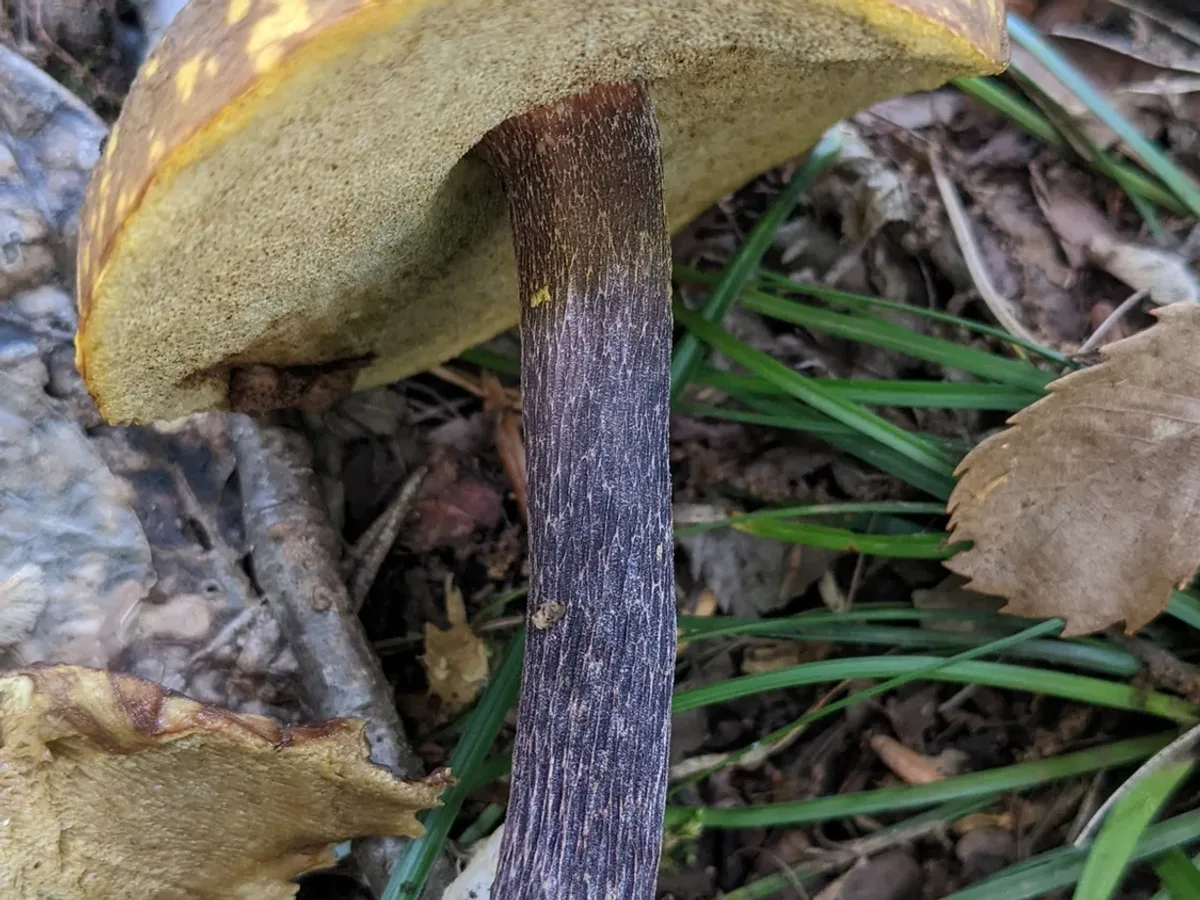 © Atsushi Nakajima (CC BY 4.0)
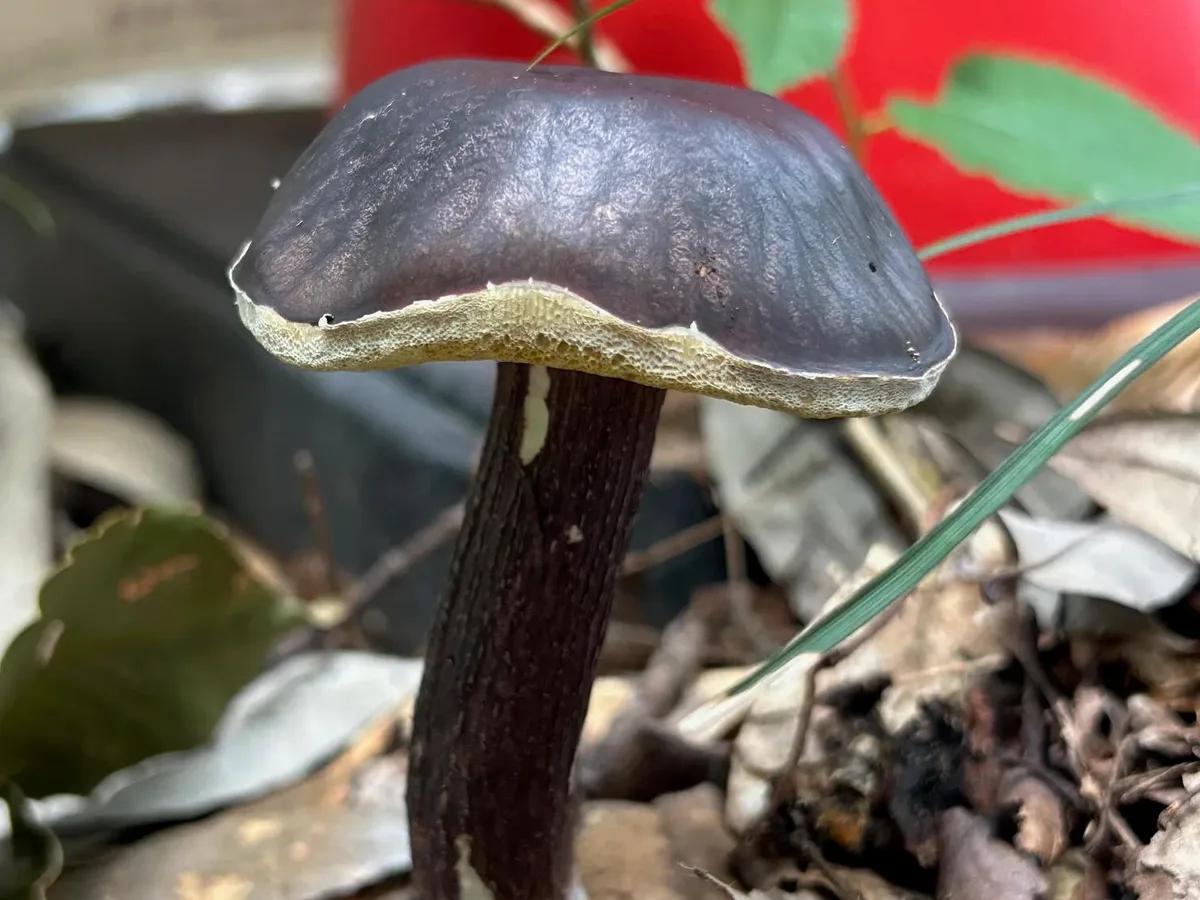 © Atsushi Nakajima (CC BY)
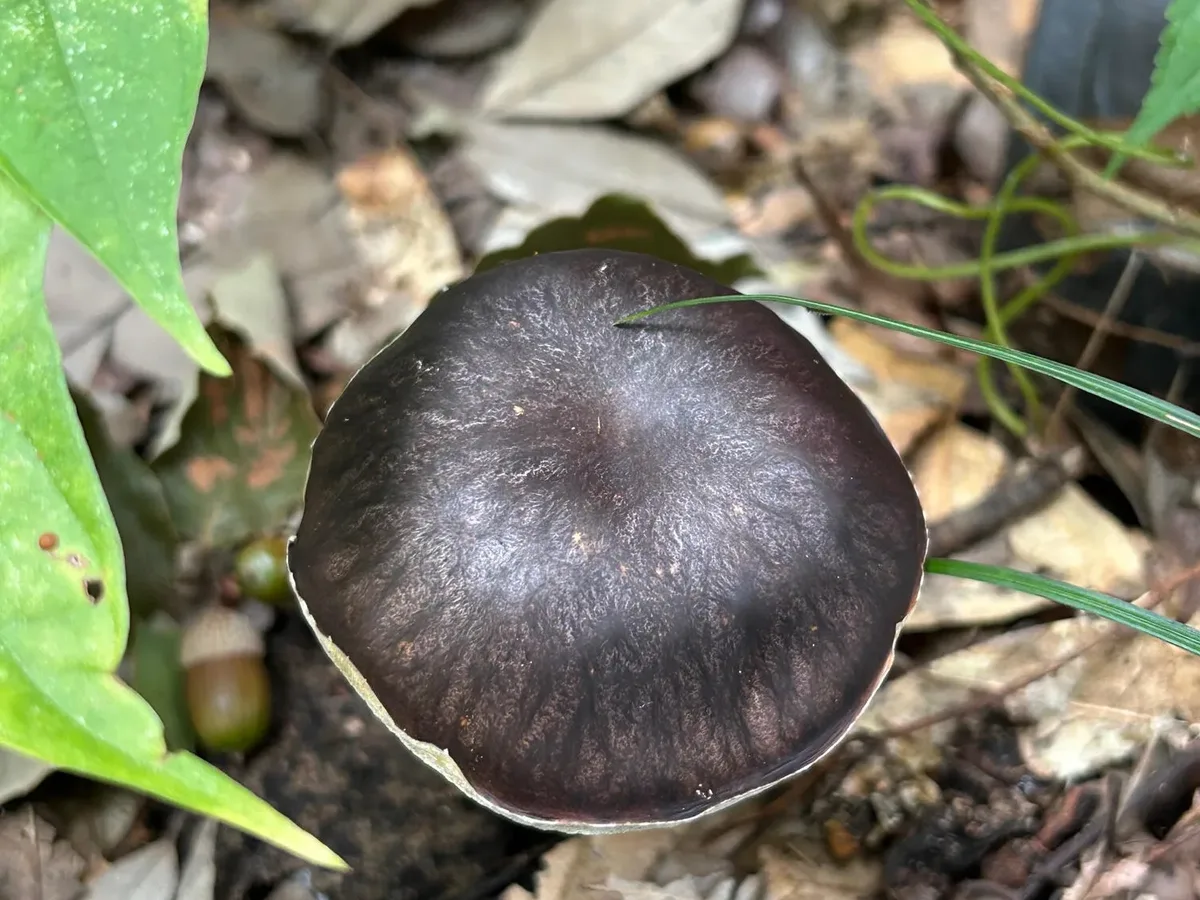 © Atsushi Nakajima (CC BY)
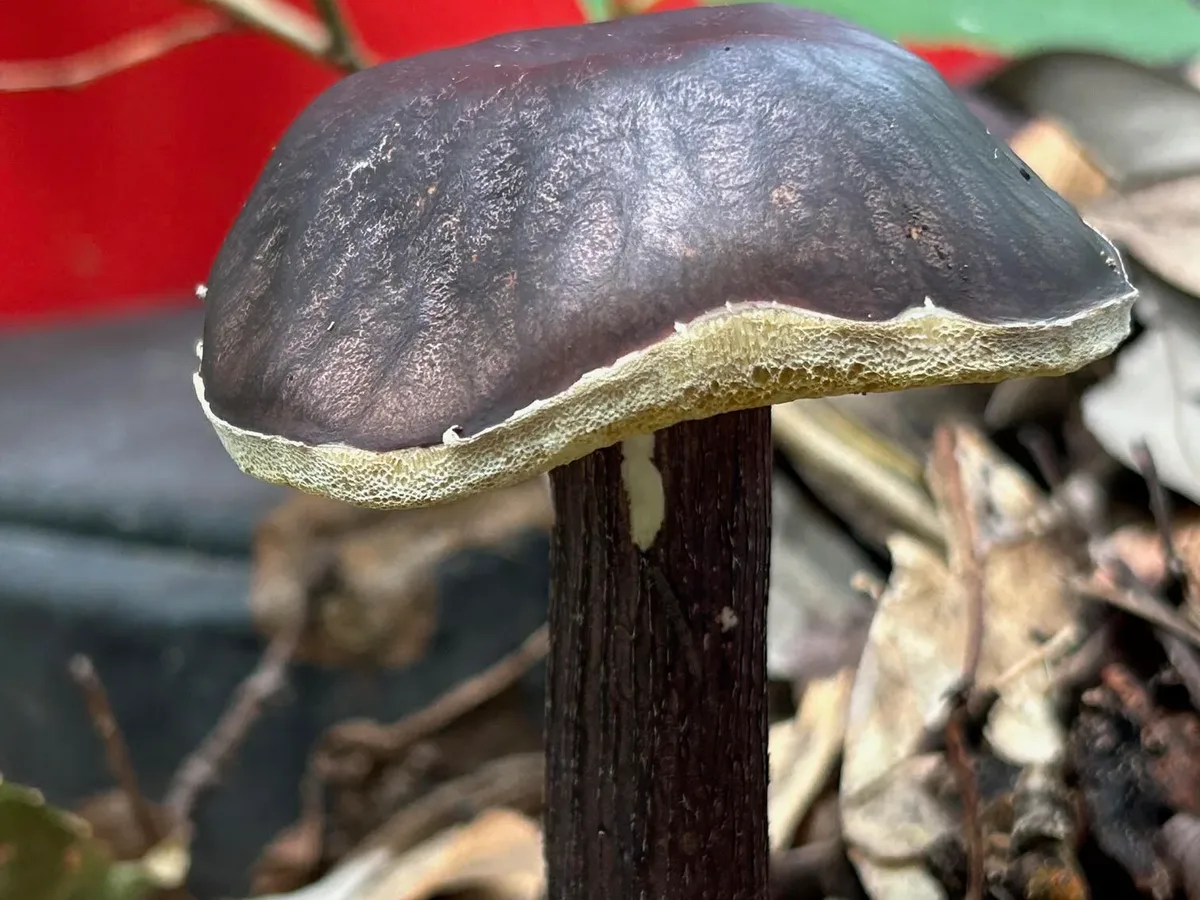 © Atsushi Nakajima (CC BY)
 © Atsushi Nakajima (CC BY)
 © Atsushi Nakajima (CC BY)
 © Atsushi Nakajima (CC BY)
 © Atsushi Nakajima (CC BY)
 © Atsushi Nakajima (CC BY)
 © Atsushi Nakajima (CC BY 4.0)© Atsushi Nakajima (CC BY 4.0)© Atsushi Nakajima (CC BY)
Good to eat, once you have identified it with certainty and cooked it through.
How to recognise it
Cap
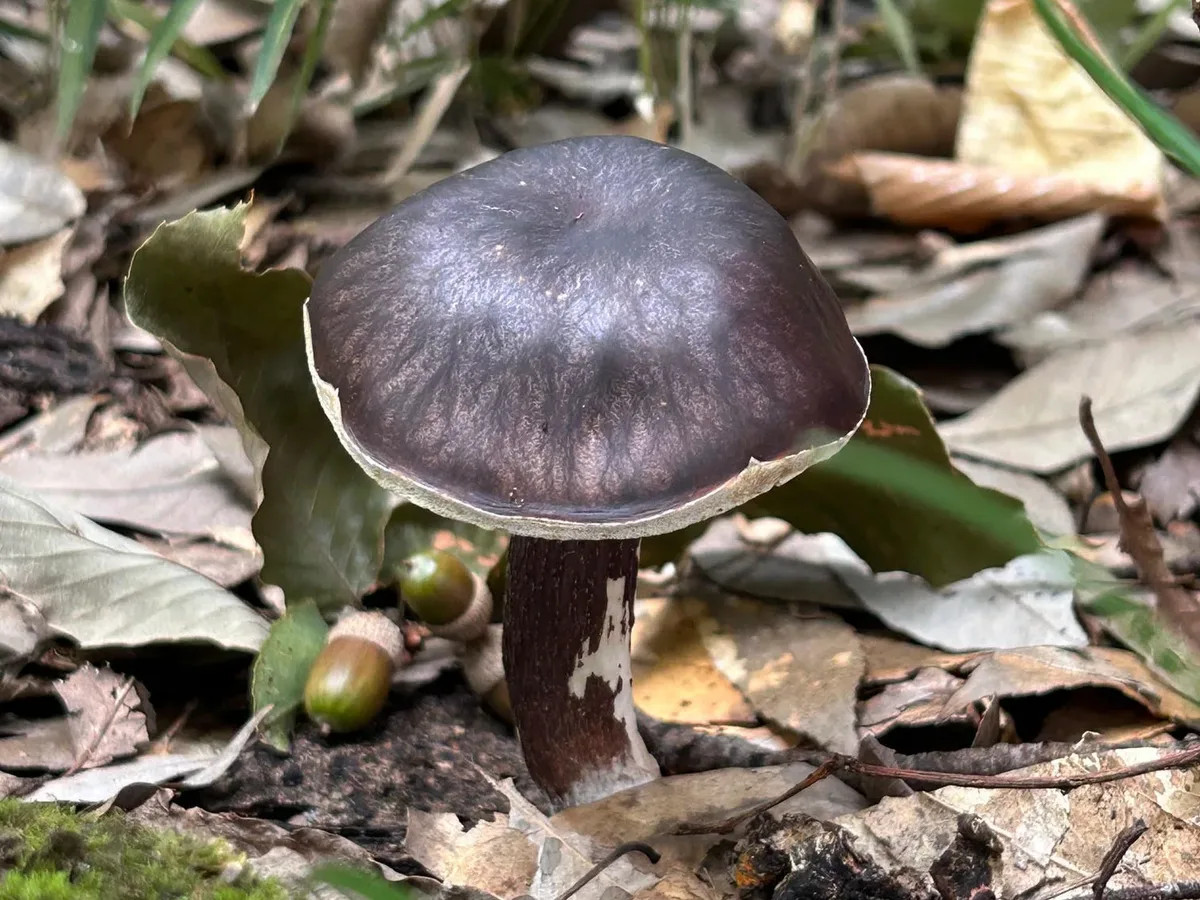
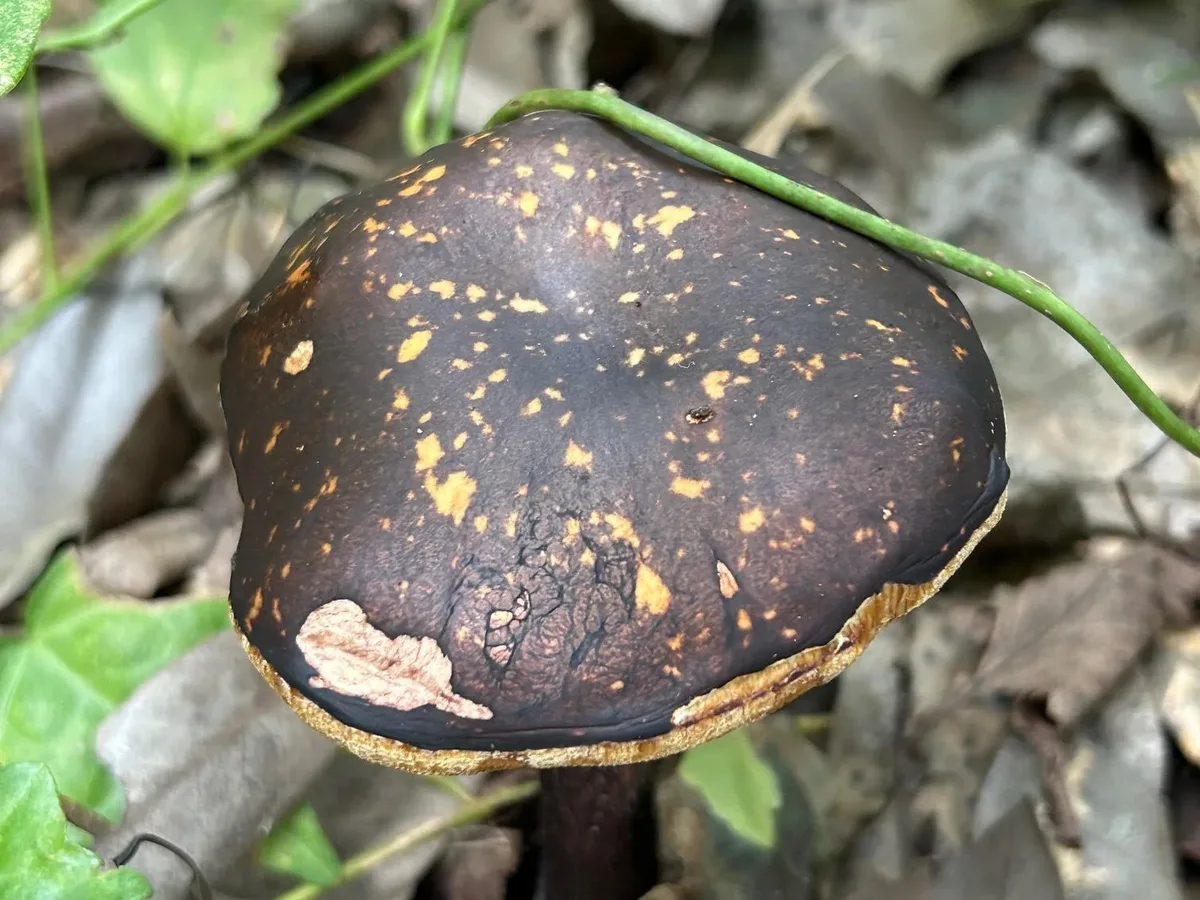
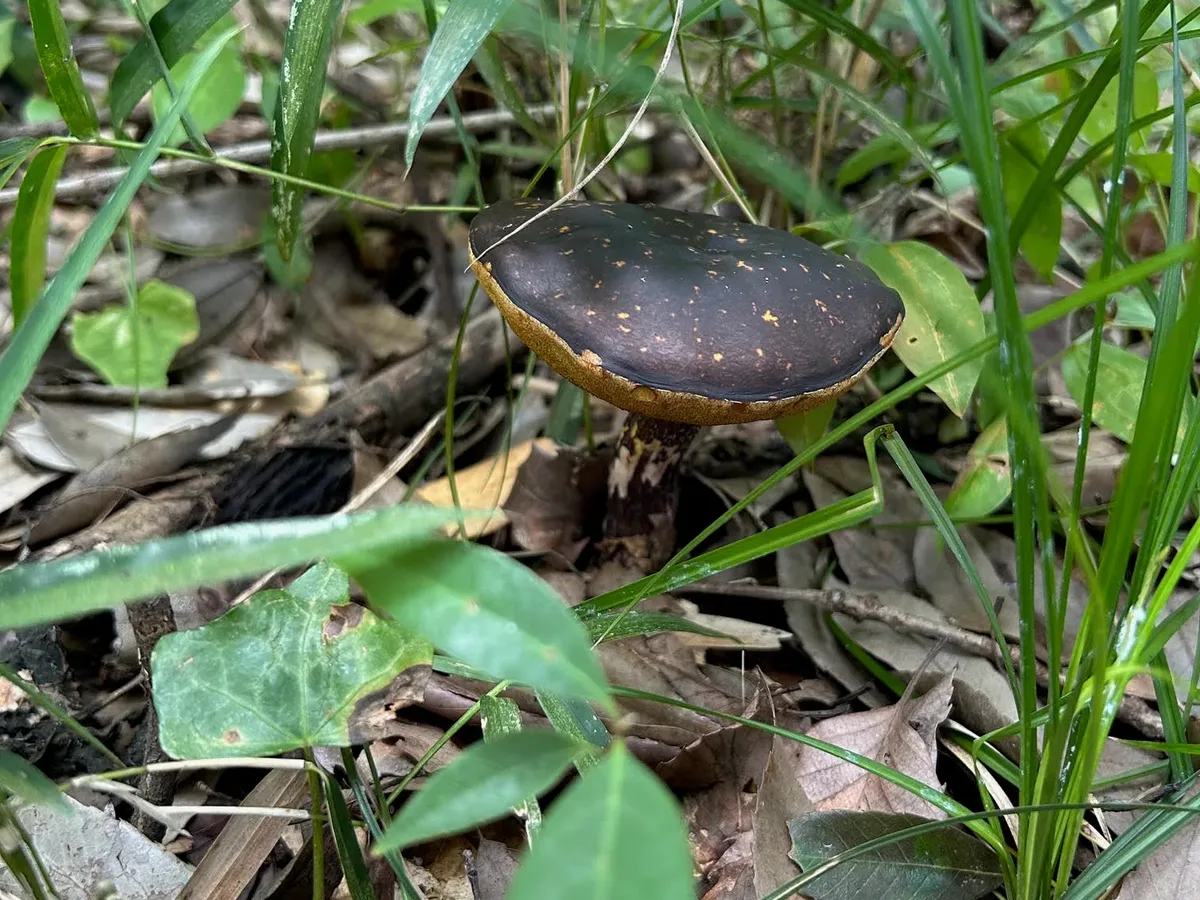
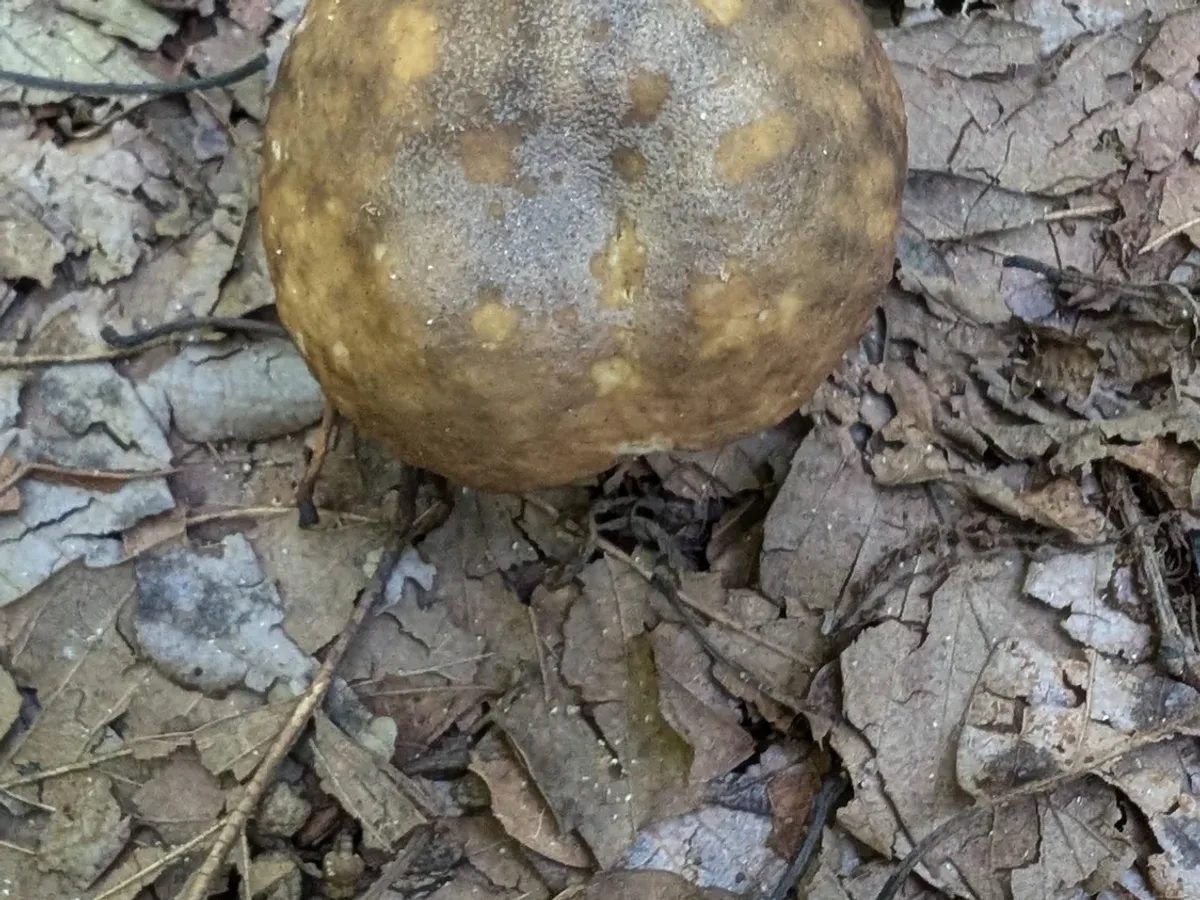
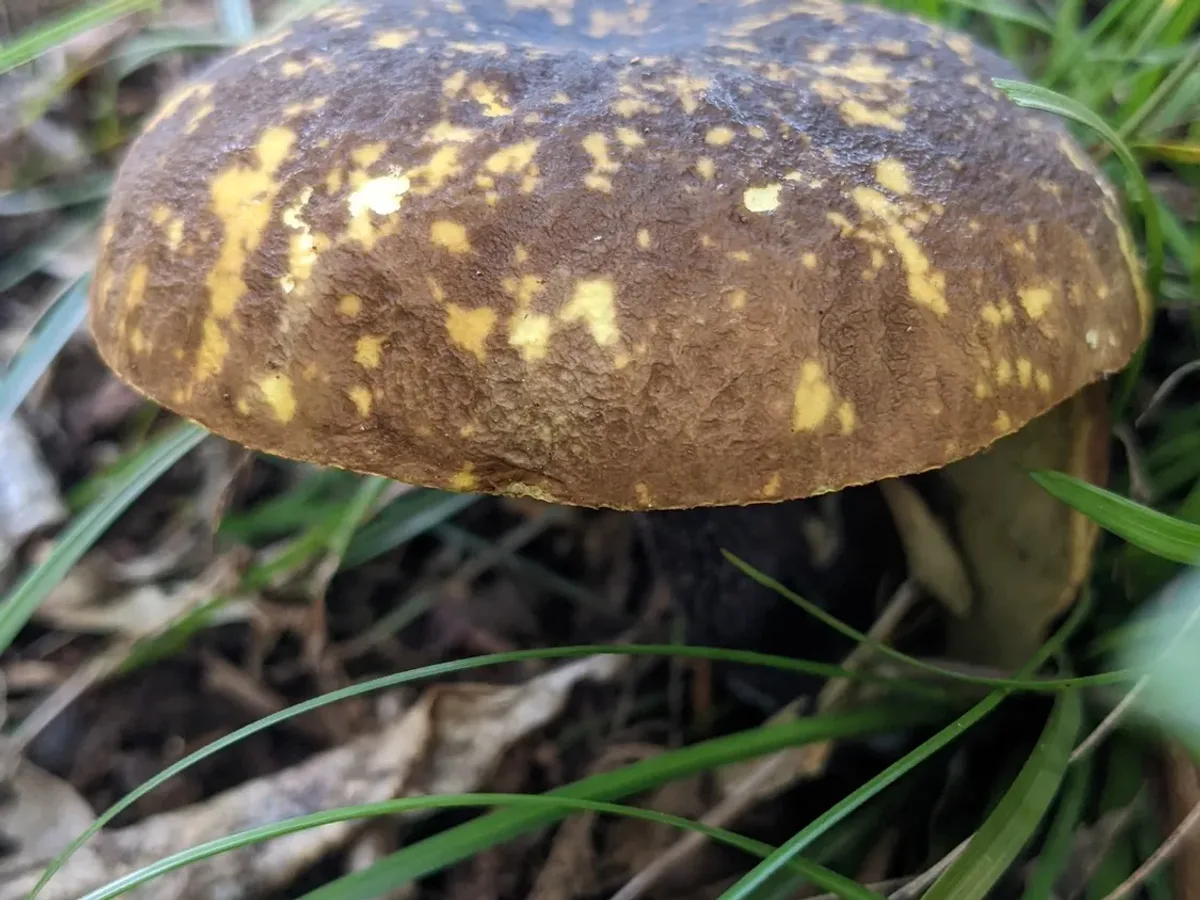
Among the boletes piled high at Yunnan markets, Boletus violaceofuscus earns a second look: its cap is an unusually deep violet-brown to blackish-violet - noticeably darker and cooler in tone than the russet and orange-brown boletes surrounding it.
The cap is convex and cushion-shaped, 5-15 cm across, with a dry surface that feels finely velvety when the mushroom is young and fresh, smoothing out as it ages.
The violet tones are most intense and most diagnostic in tight young buttons; as specimens mature and dry, the cap fades to a plainer brownish-grey or dark fuscous-brown. The margin is neat and slightly incurved in youth.
Gills / Pores
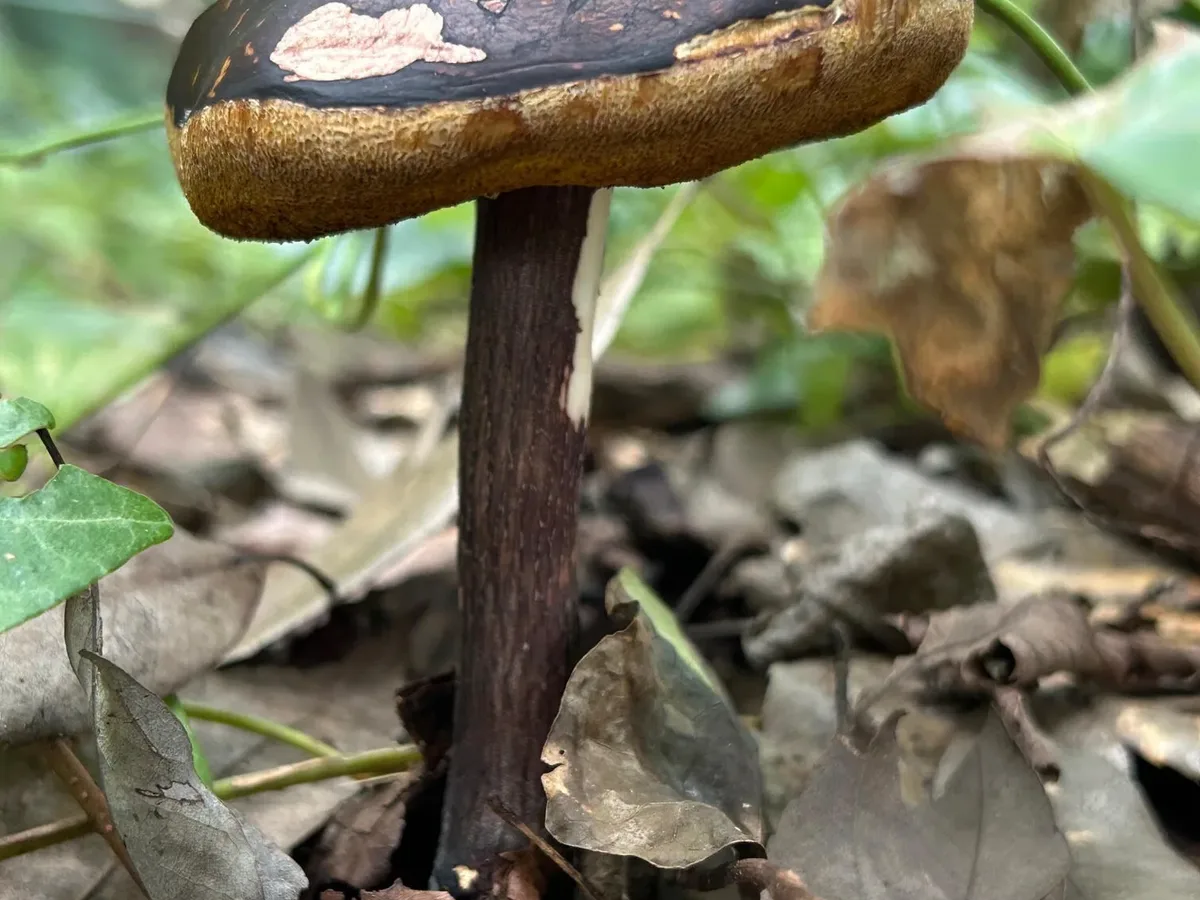
Touch a fresh pore surface and the forest chemistry shows itself: the small, perfectly circular pores (2-3 per mm) are a clean lemon-yellow, but any contact - a fingertip, a knife, a scratch - triggers an immediate, sweeping change to blue-green, then deep blue.
This bluing reaction is caused by enzymatic oxidation of variegatic acid and related compounds in the flesh. It looks dramatic, and it is genuinely interesting biology, but it is not a sign of harm in this species - it is shared by a whole family of edible boletes.
Stem
The stem is stout and solid, 5-12 cm tall and 2-4 cm wide, often gently club-shaped at the base.
Its ochre-yellow surface is laced with fine violet-brown fibres and granules that give it a subtly felty texture, with a faint purplish-brown flush sometimes developing toward the base.
There is no vivid red scabbing (unlike Neoboletus luridiformis) and no prominent pale net (unlike Boletus edulis allies).
Flesh
The flesh throughout is firm and pale yellow to white, turning immediately and intensely blue when cut - no red intermediate at the stem base (which would point instead to Suillellus luridus).
Spore print is olive-brown.
Where & when it grows
Habitat
This species is a genuine montane bolete, most at home in the high-altitude mixed forests of southwestern China - particularly the forest zone between 1500 and 3000 m in Yunnan and Sichuan provinces.
At these elevations, Pinus yunnanensis (Yunnan pine) and Pinus densata (Tibet pine) are the dominant conifers, and they form the primary mycorrhizal partnerships with this bolete. Quercus species (Chinese oaks), Abies georgei (Yunnan fir), and Rhododendron scrub are common companions in the understorey.
The species favours moist, cool, acidic, humus-rich soils on hillsides and valley slopes that receive the full force of the East Asian summer monsoon. It appears singly or in scattered groups across the forest floor, sometimes partially buried in needle and leaf litter.
Its distribution extends into Vietnam (Lam Dong, Dak Lak) and Myanmar highlands where similar forest types exist, though it is most abundantly represented and best documented in Yunnan.
Boletus violaceofuscus is widely sold at fresh mushroom markets in Yunnan cities such as Kunming and Lijiang, where it is grouped with other edible boletes under the collective market name niuganjun (牛肝菌).
It is distinct from the hallucinogenic 'jian shou qing' (见手青) complex - those species belong primarily to Lanmaoa, Neoboletus, and related genera - though the two groups are sometimes sold in proximity and can be confused by non-specialists.
When
This species lives on monsoon time.
When the summer rains arrive in the Yunnan highlands each late June, raising soil moisture and holding the cool montane temperatures (10-18 °C) that suit this bolete, the first fruiting bodies push up from the needle litter within five to ten days of sustained rainfall.
The season builds through July and peaks in late July to mid-August, when the highlands are reliably wet and warm enough to sustain repeated flushes.
By September, nighttime temperatures at altitude begin dropping below 10 °C and rainfall becomes less reliable; fruiting slows markedly and has typically ceased by early October.
The window is short but generous in a good monsoon year.
How it grows
Boletus violaceofuscus comes up singly or in small scattered groups - it does not cluster.
Growth is quick: a compact button can reach full size in three to five days once the monsoon conditions are right, the underground mycelium having waited out the dry months for exactly this window.
Young specimens are worth seeking out, having:
- the firmest flesh
- the most vivid violet-brown cap colour
- the least insect damage
Older specimens deteriorate rapidly in the warm, humid highland summer, softening from the inside out and becoming heavily tunnelled by fungus gnat and dipteran larvae.
In a good monsoon year the species fruits abundantly enough to sustain a significant local harvest: communities in Yunnan collect it for home kitchens and sell it fresh at market from July through August.
Fruiting conditions
Fruiting is triggered by the onset of the East Asian summer monsoon at altitude (1500-3000 m). Sustained monsoon rainfall (30+ mm over 14 days) with cool montane soil temperatures (10-18 °C) produces flushes within 5-10 days. Peak season is late July to mid-August in the Yunnan highlands.
Look-alikes
Several boletes in the same montane Yunnan habitat can be confused with Boletus violaceofuscus, and the risk is highest at markets where multiple species are mixed:
- Lanmaoa asiatica and related 'jian shou qing' species - the most important group to distinguish, as these species cause hallucinogenic poisoning (vivid 'little people' hallucinations) when undercooked. Jian shou qing species have warmer, brighter reddish-orange to orange-brown or russet-brown caps and blood-red to scarlet pores. B. violaceofuscus has a distinctly darker, cooler violet-brown cap and yellow (not red) pores. The bluing reaction is present in both, but the pore colour before bruising is the most reliable separator: yellow = B. violaceofuscus; red or scarlet = jian shou qing complex. Even when in doubt, thorough cooking renders jian shou qing safe, so careful cooking remains the correct safety response.
- Boletus bainiugan - one of the most prized Yunnan market boletes, with a pale tan to ochre-buff cap and white to pale yellow pores that blue slowly or not at all. Edible and choice. Distinguished by the much paler, non-violet cap colour and lack of strong blue reaction.
- Neoboletus magnificus - part of the jian shou qing complex; orange-red to brick-red cap, blood-red pores. Distinguished by pore colour as above.
- Suillellus luridus - primarily a European species but related; cap olive-brown, stem with a clear red reticulum, stem base flesh turns red before bluing. This combination does not occur in B. violaceofuscus (no reticulum, no red stage, violet-brown cap). Not present in the Yunnan highlands.
- Boletus aereus (Black porcini) - dark brown to blackish cap but NO blue reaction, white to cream pores. Confirmed absence of bluing immediately separates it.
Jian shou qing species have warmer orange-red to russet-brown caps and blood-red to scarlet pores before bruising. B. violaceofuscus has a distinctly dark violet-brown cap and yellow pores. Pore colour before bluing is the key field separator: yellow = B. violaceofuscus; red/scarlet = jian shou qing. Jian shou qing causes hallucinations if undercooked but is not fatal; thorough cooking renders it safe.
Brick-red to orange-red cap; blood-red pores before bluing. Causes hallucinations if undercooked. Distinguished from B. violaceofuscus by the warm-red (not violet) cap and red (not yellow) pores.
Much paler ochre-buff to tan cap, white to cream pores that do not or barely blue. The violet-brown cap colour and strong blue reaction of B. violaceofuscus are immediately distinctive.
In the kitchen
Picking & cleaning
Select firm, compact young specimens - check the stem base with a knife or fingernail: clean, firm flesh that turns blue-grey is expected and normal.
Avoid any specimen with:
- obvious larval tunnelling (soft flesh, holes visible at the stem base)
- a slimy cap
- advanced age
Slice cleanly at the base of the stem to avoid uprooting excessive mycelium.
The immediate blue reaction when cut is characteristic and expected; it does not indicate harm and should not cause alarm.
When buying at market in Yunnan, distinguish this species from the hallucinogenic 'jian shou qing' group by observing the cap colour (dark violet-brown, not red-brown or orange-brown) and the pore colour (yellow, not blood-red).
The jian shou qing species (Lanmaoa asiatica, Neoboletus magnificus) typically have brighter red-orange to orange-brown caps with vivid scarlet or blood-red pores; B. violaceofuscus has clearly darker, more violet-toned caps and yellow pores.
When uncertain at market, ask the seller which pile the mushrooms came from, and ensure thorough cooking regardless.
Cooking
Boletus violaceofuscus is used in Yunnan cuisine in the same way as other prized boletes (牛肝菌): stir-fried at high heat with chilli, garlic, and spring onion, which is the traditional and most common preparation.
- 1Slice caps and stem into 5-8 mm pieces, ensuring even cooking.
- 2Stir-fry in a hot wok with oil over high heat for at least 10-15 minutes, until fully cooked through and any excess moisture has evaporated.
The flesh turns a grey-blue colour during cooking due to the bluing reaction - this is purely aesthetic and does not affect flavour or safety.
The flavour is mild, nutty, and earthy, similar to Boletus edulis though somewhat more delicate.
It also performs well in soups, braises, and mixed mushroom dishes. Dried slices reconstitute well and can be used in broths.
Local Yunnan practice pairs boletes with garlic as a safety convention (thought to neutralise any residual irritants) - this tradition should be respected.
Do not consume raw or undercooked.
Good to know
Boletus violaceofuscus is considered edible and is consumed widely in Yunnan, where it has a long history of use. It is not among the toxic or hallucinogenic boletes of the region.
The blue-staining reaction, while dramatic, is not an indicator of toxicity - it is an enzymatic reaction involving variegatic acid and is shared by many edible species.
As with all boletes, thorough cooking is recommended. Raw consumption of boletes is inadvisable generally, and there is no tradition or recommendation for eating this species raw. Sauté or stir-fry until fully cooked through (a minimum of 10-12 minutes at cooking temperature).
The main safety concern is misidentification at market. Boletus violaceofuscus can be mixed in with hallucinogenic 'jian shou qing' species - which look broadly similar, are sold alongside it, and which cause bizarre hallucinations if undercooked.
Thorough cooking (15+ minutes at full frying/boiling temperature) eliminates the hallucinogenic risk from any of these species, so careful preparation is the practical safety layer even if species-level identification at market is uncertain. Never eat boletes from this region undercooked.
A reference guide - never an edibility guarantee. When in doubt, leave it out.