Appendiculate bolete
Boletus subappendiculatussyn. Xerocomus subappendiculatus, Boletus subappendiculatus var. subappendiculatus
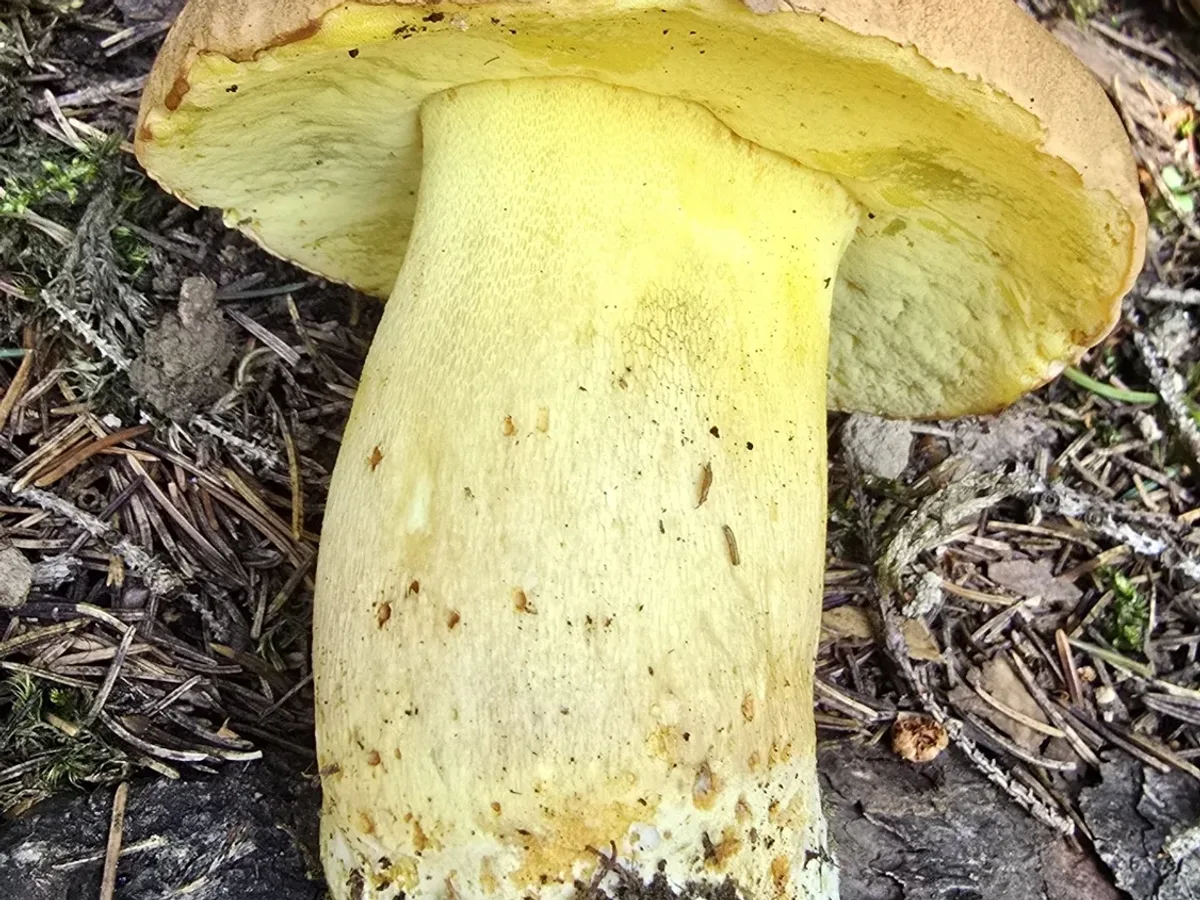 © Paula Nimigean (CC BY)
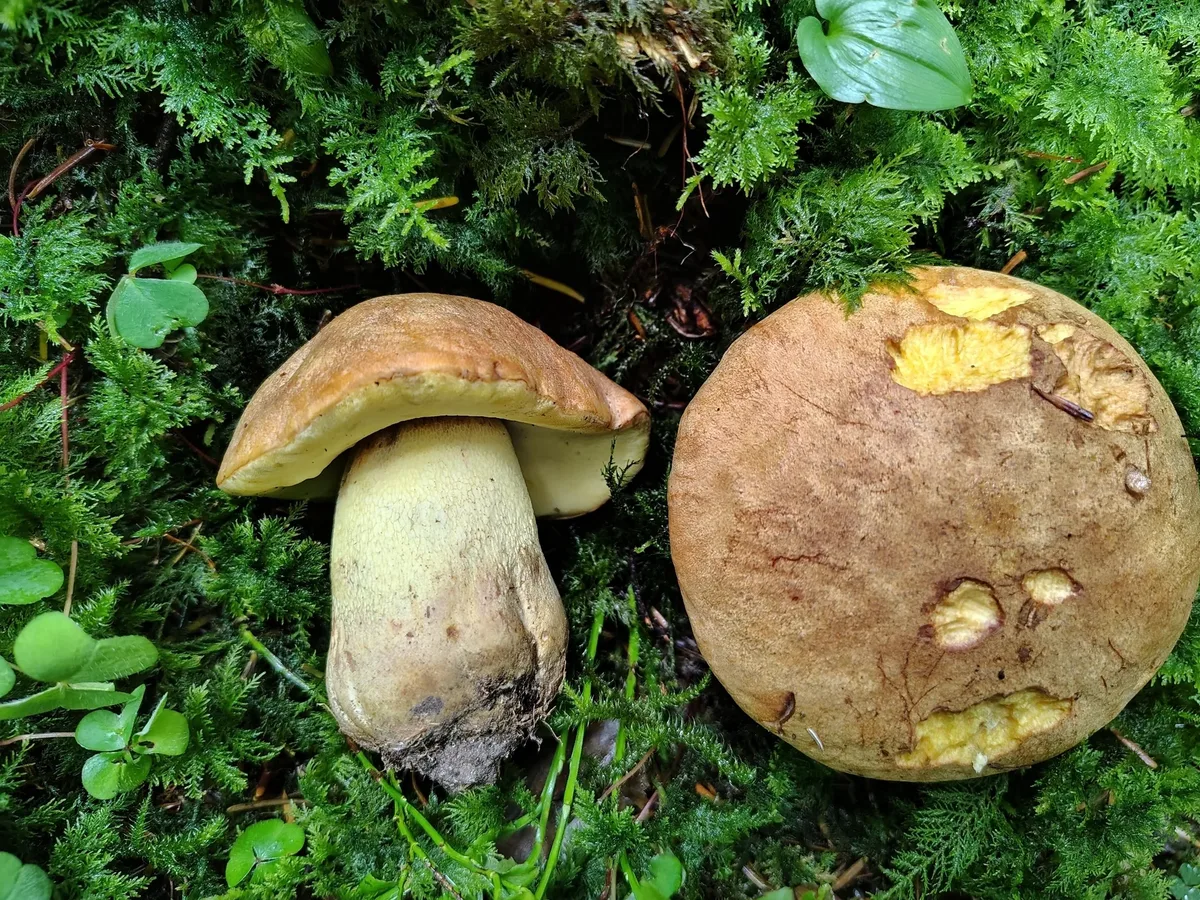 © vuikaan (CC BY)
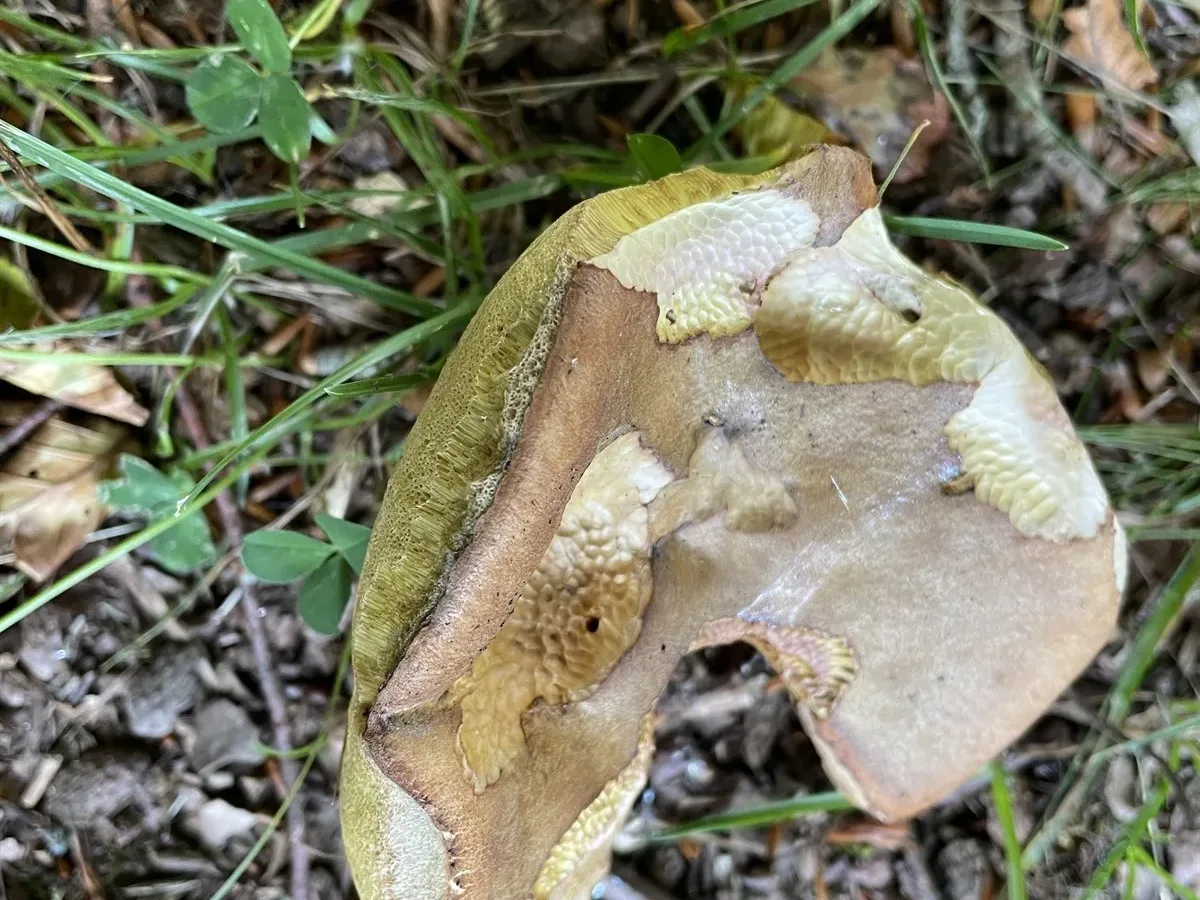 © Bjørn Eidhammer (CC BY)
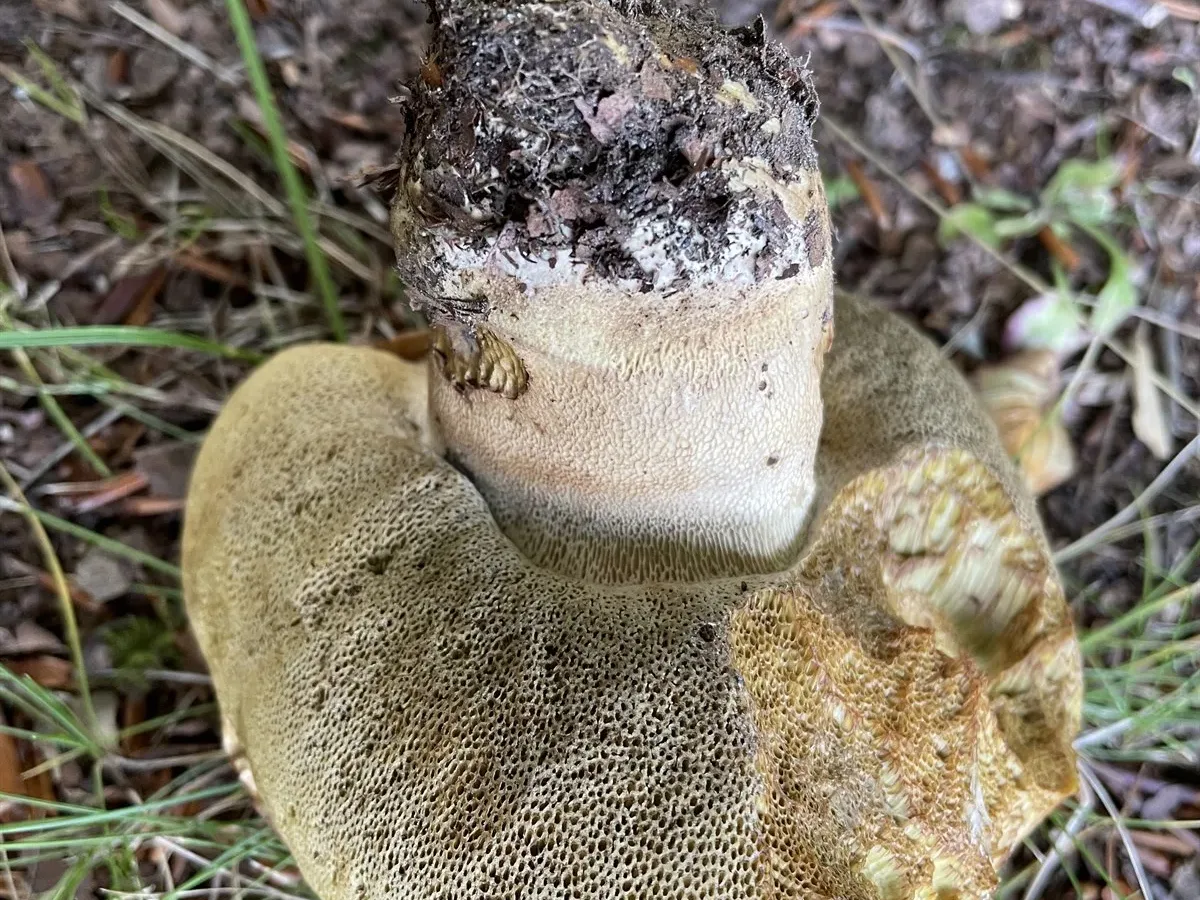 © Bjørn Eidhammer (CC BY)
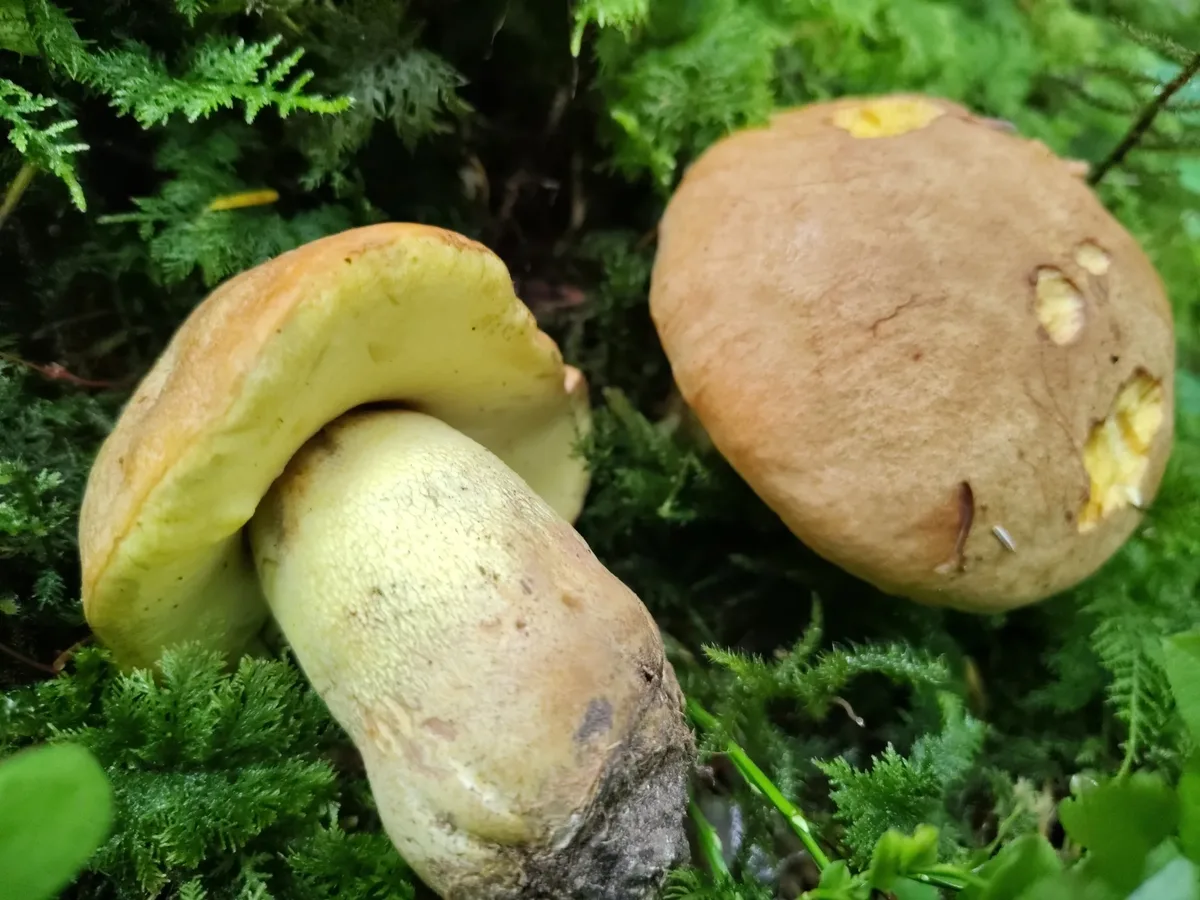 © vuikaan (CC BY)
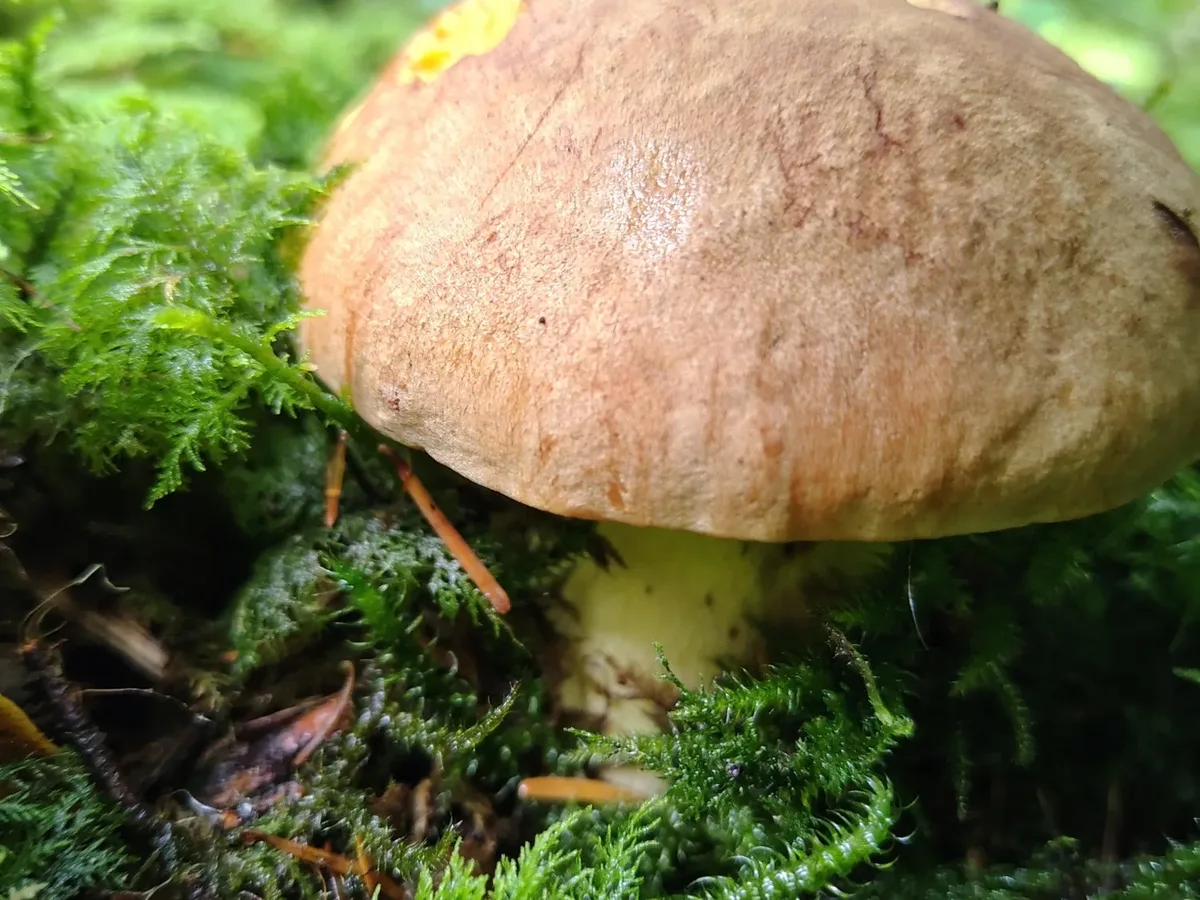 © vuikaan (CC BY)
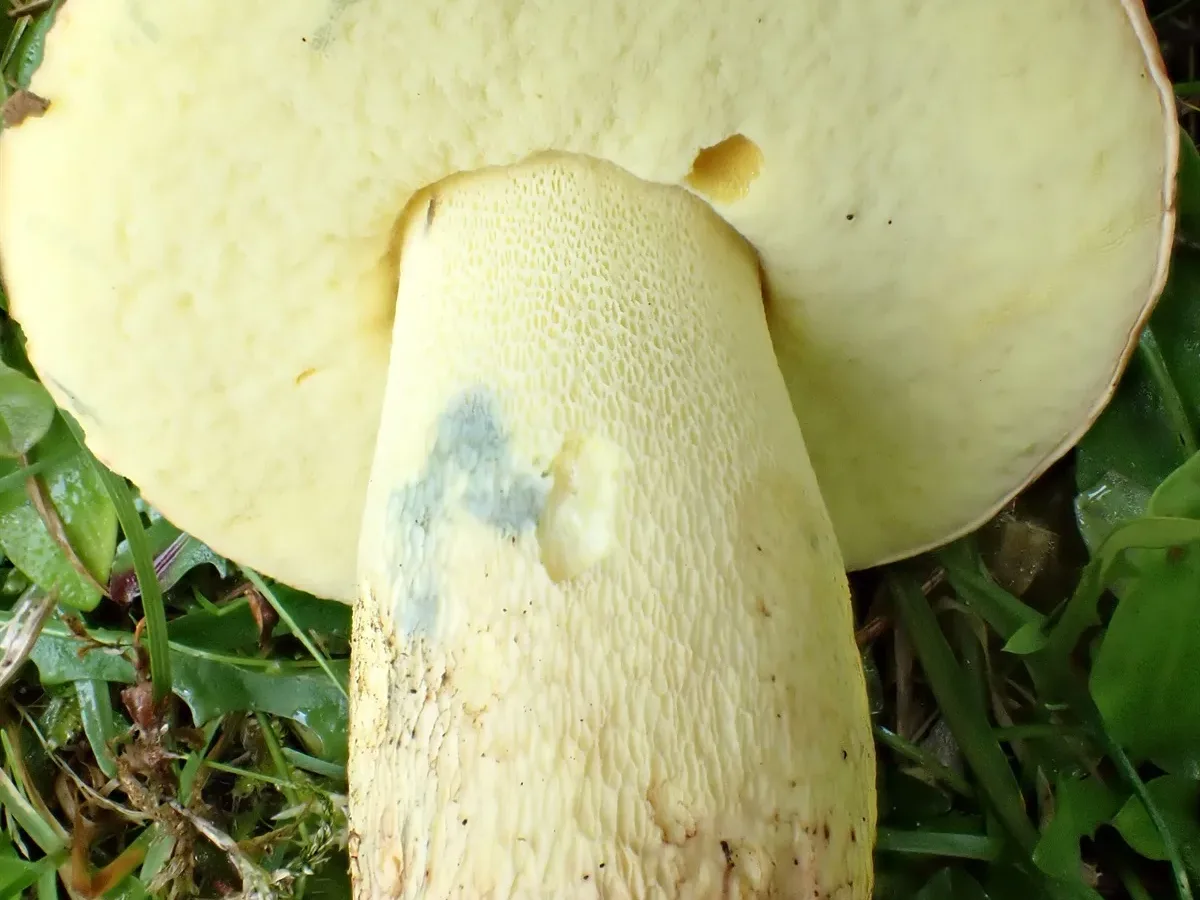 © Per Marstad (CC BY)
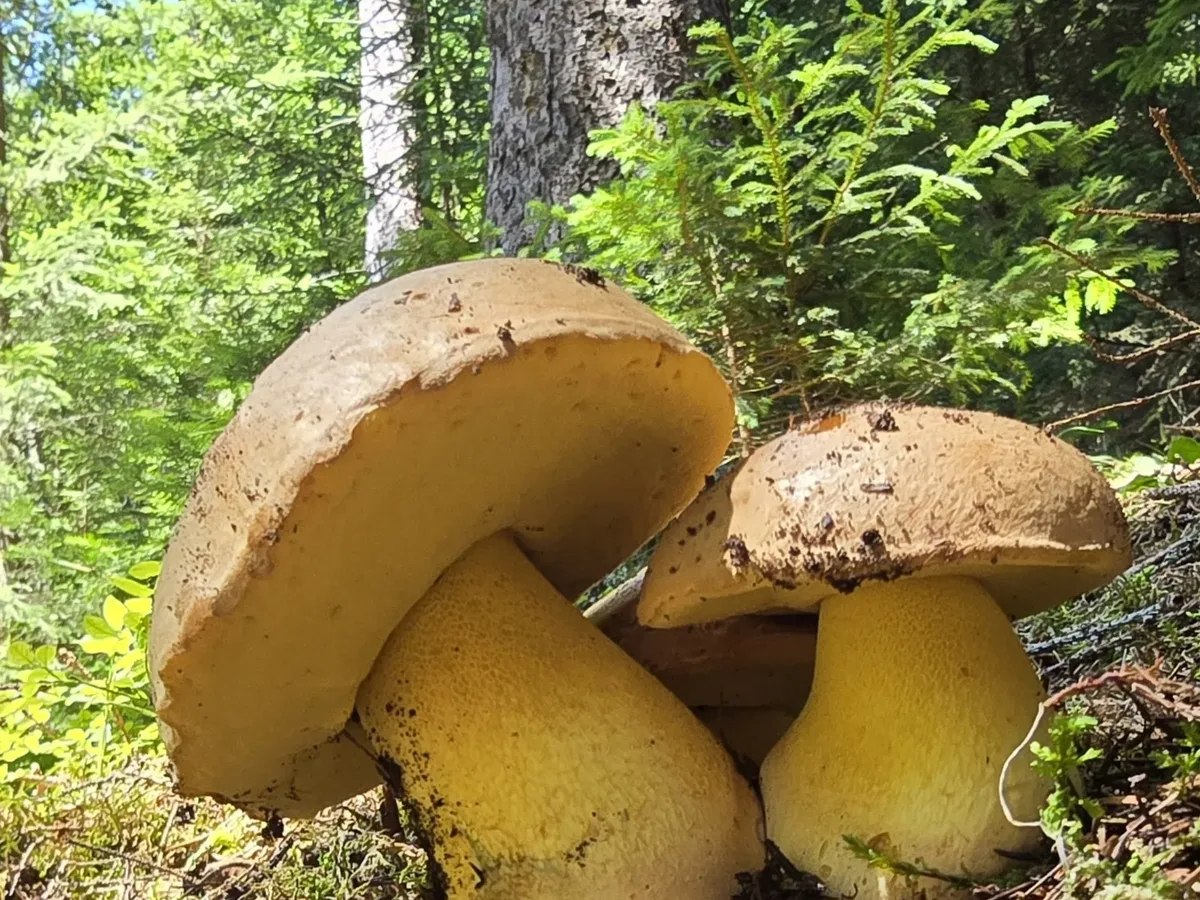 © Paula Nimigean (CC BY)
 © Paula Nimigean (CC BY)© Paula Nimigean (CC BY)© vuikaan (CC BY)
One of the best mushrooms you can bring home - once you are certain of the identification.
How to recognise it
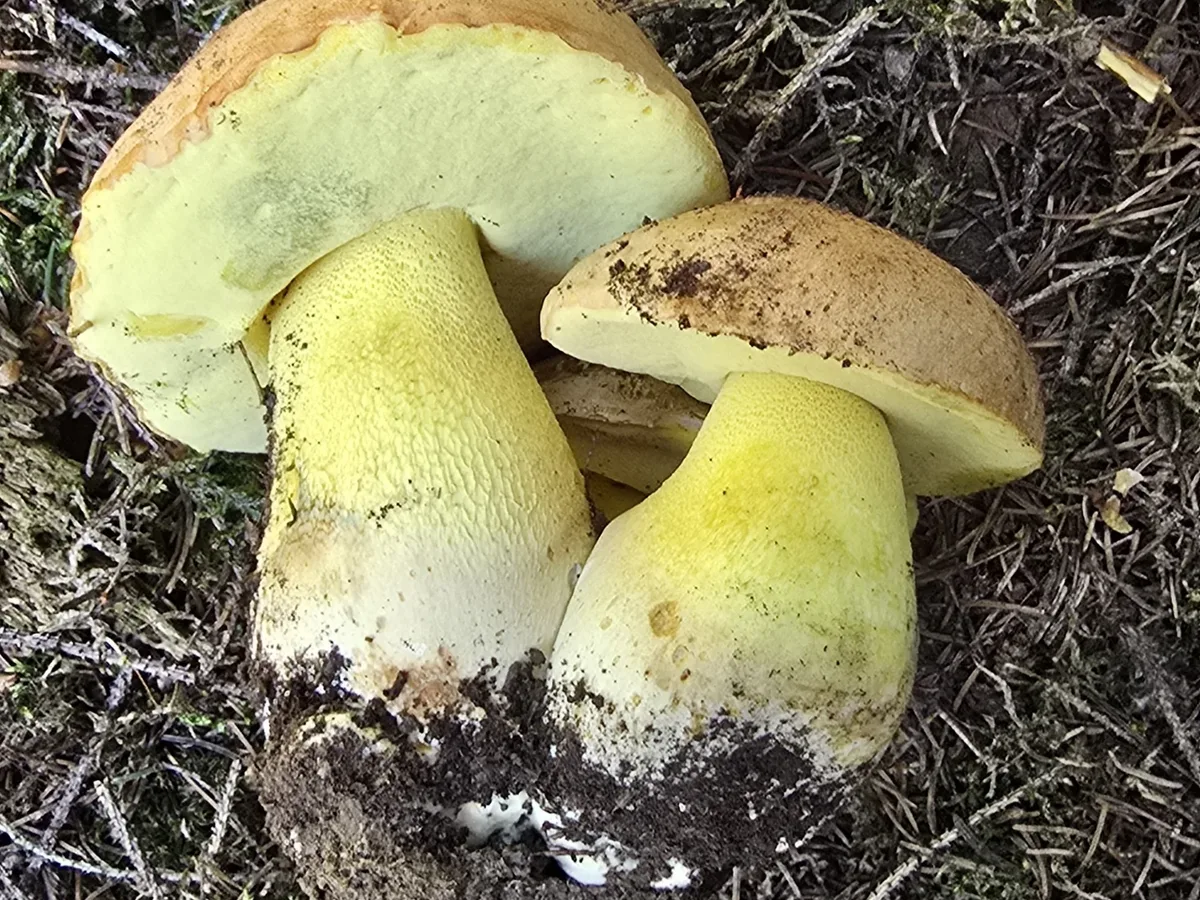
One character singles out Boletus subappendiculatus from the first moment you crouch beside it: the pore surface is a clean, bright lemon-yellow even on the youngest button.
Gills / Pores
This is far yellower than the already-yellow pores of Boletus reticulatus, and a world apart from the porcini group, whose pores begin white and only yellow with age. Here the colour is present from the start and holds through the fruitbody's whole life - a sustained signal, not a late-developing one.
Cap
The cap is a warm ochre to honey-yellow, dry and finely velvety to the touch in youth. This light tomentum (a covering of fine, matted hairs) wears away to smooth as the cap expands, which can span 5-15 cm at maturity. The colour sits tonally between the dark, rich brown of Boletus pinophilus and the pale buff of a fresh Boletus edulis.
Stem
The stem carries a fine yellowish reticulum - a subtle net pattern, often clearest in good light - and hides one of the most useful but least-known field marks: cut the stem at the apex and the flesh is distinctly yellow there. Lower down in the stem it fades to white, but that patch of yellow at the top, shared by the tubes, is not shown by B. edulis or B. pinophilus, both of which are white throughout.
Flesh
Flesh in the cap does not blue on cutting. At most a faint flush of blue-grey may appear at the very junction of stem apex and tubes in older specimens - a hesitant trace, nothing like the assertive reaction of a true bluing bolete.
Smell & taste
Taste mild and nutty; smell faint and agreeable. Spore print olive-brown.
Where & when it grows
Habitat
This is a mountain species in a real sense - finding it below 700 m is genuinely unusual. Its world is the old-growth spruce forest of central Europe's mountain massifs: the Alps, Carpathians, Apennines, and Sudetes, typically between 700 and 1900 m altitude.
The right place to look is mature, undisturbed Norway spruce (Picea abies) forest where the ground is carpeted in bilberry (Vaccinium myrtillus) and woodsorrel (Oxalis acetosella) and the moss runs deep and unbroken.
That continuous moss and thick acidic humus is not incidental - the ectomycorrhizal partnership that sustains this bolete needs old trees and undisturbed roots, which is why it appears rarely in young plantations.
In the northern limestone Alps it ventures into mixed spruce-fir stands on calcareous soils, provided an acidified humus layer has developed above the mineral rock.
A useful mental image: the same forest type where you find Russula claroflava and Boletus rex-veris, shaded, humid, mature, on steep valley sides where moisture collects.
Where B. edulis is plentiful at lower elevations and you walk uphill, you are moving into B. subappendiculatus territory.
When
A late-summer to autumn species, with a season shaped tightly by the temperature rhythms of the mountains.
To fruit, the soil at 10 cm depth needs to be above about 8°C - warm enough for the mycelium to push a fruitbody through - but high-altitude nights cool the ground quickly, compressing the window compared to lowland boletes.
The main flush at 1000-1400 m runs from late July through September. The ideal conditions are a warm, wet August with alternating sunny days and cool nights, the kind of mountain weather that combines just enough heat in the soil with moisture in the humus.
Elevation shifts the timing predictably: roughly every 200 m gain moves the peak about a week earlier toward summer.
From October onward, early snow can end the season overnight at altitude. When that happens, fruitbodies may be found intact but frozen just beneath a light cover, perfectly preserved.
How it grows
Fruits singly or in small groups of 2-5 fruitbodies, rarely in larger troops. Like other boletes, each fruitbody emerges from belowground mycelial strands, often pushing up through moss or compacted duff.
The button stage is compact and rounded. Full expansion follows significant rainfall - typically 15-30 mm over 48-72 hours - and takes 4-8 days.
At cool mountain elevations the fruitbodies are relatively long-lived: in good condition they can remain sound for a week or more before deteriorating.
Maggot damage is less aggressive at altitude than in the lowlands, but it is still worth slicing the stem cross-section on older specimens before carrying them home.
Fruiting conditions
At altitude, soils warm slowly and cool quickly. Fruiting is triggered by 15-30 mm of rainfall combined with soil temperatures in the 8-16°C range at 10 cm depth. The flush typically emerges 5-10 days after a triggering rain event in warm conditions, or up to 14 days in cooler weather. High soil temperatures above 18°C (unusual at altitude but possible on south-facing slopes) suppress fruiting. The combination of late-summer warmth and reliable orographic precipitation in the Alps creates near-ideal conditions in August.
Look-alikes
The most likely confusion in the field is with other boletes in the same mountain spruce forest habitat.
- Boletus edulis (penny bun) occurs in the same forest type at lower elevations and sometimes overlaps altitudinally. It differs by having white (not yellow) pores when young and stem flesh that is white throughout, never yellow at the apex.
- Boletus rex-veris (spring porcini) is a close relative of the alpine spruce-fir zone with a more reddish-brown cap, white pores ageing to yellowish, and entirely white stem flesh. It also appears earlier in the season (sometimes May-June at altitude after snowmelt).
Neither of these is harmful.
- Caloboletus calopus (bitter bolete) shares the mountain spruce habitat and has yellow pores and a yellow-toned stem, but it differs critically by having a stem with a prominent red-banded zone in the middle and base (red background with a pale net), and flesh that turns strongly blue when cut; it also tastes intensely bitter on nibbling the raw flesh. Caloboletus calopus causes gastrointestinal poisoning and must not be eaten; the blue-staining test and red stem pattern reliably separate it.
- Suillellus luridus (lurid bolete) shares the bluing reaction and yellow-to-orange pores and is found in montane forests; it has a strikingly red stem with red pores - easily distinguished.
No species that is realistically confused with B. subappendiculatus in the complete field picture is deadly.
Shares mountain spruce habitat and yellow pores, but C. calopus is immediately identified by its stem, which has a vivid red-to-orange band or zone (especially in the middle and lower stem) against a pale netted background; flesh stains strong blue-green throughout when cut; raw flesh is intensely bitter. Causes gastrointestinal poisoning - not deadly but do not eat. The combination of red stem coloration plus blue-staining flesh reliably excludes B. subappendiculatus.
S. luridus has orange-red to red pores (not pure yellow), a red-reticulate stem on a yellow-orange background, and flesh that turns intensely blue-black within seconds of cutting. Toxic raw, harmless when thoroughly cooked. The orange-red pores and immediate strong bluing distinguish it completely from B. subappendiculatus.
B. edulis has white pores when young (not yellow), stem flesh entirely white throughout (not yellow at the apex), and a typically paler buff-brown cap; it overlaps altitudinally but tends to occur at lower elevations. Equally choice edible - confusion is gastronomically inconsequential.
R. satanas has a whitish to pale grey cap (never ochre-yellow), vivid blood-red to crimson pores and stem base, and flesh that turns deep blue immediately when cut. Causes severe gastrointestinal poisoning when raw or undercooked. Confusion with B. subappendiculatus is extremely unlikely given the contrasting pore colour and bluing reaction, but included here as the standard caution: reject any bolete with red or orange pores or strongly bluing flesh.
B. rex-veris has white pores ageing to yellowish (not bright yellow from youth), entirely white stem flesh, a more reddish-brown to bay cap, and fruits earlier in season (May-July at altitude, often around snowmelt). Equally choice - no safety concern in confusion.
In the kitchen
Picking & cleaning
Harvest at the button-to-medium stage for best flavour and to avoid larvae. The dry, firm cap means fruitbodies transport well without bruising, unlike wetter species.
Twist gently at the base or cut cleanly at the moss surface. Trim the base and inspect the stem - clean, white-to-yellow flesh with no worm tunnels is what you want.
Because this species is montane and less common than the lowland porcini group, responsible harvesting is particularly important for population sustainability:
- taking only what you need
- leaving immature and elderly specimens
- not disturbing the moss layer
Cooking
Boletus subappendiculatus is used exactly as Boletus edulis: it is an outstanding choice edible with a rich, nutty, meaty flavour.
- Slice and sauté in butter with garlic, shallots, and thyme
- Add to risotto, tagliatelle, or polenta
- Use in cream sauces, soups, and braises
It dries well - slice caps 5-8 mm thick and dehydrate at 40-50°C. The dried product concentrates flavour and stores for months. The soaking water from dried slices is a concentrated umami stock base.
In Austrian and Slovenian mountain cuisine it is prepared simply: sautéed in butter with parsley and served on dark bread.
The pore surface, which is softer in mature specimens, can be removed before cooking if the texture seems too wet, though this is not necessary in young fruitbodies.
Good to know
Boletus subappendiculatus is a completely safe, choice edible. It has no documented toxins and no deadly lookalikes that share all its combination of features:
- bright yellow pores from youth
- non-bluing flesh in the cap
- yellow flesh at the stem apex
- dry ochre-yellow cap
- strictly montane spruce-fir habitat
The principal caution is discrimination from Caloboletus calopus. Always confirm that:
- pores are pure yellow (not orange or reddish)
- flesh does not turn blue on cutting
- the stem lacks a red band or base coloration
A nibble of raw flesh is also informative - intense bitterness indicates C. calopus; B. subappendiculatus tastes pleasant and nutty.
As with all boletes, cook thoroughly before eating; eating raw bolete flesh can cause gastric irritation in susceptible individuals.
A reference guide - never an edibility guarantee. When in doubt, leave it out.