Summer Bolete
Boletus reticulatussyn. Boletus aestivalis, Boletus edulis var. reticulatus, Tubiporus reticulatus, Dictyopus aestivalis
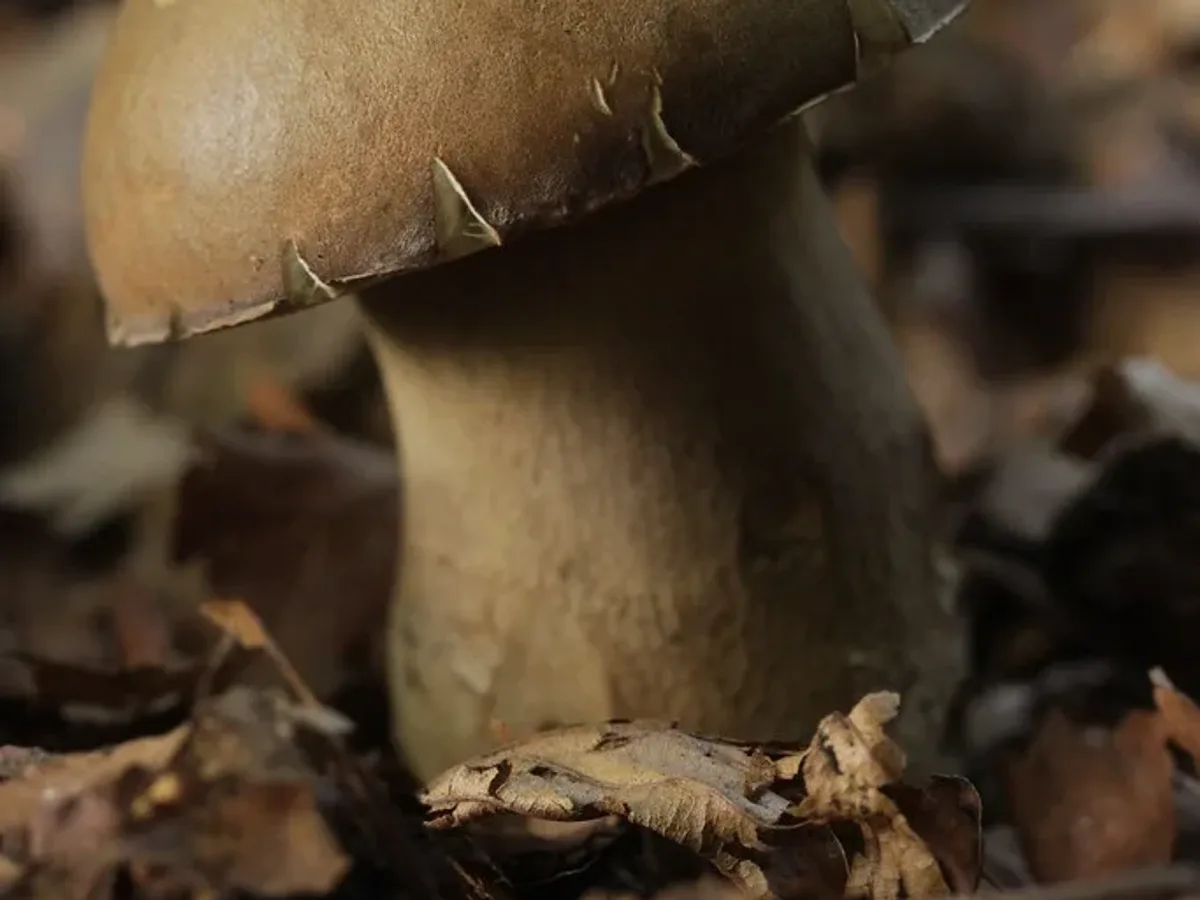 © Björn S... (CC BY-SA 2.0)
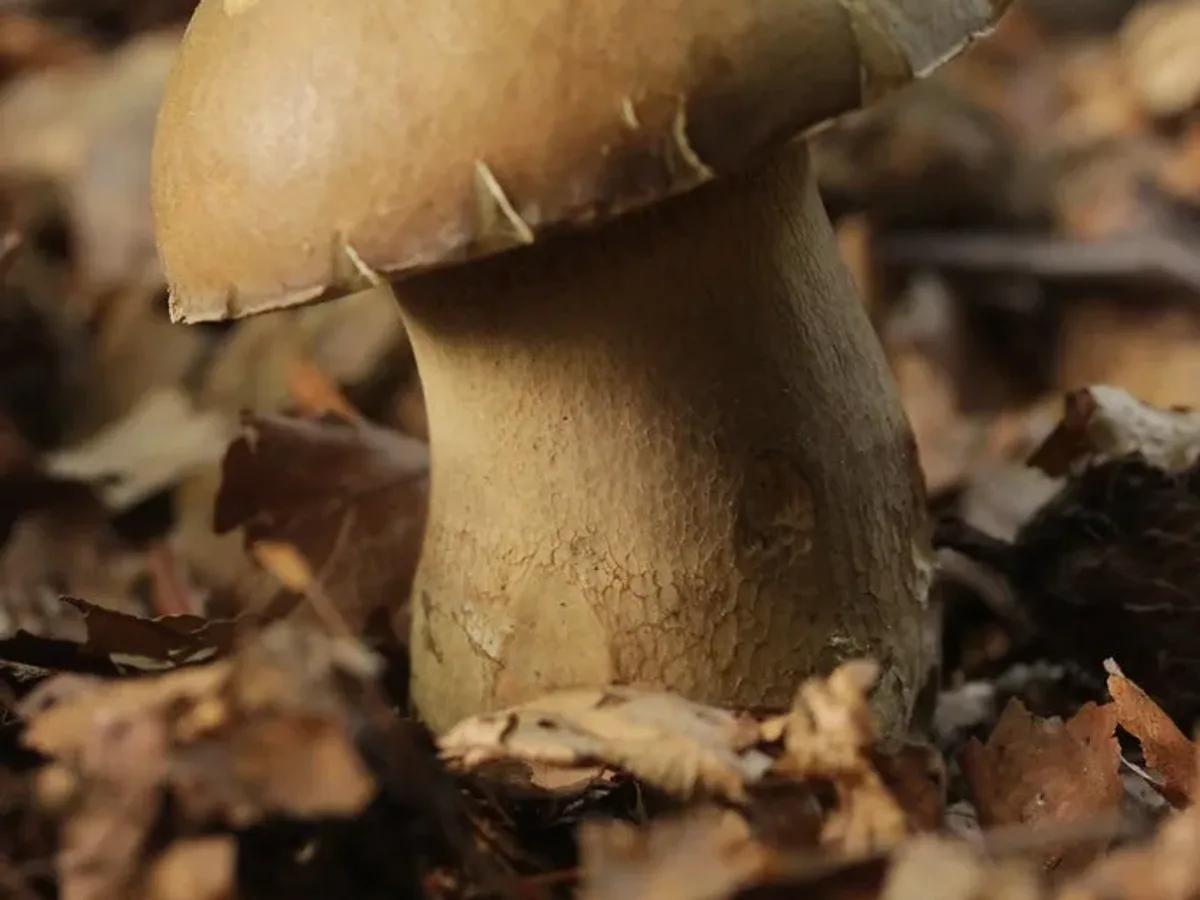 © Björn S... (CC BY-SA 2.0)
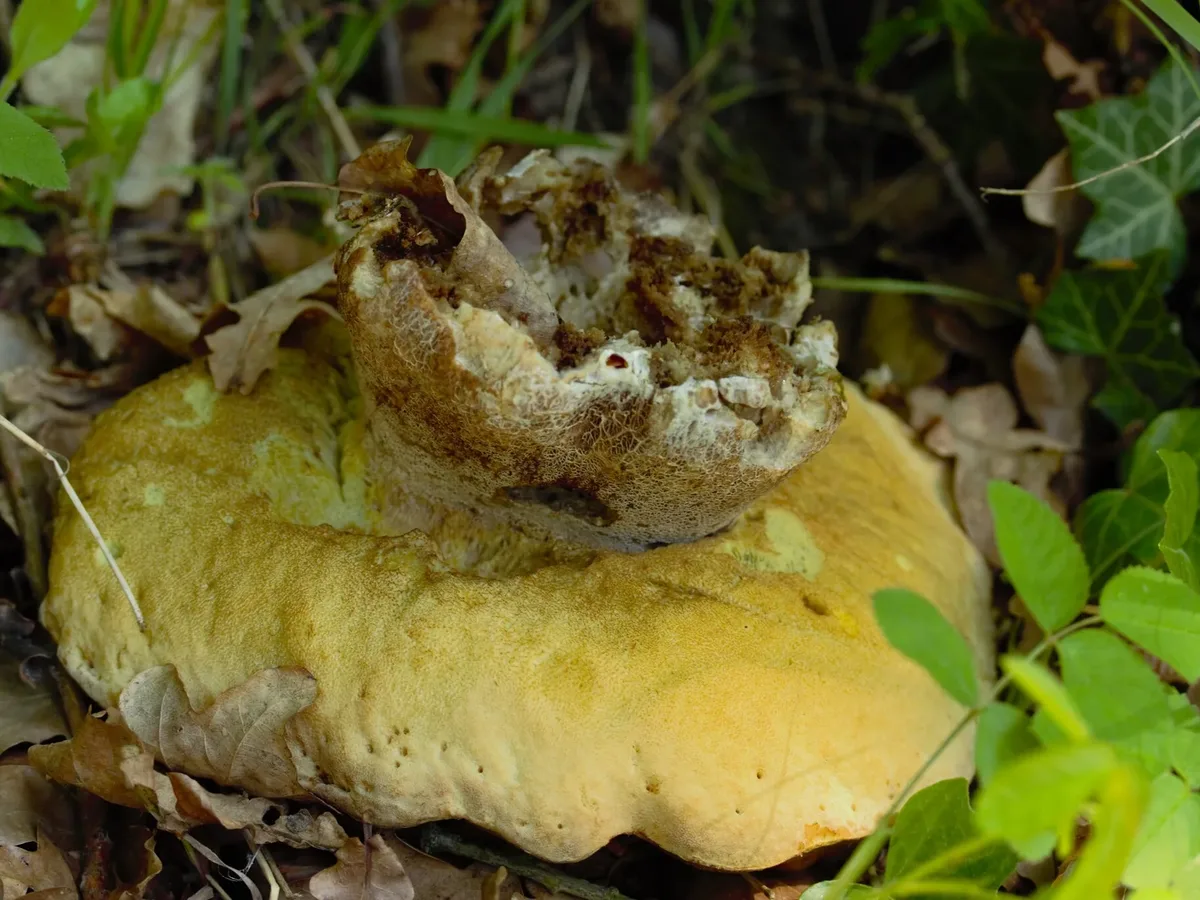 © Patrick Bayan (CC BY)
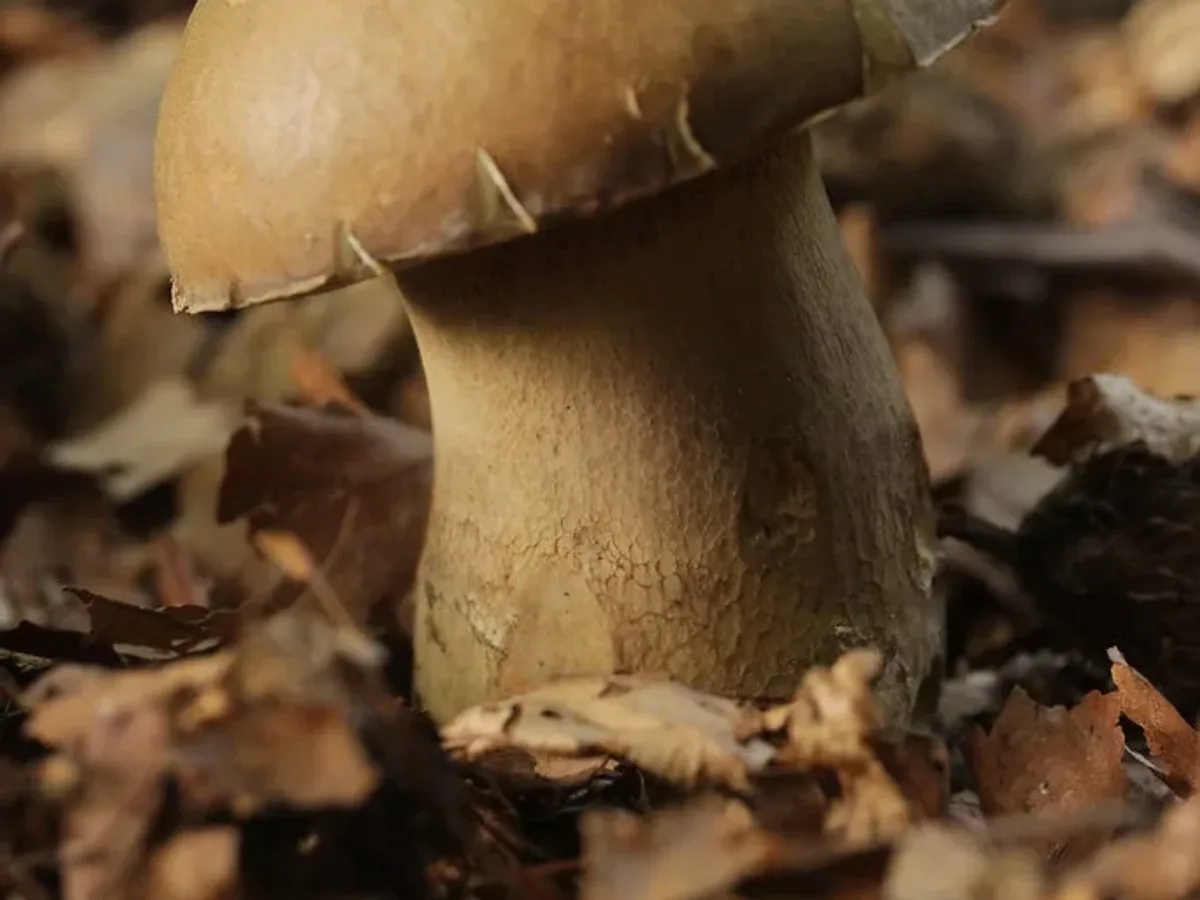 © Björn S... (CC BY-SA 2.0)© Björn S... (CC BY-SA 2.0)© Björn S... (CC BY-SA 2.0)
One of the best mushrooms you can bring home - once you are certain of the identification.
How to recognise it
The Summer Bolete is a robust, handsome member of the porcini (cep) group and, to the eye, a close cousin of the celebrated Boletus edulis.
Cap
The cap is large (commonly 8-20 cm, sometimes to 30 cm), starting as a tight hemisphere and expanding to a broad cushion.
Its surface is the single best field character: dry, matt and felted rather than smooth or greasy, coloured a warm milk-coffee, hazel or tan brown, and - especially in dry summer weather - breaking up into a fine tessellated or areolate cracking that reveals paler flesh between the patches, giving an almost crazed-pottery look.
Gills / Pores
Beneath the cap there are no gills but a sponge of tightly packed vertical tubes ending in tiny round pores; these are white in youth, ripen through pale yellow to a dull olive-yellow, and crucially do NOT stain blue when bruised or cut.
Stem
The stem is thick and often barrel- or club-shaped, pale brown over a whitish ground, and is clothed for most of its length in a conspicuous raised white net (reticulation) - coarser and reaching further down the stem than in B. edulis.
Flesh
The flesh is firm and white and stays white when sliced.
Where & when it grows
Habitat
This is a warmth-loving mycorrhizal partner of broadleaf trees, locked into a mutual root partnership it cannot grow without.
Look in open, sun-warmed deciduous and mixed woodland, along ride edges and woodland margins, in parkland, grassy glades and tree-lined avenues - anywhere the soil warms quickly and drains well.
It has a marked preference for oak and beech, but also associates with sweet chestnut, hornbeam, lime and hazel.
Light neutral-to-acid or calcareous loams and warm sandy soils suit it best; it is a lowland and hill-country species rather than a deep-forest or montane one.
Because it needs warmth, the sunniest, most sheltered pockets of a wood - south-facing banks, the grassy fringe where the canopy opens - are the places to search first.
When
The Summer Bolete earns its name by being the earliest cep of the year.
While its famous relative B. edulis waits for autumn, this species can be picking-ready from May, runs strongly through June and July, and frequently produces a second wave after rain in late summer and early autumn, lingering into September or October.
In warm southern regions the first flushes may arrive in late April; in cooler northern climates the window narrows to roughly June through August.
A spell of warm rain following a warm spell is the classic trigger.
How it grows
Fruit bodies arise solitary or in small scattered troops, never in dense tufts, springing directly from the mycelial network attached to host-tree roots.
They can appear remarkably fast after suitable rain, swelling from a small button to a full-sized mushroom within a few days.
Caps emerge as tight hemispheres and expand as they mature; in prolonged dry heat the expanding cap cuticle cracks into its characteristic mosaic.
Productive spots tend to recur year after year in the same patch of ground, so a remembered location is worth revisiting across seasons.
Fruiting conditions
Warmth-driven: needs soil warmed to roughly 14-22 C combined with adequate rain, typically flushing 1-2 weeks after warm summer rain following a warm spell. Earlier and at higher soil temperatures than the autumn-fruiting Boletus edulis.
Look-alikes
The Summer Bolete sits within the edible cep group and its principal confusions are with other ceps:
- Boletus edulis (smooth, often slightly greasy, paler-margined cap, net usually only on the upper stem; equally edible)
- B. aereus the Dark Cep (much darker, near-black cap; equally choice)
- B. pinophilus the Pine Bolete (red-brown cap, associated with conifers; also edible)
None of these is dangerous.
Far more important is to separate it from the bitter Bitter Bolete, Tylopilus felleus, which mimics the net but has pink-tinged pores, a dark net on a paler stem and an intensely bitter taste that ruins any dish.
The other key safety check is against any bolete with red or orange pores and/or flesh that turns blue when cut (e.g. Rubroboletus / Suillellus species); some of these, such as the Devil's Bolete (Rubroboletus satanas), cause violent vomiting and gastric upset and can land you in hospital - the Summer Bolete by contrast has white-to-yellow pores and white flesh that never blues.
There are no deadly lookalikes among the boletes.
Pores white then distinctly PINK with age; net on the stem is dark/blackish on a pale ground (the reverse of the cep's pale net); flesh intensely bitter (taste a tiny raw fragment and spit out). Not toxic but even one piece completely ruins a dish.
Much darker, sooty-brown to near-black cap; net brownish on a dark stem. Equally choice edible.
Red or orange pore surface, often a reddish stem, and flesh that blues on cutting; pale chalky cap. Causes severe vomiting, diarrhoea and gastric upset (occasionally requiring hospital treatment) if eaten - not deadly but seriously toxic. The Summer Bolete always has white-to-yellow pores and white, non-blueing flesh.
Smooth, often slightly sticky cap with a paler margin, net confined mostly to the upper stem; fruits later (autumn). Equally choice edible, so confusion is harmless.
Red-brown to wine-coloured cap, associated with conifers (pine, spruce) rather than broadleaves. Edible.
In the kitchen
Picking & cleaning
- 1Choose young to middle-aged specimens with firm white flesh and pale, fine pores; these are far superior to old caps whose tube layer has gone soft, olive and spongy.
- 2Cut or gently twist the whole mushroom free at the stem base so the net and any base discolouration can be checked, then trim off soil immediately to keep your basket clean.
- 3Slice the stem lengthways on the spot: insect larvae (maggots) riddle ceps readily, especially in warm summer weather, and a tunnelled specimen is best left or discarded.
- 4Confirm the white non-blueing flesh and the prominent white stem net before it goes in the basket.
- 5Carry finds in an open basket, not a plastic bag, so air can circulate and the mushrooms do not sweat and spoil.
Cooking
One of the great edible mushrooms, prized across Europe and on a par with the autumn cep.
Young, firm specimens are superb sliced and fried in butter, added to risotto, pasta and game dishes, or used as the base of a rich mushroom sauce; the firm white flesh holds its texture well.
It dries exceptionally well - sliced and dried Summer Boletes develop an intense, deep umami aroma and are excellent for stocks and soups; soak before use and add the fragrant soaking liquid to the dish.
Always cook before eating; do not eat raw.
Discard old caps whose tube layer has turned soft and olive, and any maggoty flesh.
Good to know
This is a long-established, safe, choice edible with no deadly lookalikes, but two simple rules keep foraging safe.
- 1Never eat a bolete with red or orange pores or with flesh that blues strongly on cutting until you have positively identified it - the Summer Bolete has white-to-yellow pores and white, non-blueing flesh, and any specimen failing this test should be set aside; red-pored, blue-bruising boletes such as the Devil's Bolete can cause severe vomiting and diarrhoea.
- 2Always taste-test a tiny raw fragment for bitterness to rule out the harmless-but-meal-ruining Tylopilus felleus, then spit it out completely without swallowing.
As with all wild mushrooms:
- eat only firm, fresh, maggot-free specimens
- always cook them thoroughly (raw boletes can cause stomach upset)
- try only a small portion the first time to check personal tolerance
Beginners should have any cep confirmed by an experienced forager or expert before eating.
A reference guide - never an edibility guarantee. When in doubt, leave it out.