Royal bolete
Boletus regiussyn. Dictyopus regius, Tubiporus regius
 © Manuela Fiorini (CC BY)
 © Patrick Bayan (CC BY)
 © Patrick Bayan (CC BY)
 © Patrick Bayan (CC BY)
 © Patrick Bayan (CC BY)
 © vuikaan (CC BY)
 © Manuela Fiorini (CC BY)
 © Manuela Fiorini (CC BY)© Manuela Fiorini (CC BY)© Patrick Bayan (CC BY)
One of the best mushrooms you can bring home - once you are certain of the identification.
Never eat a mushroom you are not 100% sure of - check the look-alikes below, and always cook wild mushrooms.
How to recognise it
Cap
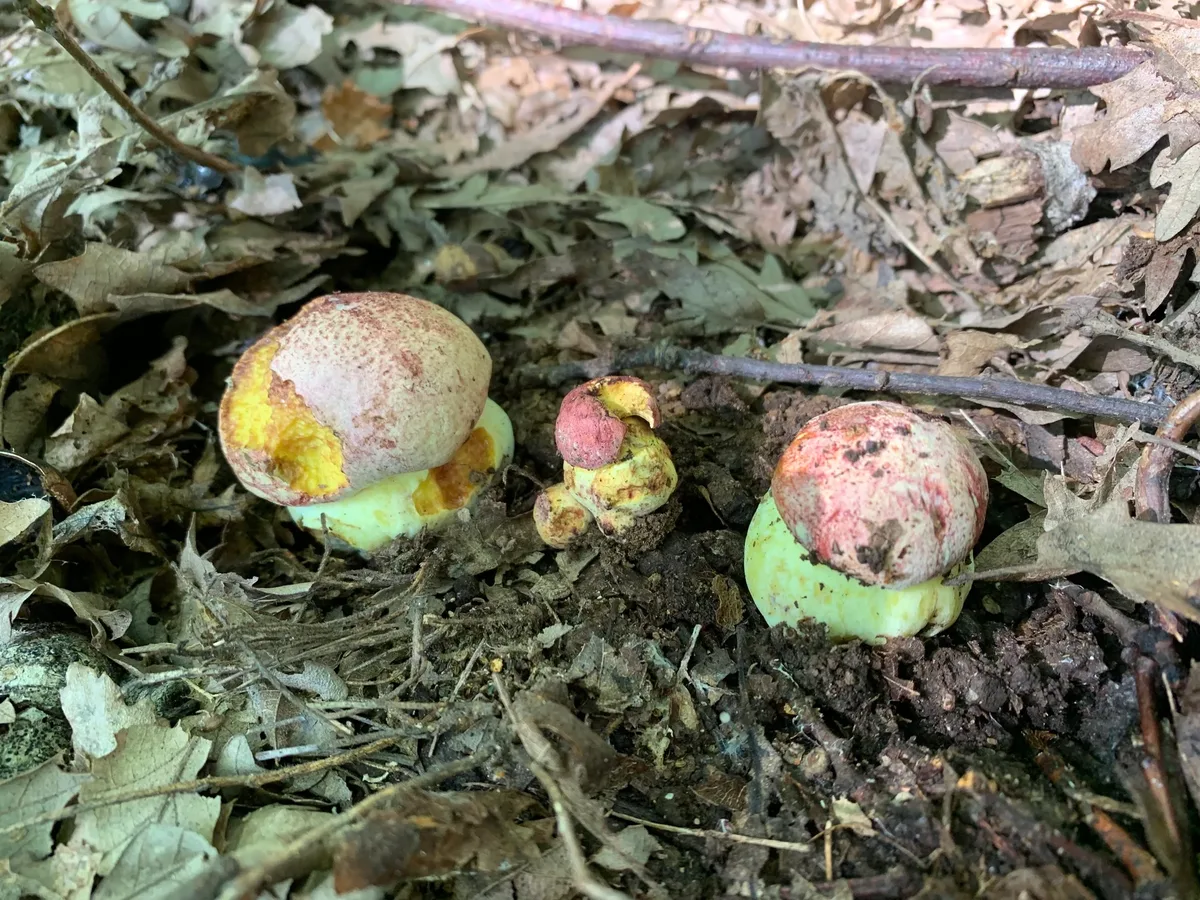
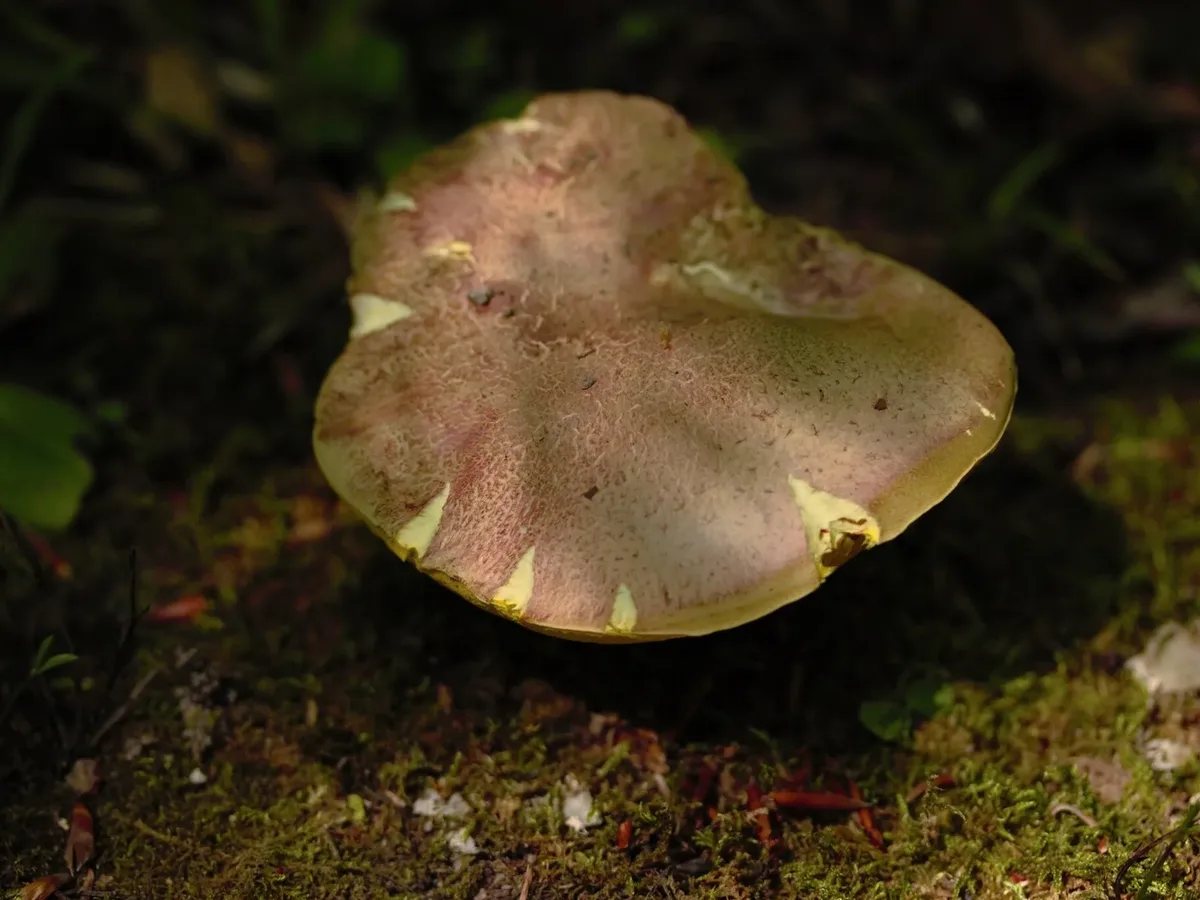
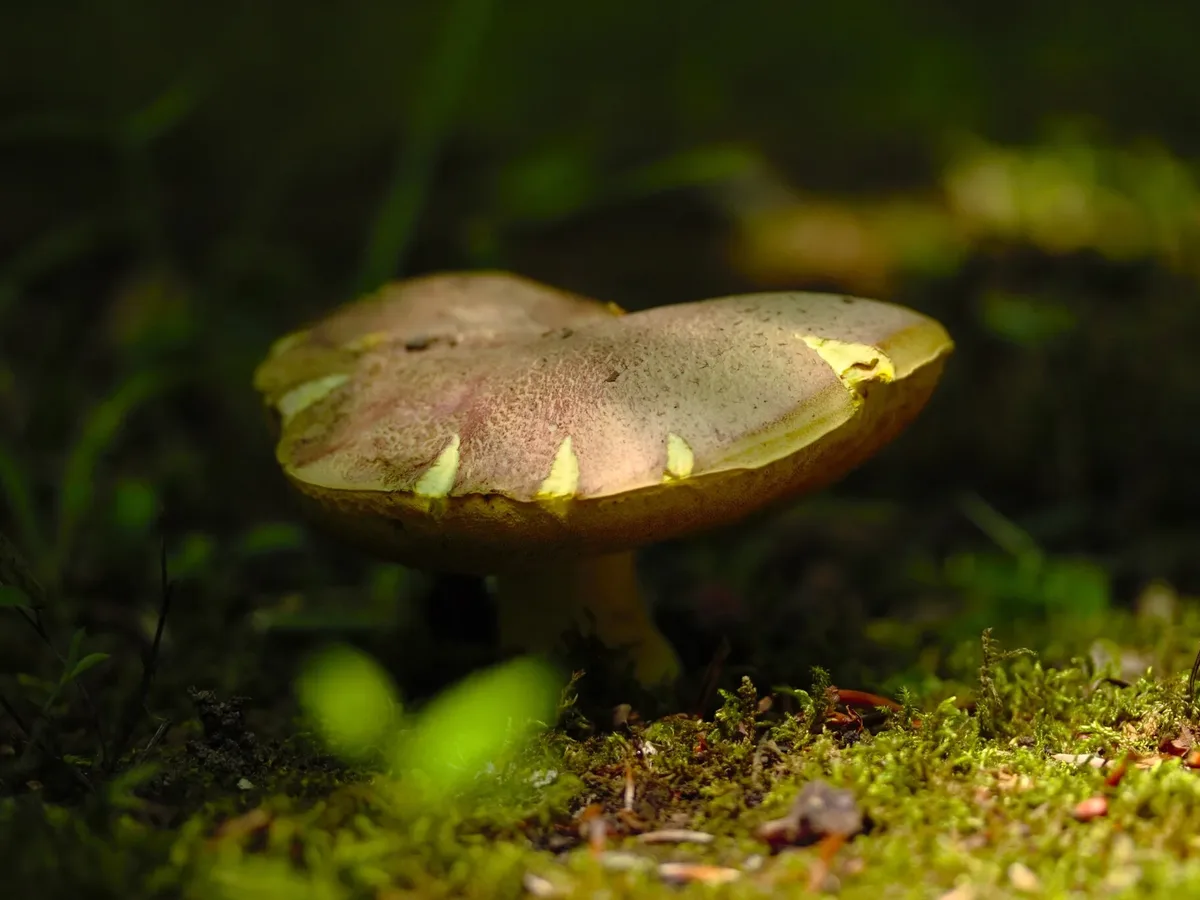
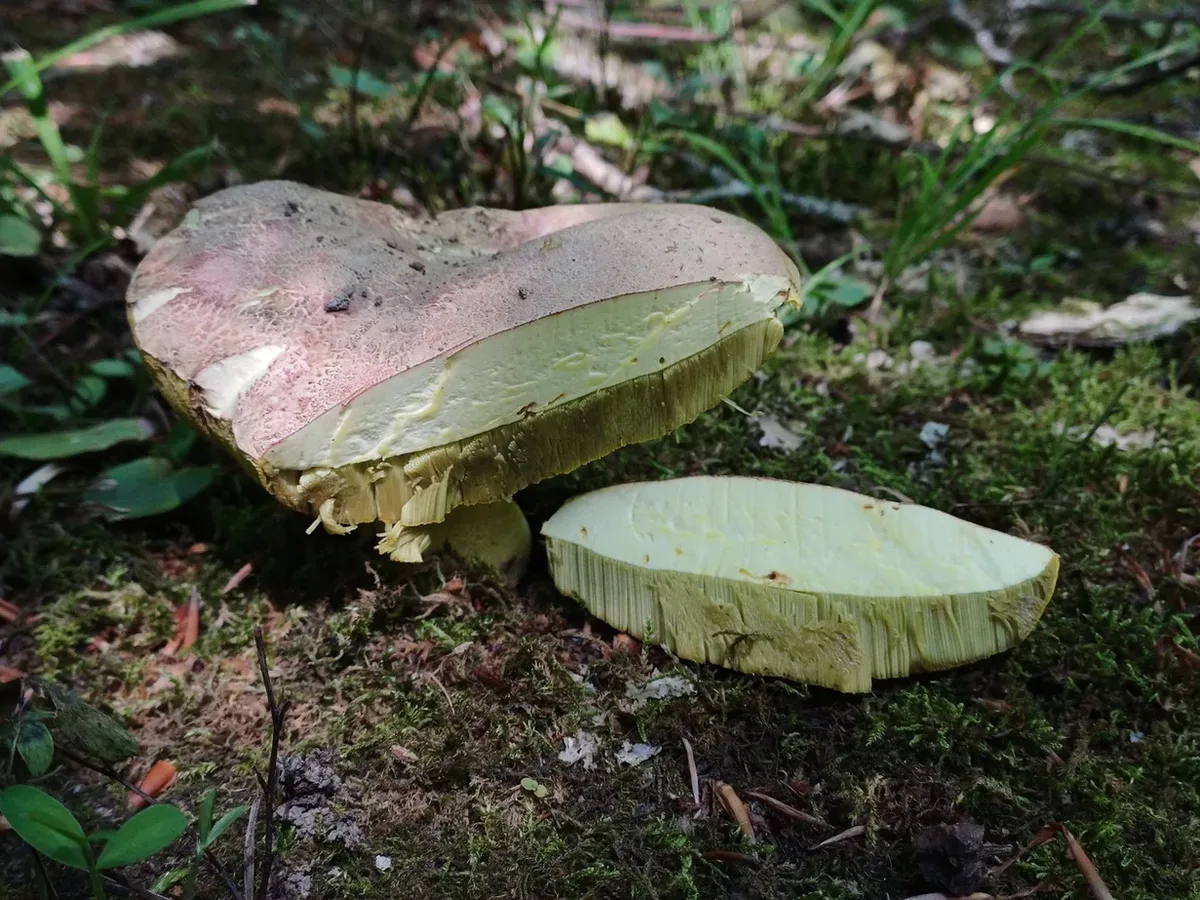
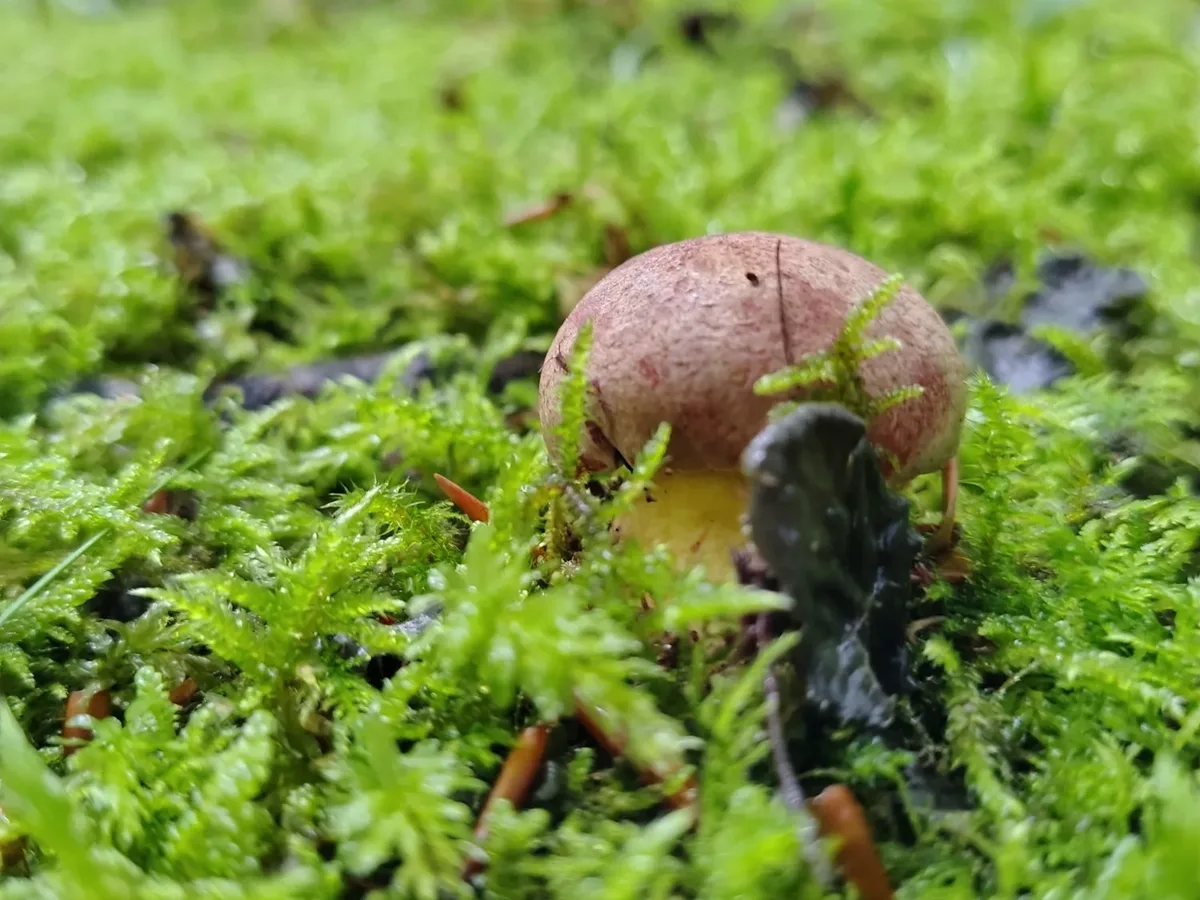
The Royal Bolete is one of the most visually striking European boletes, instantly recognisable by its cap colour: a vivid rose-pink, carmine, or brick-red that sets it apart from every other member of the porcini group, which are uniformly brown-toned.
The cap opens as a tight pink hemisphere, up to 20 cm across when mature. The surface is dry and velvety to the touch in young specimens, becoming smoother and sometimes finely cracked in very dry weather.
The colour intensity fades as the mushroom ages, mellowing to a pale brick or dusty rose-pink, but always retaining a warm reddish-pink character.
Gills / Pores
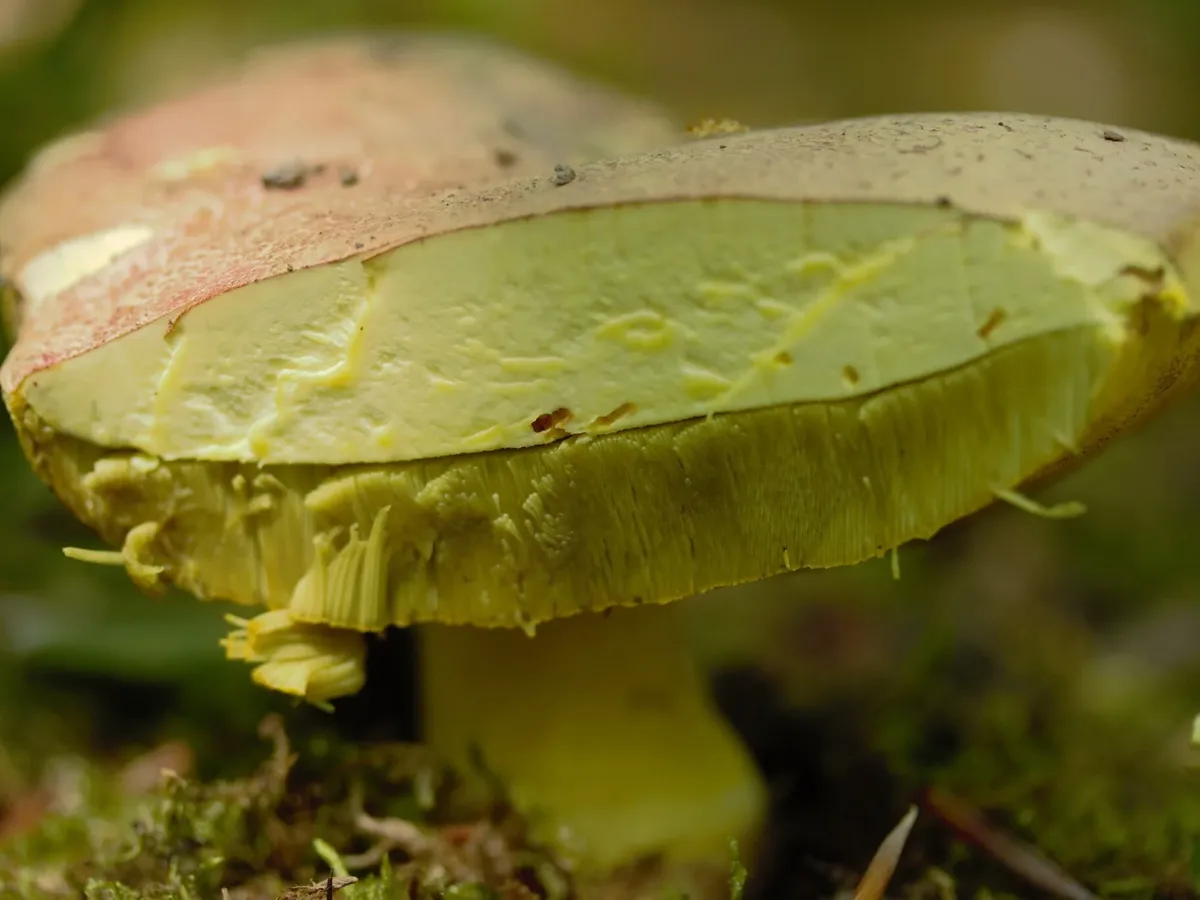
Underneath the cap, the fertile layer is a dense sponge of tubes ending in tiny round pores. These pores begin white, ripen to pale cream, and in old specimens turn pale yellow - but they are NEVER red or orange, and critically do NOT stain blue when pressed or cut.
This is the most important safety check: any bolete with red, orange, or purple pores, or whose flesh flushes blue on cutting, must be set aside immediately.
Stem
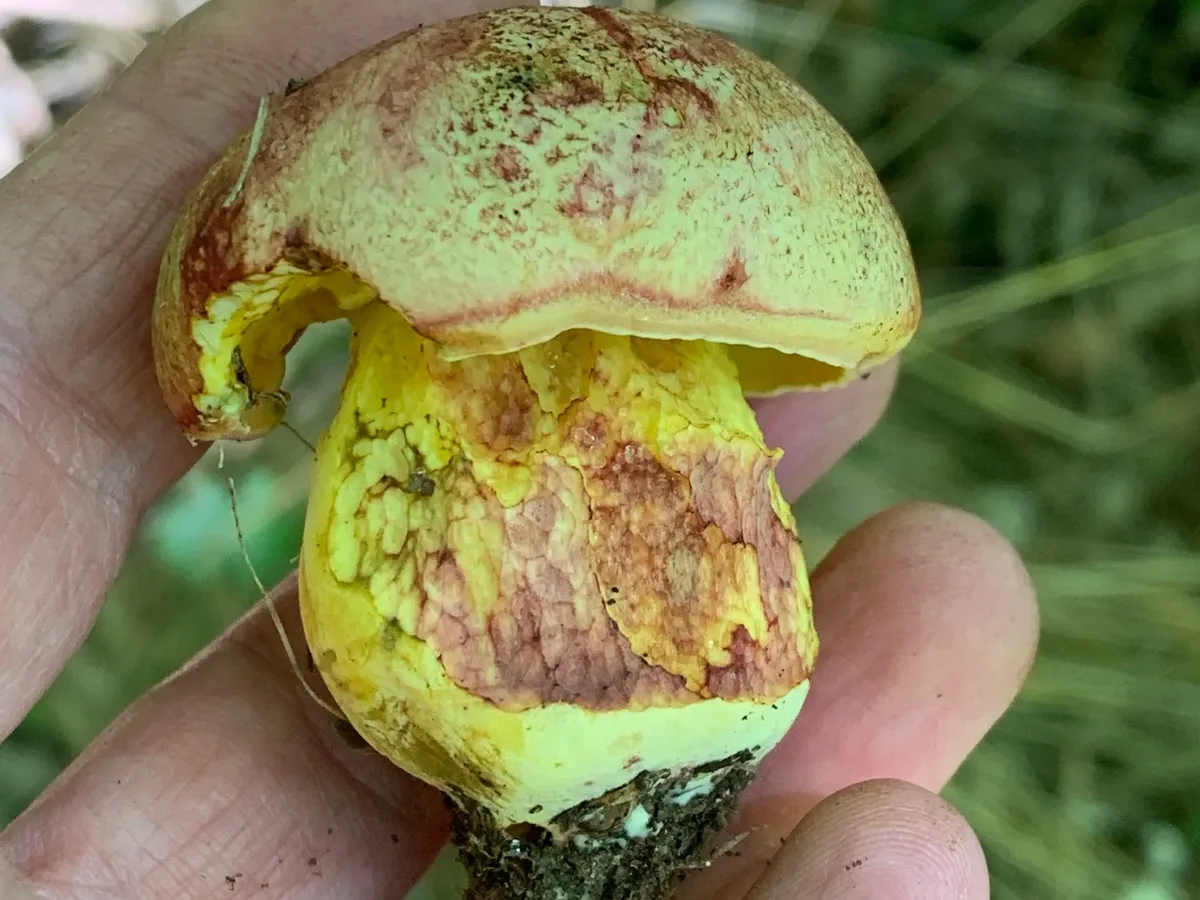
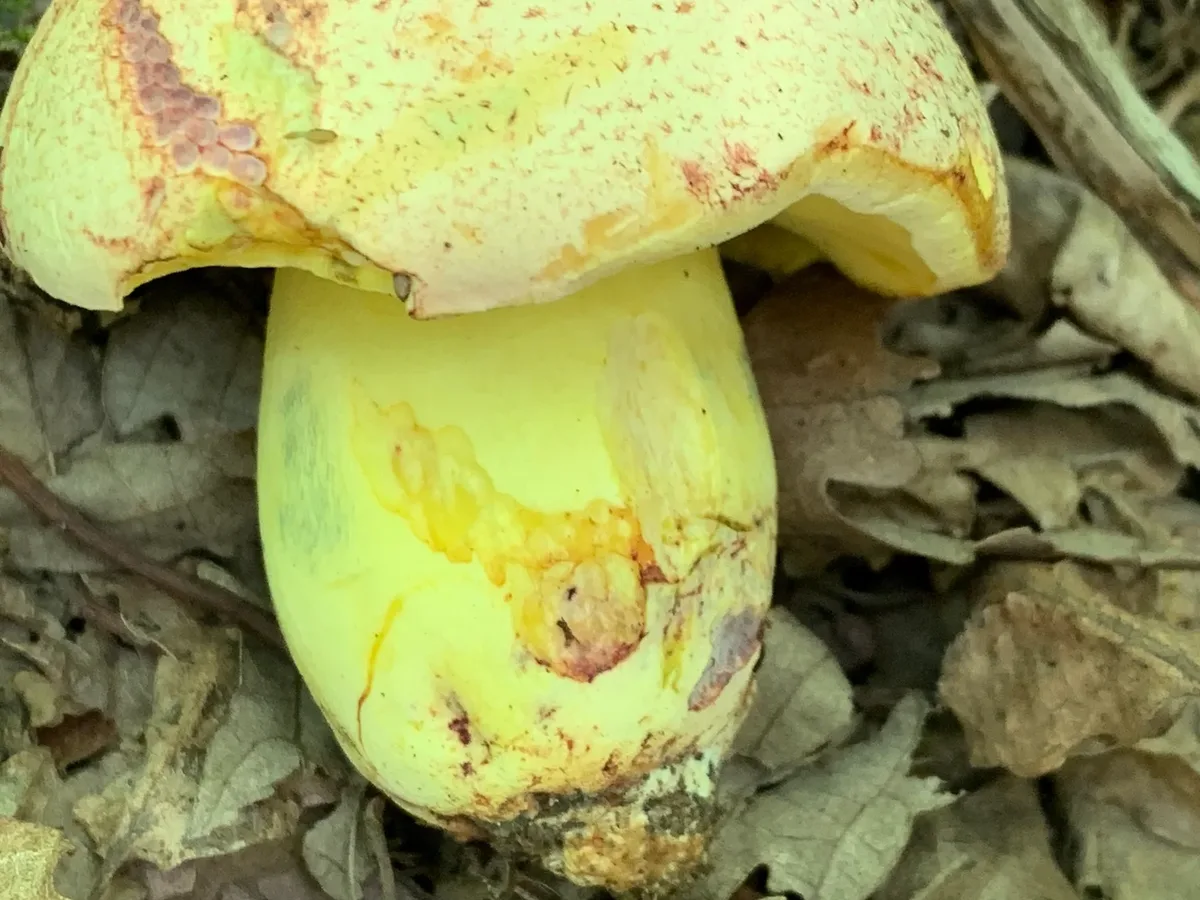
The stem is stout and swollen, pale yellowish-ivory, and is clothed for most of its length in a raised white net (reticulation) closely resembling that of the classic Penny Bun (B. edulis).
Flesh
The flesh throughout is firm, white, and stays white when sliced - no blueing, no reddening, no darkening of any kind.
Where & when it grows
Habitat
Boletus regius is a mycorrhizal species, meaning its mycelium threads into the roots of its host trees and cannot fruit without them - a partnership that may persist underground for decades while you walk past none the wiser.
It is a warmth-seeker: it favours south-facing slopes, open glades and sunny woodland margins where the soil heats up quickly in summer, and it avoids the cold, waterlogged ground that suits spruce or pine.
Beech, sessile oak, downy oak and sweet chestnut are its closest partners; in the Mediterranean it also works with holm oak. Well-drained calcareous or mildly acidic loam is its preferred soil.
The core range runs through the foothills and mid-altitude zones of southern Europe - Apennines, Pyrenees, southern Alps, Balkans and Iberian highlands at roughly 400-1400 m - but it also appears in suitable warm lowland broadleaf woods in France, Germany, Switzerland and Austria.
Less common than B. edulis but locally abundant in good years.
When
Boletus regius has a longer season than most porcini, taking advantage of two thermal windows:
- At altitude in the Mediterranean hinterland the main crop comes in summer (June-August), driven by warm soil temperatures and the occasional summer thunderstorm.
- A second, often larger wave arrives in autumn (September-October), when the first meaningful rains break the summer drought and the soil retains the warmth accumulated over summer.
In lower-altitude central European populations the autumn flush tends to dominate.
Look after warm, settled weather that is broken by at least 20-30 mm of rain, then wait 5-12 days. The triggering logic is the same as for all porcini: the flush follows warmth-plus-moisture.
How it grows
Fruit bodies arise singly or in small scattered groups, never in clusters. They push up from the same subsurface mycelial mat that has been threaded through the host tree's roots, sometimes for many years - which is why a good spot, once found, tends to produce again each season as long as the trees stand.
Young caps push up as firm, vivid-pink globes barely clearing the leaf litter. Once temperature and moisture align they expand quickly, sometimes reaching full size within 3-5 days in warm, wet weather.
The dry, velvety cap texture is most pronounced on freshly emerged specimens and gradually smooths as the mushroom expands and weathers.
Fruiting conditions
Requires warm soil (14-24 °C) combined with at least 20 mm of rain in the preceding 10-14 days. Summer flushes are triggered by thunderstorm events in the sub-montane zone; the autumn flush follows the first significant rain after summer drought when soil still retains summer warmth.
Look-alikes
Boletus regius has no deadly lookalike among boletes with a comparable pink-red cap and white non-blueing flesh; its combination of vivid rose cap + pale pores + white non-blueing flesh is unique.
However, beginners in poor light or rushing past may confuse it with red-pored, blue-staining boletes that share the same woodland.
The most important dangerous species in this category is the Devil's Bolete (Rubroboletus satanas), which has a pale whitish cap (very different from the vivid pink cap of B. regius), but red to orange-red pores and strongly bluing flesh. It causes severe vomiting, diarrhoea and cholinergic symptoms requiring hospital treatment.
The safety check is straightforward:
- Examine the pores: white to pale yellow = safe direction; red or orange = stop.
- Cut the flesh: pure white and stays white = B. regius; turns vivid blue immediately = dangerous species.
The Satan's bolete grows in similar beech and oak woodland on calcareous soils, making it a plausible encounter in the same habitat.
Boletus rhodoxanthus (Rosy bolete) is another red-pored, blue-staining, pale-capped species in similar habitats that can cause similar poisoning.
Other edible boletes with pink or reddish tones - such as Boletus pseudoregius (False Royal Bolete) - are closely related and similarly safe.
The Bitter Bolete (Tylopilus felleus) has pinkish pores and is not dangerous but utterly ruins a meal with intense bitterness; its pores actively turn pink while B. regius pores remain cream-yellow.
Pale whitish to greyish cap (very different from the vivid rose-pink cap of B. regius), but has red to orange-red pores and a stem with red tones toward the base; flesh turns vivid blue almost instantaneously when cut. Grows in similar beech and oak woodland on calcareous soils. Causes severe vomiting, diarrhoea and cholinergic poisoning. B. regius always has pale cream to yellow pores (never red) and white flesh that does not blue.
Brown cap (not pink); pores white then turning distinctly pink-buff with age; dark net on a pale stem; flesh intensely bitter. Not poisonous but ruins any dish. A tiny raw taste test (spit out without swallowing) immediately reveals the bitterness absent in B. regius.
Closely related species with similar pink-red cap and white non-blueing flesh; edible. Distinguished by subtle differences in cap texture, stature and geographical range; the two are effectively interchangeable as edibles.
Similar reddish-pink colouring on the cap but has distinctly pinkish to reddish pore surface and flesh that blues when cut - both features absent in B. regius. Causes gastrointestinal poisoning. The white, non-blueing pores and flesh of B. regius confirm the identification.
In the kitchen
Picking & cleaning
Select young to middle-aged specimens:
- The flesh should be firm and pure white when sliced.
- The pores should still be pale and fine.
- There should be no sign of insect tunnels (maggots).
Always cut or gently twist the fruit body free at the ground and slice the stem lengthways immediately - maggots are rife in older summer specimens.
Confirm the white non-blueing flesh and pale pores on every specimen before it goes in the basket; if the flesh blues at all on cutting, discard the specimen and re-examine your find.
Carry in an open basket, not a plastic bag, so the mushrooms stay cool and do not sweat.
Cooking
In taste and texture, the Royal Bolete equals the classic Penny Bun. The firm white flesh holds up beautifully to all forms of cooking:
- Slice and pan-fry in butter with garlic and parsley.
- Add to risotto or pasta sauces.
- Fold into omelettes or ragù.
- Use as a meaty vegetarian substitute in stews.
It dries superbly - thinly sliced and air- or oven-dried at 40-50 °C, the flavour deepens to an intense umami that makes it outstanding in stocks, broths and dried-mushroom sauces. Soak dried slices in lukewarm water for 30 minutes and add the soaking water (strained through a cloth) to the dish.
Always cook thoroughly; raw boletes cause gastric upset even in safe species.
Discard any specimens whose tube layer has turned soft, wet or olive-green - these are past their best and ferment quickly.
Good to know
Boletus regius is an excellent, long-established edible with no dangerous look-alike among pink-capped boletes with white pores and white non-blueing flesh. The combination of vivid rose-pink cap + pale pores + white flesh that stays white on cutting is reliable and unique in European boletes.
That said, two inviolable safety rules apply:
- 1Never eat any bolete with red, orange or purple pores - the Royal Bolete has white-to-pale-yellow pores only.
- 2Never eat any bolete whose flesh turns blue when cut - the Royal Bolete's flesh is pure white throughout and stays that way.
If either test fails, you do not have Boletus regius.
The Devil's Bolete (Rubroboletus satanas) occurs in similar woodland and has caused serious poisoning; the Rosy Bolete (Boletus rhodoxanthus) is a further red-pored danger species in the same habitat. Both are distinguished by their red pores and bluing flesh, so a quick visual and physical check before cooking eliminates the risk.
As always with wild mushrooms:
- Cook thoroughly.
- Try a small portion the first time.
- If in doubt, do not eat.
Beginners should have any porcini-type bolete confirmed by an experienced mycologist before consuming.
A reference guide - never an edibility guarantee. When in doubt, leave it out.