Stinking bolete
Boletus putidus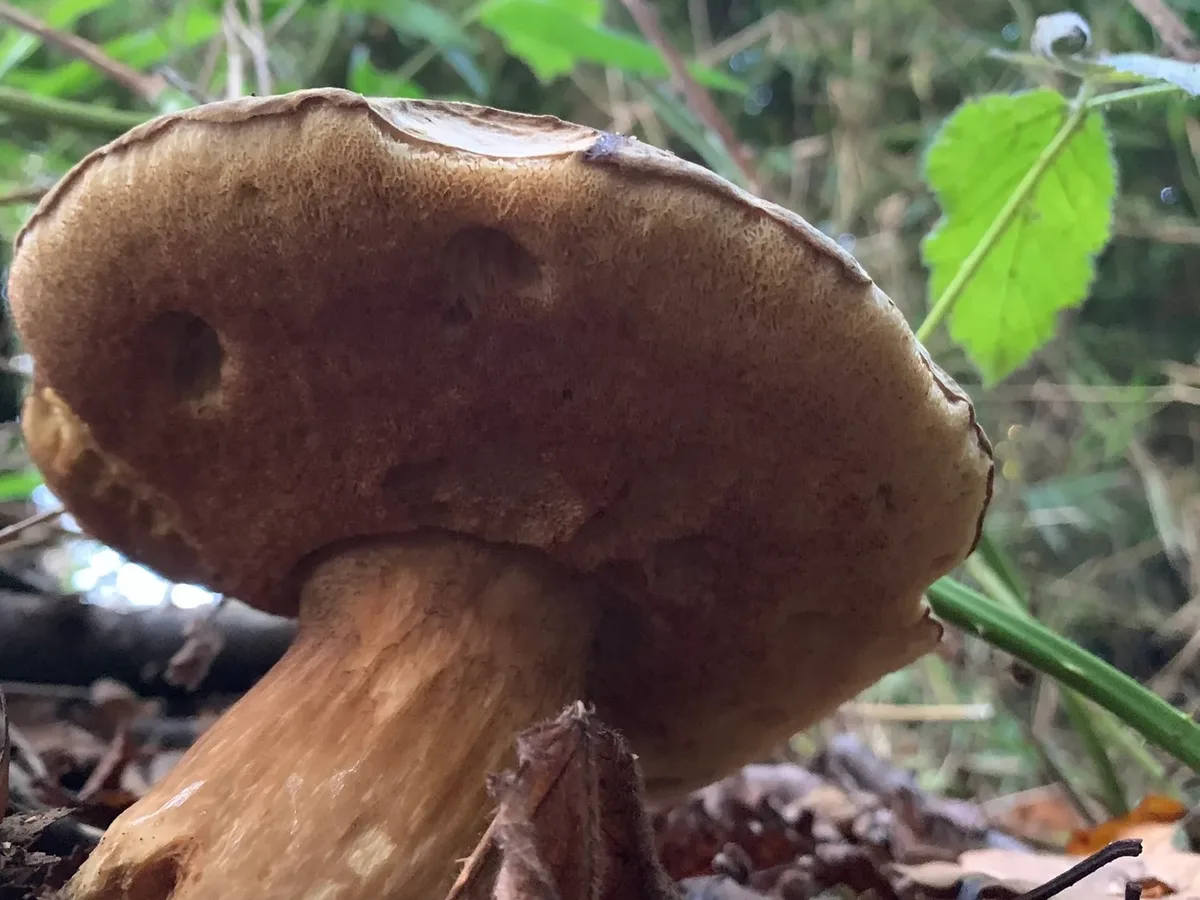 © nitsuga74 (CC BY 4.0)
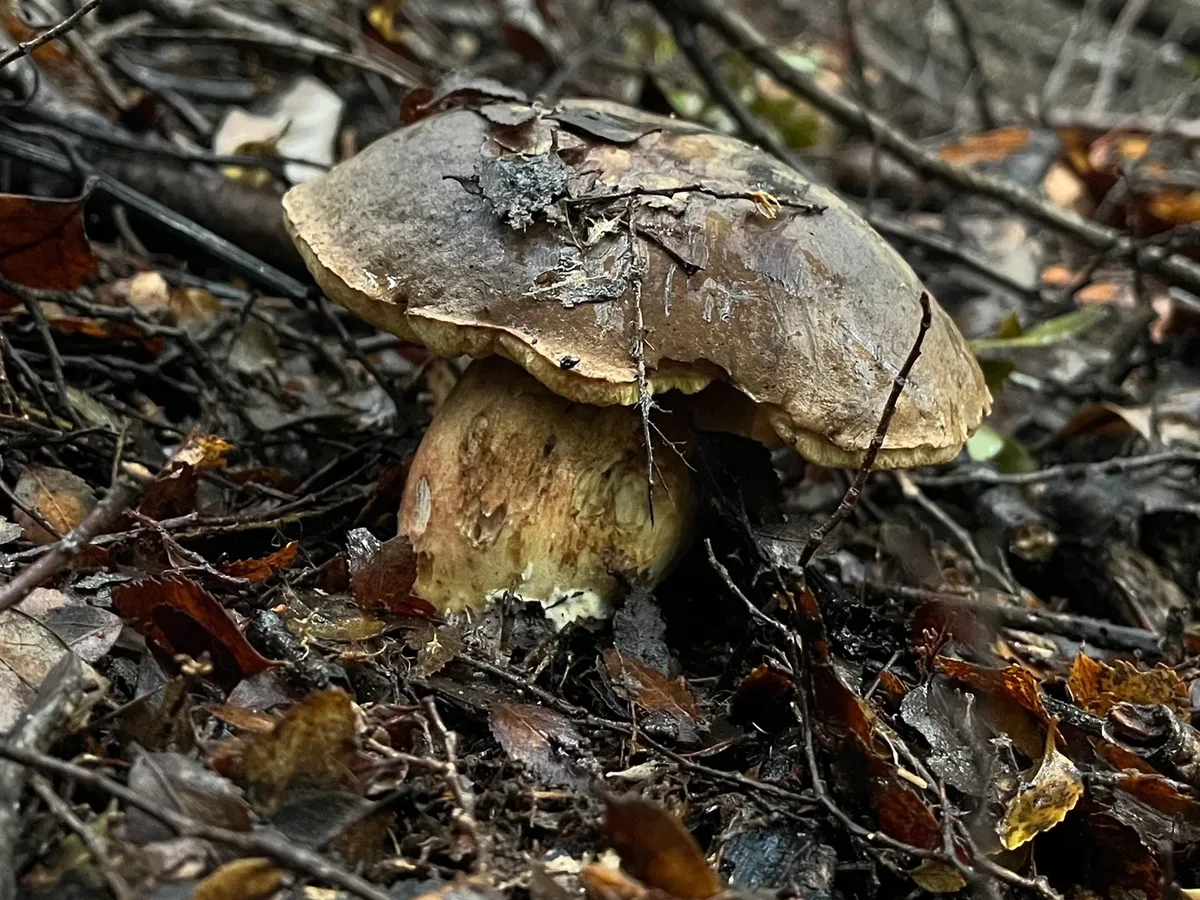 © Cristian Riquelme (CC BY 4.0)
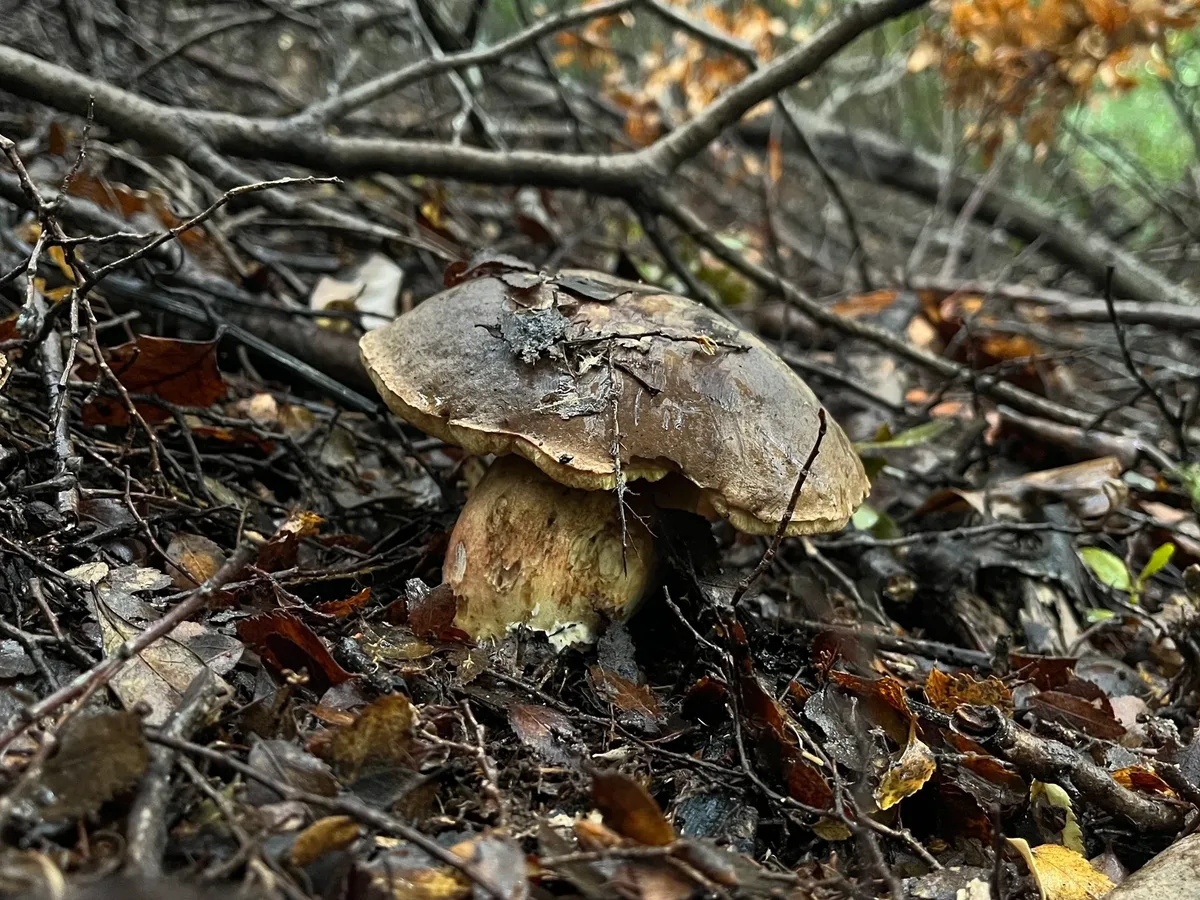 © Cristian Riquelme (CC BY)
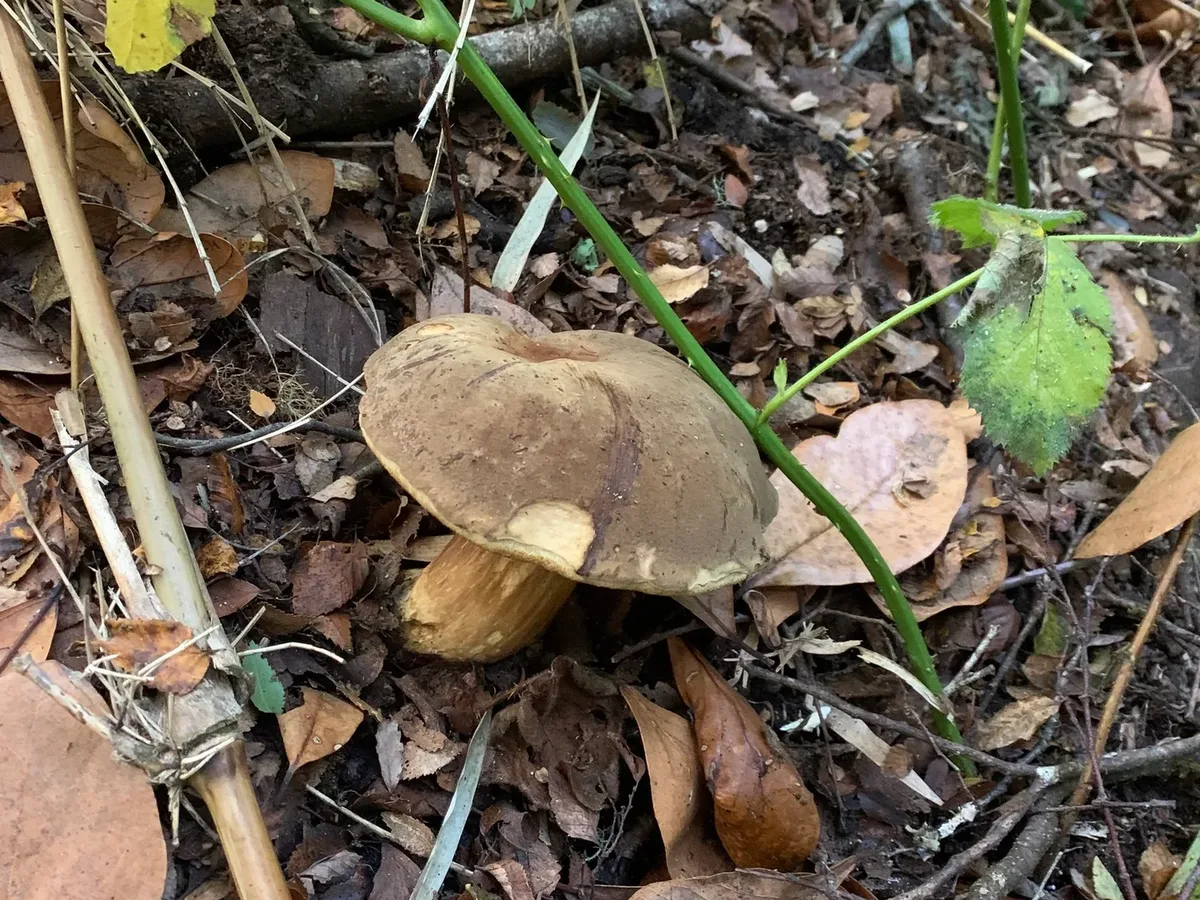 © nitsuga74 (CC BY)
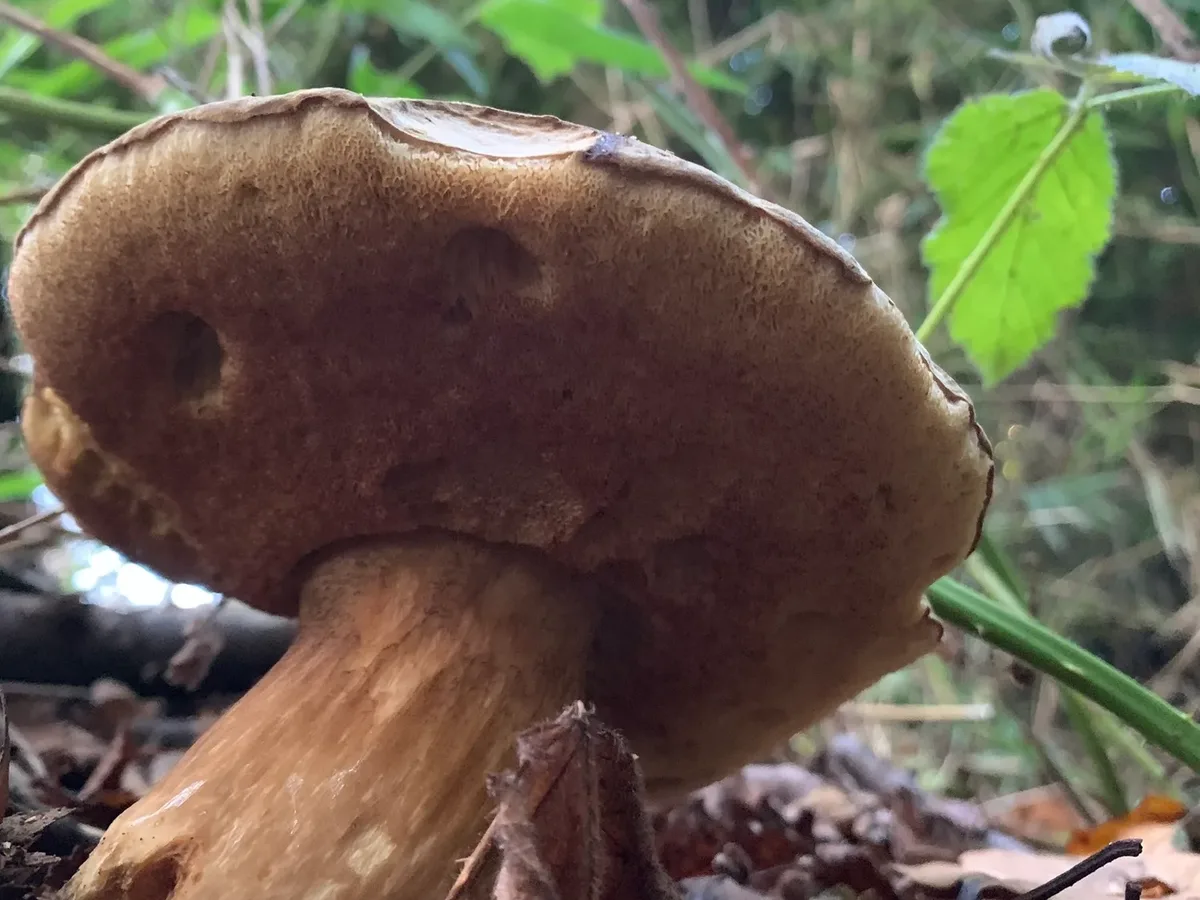 © nitsuga74 (CC BY)© nitsuga74 (CC BY 4.0)© Cristian Riquelme (CC BY 4.0)
Not poisonous, but not worth eating - too tough, bitter, or bland for the pot.
How to recognise it
When the Argentine mycologist Carlos Luigi Spegazzini described this bolete in 1887 from Patagonian specimens, he chose the epithet 'putidus' - Latin for fetid or stinking - and that name remains your best field guide.
The cap is a dull, muddy olivaceous-brown to greyish-brown, missing the warm hazel tones of its prized porcini relatives. The surface is dry to slightly tacky, the size is medium to moderately large, and the pores age from white to yellowish - all superficially porcini-like at a glance.
The blueing reaction, if it appears at all, is faint and inconsistent. The stem carries some reticulation but it is often indistinct. None of this, on its own, separates this species cleanly from edible relatives.
The smell does. Always nose a bolete before you basket it: a foul, rank, or fetid odor in a brownish bolete under Nothofagus is a firm stop signal. That smell is the clearest and most reliable identifier B. putidus has to offer.
Where & when it grows
Habitat
Boletus putidus lives in the temperate rainforests of southern South America - a biogeographically isolated world dominated by Nothofagus, the southern beeches.
These forests drape the flanks of the Andes from Araucanía south through the Chilean Lake District, Chiloé, and Aysén into Patagonian Argentina. They are genuinely ancient in character: the Nothofagus lineage has grown in this corner of the world since the supercontinent Gondwana broke apart.
Like the porcini of the northern forests, B. putidus is ectomycorrhizal - it threads its mycelium around Nothofagus root tips and trades mineral uptake for sugars from the tree.
That partnership ties it firmly to intact forest interior: deep, cool, with accumulated southern-beech leaf litter and reliable autumn moisture. You will not find it at degraded forest edges or in plantation stands.
When
As the austral summer fades in late February, cooling soil temperatures and the first sustained autumn rains shift the Patagonian forest into a different mood. That transition is what B. putidus waits for.
Fruiting runs from late February through May across the southern Chilean and Argentine range, with peak activity in March and April - the season's heart, when soil temperatures pass through the 8-15°C window.
- Around Temuco, Valdivia, and Bariloche, March-April is prime.
- Higher Andean sites have a compressed window concentrated in those same weeks.
- Maritime coastal zones can push the season into May.
A good year follows a summer that was warm but not parching, with autumn rains arriving on cue.
How it grows
Fruits singly or in scattered small groups, rarely forming dense clusters.
Fruitbodies push up through deep accumulations of Nothofagus leaf litter. From button to full expansion typically takes 7-14 days, depending on temperature and moisture.
Because this species is mycorrhizal - its mycelium bound in long-running partnership with its host trees - it tends to return to the same productive spots year after year, though the size of each flush varies with the season's weather.
Fruiting conditions
Fruiting is triggered by the onset of austral autumn conditions: soil temperatures cooling from summer highs toward the 8-14°C range, combined with sustained autumn rainfall of at least 15-20 mm over two weeks. The typical flush emerges 7-14 days after the triggering rain event. Season runs February-May in the Southern Hemisphere, peaking March-April (ISO weeks 9-15) across most of the Patagonian and Chilean Lake District range. Higher-elevation Andean sites have a shorter, earlier season; maritime coastal sites may have an extended season into May.
Look-alikes
In Nothofagus forests of southern South America, the most important comparisons are with other brownish boletes.
- Boletus loyo (now classified as Butyriboletus loyo): a prized edible of central Chile with a chestnut-brown cap and yellow flesh that does not blue. A related regional species, but it occurs at lower elevations under Nothofagus obliqua and is generally at lower latitudes; its pleasant smell and yellow flesh distinguish it.
- Various Suillus species: introduced into the region with plantation pines (exotic Pinus radiata plantations occur throughout southern Chile). Easily separated by their slimy caps and, in many species, a ring on the stem.
A cautious forager should always apply the smell test: any brownish bolete with a rank, fetid, or disagreeable odor in Nothofagus forest should be left alone.
There are no commonly reported deadly lookalikes for B. putidus in its South American range; no Rubroboletus (red-pored, toxic) species are established in this region.
The general bolete safety rule still applies: never eat any bolete with red or orange pores or flesh that blues intensely.
A prized edible bolete of central-southern Chile found under Nothofagus obliqua; has a deep chestnut-brown to reddish-brown cap, bright yellow pore surface, yellow flesh that does not blue, a pleasant nutty smell, and excellent flavour. Distinguished from B. putidus by yellow flesh colour, yellow pores (not white to cream), absence of fetid odor, and notably better flavour. Occurs at lower elevations than B. putidus's core range.
Introduced into southern Chile with European pine plantations and naturalised in some areas. Has a dark reddish-brown to liver-brown cap, often with a purple-brown tinge; white pores ageing yellowish; reticulate stem; pleasant, mild smell; white non-bluing firm flesh. Distinguished from B. putidus by its distinctly reddish-brown or liver-brown cap color, pleasant odor, and occurrence primarily under plantation pine rather than native Nothofagus.
Introduced to southern South America via pine plantations (Pinus radiata); found wherever exotic pine stands occur adjacent to or mixed with native Nothofagus forest. Distinguished by strongly slimy, glutinous, purplish-brown to chocolate cap, a prominent slimy ring on the stem, and glandular stem dots. The slimy cap is unmistakable compared to the dry to only slightly tacky cap of B. putidus. Not dangerous but lower culinary quality; some people experience mild gastrointestinal sensitivity.
In the kitchen
Picking & cleaning
Boletus putidus should not be collected for eating. No preparation method is known to improve the fetid odor or unpleasant taste - they are simply what this species is.
If you come across it, it is worth a photograph and a smell, then leave it to sporulate. The mycelium beneath it is part of the nutrient exchange that keeps its Nothofagus hosts healthy.
Cooking
Boletus putidus has no culinary use whatsoever. The fetid, rank odor that defines this species does not dissipate with heat, drying, or any other preparation method, and no cooking technique is known to render it palatable.
Do not attempt to cook or consume this mushroom. If collected accidentally, discard the specimen - do not add it to a mixed basket, as the odor can transfer to other mushrooms.
There is no traditional use of this species as food in any part of its South American range.
Good to know
Boletus putidus is not known to be poisonous - it has no confirmed toxins in the mycological literature. Its inedibility is due to organoleptic unacceptability (foul smell, unpleasant taste) rather than confirmed chemical toxicity.
No edibility trials have been systematically conducted on this obscure South American species, so it should be treated as inedible and avoided entirely. There is no culinary tradition of consuming this species.
If consumed accidentally in small amounts, no severe toxic reaction is expected based on available information, but the disagreeable taste would naturally prevent ingestion of significant quantities.
As with any wild mushroom, if consumption occurs and any symptoms develop, seek medical advice immediately.
A reference guide - never an edibility guarantee. When in doubt, leave it out.