Pine bolete
Boletus pinophilussyn. Boletus pinicola, Boletus pinophilus var. pinophilus, Tubiporus pinophilus
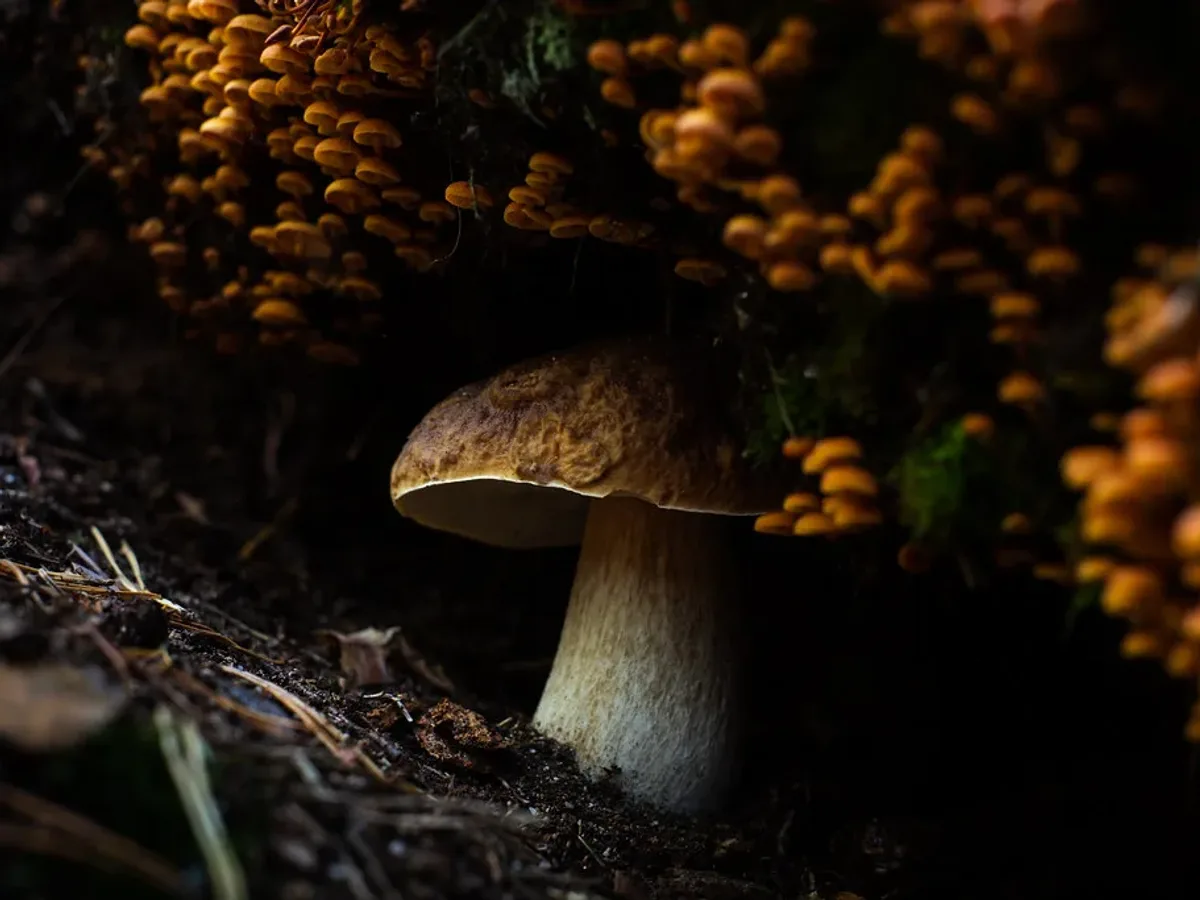 © Tero Karppinen (CC BY 2.0)
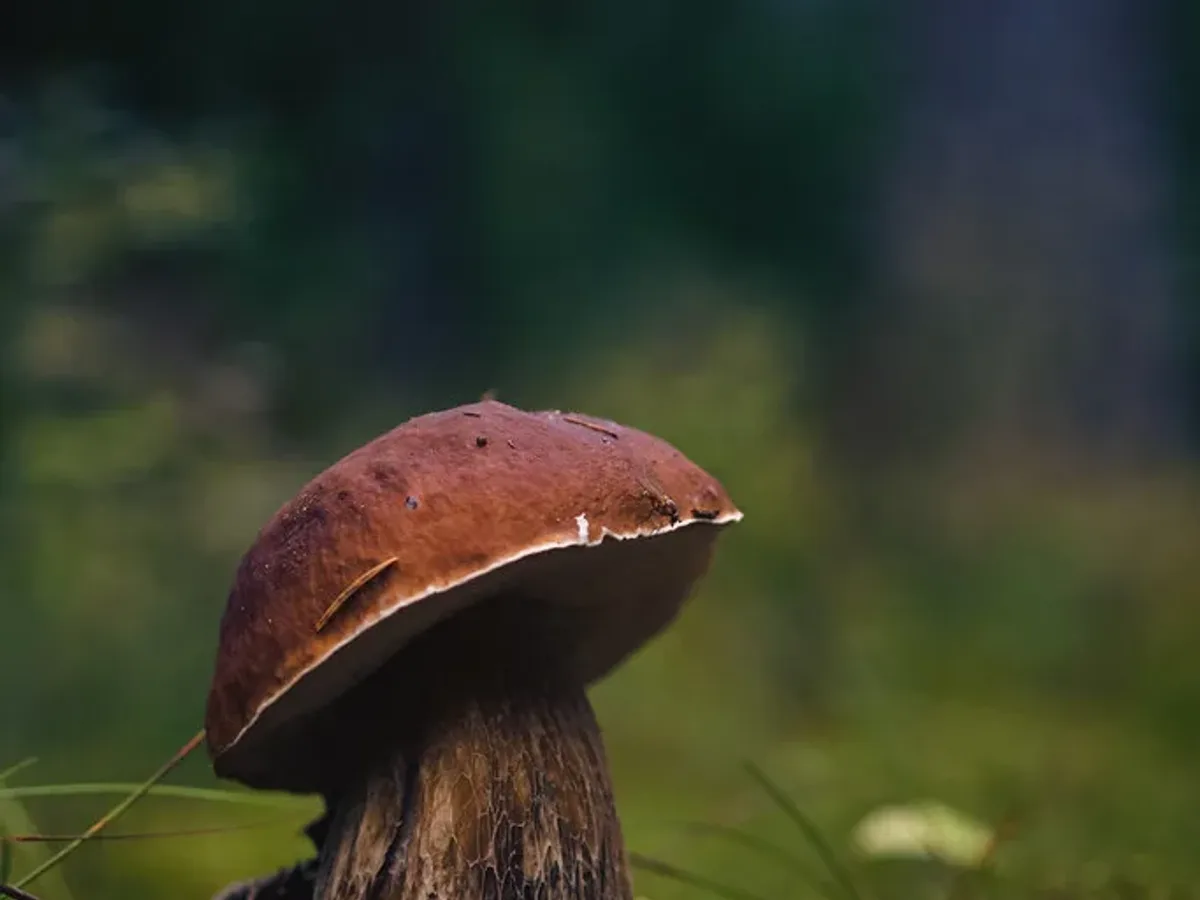 © Tero Karppinen (CC BY 2.0)
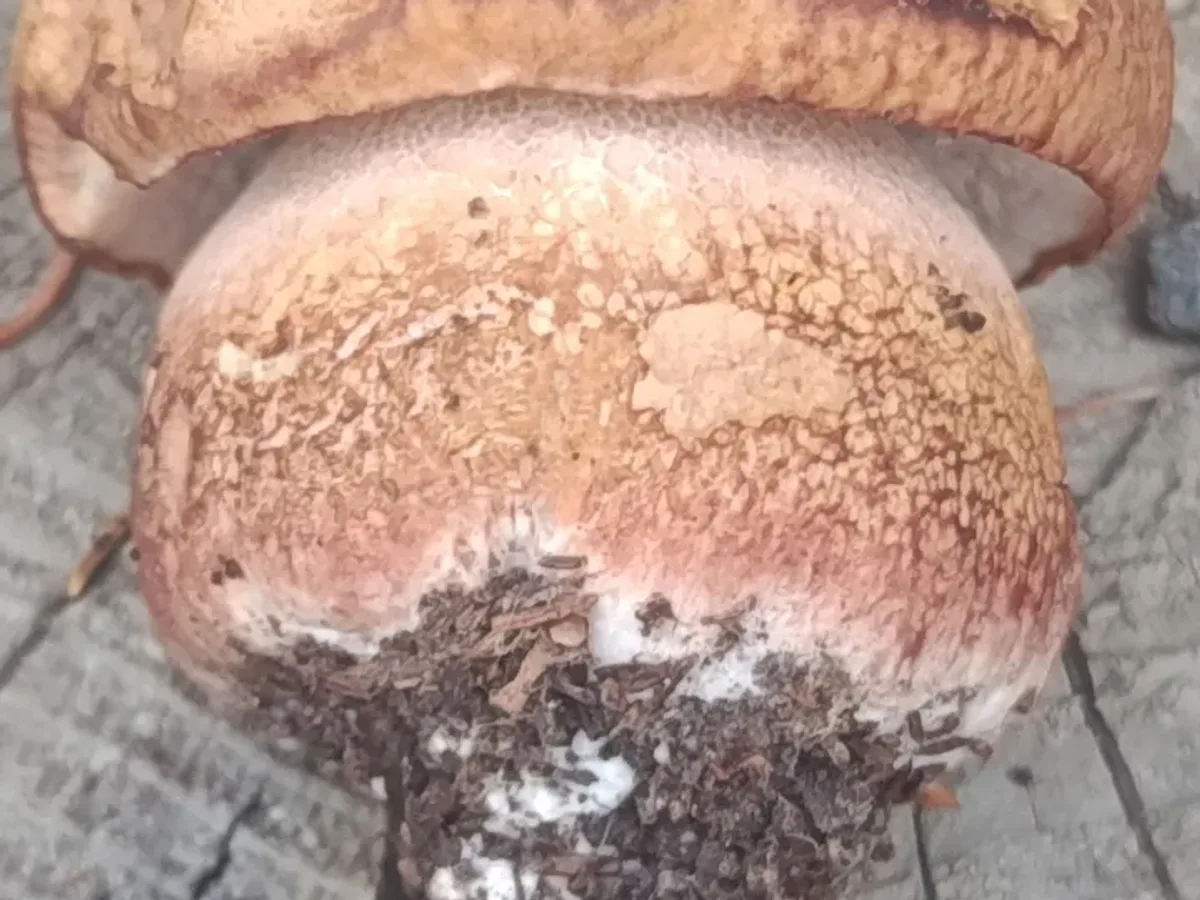 © Arild Skylstad (CC BY)
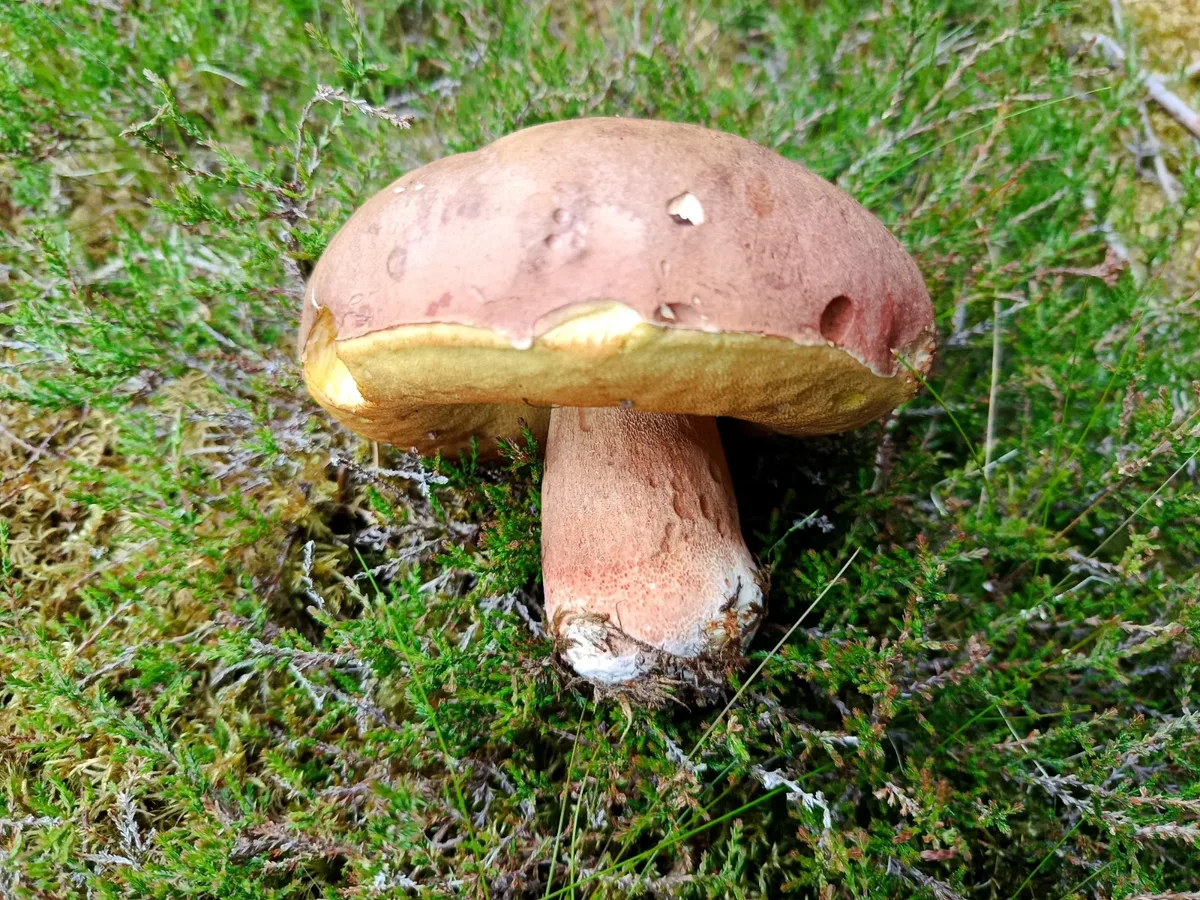 © Arild Skylstad (CC BY)
 © Arild Skylstad (CC BY)
 © Arild Skylstad (CC BY)
 © Tero Karppinen (CC BY 2.0)© Tero Karppinen (CC BY 2.0)© Tero Karppinen (CC BY 2.0)
One of the best mushrooms you can bring home - once you are certain of the identification.
How to recognise it
Boletus pinophilus is one of the four porcini species recognised in European mycology, and the one most closely tied to pine.
Cap
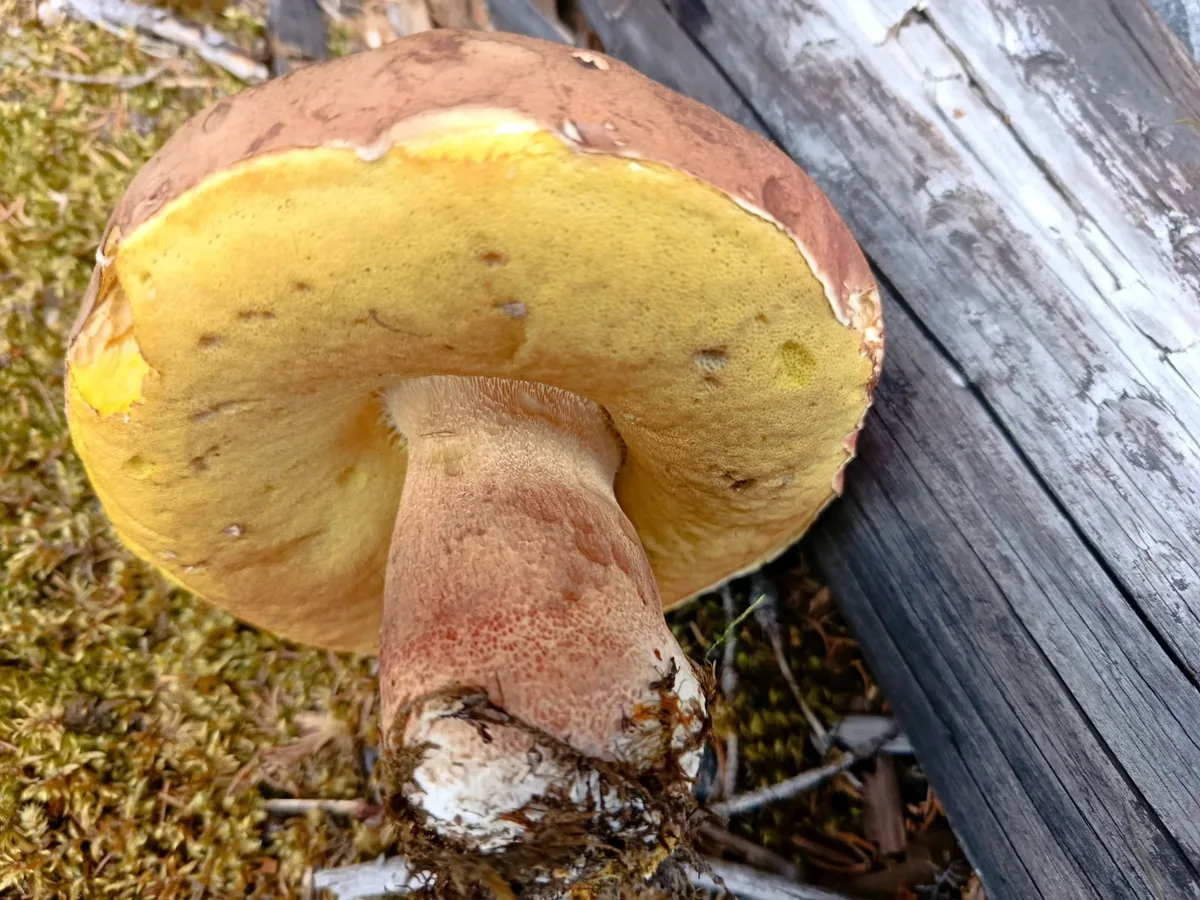
Immediately distinguished from the commoner Boletus edulis by its distinctly darker coloration: a rich reddish-maroon to chestnut-brown that can approach brick-red in mature caps, often with the characteristic pale, almost whitish marginal zone retained even into maturity.
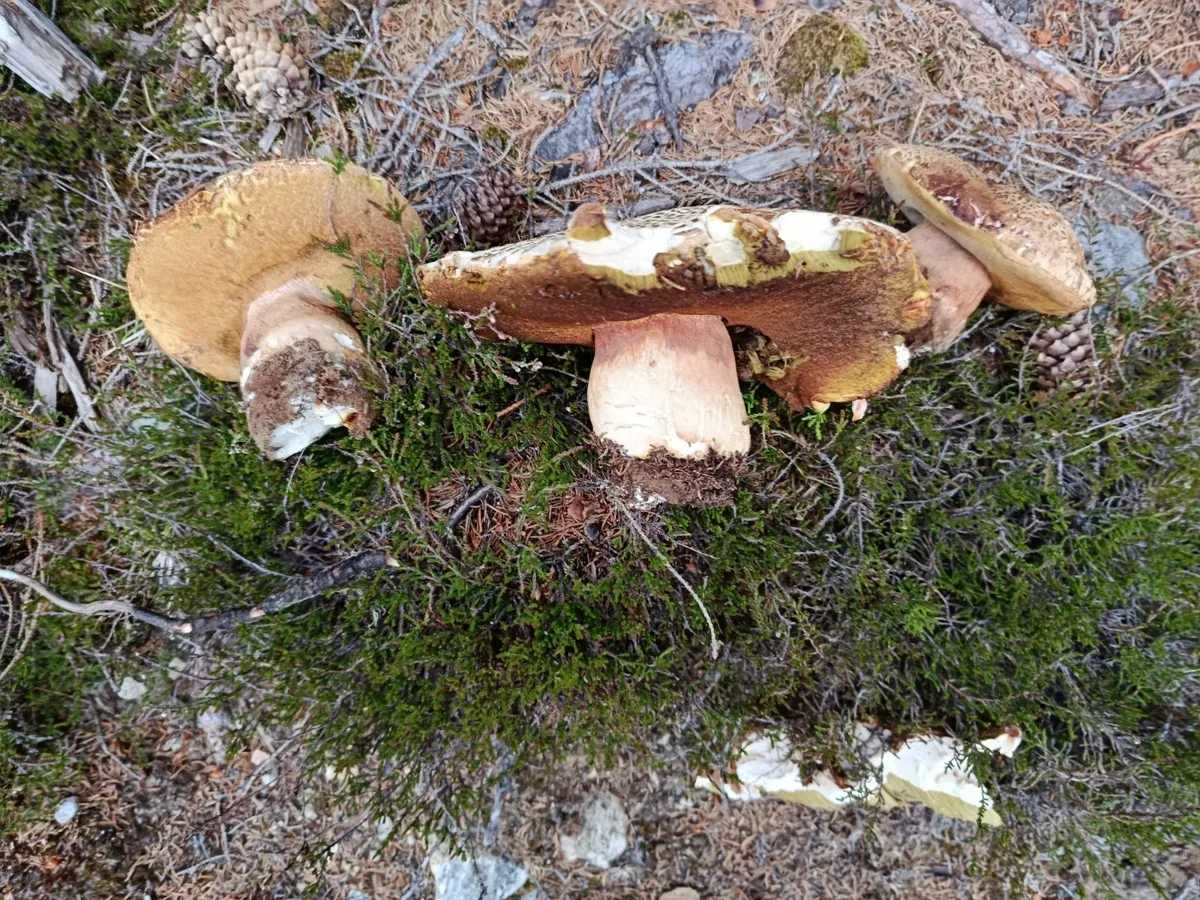
Young buttons are tightly hemispherical and very hard - almost stone-like - with a finely felty (tomentose) surface that becomes smooth or slightly polished with age. At full expansion caps can reach 25 cm across, though 8-15 cm is more typical.
Pores
The pore surface begins pure white, passing through cream and lemon-yellow to dull olivaceous-yellow as the spores ripen; the pores never blue when cut or bruised.
Stem
Characteristically stout and bulbous in youth - sometimes as wide as it is tall - and carries a conspicuous white-to-buff reticulation (net pattern) especially prominent on the upper third. This net may have a faint reddish wash on the lower stem.
Flesh
Brilliant white, firm, and does not change colour when sliced or exposed to air - a critical field mark separating it from bluing boletes.
Smell & taste
The smell is mild and agreeable, reminiscent of hazelnuts or freshly baked bread; flavour rich and nutty.
Where & when it grows
Habitat
A strictly ectomycorrhizal species forming associations almost exclusively with pines. Host trees vary by region:
- In Scandinavia and Scotland, Scots pine (Pinus sylvestris) is the overwhelmingly dominant host.
- In central Europe, Scots and Austrian pines are common hosts.
- In the Mediterranean basin, maritime pine (Pinus pinaster) and Aleppo pine (Pinus halepensis) are frequent partners.
The species strongly prefers acid, well-drained sandy soils - old heathland converted to pine plantation, coastal dune pine forests, and nutrient-poor glaciofluvial sandy plains are classic habitats.
It can fruit in sparse moss-and-lichen ground-flora or in bilberry (Vaccinium myrtillus) heathery understorey.
Look for it along rides and margins where light reaches the forest floor, and around the bases of older trees where the mycelium concentrates. Deep humus horizons in old-growth pinewood can support large perennial mycelial mats that produce abundant crops annually.
When
Across most of its range the pine bolete is a creature of late summer and autumn, timing its appearance to the first cool, wet nights after summer heat eases.
In northern Scandinavia and Scotland fruiting can begin as early as late June in a warm wet year, but the reliable season runs July through October, peaking in August and September.
Move south to Germany, Poland, and western Russia and the peak shifts a few weeks later - August into November.
In the Mediterranean, summer drought pushes the season all the way to autumn: the mushroom waits for the first significant rains and then fruits from October into December, or even January in mild coastal areas.
At altitude in the Alps and Carpathians, cooler conditions can extend the window later into autumn than at low elevations. The species is sensitive to early frosts, which rapidly deteriorate the flesh.
How it grows
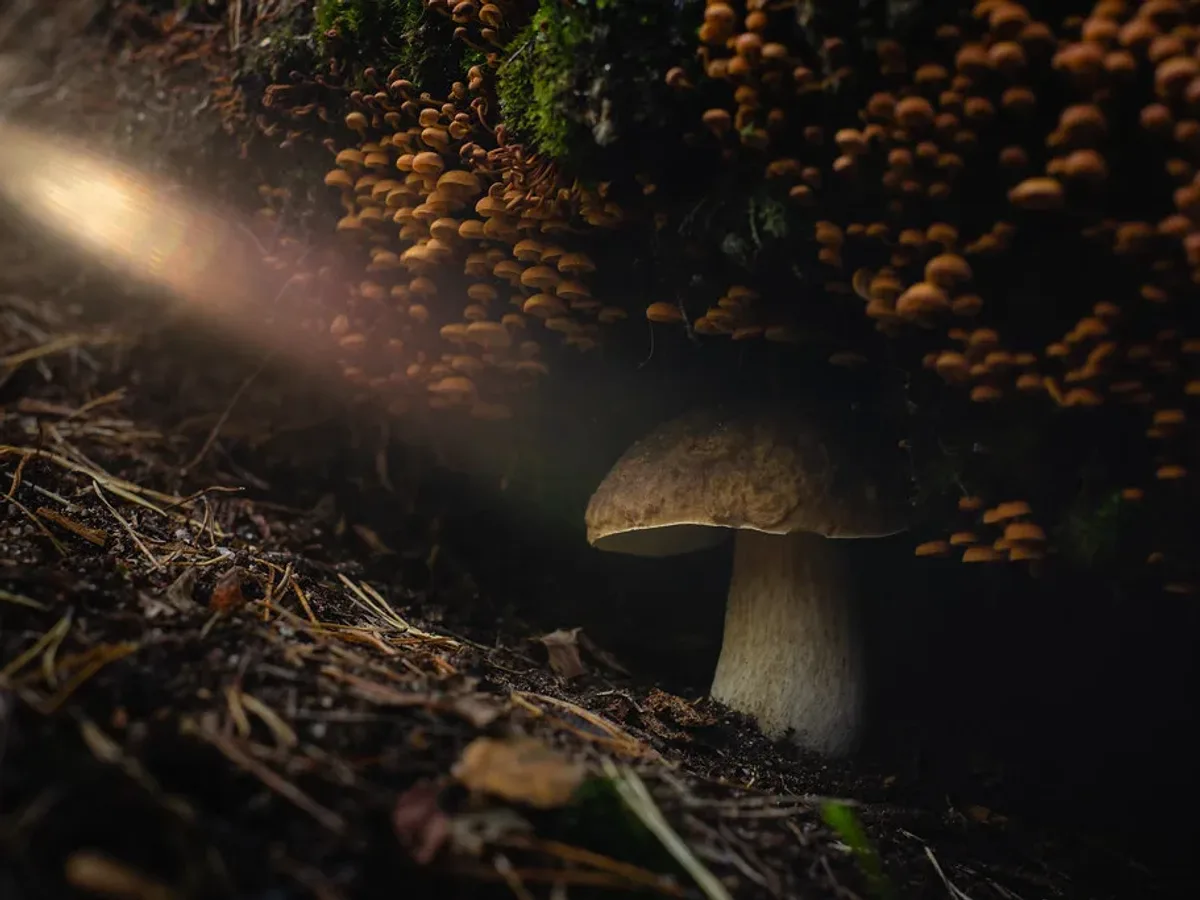
Fruits singly or in small scattered groups of 2-6, rarely forming dense clusters. Individual fruitbodies emerge from well-developed underground mycelial strands and may push up through leaf litter and moss.
The compact, button-stage fruit bodies can remain barely visible above the soil surface for several days in dry weather before expanding after rain. Growth after triggering rains is rapid: buttons can expand from egg-stage to full size within 4-7 days in warm moist conditions.
The species is strongly perennial in a given spot; productive trees may support fruiting for decades. Unlike Boletus edulis, B. pinophilus rarely fruits in large gregarious troops - individual trees tend to produce 1-4 fruiting bodies in a season.
Fruiting conditions
Fruiting is triggered by significant rainfall (minimum ~20 mm over 2 weeks) combined with soil temperatures between 8-18°C. The flush typically appears 7-14 days after a triggering rain event. Sandy soils warm and cool quickly, so the temperature window matters more than in clay soils. Summer heat above 22°C soil temperature suppresses fruiting even when moisture is adequate. In Scandinavia the first suitable conditions typically arise in late July or August.
Look-alikes
The most important comparison is with the three other European porcini:
- Boletus edulis - typically paler buff-brown cap, never as dark reddish-maroon, and broader habitat including spruce and beech.
- Boletus reticulatus - summer species under broadleaves, paler surface, more wrinkled cap margin.
- Boletus rex-veris - higher altitude, more olive-brown tones, associated with spruce and fir in subalpine zones.
None of these are harmful and all are equally choice - misidentification among porcini is gastronomically inconsequential.
Of greater safety concern is confusion with Tylopilus felleus (bitter bolete). This species shares the reticulate stem and similar stature but has pink to pale rose pore surface when mature (never white or yellow), a much coarser darker reticulum on the stem, and flesh that tastes extremely bitter - a single bite is diagnostic and should be spat out immediately.
Rubroboletus satanas (Satan's bolete) is sometimes cited as a lookalike for inexperienced foragers, but it has a pale whitish to greyish cap (never dark brown or reddish), brilliant red pores and stem base, and strongly bluing flesh - the combination of features makes confusion with B. pinophilus extremely unlikely for anyone reading the description carefully.
General rule: never eat a bolete with red or orange pores, or with flesh that turns blue when cut.
Shares large size and reticulate stem but differs decisively: pore surface is white then turns rose-pink to flesh-pink at maturity (never yellow); the stem reticulum is coarser and dark brown on a brown background; flesh is intensely bitter - a tiny nibble (spit out immediately without swallowing) confirms immediately; not lethally toxic but causes unpleasant gastrointestinal upset and ruins any dish it contaminates.
B. edulis has a paler, buff to light chestnut-brown cap without the deep reddish-maroon tones; it fruits under a wider range of trees including spruce and beech; both are equally edible and choice - no safety concern in confusion.
Superficially large and bolete-shaped but completely different: cap is pale whitish to greyish-white, never dark brown or reddish; pores and stem base are vivid red to orange-red; flesh immediately turns deep blue when cut - this combination of features is unmistakable and makes confusion with B. pinophilus extremely unlikely. Causes severe gastrointestinal poisoning (violent vomiting, abdominal pain, diarrhoea) when raw or undercooked; avoid all boletes with red pores or bluing flesh.
B. rex-veris is an alpine to subalpine species under spruce and fir above 1000 m; cap is more olive-brown to ochre-brown; stem coarser and often with pinker tones; equally edible - no safety concern.
B. reticulatus is a summer species (May-July) under broadleaved trees (oak, beech, hornbeam), with a paler ochraceous-buff cap and more wrinkled cap margin; flesh equally white and non-bluing; equally choice edible.
In the kitchen
Picking & cleaning
Harvest young to medium-aged specimens for best table quality; the flesh of very large, old caps becomes spongy and is readily attacked by fly larvae (primarily Pegomya and Mycetophilid species). At the button stage the flesh is firmest and flies have had the least opportunity to colonise.
In the field:
- Twist gently from the ground rather than cutting, or cut cleanly at soil level if leaving a neat forest floor matters.
- Brush debris from the cap with a soft brush.
- Check the stem base for larvae tunnels - infested specimens should be left to sporulate.
The dark cap colour and firm texture mean B. pinophilus holds up exceptionally well to drying; it is arguably the finest porcini for air-drying, producing a powerfully fragrant dried product.
Cooking
Boletus pinophilus is considered by many Scandinavian and Eastern European foragers to be superior in flavour intensity to Boletus edulis, with a deeper, more resinous-nutty aroma that is amplified by pine-forest terroir.
It is extraordinarily versatile:
- Sauté thick slices in butter with garlic and thyme as a standalone dish.
- Add to risotto, pasta, or polenta.
- Incorporate into stocks, gravies and sauces for deep umami.
- Add to pies and tarts.
For drying, slice caps 5-8 mm thick and dry at 40-50°C until brittle; dried slices rehydrate beautifully and the soaking liquor is a precious concentrated stock base.
Freezing (after a brief blanch or sauté) preserves flavour well for 6-12 months.
The stems, though slightly tougher, have excellent flavour and should not be discarded - they are excellent diced finely and used in stuffings or duxelles.
Good to know
Boletus pinophilus is a completely safe, choice edible mushroom with no confirmed toxins.
The only risks are:
- 1Confusion with Tylopilus felleus, which is not poisonous but causes gastrointestinal distress through extreme bitterness - confirmed by tasting a tiny piece of raw flesh and spitting it out immediately without swallowing.
- 2Maggot-infested specimens causing gastrointestinal upset if consumed in large quantity - always inspect the stem cross-section.
- 3Like all boletes, it should be cooked before consumption, as eating raw porcini can cause mild gastric irritation in some individuals.
The species has no deadly lookalikes within the pine-forest ecosystem when identified using the full suite of characters:
- Dark reddish-maroon cap
- White non-bluing flesh
- White-to-yellow pores
- White reticulated stem
Universal bolete safety rule: reject any bolete with red or orange pores or flesh that blues on cutting.
A reference guide - never an edibility guarantee. When in doubt, leave it out.