Pichiloyo
Boletus loyita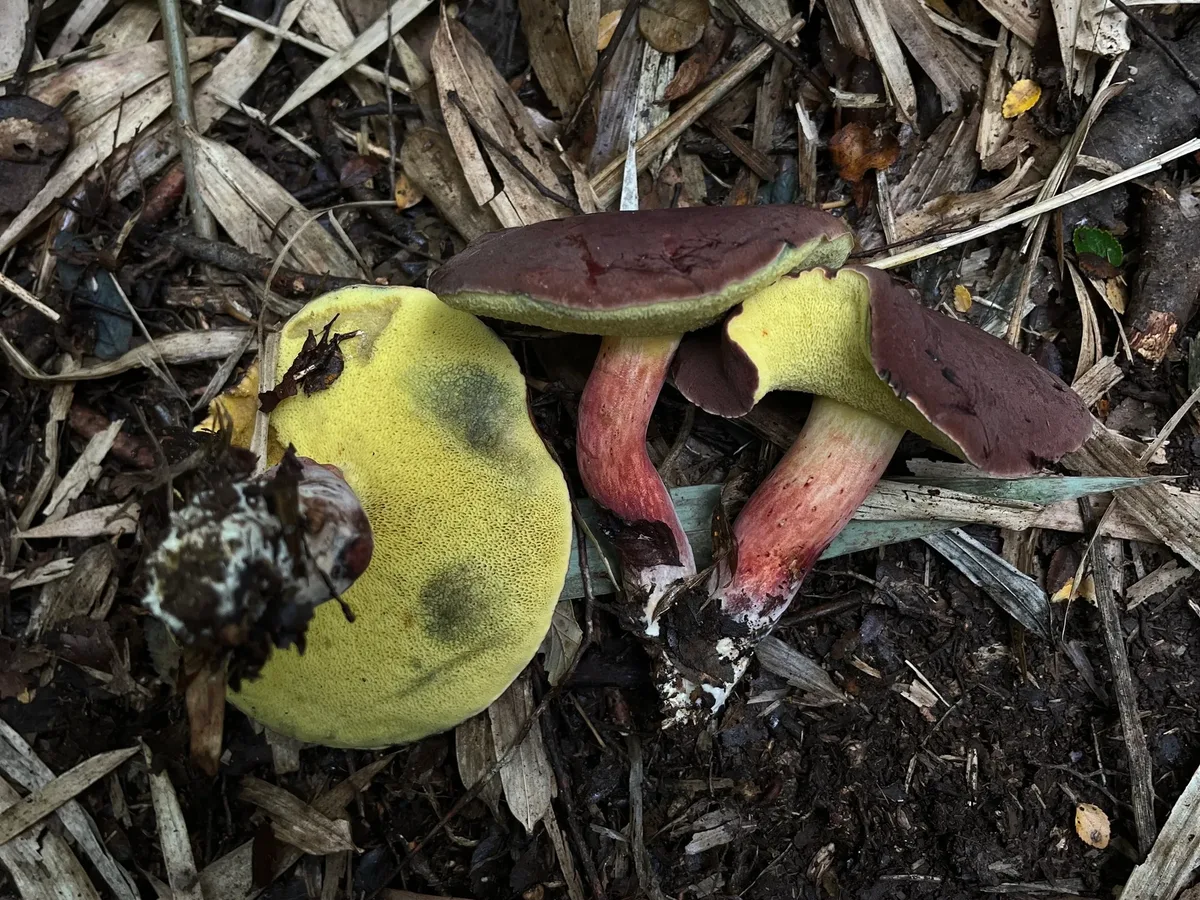 © Cristian Riquelme (CC BY)
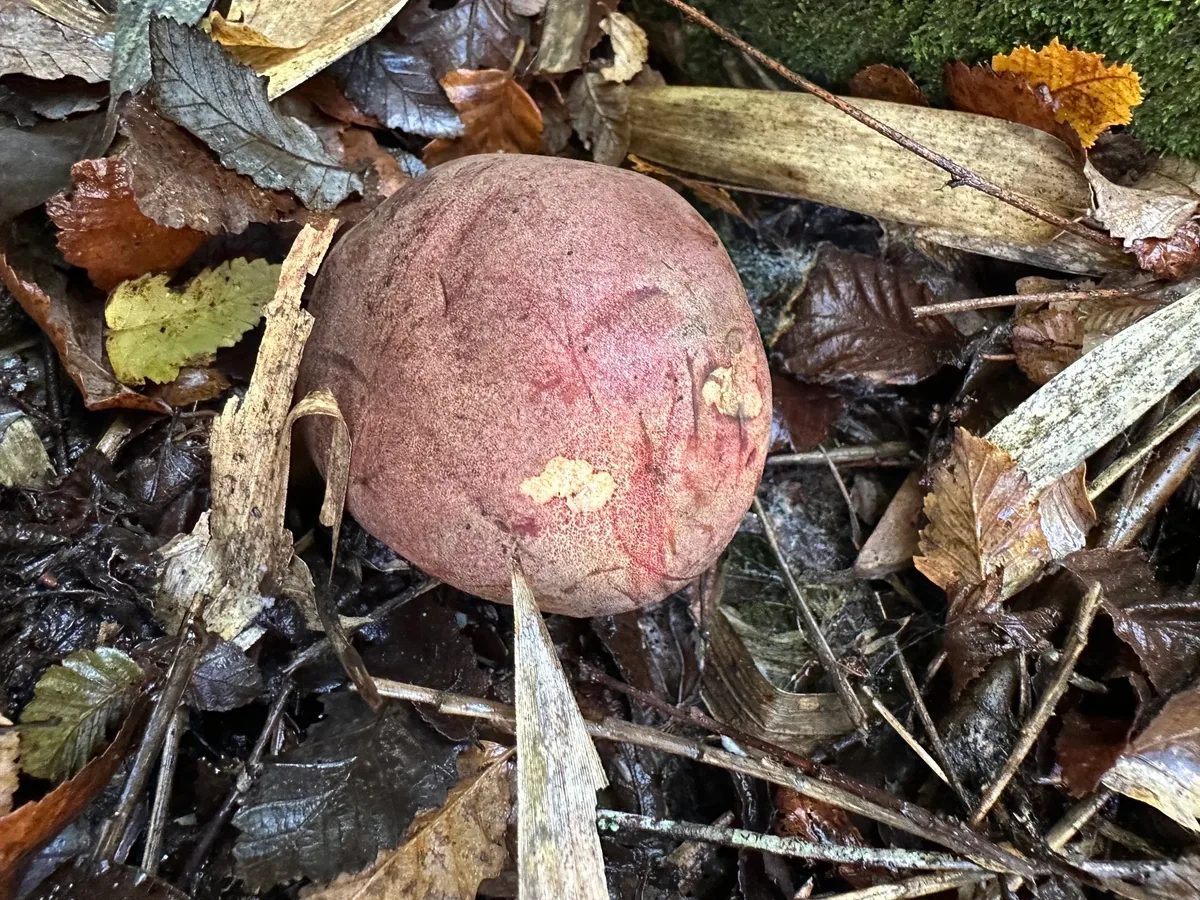 © nitsuga74 (CC BY)
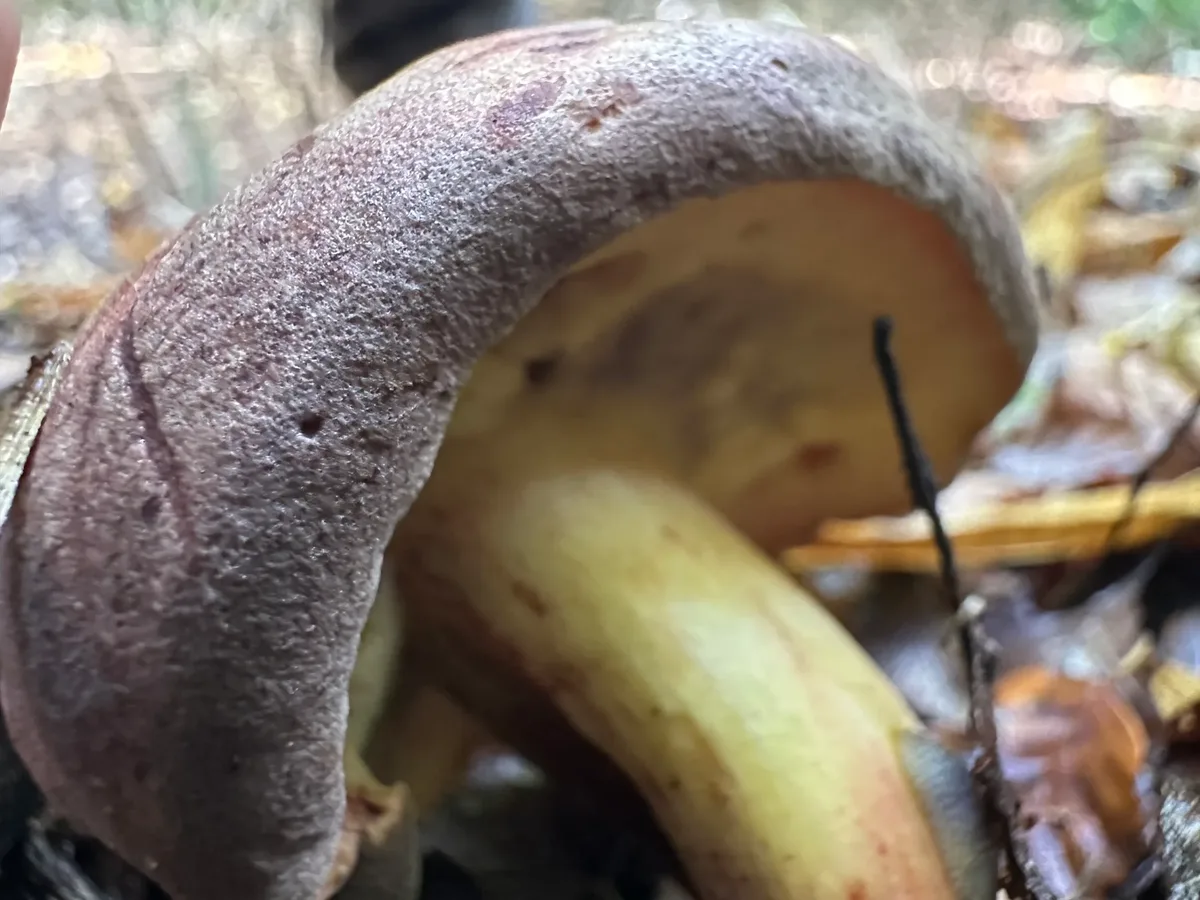 © nitsuga74 (CC BY)
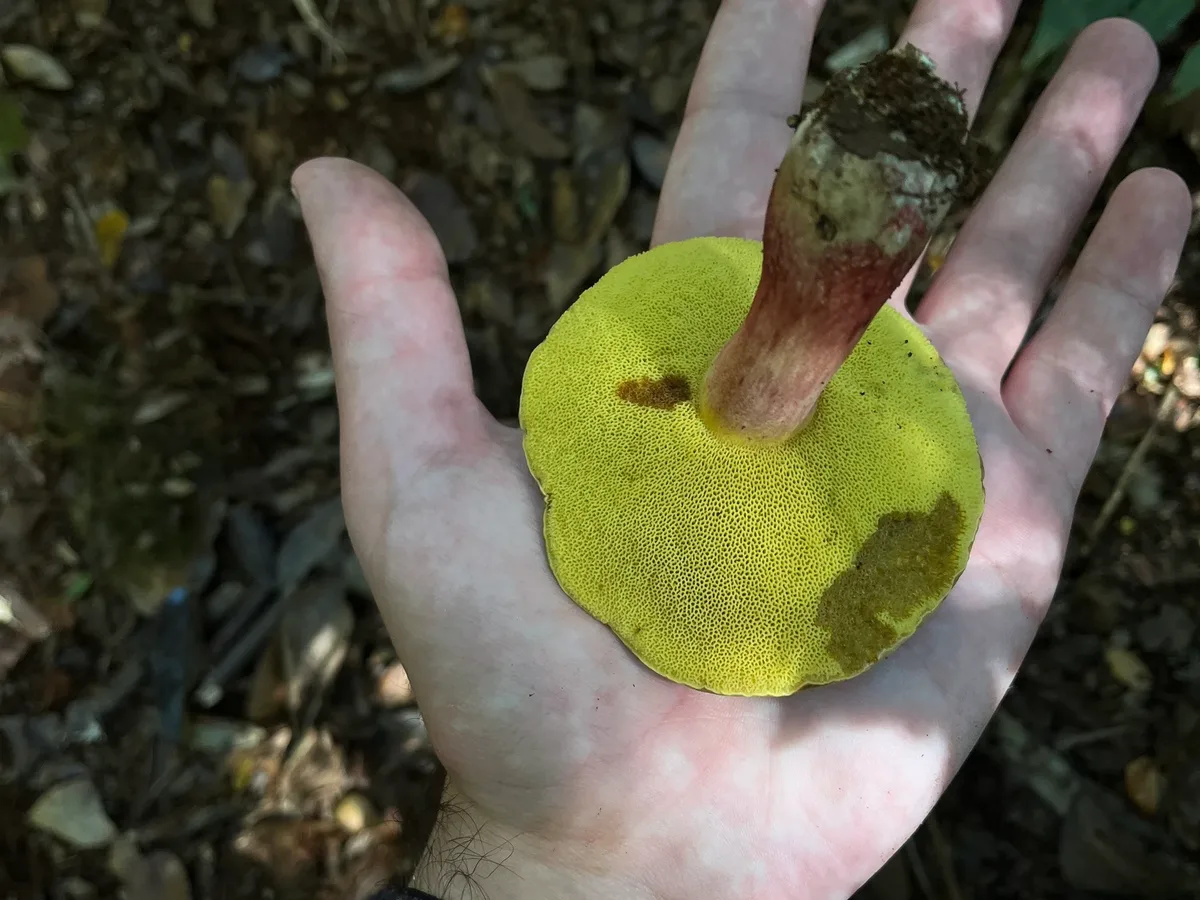 © Cristian Riquelme (CC BY)© Cristian Riquelme (CC BY)© nitsuga74 (CC BY)
Edible only with the right preparation - or safe for some people but not others. Learn the caveats first.
How to recognise it
Boletus loyita's common names - Pichiloyo in Mapudungun and Loyita in Spanish - both mean the same thing: 'little loyo'. The name is both affectionate and accurate.
Where its celebrated relative Butyriboletus loyo can produce caps thirty-five centimetres across and fruitbodies weighing several kilograms, B. loyita is a decidedly more modest mushroom: typically 3-12 cm across, compact rather than massive, a small-to-medium bolete of quiet, brownish demeanour.
Cap
The cap is chestnut-brown to dark reddish-brown, dry and slightly velvety to the touch, and does not gloss up or become slimy even after rain.
Gills / Pores
The underside carries small, finely packed pores that are pale cream-yellow when young and age to a dull olive-yellow, occasionally bruising faint blue-green when pressed - a reaction that in many specimens is weak or absent, quite unlike the vivid bluing of many European boletes.
Stem
The stipe is stout relative to the cap, pale buff to yellowish-buff, with a brownish reticulate net of raised ridges on the upper portion that links it visually to the broader porcini family.
Flesh
Slice the mushroom open and the flesh is white to pale yellowish, firm and dense at the button stage, slow to discolour.
Smell & taste
The smell is mild and pleasant.
Nothing about this mushroom suggests danger, and nothing shouts for attention - it is a quieter presence in the forest than its famous cousin.
Where & when it grows
Habitat
Boletus loyita is woven into the ecology of the Nothofagus forests of southern South America just as the loyo is, but it has a broader latitudinal range.
Where the loyo is essentially restricted to central-southern Chile between Maule and Los Lagos, the loyita ranges further south into Aysén and crosses the Andes more readily into Patagonian Argentina - Neuquén, Río Negro, and possibly Chubut.
Like all members of the bolete-porcini alliance, it is an obligate ectomycorrhizal fungus: its mycelium threads tightly around the fine feeder roots of Nothofagus trees in a chemical exchange of minerals for photosynthate, a partnership that is non-negotiable and non-transferable.
This means the loyita cannot be cultivated, cannot survive outside intact native forest, and will not appear in plantation stands of introduced species.
The forest floor it favours is the rich, dark, humus-laden duff beneath mature southern beeches - roble, coihue, raulí, lenga, ñirre - where a deep accumulation of fallen leaves and litter over the mycorrhizal root mat creates exactly the stable, moist substrate the mycelium needs to persist through seasons when fruiting is not triggered.
The same productive spots under old Nothofagus trees may produce year after year, making local ecological knowledge a real asset for anyone who knows these forests.
When
As the austral summer gives way to autumn - roughly late February in warmer coastal forest, early March in the Andean foothills - cooling soil temperatures and the first persistent autumn rains shift the Nothofagus forest into its productive mycorrhizal moment.
Boletus loyita fruits throughout this window, broadly February to May, peaking in March and April across most of its range.
The timing in any given spot is governed less by calendar date than by the convergence of two conditions:
- Soil temperature falling through the 8-15 °C band at root depth.
- Adequate soil moisture provided by autumn rainfall following the summer's dry period.
A flush typically emerges 7-14 days after a triggering rain event.
Years in which the summer is warm and moderately dry - stressing the mycelium productively - and then a steady autumn rain arrives on schedule tend to produce the most rewarding seasons. Years with early summer rains or prolonged autumn drought can compress or delay the season considerably.
How it grows
Boletus loyita fruits singly or in small scattered groups, occasionally in loose partial arcs tracing the outer edge of an expanding underground mycelial colony.
Like all ectomycorrhizal boletes, the visible fruitbody is only the surface expression of a mycelial network that may have been growing in partnership with its Nothofagus host for many years or even decades.
This long-lived subterranean architecture means productive spots return reliably across seasons. The fungus does not depend on seed dispersal or establishing anew each year - it simply fruits when conditions align.
Growth from a pinhead to a full-sized cap takes roughly 7-14 days under typical autumn conditions. The pace is fastest when soil temperatures sit in the optimal 10-14 °C range and moisture is consistent.
Fruiting conditions
Fruiting is triggered by austral autumn conditions: soil temperatures cooling through the 8-15 °C range combined with sustained autumn rainfall of at least 15-20 mm over two weeks following the summer dry period. Flushes typically emerge 7-14 days after the triggering rain event. Season runs broadly February-May in the Southern Hemisphere, peaking March-April (ISO weeks 9-15) across most of the Chilean and Patagonian Nothofagus range.
Look-alikes
In the Nothofagus forests of southern South America, Boletus loyita's most important comparison is with its own larger relative, Butyriboletus loyo (the loyo).
The loyo is substantially larger in all dimensions - caps routinely exceeding 20-35 cm across and individual fruitbodies sometimes weighing several kilograms - and its flesh turns more vividly blue on cutting, giving a rapid, unmistakable reaction.
The loyo is also an IUCN Endangered species subject to legal protection in Chile and should not be harvested without following the Fungi Foundation's sustainable harvest protocol; the loyita is a different species.
Boletus putidus, another Nothofagus-associated bolete of the same region, is separable by its distinctive fetid, rank, disagreeable odour - entirely unlike the mild, pleasant smell of B. loyita. Any brownish bolete in these forests with an unpleasant or foul smell should be set aside; the loyita always smells agreeable.
Various Suillus species have been introduced to southern South America through pine plantations; these are easily distinguished by their slimy caps and, in several species, a slimy ring on the stem.
There are no documented deadly lookalikes for B. loyita in its South American Nothofagus forest range; no Rubroboletus (red-pored, lethal) species is established here.
The general bolete safety rule still applies as an absolute backstop: never eat a bolete with red or orange pore surfaces.
The loyo is far larger - cap commonly 20-35 cm across, sometimes weighing several kilograms - versus B. loyita's modest 3-12 cm cap. The loyo's flesh also turns more vividly and rapidly blue on cutting. Both grow under Nothofagus in southern Chile and Argentina. The loyo is IUCN Endangered and legally protected in Chile; do not confuse the two when making harvesting decisions. Confusion between them is harmless from a toxicology standpoint as both are edible, but the conservation status of the loyo requires accurate identification.
Introduced to southern South America through pine plantations and common wherever Pinus radiata is grown, sometimes adjacent to Nothofagus forest. Easily distinguished by the strongly slimy, glutinous, purplish-brown to chocolate cap; a slimy membranous ring on the stem; and glandular dots on the stem below the ring. No resemblance to B. loyita's dry, velvety, reticulate character. Not toxic, but lower culinary quality; some people experience mild gastrointestinal sensitivity.
Grows in the same Nothofagus forests and has a similar brownish cap and cream-to-yellowish pores, making superficial confusion possible. Separated immediately by its characteristic fetid, rank, disagreeable odour - the defining and unmistakable character of B. putidus. Boletus loyita always smells mild and pleasant. Always smell a bolete before collecting: if it smells bad, it is not B. loyita.
In the kitchen
Picking & cleaning
Pick young to medium-aged specimens with firm, dense flesh and pores that have not yet turned deep olive-drab - at this stage the eating quality is best and, critically, spore dispersal is still largely complete.
- Cut cleanly at the base of the stipe with a knife; avoid pulling, which can tear the mycelium.
- Fill any small depression with loose soil or leaf litter.
- Carry in an open-weave basket.
- Inspect the cut stipe cross-section for insect larvae - a small amount is normal, but heavily maggoty specimens are best left behind.
Consume within 2-3 days or dry slowly at 40-50 °C for storage; the flesh holds reasonable flavour when dried.
Because the loyita, like the loyo, is a wild mycorrhizal species that cannot be farmed, harvest with restraint: take from abundant flushes, leave smaller buttons, and never clear an entire visible group.
Cooking
Boletus loyita does not match the culinary prestige of its large relative the loyo, but it is a worthwhile edible on its own terms - mild, pleasant, with a flavour in the broad porcini tradition that is more delicate than the intensely savoury loyo.
Young, firm specimens are best: slice thickly and sauté in butter or olive oil over medium-high heat with garlic and salt until the cut surfaces are lightly golden. The flesh holds reasonable structure through cooking and does not become watery.
It pairs well with egg dishes, potatoes, simple pasta, and soups - preparations that let its mild, nutty flavour contribute without being overwhelmed.
Drying at 40-50 °C concentrates the flavour and provides a useful storable product; rehydrate in warm water and include the soaking liquor in the dish.
The species is sometimes used in the same contexts as the loyo by communities that gather both, though B. loyita is generally treated as the everyday, accessible counterpart to the larger and more prized - and now legally protected - loyo.
Good to know
Boletus loyita has been consumed by communities across southern South America - including Mapuche and other Indigenous groups in Chile and Argentina - without documented cases of poisoning, and it has no confirmed toxins in the mycological literature. It is considered a legitimate edible of the Nothofagus forest country.
However, as with all wild boletes, some practical caution is warranted:
- 1Always cook before eating - raw boletes, including this species, may cause gastrointestinal irritation in sensitive individuals because of heat-labile compounds in the flesh.
- 2Confirm identification by smell - any brownish Nothofagus-forest bolete with a fetid or rank odour is not this species and should not be eaten (Boletus putidus grows in the same habitat and is inedible).
- 3Be confident about the pore colour: if a bolete in these forests has red or orange pores, do not eat it under any circumstances. B. loyita has pale yellowish-cream to olive-yellow pores and mild white-to-cream flesh.
If any stomach symptoms develop after consumption, seek medical attention promptly and bring a sample of the mushroom.
A reference guide - never an edibility guarantee. When in doubt, leave it out.