Fragrant bolete
Boletus fragrans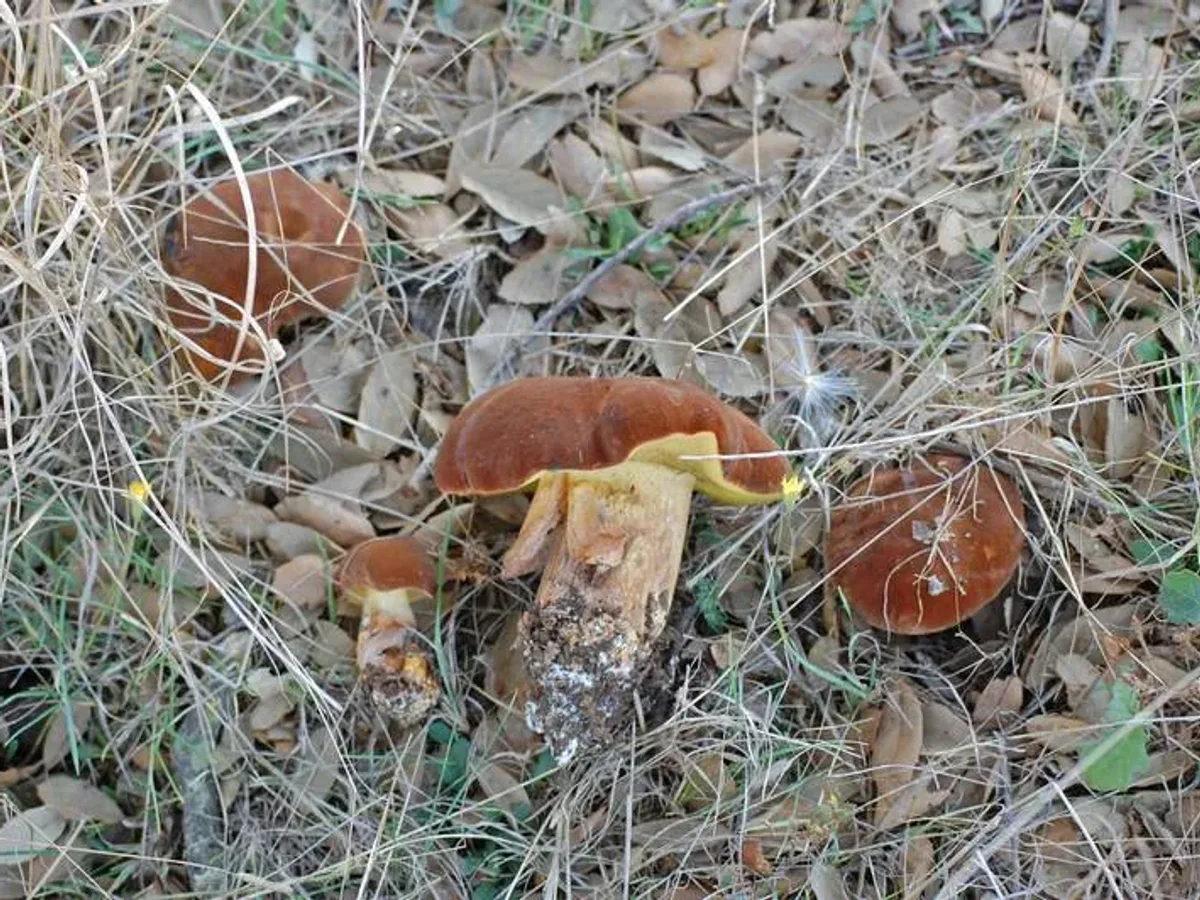 © Davide Puddu (CC BY)
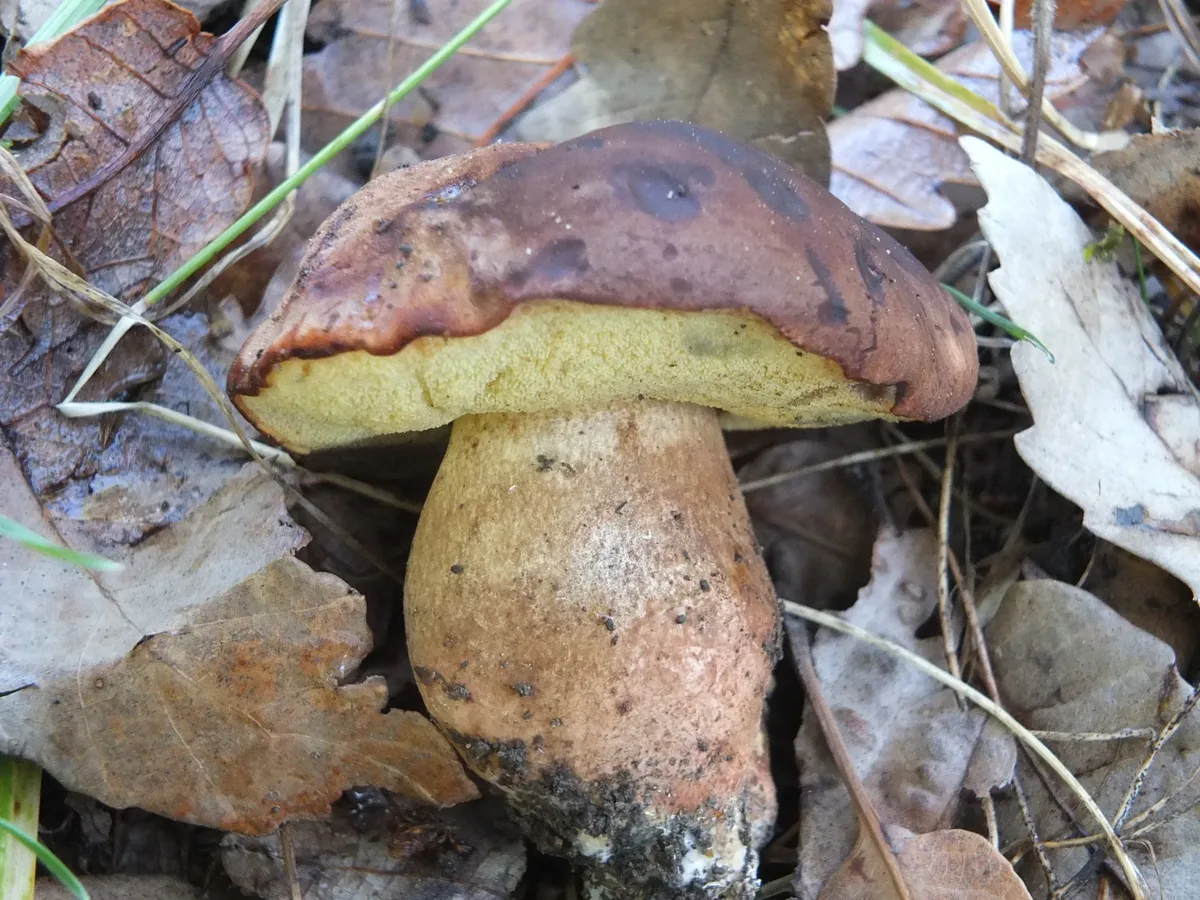 © Aissa Djamel Filali (CC BY-SA)
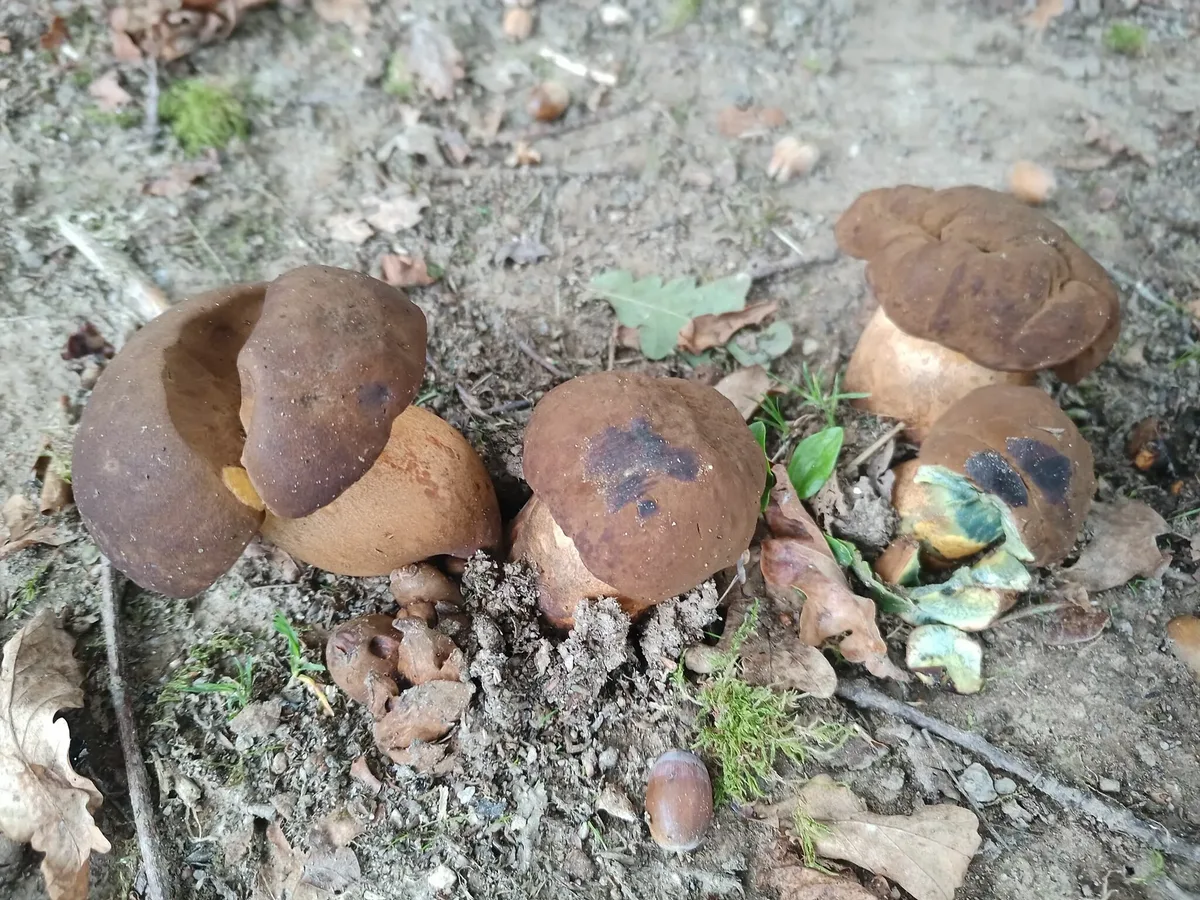 © Óscar Sampedro (CC BY)
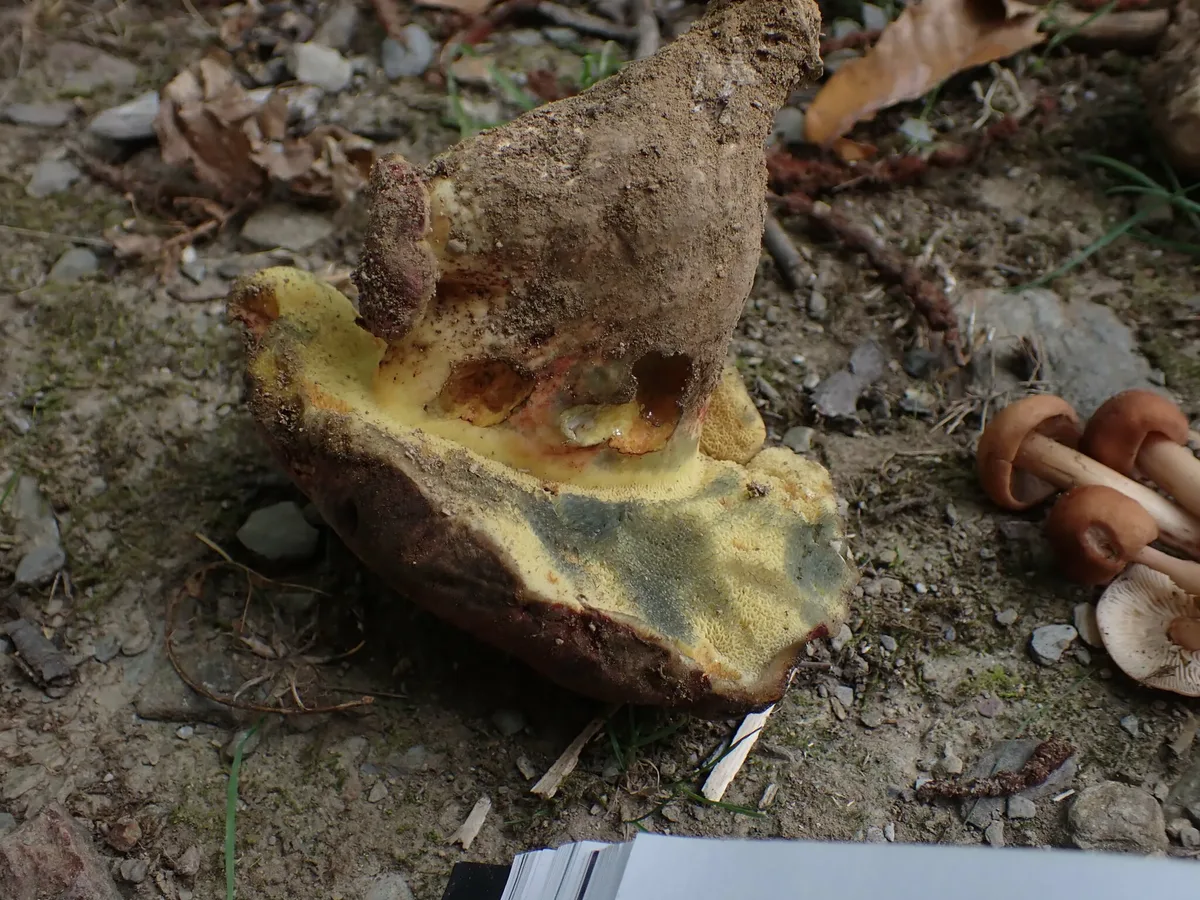 © Franck Cabot (CC BY)
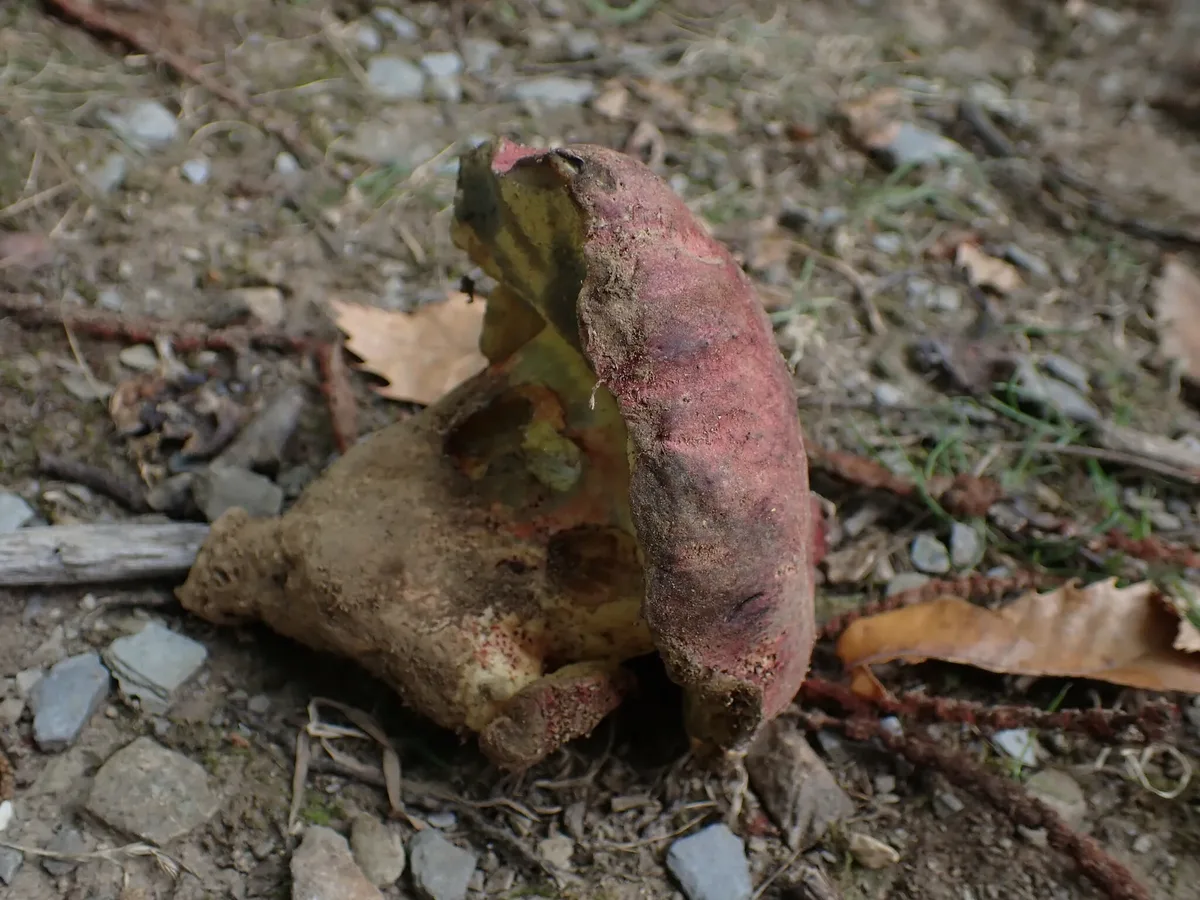 © Franck Cabot (CC BY)
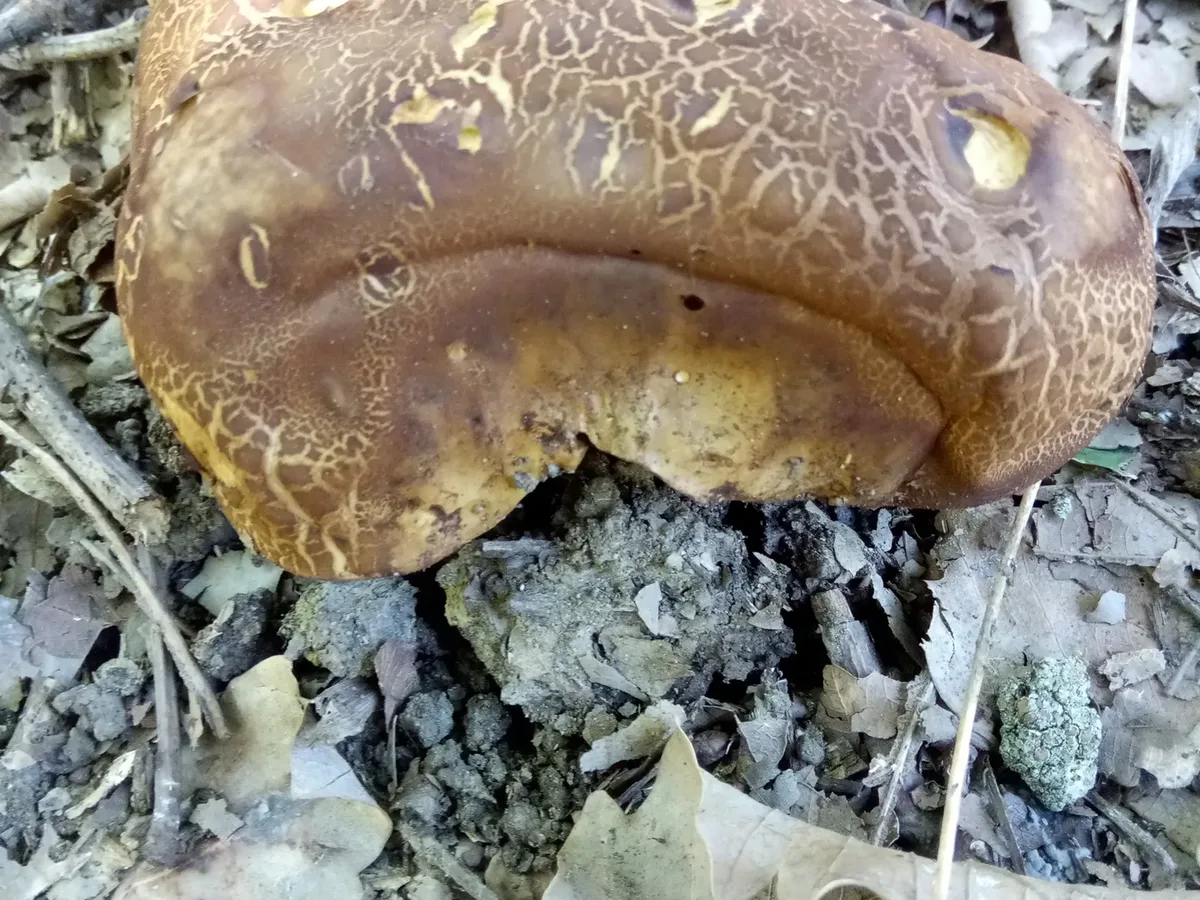 © Karim Haddad (CC BY)© Davide Puddu (CC BY)© Aissa Djamel Filali (CC BY-SA)
One of the best mushrooms you can bring home - once you are certain of the identification.
Never eat a mushroom you are not 100% sure of - check the look-alikes below, and always cook wild mushrooms.
How to recognise it
Cap
Cap 6-15 cm across, convex then slowly broadening and flattening with age, smooth to finely downy, chestnut-brown to hazel-brown with paler buff tones toward the margin.
Pores
Pores fine, white when young, turning creamy-yellow with age; they neither bruise blue nor redden - always verify both of these points before consumption.
Stem
Stem 5-12 cm tall, 2-5 cm thick, conspicuously swollen at the base, pale buff to tan, clothed in a well-defined pale reticulum over most of its surface.
Flesh
Flesh firm and white throughout, not discolouring when cut or broken - the absence of any bluing reaction is the single most important identification feature in the bolete group.
Smell & taste
Lift a fresh specimen to your nose: a mild, pleasant, faintly fruity or nutty aroma greets you - the very quality that earns it the name fragrans and a useful supporting clue in the field.
Where & when it grows
Habitat
Boletus fragrans is an ectomycorrhizal species: its mycelium weaves through the roots of living trees in a partnership that benefits both parties. The fungus receives sugars from its host and in return helps the tree draw water and minerals from the soil.
It associates principally with oak (especially holm oak, downy oak and Turkey oak), chestnut and hornbeam in warm Mediterranean woodland.
Look for it on calcareous, well-drained soils on sheltered slopes and forest edges at low to moderate altitude.
Distributed across the Mediterranean basin: Spain, Italy, southern France, Portugal and parts of the Balkans.
When
Autumn is the main season, with peak fruiting between late September and early November.
Fruitbodies push up after significant rainfall lands on soils that have cooled below summer temperatures but are still warm enough to sustain growth. In the Mediterranean this window tends to open dramatically after the first proper autumn rains.
Occasional late flushes can extend into December in mild coastal areas.
How it grows
Solitary to scattered under host trees, usually not in dense clusters.
Mycelium expands slowly over years under established host trees. Productive spots tend to return reliably year after year when autumn conditions repeat.
Fruiting conditions
Fruiting follows at least 20 mm of rain in the two weeks prior, once soil temperatures have dropped below about 19 °C after summer. The lag of one to two weeks between rainfall and visible fruitbodies is typical for ectomycorrhizal boletes. Warm, moist autumns in Mediterranean oak woodland are the most productive conditions.
Look-alikes
The greatest danger in bolete hunting is confusing any pale-pored, non-bluing species with species that have red or orange pores, or that blue strongly.
Rubroboletus satanas (devil's bolete) is the most dangerous species in the same oak woodland habitat. It has three warning characters:
- conspicuous red to orange pores
- a reddish stem base
- flesh that turns instantly vivid blue when cut
If you see any of these three characters - stop.
B. fragrans has none of them: its pores stay white to pale yellow, its stem is pale buff throughout, and its flesh stays pure white.
Other pale-pored look-alikes to exclude:
- Caloboletus calopus (bitter beech bolete): its red-flushed stem base, slight bluing, and intensely bitter taste.
- Tylopilus felleus (bitter bolete): a coarser, dark-brown stem reticulum, pores that turn pinkish with age, and an unmistakably bitter taste.
- Boletus aereus (porcino nero): a close, edible relative distinguishable by its distinctly darker, almost black-brown cap.
The combination of chestnut-brown cap + fine pale reticulum + white non-bluing flesh + mild pleasant smell + pale pores is essentially diagnostic for B. fragrans.
Has distinctly red to orange pores (never white or pale yellow), a stem with conspicuous red at the base, and flesh that turns vivid blue instantly when cut. Boletus fragrans has white-to-pale-yellow pores, a uniformly pale buff stem, and firm white flesh with absolutely no bluing reaction. Any combination of red pores plus bluing is a hard reject.
Shares pale pores and similar cap colour but has a conspicuously red-flushed stem base and flesh that blues at least partially on cutting. It also tastes intensely bitter - a small taste test on the tip of the tongue is immediately diagnostic. Boletus fragrans has no red on the stem, non-bluing flesh, and a mild pleasant flavour.
Similar size and cap colour but its stem bears a coarser, dark-brown net pattern and the pores turn distinctly pinkish with age. The taste is intensely bitter, making it unpalatable though not seriously toxic. Boletus fragrans has a fine pale reticulum, pores that stay pale yellow, and no bitterness.
A close relative and also a choice edible. Boletus aereus has a distinctly darker, near-black to dark sooty-brown cap surface with a more velvety-granular texture, whereas B. fragrans is clearly chestnut-brown. Both share non-bluing white flesh and are excellent edibles; distinguishing them is harmless but useful for identification precision.
In the kitchen
Picking & cleaning
- Cut cleanly at the base with a knife rather than pulling, to avoid disturbing the mycelium below.
- Brush off soil and debris in the field.
- Trim the base and any damaged portions before putting in the basket.
The pore layer of young, firm specimens can be left intact; on older or waterlogged specimens it is best removed before cooking as it turns soft.
Do not wash unless immediately before cooking - moisture degrades both texture and the delicate fragrance.
Cooking
Prepare it as you would Boletus edulis:
- sautéed with garlic and parsley (trifolati)
- stirred into risotto or pasta
- sliced and grilled
- dried and stored to use as an aromatic flavouring through the year
Drying concentrates the mild fragrance. The firm flesh holds its texture well in longer cooking such as braises and ragù.
Like all porcini-type boletes, avoid boiling - gentle dry heat or fat-cooking preserves both texture and aroma.
Good to know
Considered a choice edible in Italy and Spain, comparable to porcini in culinary quality. No toxicity is known.
Apply the universal bolete safety rule every time. Confirm before consuming:
- non-bluing white flesh
- pale (never red or orange) pores
- absence of extreme bitterness
Never eat boletes with red or orange pores under any circumstances - these indicate species capable of serious harm.
A reference guide - never an edibility guarantee. When in doubt, leave it out.