Summer King Bolete
Boletus edulis subsp. reticulatussyn. Boletus reticulatus Schaeff., Boletus aestivalis (Paulet) Fr., Boletus edulis var. reticulatus (Schaeff.) Vassilkov, Tubiporus reticulatus (Schaeff.) Maire, Dictyopus aestivalis (Paulet) Quél.
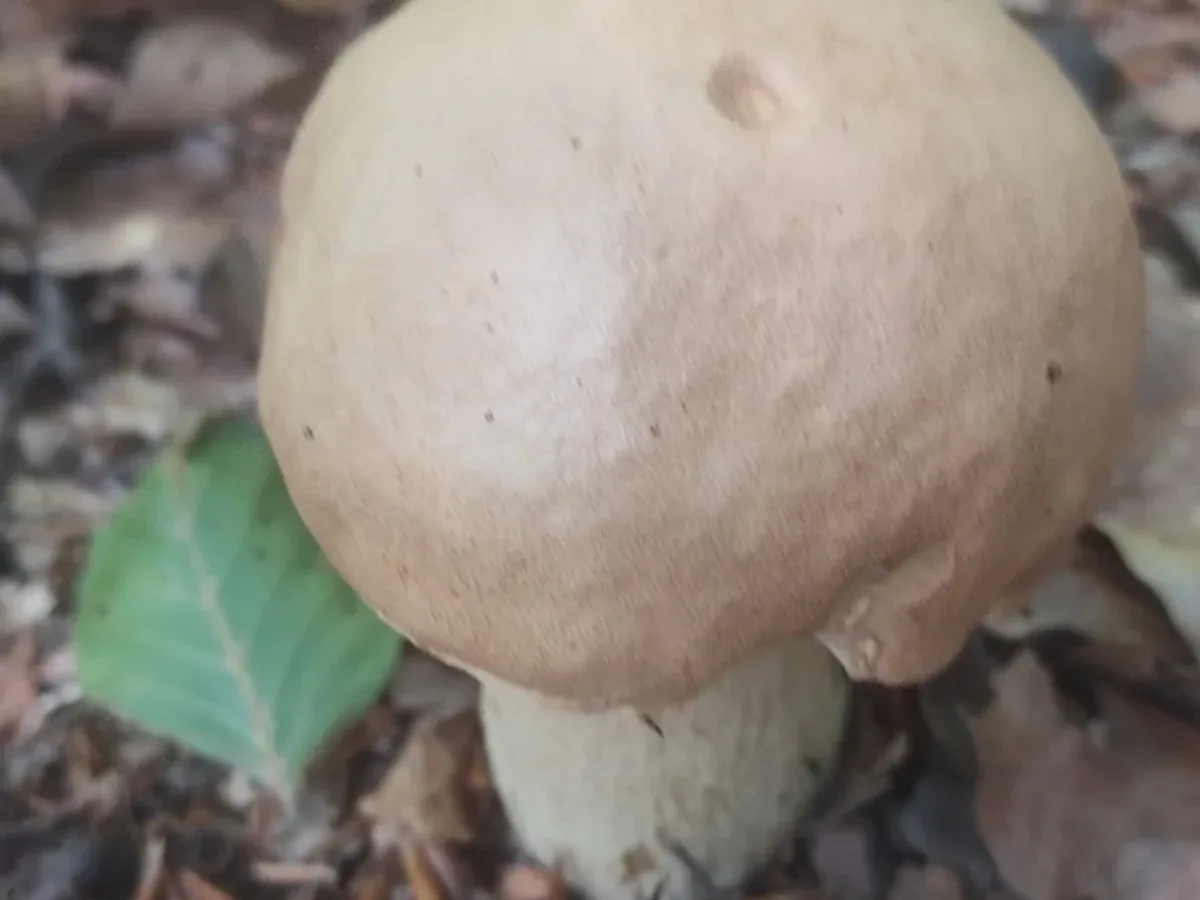 © Ivana Capan (CC BY)
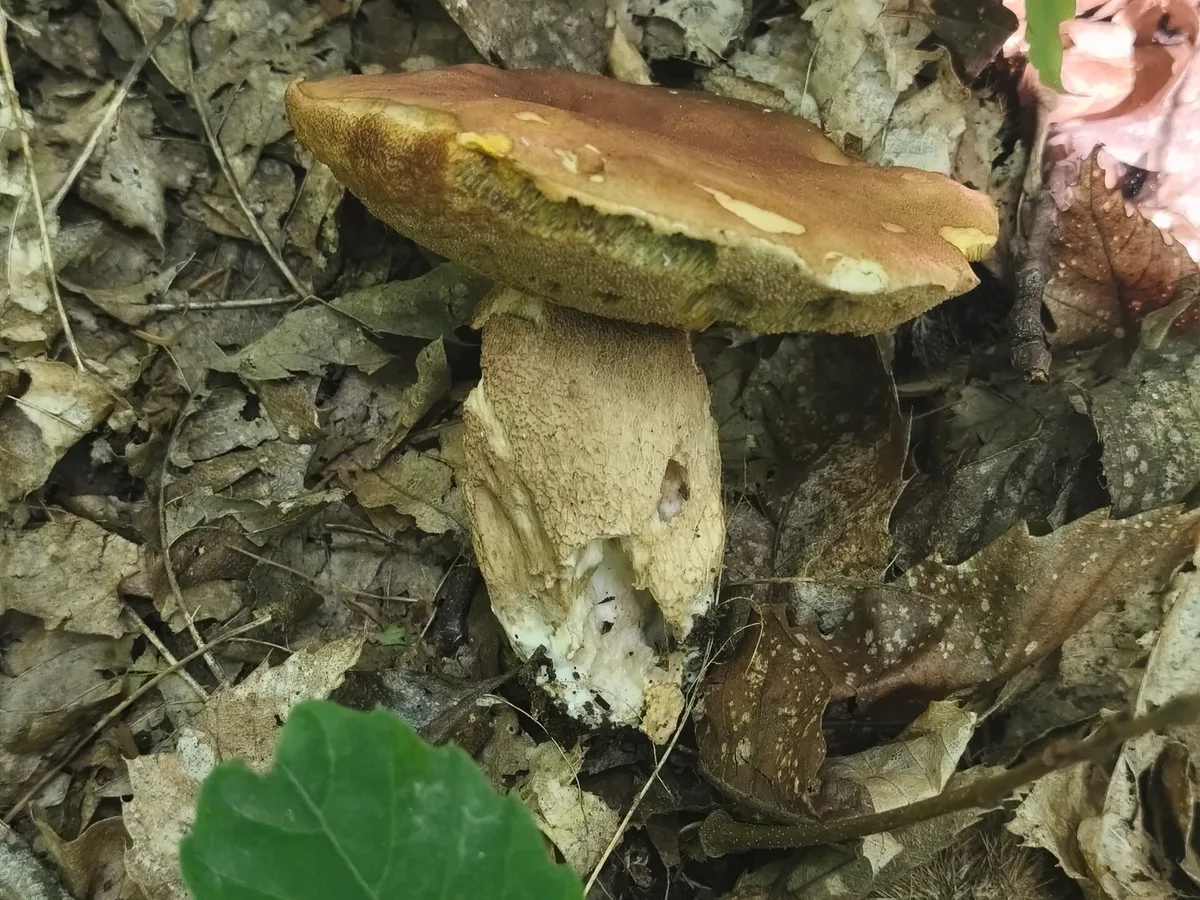 © victor laborde (CC BY)
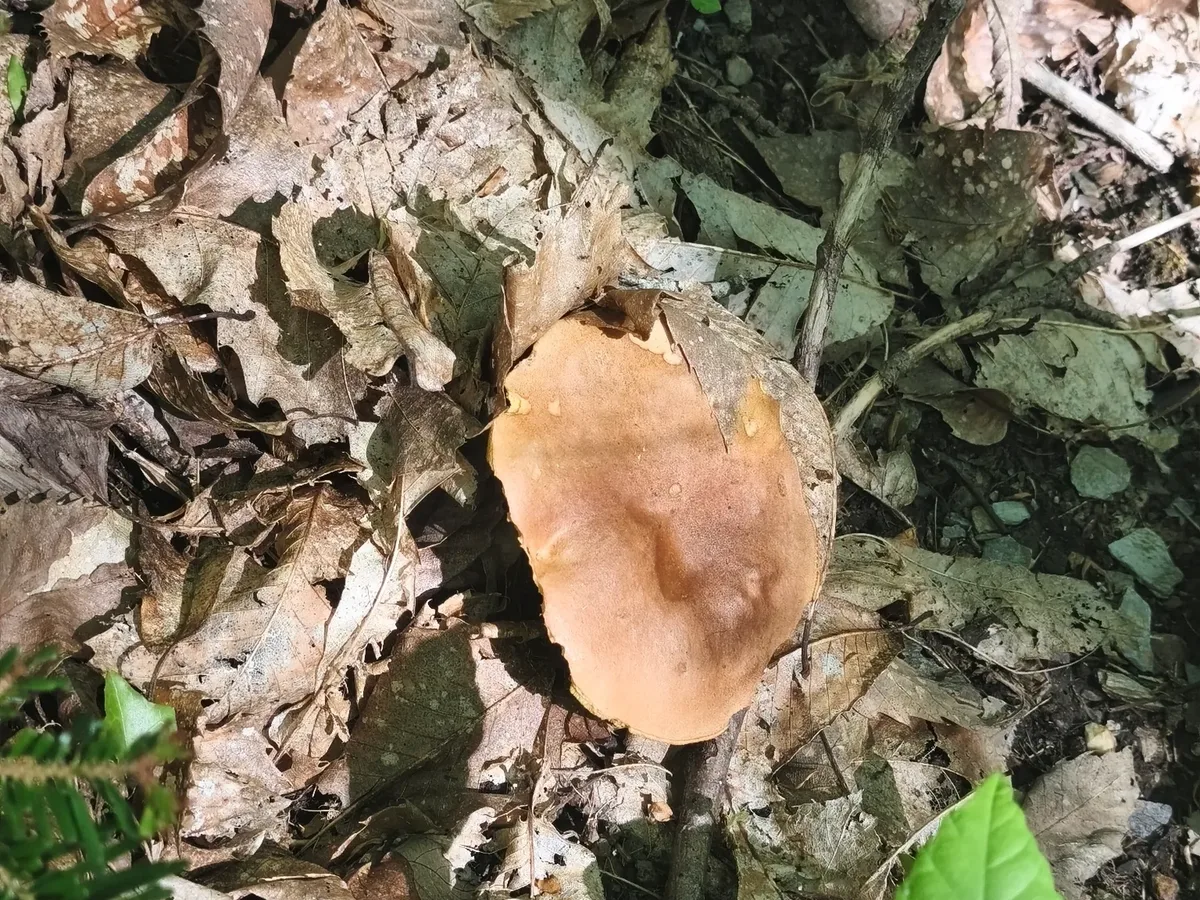 © victor laborde (CC BY)
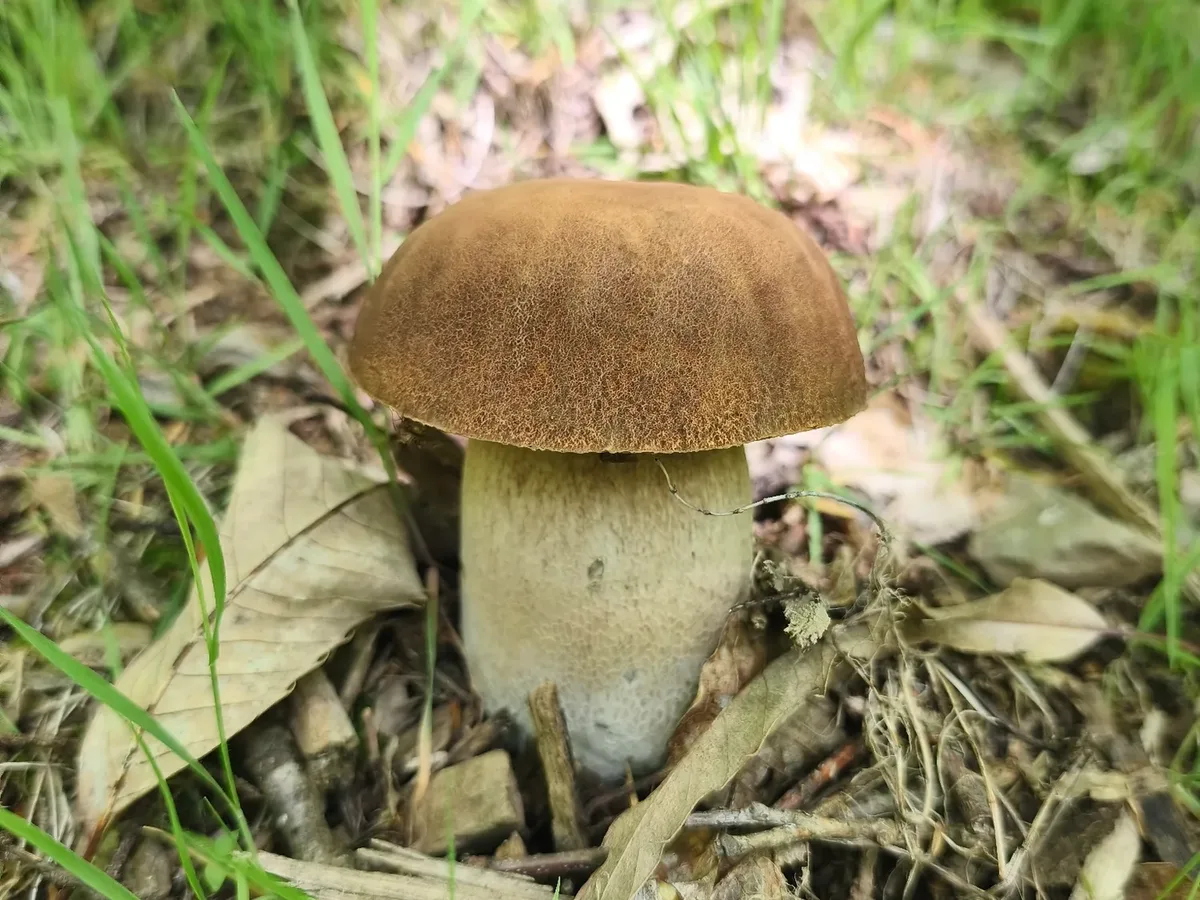 © victor laborde (CC BY)
 © victor laborde (CC BY)
 © Paula Nimigean (CC BY)
 © Bjørn Eidhammer (CC BY)
 © Patrick Bayan (CC BY)© Ivana Capan (CC BY)© victor laborde (CC BY)
One of the best mushrooms you can bring home - once you are certain of the identification.
How to recognise it
The Summer King Bolete is a handsome, large mushroom belonging to the most celebrated group of wild edibles in the Northern Hemisphere - the porcini or cep complex. It differs from the classic autumn King Bolete (Boletus edulis) in a cluster of characters that become clear once you know what to look for.
Cap
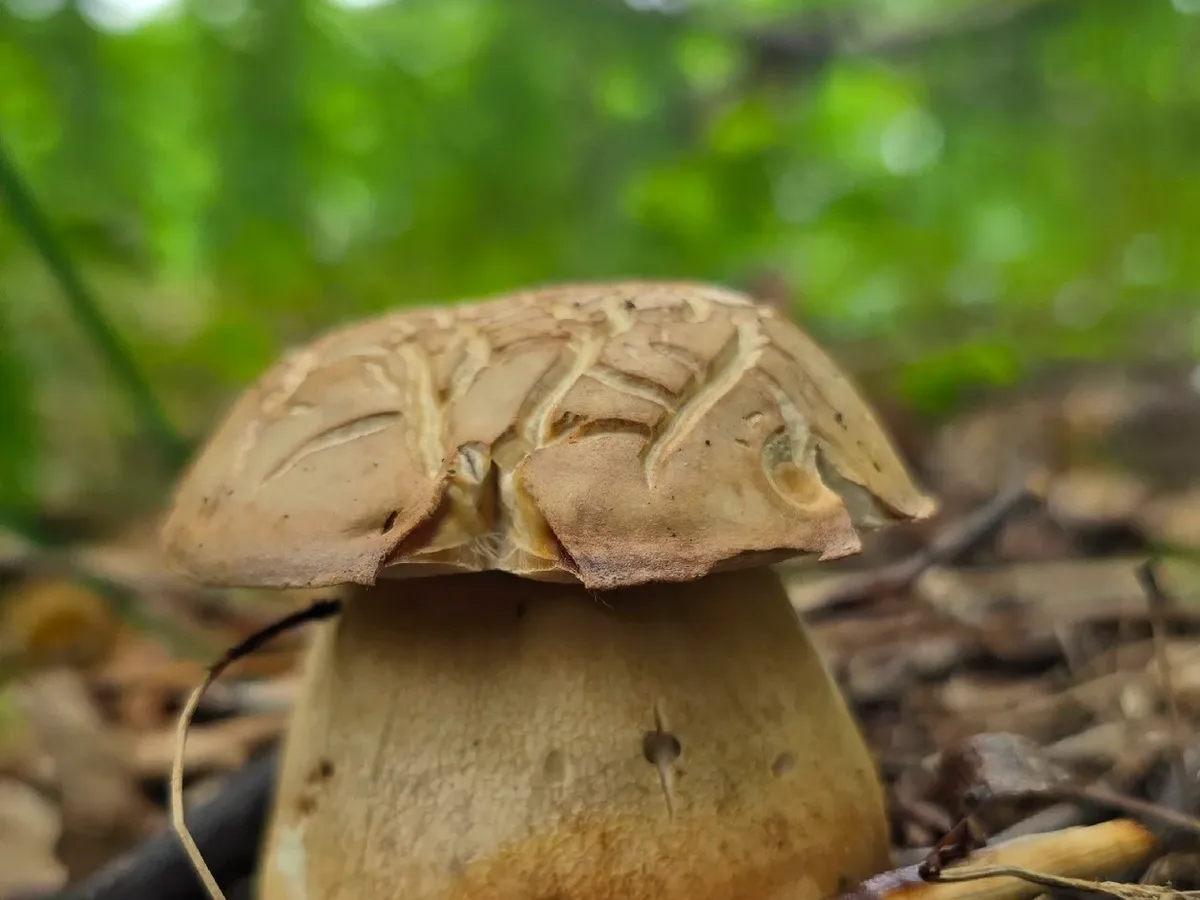
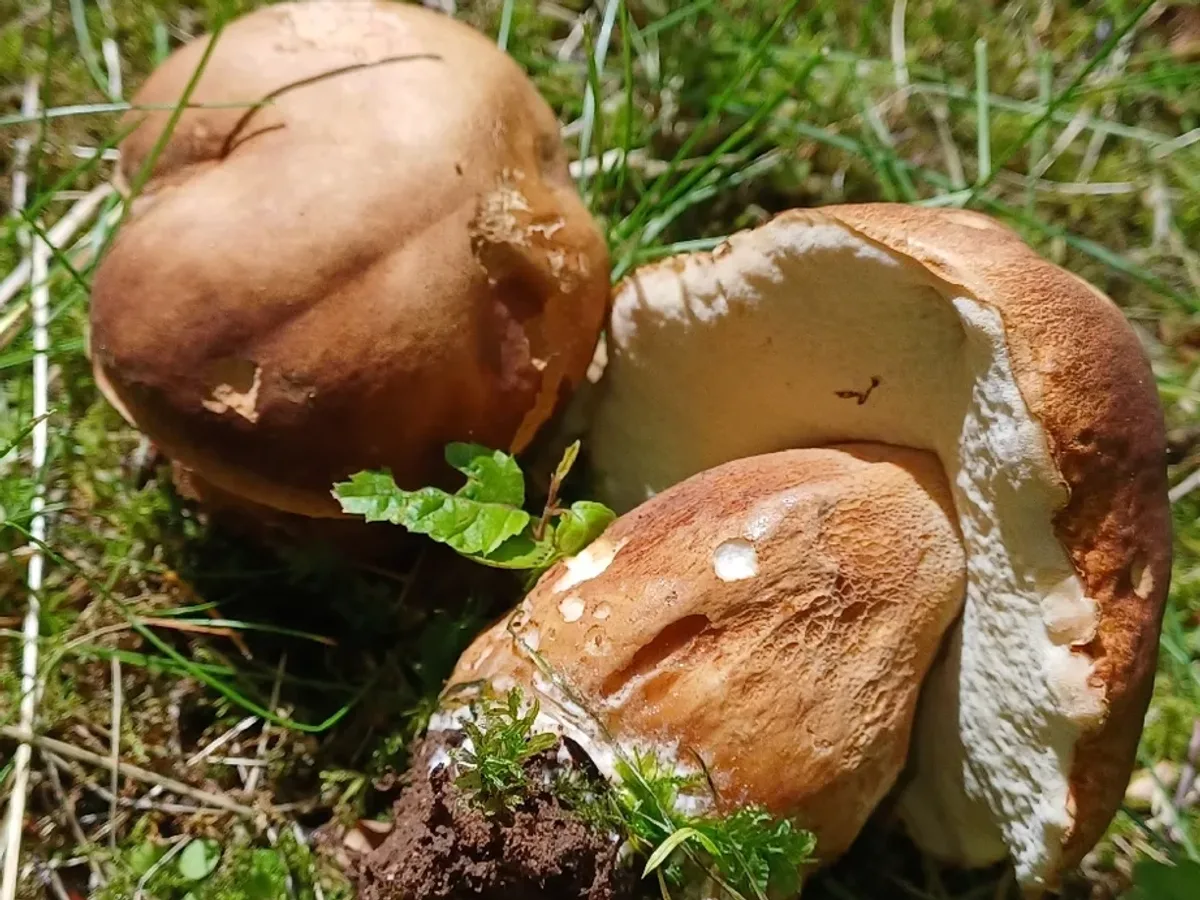
The cap is large (commonly 8-18 cm, sometimes to 22 cm), beginning life as a tight, firm hemisphere and expanding into a broad cushion. Its most distinctive surface feature is that it is dry and matt or finely felted to the touch, never greasy or sticky.
Colour is warm milk-coffee to hazel or ochre-brown.
In dry summer weather the cap cuticle, unable to stretch to match the growing flesh beneath, cracks into a fine mosaic - a tessellated or areolate pattern of brownish polygons separated by paler lines - giving a cracked-earth or crazed-pottery look. This cracking is one of the most useful field markers for this taxon and rarely develops on the autumn B. edulis.
Pores
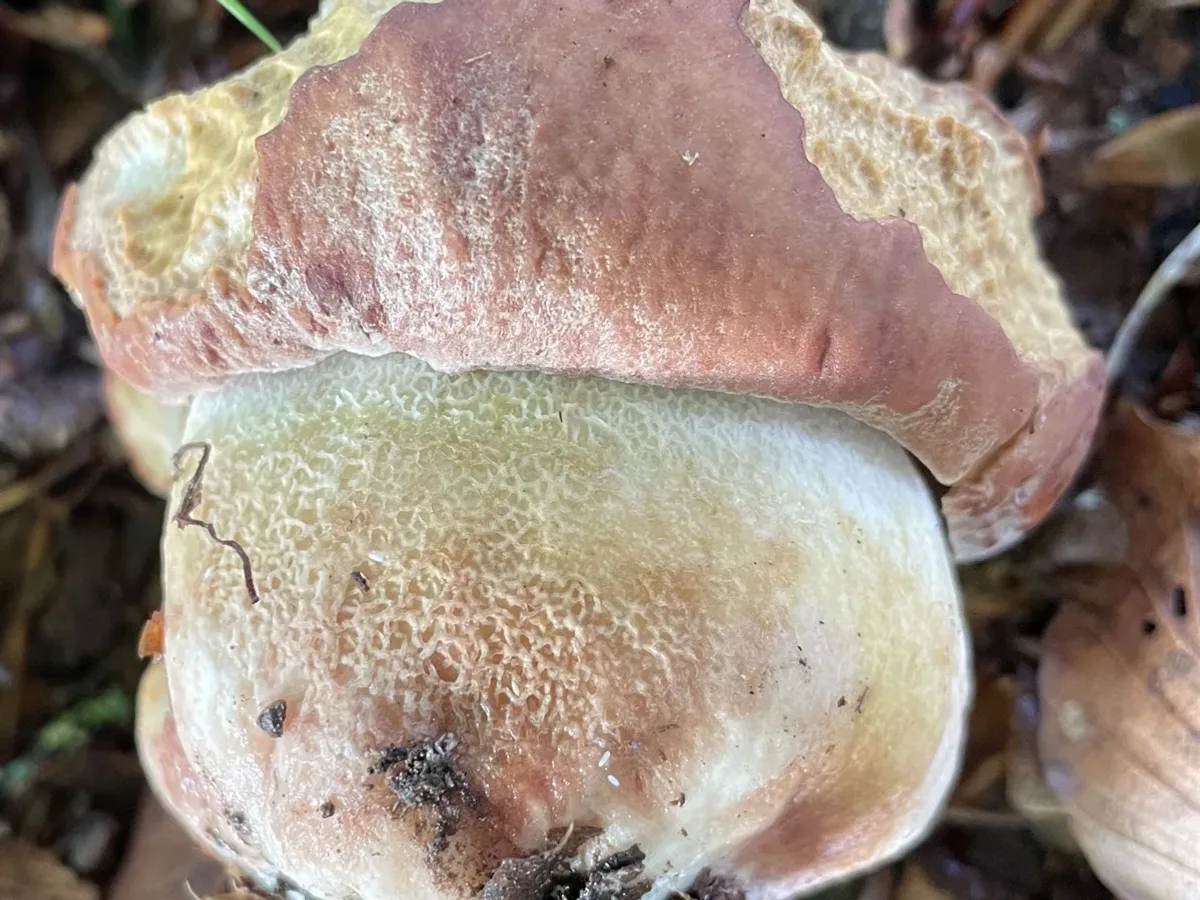
Turn the cap over and you find a dense sponge of small, round pores: white in very young buttons, ripening to pale yellow, and in old specimens a dull olive-yellow. Press a pore surface with a fingertip: nothing happens, no blue stain, no red flush.
Flesh
Slice the flesh: pure white, firm, unchanging - no blue, no red, no grey.
Stem
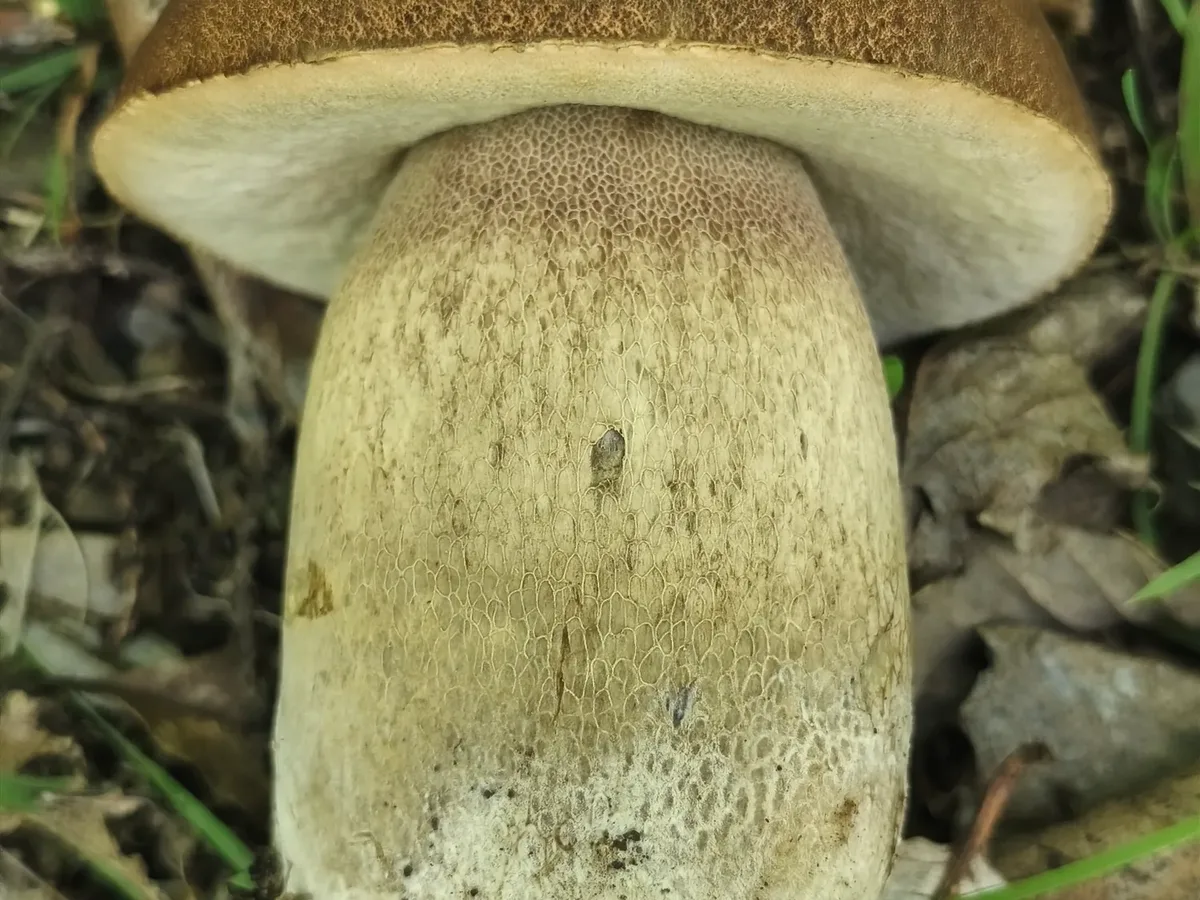
The stem is thick and sturdy, pale tan or cream. Its most striking feature is the raised, well-developed white net (reticulation) that covers it for much of its length - from just below the cap down through most of the stem, and noticeably more extensive than the upper-stem-only net of the autumn B. edulis.
Where & when it grows
Habitat
This is a warmth-seeker rooted in partnership with broadleaf trees.
Look in open, sun-warmed deciduous forest, along ride edges, in parkland with scattered old trees, and at the sunny margins of oak-hickory or beech-maple stands where the leaf canopy opens enough for direct sunshine to reach the forest floor and warm the soil.
Oaks of any species are the primary hosts in eastern North America; beech, hickory, basswood and other broadleaf trees also support it.
The best habitat is typically well-drained mineral soil or light loam - often sandy or gravelly - on south-facing exposures where the ground heats up fastest after rain. Shaded, waterlogged hollows produce far fewer fruit bodies.
Because the mycelium is perennial and locked to specific tree roots, a productive site found in one season is worth returning to in subsequent years, even after dry or cool summers when the mycelium was there all along but conditions were not right to fruit.
When
The summer timing is the most practically useful character separating this subspecies from B. edulis in eastern North America.
While the classic King Bolete is essentially an autumn mushroom in the region (peaking August-October in most accounts), this taxon begins its main season in June and runs through July and August - the heart of summer - when broadleaf forest floors are still warm and the trees are in full leaf. A secondary flush sometimes follows in September after late-summer rains.
The trigger is familiar to anyone who forages porcini:
- 1a sustained warm period
- 2followed by a meaningful rainfall (roughly 20-30 mm or more over a few days)
- 3then a lag of about one to two weeks while the mycelium activates and the fruit bodies develop
In an unusually wet or cool June the first fruit bodies may be delayed to mid-June; in a hot, dry summer without rain they may appear only as a sparse autumn population. Soil temperature needs to exceed about 14 °C to trigger good fruiting.
How it grows
Fruit bodies arise singly or scattered in small groups from the underground mycelium attached to host-tree roots; they never grow in tufts or clusters.
A young button pushes up through the leaf litter as a firm, rounded lump - sometimes resembling a pale brown bun - and can reach full size within 4-7 days under warm, moist conditions.
In very dry weather the expanding cap may crack into its characteristic tessellated mosaic even before the button stage is complete, while in cool, moist conditions caps may remain smooth.
The perennial mycelial mat tends to generate fruit bodies in the same patches each season. Over years, a productive spot may expand outward as the mycelium colonises additional root systems.
Fruiting conditions
Summer-triggered: requires soil temperatures above roughly 14 °C (the warm side of the porcini window) combined with at least 20 mm of rain in the preceding 10-14 days, then a lag of one to two weeks as fruit bodies develop. In eastern North America the peak flush typically follows the first substantial rainfall of summer once soils have warmed in June or July. A second, usually smaller flush can occur after late-summer rains in August-September if soils are still warm.
Look-alikes
In eastern North America the Summer King Bolete sits within a group of large, edible porcini-like boletes, and separating it from its close relatives causes no safety concern.
Its most frequently encountered edible congeners are:
- the autumn King Bolete (Boletus edulis sensu stricto, more conifer-associated and autumn-fruiting)
- in some accounts Boletus separans (the Lilac-stemmed bolete, with lavender tones in the young stem, edible)
The most important non-dangerous confusion species is Tylopilus felleus, the Bitter Bolete. It closely mimics the porcini's general shape, brown cap and stem net, but gives itself away absolutely by:
- its pore surface, which turns distinctly pink to pinkish-buff with age (never pale yellow)
- the overwhelmingly bitter taste of even a tiny raw fragment (try a small piece on the tip of the tongue and spit it out completely - bitterness is immediate and intense)
T. felleus is not toxic but can ruin an entire dish.
The other essential safety check concerns red-pored and blue-staining boletes. Several North American species (including Rubroboletus pulcherrimus, the Red-pored Bolete, and Caloboletus calopus, the Bitter Beech Bolete) occur in the same broadleaf forests and cause severe gastrointestinal illness; they are distinguished by orange to red pore surfaces and/or flesh that turns blue to dark blue within seconds of being cut.
The Summer King Bolete has white-to-pale-yellow pores that never develop any red or orange, and white flesh that stays white. These two checks - pore colour and flesh reaction - resolve all meaningful safety questions about this species in the field.
Closely related and equally edible - confusion is harmless. The autumn B. edulis in eastern North America tends to fruit later (August-October), is often associated with conifers as well as broadleaf trees, has a smooth or slightly greasy cap surface (rather than dry and tessellate-cracking), and the reticulation is usually confined to the upper portion of the stem rather than extending most of the way down. Both are choice edibles; the distinction matters for timing your search more than for safety.
White to greyish cap with a contrasting bright crimson-red stem base; pores pale yellow and staining blue on cutting; flesh also turns blue when cut. Causes gastrointestinal illness. The Summer King Bolete has a uniformly brown cap, a reticulate but not red-tinged stem, and non-bluing white flesh.
The most important confusion species in eastern North America. Very similar brown cap and stem net, but pores turn distinctly PINK to pinkish-buff with age (never pale yellow), the dark net on the stem sits on a paler ground (the reverse pattern of the Summer King's pale net), and a tiny fragment of raw flesh is intensely bitter - immediately and unmistakably so (taste a small piece on the tip of the tongue and spit out completely). The Summer King Bolete has mild-tasting raw flesh and pale yellow pores, never pink. T. felleus is not poisonous but even one piece ruins any dish.
Edible and closely related. Distinguished by lilac, violet or wine tones in the young stem (especially toward the apex) and sometimes in the cap; pores white to yellow, non-bluing. The summer king shows no lilac pigmentation. Both choice edibles in the same broadleaf forests.
Orange to dark-red pore surface and flesh that turns intensely blue within seconds of cutting - neither feature is present in the Summer King Bolete, which always has white-to-pale-yellow pores and white non-bluing flesh. R. pulcherrimus causes severe vomiting, diarrhoea and cholinergic symptoms; red pores are the immediate disqualifier.
In the kitchen
Picking & cleaning
Young to middle-aged specimens with firm white flesh and fine, pale pores are far superior for eating to old ones whose tube layer has turned soft, olive and spongy.
Cut or gently twist the whole mushroom free at the stem base - this allows you to examine the stem base and net, and disturbs the mycelium less than tearing.
Check the pores (white to pale yellow, never red or orange) and slice the stem lengthways on the spot to inspect for insect larvae: summer porcini are heavily parasitised by fly larvae (maggots) that tunnel through the flesh from the stem base upward, and a heavily bored specimen is better left or discarded rather than taken home and cleaned.
Confirm the white, non-bluing flesh before the mushroom goes in the basket.
Carry finds in an open basket or breathable bag; plastic bags trap heat and moisture and speed deterioration in summer.
Cooking
One of the finest wild mushrooms in eastern North America, on a par with its autumn counterpart. The firm white flesh has a deep, nutty umami character that intensifies on cooking.
Young specimens sliced and fried in butter with a little garlic and fresh thyme are superb; sliced into a summer risotto or tossed with fresh pasta and cream, they hold their texture well.
Because summer heat means they deteriorate quickly after picking, the best approach is to process them the same day:
- clean carefully
- inspect for maggot tunnels (discard bored flesh)
- then either cook immediately, slice and dry, or slice and freeze (blanch briefly first)
Drying is particularly worthwhile - thinly sliced caps and stems dried at 40-50 °C concentrate the umami flavour dramatically, and dried Summer Porcini are excellent in soups, stocks, broths and slow-cooked dishes; always add the strained soaking liquid to the pot.
Always cook thoroughly before eating. Discard any specimens whose tube layer has gone soft, spongy and olive-coloured.
Good to know
The Summer King Bolete is a long-established, choice edible with a strong safety record and no deadly lookalikes. Two practical rules cover all the relevant risks.
- 1Check the pores and the flesh before every collection goes in the basket: pores must be white to pale yellow (never red, orange or pink-buff), and the flesh when sliced must be white and stay white (never blue, never red, never grey). Any specimen that fails either test is not this species and should be set aside. This rule screens out the toxic red-pored boletes (Rubroboletus species) that share its broadleaf habitat and cause severe vomiting and gastrointestinal distress.
- 2Taste-test a tiny raw fragment for bitterness to exclude the Bitter Bolete (Tylopilus felleus), then spit it out completely without swallowing. The Summer King Bolete has a mild, pleasant raw taste; any bitterness at all means you have T. felleus, which is not toxic but will ruin the dish.
As with any wild mushroom:
- always cook before eating (raw boletes of even choice species can cause stomach upset)
- eat only firm, fresh, non-decomposing specimens
- try a moderate portion first on new acquaintance
Beginners should have any porcini-type bolete confirmed by an experienced mycologist or forager before eating.
A reference guide - never an edibility guarantee. When in doubt, leave it out.