Bresinský's bolete
Boletus bresinskyanus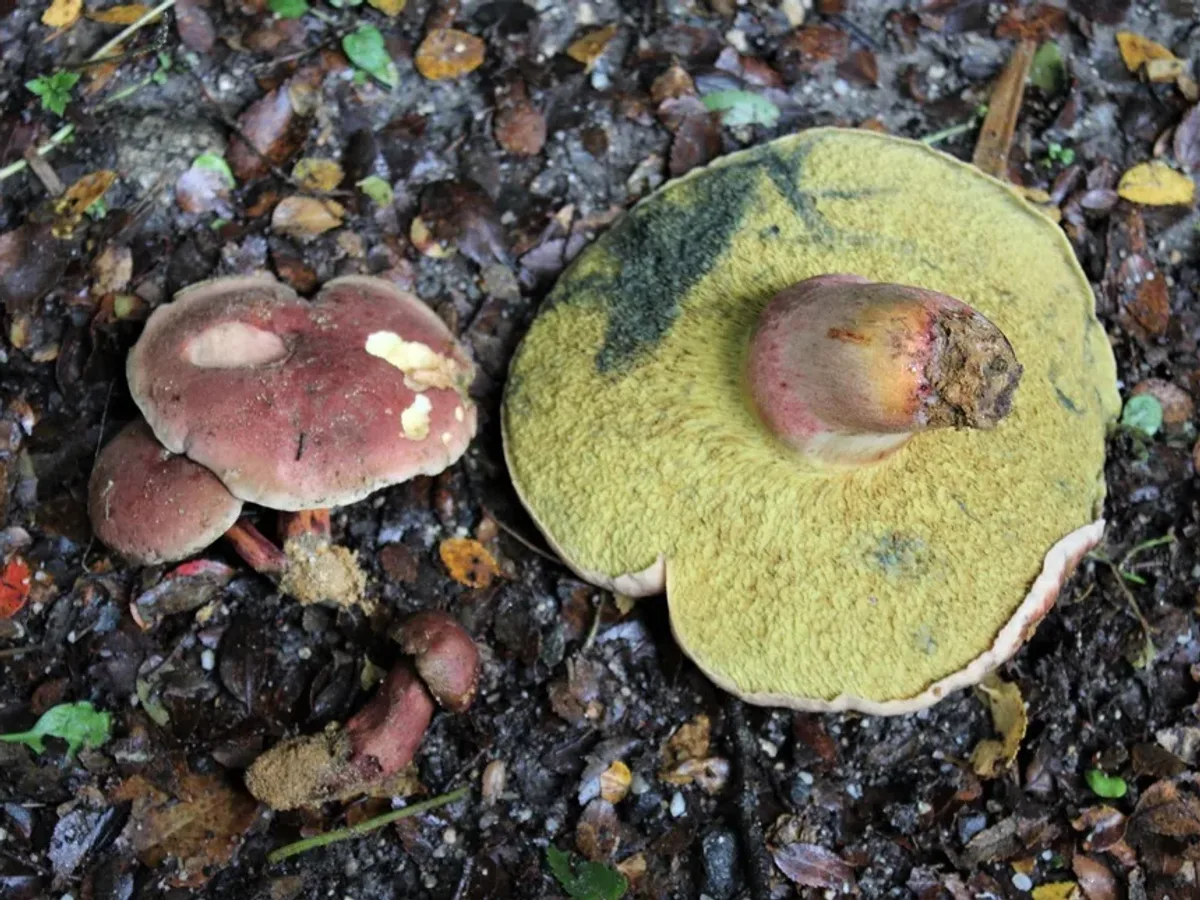 © Viviana E. Salazar Vidal (CC BY-SA)
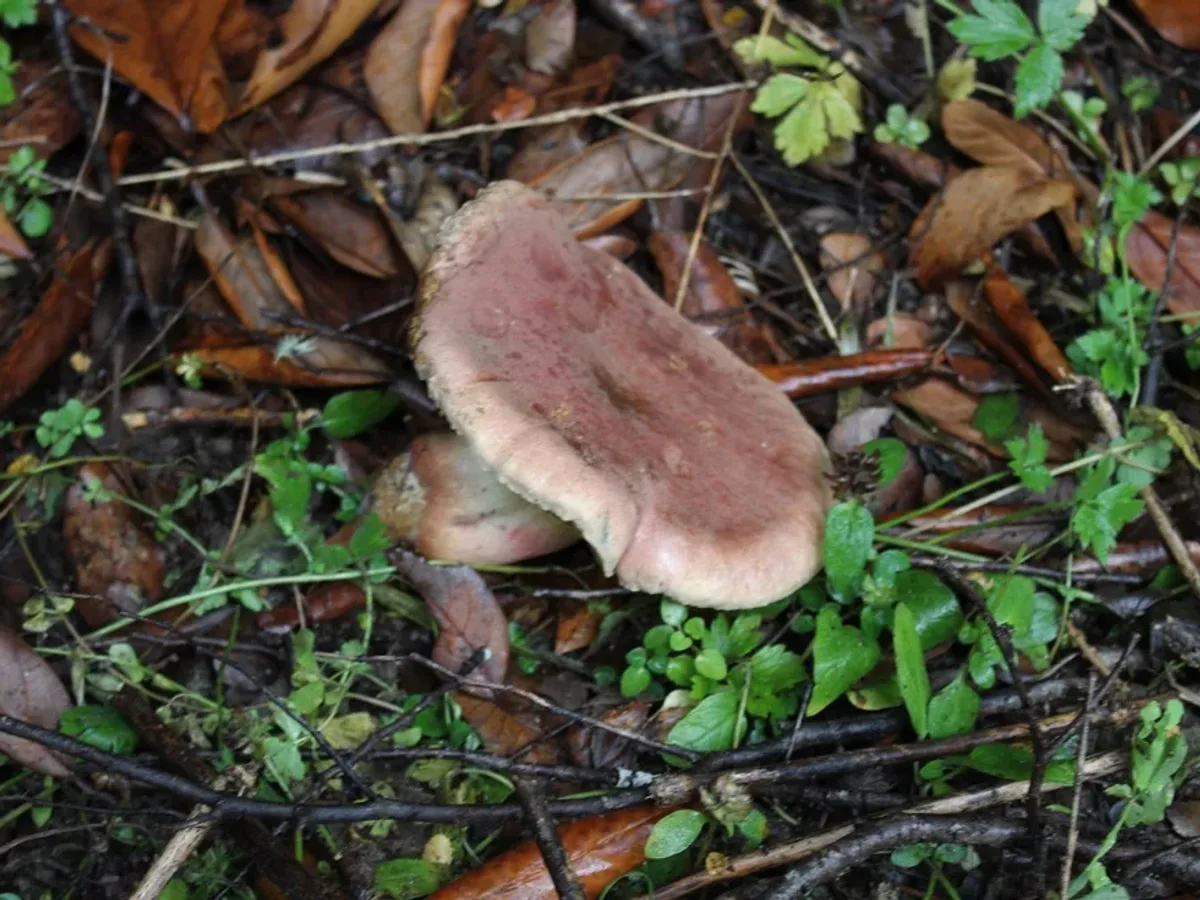 © Viviana E. Salazar Vidal (CC BY-SA)© Viviana E. Salazar Vidal (CC BY-SA)© Viviana E. Salazar Vidal (CC BY-SA)
Edible only with the right preparation - or safe for some people but not others. Learn the caveats first.
How to recognise it
Boletus bresinskyanus is a solidly built, medium-to-large bolete in the familiar porcini mold - and in the southern beech forests of Patagonia and the Chilean lake district, that is essentially what it fills.
Cap
The cap is a warm, medium brown, neither as dark as the fetid Boletus putidus nor pale-ochre enough to evoke the European summer cep. In fresh, young specimens it often has a subtle matte or finely velvety texture that distinguishes it from the purely smooth caps of some relatives.
As specimens expand and age the surface becomes slightly smoother, and in wet weather it may feel faintly tacky, but it is never truly slimy.
Pores
The pore surface passes through white to cream and then dull olivaceous-yellow as the cap broadens - this progression is shared by all the good edible porcini-group relatives, and tracking it helps judge the age of a specimen at a glance.
Flesh
The flesh, when you slice through the stem, is white and firm, with the satisfying density characteristic of a porcini in prime condition. It does not blue.
Smell & taste
It should smell mild and faintly pleasant.
Any unusual discoloration, a rank or fetid odor, or an immediately obvious bluing reaction should make you put the specimen down and look more carefully at what you have found.
Where & when it grows
Habitat
The ectomycorrhizal partnership at the heart of this species' ecology is one of the oldest biological relationships in the southern forests. Nothofagus, the southern beech lineage, has grown in what is now Chile and Argentina since before the Andes achieved their present altitude, and the fungal communities that colonize its roots evolved alongside it across geological time.
Boletus bresinskyanus threads its mycelium around Nothofagus root tips in exchange for photosynthetic sugars, contributing to the mineral cycling and root health of its host trees.
This tight partnership means the species is essentially absent from forest edges, degraded stands, and any site where the Nothofagus canopy has been broken.
Prime habitat is old-growth or mature second-growth interior forest with a deep, undisturbed layer of leathery southern-beech leaves - the litter that the mycelium colonizes.
Key regions include:
- the Chilean Lake District from Araucanía south through the Valdivian temperate rainforest zone
- the Chiloé archipelago and the mainland coast facing it
- the Andean foothill forests of Argentina's Neuquén and Río Negro provinces
At higher elevations in the Andes the understory opens and the stands become purer Nothofagus pumilio (lenga beech) or N. antarctica (ñire); at these sites the season is shorter but the fruitbodies can be found in open grassy clearings within the treeline.
When
The rhythms of a Patagonian Nothofagus autumn set the stage for this bolete's appearance.
By late February the long southern-hemisphere summer is fading: soil temperatures begin their slow descent from summer highs, the days shorten, and rain begins to replace the summer dry spells that suppress fruiting.
It is in this window - from late February through May - that Boletus bresinskyanus produces fruitbodies across its range. March and April are generally the most productive months, matching the period when soil temperatures pass through the 8-15 °C range that mycorrhizal boletes across the world seem to prefer.
A good fruiting year follows a summer that was warm but not severely dry, succeeded by consistent autumn rainfall accumulating over several weeks - the patient soaking that allows mycelium throughout the forest floor to prime itself for fruiting. A brief, single intense rain event does not trigger the same response as sustained wet conditions.
At higher Andean elevations the window is compressed, perhaps just a few weeks in March-April; at lower maritime coastal sites it may extend into May.
How it grows
Fruits singly or in small scattered groups of two to five fruitbodies, occasionally somewhat more where the mycelial network is dense and conditions are favorable.
Fruitbodies push up through accumulated Nothofagus leaf litter from below, sometimes visible only as slight domed swellings in the litter before the cap breaks free.
Growth from tight button to full expansion typically takes seven to fourteen days at optimal temperatures. Warmer spells accelerate development, and cold nights can stall it.
Because the mycelium maintains a long-term relationship with the same host trees, productive spots in intact Nothofagus forest tend to return fruitbodies year after year. Local knowledge of good spots, handed down in communities living near these forests, is genuinely valuable here.
Fruiting conditions
Fruiting is triggered by the onset of austral autumn conditions: soil temperatures cooling from summer highs toward the 8-14 °C range, combined with sustained autumn rainfall of at least 18 mm over two weeks. The typical flush emerges 7-14 days after the triggering rain event. Season runs February-May in the Southern Hemisphere, peaking March-April (ISO weeks 9-15) across most of the Patagonian and Chilean Lake District range. Higher-elevation Andean sites have a shorter, earlier season; maritime coastal sites may have an extended season into May.
Look-alikes
In the Nothofagus forests of southern South America, the most important comparison is with Boletus putidus, which occupies the same habitat and can appear at the same sites in the same season. Boletus putidus is distinguished by a decisively unpleasant fetid or rank odor - the smell that earned it its Latin name - whereas Boletus bresinskyanus smells mild and pleasant.
Always smell a bolete before adding it to your basket: in Nothofagus forest, a rank, sour, or foul odor in a brownish bolete is a reliable stop signal.
The prized edible Butyriboletus loyo (loyo), one of the most celebrated wild foods of Chile, grows under Nothofagus obliqua in central-southern Chile. It has a deeper chestnut-brown to reddish-brown cap, bright yellow pore surface and flesh, and does not discolor when cut - its yellow flesh color and warm red-brown cap tone distinguish it from the paler, white-fleshed B. bresinskyanus.
Various Suillus species have been introduced to southern South America with plantation pine (Pinus radiata). They are easily separated by their distinctly slimy to viscid cap surface and, in most species, a slimy ring on the stem.
The universal bolete safety rule remains important regardless of species: never eat any bolete with red or orange pore surfaces, or with flesh that turns blue rapidly and strongly when cut. These characters do not appear in B. bresinskyanus but must be checked in every specimen collected.
Occupies the same Nothofagus forest habitat and fruiting season, making it the most likely confusion species. Distinguished reliably by its strongly fetid, rank, or unpleasant odor - B. bresinskyanus has a mild, pleasant smell. Also tends toward a slightly more olivaceous-grey or dull brownish cap rather than the warmer brown tones of B. bresinskyanus. B. putidus is inedible due to unacceptable smell and taste; it is not poisonous but deeply unpalatable. Always smell before collecting.
Also introduced with plantation pines in Chile and Argentina. Lacks a ring but has a distinctly slimy yellowish-tan to orange-brown cap and glandular dots on the upper stem that exude milky droplets in fresh young specimens. The slimy cap surface and granular stem dots distinguish it immediately from B. bresinskyanus. Found primarily under Pinus radiata rather than native Nothofagus, though it can occur at ecotones.
A highly prized edible of central-southern Chile found under Nothofagus obliqua; distinguished by its deep chestnut-brown to reddish-brown cap, vivid yellow pore surface, bright yellow flesh that does not discolor when cut, and a richer, warmer flavour profile than B. bresinskyanus. The yellow flesh color and yellow pore surface are the clearest distinguishing characters. Both species are edible but B. loyo has a lower elevation preference and warmer brownish-red coloration overall.
Introduced to southern South America with Pinus radiata plantations; found wherever exotic pine stands occur near or within Nothofagus forest. Immediately distinguished by its strongly slimy, glutinous, chocolate-brown to purplish-brown cap - a sliminess that is absent in B. bresinskyanus under any weather conditions - and by the slimy membranous ring on the stem. Not dangerous but much lower culinary quality; some people experience mild gastrointestinal sensitivity.
In the kitchen
Picking & cleaning
Select buttons and young-to-medium specimens while the pore surface is still white to cream and the flesh is tight and firm - these represent peak edible quality and will keep well for two to three days refrigerated.
In the field:
- Slice the stem at the base rather than pulling it, to minimize disturbance to the mycelium and litter layer.
- Check the cut base of the stem: the flesh should be white and firm, with no significant yellowing, reddening, or blueing.
- Carry in an open basket rather than a sealed bag to prevent sweating.
- Clean off attached soil and leaf litter.
Avoid collecting specimens that are soft, strongly smelling, or show signs of heavy insect infestation (visible larval tunnels through the stem flesh when sliced longitudinally).
Older, very large specimens with soft, greenish-yellow pore surfaces are past prime and should be left for spore dispersal.
Good to know
Boletus bresinskyanus has no documented toxins in the mycological literature and is considered edible in the South American tradition of Nothofagus-forest foraging.
However, it is a relatively obscure species with limited formal edibility documentation compared to its better-studied relatives, and no systematic toxicological testing has been carried out.
Treat it as a worthwhile edible species while applying the same care you would to any wild mushroom:
- Confirm all key characters on each specimen individually
- Cook thoroughly before eating
- Avoid eating very large quantities of any wild bolete on a first trial
The general bolete safety rules are non-negotiable regardless of species. Discard any specimen that:
- shows red or orange pores
- turns blue within one to two minutes of cutting
- smells rank or fetid rather than mild and pleasant
Following these rules eliminates the most serious risks associated with bolete foraging.
There are no established deadly bolete species in native Nothofagus forest of South America, but caution is always warranted with unfamiliar specimens.
A reference guide - never an edibility guarantee. When in doubt, leave it out.