White king bolete
Boletus barrowsii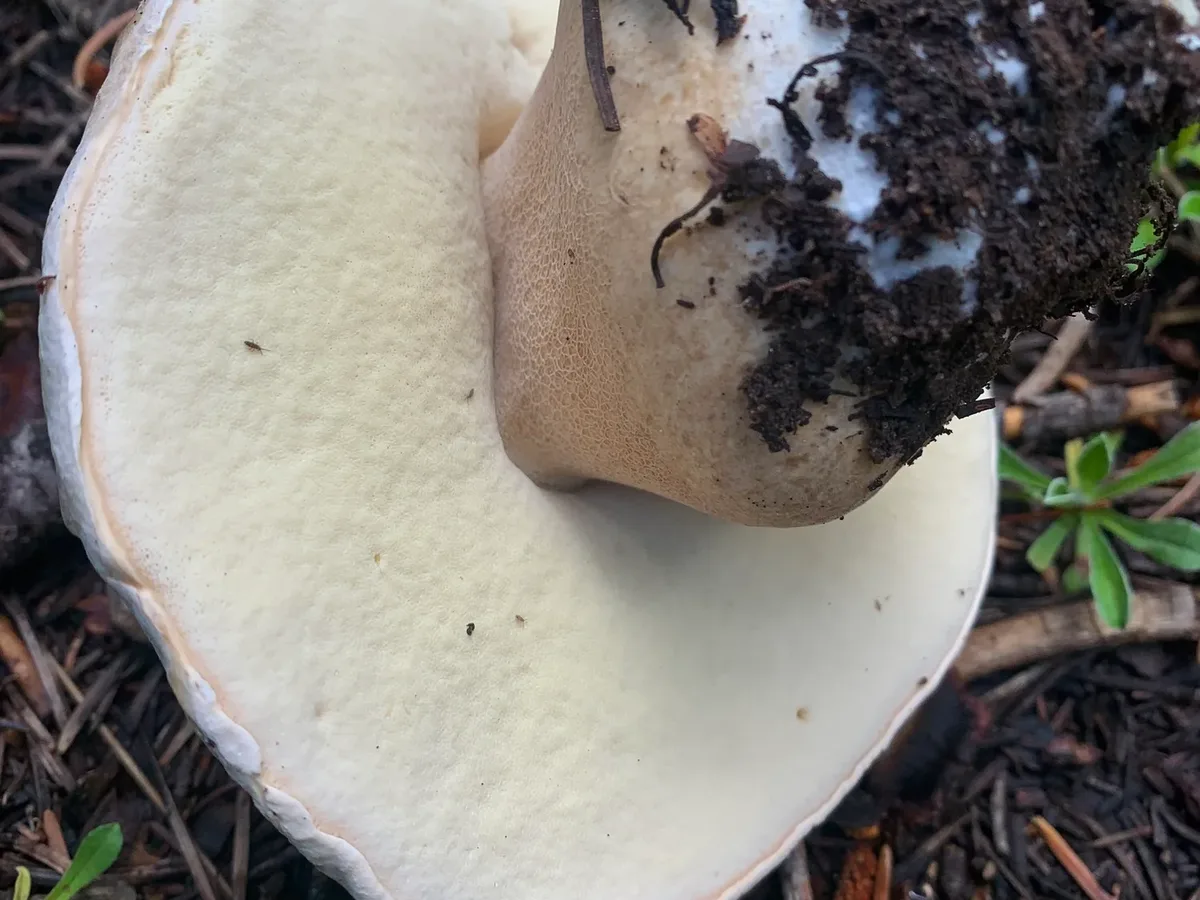 © Northcut (CC BY 4.0)
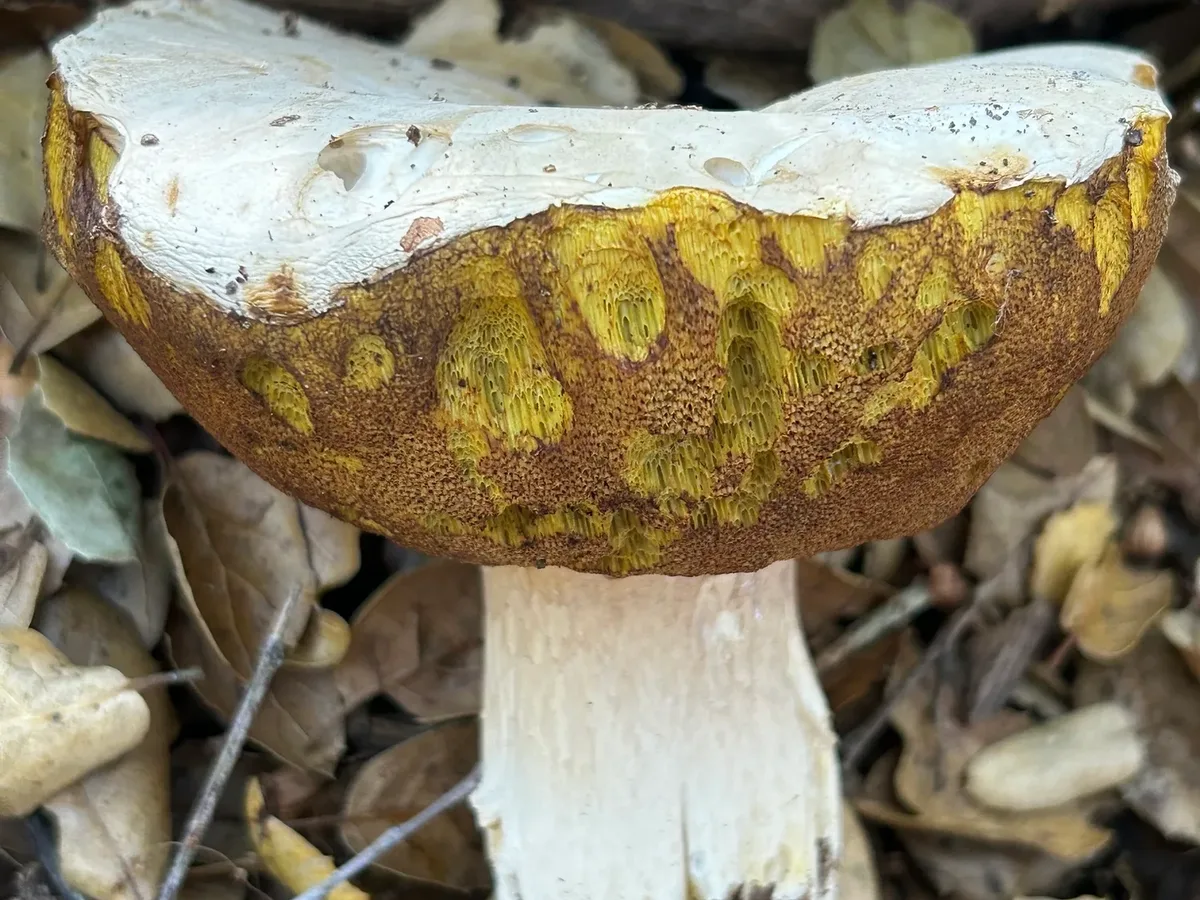 Alex Heyman (CC0)
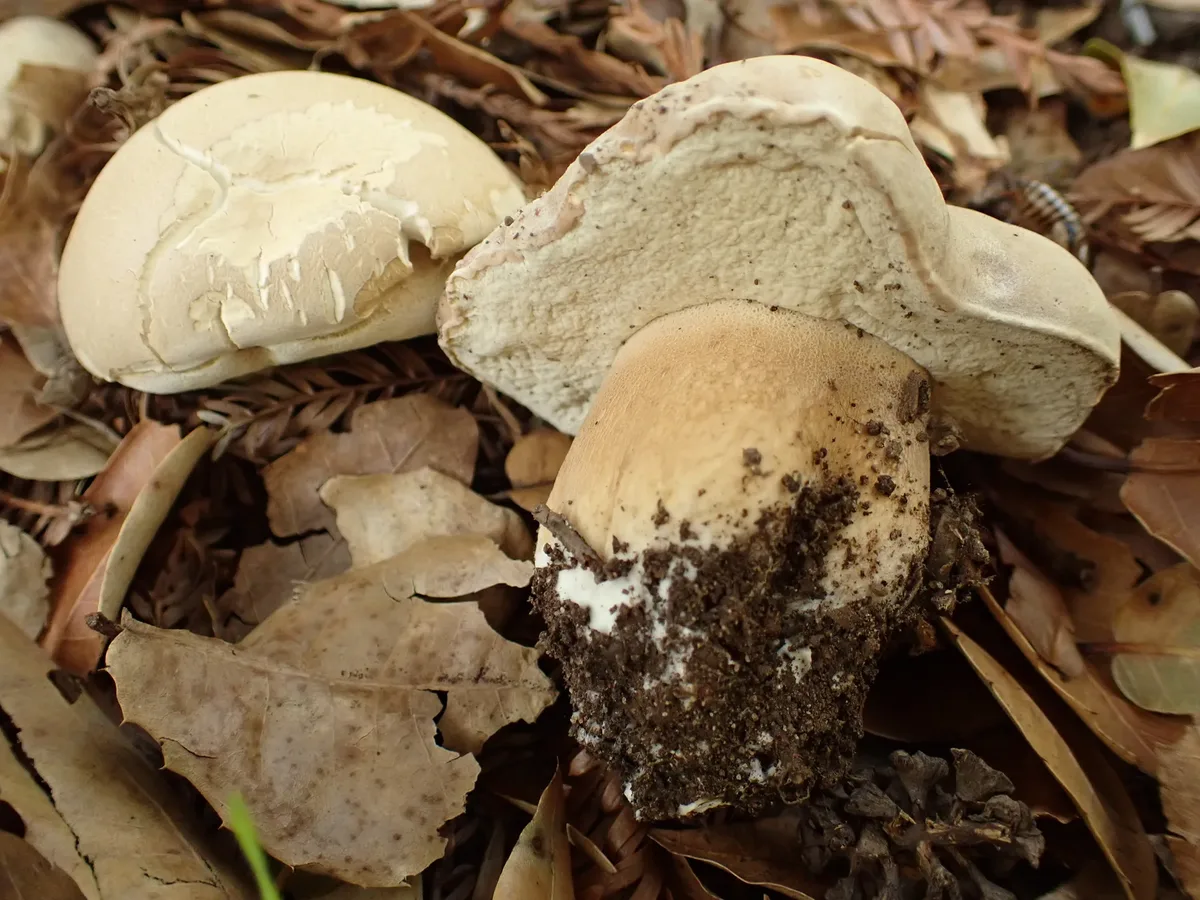 © reagan peschke (CC BY)
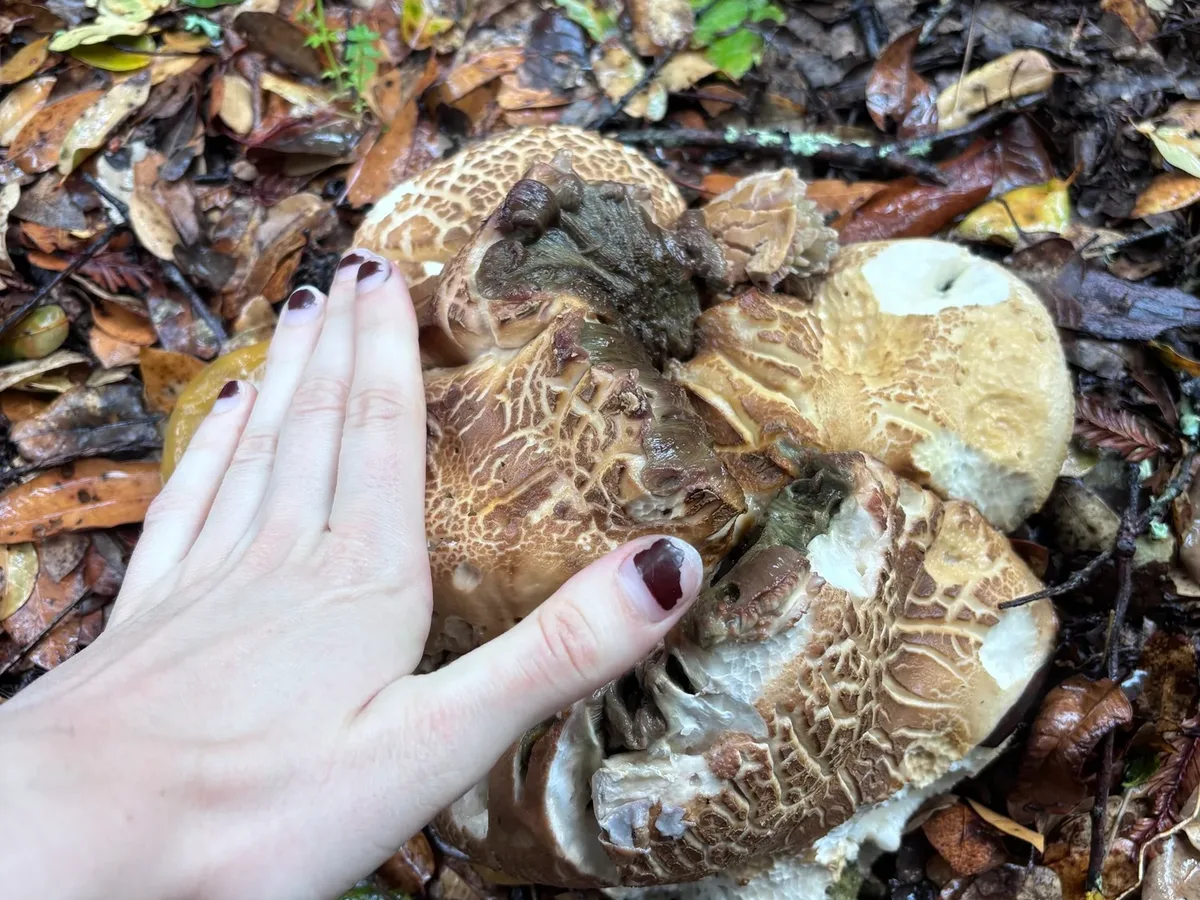 © reagan peschke (CC BY)
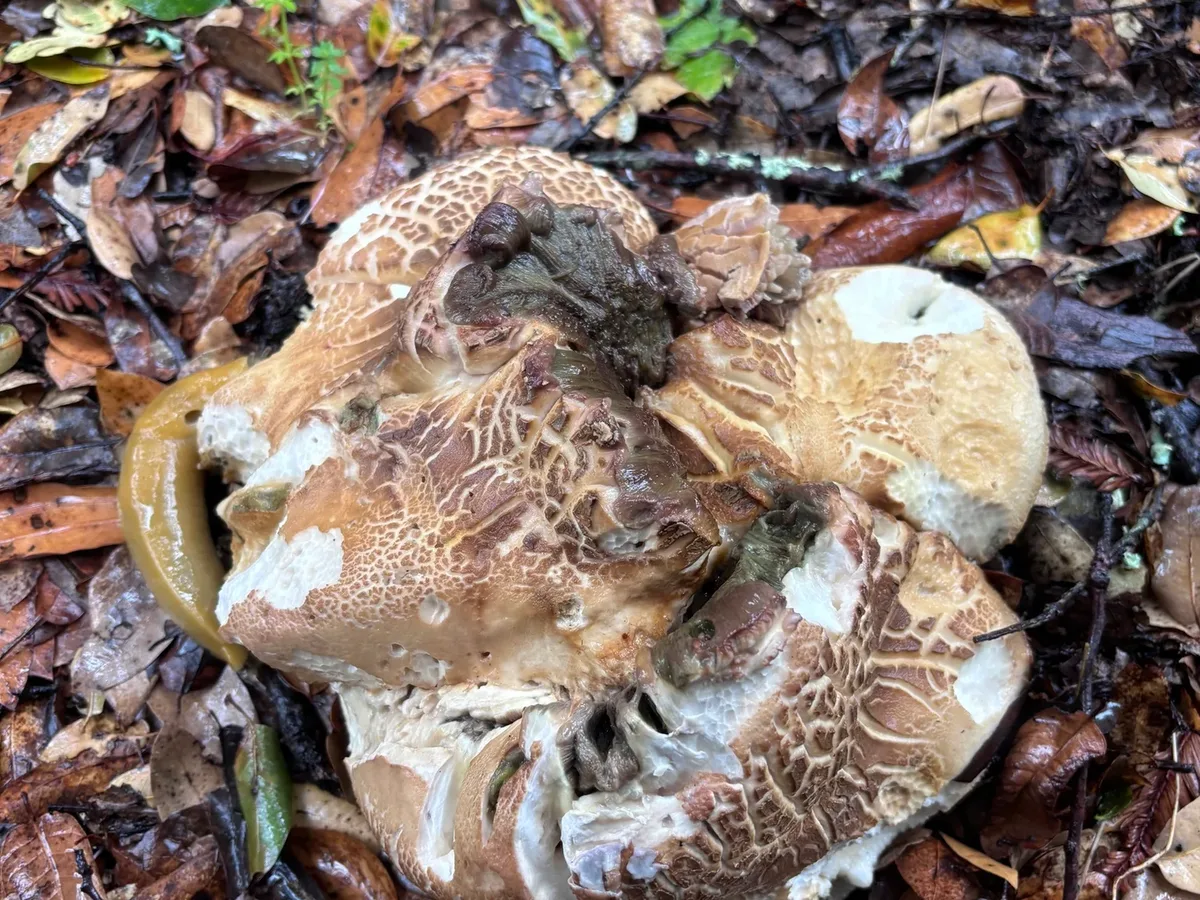 © reagan peschke (CC BY)
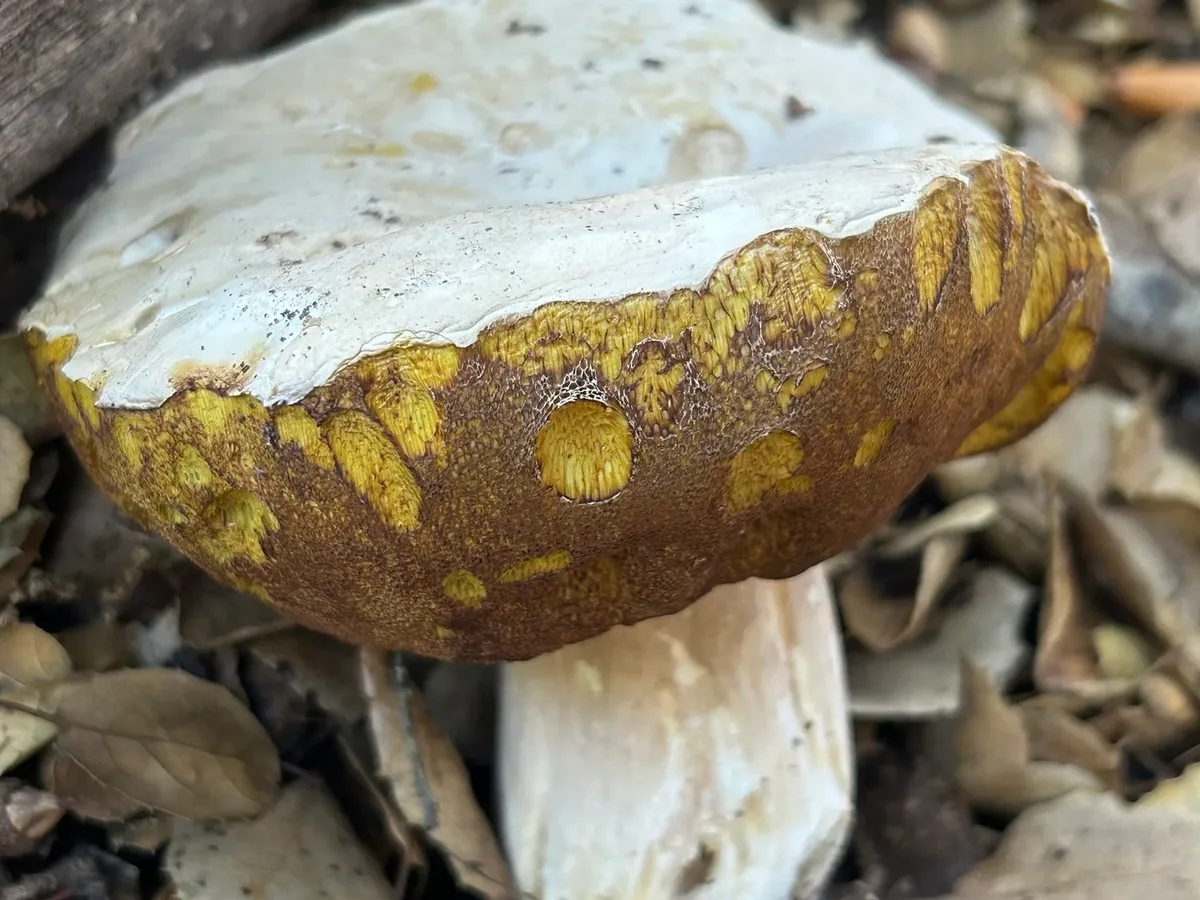 Alex Heyman (CC0)
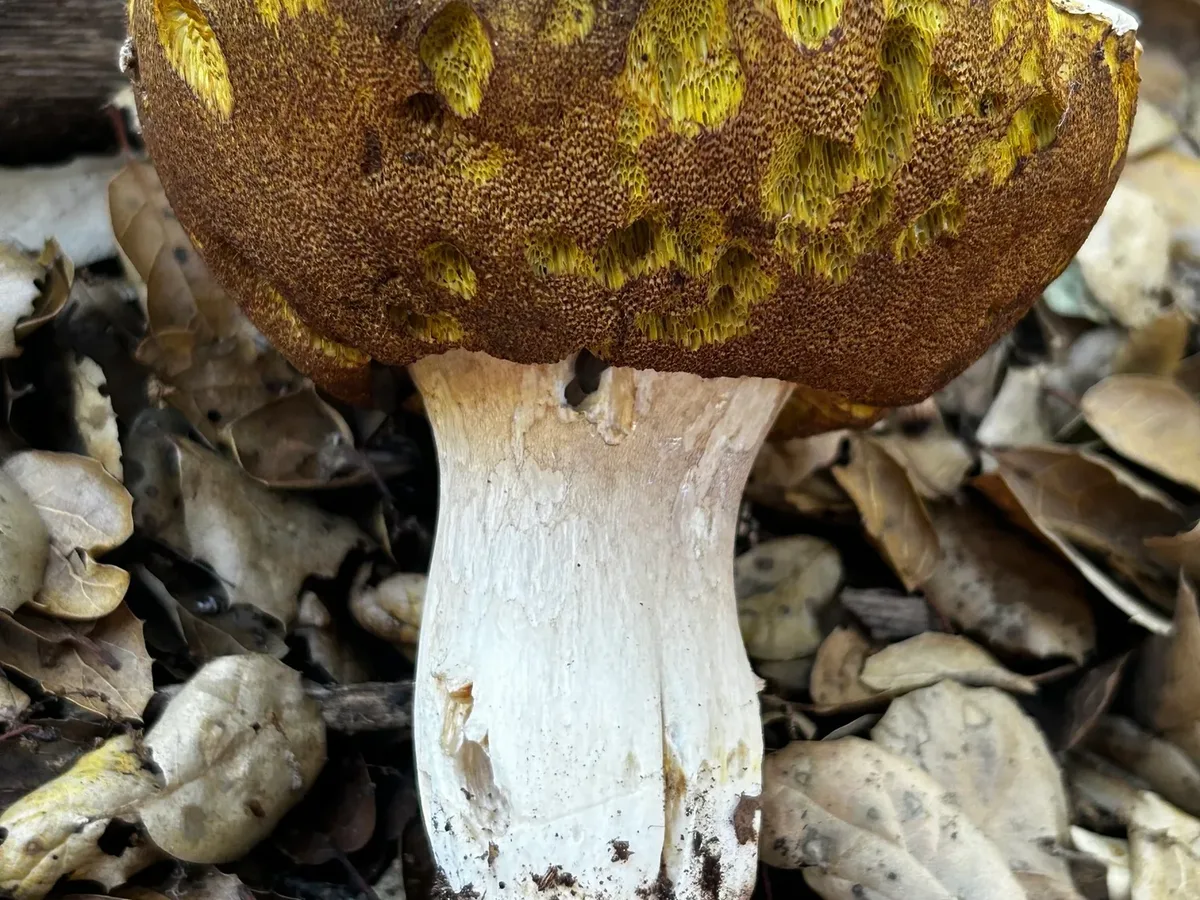 Alex Heyman (CC0)© Northcut (CC BY 4.0)Alex Heyman (CC0)
One of the best mushrooms you can bring home - once you are certain of the identification.
Never eat a mushroom you are not 100% sure of - check the look-alikes below, and always cook wild mushrooms.
How to recognise it
The white king bolete is the pale counterpart to the famous porcino.
Cap
Cap 8-30 cm, convex when young and broadening with age to nearly flat.
Color is the immediate field clue: white to pale buff or cream throughout, never developing the warm reddish-brown of Boletus edulis. Older caps may go faintly tan or develop slight cracks in drought conditions, but they stay pale.
Pores
Pores beneath the cap are white when young, aging to cream or pale yellow - they are never orange or red, and critically they do not stain blue on bruising.
Stem
The stem is substantial, club-shaped to cylindrical, white to pale buff, covered with a fine white reticulation (network of raised ridges) visible over most of its length.
Flesh
Flesh is firm, white, and stays white when cut - no color change whatsoever.
Smell & taste
Taste mild and pleasant; odor faintly fruity or nutty.
This combination - pale cap + white pores that age to cream + white non-blueing flesh + white reticulate stem - makes it unmistakable among the king boletes.
Where & when it grows
Habitat
Restricted to the drier interior of western North America: the southern and central Rocky Mountains, the Colorado Plateau, and surrounding ranges from Colorado, New Mexico and Arizona northward into Utah and southern Wyoming.
Its heart is open ponderosa pine forest and mixed conifer-oak woodland, particularly where monsoon summer rains drive mushroom production. Look for it at mid-to-high elevations (roughly 1500-3000 m / 5000-9800 ft) on well-drained mineral soils.
The species was described by Thiers & Halling in 1976 from material collected in New Mexico and is broadly considered a southwestern/Rocky Mountain endemic, though scattered records exist further into the Pacific Northwest and the Sierra Nevada.
When
The North American Monsoon is the key to this species.
Fruiting begins when the summer monsoon rains arrive in July and typically peaks through August and September, continuing into October at higher elevations or in years with extended autumn moisture.
Look for flushes 10-21 days after significant cumulative rainfall once soil temperatures are warm (above about 14 °C).
In La Niña years with prolonged monsoon moisture, the season extends longer. By contrast, drought years can suppress fruiting almost completely.
How it grows
Mycorrhizal - its underground mycelium threads through the roots of ponderosa pine, white fir, and oaks, exchanging soil minerals for tree-fixed carbohydrates.
Like other boletes it expands largely underground, lifting a rounded cap of forest duff before breaking the surface. The characteristic 'mushroom bump' in the pine litter, sometimes with a small crack, signals a developing specimen beneath.
Young, button-stage mushrooms fully buried in the duff are typically the least insect-infested and the best to collect.
Fruiting conditions
Triggered by North American Monsoon rains in July-August; flushes appear 10-21 days after adequate cumulative rainfall once soils are warm. Warm-season fruiter unlike most European porcini.
Look-alikes
The primary confusion risk is with boletes that have red or orange pores and blue-staining flesh, which can occur in the same habitat.
Rubroboletus eastwoodiae (Eastwood's bolete, the western North American Satan's bolete relative) is the most important: it has orange-red pores and flesh that instantly turns vivid blue when cut, and it causes severe gastrointestinal poisoning requiring hospitalization.
Never eat any pale-capped bolete without confirming:
- 1pores are white aging to cream, never orange/red
- 2flesh does not stain blue
Caloboletus rubripes (red-stemmed bitter bolete) has a red-tinged stem base, yellow pores, intense blue staining, and a violently bitter taste - the bitterness alone would prevent consumption.
Boletus edulis and relatives (B. rex-veris, B. pinophilus) are all edible but have darker, browner caps; they occupy overlapping habitat but are safe confusions.
The rule: white to pale cream cap + white/cream pores that never blue + flesh that stays white = B. barrowsii.
Has orange to red pores (never white or cream) and flesh that turns vivid blue instantly when cut. Causes severe gastrointestinal poisoning requiring hospitalization, including multi-system toxicity from bolesatine and related toxins. The white king bolete has consistently white to cream pores and flesh that stays white on cutting - confirm both before collecting. This species is considered potentially deadly - never eat any bolete with orange or red pores or blue-staining flesh.
Cap is warm reddish-brown to tan-brown, not white to pale cream. Both are choice edibles; confusion is safe but worth distinguishing for species records.
Yellow pores that blue strongly, a red-flushed stem base, and a violently bitter taste (even a small piece on the tongue). The white king has a mild taste and white pores that never stain blue.
Cap is reddish-brown to dark brown (not pale/white), fruits in spring after snowmelt rather than summer monsoon. Both are choice edibles, so this is a safe confusion, but important for accurate identification.
In the kitchen
Picking & cleaning
White king boletes grow in warm monsoon weather, which means larvae move fast - a pristine-looking cap can be riddled within a day or two.
The field habit that saves you: slice the stem base lengthwise before the mushroom goes in your basket and check the flesh for tiny tunnels. Young, button-stage specimens still half-buried in pine litter are almost always the cleanest; very large, older caps often harbor larvae throughout.
- Cut cleanly with a knife and try not to disturb the surrounding duff more than necessary - the mycelium feeding the next flush is just below.
- Carry your harvest in a rigid basket or open container, not a plastic bag, so the mushrooms breathe and stay firm on the way home.
- Brush off pine needles and soil before you leave the forest.
Cooking
One of the finest wild mushrooms of western North America. The flavor profile is rich, nutty, and complex - comparable to Boletus edulis but with its own character.
- Fresh: slice and sauté in butter or olive oil with salt and fresh herbs; excellent in risotto, pasta, and egg dishes. The firm texture survives longer cooking well.
- Drying concentrates the flavor dramatically: slice to 5 mm and dry at low heat. Dried white king boletes reconstitute well and the soaking liquid is a superb broth base.
- Freezing after blanching or sautéing is also effective.
Pairs with thyme, garlic, shallots, cream, dry white wine, and polenta.
Good to know
Choice edible with no known toxins or reported poisonings.
The single non-negotiable safety rule for this species is confirming:
- the absence of blue-staining on cut flesh
- the absence of red or orange pores
Both of these features in a bolete signal a potentially toxic species.
Young, firm specimens with white flesh confirmed not to stain are safe.
Avoid collecting in extreme heat or after prolonged dry spells, which can make any bolete difficult to assess due to degradation.
A reference guide - never an edibility guarantee. When in doubt, leave it out.