Bronze bolete
Boletus aereussyn. Tubiporus aereus, Boletus aeneus
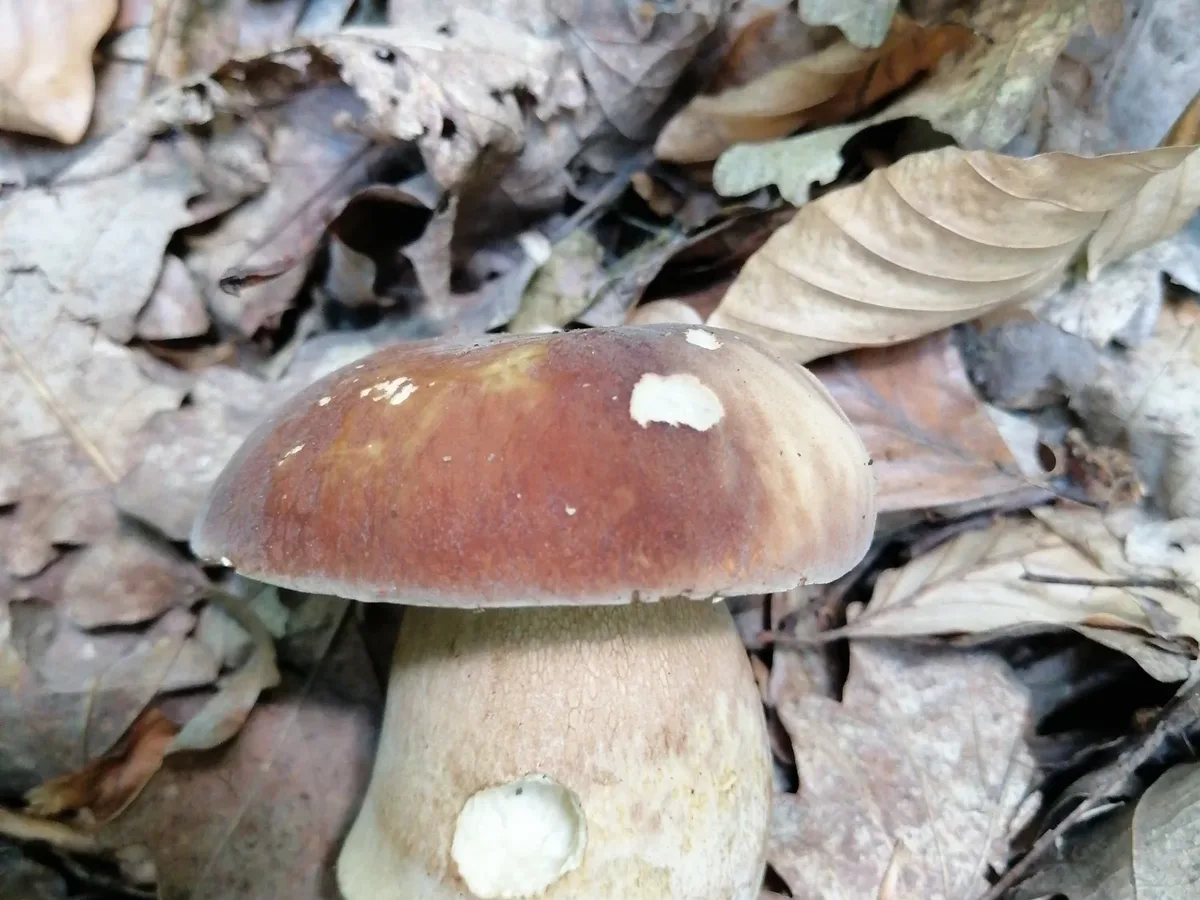 szegedigombasz (CC0)
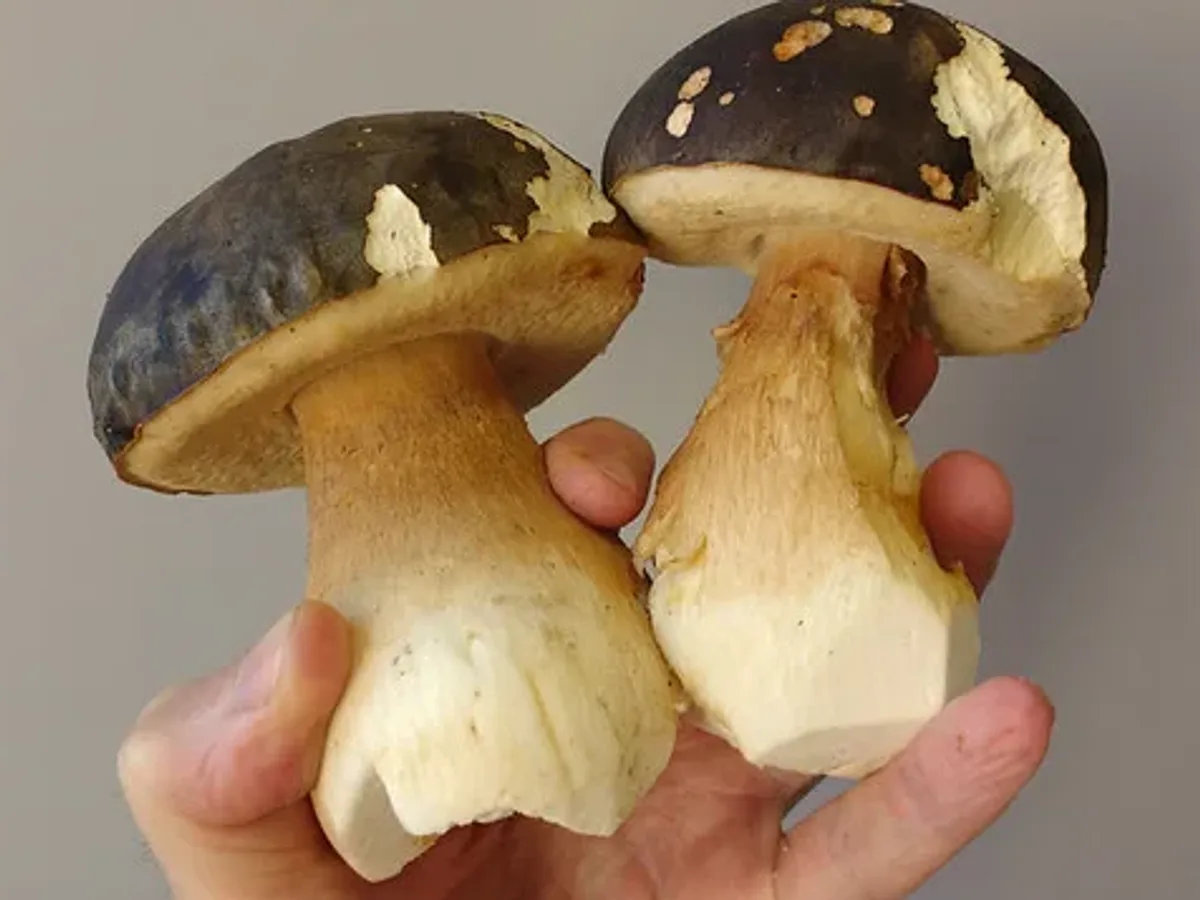 © mongider (CC BY-SA 2.0)
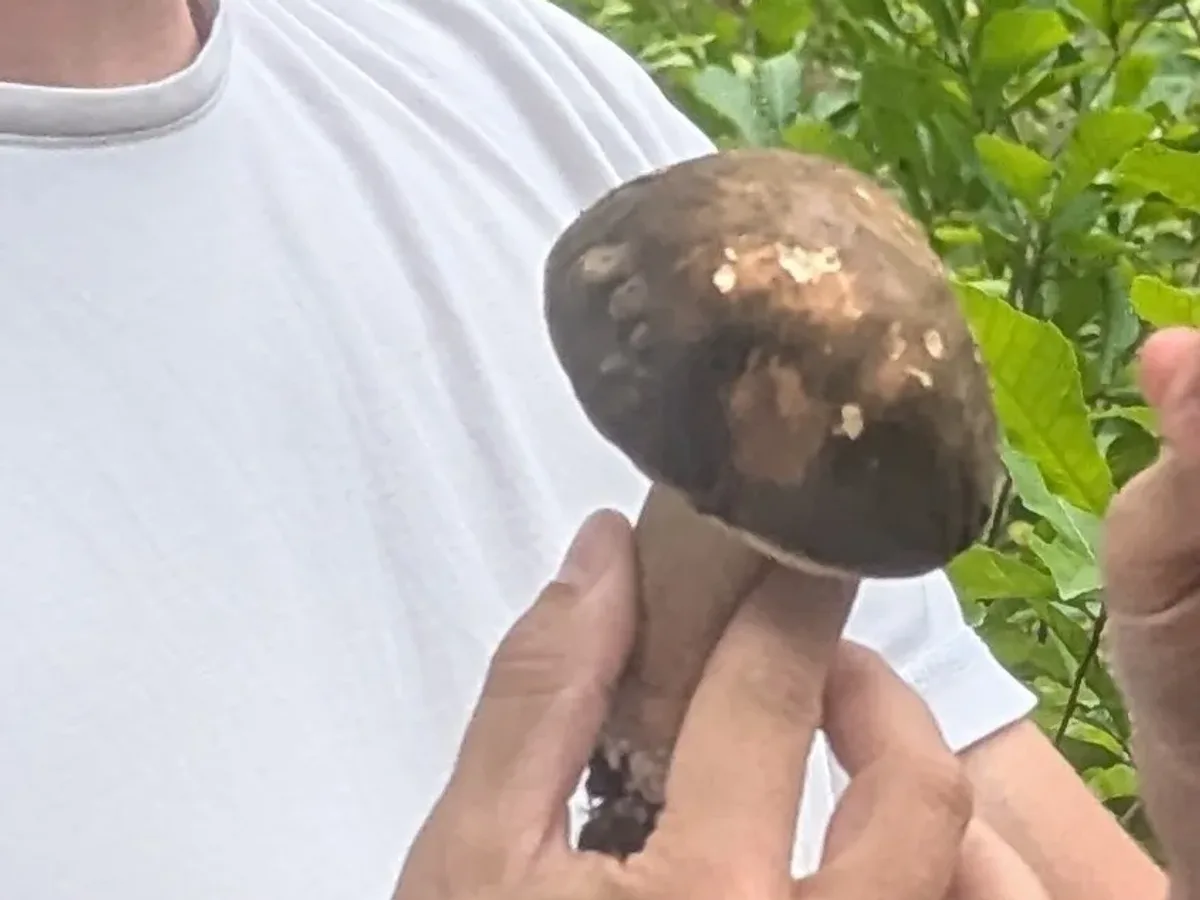 © biogeek (CC BY)
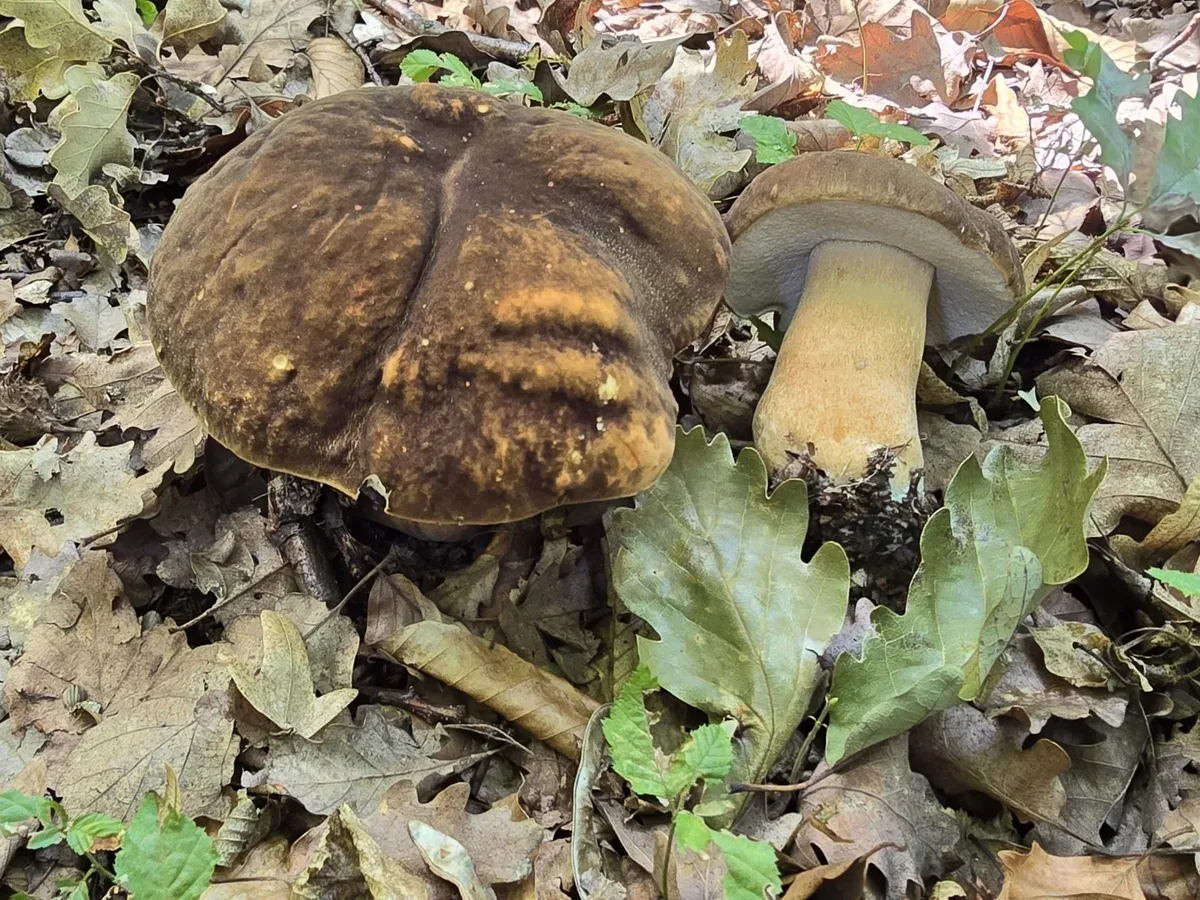 © Paula Nimigean (CC BY)
 © Paula Nimigean (CC BY)
 © Paula Nimigean (CC BY)
 © Patrick Bayan (CC BY)
 © Patrick Bayan (CC BY)
 © gerardbertrand (CC BY)szegedigombasz (CC0)© mongider (CC BY-SA 2.0)
One of the best mushrooms you can bring home - once you are certain of the identification.
Never eat a mushroom you are not 100% sure of - check the look-alikes below, and always cook wild mushrooms.
How to recognise it
Cap
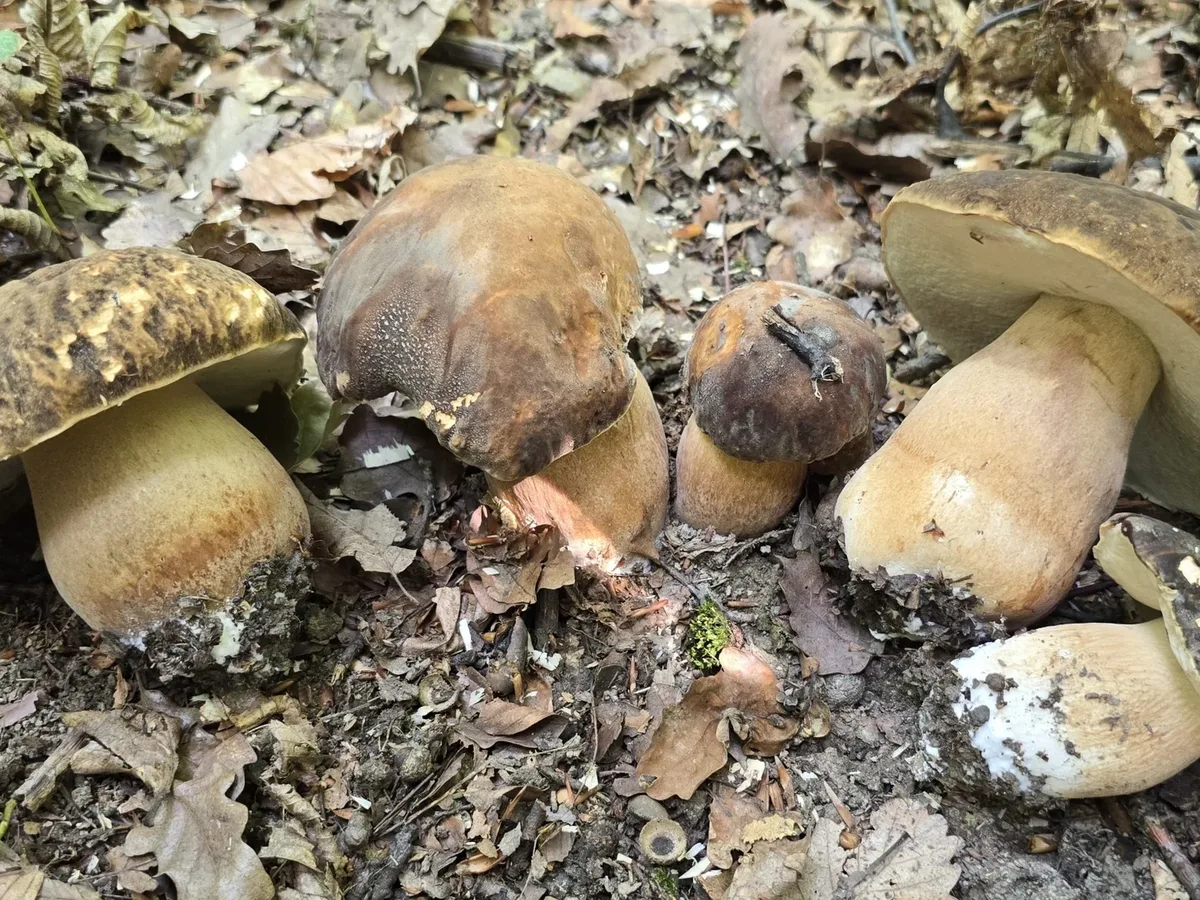
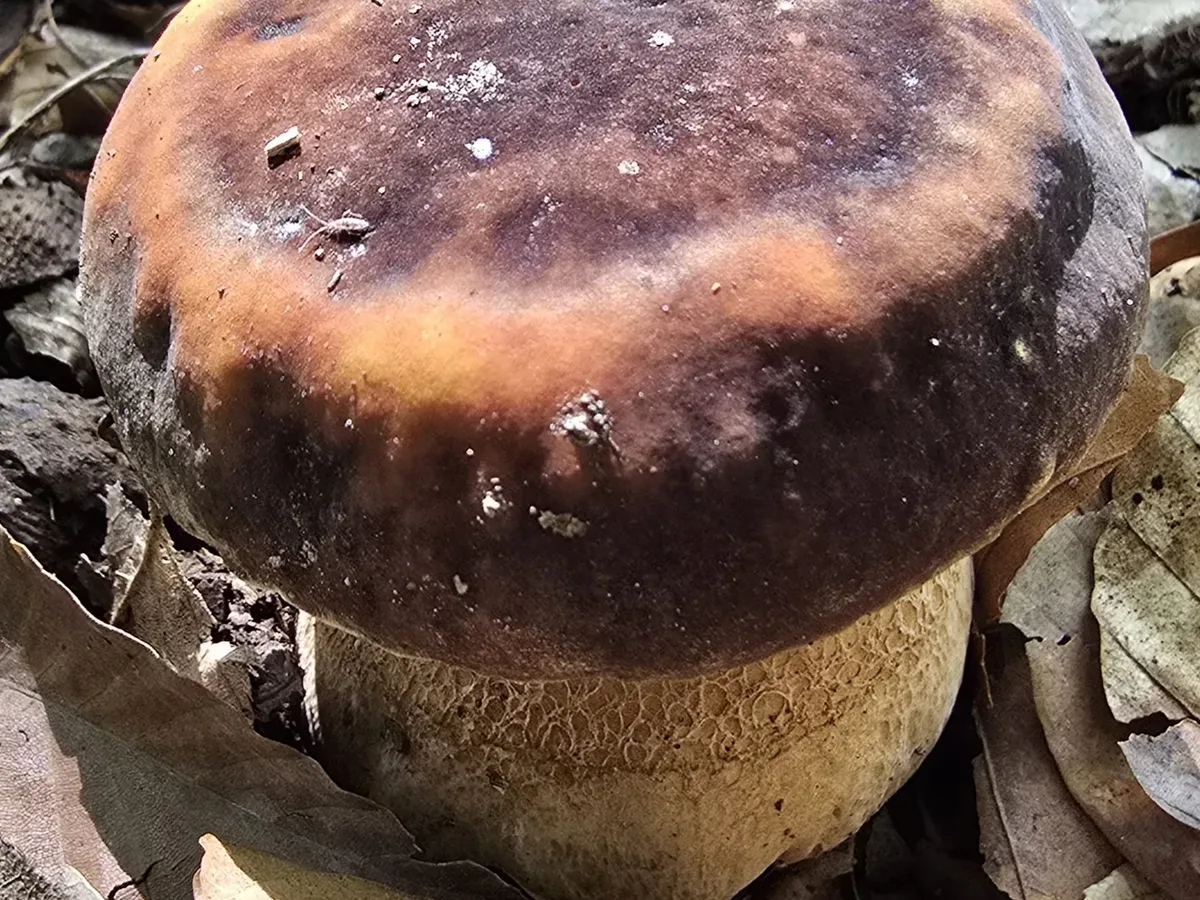
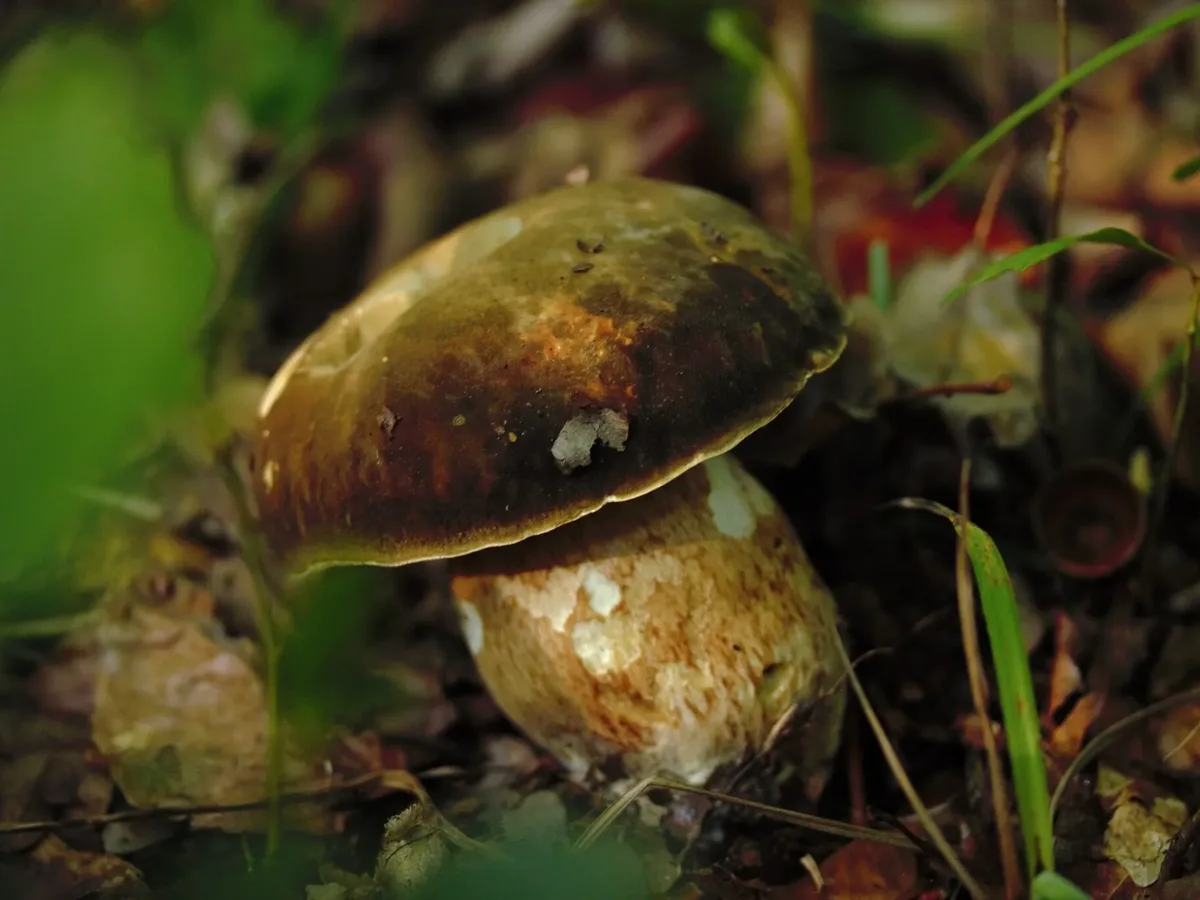
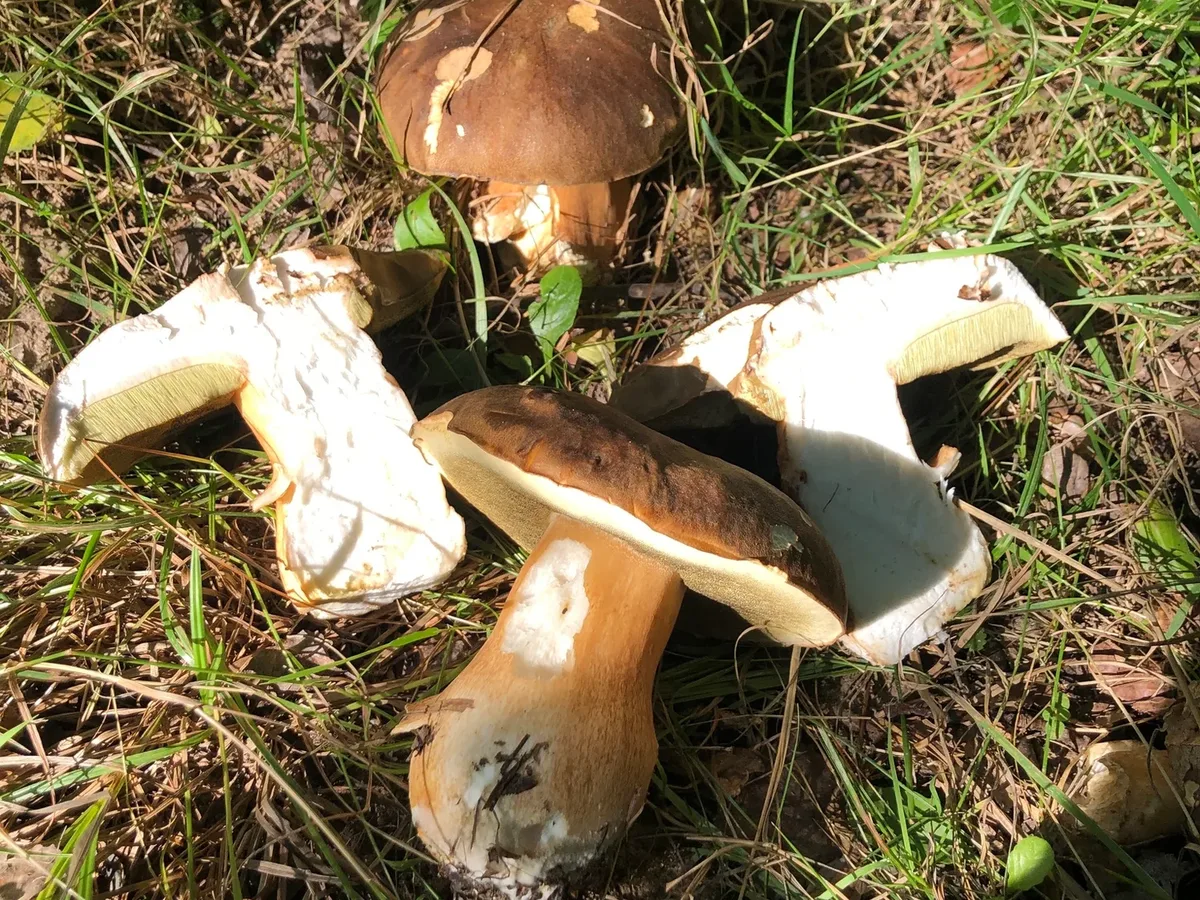
Boletus aereus is the darkest of the four principal European porcini species, and this darkness is its single most reliable field character.
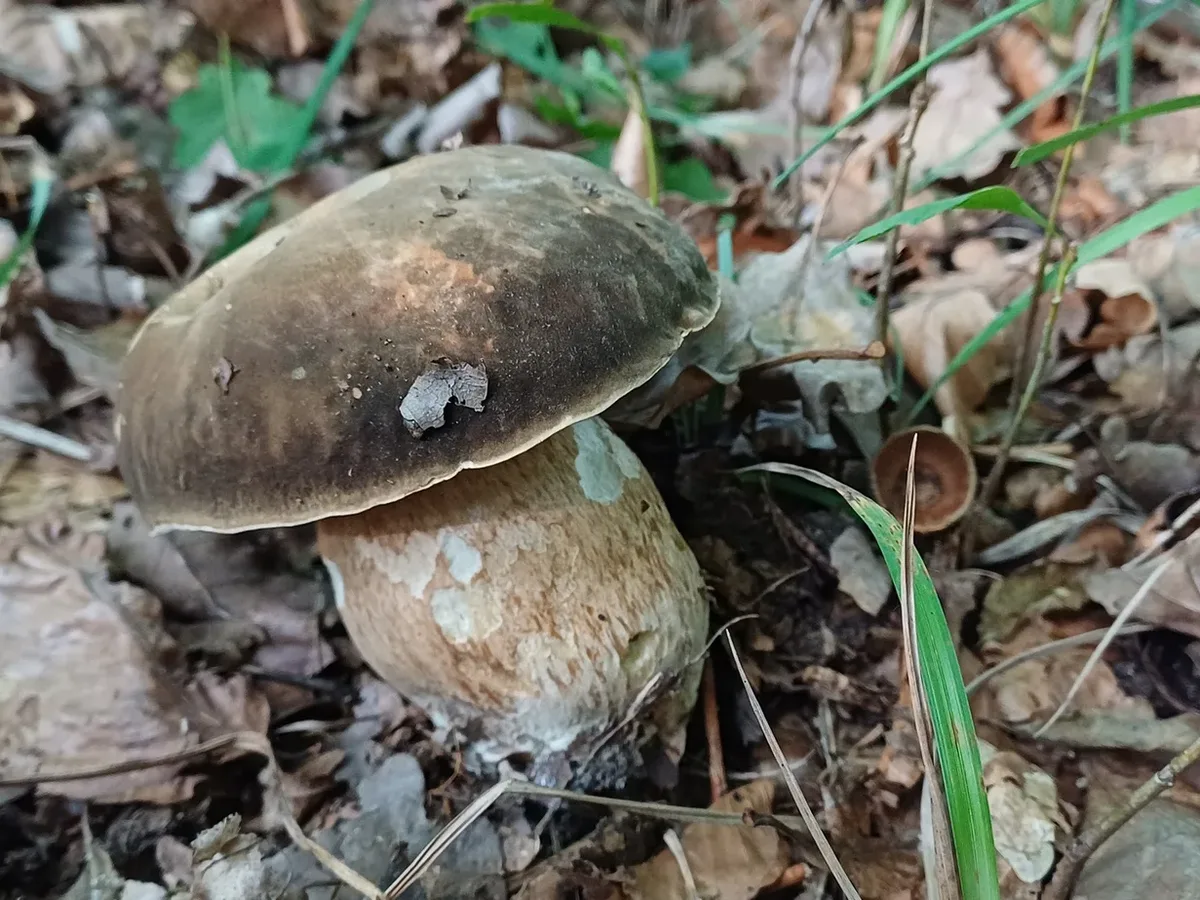
The cap ranges from deep chocolate-brown to almost black when young and moist, softening only very slightly with age or in drought to a dark sepia or umber-brown.
Compare directly with Boletus edulis (penny bun), which is typically mid-brown to reddish-chestnut with a paler marginal zone, and with Boletus reticulatus (summer cep), which is pale tan to ochre-buff and strongly felty.
The cap surface is dry and finely downy to tomentose in youth, becoming glabrous and sometimes faintly shiny with age. In wet weather a very slight sliminess may be noticed, but the cap never becomes truly viscid.
Pores
The pore surface is white and almost porcelain-like when the cap is still domed; as it expands the pores turn creamy, then ivory-yellow and finally dull olivaceous-yellow when mature.
They do not change colour when pressed or cut and never blue.
Stem
The stem is characteristically stout - often as wide as it is tall in robust specimens - and shows a raised pale network over at least the upper half and frequently over the entire surface.
This network (reticulum) is the pale stitching of a bolete stem and is present in all four porcini species; in B. aereus the network threads are pale buff against a mid-brown background.
Flesh
The flesh is white, firm, and does not discolour when broken, sliced, or exposed to air for several minutes - any blueing instantly disqualifies B. aereus.
Where & when it grows
Habitat
Boletus aereus is a thermophilous ectomycorrhizal species that reaches its highest density and reliability in the western Mediterranean basin:
- the Iberian Peninsula
- southern France (Languedoc, Provence, Corsica)
- Italy (especially Tuscany, Sardinia, Sicily)
- the Maghreb coast of North Africa
It is a defining species of warm, dry holm-oak (Quercus ilex) woodland - the so-called 'encinar' habitat of Spain and Portugal - but also colonises cork-oak scrub, deciduous oak stands on well-drained valley slopes, and chestnut groves.
The species rarely appears in northern or montane habitats and is essentially absent from boreal or Atlantic regions where Boletus edulis is most abundant.
It grows on sandy, gravelly or rocky soils that drain quickly, often on south-facing slopes baking in summer sun. In favoured spots the same clearings produce fruitbodies year after year.
When
The primary fruiting season is late summer to mid-autumn. In lowland Mediterranean areas it runs from August through October, peaking in September after the first heavy rains following the summer dry season.
In upland oak forests (500-1000 m) in Spain or Italy the season can open earlier, from June onwards, matching cooler conditions.
Sporadic late fruitings occur in November and, in mild maritime spots, even December. In drought years fruiting can be almost absent or reduced to a brief window following a single rain event.
How it grows
Fruitbodies emerge as firm, near-spherical buttons, initially almost entirely covered by the inrolled cap margin, giving them an egg-like appearance.
Growth is steady over 5-10 days depending on temperature and moisture. Caps expand to their final width before the flesh begins to soften, and the stem elongates and broadens simultaneously.
Fruitbodies often appear singly or in pairs; dense trooping is unusual. They are solidly fleshed throughout life and rarely show worm damage in young stages unless the season is advanced.
Fruiting conditions
Fruiting in Mediterranean climates is strongly coupled to the first significant autumn rains breaking the summer drought. A minimum of 20-30 mm over a 2-week window, with soil temperatures cooling below 22 °C, typically triggers the main flush after a 10-14 day lag. Extended dry spells suppress fruiting entirely regardless of temperature.
Look-alikes
The four commercially traded porcini species (Boletus edulis, B. pinophilus, B. reticulatus, B. aereus) all share the same fundamental character set - brown cap, white-to-olive pores that do not blue, pale stem reticulum, white non-bluing flesh - and are all edible and delicious.
Distinguishing B. aereus from its relatives requires attention to cap colour (very dark brown to blackish vs. mid-brown or pale tan in the others) and habitat (warm Mediterranean oak woodland vs. the more northern or montane affinities of B. edulis and B. pinophilus).
Boletus pinophilus has a deep chestnut-red to purplish-brown cap but grows under pines and has brownish-red mycelial threads at the stem base.
The most serious confusion risk in Mediterranean habitats is with Satan's bolete (Rubroboletus satanas): same oak-woodland habitat, same large, robust habit. But it is immediately separated by:
- a pale creamy-white or dirty-ivory cap (not dark brown)
- a vivid red pore surface
- a red-flushed stem base
- rapid, strong blueing of the flesh when cut
Any blue reaction, any red pore surface, or any pale whitish cap: do not eat.
Two other dangerous boletes to know:
- Suillellus luridus (lurid bolete) also blues rapidly and has an orange-red pore surface.
- Neoboletus luridiformis (scarletina bolete) blues instantly, has orange-red pores, and has caused fatalities when eaten raw.
All boletes with blue-staining flesh and/or red/orange pores must be strictly avoided.
Inonotus and other bracket fungi are not likely confusions. No deadly lookalike shares all of B. aereus's characters (very dark brown cap + white non-bluing pores + pale reticulate stem + white non-bluing flesh).
Same warm oak-woodland habitat but cap is pale whitish-grey to dirty cream (never dark brown), pore surface is vivid orange-red, stem base is red-flushed, and flesh blues rapidly and dramatically within seconds of cutting. Causes severe gastrointestinal poisoning (violent vomiting, abdominal pain, diarrhoea); potentially fatal in children or vulnerable individuals. Any red pores or blueing flesh: do not eat under any circumstances.
Cap bay-brown to chestnut, pores orange-red, and flesh turns vivid blue within seconds of cutting. Distinguished at a glance by red pores and instant blueing. Has caused fatalities when consumed raw or insufficiently cooked. Avoid all boletes with orange-red pores or bluing flesh.
Cap brown to olive-brown and superficially similar, but pore surface is orange-red, stem surface covered in a coarse red network (not pale), and flesh blues strongly and immediately when cut. Toxic when raw; causes serious gastrointestinal illness. Avoid all boletes with orange-red pores or bluing flesh.
B. edulis has a pale to mid-brown cap (not blackish-brown), typically with a broad whitish edge zone when fresh, and grows predominantly under conifers and in cooler, more northerly or montane habitats. Flesh and pores equally non-bluing; both edible and choice.
Cap deep chestnut-red to purplish-brown (darker reddish, not blackish), almost always associated with pine trees, and has a reddish-purple flush of mycelium at the stem base. Pores and flesh non-bluing. Both edible and excellent.
Cap pale buff to ochre-tan, distinctly paler than B. aereus, and very strongly tomentose-felty throughout life, often cracking in dry weather. Fruits earlier (May-July). Edible and choice.
In the kitchen
Picking & cleaning
Select buttons and young specimens with fully white, firm pore surfaces and a closed, still-domed cap - these are at peak culinary quality and will keep for 2-3 days refrigerated.
- Cut the stem cleanly at soil level with a knife; do not pull, as disturbing the mycelium can reduce future yields.
- Brush off soil and leaf litter in the field.
- Examine the cut stem base: flesh should be white and firm; any yellowing or orange flush at the base suggests a different species.
- Carry in a basket; do not plastic-bag.
- Trim any soft or insect-damaged flesh before processing.
Cooking
Boletus aereus rivals Boletus edulis in flavour and arguably surpasses it in aroma: the dried form in particular develops an intensely deep, savoury, almost truffle-like fragrance.
Young firm buttons can be thinly sliced and eaten raw with lemon juice and quality olive oil in the Italian tradition (porcini crudi).
For cooking, sauté thick slices in butter or olive oil over high heat until golden and slightly caramelised; season simply with salt, garlic, and parsley. The dense flesh holds its structure in risotto, pasta sauces, and ragù far better than many mushrooms.
For preservation:
- Slice and dry at 40-50 °C until brittle; rehydrate in warm water for 20 minutes and use the soaking water as stock.
- Freezing after par-cooking in butter is also excellent.
Avoid boiling in water for extended periods, which leaches flavour.
Good to know
Boletus aereus is one of the safest wild mushrooms to collect once its key characters are learned, because no deadly European species shares its combination of very dark brown cap, non-bluing white pores, pale stem network, and non-bluing white flesh.
The absolute safety rule for all boletes: do not eat a bolete if either applies:
- the flesh or pores turn blue within 1-2 minutes of cutting
- the pore surface is red or orange
Following this rule eliminates all dangerous boletes. Boletus aereus never blues and never has red or orange pores.
Eat raw test bites only with caution - even edible boletes can cause mild gastric upset raw in some individuals; always cook before eating. If any specimen causes doubt, discard it.
A reference guide - never an edibility guarantee. When in doubt, leave it out.