Mustard-stem bolete
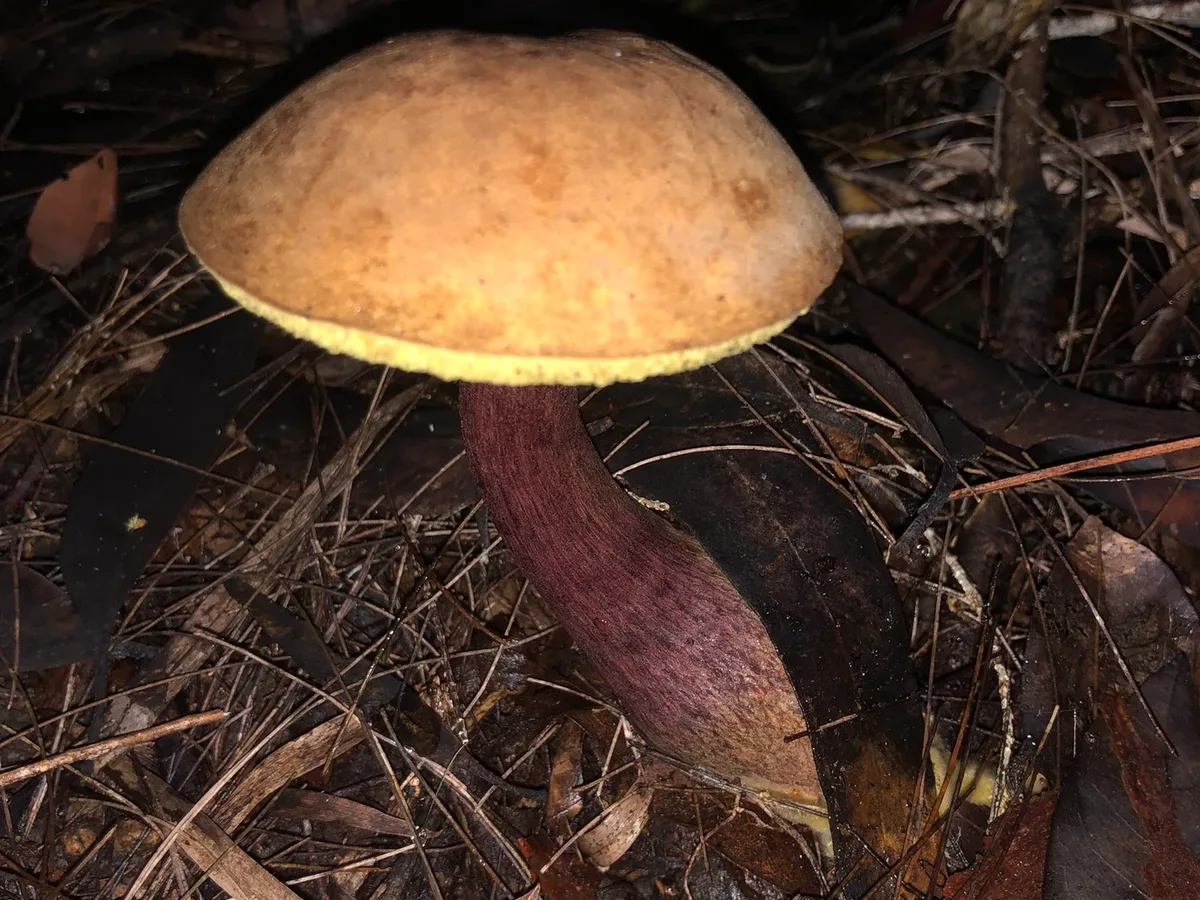
Boletellus sinapipes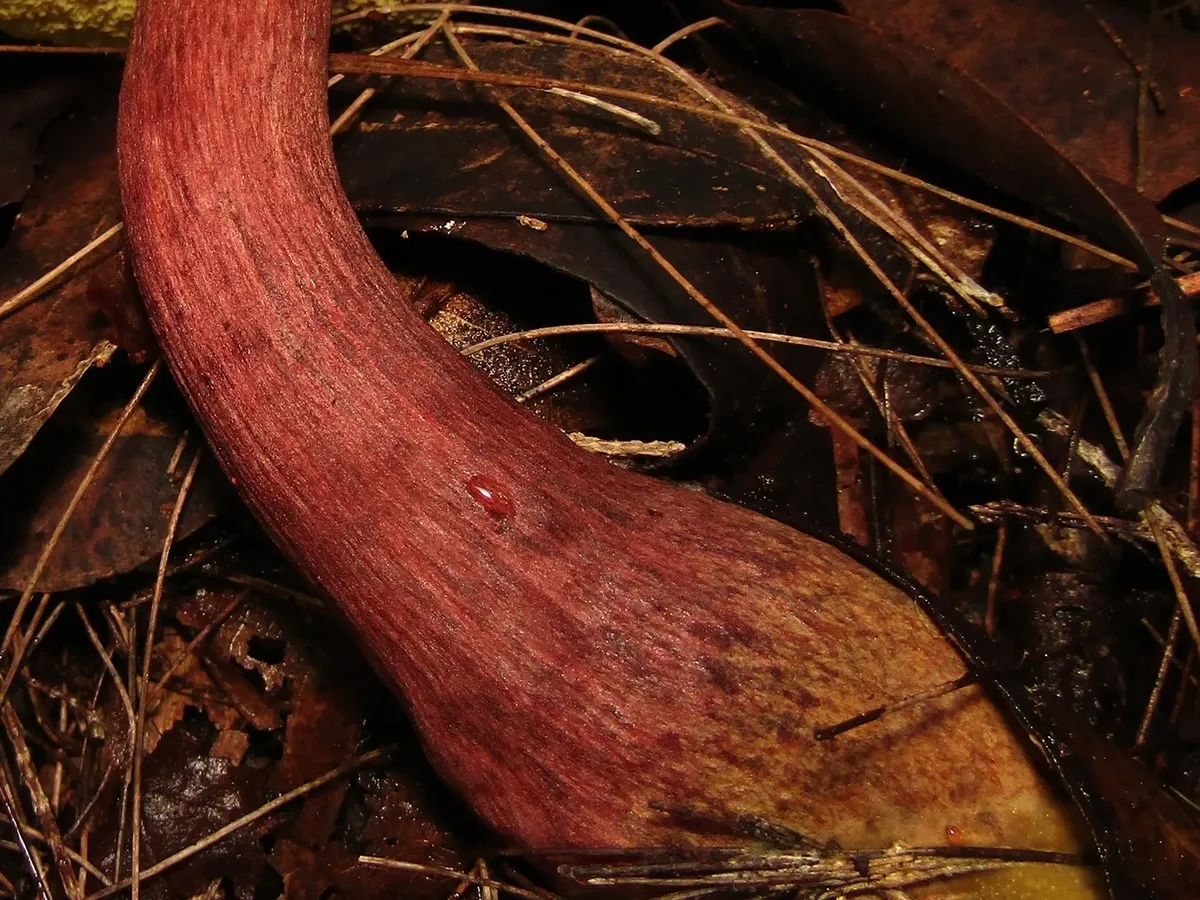 © Samuel Frankel (CC BY)
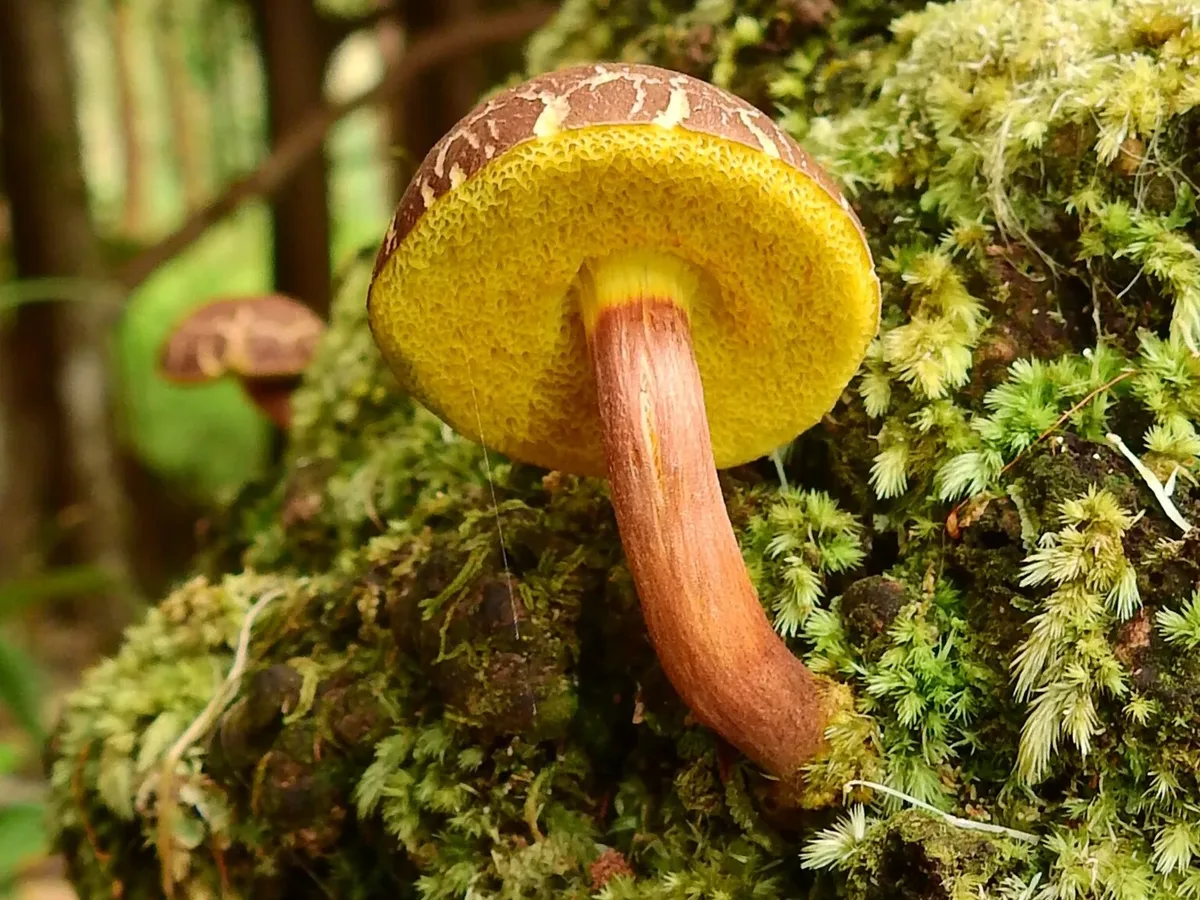 © Samuel Frankel (CC BY)
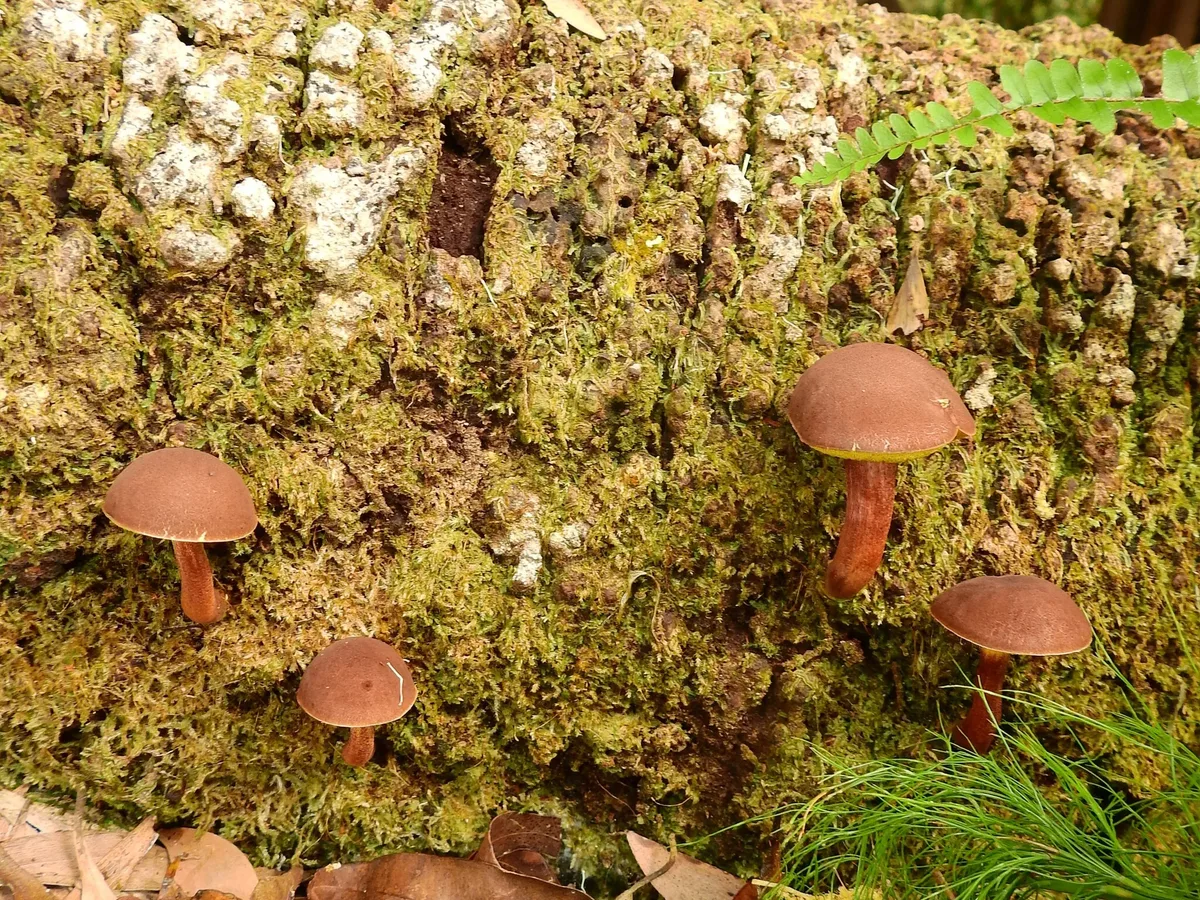 © Samuel Frankel (CC BY)
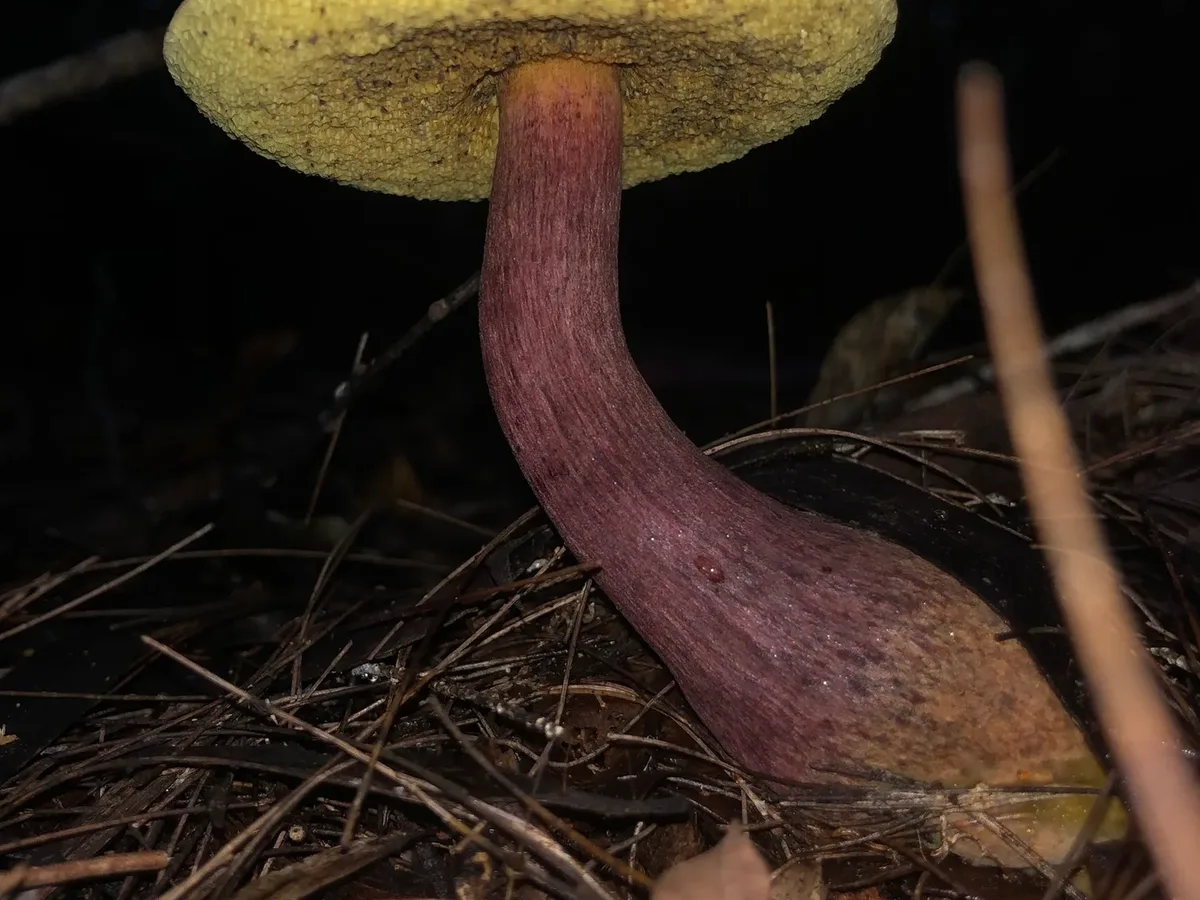 © Samuel Frankel (CC BY)
 © Samuel Frankel (CC BY)
 © Samuel Frankel (CC BY)
 © Samuel Frankel (CC BY)© Samuel Frankel (CC BY)© Samuel Frankel (CC BY)
Edible only with the right preparation - or safe for some people but not others. Learn the caveats first.
How to recognise it
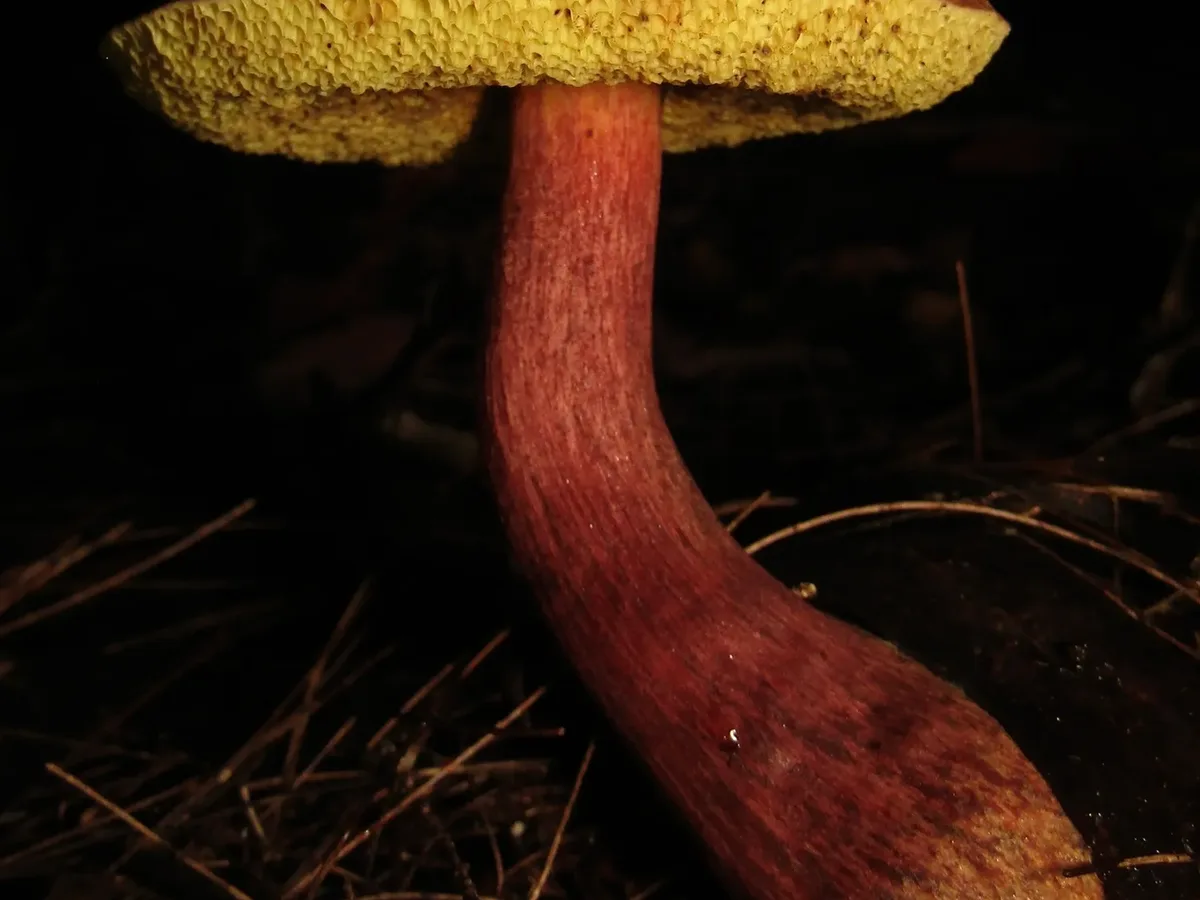
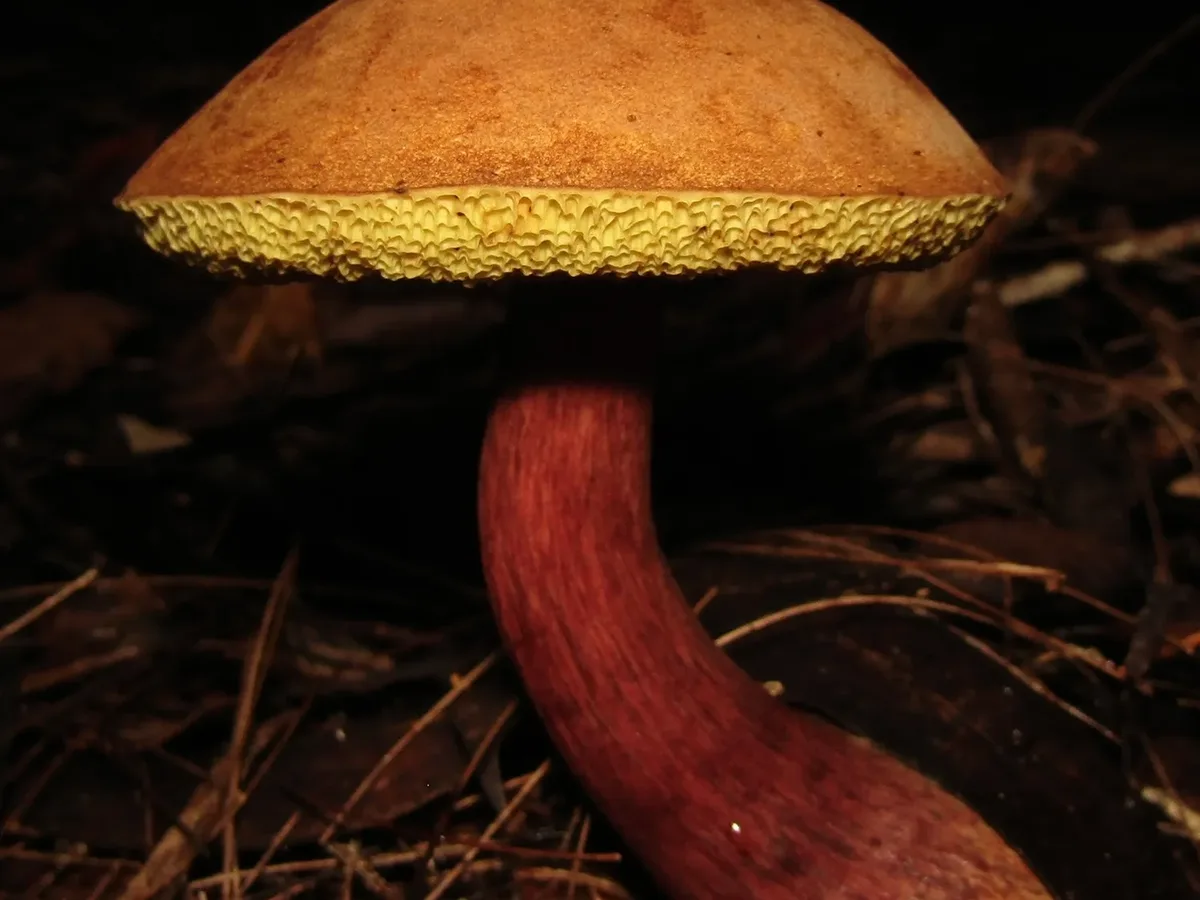
Boletellus sinapipes is most readily identified by one outstanding feature: the strikingly mustard-yellow to chrome-yellow stem. While other Australian boletes may share a reddish-brown fibrillose cap and blue-bruising yellow pores, the vivid, saturated yellow stipe is specific to this species and should be the first thing you look for.
Cap
The cap (4-10 cm) is convex to broadly flat, the surface dry and breaking into flat-lying scales on a reddish-brown to chestnut background - not the coarsely shaggy tufted texture of Boletellus obscurecoccineus, but a more pressed, appressed scaliness.
Gills / Pores
The pore surface is bright lemon-yellow, and touching it with a fingernail produces an instant deep blue mark - the bluing reaction driven by the oxidation of variegatic acid in the pore tissue, a chemistry shared across many boletes worldwide.
Flesh
Cut the fruit body and the same rapid blue staining runs through the cap flesh; the stipe flesh may blue more slowly but still turns blue, confirming the reaction is systemic.
The spore print is olive-brown, confirming placement in Boletellus.
The combination of reddish-brown scaly cap + mustard-yellow stem + yellow bluing pores + olive-brown spores is diagnostic and should not be confused with other species in the Australian native forest context.
Where & when it grows
Habitat
Search for this species in intact native sclerophyll forest and eucalypt woodland of southeastern Australia - Victoria, New South Wales, and Tasmania are the core documented range.
It fruits from the soil among leaf litter and humus beneath mature Eucalyptus, forming obligate ectomycorrhizal bonds with the root systems of its tree partners.
This ectomycorrhizal relationship is the key ecological fact: the fungus cannot survive without living Eucalyptus root systems nearby, which means you will never find it in cleared paddocks, roadsides, or young regenerating scrub.
Sheltered, moist gully sides and the understorey of older eucalypt forest - where soil moisture is retained through autumn - are the most productive microhabitats.
Like the rhubarb bolete (B. obscurecoccineus), a find here is an indirect signal of forest quality and continuity.
When
Fruiting is tied to the Southern Hemisphere autumn cooling cycle. Soil temperature dropping from summer highs through the mid-teens Celsius, combined with meaningful autumn rainfall - typically 20 mm or more spread across one to two weeks - triggers fruiting in ectomycorrhizal boletes of this type.
Expect fruit bodies from March through June, with April and May being the most reliable peak.
Individual fruit bodies are short-lived - a few days of good condition before collapsing - so visit known sites shortly after autumn rain events for the best results. Summer drought and winter cold both terminate the season.
In the highlands (e.g., Victorian Alps foothills) the season may peak slightly earlier in March as temperatures cool faster; at lower-elevation coastal sites fruiting may extend into June.
How it grows
Produces solitary to scattered fruit bodies, never in the dense clusters associated with wood-decay fungi.
The fruit bodies you see are a brief seasonal surface expression of a mycelium that persists underground year-round, woven through the soil and ectomycorrhizal root tips of Eucalyptus hosts.
Because the mycelium is long-lived and the partnership with its host tree stable, B. sinapipes tends to fruit at the same general site year after year - though the exact location of individual fruit bodies shifts as the mycelium explores the expanding root network.
A documented site is worth returning to each autumn, especially in the two to three weeks after significant rainfall.
Fruiting conditions
Southern Hemisphere autumn bolete. Fruiting triggered by cooling soil temperatures (falling through ~15 °C) and autumn rainfall. Flush lag of 7-14 days after adequate rain is typical for ectomycorrhizal boletes of this type. Most productive April-May in southeastern Australia.
Look-alikes
The mustard-yellow stem of Boletellus sinapipes is the primary distinguishing feature and separates it clearly from most other Australian boletes. No other commonly encountered native bolete shares the combination of reddish-brown fibrillose cap, lemon-yellow bluing pores, and a vivid chrome-yellow stem.
The most realistic confusion species in the Australian context are:
- Boletellus obscurecoccineus (rhubarb bolete) - a similar bluing cap and yellow pores, but a dark crimson to scarlet cap that is more coarsely shaggy and a reddish-brown stem that is not mustard-yellow.
- Austroboletus lacunosus - a pale to ochre-buff cap with a deeply pitted-reticulate (lacunose) stem; the pitting pattern and paler colour differ substantially.
Any Australian bolete with a reddish-brown cap and yellow bluing pores that lacks the mustard stem should be keyed out carefully; do not assume either species is safe to eat.
Another native Australian bolete in eucalypt forest, but with a pale ochre to buff or pinkish-brown cap and a deeply pitted (lacunose) reticulate stem - the pit-pattern on the stipe is distinctive and unique among Australian boletes. Pore surface pink to pinkish-tan, not yellow, and flesh does not blue. The colour, pore colour, and stem texture differ substantially from B. sinapipes.
Several undescribed or poorly characterised native Australian Boletellus species share reddish to brown caps and bluing yellow pores. Separation requires careful examination of cap texture, stem colour (the mustard-yellow of B. sinapipes is distinctive), and spore morphology. All native Australian boletes in this group should be treated as not for consumption unless specifically verified by an Australian mycologist.
The closest relative in the Australian flora, also with a fibrillose cap, yellow bluing pores, and similar habitat. B. obscurecoccineus has a deep, dark scarlet to crimson-red cap that is more coarsely shaggy-scaly, and a reddish-brown or rhubarb-red stem - not mustard-yellow. The vivid chrome-yellow stem of B. sinapipes is the clearest separation point. B. obscurecoccineus is known to cause gastrointestinal illness; both species should be left uneaten.
In the kitchen
Picking & cleaning
Do not collect this species for the table.
Boletellus sinapipes has no established culinary tradition in Australia and its edibility has not been evaluated. The absence of documented toxicity is not the same as established safety - for native Australian boletes with no history of consumption and no formal toxicological assessment, the precautionary position is to leave them unpicked for eating.
If collecting for scientific voucher or photographic documentation:
- cut the stem cleanly at the base to preserve the mycelial structure
- photograph both cap surface and the distinctive mustard-yellow stem before cutting
- note habitat, host tree species, and exact location coordinates for the record, as occurrence data for this species remains sparse
Cooking
Boletellus sinapipes should not be prepared for or brought to the table.
No safe preparation method has been established for this species, no culinary tradition exists involving it, and the edibility of native Australian boletes as a group is largely unstudied.
The attractive mustard-yellow stem and bolete form are no indicator of edibility - appearance alone does not predict safety among native fungi.
Discard any specimen accidentally collected alongside edible species.
Good to know
Boletellus sinapipes should not be consumed. This is not because it is a known toxic species - no toxicity has been formally documented - but because:
- its edibility has never been evaluated
- it has no culinary tradition anywhere in its range
- there is no body of safe-use evidence for this or most other native Australian boletes
In the Australian context, the appropriate default for any native bolete that has not been specifically cleared for consumption is caution: treat as inedible until demonstrated otherwise.
Blue-staining boletes as a group include members that cause gastrointestinal illness, and the specific chemistry of this species is unknown.
If you are unsure of your identification or are new to bolete foraging, the safest course is to leave all native Australian boletes uneaten and focus on introduced species with strong culinary traditions (e.g., introduced Boletus edulis populations under introduced conifers in plantation areas).
If accidental ingestion occurs, contact the Poisons Information Centre (Australia: 13 11 26).
A reference guide - never an edibility guarantee. When in doubt, leave it out.