Pineapple bolete
Boletellus ananassyn. Boletus ananas, Strobilomyces ananas
 © Sarah DeLong-Duhon (CC BY 4.0)
 © Andrey Loria (CC BY-SA 4.0)
 Vijay Barve (CC0)
 Vijay Barve (CC0)
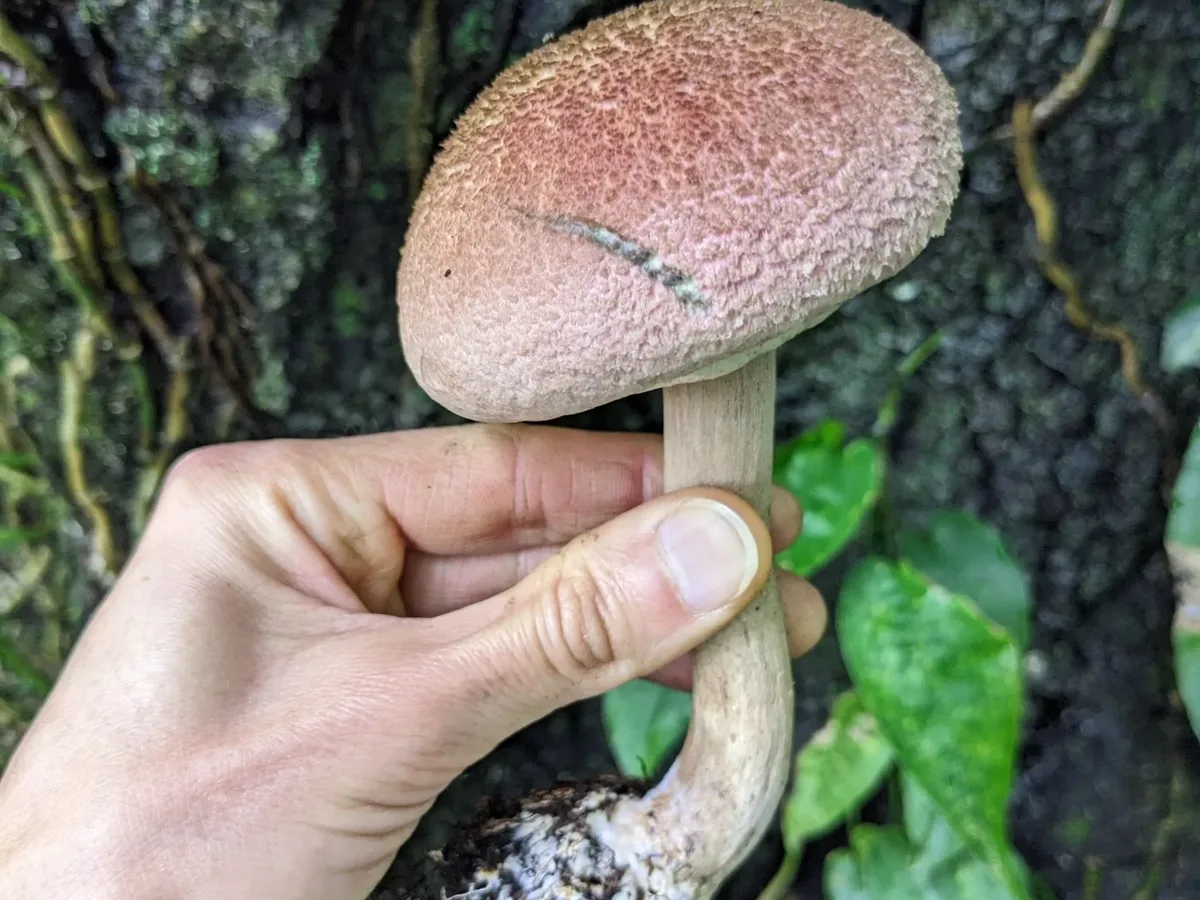 Rodrigo Blanco E. (CC0)
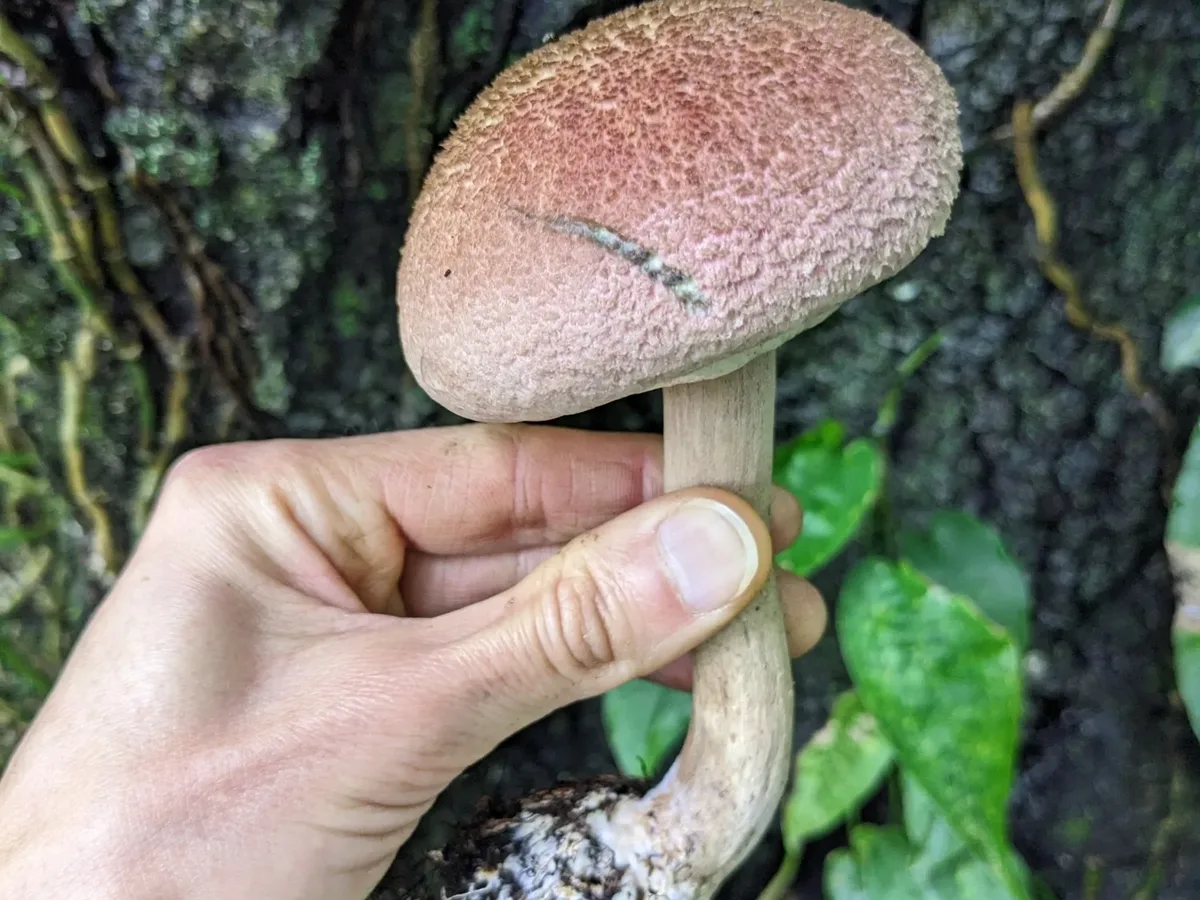 Rodrigo Blanco E. (CC0)
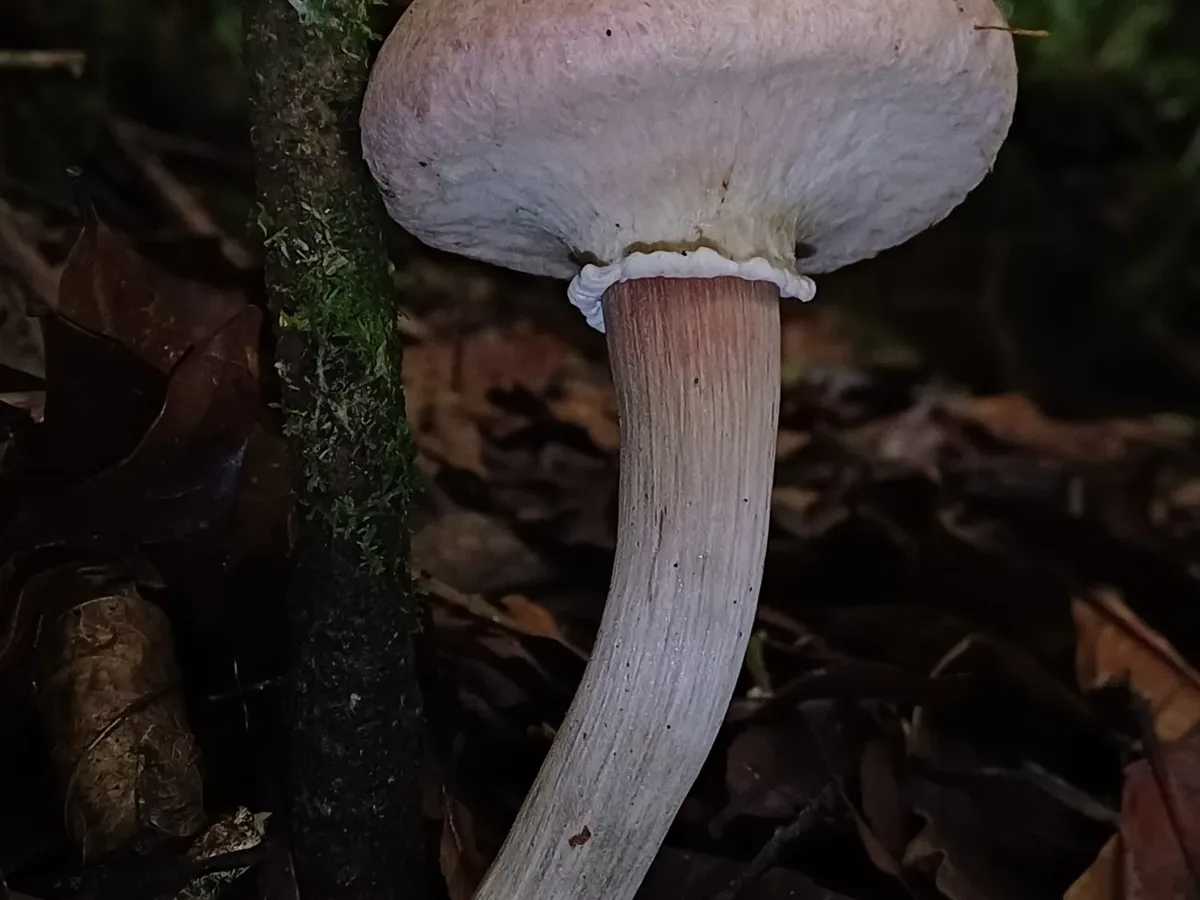 © Andrey Loria (CC BY)
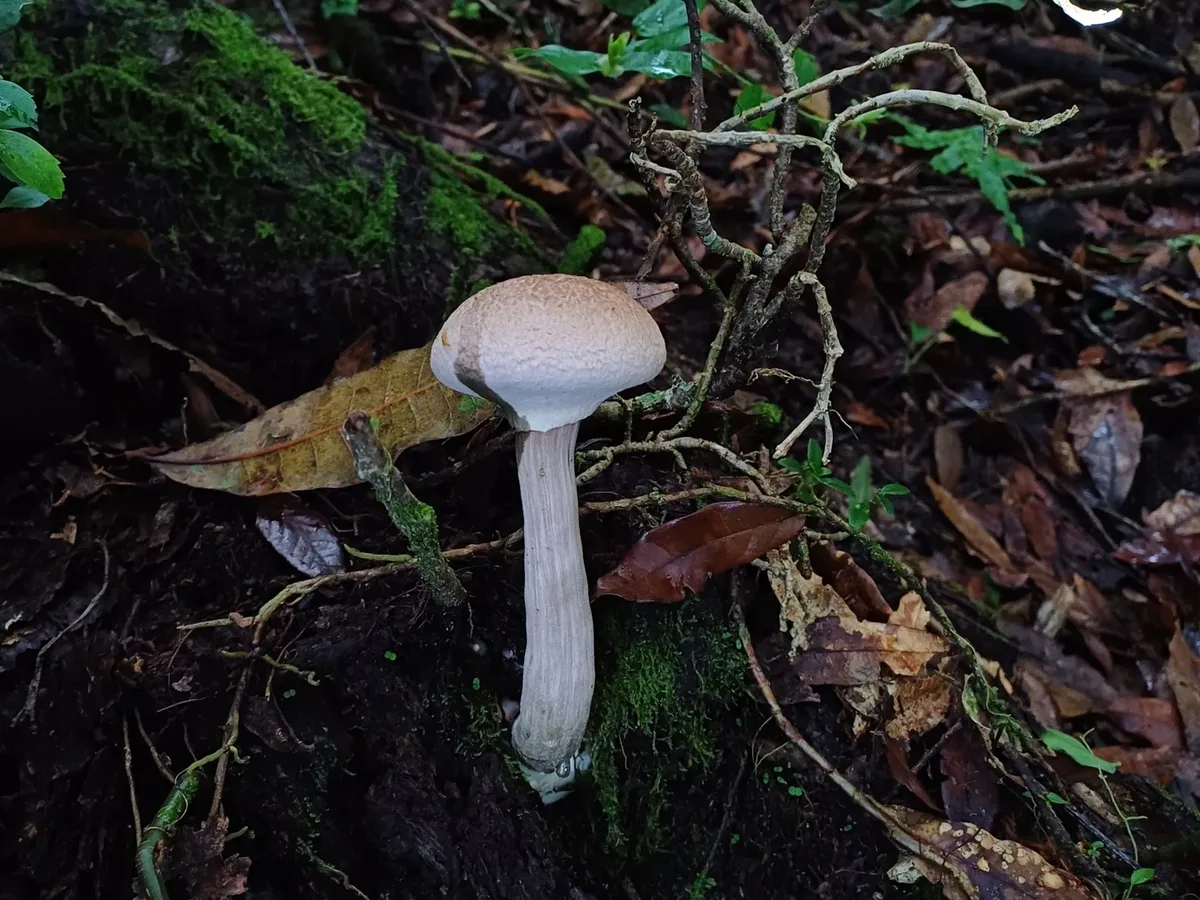 © Andrey Loria (CC BY)
 © Andrey Loria (CC BY)
 © Andrey Loria (CC BY)
 © Andrey Loria (CC BY)
 © Andrey Loria (CC BY)
 © Sarah DeLong-Duhon (CC BY 4.0)© Sarah DeLong-Duhon (CC BY 4.0)© Andrey Loria (CC BY-SA 4.0)
Good to eat, once you have identified it with certainty and cooked it through.
How to recognise it
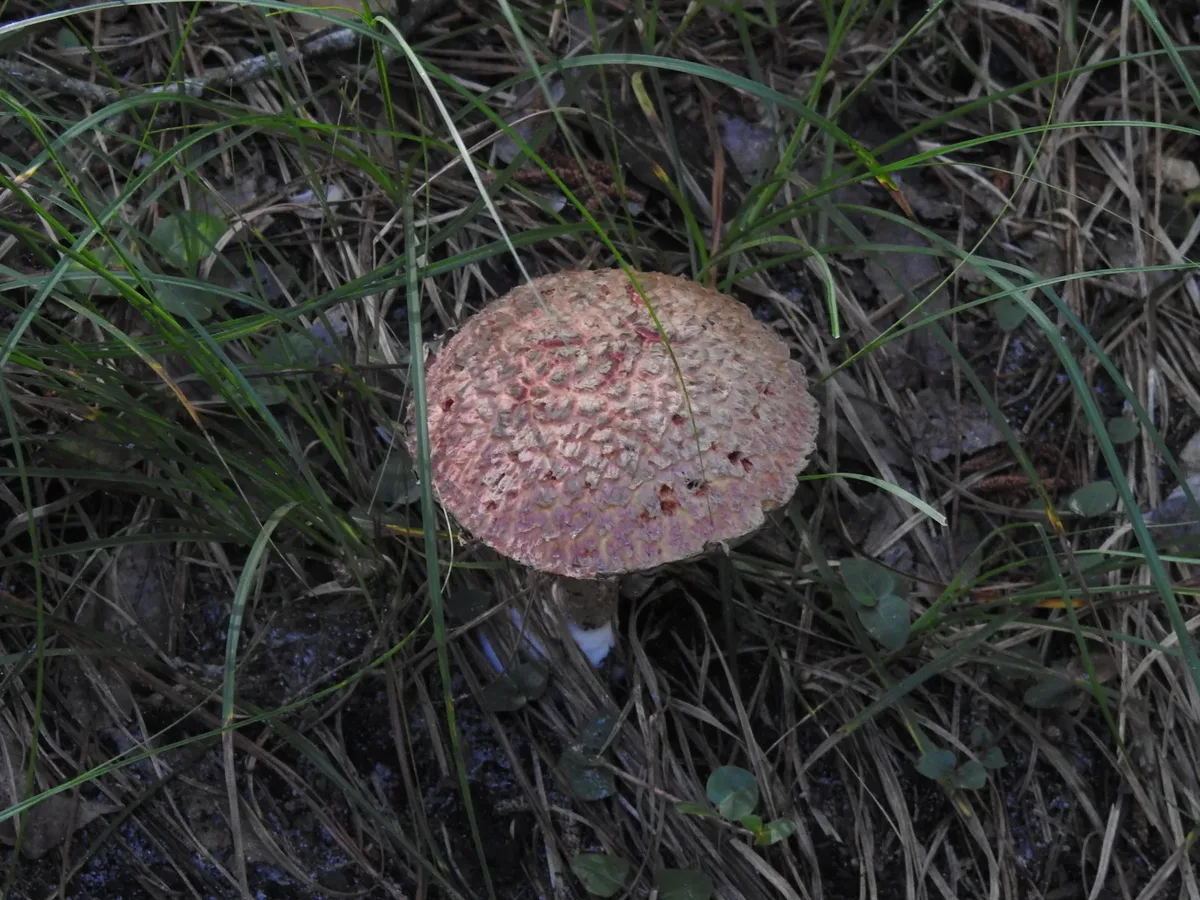
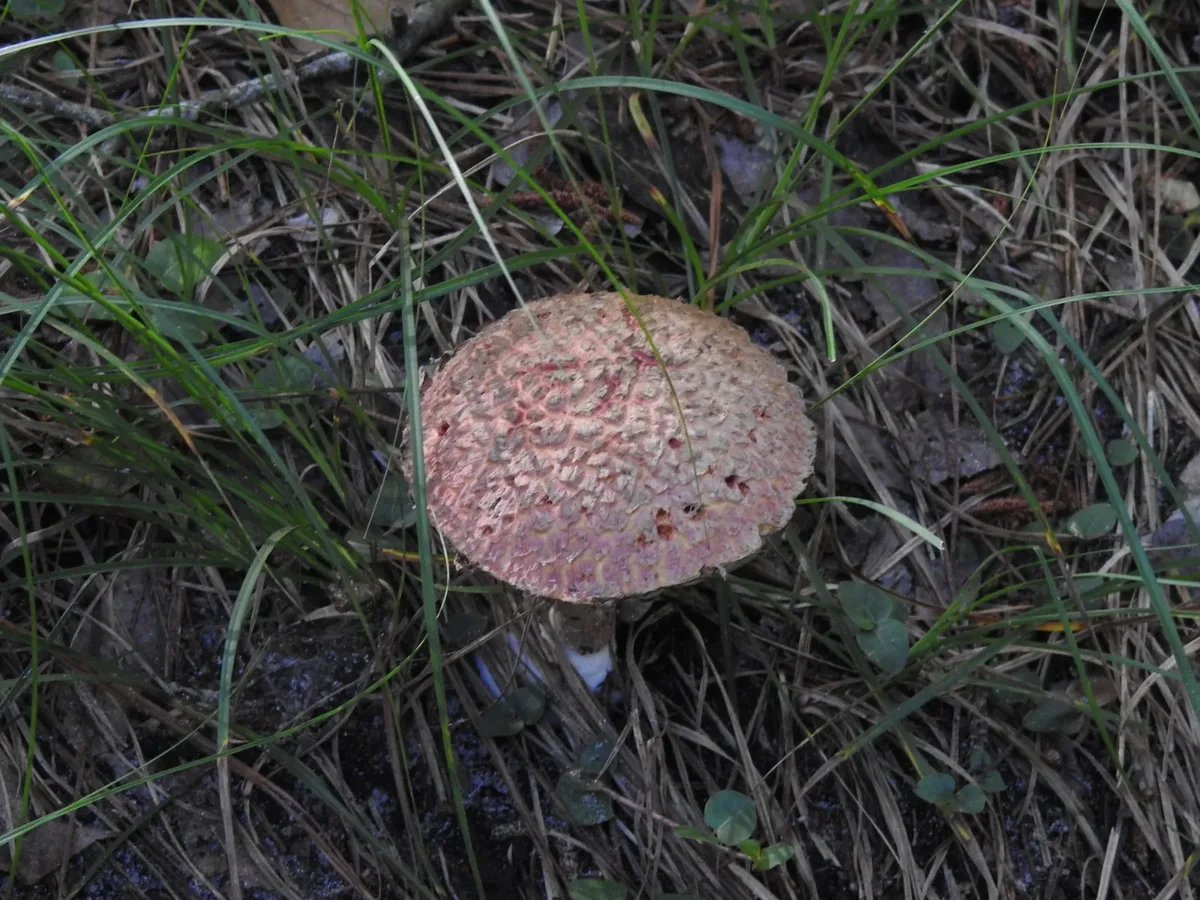
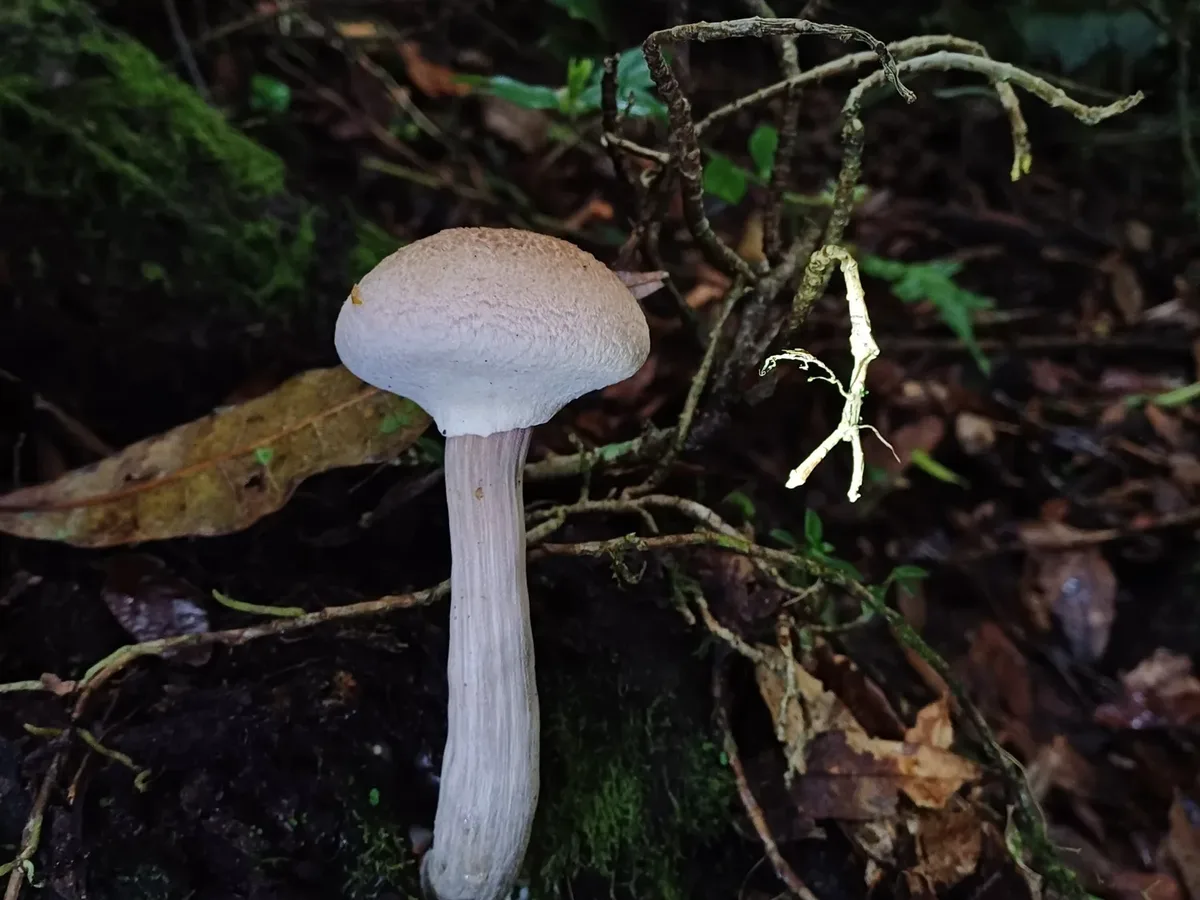
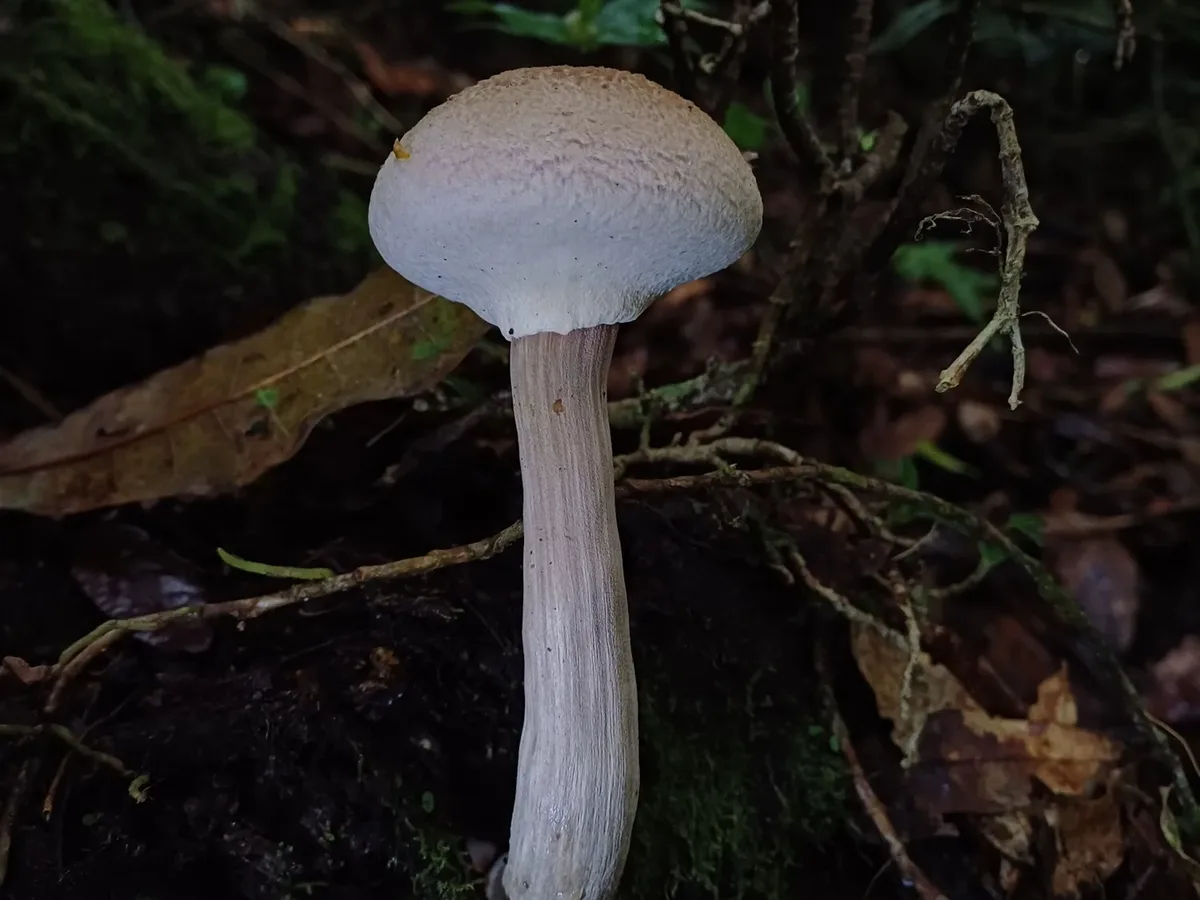
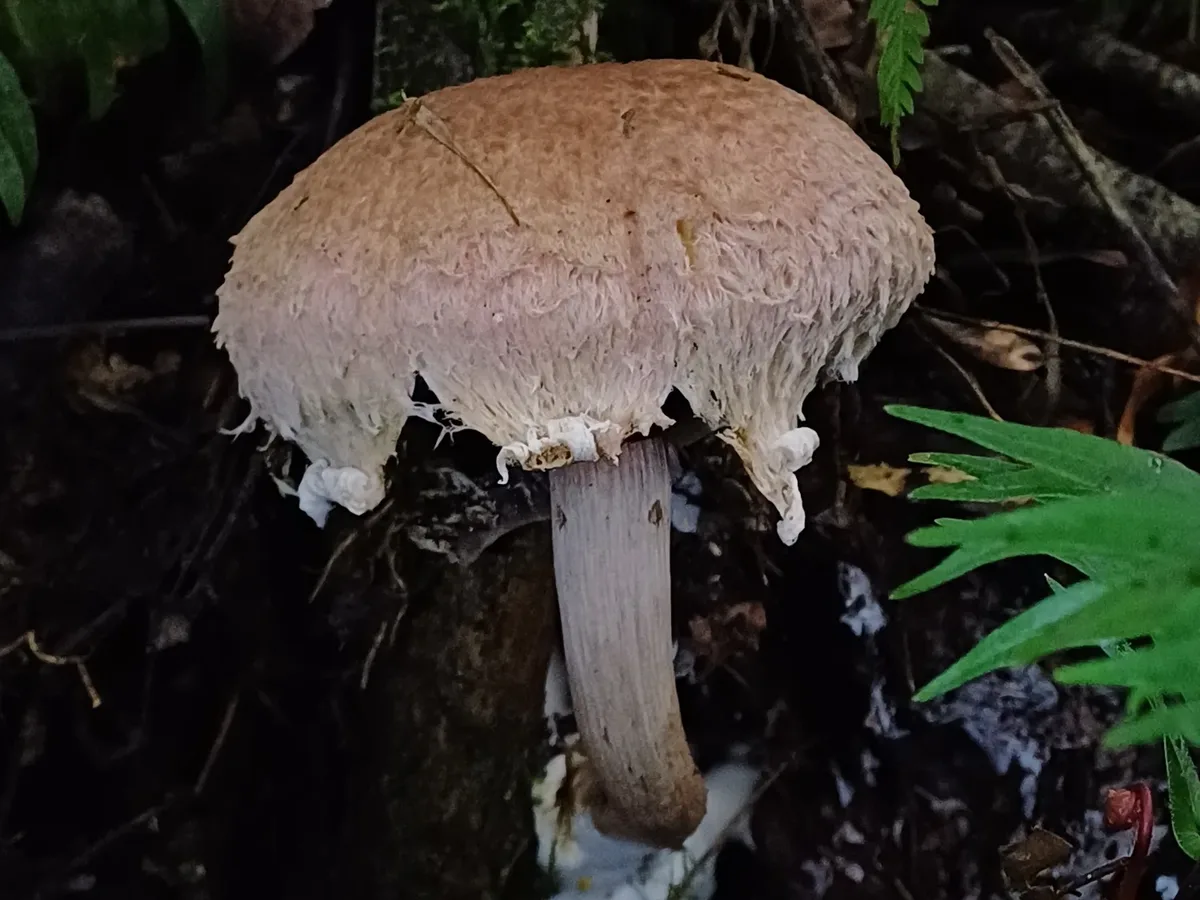
The pineapple bolete is instantly recognizable among eastern boletes by its shaggy, pineapple-textured cap. The whole fruit body has a rough, almost shaggy character quite unlike the smooth dome of a king bolete - that texture is the most reliable field mark you have.
Cap
The surface is covered in coarse, fibrous tufts or scales standing erect from a pinkish-rose to brick-red background, making it look almost tousled.
Cap diameter runs 3-10 cm, convex to broadly convex, the margin sometimes slightly inrolled in young buttons.
Gills / Pores
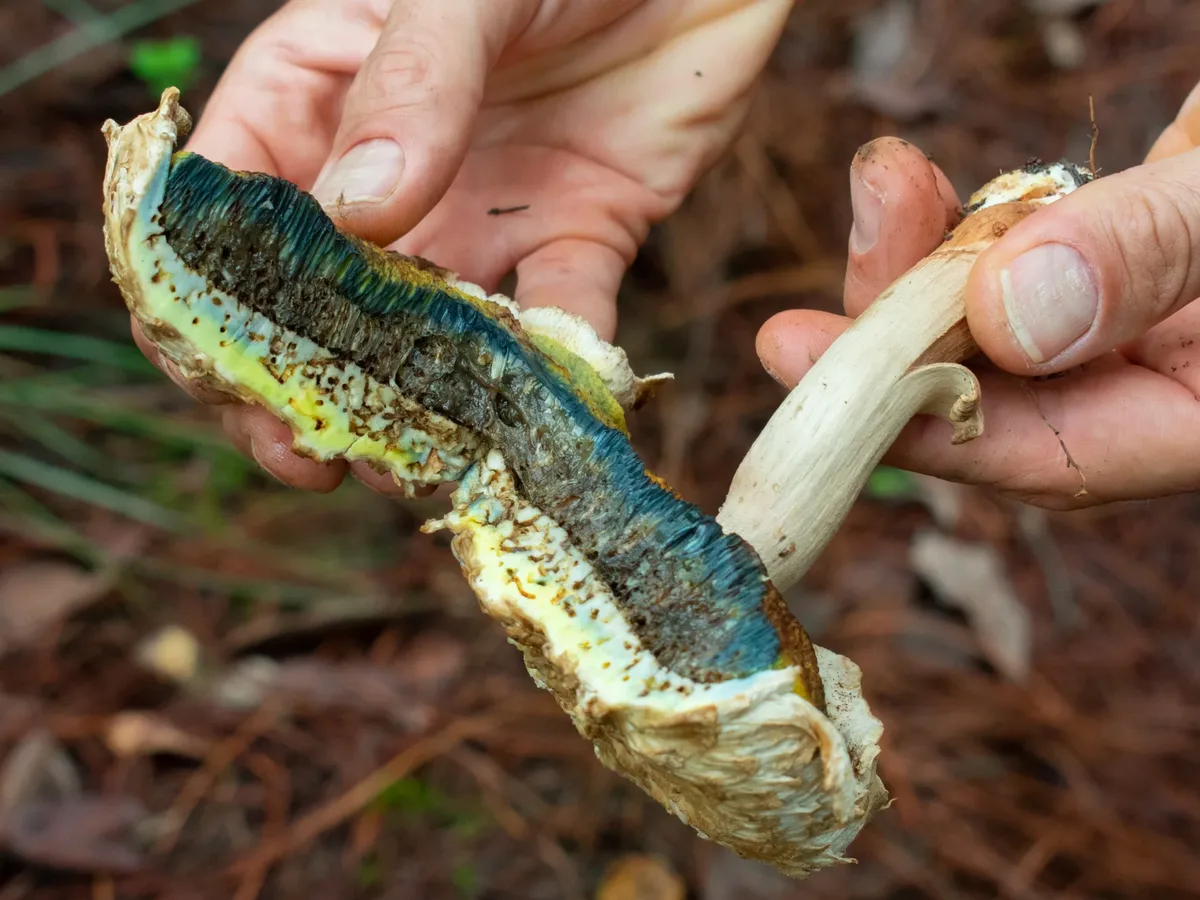
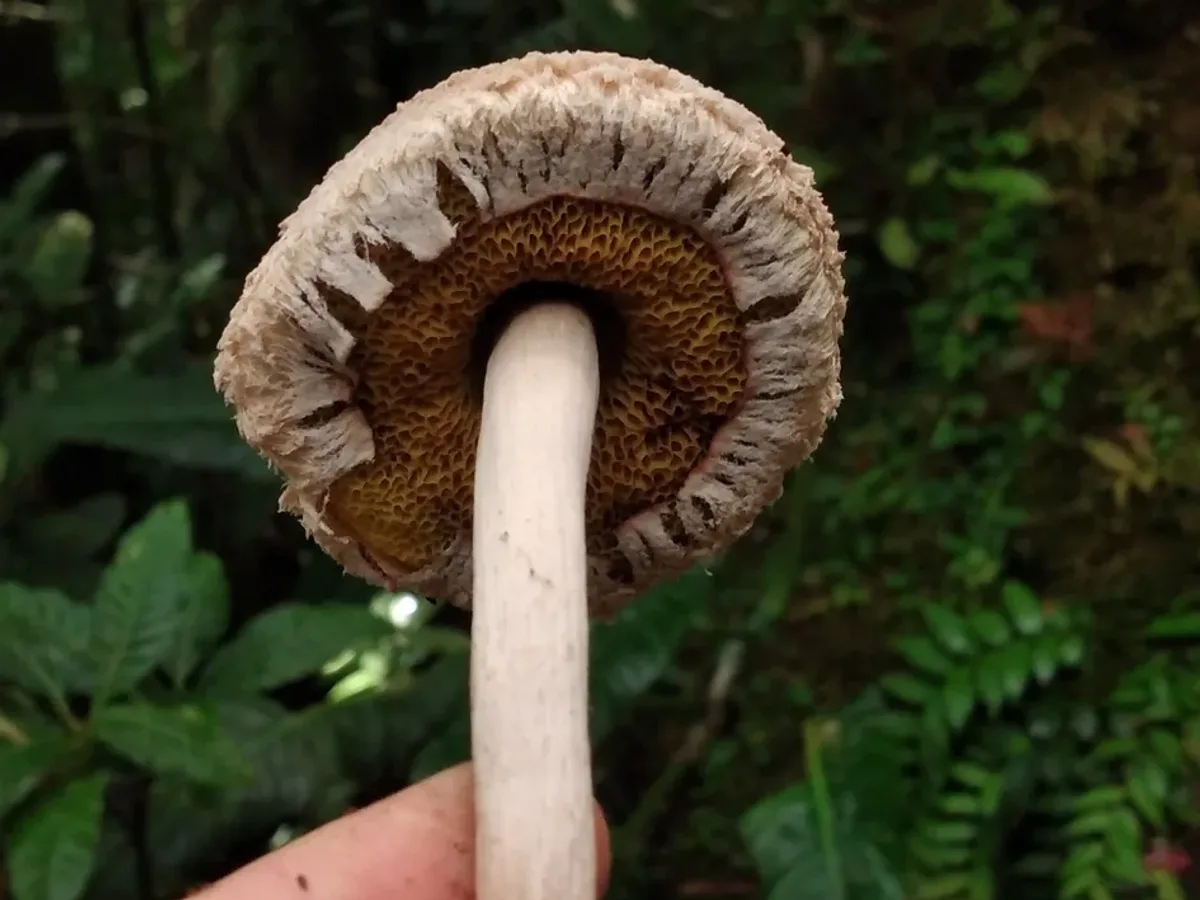
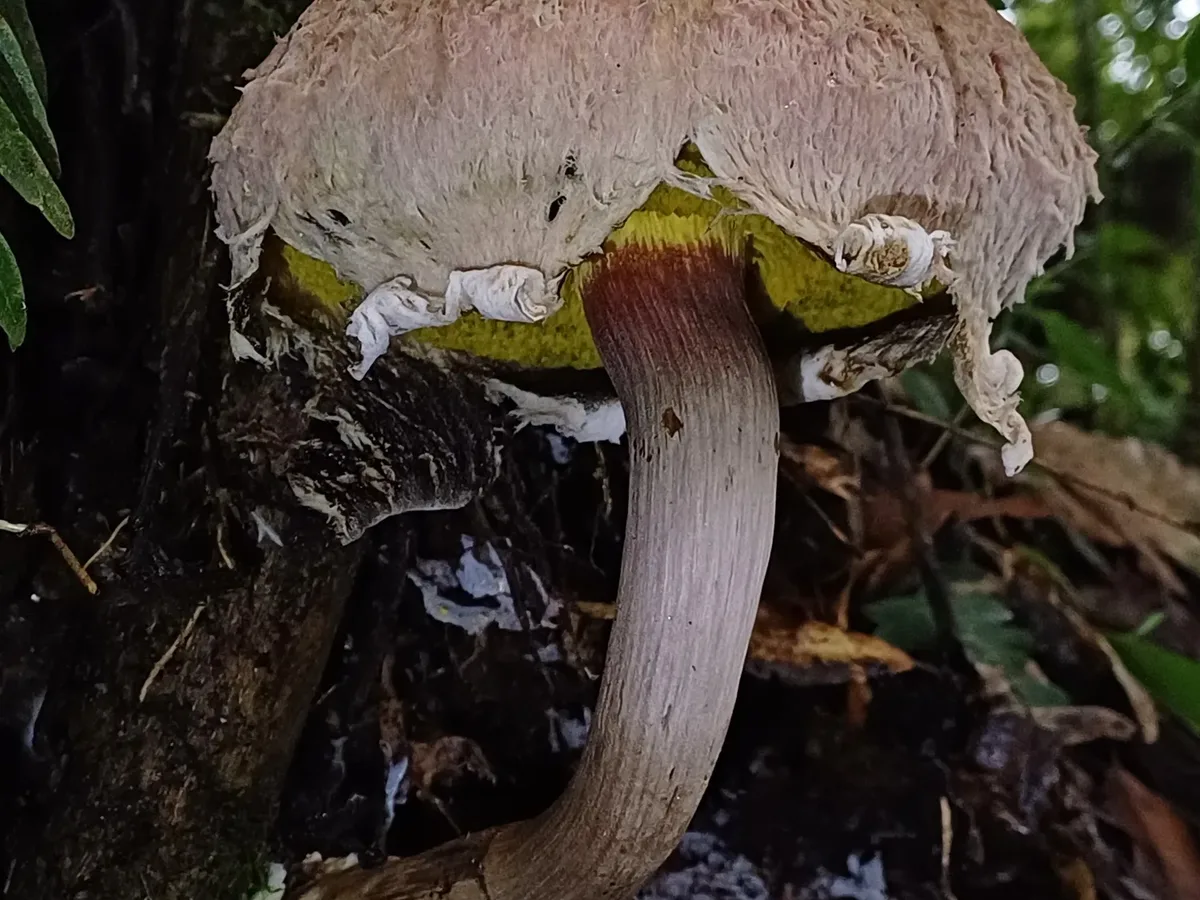
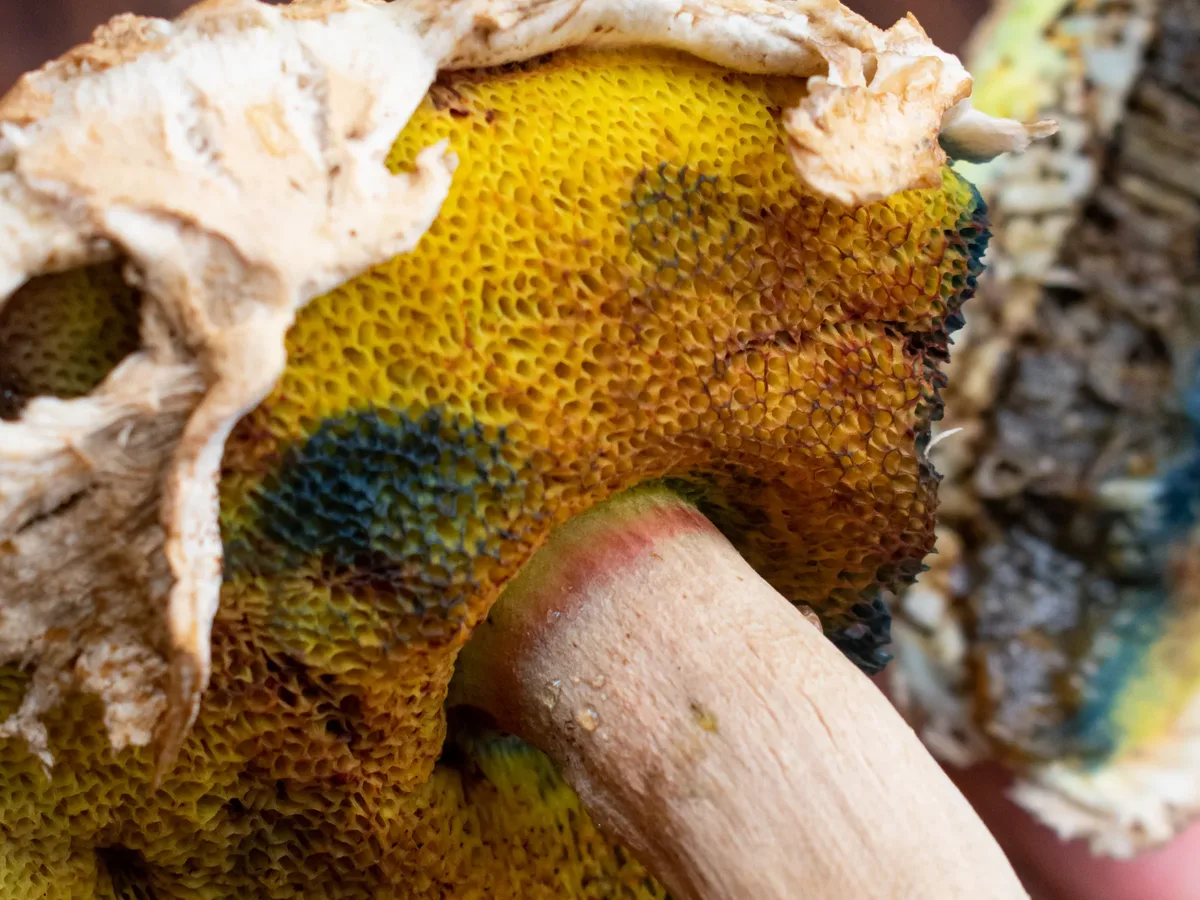
The pore surface is bright yellow, bruising blue to greenish-blue when cut or pressed - a reaction caused by oxidases acting on pigments in the flesh, common across many boletes.
Stem
The stem is 4-10 cm tall, typically reddish to yellowish, without the strong white network (reticulation) characteristic of Boletus edulis.
Flesh
Flesh is pale yellow, slowly bluing when cut, with no particularly strong taste or smell.
Where & when it grows
Habitat
Look for Boletellus ananas in warm, humid mixed forests of eastern North America, from the Great Lakes south through the Appalachians and into the Gulf coastal states.
It is especially common in the southeastern US - Virginia, the Carolinas, Georgia, Tennessee, and Florida - under oak, beech, and occasionally pine.
The species tolerates a wide range of soil types but prefers well-drained loamy acidic soils.
Unlike many prized boletes, it does not have a strict mycorrhizal requirement with one tree genus, which may explain why it appears somewhat unpredictably across different forest types.
When
Summer through early autumn is peak time, corresponding to the warm-and-wet season that drives most bolete flushes in eastern North America.
Expect the first fruit bodies after the soil has warmed above 15°C and following significant rainfall (typically 20+ mm over a 7-14 day window).
In the deep south the season can extend from late May through October; in northern parts of the range (Pennsylvania, Ohio) it is mostly July-September.
Like all large boletes, individual flushes are brief - a few days of good fruit bodies followed by rapid deterioration.
How it grows
Produces solitary to scattered fruit bodies, rarely in tight clusters.
Most boletes live as mycorrhizal partners, threading mycelium into tree roots and returning reliably to the same spot year after year.
The pineapple bolete appears to operate differently - it may be saprotrophic or only weakly mycorrhizal, drawing its nutrients from decaying organic matter in the soil rather than from a tree partnership.
That independence means you cannot count on finding it in the same spot twice; new fruit bodies may surface in different corners of the same forest from one season to the next.
Fruiting conditions
Warm-season bolete requiring warm soils and meaningful summer rainfall. Flushes appear 5-14 days after adequate precipitation when soil temperatures are in the 15-27 °C range. Most productive July-early September across most of the eastern range.
Look-alikes
The shaggy cap texture is Boletellus ananas's best field mark and makes it unlikely to be confused with most other boletes. The closest visual confusion risks are:
- 1Strobilomyces strobilaceus, the 'old man of the woods,' which also has a coarsely scaly dark cap, but is grey to black rather than pinkish-red, and has grey-black pores.
- 2Neoboletus luridiformis (lurid bolete / scarletina bolete), which has a similar pinkish-red to orange-red cap and strongly blue-bruising yellow pores, but its cap surface is smooth to finely felty, never coarsely shaggy, and it has a more strongly reticulate stem with red dots. Neoboletus luridiformis is considered edible only when well cooked, and should not be confused with Rubroboletus satanas (Satan's bolete), which has red pores, a whitish cap and causes severe poisoning.
- 3Other boletes with red or pinkish caps and blue-staining pores exist (e.g., Boletus sensibilis in eastern North America), but none replicate the distinctive coarse scaliness of B. ananas.
Also coarsely scaly, but cap, pores, and stem are grey to black rather than pinkish-red. Pores are grey-black, not yellow. The color contrast alone distinguishes it immediately.
Pinkish-red to orange cap and strongly blue-bruising yellow pores, superficially similar, but cap surface is smooth to finely felty - never coarsely shaggy - and the stem shows distinctive red dots and stronger reticulation. Edible only when thoroughly cooked.
Eastern North American species with reddish cap and rapidly and intensely blue-bruising pores. Cap is smooth, not shaggy. Causes gastrointestinal illness; should be avoided.
In the kitchen
Picking & cleaning
- Cut the stem at the base rather than pulling, to avoid disturbing the mycelium and soil.
- Examine the pores immediately - bright yellow pores are a good sign; avoid any specimen with already-deep blue pores throughout (sign of damage or age).
- Young, firm specimens with taut caps are best.
- Check for insect larvae (worms) by slicing the stem vertically; heavily infested stems should be left behind.
- Brush off debris gently and transport in a breathable basket rather than a plastic bag.
Cooking
Boletellus ananas must be cooked before eating. Raw consumption of boletes as a class is inadvisable - many species contain heat-labile compounds that can cause gastrointestinal distress when eaten uncooked, and even species considered edible when properly prepared carry that risk if eaten raw.
Cook this mushroom thoroughly every time, without exception.
Before cooking, slice each specimen lengthwise from cap through stem. This exposes any internal larvae tunnels (bolete maggots are extremely common in this species and can honeycomb the flesh of older or warm-weather specimens).
Discard any portion that is heavily riddled with tunnels - lightly infested sections near the cap edge can be trimmed away and used, but flesh that is mostly degraded offers poor texture and accelerated spoilage.
Select only firm, young, pale-fleshed specimens for the table; avoid any that smell fermented or show signs of softening.
For sautéing, the most reliable method:
- 1Cut cleaned flesh into slices or rough chunks about 1 cm thick.
- 2Heat butter or a neutral oil in a wide pan over medium-high heat until the fat is hot and shimmering.
- 3Add the mushroom pieces in a single layer - do not crowd the pan, or they will steam rather than brown.
- 4Cook undisturbed for 3-4 minutes until a golden crust begins to form on the underside, then turn and cook a further 4-6 minutes, totalling roughly 8-10 minutes depending on thickness.
- 5The flesh should be fully cooked through, no longer translucent, and any softness should come from heat rather than raw moisture.
- 6Season with salt toward the end of cooking.
For soups and stews, add pieces during the last 20-30 minutes of simmering time to allow flavors to integrate without the flesh disintegrating entirely. The porous tube layer (the underside of the cap) can become spongy and absorb liquid heavily; some cooks remove the pore layer before cooking for a firmer result.
Note that the dramatic blue bruising visible on raw flesh - caused by the oxidation of variegatic acid and other bolete pigments - disappears completely during cooking. The blue-green color is purely a chemical reaction and has no bearing on flavor or safety; it does not indicate spoilage, toxicity, or any change in the mushroom's properties once cooked.
Flavor profile: mild, slightly earthy, with a pleasantly firm but not leathery texture when fresh and properly cooked.
It is not in the same league as Boletus edulis (porcini) or Cantharellus cibarius (chanterelle) in terms of depth of flavor or culinary prestige, and it is not considered a top-tier edible by most foraging traditions.
Because the flavor reward is modest, quality selection matters more here than with choice boletes: use only the firmest, freshest specimens, discard anything past its prime, and aim to collect young buttons rather than mature, weathered caps.
A mediocre porcini still makes a good meal; a mediocre pineapple bolete makes a forgettable one. Freshness is your most important ingredient.
Good to know
Boletellus ananas is regarded as edible in North American field guides, and there are no documented cases of serious toxicity attributable to it.
A general caution applies to all blue-staining boletes: as a class they include both edible and toxic members, and positive identification to species is essential before consuming any blue-bruising bolete.
Always cook thoroughly - eating raw boletes of any species is inadvisable.
Beginners should practice identification carefully, ideally with an experienced forager present for the first few collections. If in any doubt about your identification, do not eat.
A reference guide - never an edibility guarantee. When in doubt, leave it out.