Two-colored bolete
Baorangia bicolorsyn. Boletus bicolor, Boletus edulis, Boletus variipes
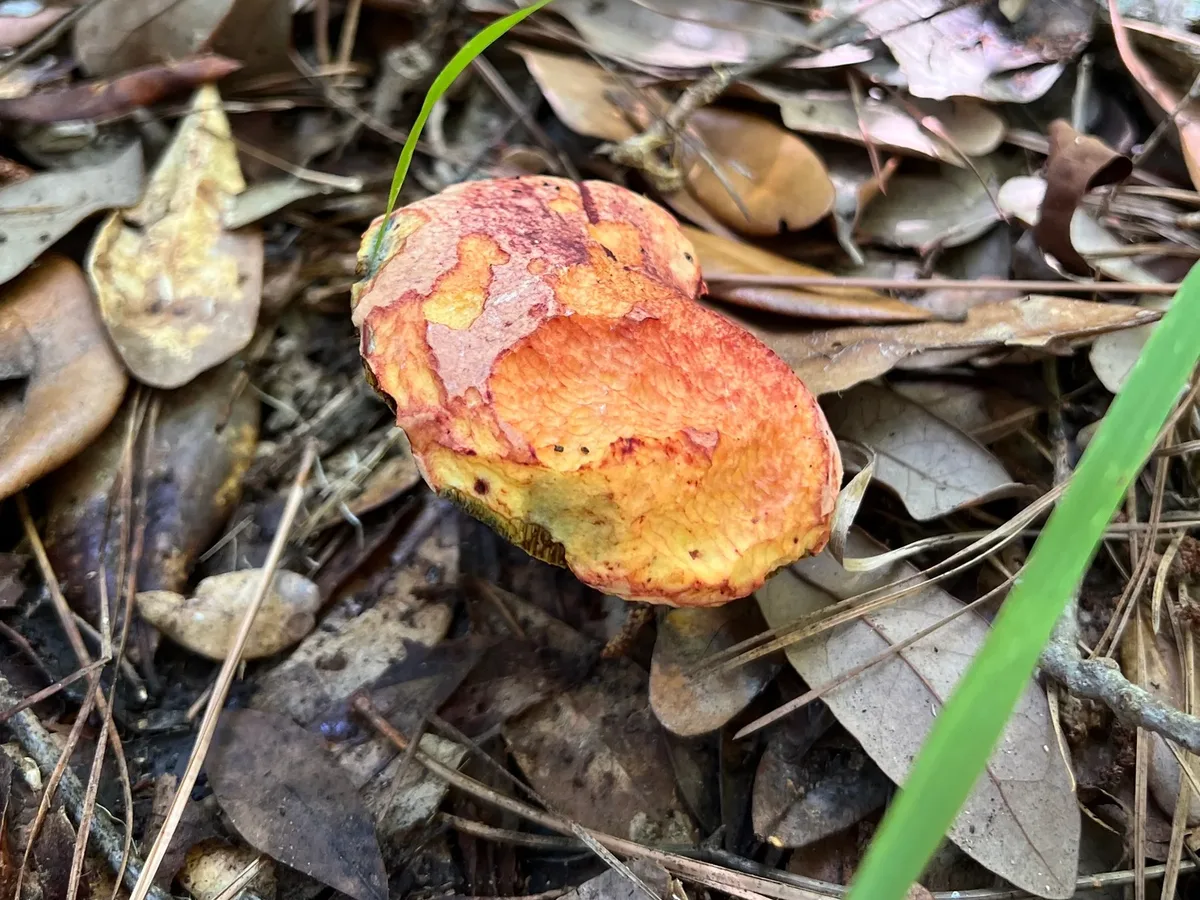 © Fluff Berger (CC BY-SA 4.0)
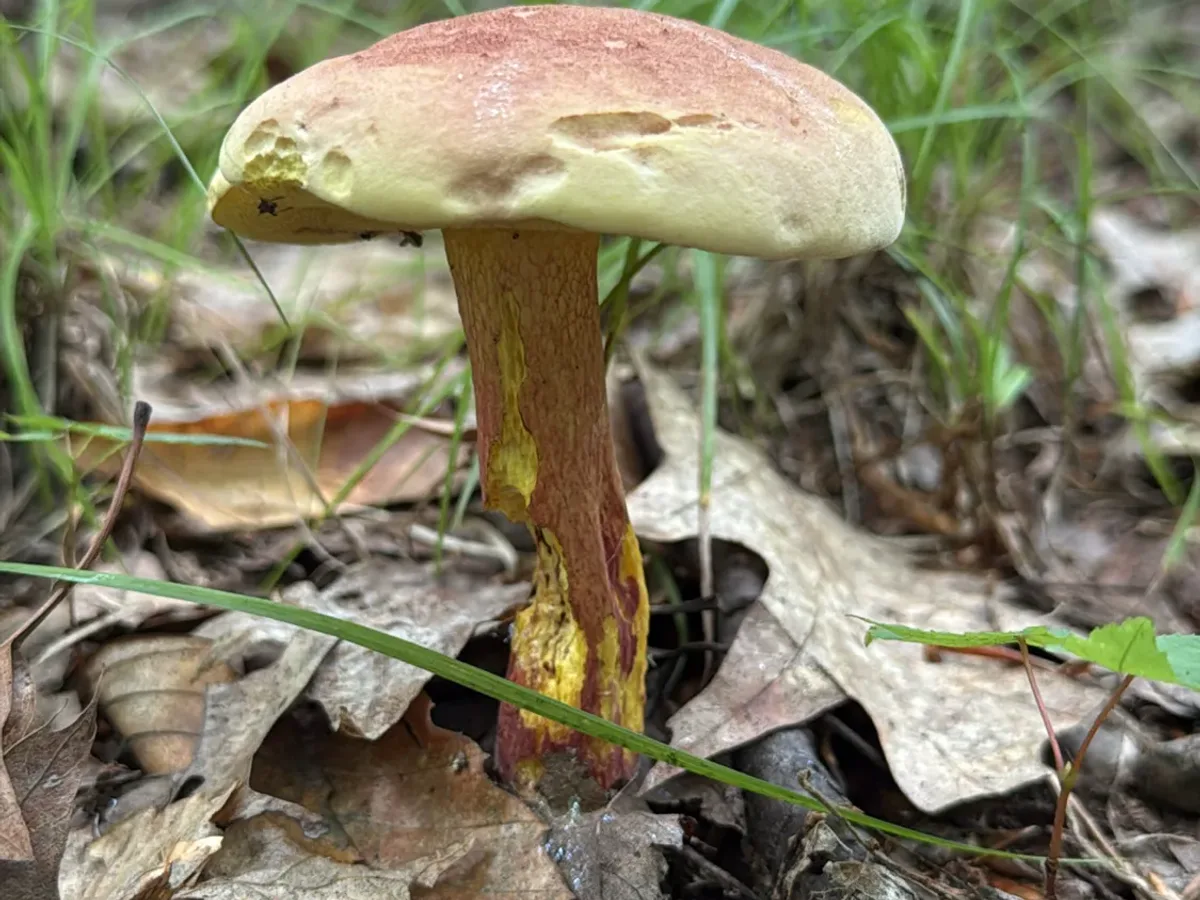 © nebrooks (CC BY)
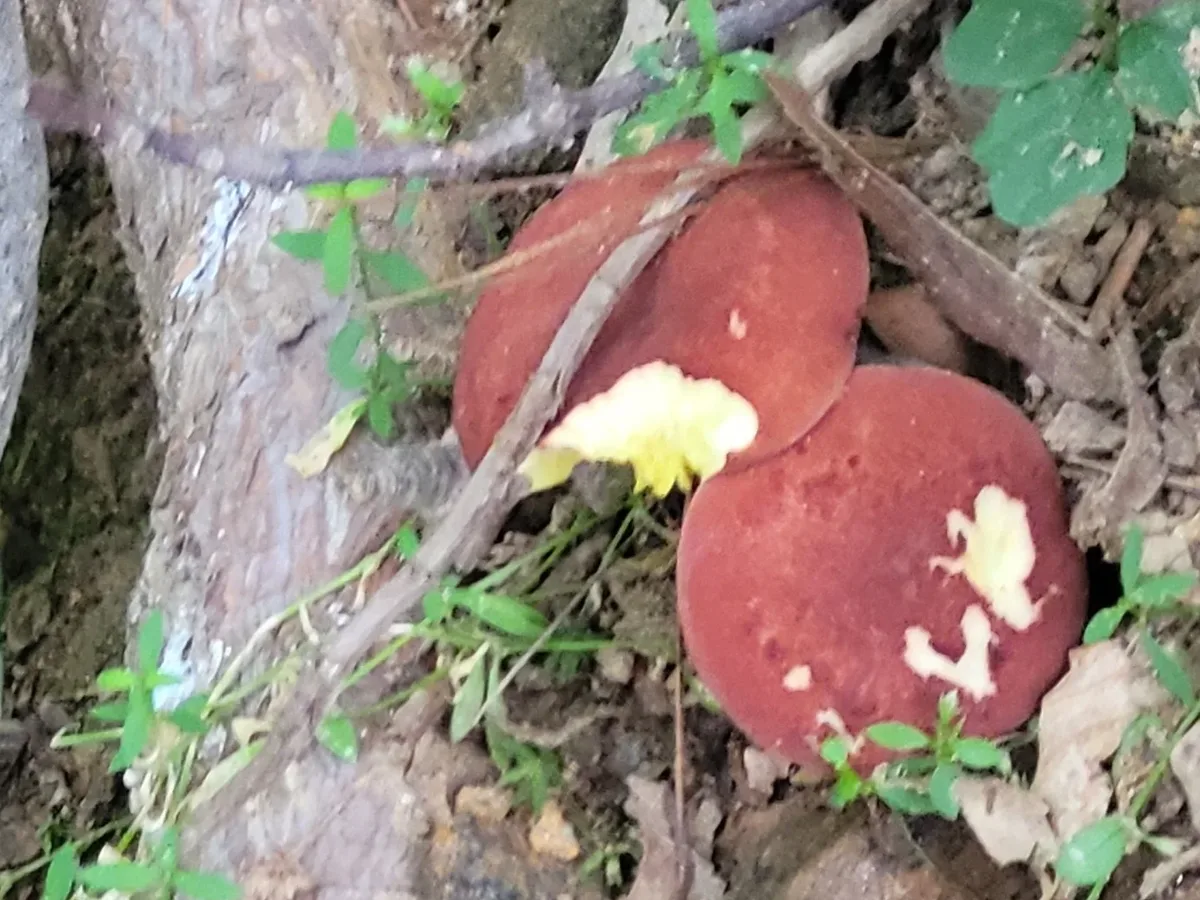 © Christina Moresi (CC BY)
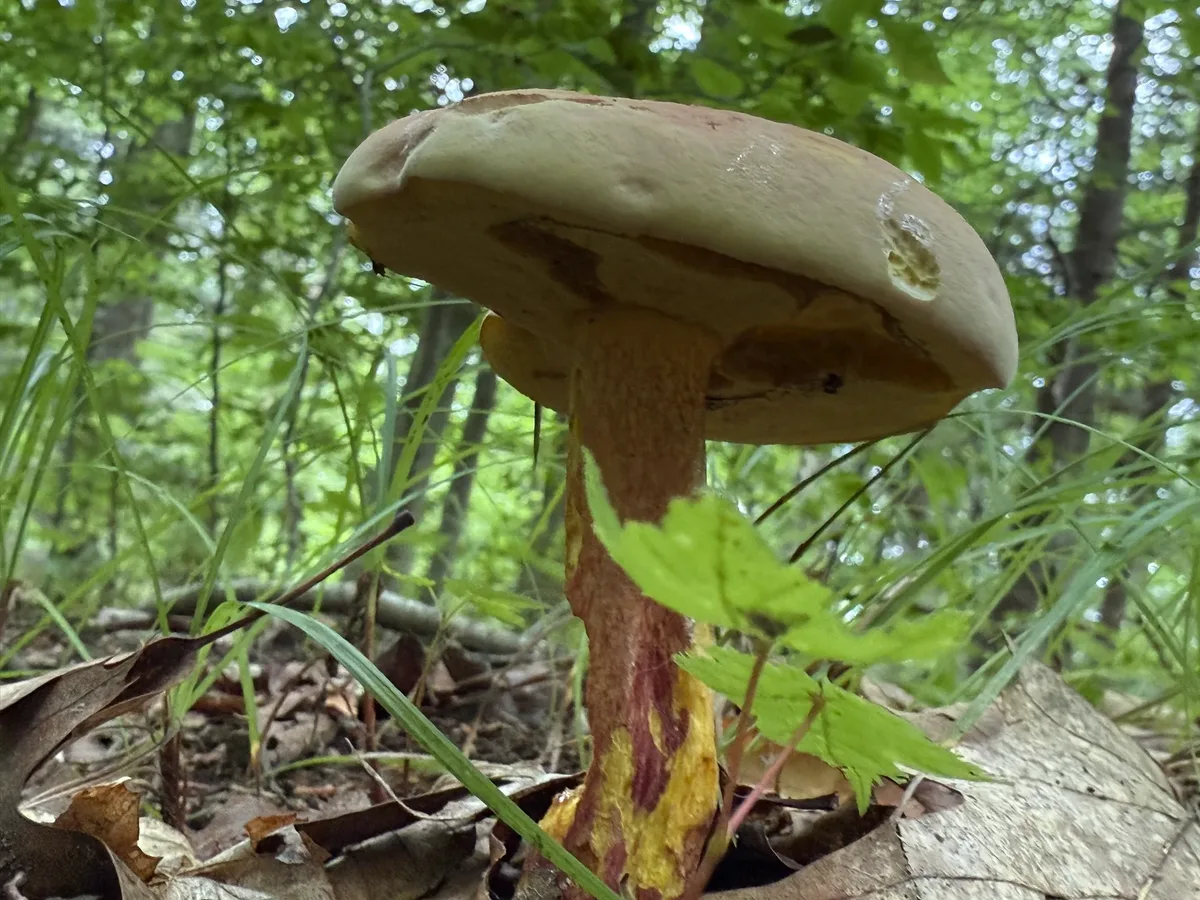 © nebrooks (CC BY)
 © nebrooks (CC BY)
 © Julie Travaglini (CC BY)
 © Sam Taylor (CC BY)
 © pinonbistro (CC BY-SA 4.0)© Fluff Berger (CC BY-SA 4.0)© nebrooks (CC BY)
Good to eat, once you have identified it with certainty and cooked it through.
How to recognise it
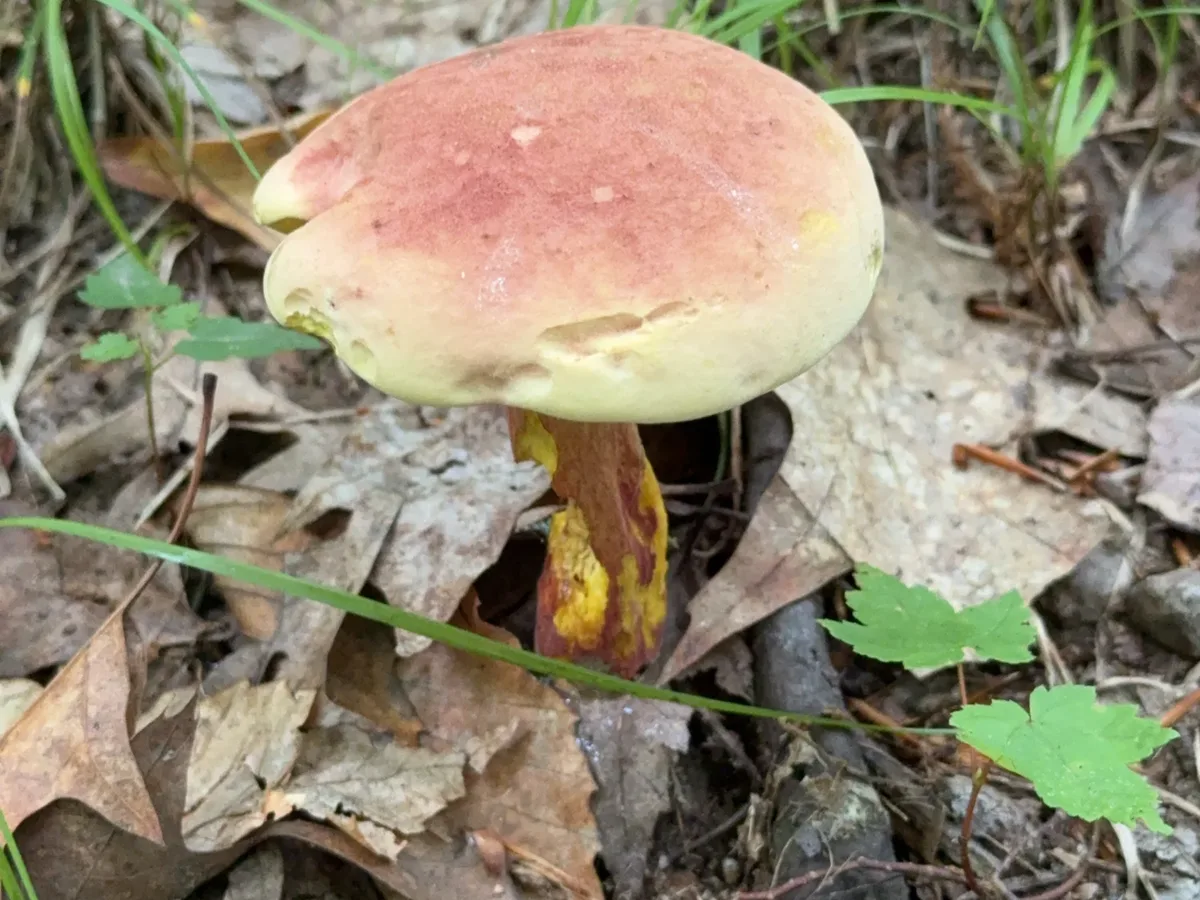
Baorangia bicolor is one of the most visually distinctive boletes in eastern North America, and its two-toned color scheme is not mere decoration - it is the fastest diagnostic you have in the field.
Cap
The pileus ranges from 5 to 15 centimeters across when mature, though older specimens can push wider.
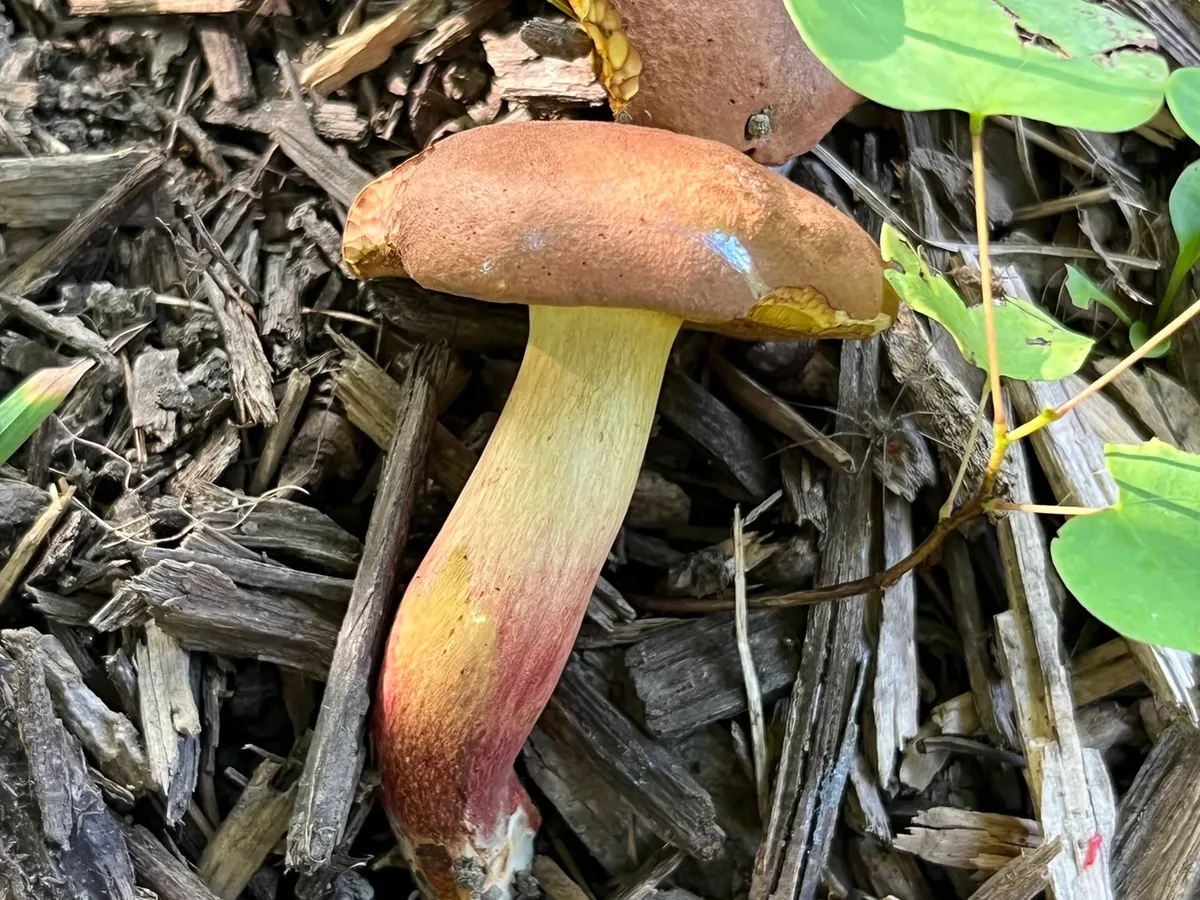
Its surface is dry and subtly tomentose when fresh, carrying tones that shift along a spectrum from brick red and rose-pink through dusky wine, often fading toward a paler pinkish-buff at the margin in older or sun-exposed caps.
Pores
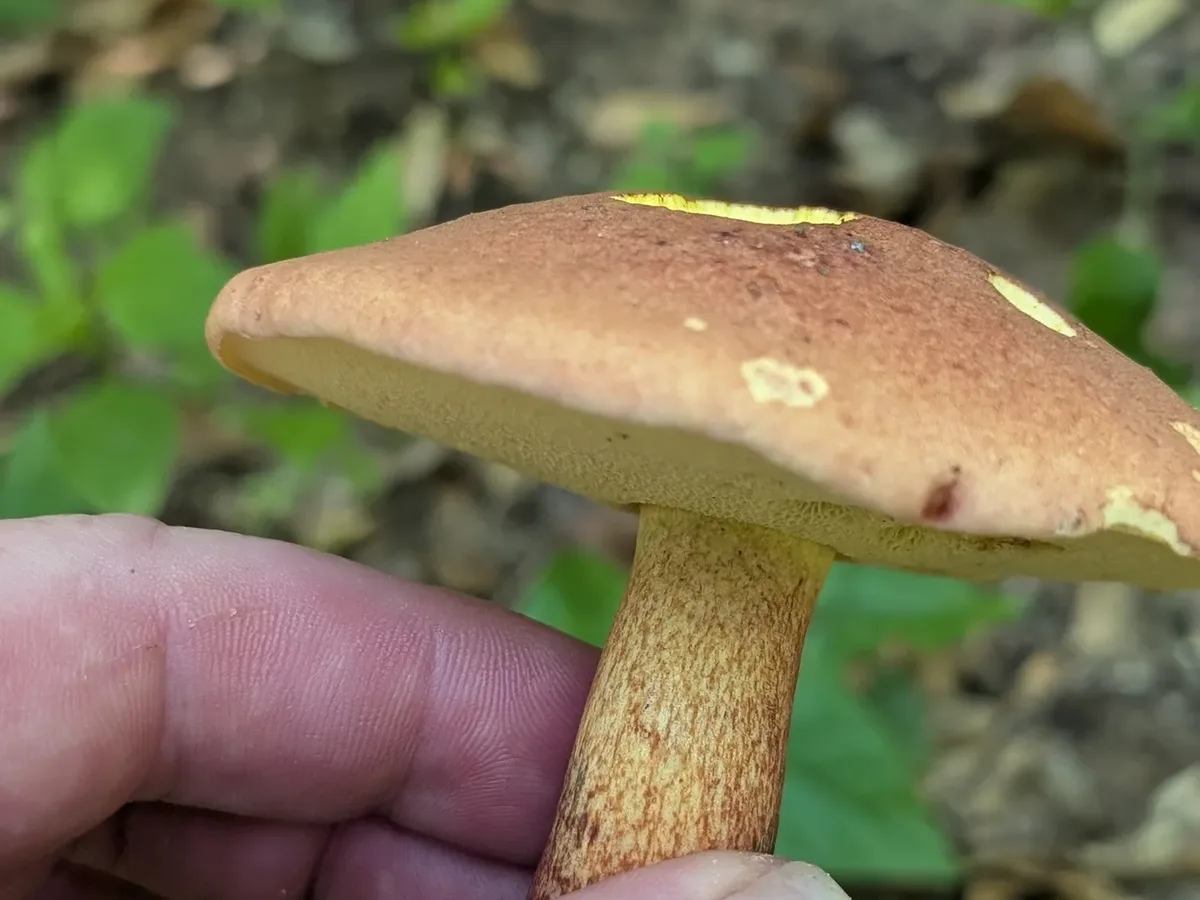
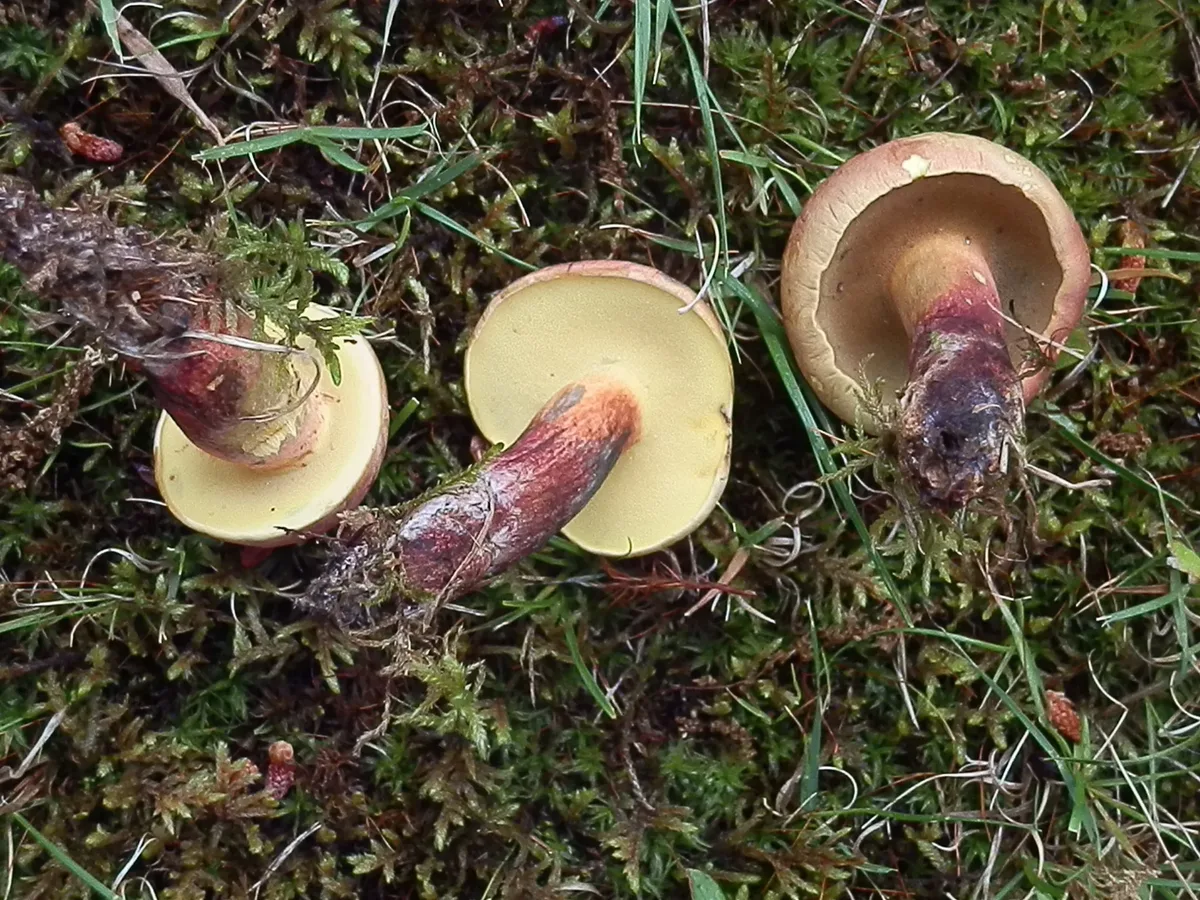
Beneath that cap lies the pore surface, which is the second key field mark: a clean, saturated yellow when fresh, sometimes approaching golden, with pores small and round (roughly 1-2 per mm).
On pressure or damage - a fingernail press, a raindrop impact, a slug bite - those yellow pores may turn a very faint blue-green, but the change is slow (seconds to a minute) and far from vivid. This sluggish, mild bluing response is one of the species' most important distinguishing traits.
Stem
The stipe is stout and club-shaped to cylindrical, typically 4-10 cm tall and 1.5-3 cm thick, and it faithfully echoes the two-color logic of the cap: yellow at the apex grading into the same brick-red or rosy red of the cap toward the base.
There is no ring, no partial veil remnant, and no volva.
Flesh
The flesh throughout is pale to creamy yellow, thick and firm in young specimens, softening with age. Cut across the stipe and cap: the flesh does not stain blue significantly, which sets it apart from many dangerous congeners.
Spore print is olive-brown.
Where & when it grows
Habitat
Baorangia bicolor is an obligate mycorrhizal partner - it cannot grow without a living tree host, and in the eastern deciduous woodlands it overwhelmingly favors oak (Quercus spp.).
The mycelial network of this species spreads through the upper mineral soil and leaf-litter interface, forming ectomycorrhizal associations with fine oak rootlets.
These are not casual relationships: the fungus envelopes the root tips in a sheath of hyphae and extends out into the soil as a far-reaching foraging network, increasing the tree's access to phosphorus, water, and other minerals in exchange for photosynthetically fixed carbon. A mature oak stand may have been in partnership with the same Baorangia mycelium for decades.
Geographically, the species ranges from southeastern Canada - Ontario and Quebec - south through the entire eastern seaboard to Florida, and west as far as Wisconsin and Missouri.
It is most abundant in mixed oak-hickory and oak-dominated second-growth forests, appearing on slopes and flats alike, often on well-drained acidic soils.
You will not find it in purely coniferous stands; where it appears near pines it is almost always because oaks are also present.
The forest floor layer at fruiting sites tends to have a good depth of decomposing leaf litter, and the mycelium beneath it may extend several meters from any one visible fruitbody.
When
The two-colored bolete is a warm-season species with a fruiting window that typically runs from June through October across most of its range, placing it firmly in the summer-to-autumn bolete guild.
The earliest fruitings - in June and early July - generally require a combination of:
- soil temperatures that have risen above roughly 12°C at depth
- sustained warmth through the preceding weeks
- at least 25 mm of rain in the 14 days before emergence
The fungus does not appear reliably after a single shower; it tends to flush after several days of warm, wet weather that allows the soil to hold moisture through the root zone.
Peak fruiting in most of the mid-Atlantic and New England region falls in late July through September, when afternoon thunderstorm patterns and still-warm soils create the most reliable flushes. In the southeast, where soils stay warmer longer, October fruitings are common.
Cold nights - sustained lows below around 5°C - signal the end of the season, and the mycelium retreats into winter dormancy, waiting underground until the following summer's warmth returns.
Individual fruitbodies emerge over 5 to 14 days after triggering rains.
How it grows
Like all mycorrhizal boletes, Baorangia bicolor produces its fruitbodies as reproductive structures of a much larger and longer-lived underground organism.
The mycelium itself - the true body of the fungus - can persist for many years in the same patch of forest soil. It is linked to one or more oak root systems in a nutrient-exchange network that endures through dry summers, cold winters, and the annual death and regrowth of the forest canopy above it.
Fruiting is the mycelium's bid to disperse genetic material. When soil temperature, moisture, and day-length cues align, it allocates carbohydrates into the rapid construction of a fruitbody, which can emerge and expand from a small primordium to a full-sized mushroom in as little as one to three days under ideal conditions.
Individual fruitbodies appear singly or in small loose groups scattered across the root zone of a host tree, rarely in tight clusters. They emerge directly from the soil - there is no stump or log substrate.
The spores, released from the pore tubes on the underside of the cap, are olive-brown, fusiform, and dispersed passively by air movement and, to a lesser extent, by invertebrates.
Because the mycelium is perennial and the fruiting spots are tied to specific host trees, returning to a productive patch year after year is a reliable foraging strategy.
Fruiting conditions
Warm-season bolete; fruits after substantial summer rains under oak, with soil warm. Conservative standard-mycology estimate.
Look-alikes
The single most important lookalike for Baorangia bicolor is Boletus sensibilis, a poisonous species that shares the red-pored, yellow-pored, red-and-yellow color scheme and grows in the same eastern oak forests.
The critical difference is the bluing reaction. Boletus sensibilis bruises blue instantly and intensely - cut the flesh or press a pore and the color change is dramatic within seconds, turning deep indigo-blue across a wide area.
Baorangia bicolor by contrast bruises only slowly and faintly, if at all, and the color change is restricted to the pore surface rather than spreading through the flesh.
Do not rely on bluing as the only test: also check the overall coloration. Boletus sensibilis tends toward a brighter, more orange-red cap and more vivid red pores compared to the brick-rose tones of Baorangia.
Other red-pored or blue-bruising boletes in eastern North America - including Neoboletus pseudosulphureus and various Rubroboletus - should all be treated with caution by anyone without solid bolete experience; several cause gastrointestinal illness.
The related eastern king-bolete relatives (Boletus variipes) differ clearly: B. variipes has a dry brown cap, a white reticulate net pattern on the pale stipe, and pale white-to-yellow pores with little or no red.
As a practical field rule: any red-pored bolete that turns blue quickly and strongly should not be collected for the table.
Poisonous; resembles the two-colored bolete but bruises blue quickly and dramatically, whereas Baorangia bruises slowly and faintly.
Should be avoided by beginners. The slow, faint bluing plus the larger size distinguish Baorangia bicolor.
In the kitchen
Picking & cleaning
Select fruitbodies that are firm and heavy for their size - a dense, solid stipe and a pore surface that is still yellow and tight-pored indicates freshness.
Older specimens develop a yellowish-brown or slightly sunken pore surface and softer flesh; they are still edible but degrade quickly and attract insects faster.
The most common form of deterioration is maggot infestation: bolete fly larvae (Pegohylemyia, Suillia, and related species) may be tunneling through the stipe and cap before any external sign is visible. Slice the stipe vertically before collecting: clean, white or pale-yellow flesh with no winding tunnels means the specimen is sound; riddled flesh can be trimmed back or left for the forest.
Handling:
- Carry specimens in a basket or breathable bag to allow spore dispersal and prevent moisture buildup.
- Cut rather than pull - a clean cut at the base of the stipe leaves the mycelium undisturbed and helps keep the fruit body clean of soil.
- Brush away debris rather than washing in the field.
- Specimens picked in the morning, when temperatures are cooler, keep better than afternoon harvests.
- In the kitchen, use fresh within two days; dry or cook down immediately for longer storage.
- Do not collect from roadsides or sites with known pollution, as boletes bioaccumulate heavy metals.
Cooking
Baorangia bicolor is held in high regard by eastern North American foragers and is frequently ranked alongside or above the European king bolete (Boletus edulis) in flavor.
The flesh is firm, meaty, and moderately dense when fresh, with a savory, faintly nutty character that intensifies considerably on heat.
The faint blue discoloration that may appear in cut specimens - a result of the enzymatic oxidation of variegatic acid - disappears entirely during cooking. The cooked flesh is pale yellow to cream and shows no off color.
For fresh cooking, slice the cap and stipe and sauté in butter or olive oil over medium-high heat until the surface is lightly browned and any released moisture has evaporated. The Maillard reaction at this stage develops the deepest flavor.
Baorangia pairs well with garlic, thyme, cream sauces, eggs, and pasta. It can be used in any preparation that suits a king bolete: risotto, gratins, soups, and simple pan sauces.
For preservation, drying is highly effective. Thin-sliced fruitbodies dry readily in a dehydrator at 40-50°C or in a low oven with the door cracked, and the dried product reconstitutes well in warm water, yielding both rehydrated mushroom pieces and a flavorful soaking liquid suitable for stocks and sauces.
Powder from dried specimens can be used as a seasoning. The species is not suitable for eating raw.
Good to know
Baorangia bicolor is edible and widely eaten, but it is not a species for foragers who are new to boletes. The risk is misidentification, not any toxin in the species itself.
The poisonous Boletus sensibilis is its most dangerous confusion species and grows in the same habitat, sometimes in the same flush. The distinguishing feature - the speed and intensity of the bluing reaction - requires hands-on, practiced observation to judge reliably. A beginner may not have a clear enough baseline to tell a slow, faint bluing from a fast, strong one.
Beyond misidentification risk, some individuals experience gastrointestinal upset from edible boletes even when correctly identified. This appears to be a sensitivity to specific polysaccharides or heat-labile compounds, and it underscores the rule that all boletes must be thoroughly cooked before eating - never raw.
Heavy metal bioaccumulation is a documented property of many bolete species; avoid harvesting from roadsides, industrial edges, or sites with known soil contamination.
Before collecting any specimen, verify:
- the slow bluing
- the yellow pores
- the red-and-yellow stipe
- the absence of a ring or volva
When in doubt, leave it.
A reference guide - never an edibility guarantee. When in doubt, leave it out.