Southern funnel rollrim
Austropaxillus infundibuliformissyn. Paxillus infundibuliformis, Paxillus involutus var. infundibuliformis
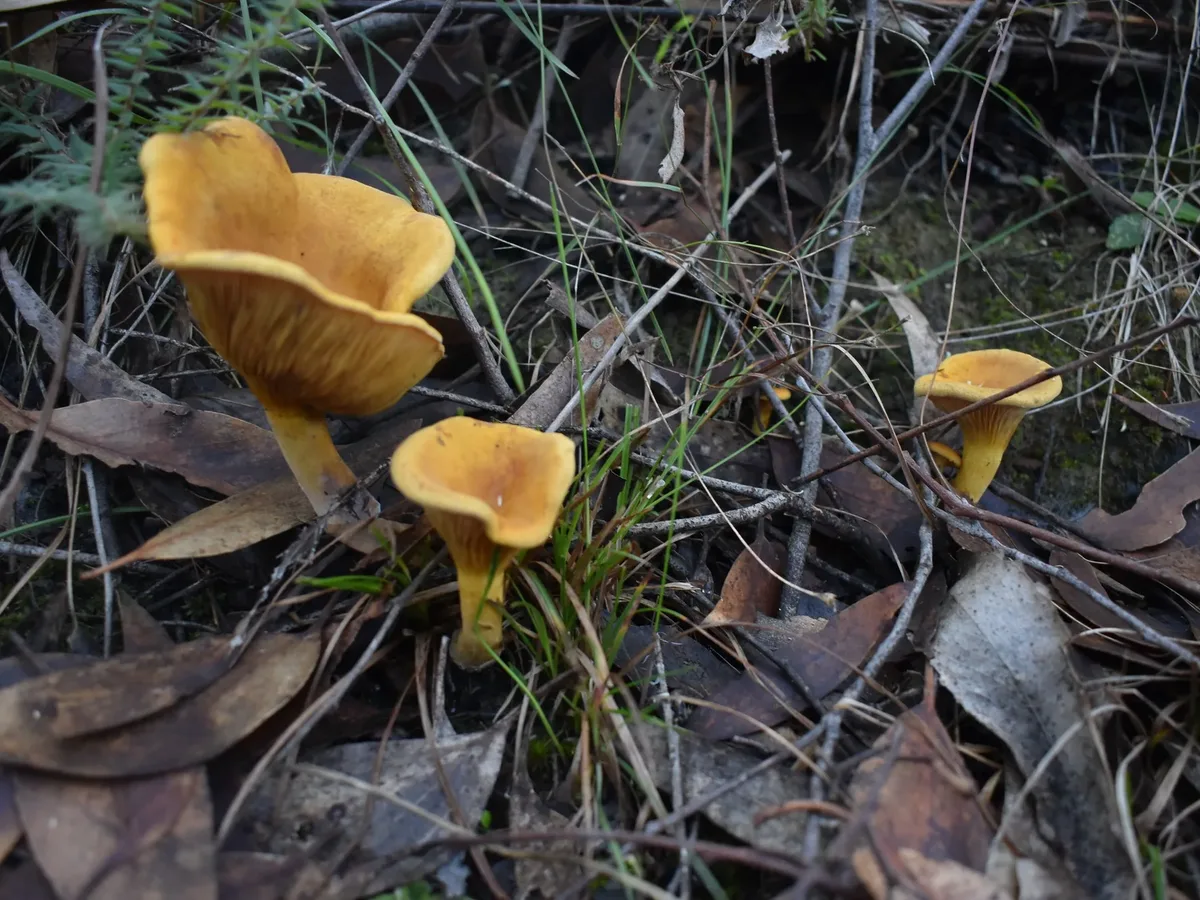 © Jess Bamford (CC BY 4.0)
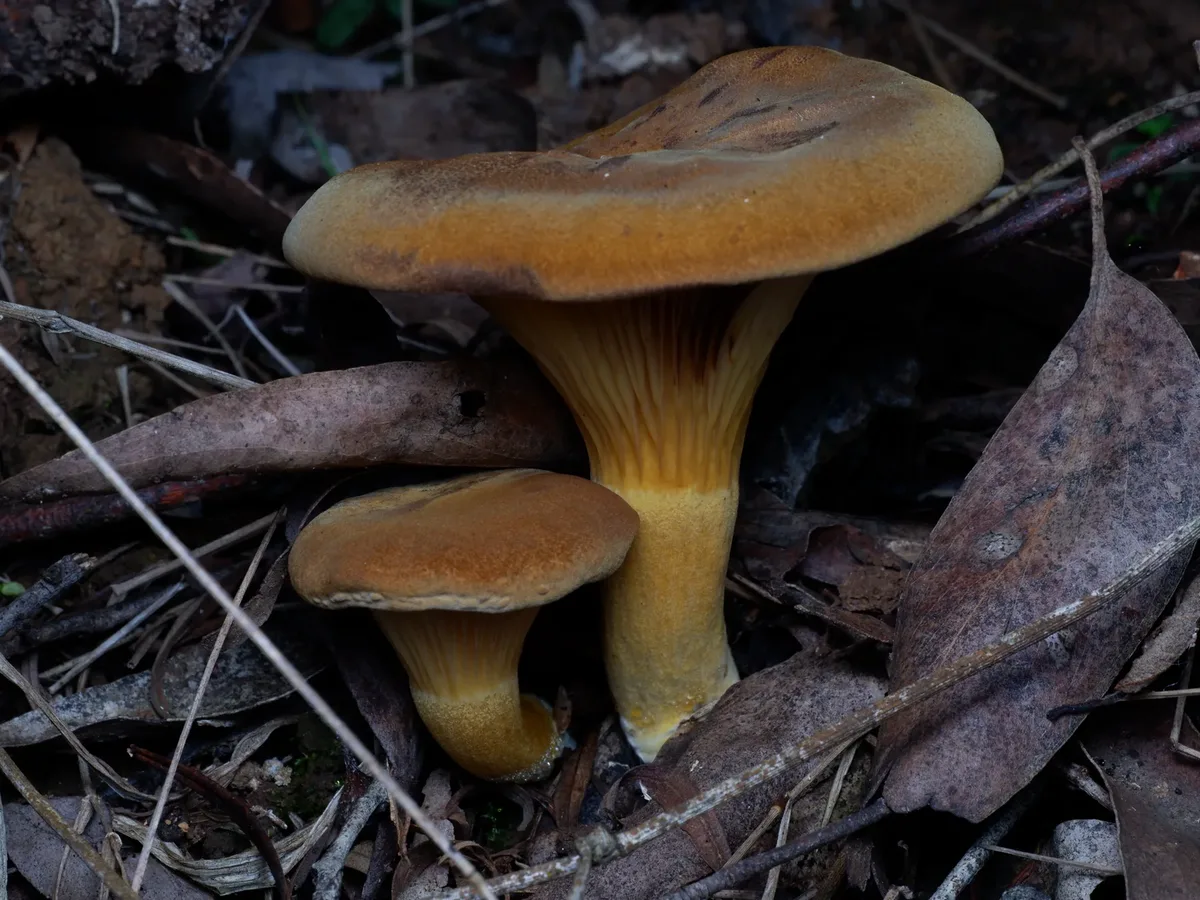 © Heather Merrylees (CC BY)
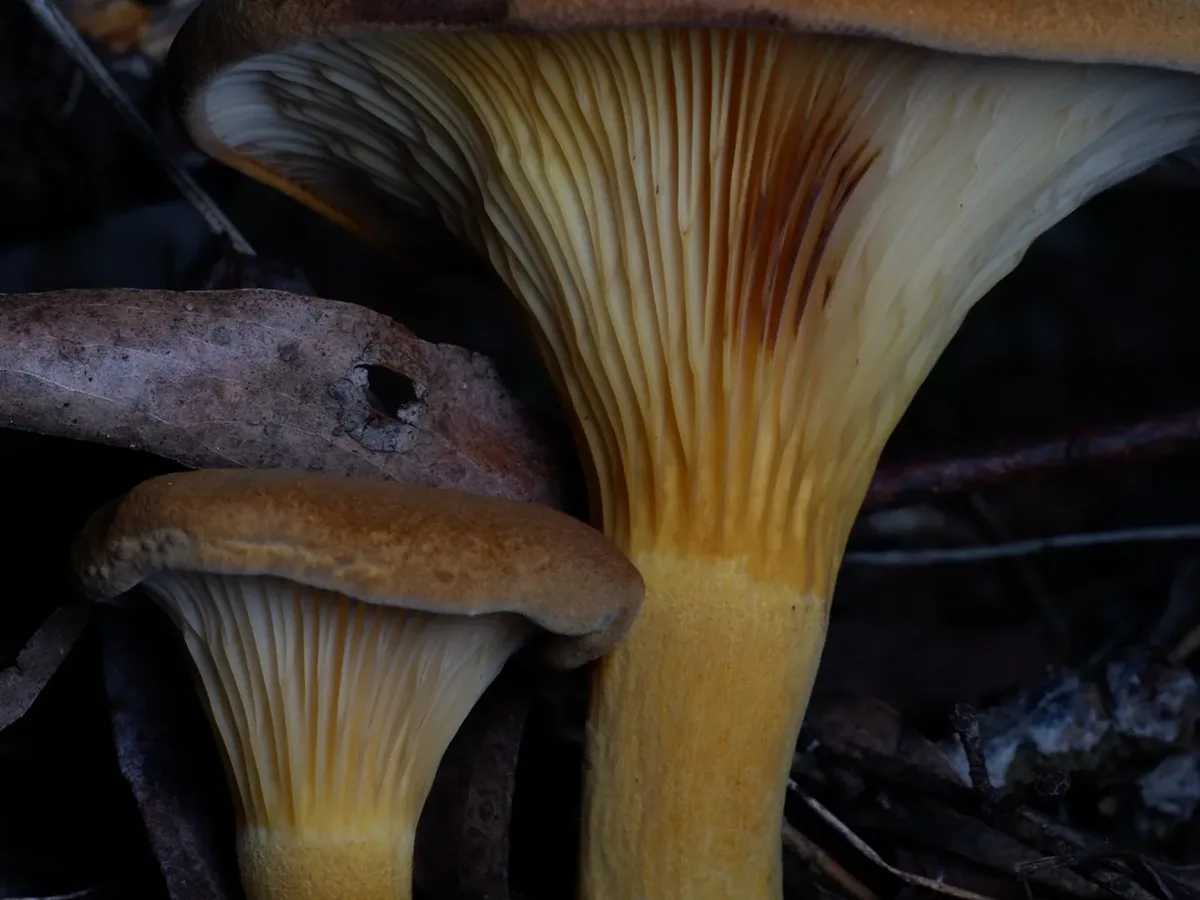 © Heather Merrylees (CC BY)
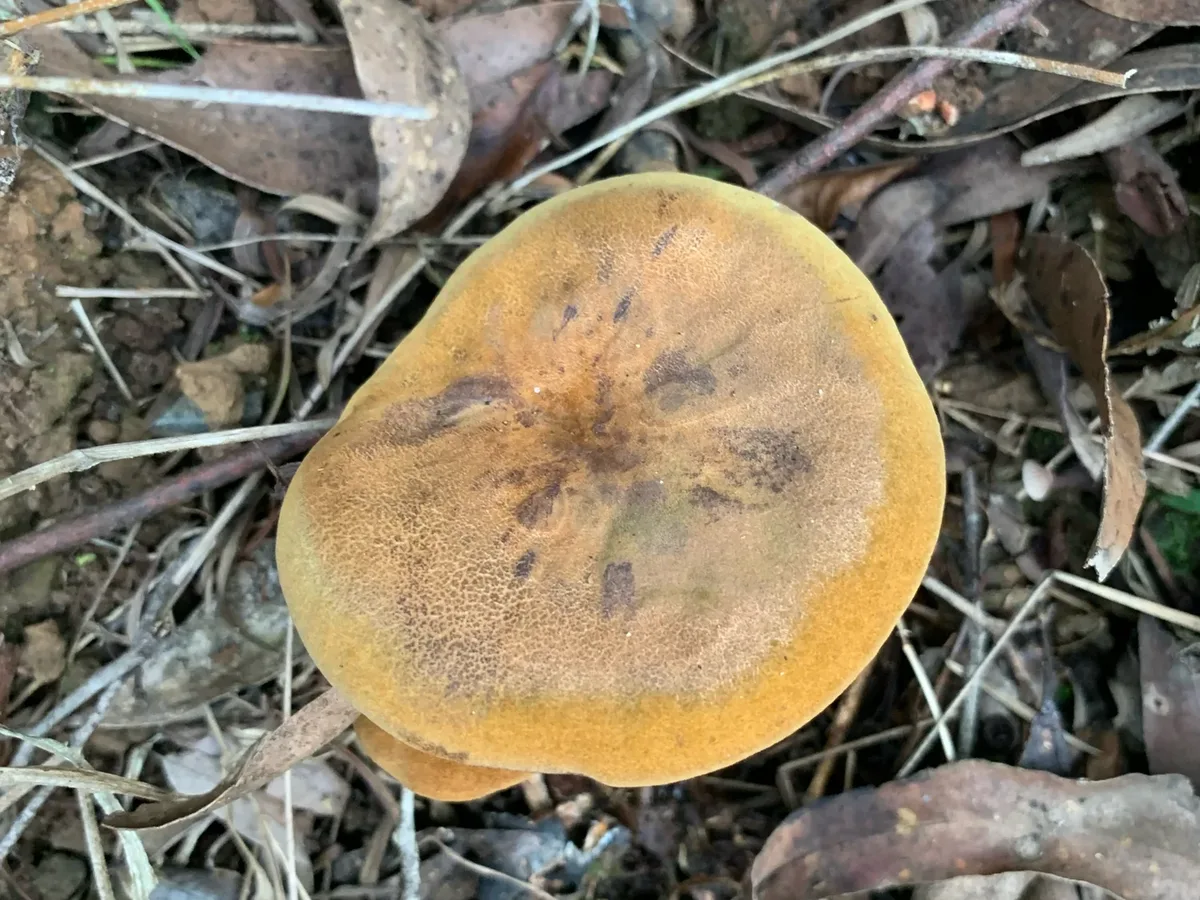 © Heather Merrylees (CC BY)
 © Heather Merrylees (CC BY)
 © Peter Neish (CC BY)
 © Peter Neish (CC BY)
 © Peter Neish (CC BY)
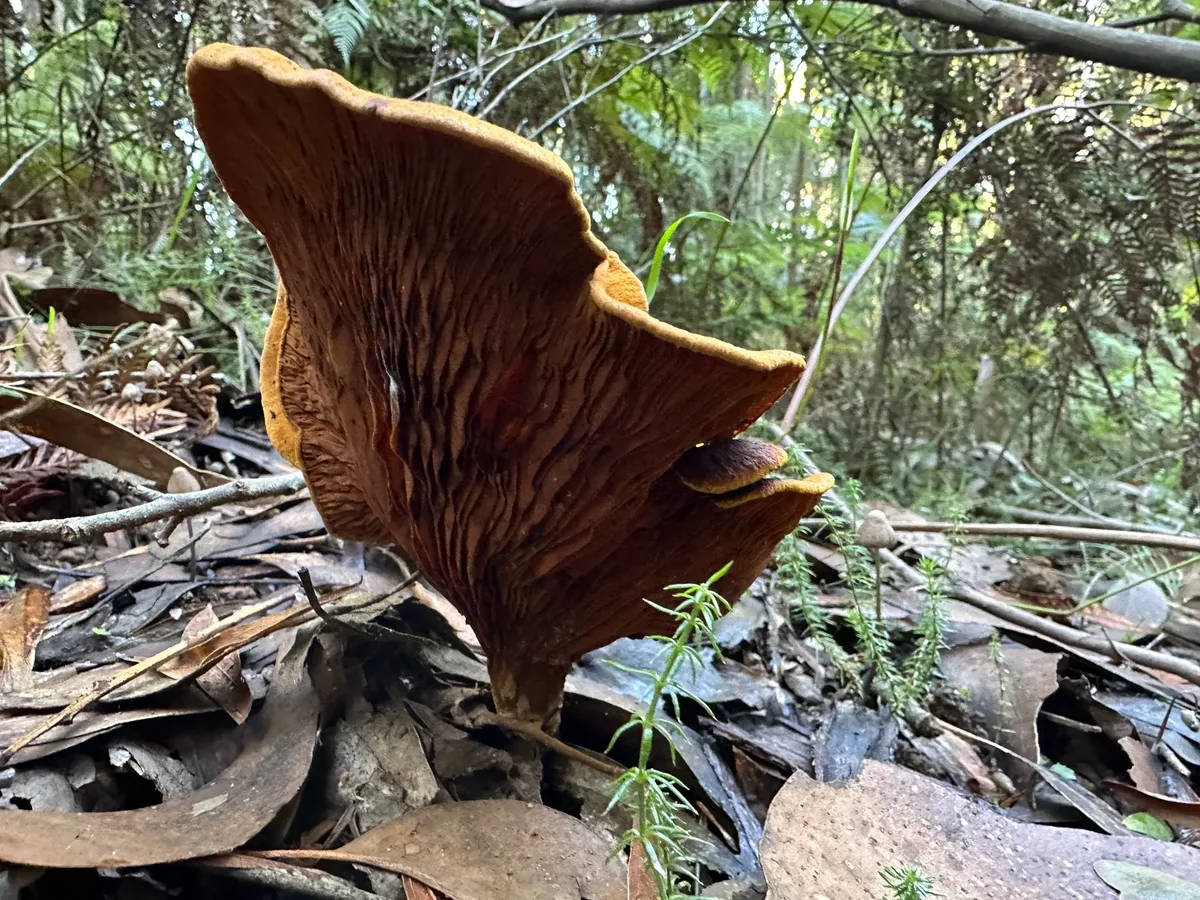 © Peter Neish (CC BY)
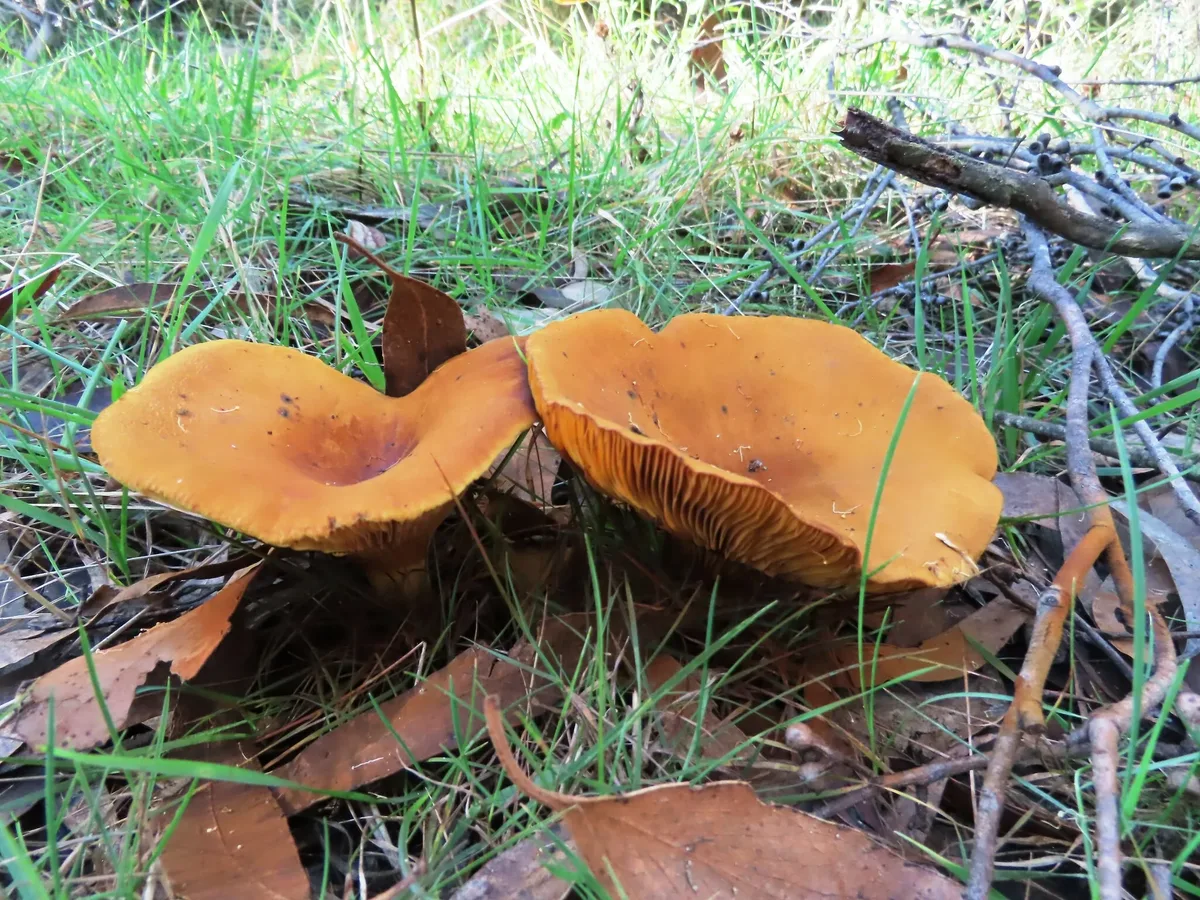 © Elspeth Swan (CC BY)© Jess Bamford (CC BY 4.0)© Heather Merrylees (CC BY)
Edible only with the right preparation - or safe for some people but not others. Learn the caveats first.
Never eat a mushroom you are not 100% sure of - check the look-alikes below, and always cook wild mushrooms.
How to recognise it
Cap
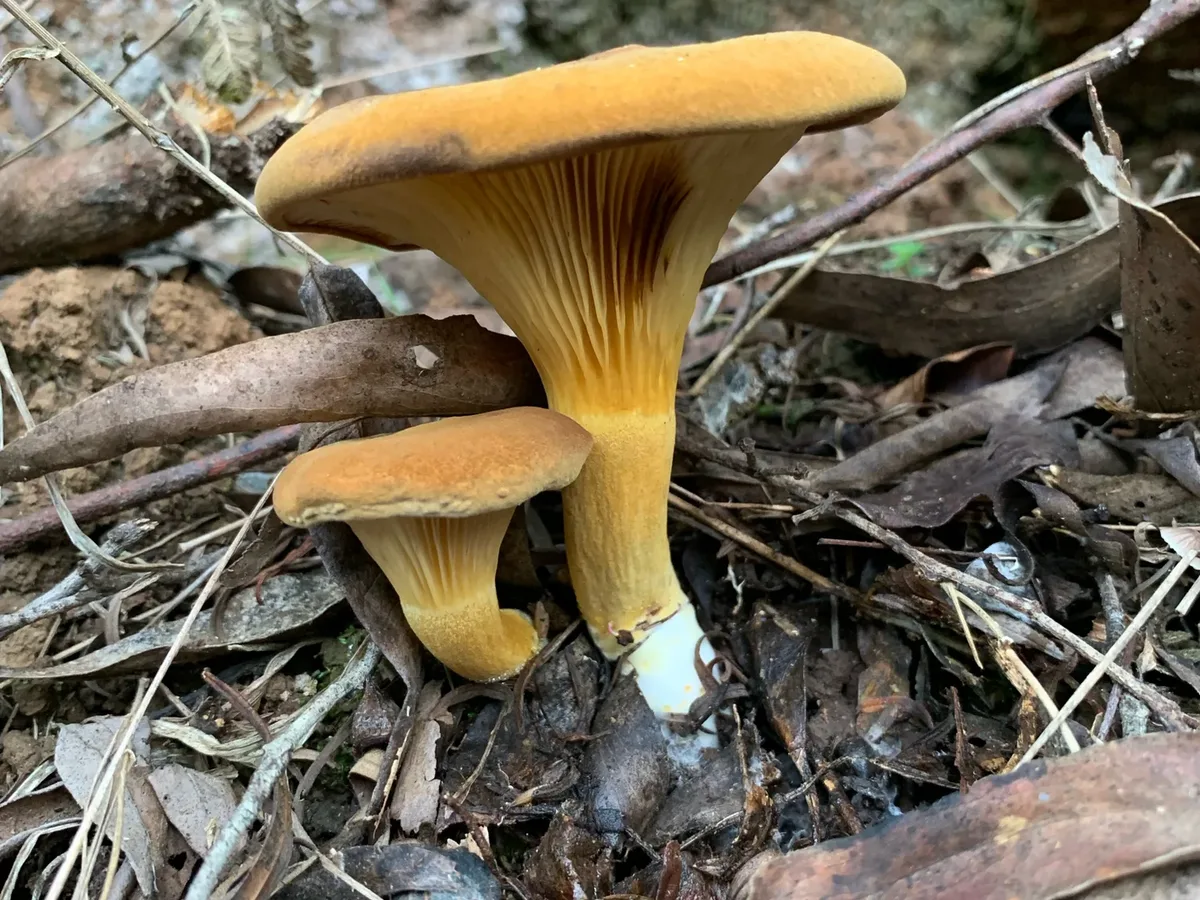
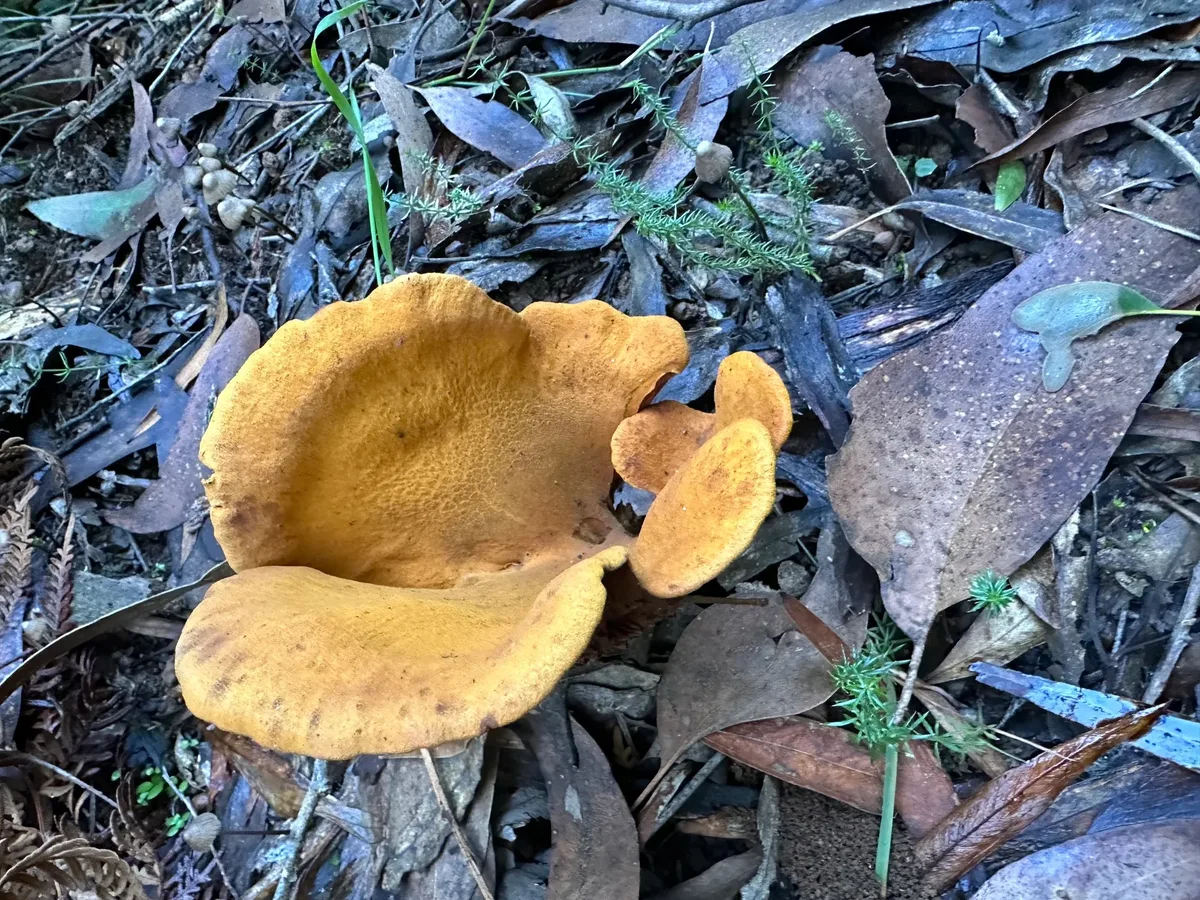
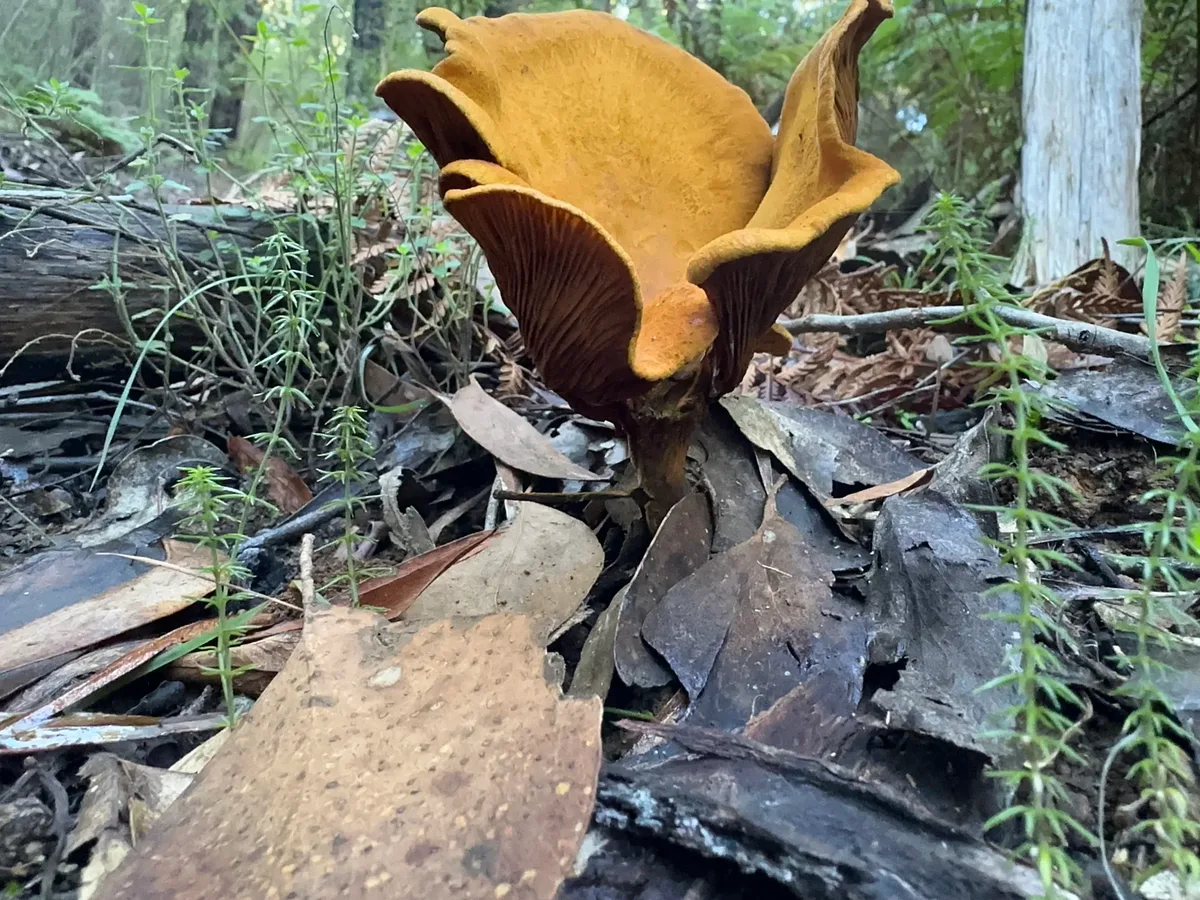
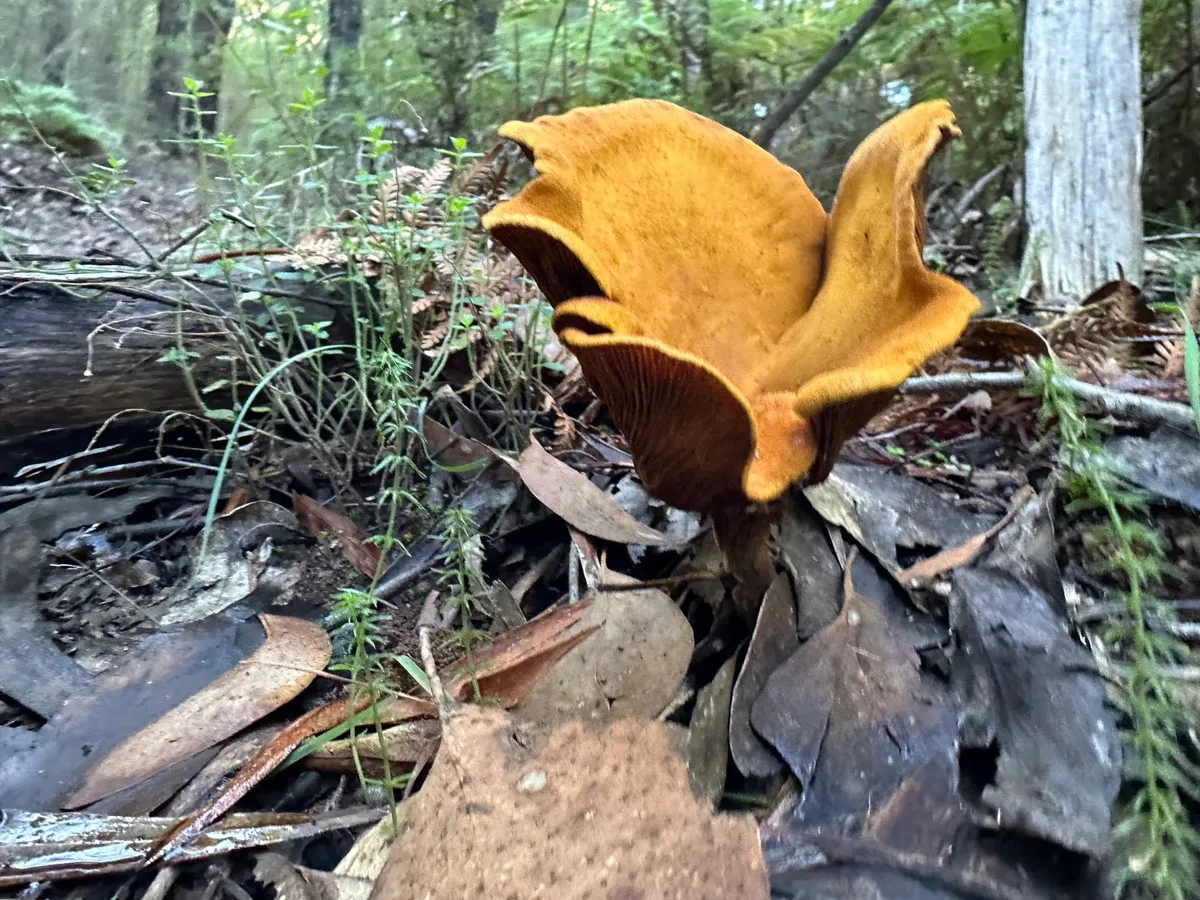
Cap 4-12 cm across, strongly funnel-shaped (infundibuliform) when mature - a silhouette that marks this mushroom out the moment you spot it among the leaf litter.
Even in old specimens the margin stays persistently inrolled, deepening the funnel shape rather than flaring open.
Surface dry to slightly moist, fibrillose-tomentose, ochre-brown to mid-brown or tawny.
Flesh
Flesh firm, cream to pale ochre, unchanged on cutting.
Gills / Pores
The gills are densely crowded, strongly decurrent (running far down the stem), and repeatedly fork near the margin - a hallmark of the paxilloid group, and something you can feel as well as see.
Pale cream when young, they age to ochre-brown and peel cleanly from the cap surface. Spore print ochre-brown to dull yellow-brown.
Stem
Stem solid, concolorous with the cap, lacking both ring and volva.
Why it's dangerous
The principal danger is misidentification as the deadly Paxillus involutus, which grows in the same region under introduced conifers.
A secondary risk is the unknown toxicology of Austropaxillus itself.
Because paxilloid mushrooms can cause slowly developing immune sensitisation rather than immediate symptoms, a lack of obvious illness after ingestion does not confirm safety.
Toxin
The specific toxic compound(s) in Austropaxillus infundibuliformis have not been isolated or characterised in published research.
The closely related Paxillus involutus contains involutin and related compounds that act as haptens. They bind to red blood cell membranes and trigger an IgG-mediated autoimmune haemolytic reaction - a mechanism unique among mushroom toxins that can be lethal even after years of apparently safe consumption.
It is unknown whether Austropaxillus species share this mechanism.
Symptoms
No confirmed clinical poisoning cases from Austropaxillus infundibuliformis are documented in the literature.
If ingested, gastrointestinal symptoms (nausea, vomiting, cramps, diarrhoea) are possible.
Given the family relationship with Paxillus involutus, immune-mediated haemolytic anaemia cannot be excluded.
Signs of haemolysis should prompt immediate emergency medical assessment:
- dark red-brown urine
- pallor
- dizziness
- rapid heart rate
- back and abdominal pain
Contact the Poisons Information Centre (Australia: 13 11 26; NZ: 0800 764 766) if ingestion is suspected.
Staying safe
Treat Austropaxillus infundibuliformis as inedible and potentially harmful.
The species belongs to the order Boletales, family Tapinellaceae, closely allied to Paxillus involutus - the deadliest representative of its family, capable of causing fatal immune-mediated haemolytic anaemia even after repeated ingestion without immediate symptoms.
Whether Austropaxillus infundibuliformis carries the same toxic mechanism is not established by published toxicology studies, but the precautionary principle is unambiguous:
- no confirmed edible record exists
- the family context is hazardous
- the potentially deadly Paxillus involutus occurs in the same broad region
Where & when it grows
Habitat
Tied by biology to Nothofagus (southern beech) - it forms ectomycorrhizal partnerships with southern beech root tips and simply does not fruit elsewhere.
In Australia the primary host is Nothofagus cunninghamii (myrtle beech) in cool temperate rainforest; in New Zealand it associates with several Nothofagus species across both main islands.
This host fidelity is the most useful field filter: if you are not standing in native southern beech forest, this is not Austropaxillus infundibuliformis.
Look for it in moist, sheltered sites - gullies, stream margins, and higher-elevation beech forest where leaf litter and moss hold moisture between rain events.
When
Fruits through Southern Hemisphere autumn and into early winter (March-July), with the main flush in April-May after the first significant autumn rains, when soil temperatures begin to drop below about 14 degrees C.
Absent in summer.
How it grows
An obligate ectomycorrhizal fungus: for much of its life it exists unseen, as fungal threads woven into the fine roots of southern beech trees, exchanging nutrients with a host it may have partnered for decades.
The fruiting bodies we see above ground are just the seasonal expression of that long, hidden relationship - appearing singly or in small scattered groups from leaf litter, never in dense clusters on wood.
The funnel shape develops gradually as the cap expands.
Fruiting conditions
Fruits in Southern Hemisphere autumn as soils cool and rain events accumulate. A soil temperature drop below approximately 14 degrees C combined with 20+ mm rainfall over the prior two weeks triggers fruiting, with bodies appearing 7-14 days after the rain event. Conservative estimates derived from the known season (March-July) and general ectomycorrhizal Nothofagus fruiting ecology.
Look-alikes
The most dangerous confusion is with Paxillus involutus (brown rollrim), a European species introduced to Australia and New Zealand under imported pine trees and now locally common in plantation and park settings.
Parxillus involutus is deadly and shares several features:
- inrolled margin
- ochre-brown colouration
- decurrent forking gills
- ochre-brown spore print
The critical separation is habitat: Paxillus involutus grows under conifers (pines, introduced birches), whereas Austropaxillus infundibuliformis is found only under native Nothofagus. Both can fruit in the same geographical area.
Tapinella atrotomentosa (velvet rollrim) has a distinctively velvety dark-brown stem and grows on conifer stumps.
Pale funnel-shaped Clitocybe or Infundibulicybe species have white to cream untextured caps and white spore prints.
Paxillus involutus is introduced to Australia and New Zealand and grows under conifers (pines) and birch rather than native Nothofagus. Both species share the inrolled margin, ochre-brown cap, forking decurrent gills and ochre-brown spore print. Habitat is the safest separator: native Nothofagus forest points to Austropaxillus infundibuliformis; pine plantation or park with introduced trees points to Paxillus involutus. Where habitat is ambiguous or mixed, avoid both. Paxillus involutus is deadly via a unique immune-mediated haemolytic mechanism.
Infundibulicybe geotropa has a pale cream to buff cap and gills with a white spore print, not the ochre-brown cap, gills and spore print of Austropaxillus infundibuliformis. It grows in grassland and mixed woodland rather than native Nothofagus forest. The gills of Infundibulicybe do not show the densely forking paxilloid pattern.
Other Austropaxillus species such as A. nothofagi occur in southern beech forest in the same region and are distinguished by spore size, cap and stem colour nuances, and host specificity. All should be treated as inedible pending toxicological study. Species-level identification within the genus requires microscopy.
Tapinella atrotomentosa has a distinctively velvety, very dark chestnut-brown to blackish stem - unlike the smooth, pale to mid-brown stem of Austropaxillus infundibuliformis. It grows on conifer stumps and logs, not soil under Nothofagus. The cap is similarly brown with inrolled margin, but the stem texture alone is a reliable separator.
A reference guide - never an edibility guarantee. When in doubt, leave it out.