Skirt webcap
Austrocortinarius australiensissyn. Cortinarius australiensis (Berk.) Sacc. (1887, in part — taxonomic ambiguity), Phlegmacium australiense
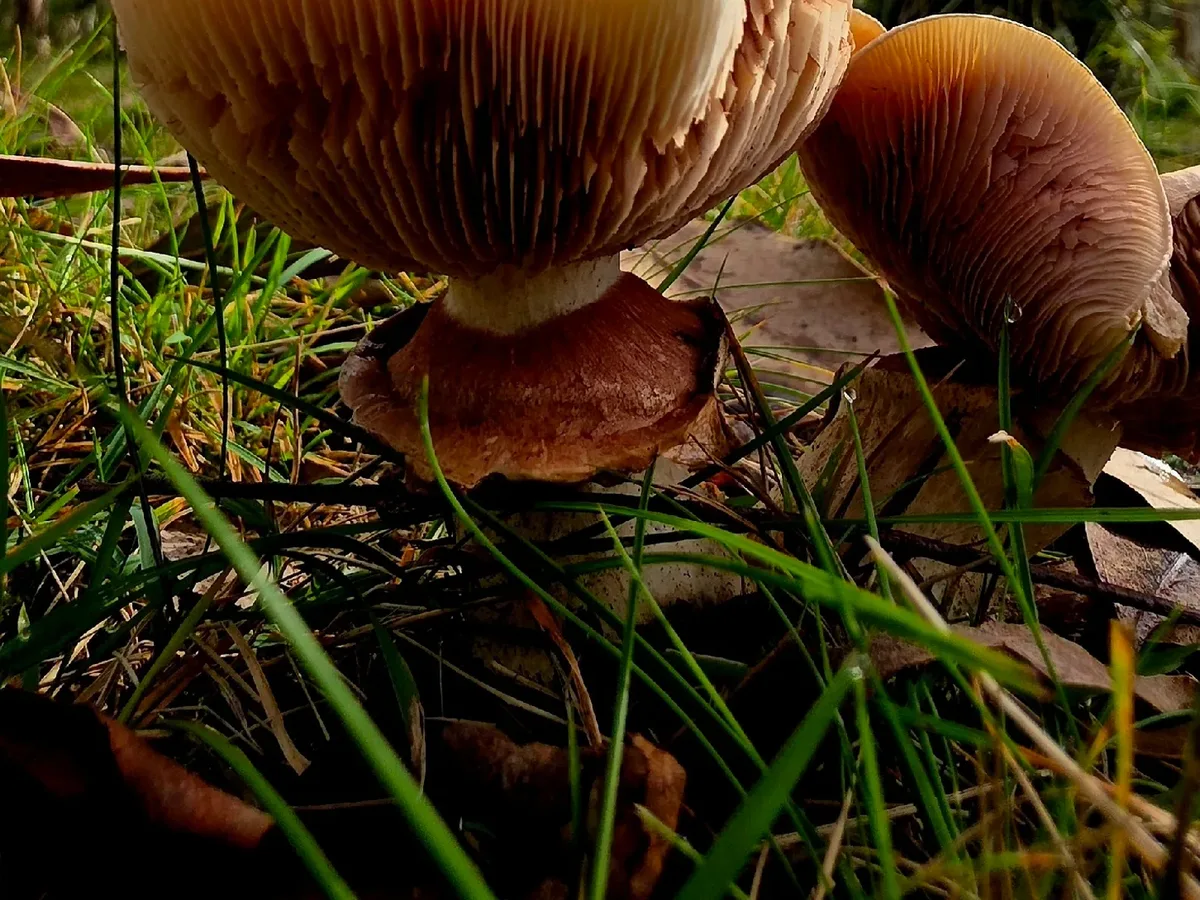 © Hector Hind (CC BY)
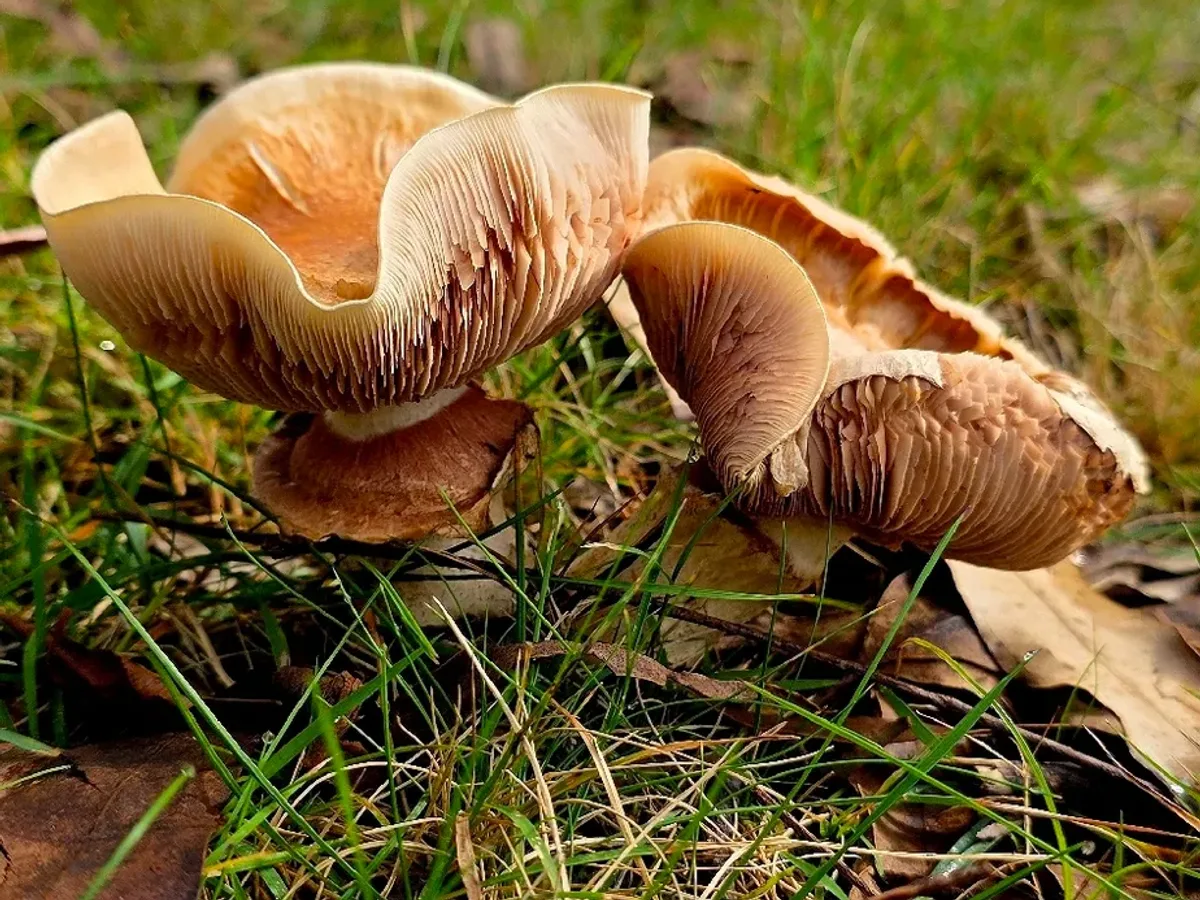 © Hector Hind (CC BY)
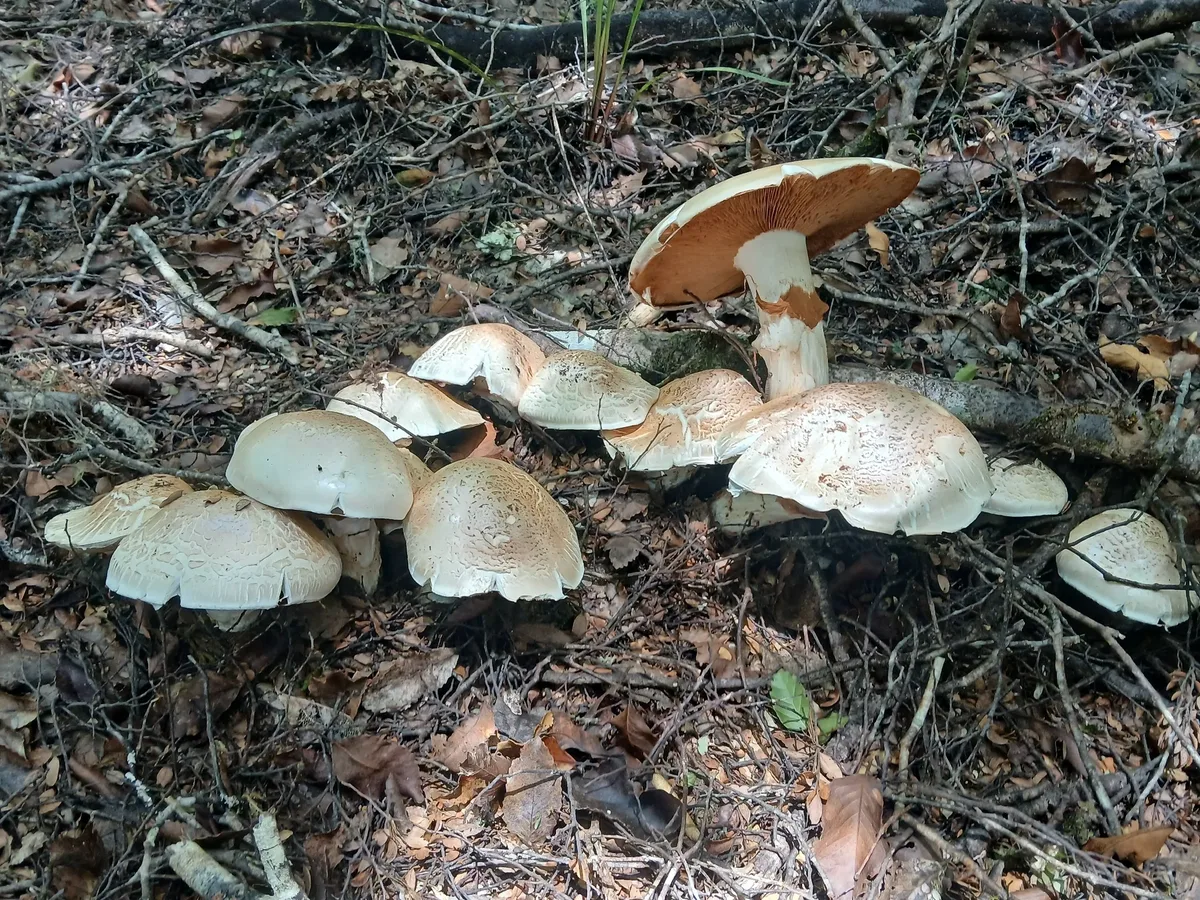 © claire (CC BY)
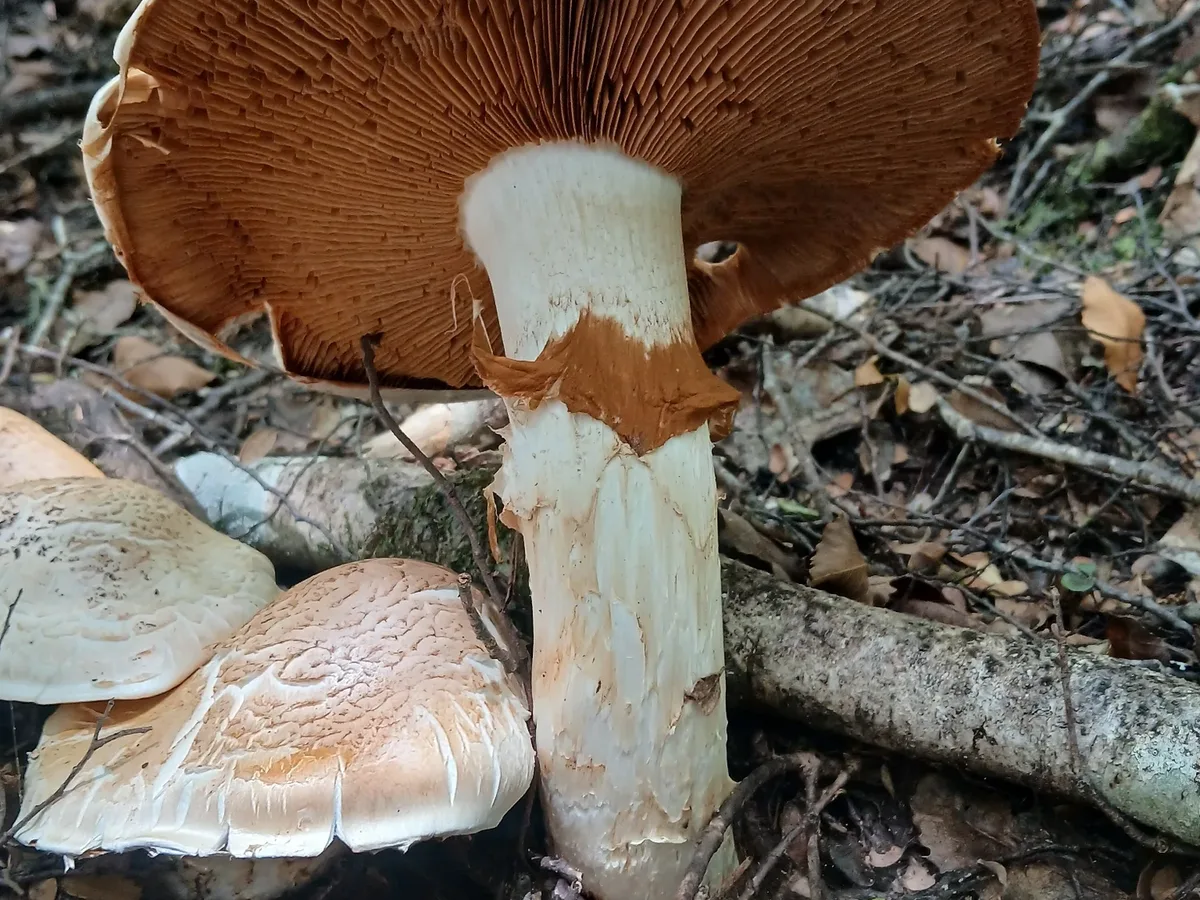 © claire (CC BY)
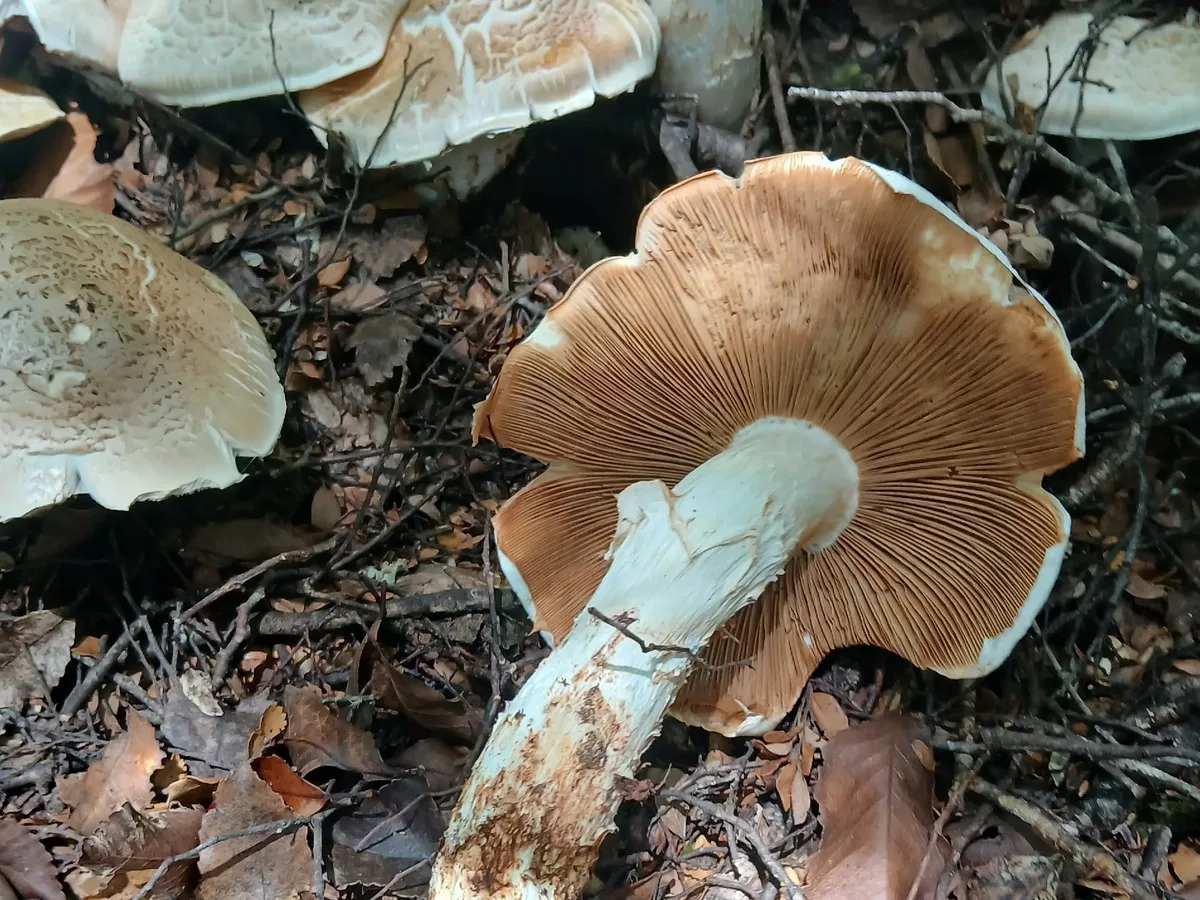 © claire (CC BY)
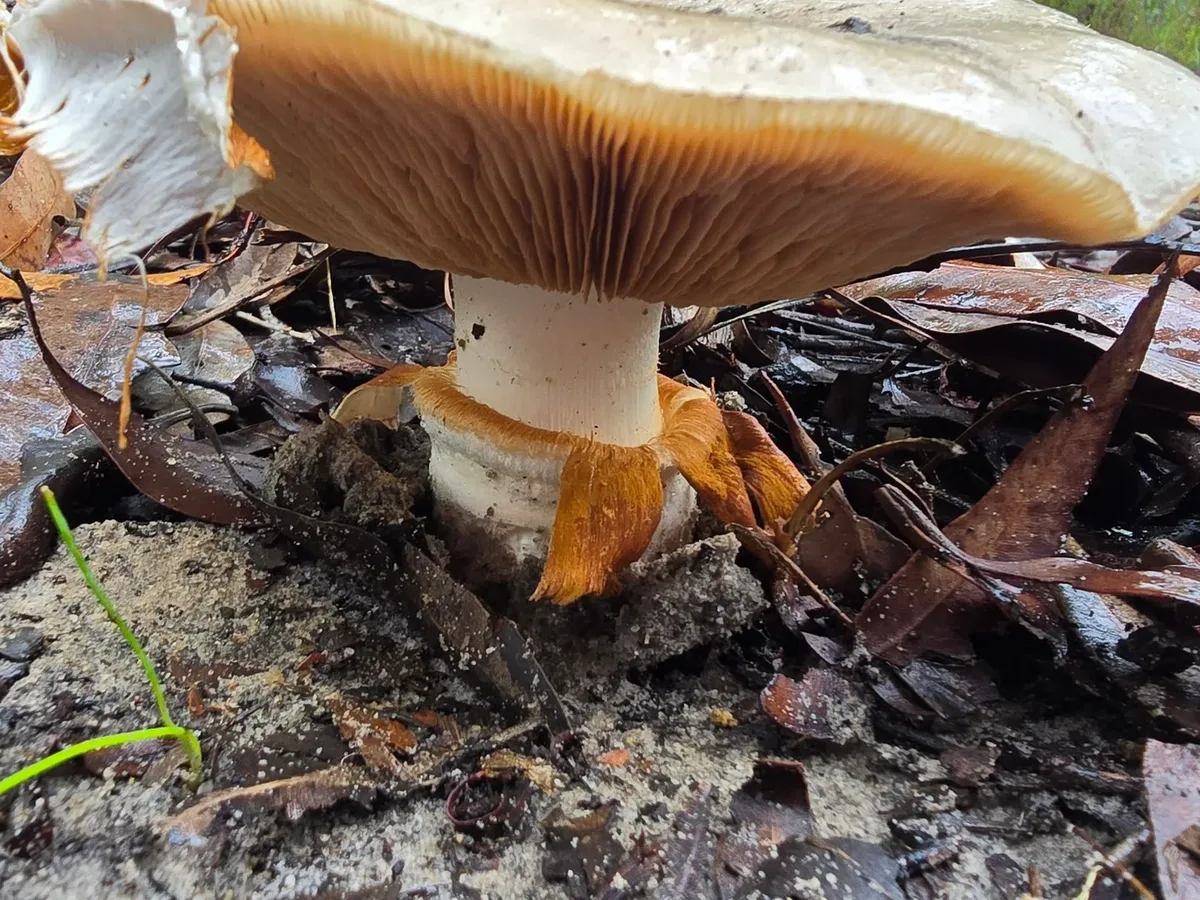 © Petra Holland (CC BY)
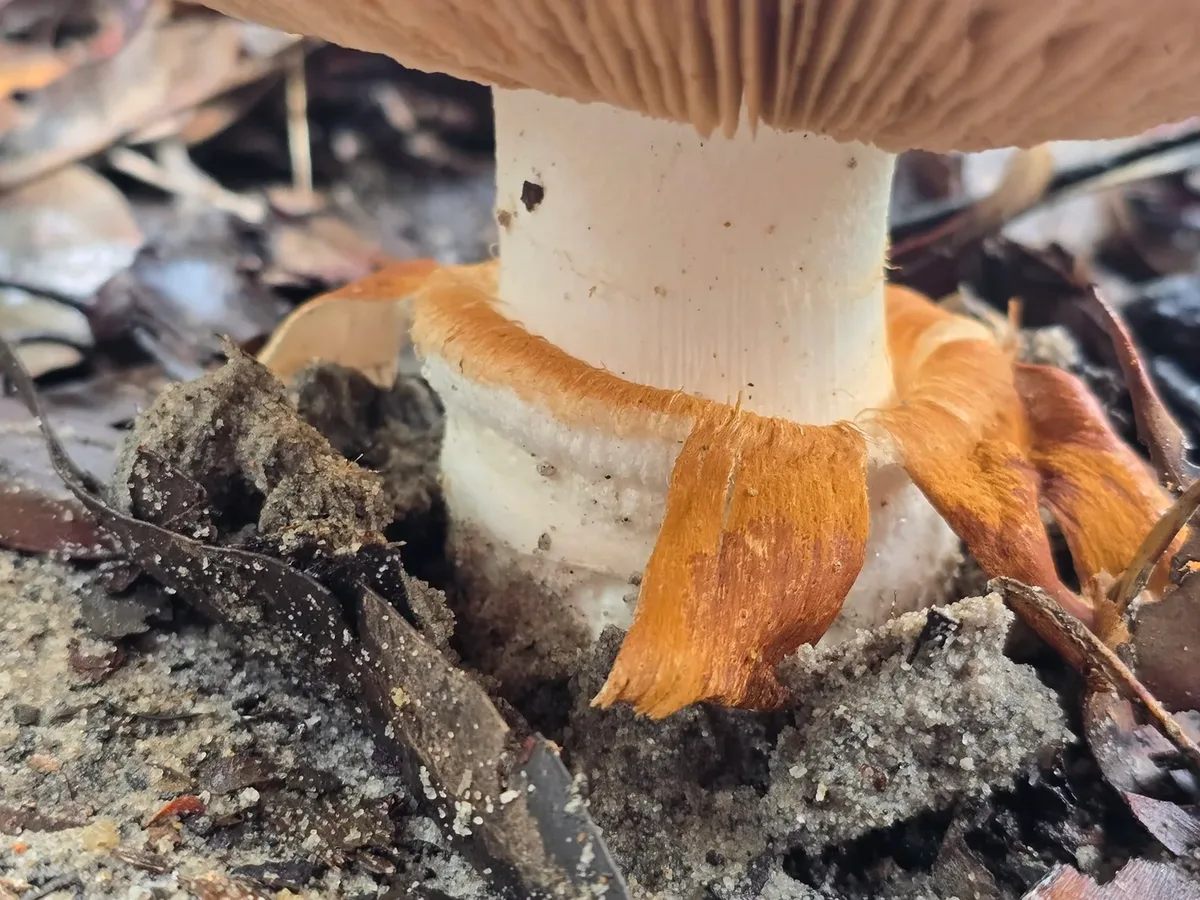 © Petra Holland (CC BY)
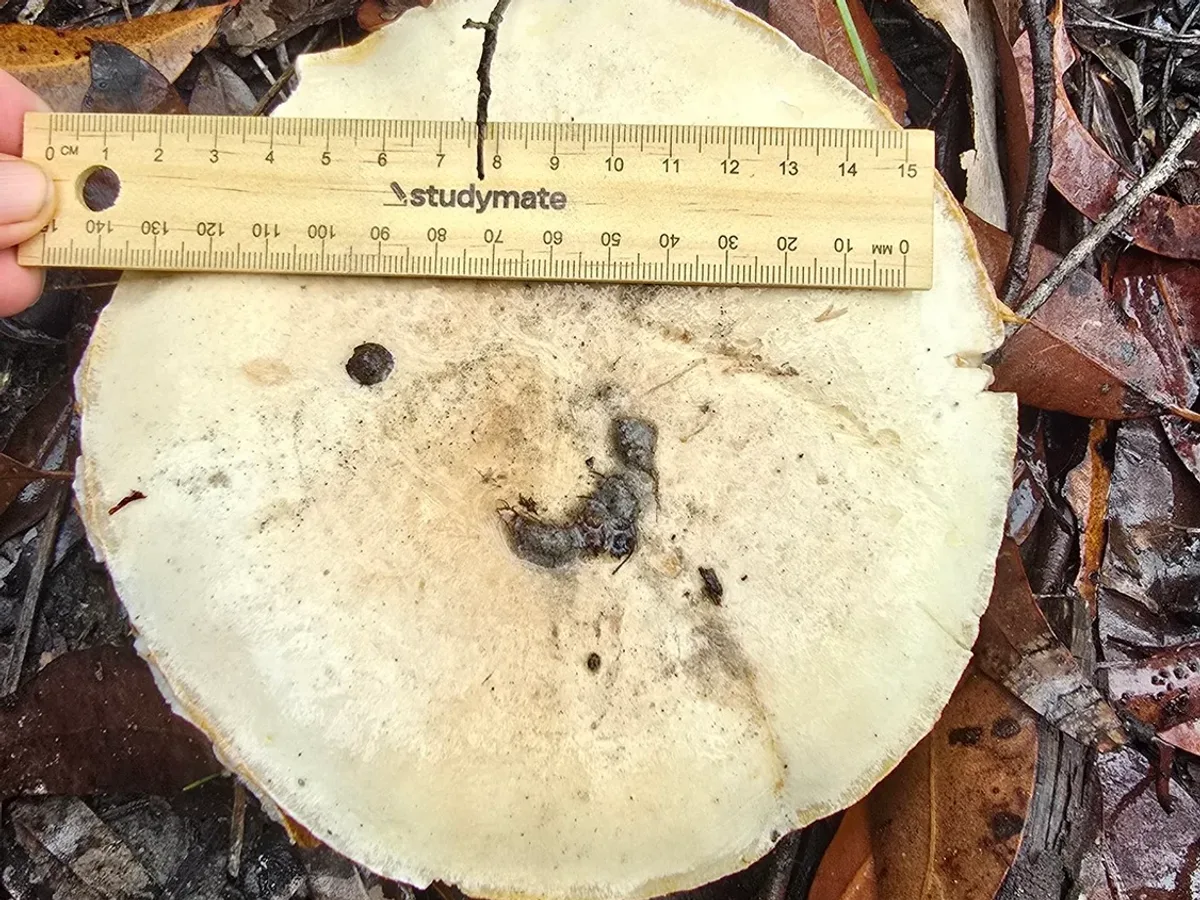 © Petra Holland (CC BY)© Hector Hind (CC BY)© Hector Hind (CC BY)
Edible only with the right preparation - or safe for some people but not others. Learn the caveats first.
Never eat a mushroom you are not 100% sure of - check the look-alikes below, and always cook wild mushrooms.
How to recognise it
Austrocortinarius australiensis is a medium to moderately large agaric - stocky, earthy in colour, and easily overlooked among the leaf litter of native Australian forest.
Cap
The cap is convex when young and expands to nearly flat, often retaining a low central umbo. The surface is dry to barely viscid, ochre-brown to tawny-orange or rusty cinnamon, paling toward the margin.
Gills
Gills are pale cream at first and mature to the rusty cinnamon-brown that signals spore development - the same transition visible across the entire Cortinariaceae family.
Stem
The stem is firm and slightly club-shaped, whitish to pale ochre.
The single most important character of the genus - and the source of its common name 'Skirt webcap' - is the persistent membranous annulus, a firm, skirt-like ring on the upper stem that remains intact long after the cap has fully expanded.
In true Cortinarius species, the partial veil is an ephemeral cobweb (cortina) that tears and vanishes as the cap opens; in Austrocortinarius the veil is membranous and durable, resembling a shaggy or fringed skirt.
The upper face of this ring gradually accumulates a rusty-brown dusting of falling spores.
Spore print: rusty brown to ochre-cinnamon, a field-critical character shared with all webcap relatives and a reliable marker of the group.
Why it's dangerous
The primary danger is misidentification. This species grows in the same forest, at the same time, alongside confirmed deadly orellanine-bearing webcaps that can kill through irreversible kidney failure.
A forager who believes they can reliably distinguish Austrocortinarius australiensis from Cortinarius australiensis, C. archeri, or C. rotundisporus in the field is taking a life-threatening risk.
Secondary risk is the unknown toxicity of Austrocortinarius itself.
The combination of a confirmed-deadly neighbourhood, uncertain personal toxicology, and a heat-stable candidate toxin that cannot be cooked out makes this a species to observe and photograph - never to eat.
Toxin
No toxin has been isolated or characterised from Austrocortinarius australiensis in published analytical studies.
The precautionary assessment of this species as potentially poisonous rests on its phylogenetic and ecological placement within Cortinariaceae, a family that includes multiple confirmed orellanine producers.
Orellanine (and related orelline, cortinarin compounds) are polypyridine N-oxide nephrotoxins that selectively destroy renal proximal tubule cells through free-radical mechanisms. They are heat-stable and not inactivated by cooking.
Whether Austrocortinarius shares this chemistry is unknown. Without chemical analysis, the possibility of orellanine or related compounds cannot be excluded.
Symptoms
No confirmed poisoning cases specifically attributable to Austrocortinarius australiensis are documented in the medical literature.
If consumed and if it shares the orellanine-class toxicology of nearby Cortinarius species, the expected clinical course would involve:
- 1A long and deceptive latent period of days to weeks during which the patient feels relatively well.
- 2Followed by the insidious onset of intense thirst, frequent then decreased urination, nausea, headache, severe fatigue, and flank pain as renal tubular damage accumulates.
Progressive acute kidney injury may require haemodialysis.
Because the latency is so long, any person who consumed a webcap-type mushroom from native Australian forest in the past three weeks and is experiencing these symptoms - or any forager who is uncertain what they ate - must seek emergency medical assessment immediately and name the potential exposure.
Staying safe
Do not eat Austrocortinarius australiensis.
The toxicological status of this species has not been established in published scientific literature, and it is surrounded in its native habitat by multiple confirmed deadly species (orellanine-bearing Cortinarius) that share its appearance, host trees, season, and spore print colour.
The risk of fatal misidentification - either of this species for an edible species, or of a deadly Cortinarius for this species - is real and the consequence is potentially irreversible kidney failure.
- Australian Poisons Information Centre: 13 11 26
- New Zealand National Poisons Centre: 0800 764 766
If any webcap-type mushroom from native Australian forest has been consumed, contact a poisons centre immediately without waiting for symptoms. Orellanine poisoning from closely related species is characterised by a latency of 2 days to 3 weeks before symptoms appear, by which time severe renal damage may already have occurred.
Where & when it grows
Habitat
This species is an obligate ectomycorrhizal partner of trees - primarily Nothofagus (southern beech) in cool temperate rainforest and Eucalyptus species in moist sclerophyll forest.
It cannot complete its life cycle without a living host, and the mycelial network woven into host root tips may be decades old by the time it produces the visible fruiting body.
Recorded from Tasmania, Victoria, and New South Wales, with the bulk of collections from moist montane and coastal foothill forest.
It grows on humus-rich, acidic soils in forest interior rather than at edges or clearings. Look for it on gently sloping ground with a deep, well-developed leaf litter layer beneath the dominant tree canopy.
When
Fruiting is an autumn-early winter phenomenon in the Southern Hemisphere, running broadly from March through June with the main flush in April and May.
The trigger is the classic one for ectomycorrhizal forest fungi: a meaningful autumn rainfall event - at least 20-30 mm over one to two weeks - combined with soil temperatures cooling below about 15 °C after the heat of summer.
Under those conditions, fruiting bodies typically emerge within 10-21 days of the rain event.
In Tasmania and at higher elevations in Victoria, the season can extend into June. The species is reliably absent in the summer dry period.
How it grows
Like all ectomycorrhizal agarics, Austrocortinarius australiensis presents above ground only as its reproductive phase. The organism itself is a dense mycelial network threaded around and between the root tips of its host trees, exchanging photosynthetically fixed carbon from the tree for soil minerals and water it extracts for both partners.
This mutualistic relationship is the reason the species is confined to native intact forest - the mycorrhizal web cannot establish itself in degraded or plantation settings without decades of native tree succession.
Fruiting bodies emerge singly or in small scattered groups, rarely more than five together. Dense clusters would be unusual and suggest a different species.
The membranous veil encloses the developing gills and tears free from the cap margin as it expands, remaining attached to the stem as the characteristic skirt.
Fruiting conditions
Southern Hemisphere autumn species. Fruiting triggered by post-summer soil cooling (falling below ~15 °C) combined with substantial rainfall (20+ mm over 14 days). Typical flush lag 10-21 days after triggering rain. Peak April-May; may extend to June at higher-altitude or wetter sites in Tasmania and montane Victoria. Derived from known season and standard ectomycorrhizal Nothofagus-Eucalyptus fruiting ecology.
Look-alikes
The most serious identification risk is confusion with genuinely deadly orellanine-bearing Australian webcaps:
- Cortinarius australiensis (the native orellanine webcap)
- Cortinarius archeri (confirmed deadly, orellanine)
- Cortinarius rotundisporus (violet skullcap, deadly)
These species are ectomycorrhizal in the same forests, fruit in the same season, and share the rusty-brown spore print.
A forager relying on the 'skirt versus cobweb' veil distinction to separate Austrocortinarius from deadly Cortinarius species must exercise extreme caution: veil remnants are variable, age-dependent, and easily obscured by weathering.
Species-level separation in the webcap group requires specialist knowledge and microscopy. No webcap or webcap relative should be eaten without expert verification.
Less dangerous confusions include young Pholiota species and some Agrocybe species, both of which have an annulus and rusty-ochre spore print but typically grow on wood or disturbed organic substrates rather than native forest soil.
Confirmed deadly (orellanine) webcap in the same forests. C. archeri is typically more violet-purple in cap and stem coloration compared to the ochre-brown of Austrocortinarius, but colour is unreliable due to age, weathering, and individual variation. Both share the rusty-brown spore print and ectomycorrhizal native-forest habitat. The cobwebby cortina of C. archeri may be absent by the time it is found. Treat any webcap relative in native Australian forest as potentially deadly.
Confirmed deadly (orellanine) webcap growing in the same native forest habitat and season. C. australiensis has a cobwebby cortina (not a firm membranous skirt) in young specimens, but the veil is often absent in mature or weathered individuals, making the separation unreliable in the field. Both produce rusty-brown spore prints and have similar cap colours. Do not attempt to separate these species based on veil type alone; avoid both.
Confirmed deadly (orellanine) webcap. Typically more blue-violet to blue-grey in colour than the ochre-brown Austrocortinarius, but faded or aged specimens may overlap in colour. Shares the rusty-brown spore print and native forest habitat. The cobwebby cortina may be invisible in older specimens. Any rusty-spored, annulate or formerly-annulate mushroom from native Australian forest is high-risk.
Agrocybe species have an ochre-brown cap and a persistent ring, with a rusty-brown to tobacco-brown spore print, but grow in disturbed ground, gardens, wood chips, or grassy areas rather than in undisturbed native forest under Nothofagus or eucalypts. The ring is typically simple and membranous rather than skirt-like and shaggy. Habitat separation is reliable: native forest ectomycorrhizal site versus disturbed or garden soil.
Several Pholiota species have a persistent ring on the stem and a rusty-brown spore print. However, Pholiota species typically grow on wood or woody debris (stumps, logs, buried wood) rather than from undisturbed forest soil in a mycorrhizal relationship, and many have distinctly scaly cap surfaces with sticky or glutinous texture. Habitat (woody substrate vs. soil under native trees) is the most reliable separator. Pholiota species are generally considered mildly toxic or inedible.
A reference guide - never an edibility guarantee. When in doubt, leave it out.