White coarsely-ribbed bolete
Austroboletus subflavidussyn. Boletus subflavidus
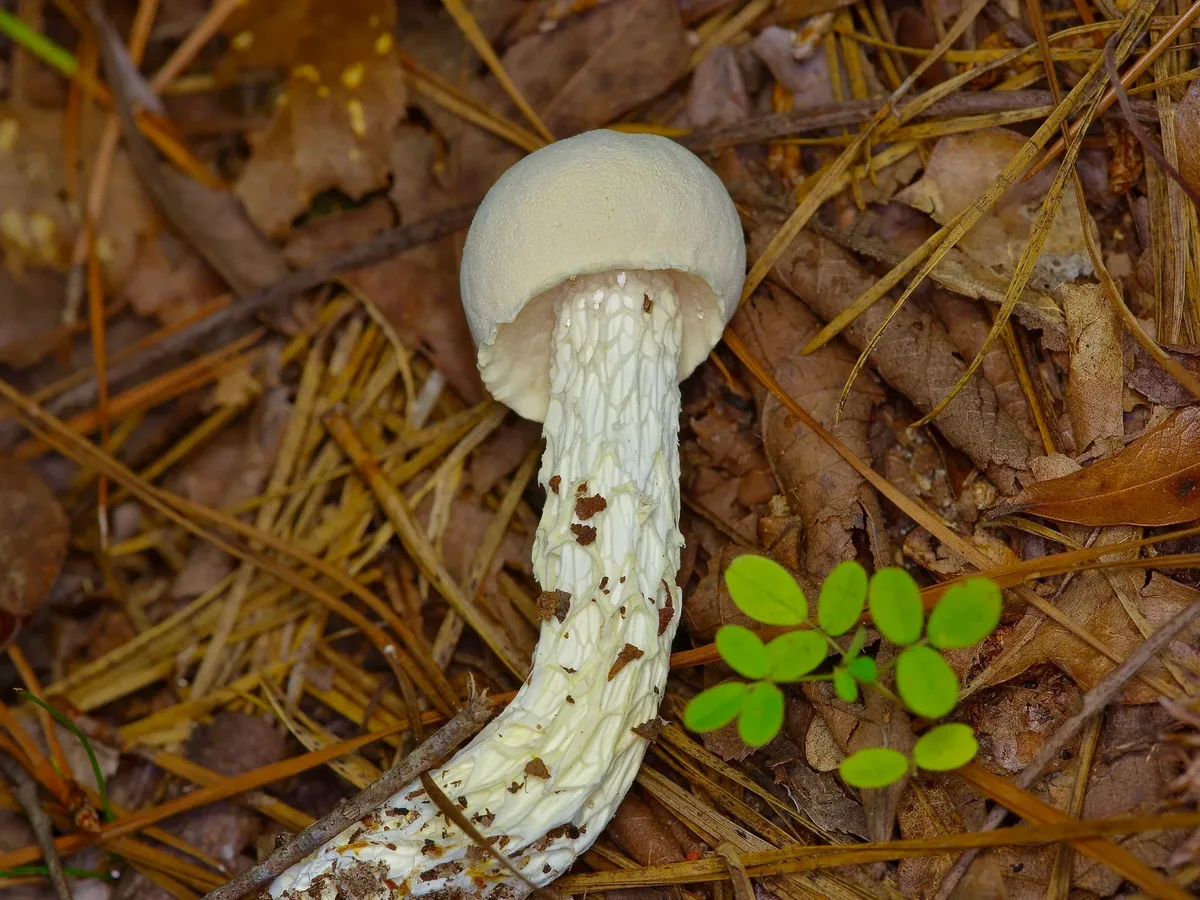 © Michelle W. (鍾偉瑋) (CC BY)
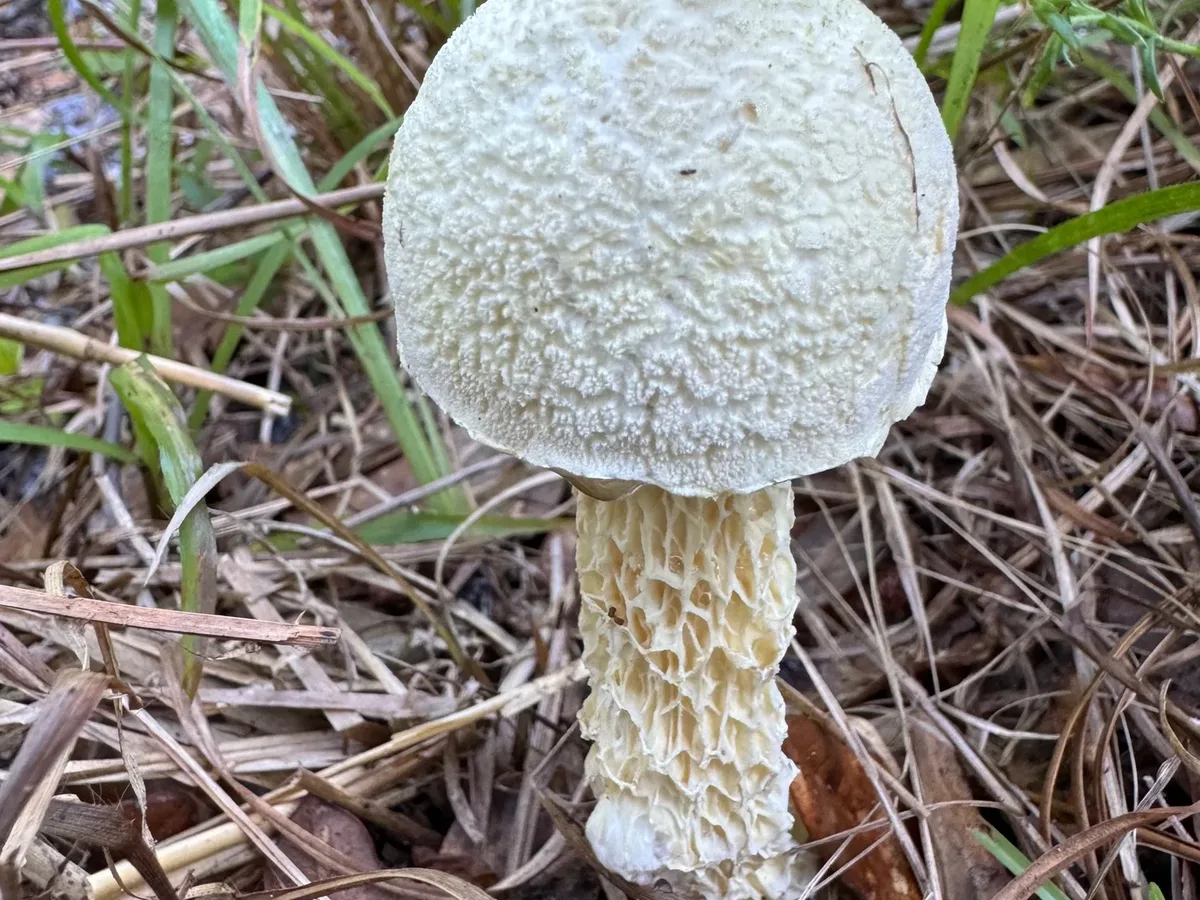 © Karen Guin (CC BY)
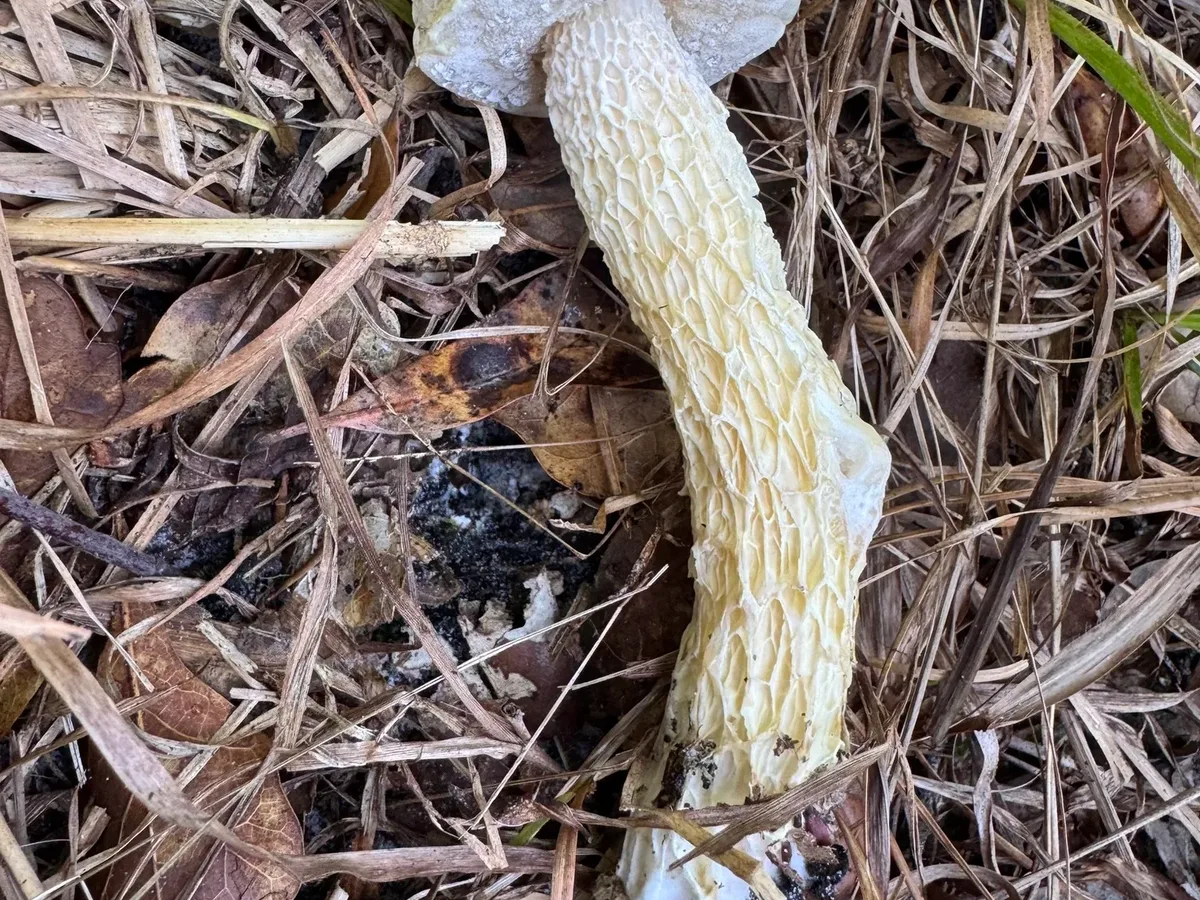 © Karen Guin (CC BY)
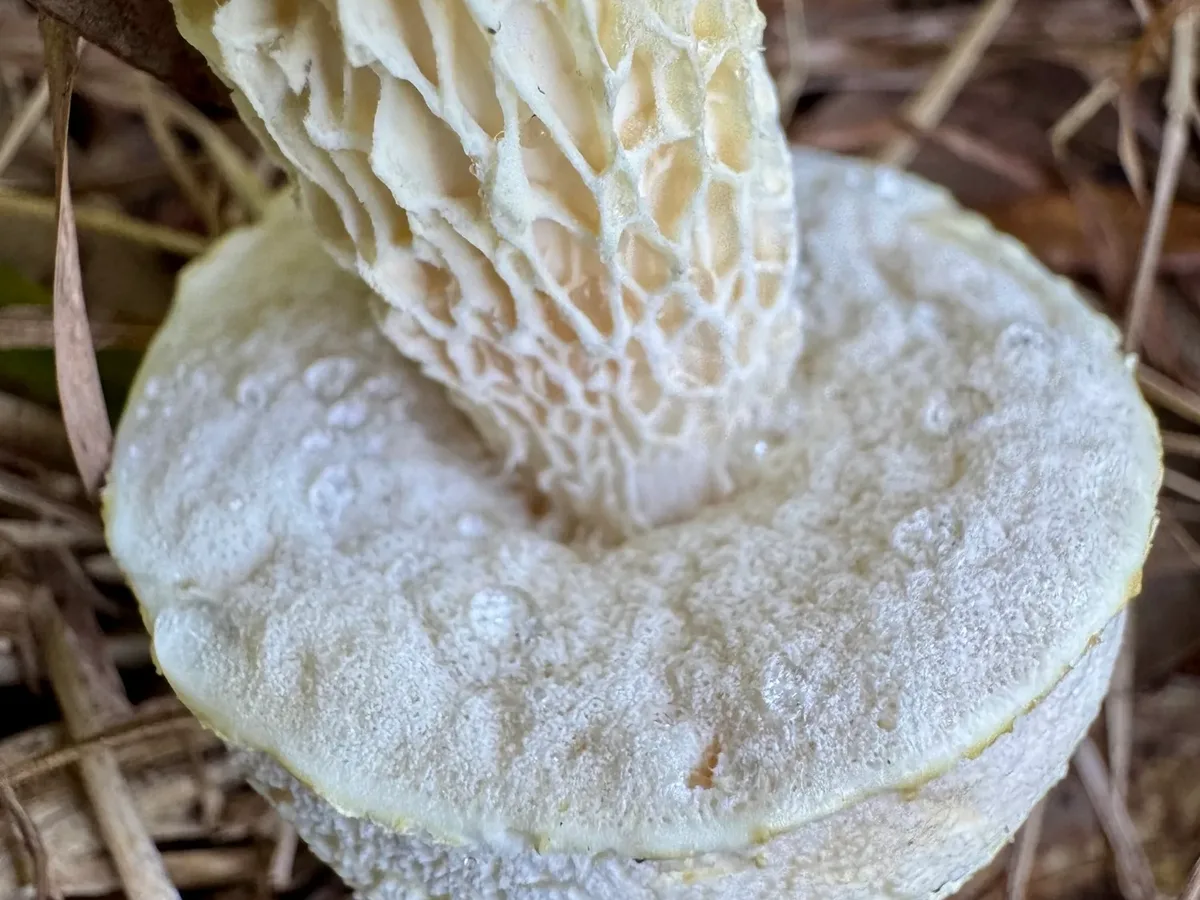 © Karen Guin (CC BY)
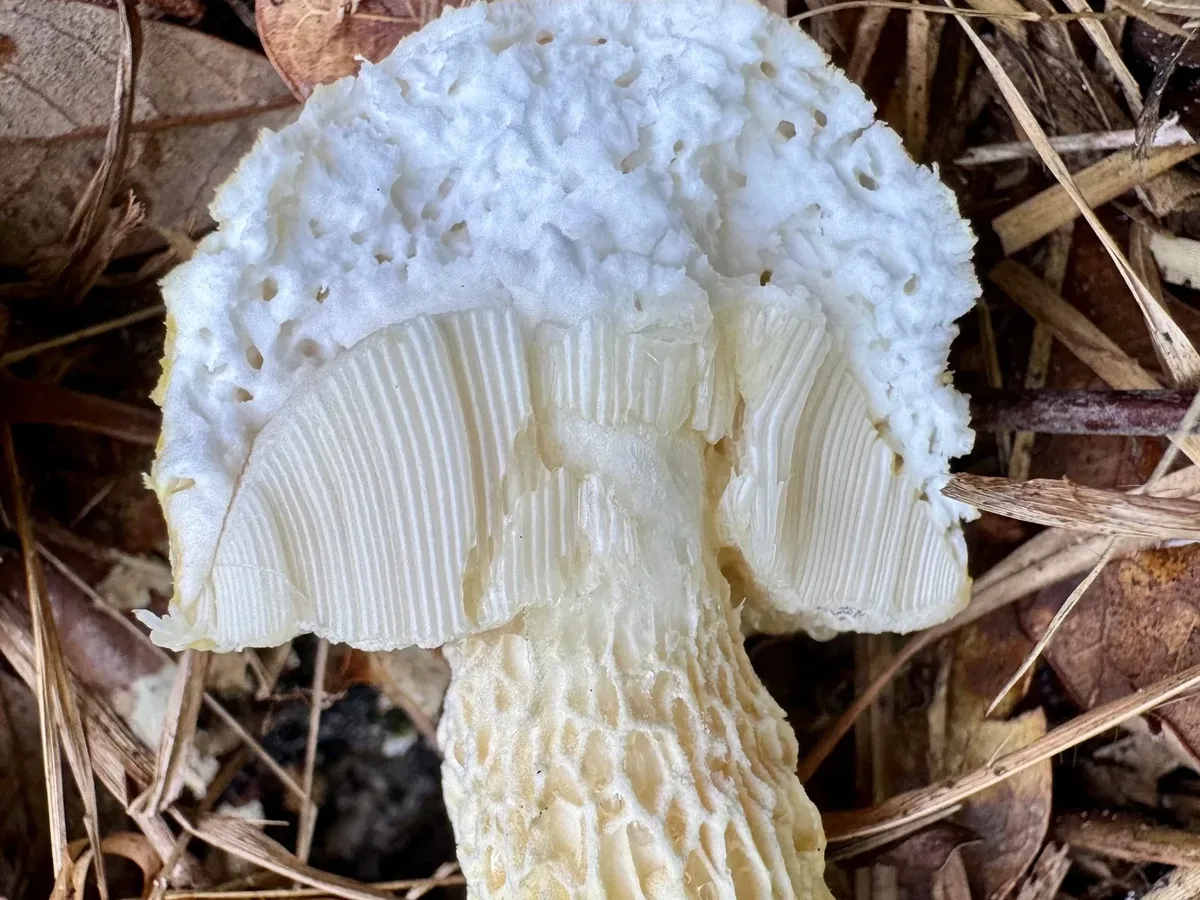 © Karen Guin (CC BY)
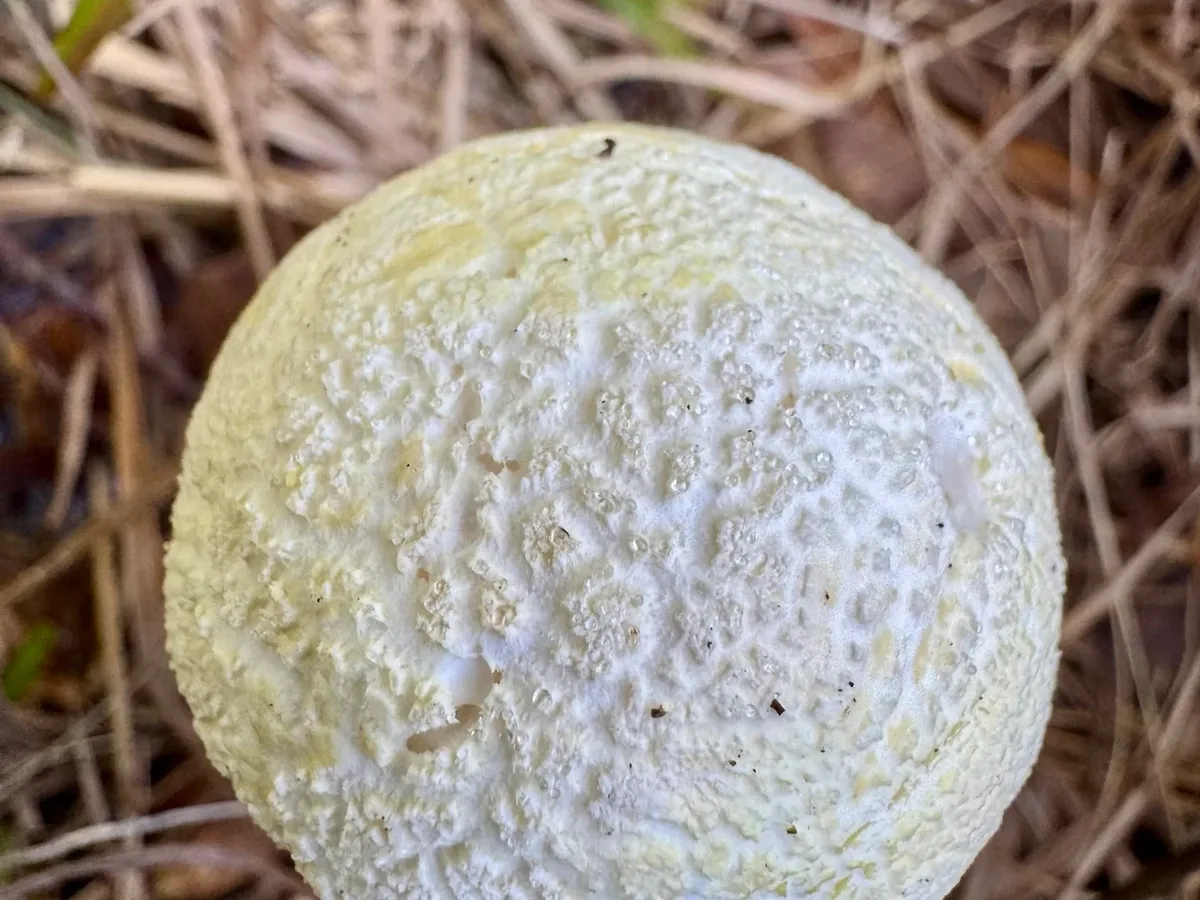 © Karen Guin (CC BY)
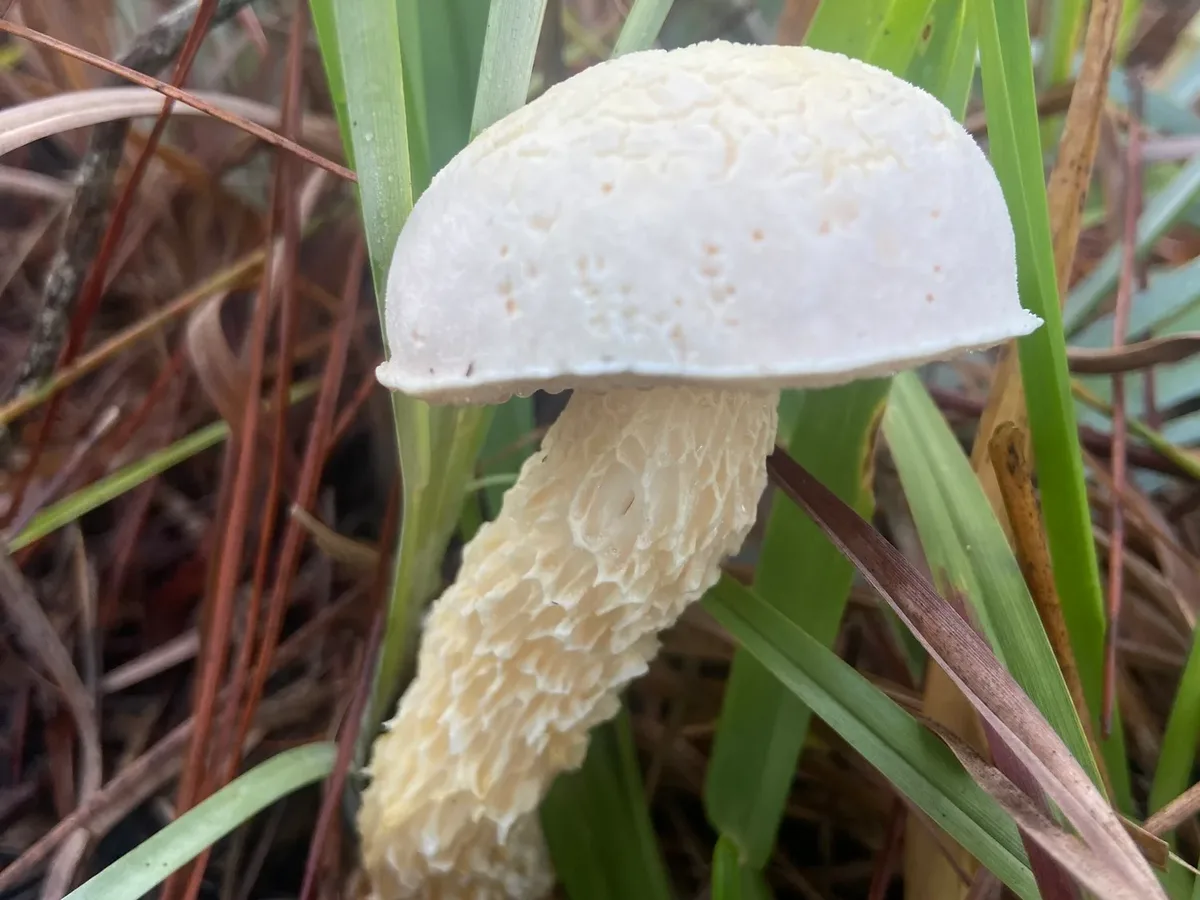 nataliekrops (CC0)
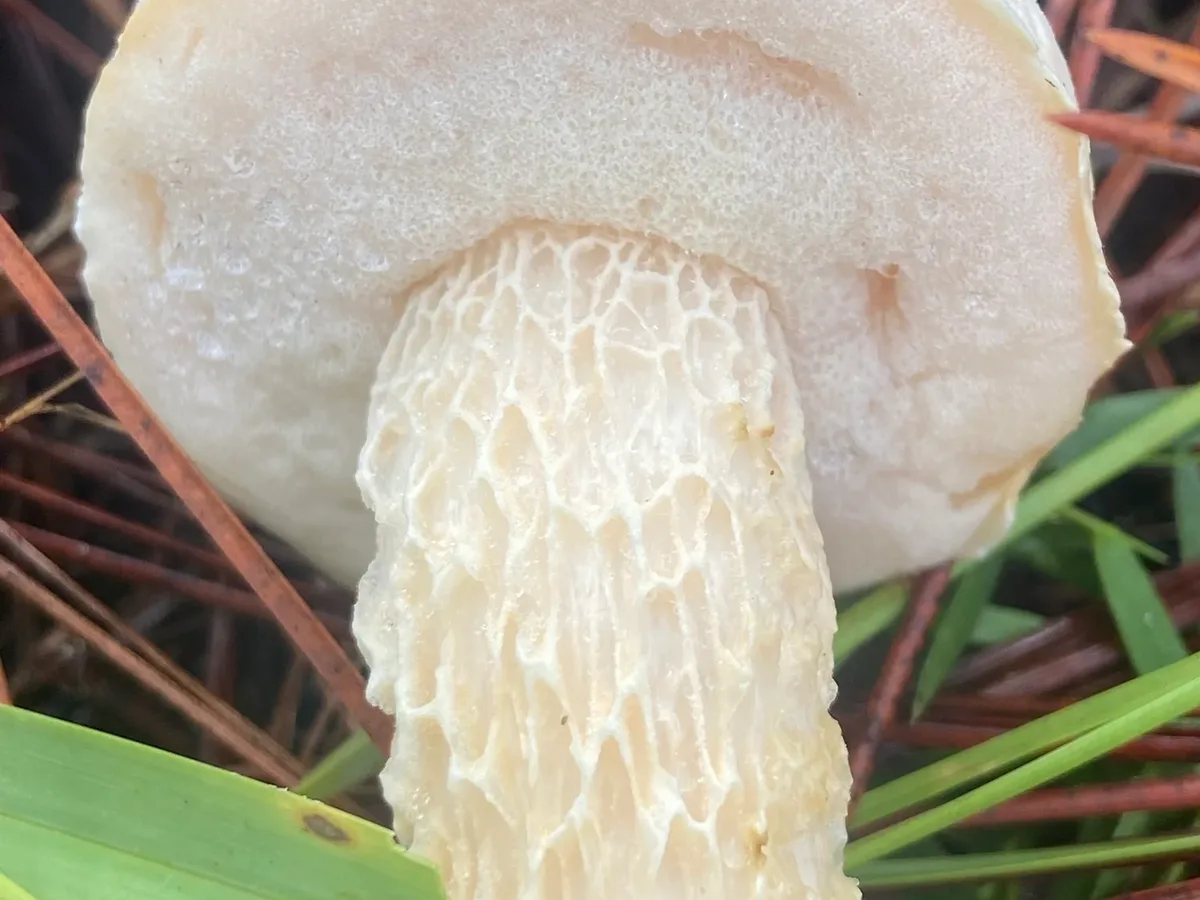 nataliekrops (CC0)
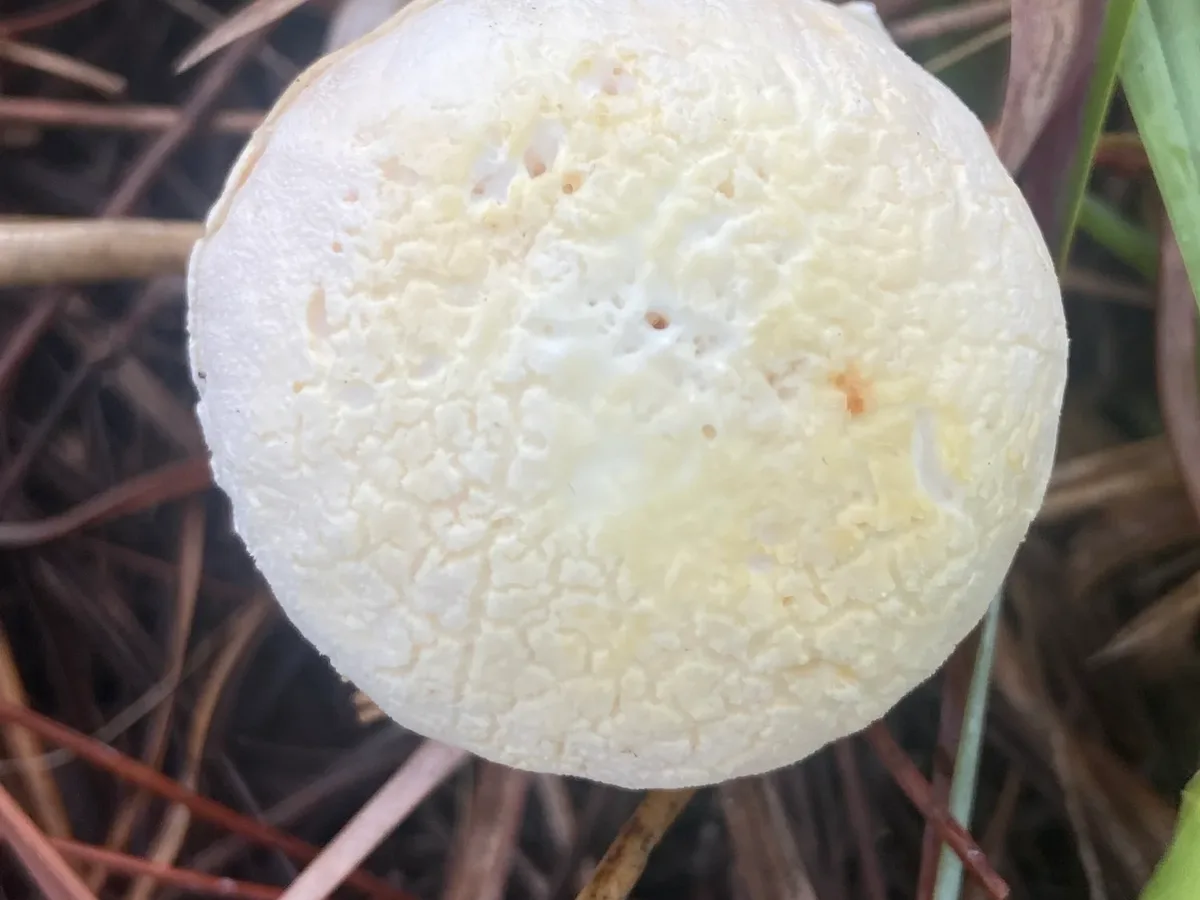 nataliekrops (CC0)© Michelle W. (鍾偉瑋) (CC BY)© Karen Guin (CC BY)
Edible only with the right preparation - or safe for some people but not others. Learn the caveats first.
How to recognise it
Austroboletus subflavidus is a medium to large bolete presenting in understated, pale tones that can make it easy to overlook against the cream-and-ochre palette of Atlantic Forest leaf litter.
Cap
The cap begins as a tightly rounded dome and opens steadily to a broad, relatively flat surface, reaching 4-12 cm in width.
Its dry surface is pallid whitish-cream to pale straw-yellow - the specific epithet 'subflavidus' means 'somewhat yellowish' - often a little more ochre or buff at the centre while the margin stays paler.
There is no stickiness, no obvious cracking, and crucially no blue staining when the flesh or pores are cut or bruised: a safety-critical observation for any bolete forager.
Gills / Pores
The pore surface below the cap is similarly pale - white to cream in youth, ageing to faint straw-yellow or ochraceous.
Stem
The stipe is where Austroboletus subflavidus is most characteristic: it carries coarse longitudinal ribs or ridges that anastomose into a rough, open network, more pronounced than the fine lacework reticulation of Boletus edulis but less extreme than the deep pitting of Austroboletus lacunosus from Australia.
This coarse ribbing feels almost sculptural under the fingers. Stipe colour is pallid to whitish with occasional pinkish-buff tones at the base.
Flesh
The flesh inside is white, firm, and does not stain blue. Spore print olive-brown.
Where & when it grows
Habitat
This species belongs to the rich but embattled world of the Atlantic Forest (Mata Atlântica) - the coastal rainforest biome that once ran for thousands of kilometres along Brazil's Atlantic seaboard and is now fragmented to roughly 12 % of its original extent.
Austroboletus subflavidus is a creature of that forest's interior: it threads its mycelium through the root systems of native trees, primarily legumes (Fabaceae) and myrtle-family trees (Myrtaceae), forming the underground ectomycorrhizal partnerships on which both the fungus and the tree depend.
Look for it on well-drained, red or yellow clay-loam soils under mature canopy, partly buried in the deep, moist leaf litter that characterises undisturbed Atlantic Forest floor. The species is largely absent from the pine and eucalyptus plantations that have replaced much native forest.
It is most reliably found between 200 m and 900 m elevation, where the forest retains enough intact understorey to support its host-tree partnerships.
Records are concentrated in São Paulo, Paraná, Santa Catarina, and Rio de Janeiro states in Brazil, with outlying records in Paraguay and northeastern Argentina.
When
Fruiting is tied to the subtropical wet season. In the main range (southern Brazil), expect to find Austroboletus subflavidus from October through April - the warm, rain-rich months when Atlantic Forest receives the bulk of its annual precipitation.
The most productive period is typically November through February, when tropical convective storms deliver intense rainfall and soils maintain temperatures of 18-26 °C.
A significant rain event (≥30 mm over a short period) is generally the trigger; primordia push to the surface 10-20 days later as the mycelium mobilises resources from its tree partners.
Fruiting ceases during the austral winter (May-August), when soils cool and the dry season reduces moisture availability below the threshold needed for carpophore development.
How it grows
Solitary or in widely scattered pairs, rarely in groups of three or more - a pattern typical of mycorrhizal boletes that allocate nutrients through the root network of individual large trees rather than in surface-level clusters.
Each fruiting body pushes up from the soil with the cap tightly closed, expanding over four to seven days.
Because the species is ectomycorrhizal and depends on undisturbed forest, it returns to the same patches of intact forest year after year. Finding a productive spot is genuinely valuable; the site is worth revisiting each wet season.
The species is not abundant in any single location, and overall population density in known ranges is low - partly reflecting the fragmented state of Atlantic Forest habitat.
Fruiting conditions
Fruiting is triggered by warm-season rainfall in subtropical Atlantic Forest. A meaningful rain event (≥30 mm over 14 days) combined with soil temperatures of 16-26 °C initiates the flush, with carpophores emerging 10-20 days after soil saturation. Fruiting is restricted to the austral spring-summer wet season (October-April) and does not occur in the cool dry winter months. Storm-driven intensive rainfall events typical of subtropical Brazil are the most reliable trigger.
Look-alikes
In Atlantic Forest, several pale boletes share superficially similar features.
- Tylopilus potamogeton, T. pakaraimensis, and other South American Tylopilus species are the most likely field confusions: they are also pale-coloured, non-bluing boletes with a reticulate or ribbed stipe, but their pore surface turns distinctly pink to flesh-coloured in maturity rather than remaining white-to-cream. The bitter taste of most Tylopilus species is immediately apparent if you take a tiny taste of raw flesh - Austroboletus subflavidus has a mild, inoffensive taste.
- Boletus pulverulentus and related bluing boletes in South American subtropical forest are differentiated by their intense and rapid blue staining of pores and flesh when cut; avoid any bolete that blues.
- Some pale Suillus species grow under introduced pines in parts of subtropical Brazil (e.g., around pine plantations), but they have a slimy or viscid cap in moist conditions and a glandular-dotted rather than ribbed stipe.
- Austroboletus betula and related South American Austroboletus species are the closest genus-level relatives; some have a more deeply reticulate or lacunose stipe rather than the coarse ribbing of A. subflavidus, or show distinct pink or red tones not present here.
A related Austroboletus of tropical and subtropical forest in the Americas, with a more deeply lacunose (pitted) stipe and often a more ochre-brown cap. The stipe texture - deeply pitted versus coarsely ribbed - is the most reliable distinction. Both are in the same genus with similar ecology and edibility status.
Several bluing boletes occur in subtropical South American forest, including B. pulverulentus and related species. They blue dramatically and rapidly - pores and flesh turn intense blue-black within seconds of cutting. Austroboletus subflavidus shows absolutely no bluing. Never eat any bolete with any blue staining of flesh or pores.
Boletus edulis occurs in South America in introduced-tree plantations (pine, oak). It has a browner, more viscid cap in youth, a fine (not coarse) white reticulum on the stipe, and strongly cream-to-yellow pores. It is choice edible. The coarse ribbing of A. subflavidus's stipe and its association with native Atlantic Forest trees (not introduced pines) distinguish it.
Pale-bodied non-bluing bolete of South American subtropical forest; distinguished by pores that turn distinctly pink to flesh-pink in maturity (never cream-to-ochre as in A. subflavidus) and intensely bitter taste of the raw flesh - bitterness is immediate and unmistakable. Considered inedible due to bitterness, not lethal, but should not be confused with A. subflavidus.
Several South American Tylopilus species share a pale cap and non-bluing flesh with A. subflavidus. All Tylopilus species can be distinguished by the pinkish to rose-brown pore surface in maturity (distinct from the white-cream pores of Austroboletus) and often by a bitter to astringent taste. None are lethally poisonous, but their bitterness makes them unpalatable. Always taste a tiny fragment of raw flesh: bitterness immediately excludes Tylopilus.
In the kitchen
Picking & cleaning
Select young to mid-stage specimens with a firmly closed or just-opening cap, pale-white pores, and firm flesh.
The coarsely ribbed stipe is the most reliable field character: examine it before picking any pale, non-bluing bolete from Atlantic Forest.
- Cut the base cleanly with a knife rather than pulling, to minimise disturbance to the mycelium.
- Check the flesh by making a small transverse cut - it must remain white without any blue or green staining; discard any specimen that blues.
- Carry in an open basket rather than a sealed bag.
- Clean by brushing; the stipe ridges can trap soil and require gentle attention.
Given the limited formal edibility data, treat collected specimens with the same care as any modestly documented wild bolete: refrigerate immediately and use within two days.
Cooking
On the limited available evidence from Brazilian mycological foragers, Austroboletus subflavidus has a mild, pleasant flavour with a firm texture typical of the Boletaceae.
Young, firm specimens are preferred. The cap and stipe are both usable. Clean by brushing rather than washing.
Sauting in butter or olive oil with garlic and herbs is the most straightforward preparation; the mild flavour benefits from aromatic companions. It can be incorporated into rice dishes, stews, and mixed mushroom preparations without dominating.
Thorough cooking is recommended for all wild boletes in this region.
Given the species' uncommon status in heavily reduced Atlantic Forest habitat, restrained harvesting - taking only a modest quantity - is both ecologically appropriate and practically sensible.
Good to know
Austroboletus subflavidus has not been the subject of formal toxicological studies, and edibility records from South American foraging literature are sparse.
The genus Austroboletus as a whole is not regarded as toxic, and no illness has been attributed to this species in the available literature.
However, the combination of limited documentation and a restricted primary habitat (fragmented Atlantic Forest) means that consumption data from large numbers of people simply does not exist. Accordingly, this species is classified as caution: edible-with-reservation rather than confidently edible.
The most important safety check is the absolute absence of any blue staining of flesh or pores when cut - any bolete that blues in this habitat should not be eaten.
- Do not eat any specimen where identification is in doubt.
- If eaten, cook thoroughly; do not consume raw.
- First-time tasters should eat a small quantity and wait 24 hours before consuming more.
A reference guide - never an edibility guarantee. When in doubt, leave it out.