Snowy Bolete
Austroboletus niveussyn. Boletus niveus (Massee) Cooke, Tylopilus niveus (Massee) Singer
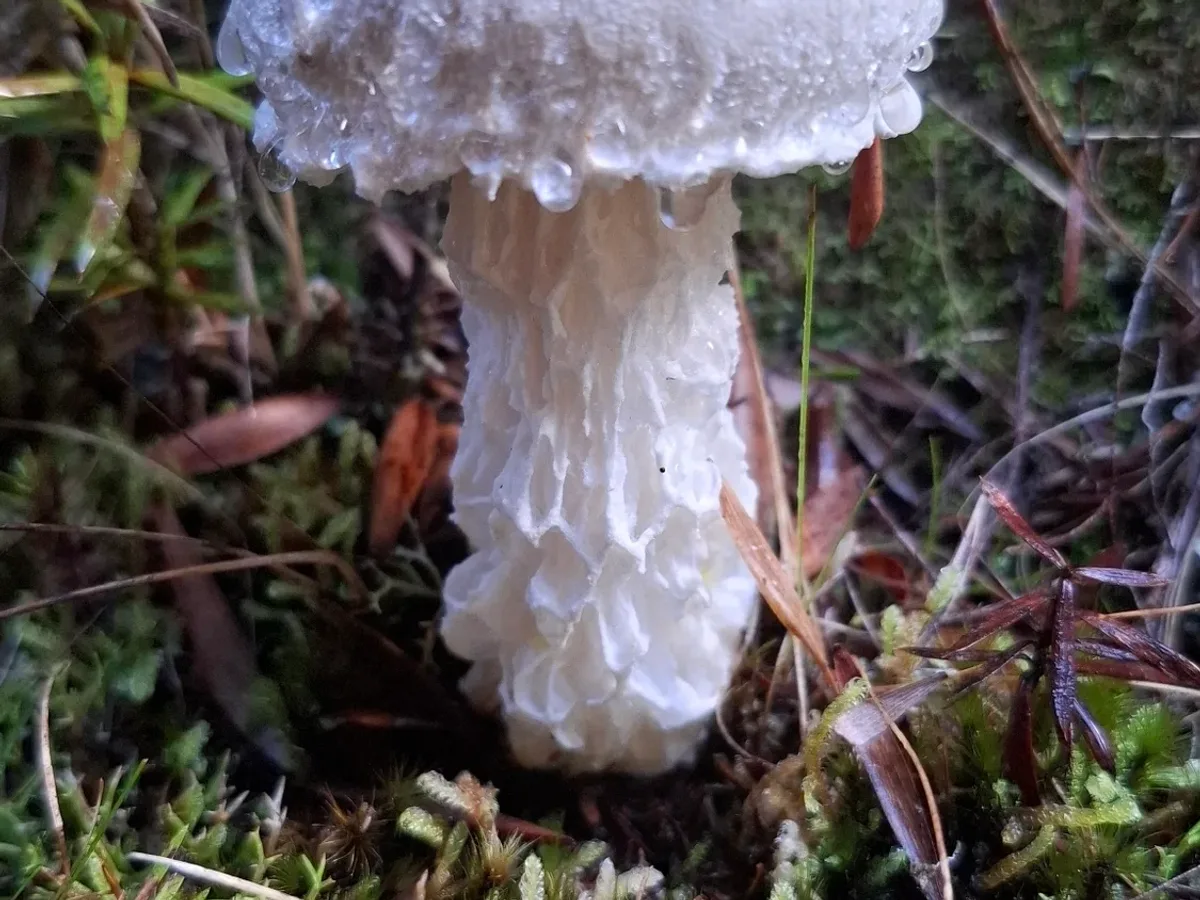 Hilton Ward (CC0)
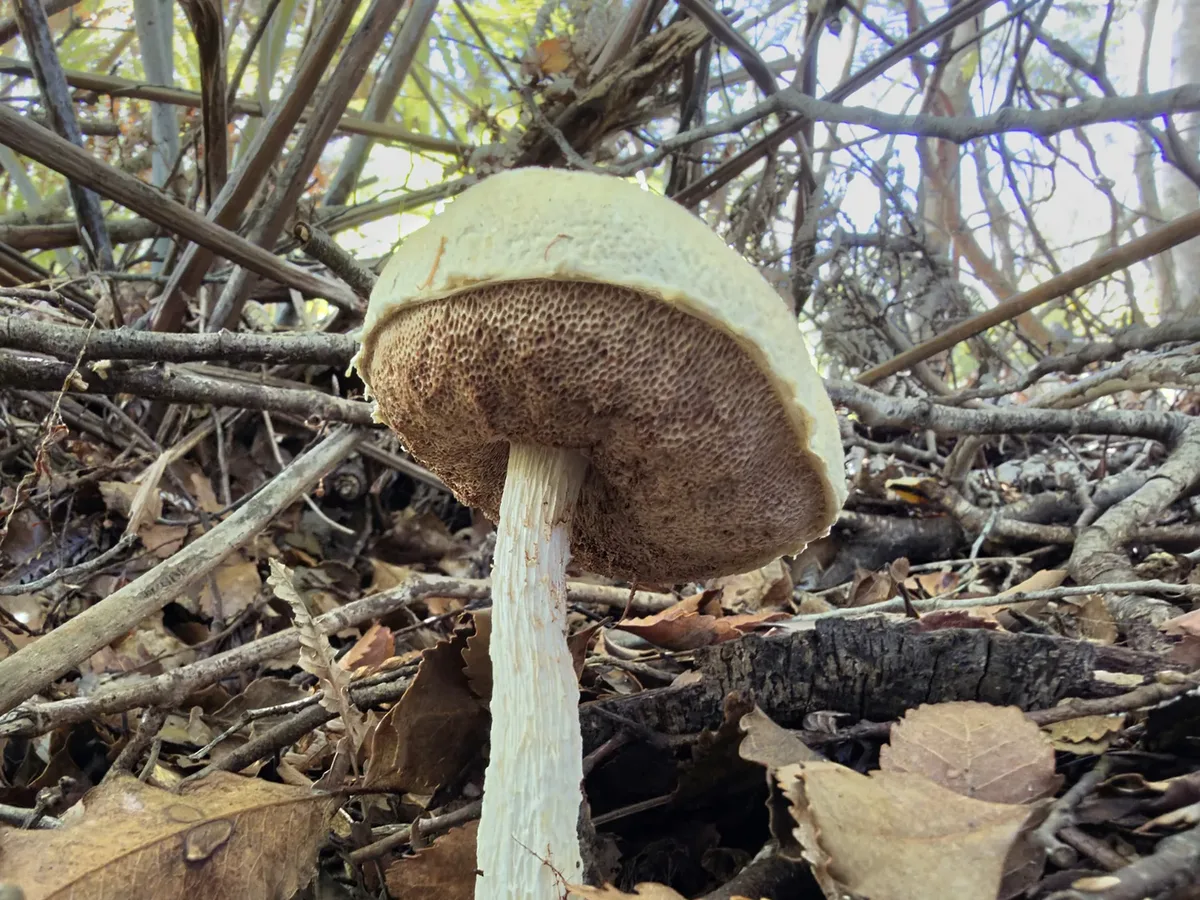 © Jeremy Rolfe (CC BY)
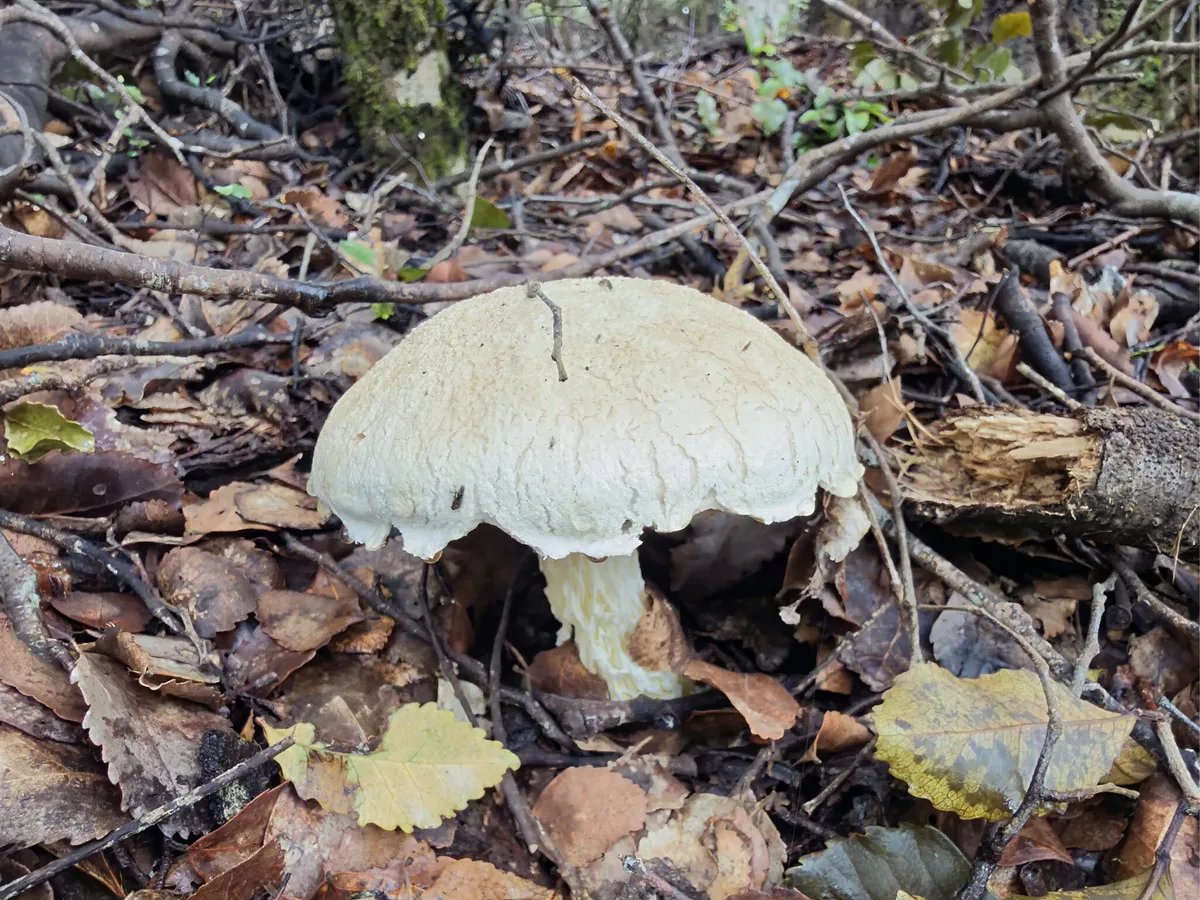 © Jeremy Rolfe (CC BY)
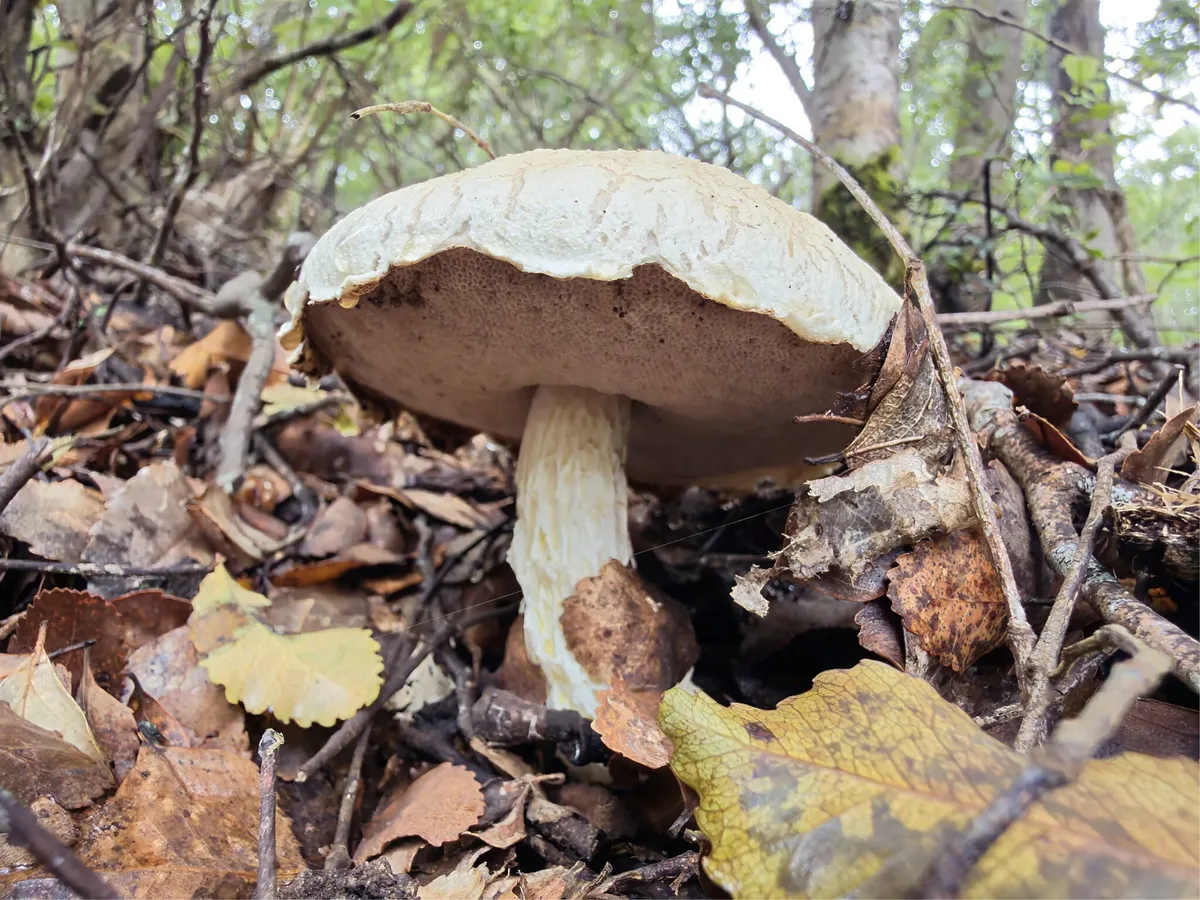 © Jeremy Rolfe (CC BY)
 © Jeremy Rolfe (CC BY)
 © Genevieve Early (CC BY)
 © Genevieve Early (CC BY)Hilton Ward (CC0)© Jeremy Rolfe (CC BY)
Edible only with the right preparation - or safe for some people but not others. Learn the caveats first.
How to recognise it
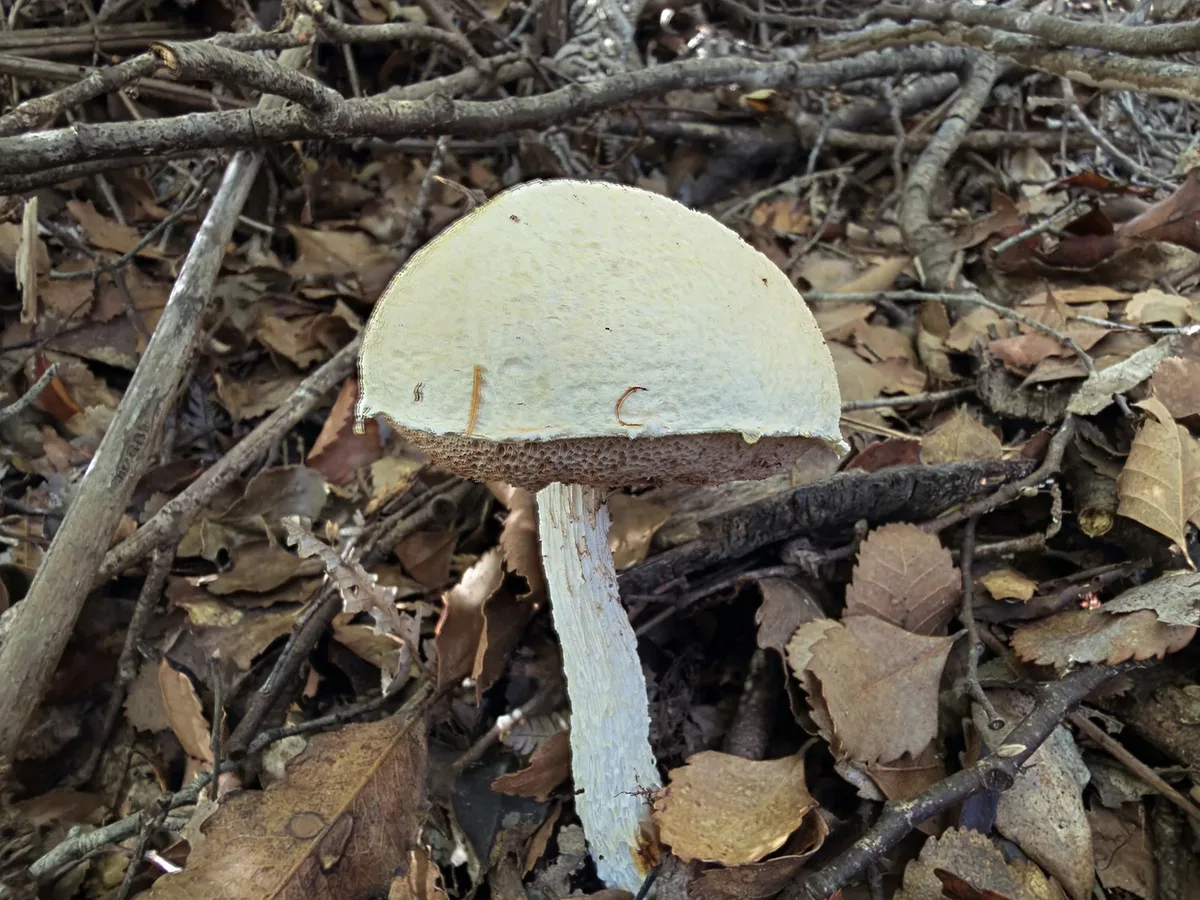
Austroboletus niveus is immediately distinguished among southern-hemisphere boletes by its uniformly white to snow-white coloration - a trait so consistent that fresh, undamaged specimens look as though dusted with pale powder.
Unlike most boletes, neither handling nor ageing produces any significant bluing, yellowing, or reddening of the flesh or pore surface. All surfaces remain white to very pale cream throughout the specimen's life, with only a slow drift toward pale buff in old or dried material.
Cap
4-12 cm across, broadly convex to eventually flat-topped. The surface is dry and finely tomentose, and can crack into small areolae in dry weather.
Pores
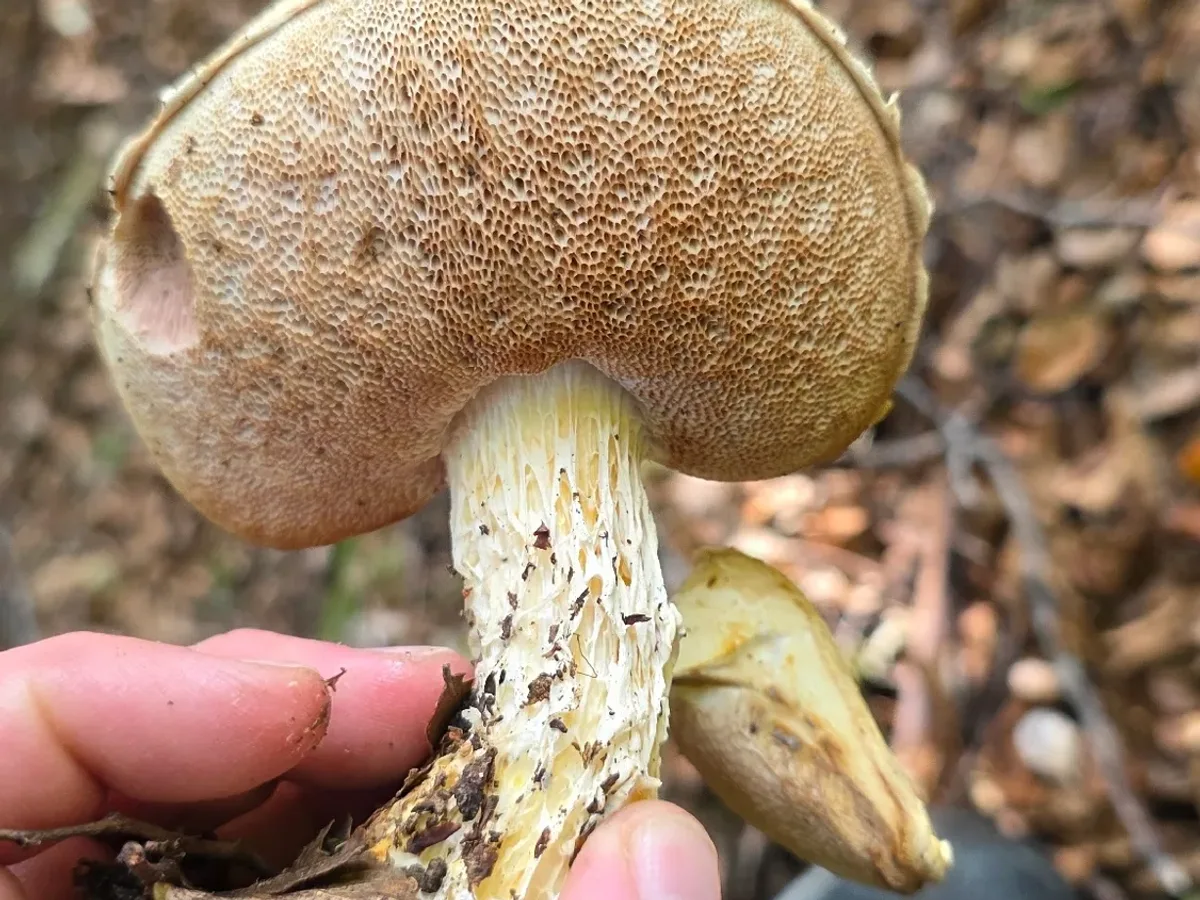
Small (about 1-2 per mm), circular, white to cream, and non-bluing - which rules out most of the problematic toxic boletes and places it in the white-pored subset of the genus.
The tubes beneath are 8-15 mm deep and pale.
Stem
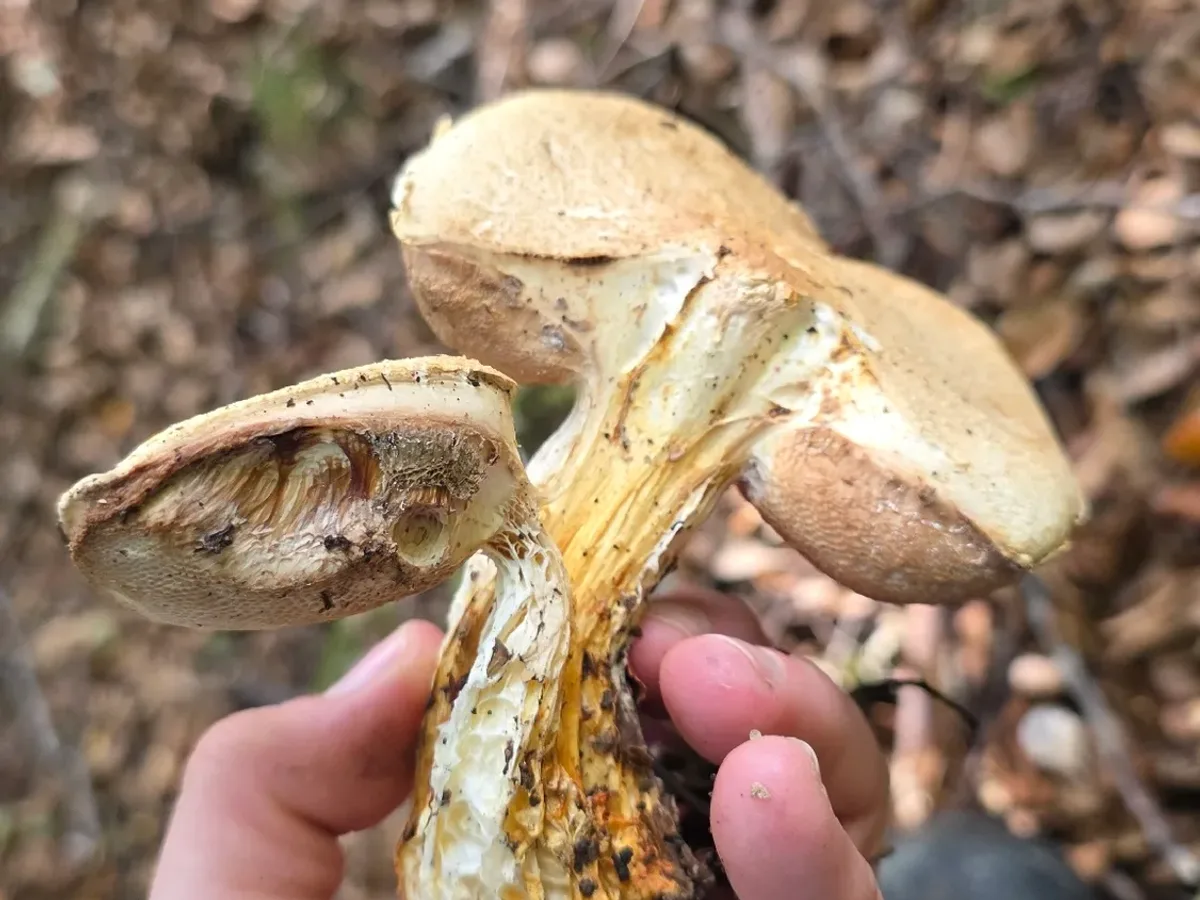
The genus-defining character to look for: thick, white, and covered in Austroboletus's signature deeply reticulate-lacunose texture - irregular ridges, furrows, and elongated pits that produce a rough, almost corky feel.
This is distinctly different from the light surface netting of Boletus edulis or the granular dots of Suillus.
Flesh
White and firm, unchanged when cut or bruised. Spore print dull olive-brown.
Where & when it grows
Habitat
A mycorrhizal species requiring an intimate, living partnership with the roots of mature native trees.
Primary hosts:
- In Australia: tall eucalypts of the wet sclerophyll zone (Eucalyptus regnans, E. obliqua, E. delegatensis), and myrtle beech (Nothofagus cunninghamii) in cool temperate rainforest gullies.
- In New Zealand: the various Nothofagus species that dominate the native forest.
The species does not colonise plantation timber, introduced trees, or disturbed ground.
Its requirement for old, undisturbed root systems means it is a reliable indicator of forest continuity - finding it implies the soil biome beneath you has been intact for a long time.
It prefers acidic, organic-rich soils with persistent leaf litter and moss, at a range of elevations from coastal forest to montane zones. Within a site it tends to recur in the same patches year after year where established mycelial networks persist.
When
Fruiting is strictly autumnal in the Southern Hemisphere: March through June across most of the range, with April and May the most reliably productive months.
The physiological trigger is the combination of cooling soil temperatures and sufficient rainfall to break summer soil moisture deficits. When soils cool below approximately 16 °C and accumulate 20-30 mm of rain over two weeks, fruiting bodies typically emerge 10-18 days later.
At higher elevations (montane Tasmania, the New Zealand South Island mountains) the season may open as early as late February after cool nights; at lower-elevation coastal sites in Victoria it can extend into June.
There is no spring or summer fruiting.
How it grows
Solitary to scattered, sometimes in loose groups of two to four near the same root system, but never in dense clusters.
Because Austroboletus niveus is both mycorrhizal and uncommon, individual fruiting sites are valuable - often known only to local collectors who revisit them year after year.
It is not a productive foraging target the way porcini are in Europe; finding even one or two specimens in an outing is notable.
Fruiting bodies emerge slowly from the soil with the cap tightly closed, expanding over five to eight days.
Fruiting conditions
Fruiting triggered by autumnal rain events (March-June in the Southern Hemisphere) once soil temperatures cool below approximately 16 °C following the summer dry period. A minimum of 20 mm rainfall over two weeks combined with soil temperatures of 8-16 °C is associated with productive flushes. Flush lag from meaningful rain to emergent caps is typically 10-18 days. No fruiting occurs in winter cold or summer heat.
Look-alikes
Austroboletus niveus is unusual in the southeastern Australian and New Zealand bolete flora precisely because of its consistent white coloration, which distinguishes it from most other species in the region. The most likely confusion is with other white or pale boletes.
Tylopilus species (which share white flesh and white to pale pores) can resemble it. But Tylopilus boletes often have a pinkish tinge to the spore print and distinctly bitter-tasting flesh - a small nibble-and-spit test will reveal bitterness in Tylopilus that is absent in Austroboletus niveus.
Other Austroboletus species in the region (A. lacunosus, A. novae-zelandiae) are brown-capped rather than white, and are readily distinguished by cap colour alone.
In New Zealand forest, no deadly boletes are established as confirmed residents.
Collectors should nonetheless apply universal bolete safety rules. Reject any bolete with:
- red or orange pore surfaces
- blue-staining flesh or pores
- any that tastes bitter after a cautious nibble-and-spit test
Tylopilus felleus has a brown cap and pink-tinged pores, but some pale Tylopilus species can have whitish caps. The decisive test is taste: Tylopilus boletes have intensely bitter flesh - a cautious nibble-and-spit reveals this immediately, whereas Austroboletus niveus is not bitter. Tylopilus also tends to have a pinkish spore print rather than olive-brown.
A related species in New Zealand Nothofagus forest with a similar lacunose stipe, but brown-capped and more viscid in wet conditions. Cap colour is the primary distinguishing character: A. novae-zelandiae is brown, not white. Both are in the caution-to-edible range.
Suillus species in Australia and New Zealand grow exclusively under introduced pines, not in native eucalyptus or Nothofagus forest. They have slimy caps in wet weather and granular-dotted (not lacunose-pitted) stipes, often with a ring or ring-zone. The habitat difference alone is decisive: if you are not under planted pines, it is not a Suillus.
Austroboletus lacunosus shares the deeply lacunose stipe texture of the genus but has a distinctly brown to ochre-brown cap, not white. The cap colour difference is immediately apparent in the field. Both are found in the same southeastern Australian forest types and seasons. Both are regarded as edible.
In the kitchen
Picking & cleaning
Select young to mid-maturity specimens with the cap firmly domed or just beginning to flatten, pores bright white and firm, flesh solid throughout.
The white coloration is a key field identification point - examine the entire specimen before harvesting.
Trim the stipe cleanly near soil level with a knife, leaving the mycelial mat intact.
Because this species is uncommon and site-specific, collecting restraint is important: take only what will be used, and leave at least half the specimens at any site to allow spore dispersal and continued mycelial health.
- Carry in a breathable basket, not a sealed plastic bag.
- Clean by brushing gently; the lacunose stipe surface can trap soil in its pits and may need careful attention with a soft brush.
- Refrigerate and use within two days.
Do not collect if the specimen shows any bluing, reddening, or orange coloration - these are signs of a different and potentially problematic species.
Cooking
For those who have positively identified Austroboletus niveus and wish to eat it, it should always be cooked - do not consume raw.
The flavour is reported as mild and pleasant, without strong bitterness or unpleasant notes. Its white flesh holds up reasonably well to sautéing in butter or olive oil, where it develops a gentle nuttiness.
It works in mixed mushroom dishes, pasta, or risotto, where its mild flavour blends readily with other ingredients. Drying is possible but the mild flavour concentrates only modestly.
Because the species is uncommon and sparsely studied, do not consume large quantities at a single sitting; a modest serving at first use allows any idiosyncratic reactions to be identified before eating more.
Good to know
No toxicity has been formally confirmed for Austroboletus niveus, and it is mentioned in some Australian and New Zealand foraging contexts as edible.
However, formal edibility documentation is sparse: it is not a commonly eaten species, systematic toxicological testing has not been performed, and individual sensitivity or preparation-dependent reactions cannot be excluded.
For these reasons this guide classifies it as caution. It should not be eaten unless:
- The identification is absolutely certain.
- It has been thoroughly cooked before consumption, rather than eaten raw.
- It has been tried in small quantities first.
The consistent white non-bluing pore and flesh character places it outside the known toxic-bolete profiles for the region, which is reassuring - but that absence of evidence is not a clearance.
As always: when in doubt, leave it out.
A reference guide - never an edibility guarantee. When in doubt, leave it out.