Austroboletus mutabilis
Austroboletus mutabilissyn. Boletus mutabilis (Watling & N.M.Greg.) invalid use
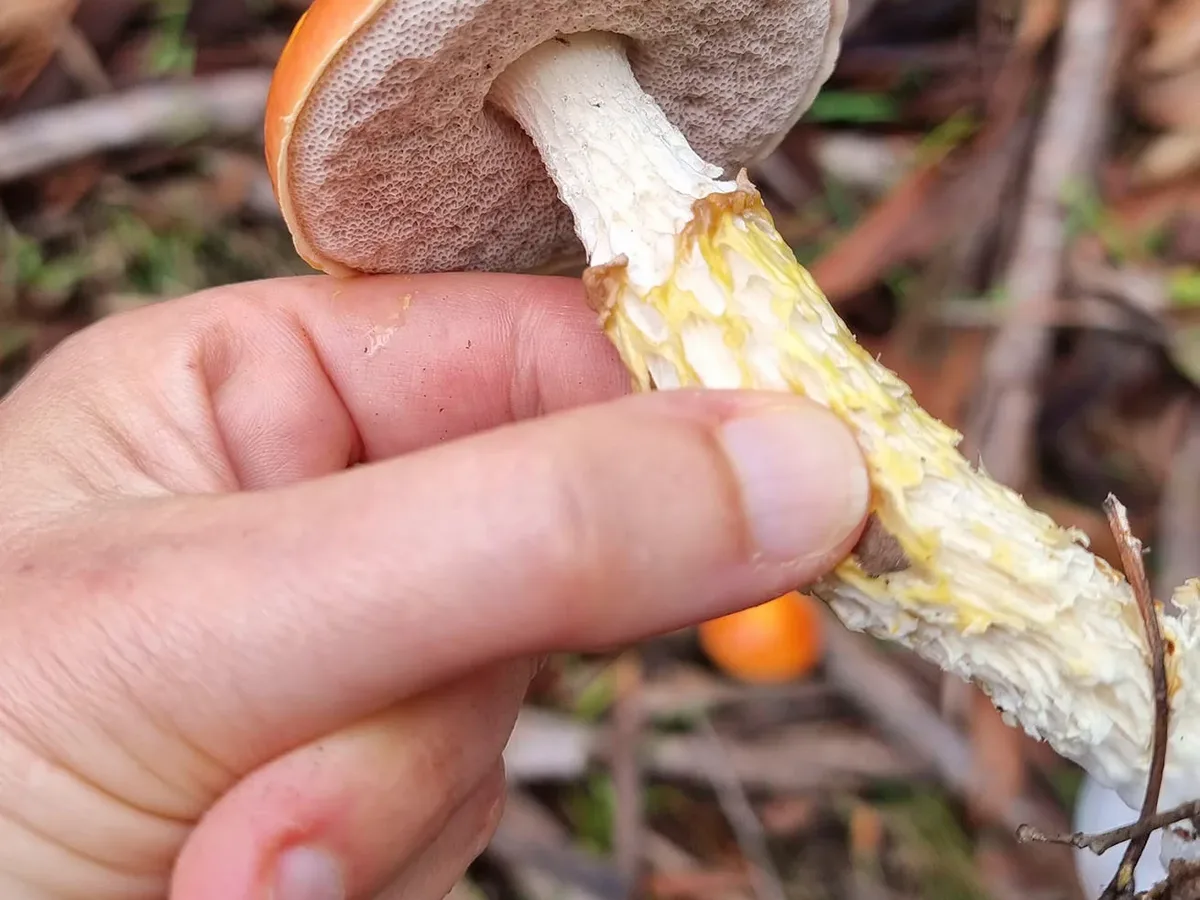 © Bianca Tainsh (CC BY)
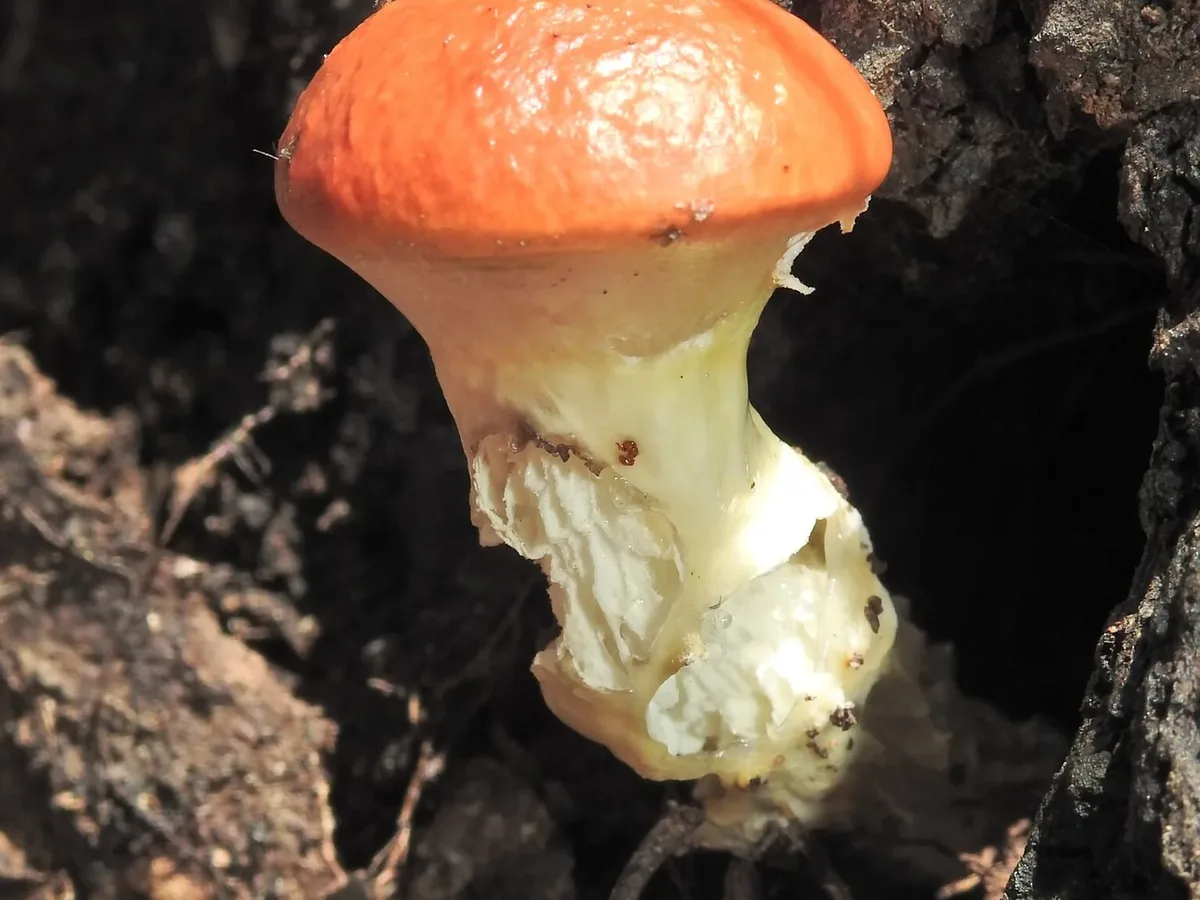 © Scott W. Gavins (CC BY)
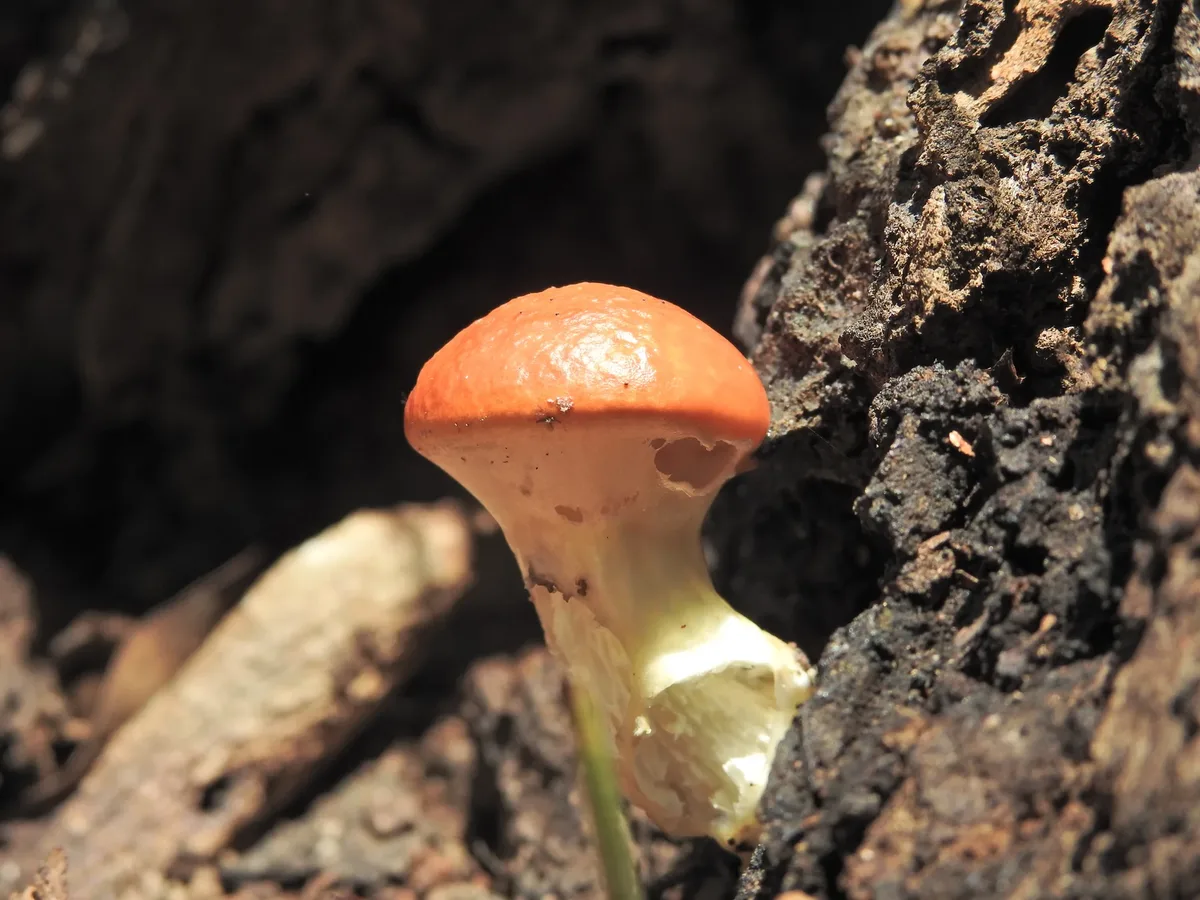 © Scott W. Gavins (CC BY)
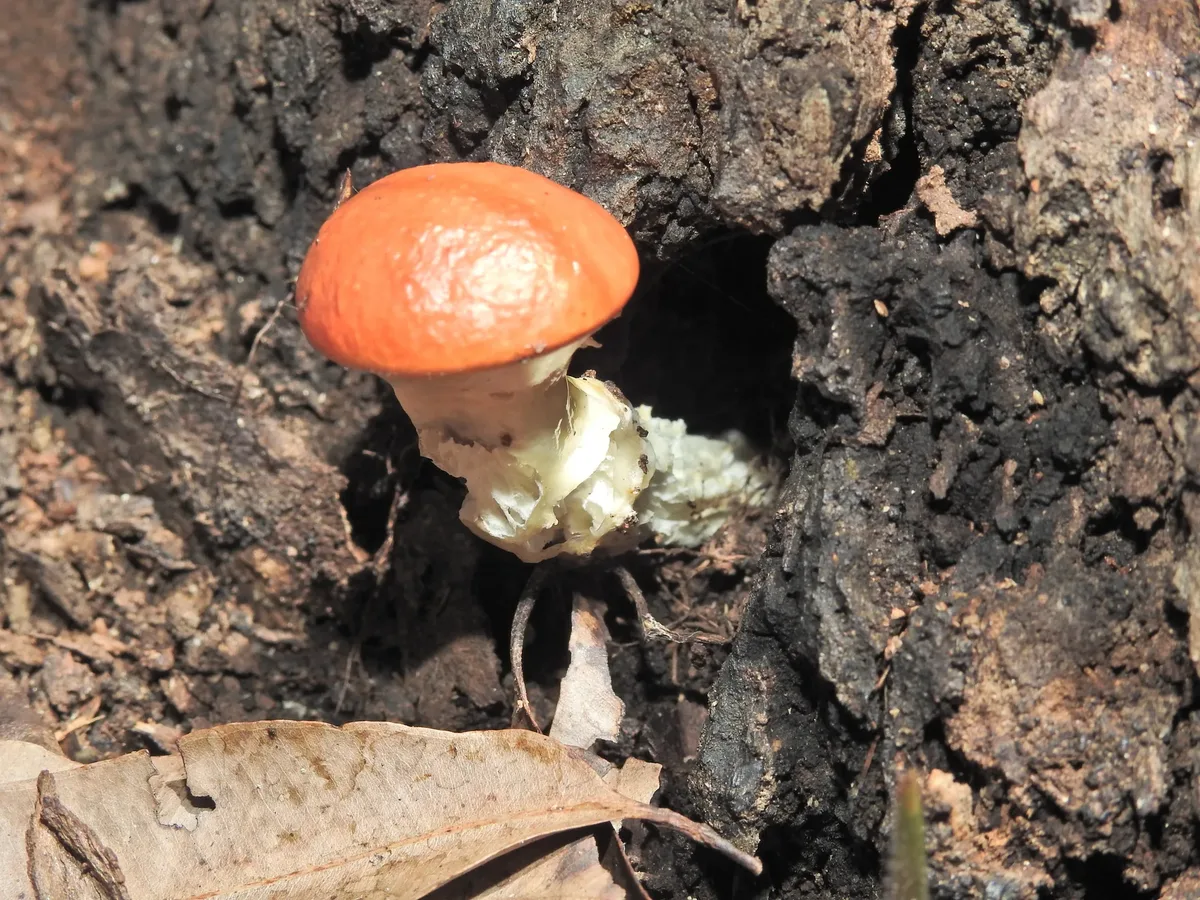 © Scott W. Gavins (CC BY)
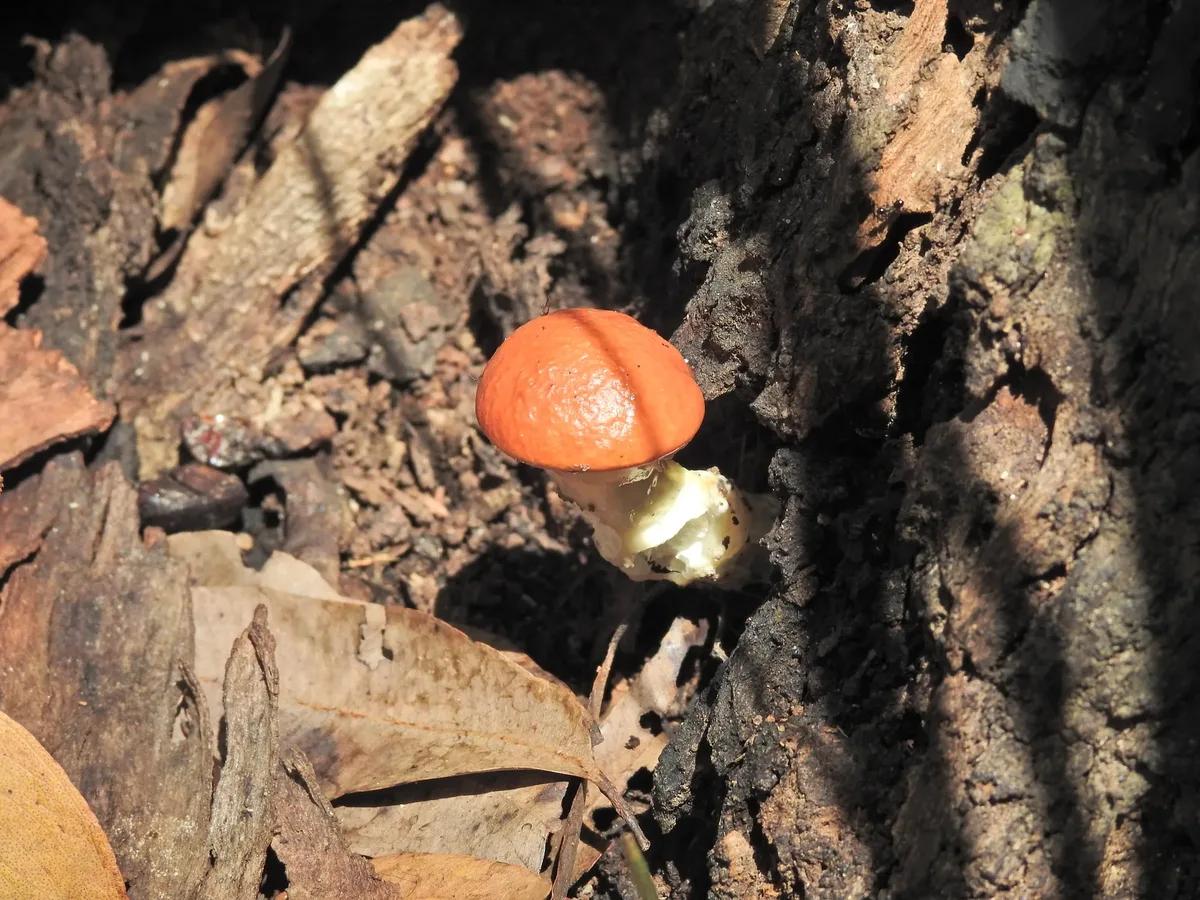 © Scott W. Gavins (CC BY)
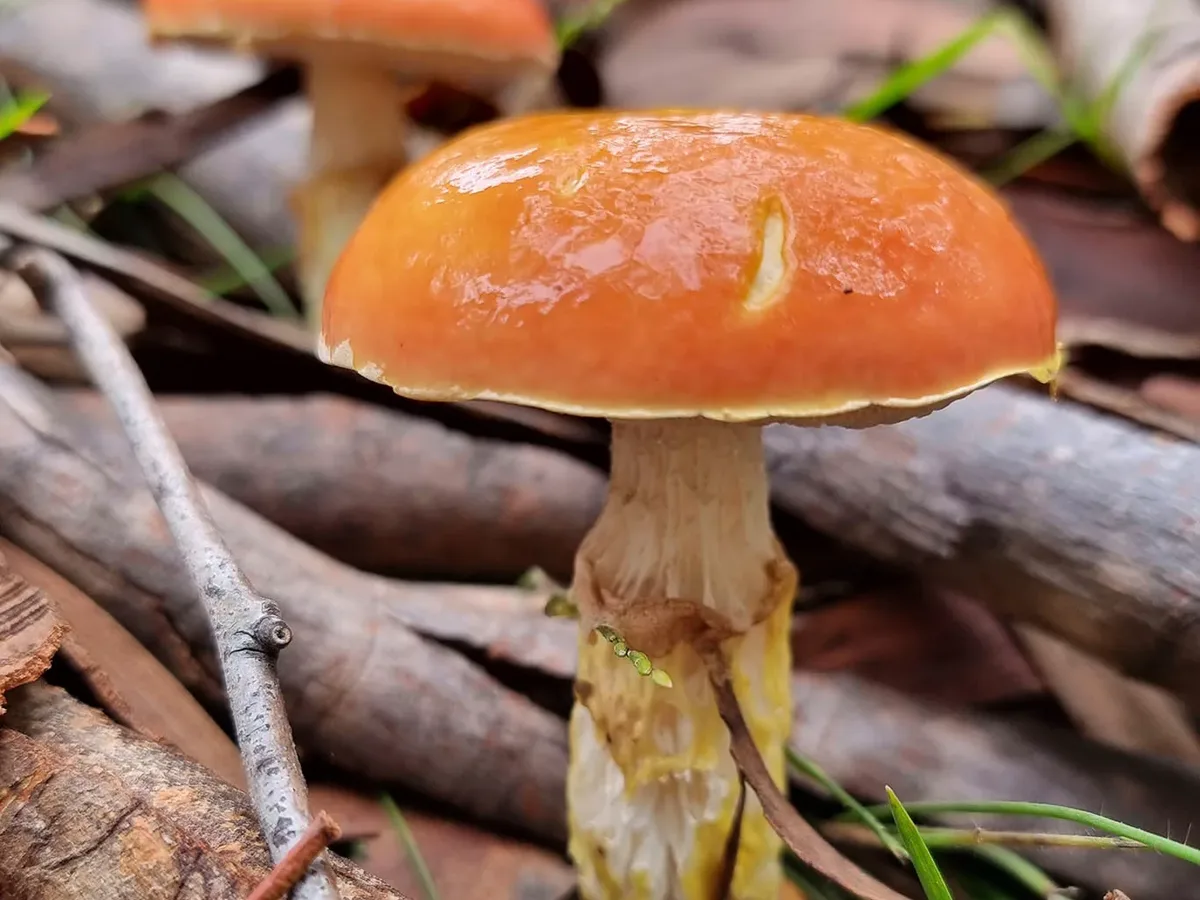 © Bianca Tainsh (CC BY)
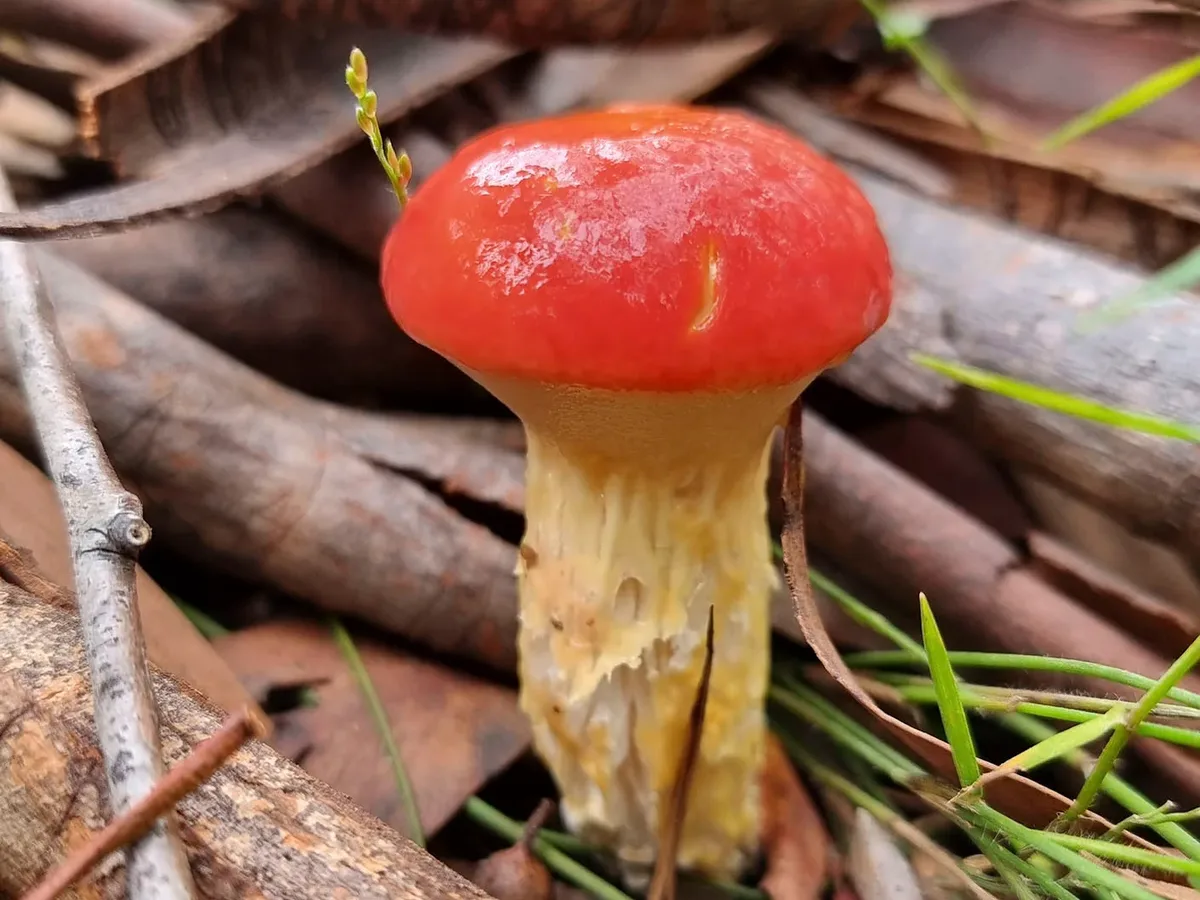 © Bianca Tainsh (CC BY)© Bianca Tainsh (CC BY)© Scott W. Gavins (CC BY)
Edible only with the right preparation - or safe for some people but not others. Learn the caveats first.
How to recognise it
A medium-sized bolete whose most telling feature is right there in its species name: 'mutabilis' is Latin for changeable or variable, and the cap colour delivers on that promise with unusual range.
Cap
Across different specimens, and across the life of a single cap, you can see pale ochre-yellow buttons ageing into tawny brown, reddish-brown individuals standing alongside olive-brown neighbours, occasional caps with soft vinaceous or pinkish-russet overtones, and irregular paler patches where the cuticle has thinned.
This variability makes for a beautiful but sometimes puzzling field subject.
The cap surface is dry and smooth to finely tomentose, without the shaggy scales of Boletellus obscurecoccineus or the deep pitting of the related A. lacunosus.
Pores
Beneath the cap the pore surface is white to cream when fresh, ageing quietly to pale yellowish or pale ochre.
If you press the pore surface with a fingernail or cut the flesh, the bluing reaction - that chemical blue that announces oxidation of variegatic acid in many boletes - is either absent or at most a very faint, slow, transient flush that fades without the vivid and decisive bluing seen in species like B. obscurecoccineus.
This weak or absent bluing is a genuinely useful field observation for this genus in Australia.
Stem
The stipe is the other key feature: clearly reticulate (raised ridges forming a net-like pattern), whitish to pale ochre-buff, becoming browner at the base.
Flesh
Flesh white to pale cream throughout, firm in young specimens, not significantly staining when cut.
Where & when it grows
Habitat
This is a eucalyptus forest mushroom, tied biologically to the living root systems of mature eucalypts in eastern Australia's sclerophyll woodland and forest.
As an ectomycorrhizal species, it threads its mycelium through the soil and into the fine roots of eucalypt trees, exchanging mineral nutrients for photosynthetically fixed carbon from its host - a trade that benefits both partners and an obligate relationship that the fungus cannot abandon or replace.
This dependency means it cannot fruit in cleared land, bare soil, or heavily disturbed sites; finding it is, in its quiet way, an indicator of intact native eucalyptus forest.
The primary range is eastern Queensland and northern New South Wales, particularly in warm-temperate to subtropical dry and wet sclerophyll forest on the coast and tablelands, with sparser records extending south toward Victoria.
Soils are typically acidic and free-draining, with a good layer of eucalyptus leaf litter.
Look for it beneath mature eucalypts in sheltered aspects - gully edges, forest slopes - rather than open, sun-exposed ridge tops.
When
An autumn fungus in the Southern Hemisphere rhythm: March through June, with April and May typically the most productive weeks.
The fruiting trigger is familiar to students of ectomycorrhizal boletes: cooling soils after summer's heat, combined with meaningful autumn rainfall.
Summer in the subtropical eastern Australian forest is warm and often dry enough to suppress fruiting entirely. The fungal mycelium waits, threaded quietly through the soil and roots, until the temperature drops and rain arrives.
In subtropical Queensland localities, an early autumn rain event in late February or March may initiate earlier fruiting than the core season suggests.
Once conditions are right, caps typically push up 7-14 days after a significant rain event.
Individual fruit bodies are short-lived - a good specimen persists only a few days before softening - so visits after autumn rain events are the productive strategy.
How it grows
Solitary or in small scattered groups, never clustered.
As an obligate mycorrhizal partner of specific eucalypts, it returns to the same general sites year after year when conditions are favourable. The underground mycelium persists invisibly through seasons when no fruit bodies appear.
It is not a particularly common or abundant species; finding two or three specimens in a productive outing at a known site is a good result.
The variable cap colour means multiple individuals at the same site can look surprisingly different from each other - the 'changeable' in the name is visible not just through time but across a single colony.
Fruiting conditions
Fruiting triggered by cooling soils and autumn rainfall in the Southern Hemisphere (March-June). Soil temperatures falling through approximately 18 °C from summer highs combined with 20+ mm of rainfall over 14 days produces reliable flushes; lag from rain event to emergent fruit bodies estimated at 7-14 days based on standard ectomycorrhizal bolete phenology. In warmer subtropical Queensland locations, the upper soil temperature threshold may extend slightly higher (to ~20 °C), enabling somewhat earlier fruiting after unseasonable rains.
Look-alikes
Austroboletus mutabilis can potentially be confused with several other boletes in eastern Australian eucalyptus forest, and the variable cap colour increases the opportunity for confusion.
- Austroboletus lacunosus (pitted austroboletus) - a closely related species of southeastern Australia; separated by its diagnostic deeply lacunose (heavily pitted) stipe surface, far more extreme than the reticulate (net-ridged) stipe of A. mutabilis, and by its more restricted distribution in cooler southeastern forest.
- Boletellus obscurecoccineus (rhubarb bolete) - a dark scarlet to crimson-red scaly cap and dramatically bluing yellow pores; the vivid colouration and strong bluing reaction are decisive distinctions from the variable earthy-toned, weakly-bluing or non-bluing A. mutabilis. It should be avoided as it is GI-toxic.
- Suillus species (pine boletes) - associated with introduced pines, never native eucalypts, and have a slimy cap and/or a ring on the stipe.
- Various undescribed or poorly-known native boletes in eastern Australia share some superficial characters with A. mutabilis; the general rule for uncertain native boletes in the region is caution.
Eastern Australia hosts several other Austroboletus and related bolete species, some undescribed or poorly documented. All should be treated as of unknown edibility. Key features to document when encountering an unfamiliar bolete in this region: degree and speed of bluing on cut flesh and pores, cap surface texture (smooth/tomentose/scaly/viscid), stipe surface (smooth/reticulate/lacunose/granular), presence or absence of a ring, and host tree. Without specialist study, species-level identification of many eastern Australian boletes requires microscopy.
Suillus species in Australia are found exclusively under introduced conifers (pines), not under native eucalypts. They have a slimy to viscid cap surface in moist conditions and typically show a gelatinous ring zone or ring on the stipe; the stipe surface is granular-dotted rather than reticulate. Habitat alone is a reliable separator: if you are standing under native eucalypts far from any pine planting, a Suillus is not the species you are looking at.
A closely related species of southeastern Australia (Tasmania, Victoria, NSW) with a similarly earthy-toned cap and reticulate stipe, but the stipe of A. lacunosus is dramatically and distinctively lacunose - covered in deep, irregular elongated pits and cavities far more extreme than the net-ridged reticulation of A. mutabilis. Geographical overlap is limited; A. lacunosus favours cooler, more southerly forests. Both are of unknown or only provisional edibility; neither should be eaten without expert verification.
A toxic, GI-irritant bolete of eastern Australian eucalyptus forest. Separated from A. mutabilis by its deep dark scarlet to crimson cap covered in coarse shaggy scales (not smooth or finely tomentose), and by its bright yellow pores that blue instantly and dramatically when bruised or cut - a vivid, decisive reaction entirely unlike the weak or absent bluing of A. mutabilis. Cap colour of the rhubarb bolete is distinctly red, not the earthy yellow-ochre to brown variable tones of A. mutabilis. Do not eat the rhubarb bolete.
In the kitchen
Picking & cleaning
Austroboletus mutabilis should not be collected for eating unless you are working directly with an Australian mycologist or have access to specialist regional guidance confirming the specific collection.
The species is not part of any established foraging tradition in Australia, and its edibility has not been documented in the mycological literature in a way that permits responsible recommendation.
The caution classification reflects genuine uncertainty: the species is not known to be poisonous, but unknown edibility in a little-studied regional bolete is not the same as documented safety.
If collecting for study, scientific documentation, or photographing:
- Cut the stem cleanly at the base with a knife to preserve the mycelial mat.
- Handle minimally, and do not confuse with the bluing toxic boletes of the same forest.
- Place in a wicker basket or paper bag, never sealed plastic.
- Note the degree of bluing (or its absence) immediately after cutting the flesh, as this is a useful diagnostic and deteriorates quickly.
Good to know
Austroboletus mutabilis has no documented toxicity in the mycological literature and is not known to have caused poisoning.
However, the absence of reported poisoning reflects the species' obscurity and the lack of systematic study of Australian bolete edibility, not confirmed safety.
The genus Austroboletus as a whole has no strongly toxic members documented, but Australian bolete taxonomy and toxicology remain incompletely explored.
The 'caution' classification is appropriate and reflects genuinely unknown edibility: this is not a mushroom with a body of safe foraging experience behind it.
If you are in eastern Australian eucalyptus forest and encounter a bolete with variable earthy cap colours and a reticulate stipe:
- Photograph it.
- Note whether it blues on cutting.
- Leave it in the ground unless you have species-level expert verification.
If any specimen collected by mistake is eaten and gastric symptoms develop, contact the Poisons Information Centre (Australia: 13 11 26; New Zealand: 0800 764 766) and seek medical assessment.
A reference guide - never an edibility guarantee. When in doubt, leave it out.