Pitted austroboletus
Austroboletus lacunosussyn. Boletus lacunosus, Boletus lacunosus Rodway
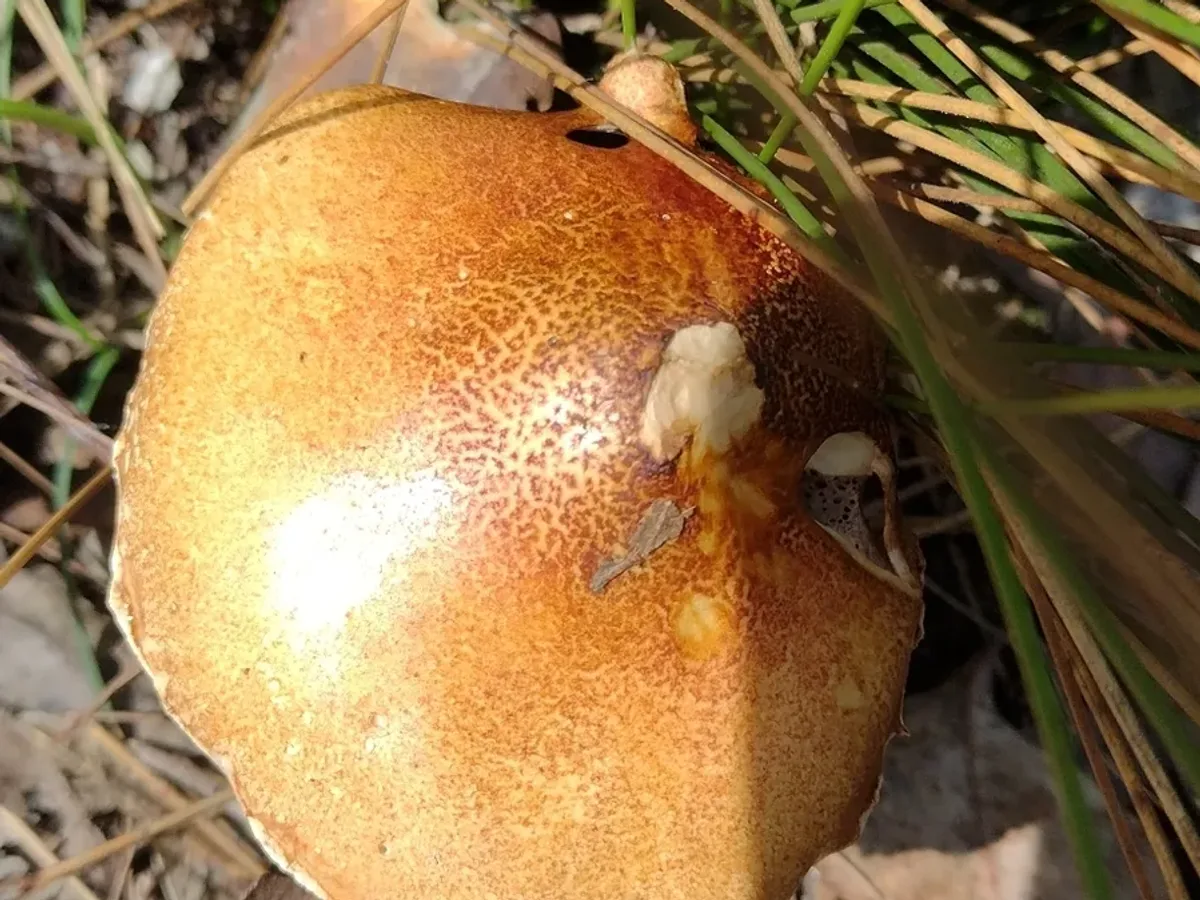 teacay (CC0)
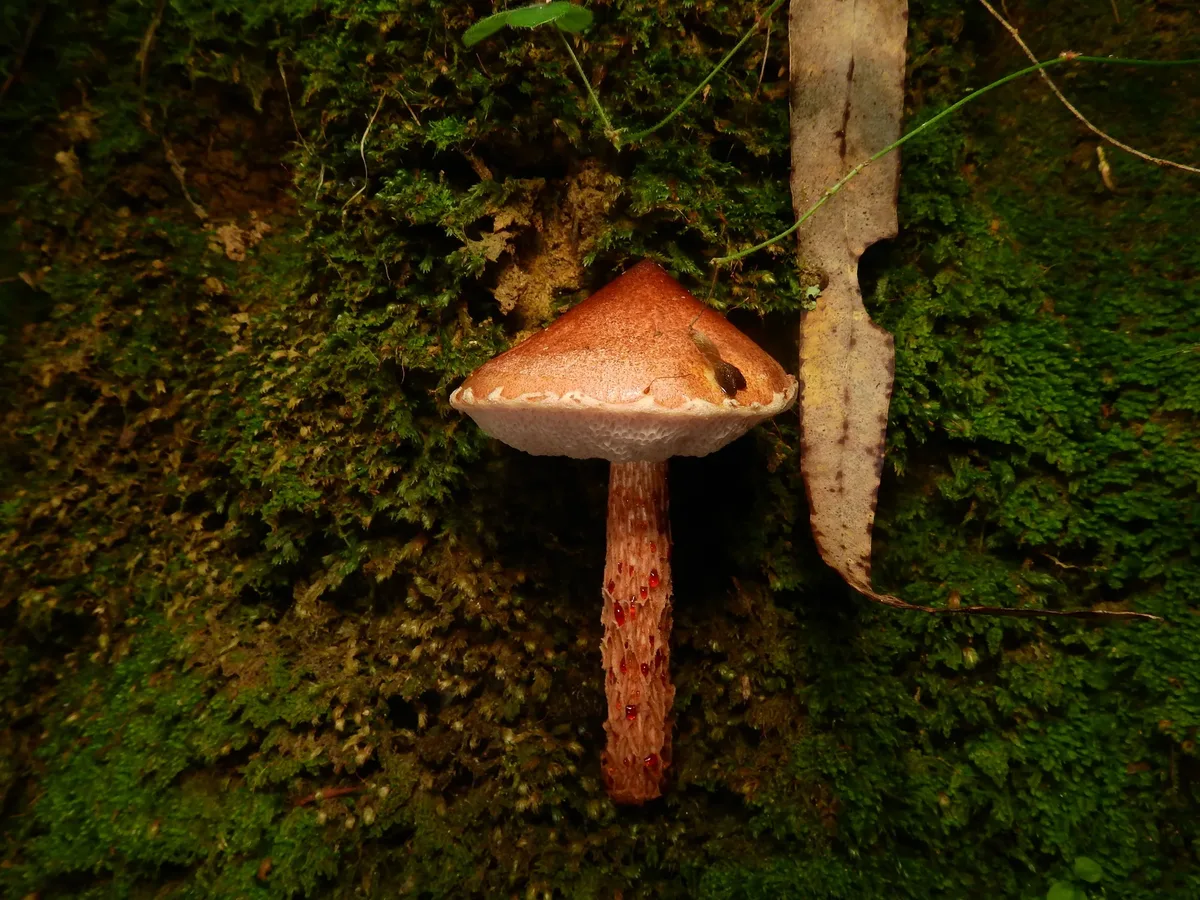 © Samuel Frankel (CC BY)
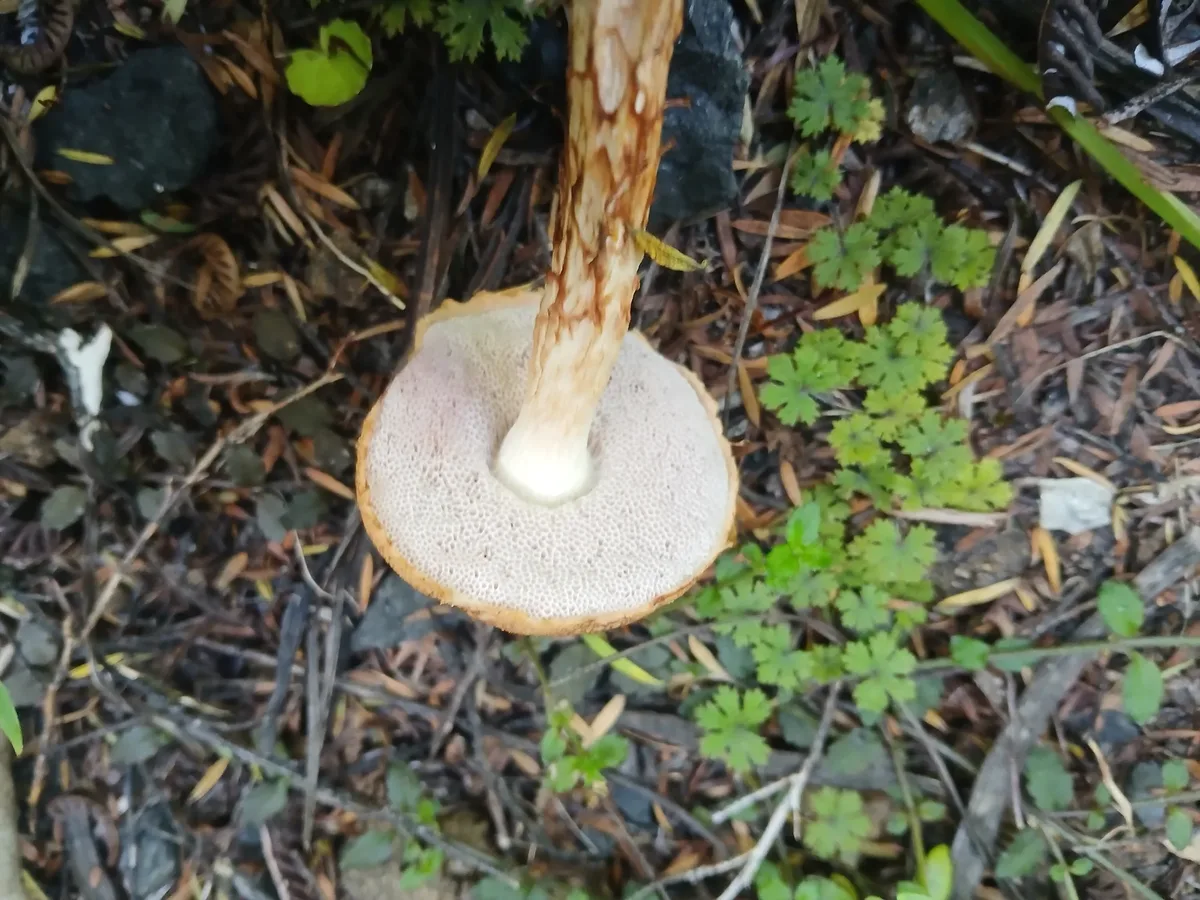 © claire (CC BY)
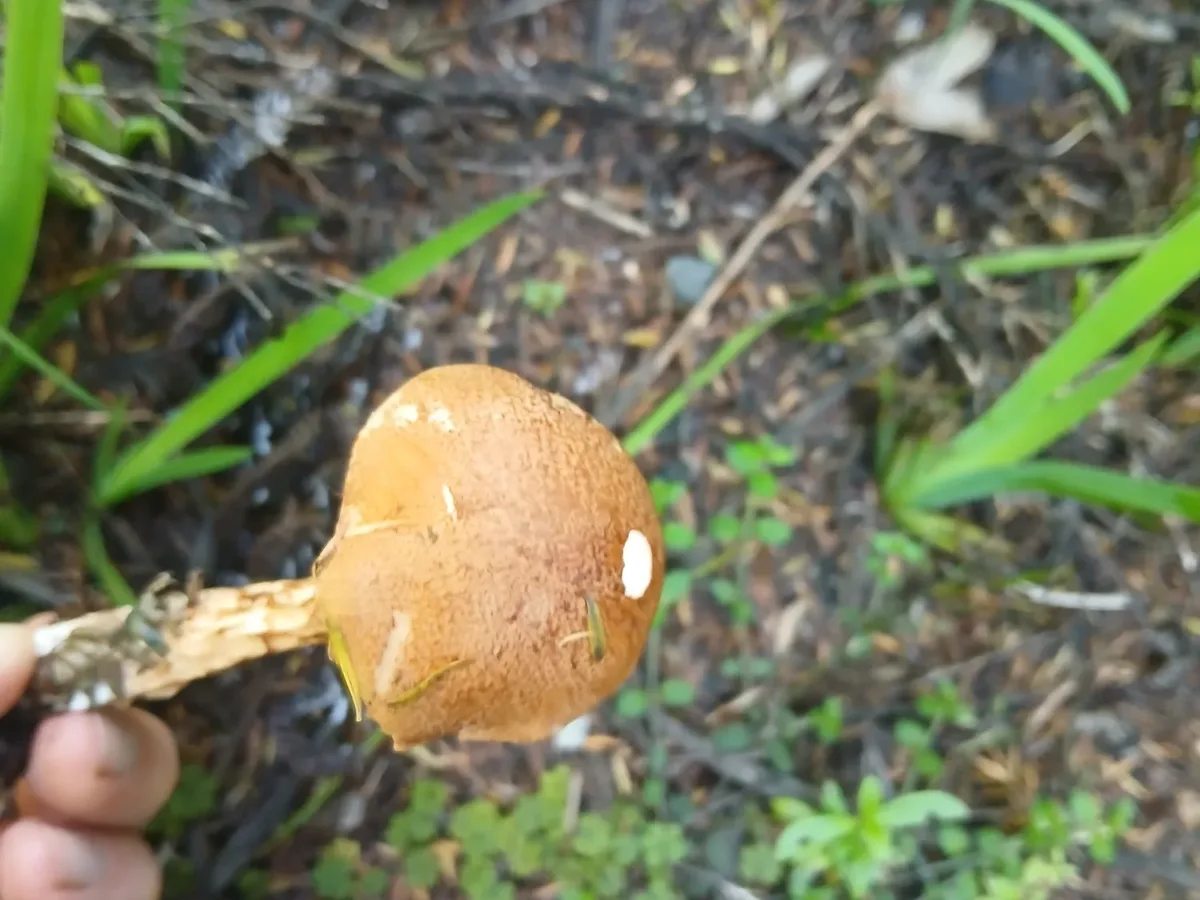 © claire (CC BY)
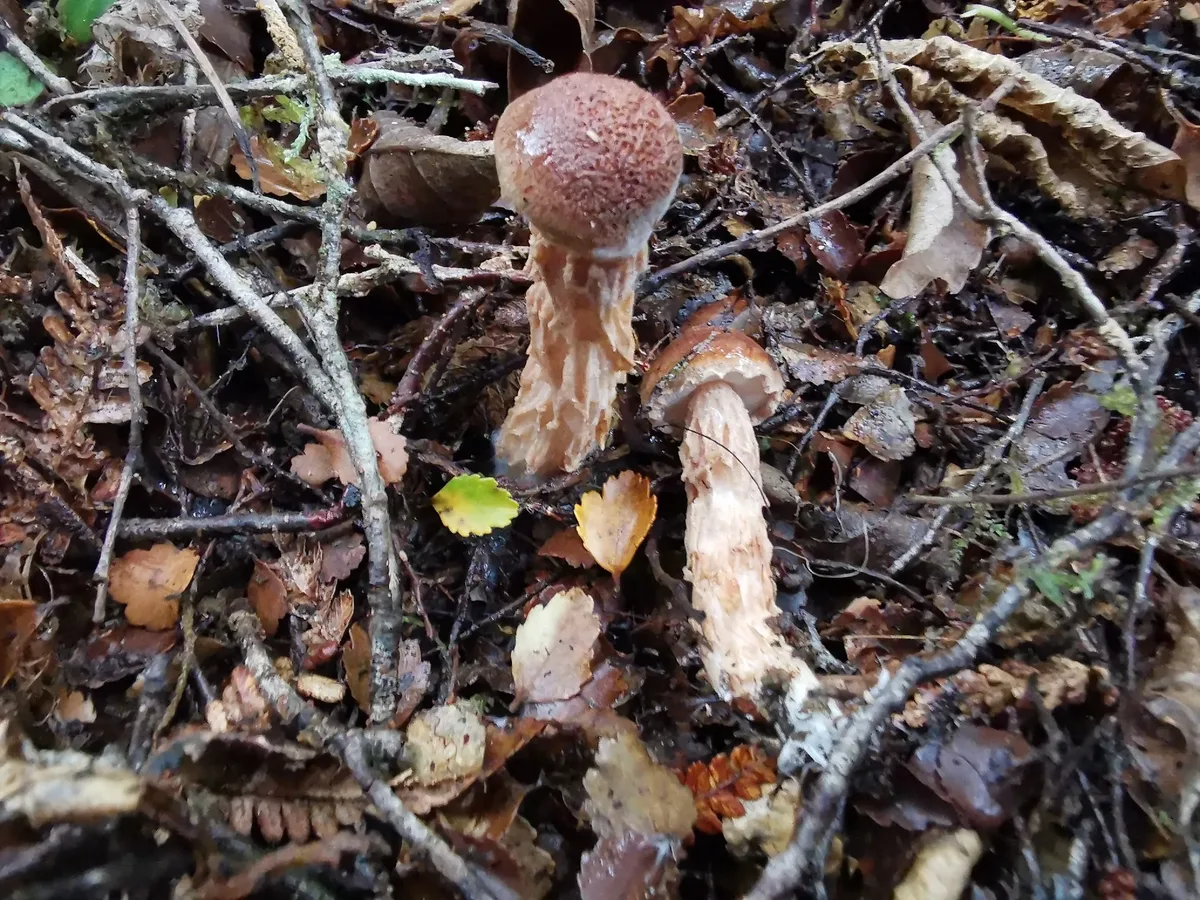 © Luisa Atzei (CC BY)
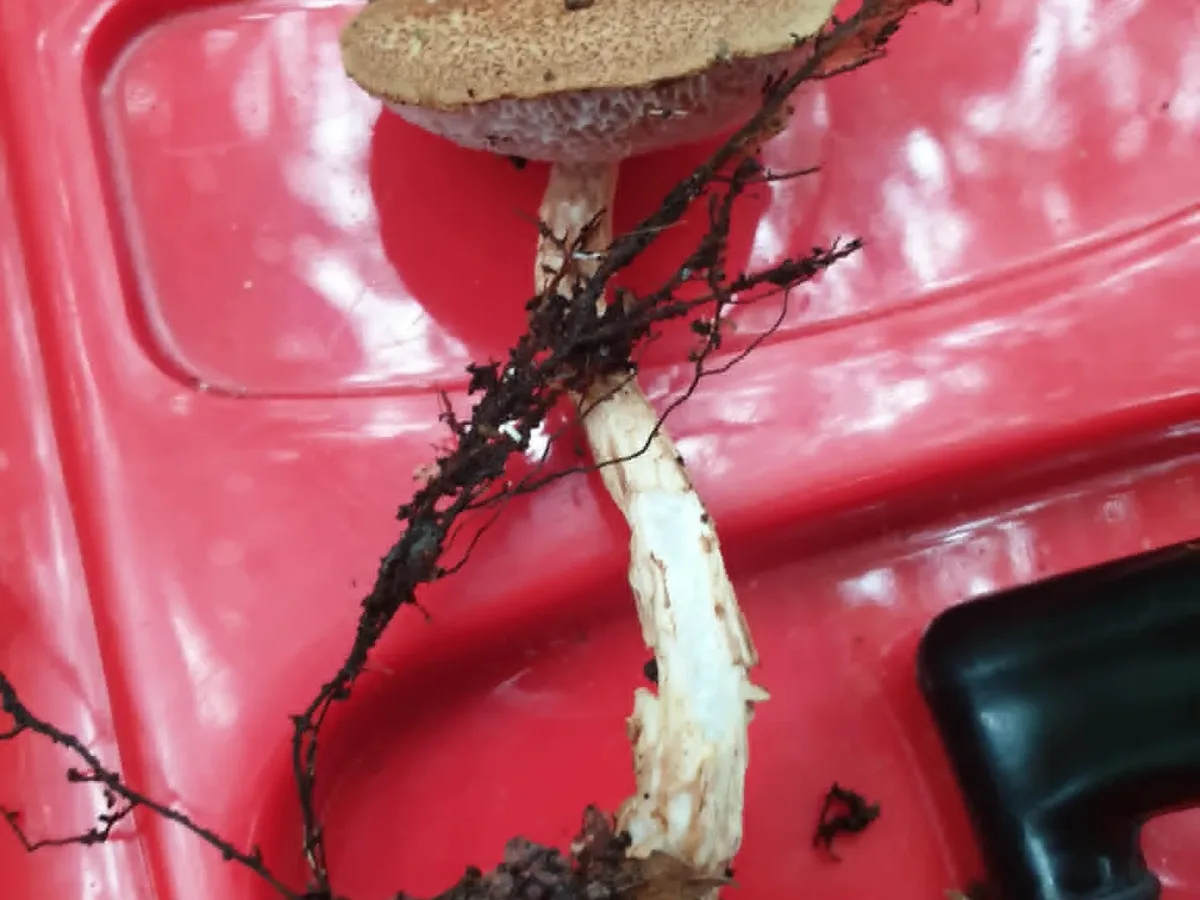 Sam Lasham (CC0)
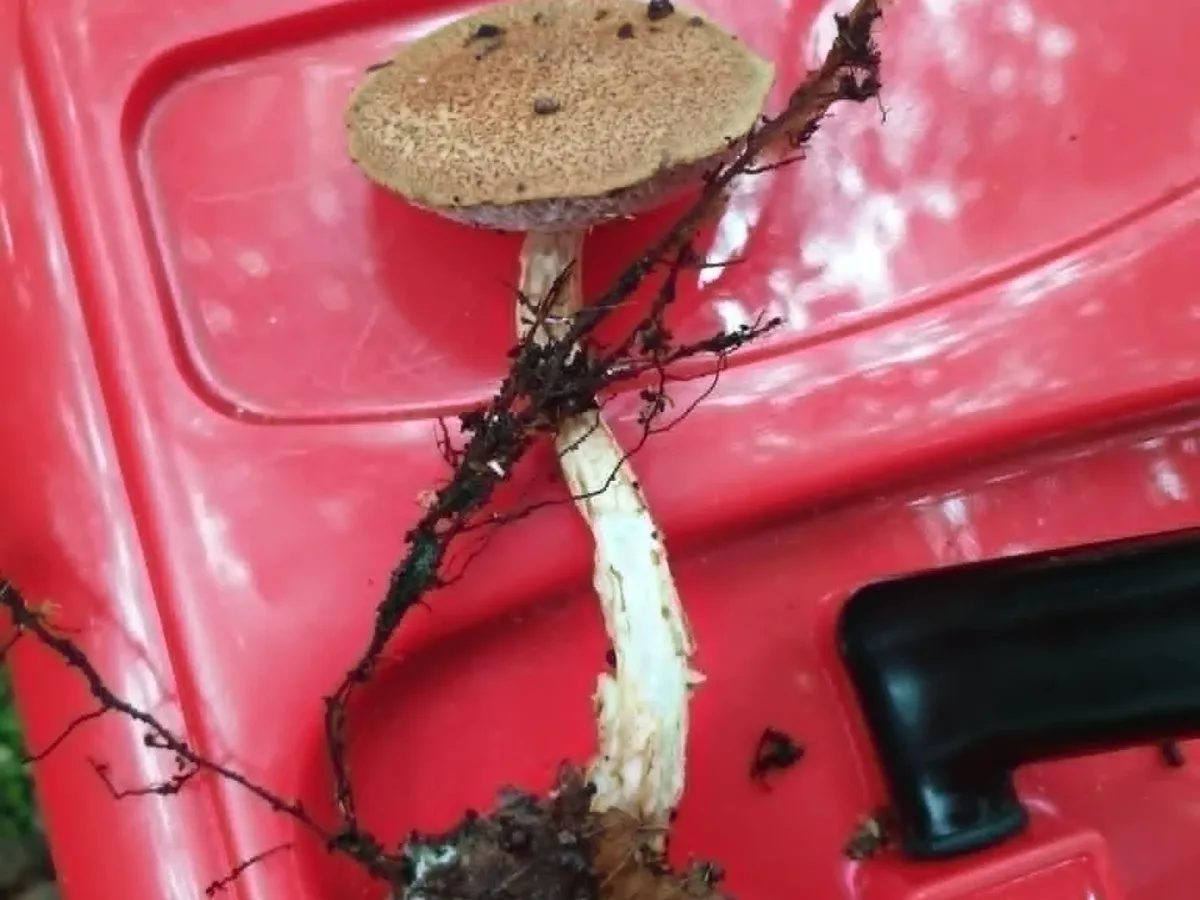 Sam Lasham (CC0)
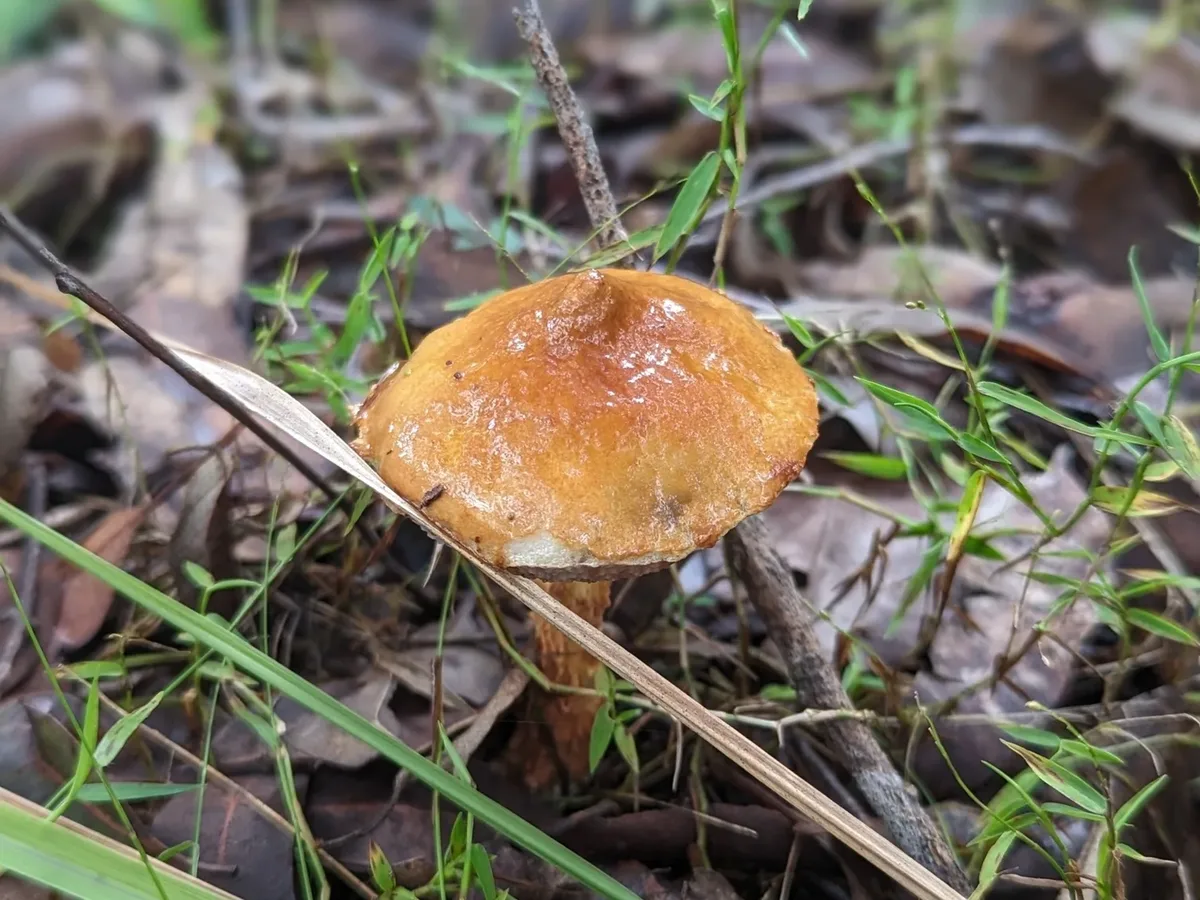 neilbags (CC0)teacay (CC0)© Samuel Frankel (CC BY)
Good to eat, once you have identified it with certainty and cooked it through.
How to recognise it
Austroboletus lacunosus is one of Australia's most structurally distinctive boletes, immediately recognisable to anyone familiar with the genus.
Cap
The cap is conventional bolete-shaped - broadly convex when young, flattening with age - and coloured in warm earthy tones of buff, ochre-brown, or reddish-chestnut, with a dry, lightly downy surface that does not crack noticeably in dry weather.
Cap size ranges from 4 cm in young buttons to 12 cm in mature specimens.
Gills / Pores
The undersurface carries a typical bolete tube layer: small, circular pores that are white to cream when fresh, ageing to pale yellowish or ochraceous, and not bluing when bruised - an important safety distinction from the few blue-staining toxic Australian boletes.
Flesh
The flesh is white to pale cream throughout, firm, and does not meaningfully stain on exposure to air.
Stem
The stipe is the species' showpiece feature: it is deeply lacunose, meaning the surface is heavily pitted with irregular, elongated cavities and ridges, producing a texture reminiscent of a deeply reticulate or even sponge-like surface - far more extreme than the mild netting seen on Boletus edulis.
This pitting is present from an early stage and intensifies with age. Stipe colouration is whitish to pale buff with characteristic pinkish-red to reddish tones, especially toward the base.
The spore print is dull olive-brown.
Where & when it grows
Habitat
A strictly ectomycorrhizal species of the temperate forests of southeastern Australia and Tasmania, forming obligate underground partnerships with living tree roots.
It associates with eucalypts (particularly tall-forest species such as Eucalyptus regnans, E. obliqua, and E. globulus in wetter sites, and E. delegatensis in montane zones) and with Nothofagus cunninghamii (myrtle beech) in cool temperate rainforest.
The ecology reflects its host preference: you find it on acidic, organic-rich soils under mature canopy trees, often in locations with persistent leaf litter and moss.
It is not a colonist of disturbed or logged forest; this sensitivity makes it a useful informal indicator of habitat continuity.
In New Zealand, records are associated with Nothofagus forest.
The soil temperature and moisture regime of autumn - cooling after summer, moistened by seasonal rains - creates the precise conditions under which it fruits.
When
Fruiting falls in austral autumn - March through June across most of the range, with April and May typically the most productive weeks.
The flush is triggered by the combination that characterises autumn in these forests: seasonal rains rehydrating soils that the summer heat has dried out, and soil temperatures cooling to roughly 10-16 °C.
Once those conditions align, caps usually emerge within 10-18 days of a meaningful rain event.
The timing shifts with elevation: at higher sites in Tasmania or the Victorian Alps, first fruiting can arrive in March; in warmer lowland years it may not begin until May.
It does not fruit in winter or spring.
How it grows
Solitary or in small scattered groups, never forming dense clusters.
As an obligate mycorrhizal species tied to mature eucalypt and Nothofagus trees, it reappears year after year in the same patches of undisturbed forest. Experienced collectors return to known sites annually.
It is not particularly abundant; a haul of three to five specimens in a good outing is typical.
The fruiting bodies emerge from the soil with the cap tightly closed, opening over several days.
Fruiting conditions
Fruiting triggered by autumn rains (March-June in Southern Hemisphere) once soil temperature cools below approximately 16 °C from summer highs. A minimum of 25 mm rainfall in the preceding two weeks combined with soil temperatures of 8-16 °C produces reliable flushes. Flush lag from rain event to emergent caps is 10-18 days. Does not flush in summer heat or winter cold.
Look-alikes
Austroboletus lacunosus is distinguished from other Australian boletes most readily by its dramatically lacunose (deeply pitted) stipe surface, which is unique among common southeast Australian species.
Most bolete confusion in Australia involves Suillus species (associated with introduced pines, slimy cap or distinctly ringed stipe) or other Austroboletus species.
Austroboletus novae-zelandiae is a related species occurring in New Zealand with similar habit, but differs in having a more viscid cap in wet conditions and subtle colour differences.
Gyroporus cyanescens, if it were to occur in the same habitat (it is primarily a Northern Hemisphere species), would blue dramatically when cut, which Austroboletus lacunosus does not.
In southeastern Australia, no deadly boletes are established in native eucalyptus forest; the red-pored deadly boletes of the genus Rubroboletus are Northern Hemisphere taxa not reliably recorded in Australia.
Collectors should nonetheless refrain from eating any bolete that bluely stains when cut or that has red or orange pore surfaces, as a universal bolete precaution.
A closely related Austroboletus species from New Zealand and occasionally Tasmania; has a similar lacunose stipe but the cap surface tends to be more viscid (sticky) in wet conditions and colouration differs subtly. Both are edible. Differentiation may require microscopy for certainty.
Gyroporus species have a hollow or chambered stipe that is not pitted in the lacunose manner of Austroboletus. G. castaneus has a chestnut-brown cap and white pores that do not stain; found in eucalypt forest but the stipe character is immediately different. Both edible.
Suillus species in Australia grow under introduced pines (Pinus), not native eucalypt or Nothofagus forest. They have a slimy cap in wet weather and often a gelatinous ring or ring-zone on the stipe; the stipe surface is granular-dotted but not deeply lacunose. They are edible but distinctly different in habitat and morphology.
In the kitchen
Picking & cleaning
Select young to mid-maturity specimens:
- cap firmly closed or just beginning to flatten
- pores white to cream and not yet darkened
- flesh firm, without soft or wormy patches
The deeply lacunose stipe is a definitive identification feature - examine it carefully before collecting.
- Trim the stipe base with a knife, leaving the mycelial mat undisturbed.
- Because the species is mycorrhizal and not abundant, collect only what you will use; avoid taking every specimen at a site.
- Carry in a wicker or mesh basket; avoid plastic bags.
- Clean by brushing with a soft brush; the pitted stipe can trap soil in its cavities, which may need gentle removal.
- Refrigerate promptly and use within two to three days.
Cooking
The flavour is mild, pleasant, and nutty - honest rather than bold, without the assertive depth of Northern Hemisphere porcini.
Young, firm specimens are best; avoid old, soft, or wormy caps.
Clean by brushing soil from the deeply pitted stipe, which can trap debris in its cavities, and wipe the cap rather than washing to avoid waterlogging.
It sautés well in butter or olive oil and suits pasta, risotto, or mixed mushroom dishes; drying preserves the flavour moderately well. The mild taste responds generously to garlic, thyme, or other aromatics.
It will not outshine a porcini, but found in the right undisturbed Australian autumn forest, it is a genuine and worthwhile reward.
Good to know
Austroboletus lacunosus is documented in Australian mycological literature as edible, and no toxicity has been reported.
The deeply lacunose stipe is sufficiently distinctive that confusion with toxic species is unlikely for anyone who examines their find carefully.
Standard bolete safety precautions apply:
- Do not eat any bolete with red pore surfaces or dramatic blue staining when cut
- Do not eat unless the identification is certain
- Try a small quantity first if this is your first time eating this species
The species is uncommon enough that systematic toxicological testing has not been carried out, so caution in quantity is reasonable.
A reference guide - never an edibility guarantee. When in doubt, leave it out.