Admirable bolete
Aureoboletus mirabilissyn. Ceriomyces mirabilis, Boletus mirabilis, Boletellus mirabilis, Heimioporus mirabilis, Xerocomus mirabilis
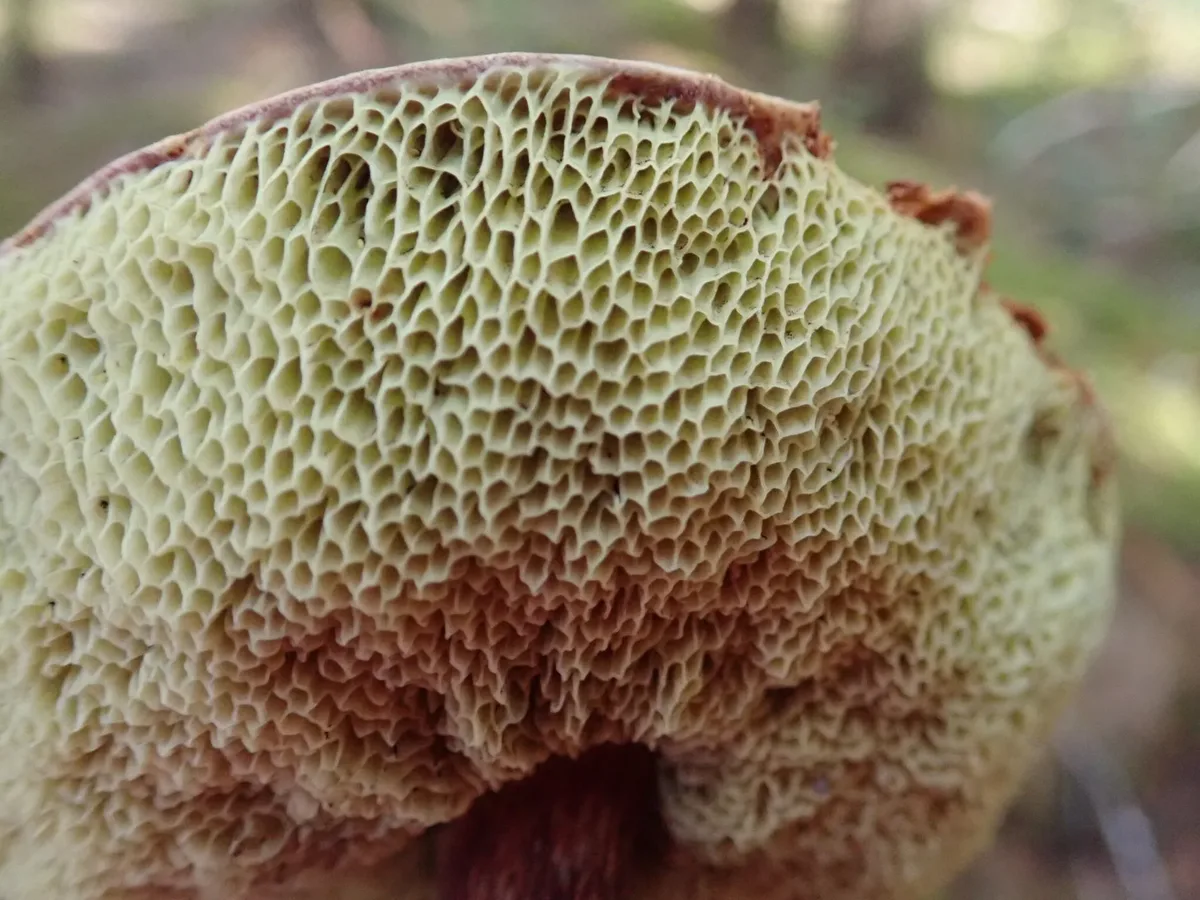 © John Brew (CC BY 4.0)
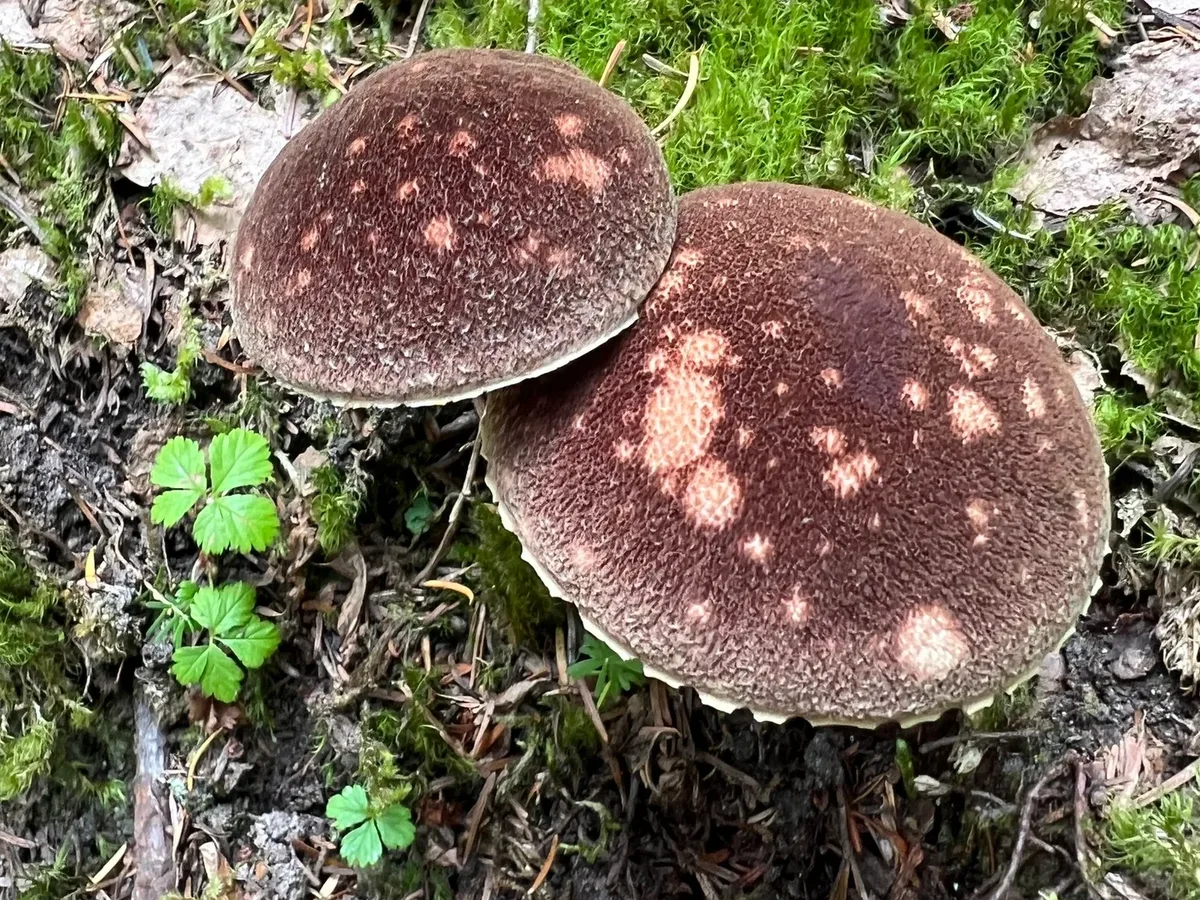 © Spencer Bierman (CC BY)
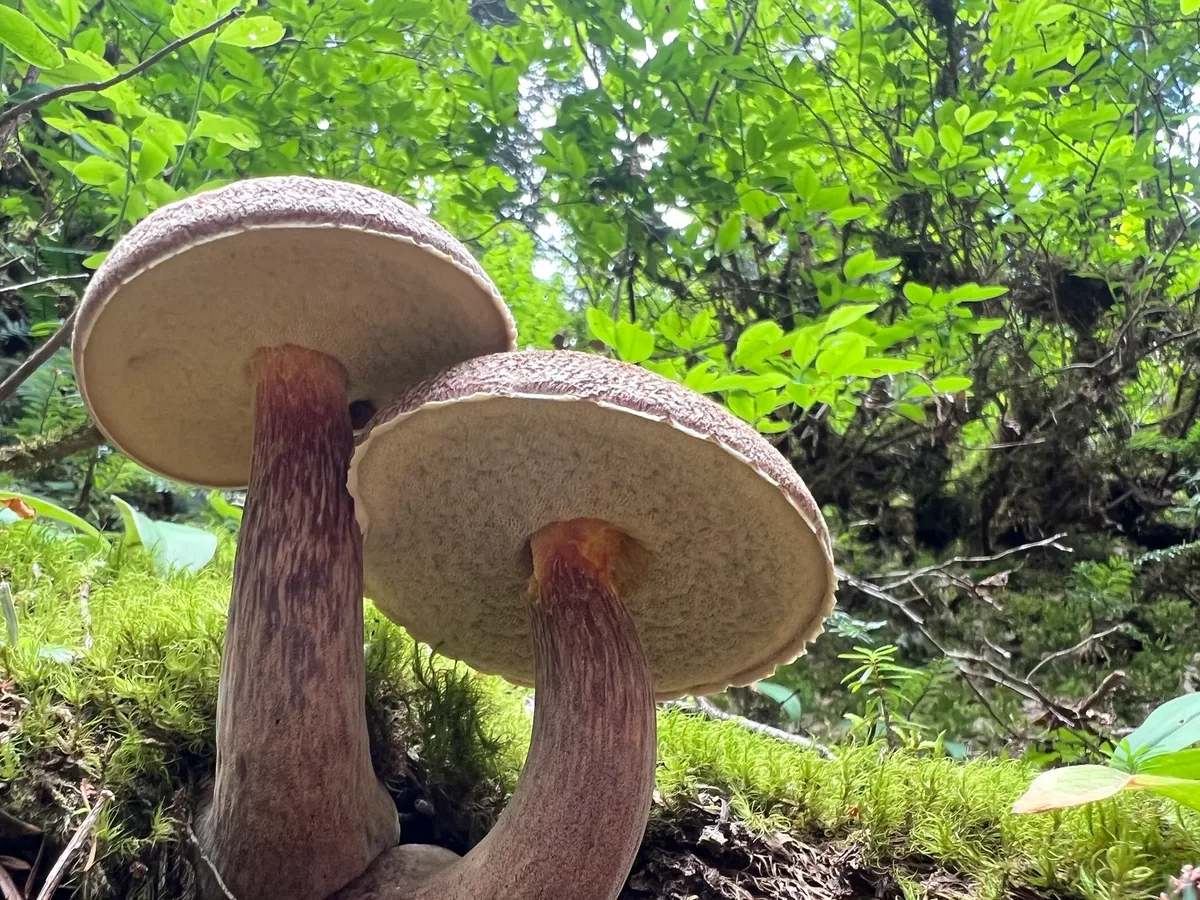 © Spencer Bierman (CC BY)
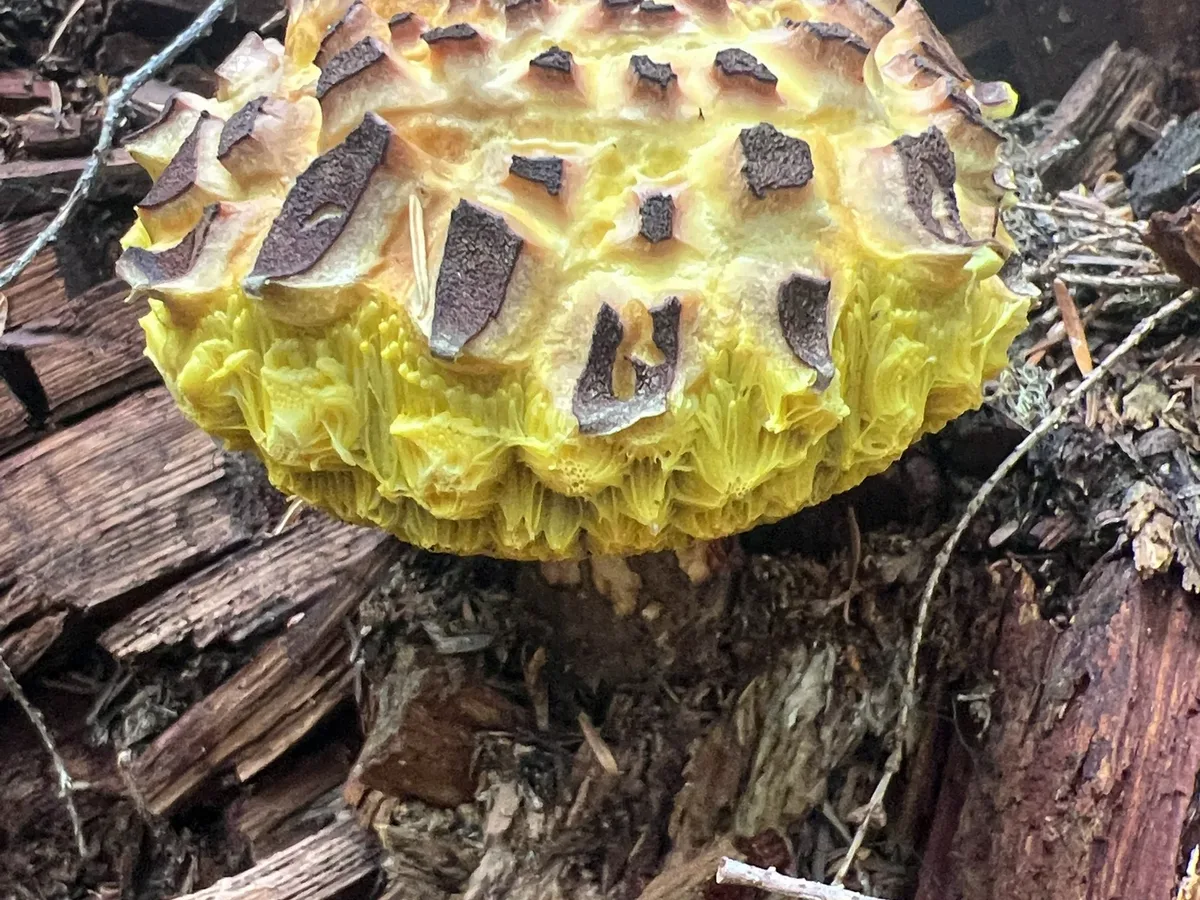 moorebuesing (CC0)
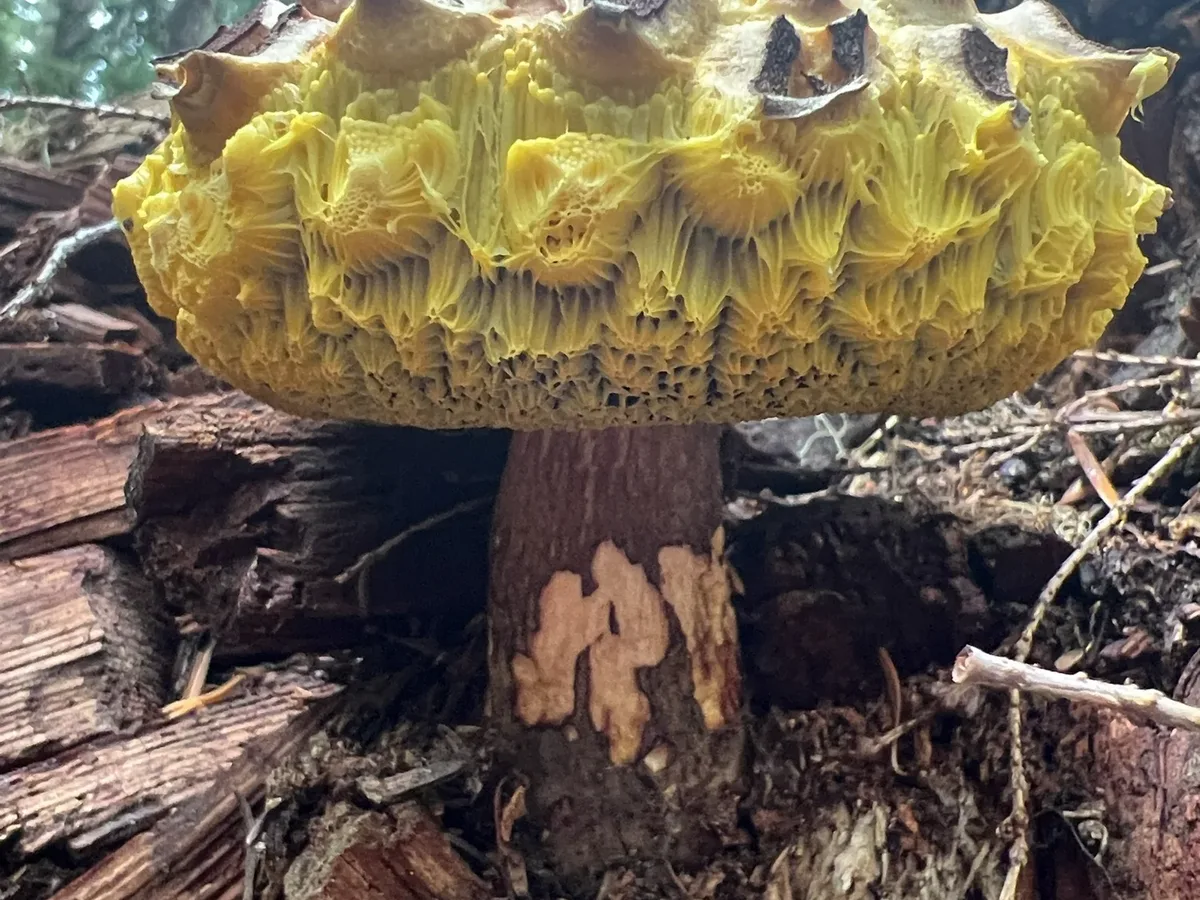 moorebuesing (CC0)
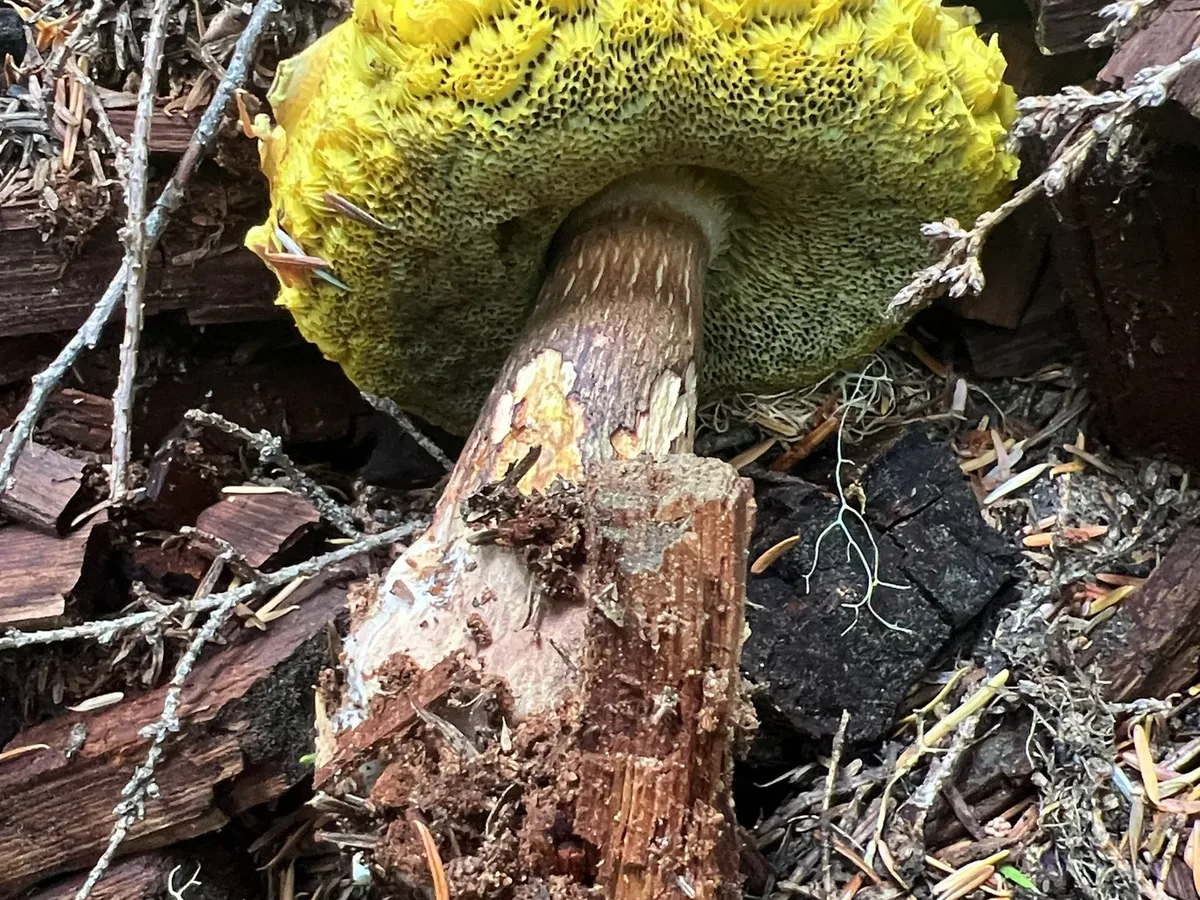 moorebuesing (CC0)
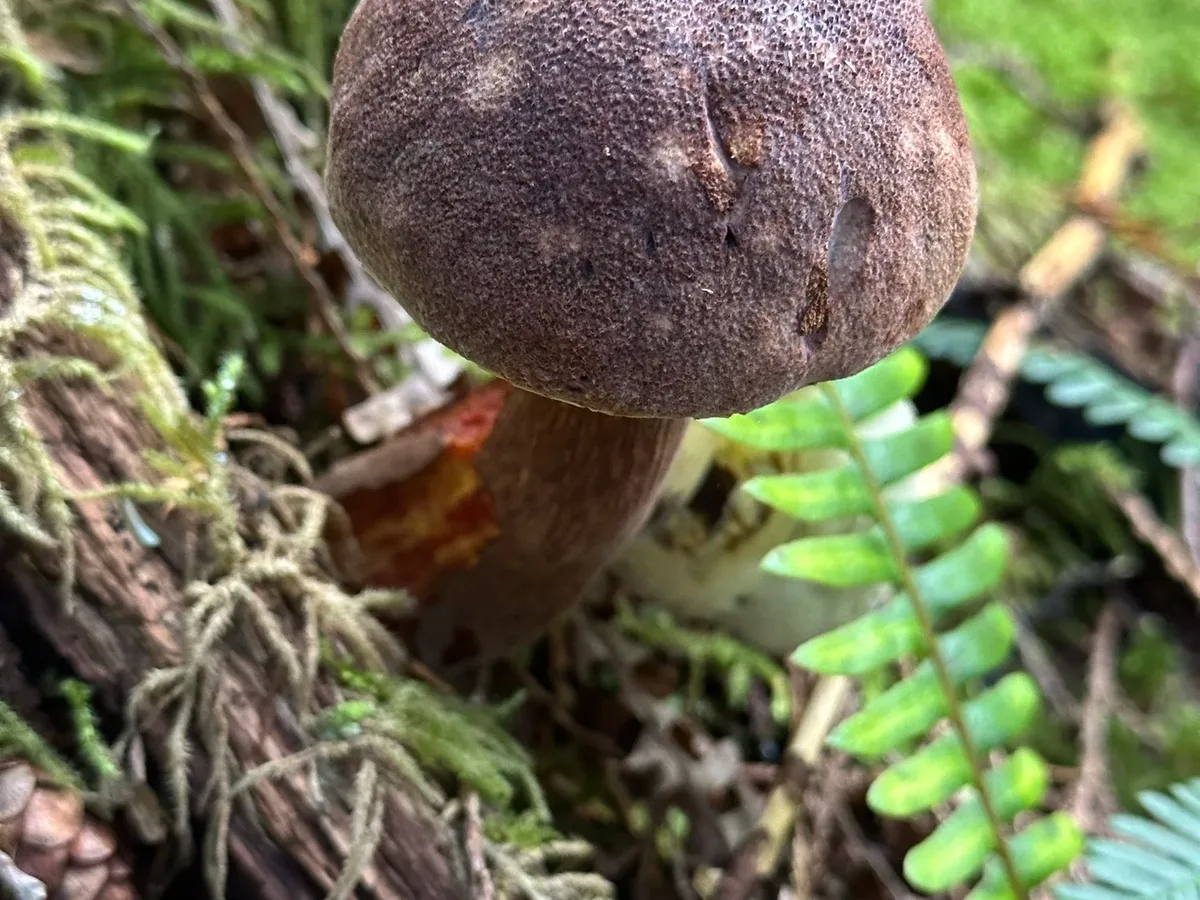 Tristan Lindgren (CC0)
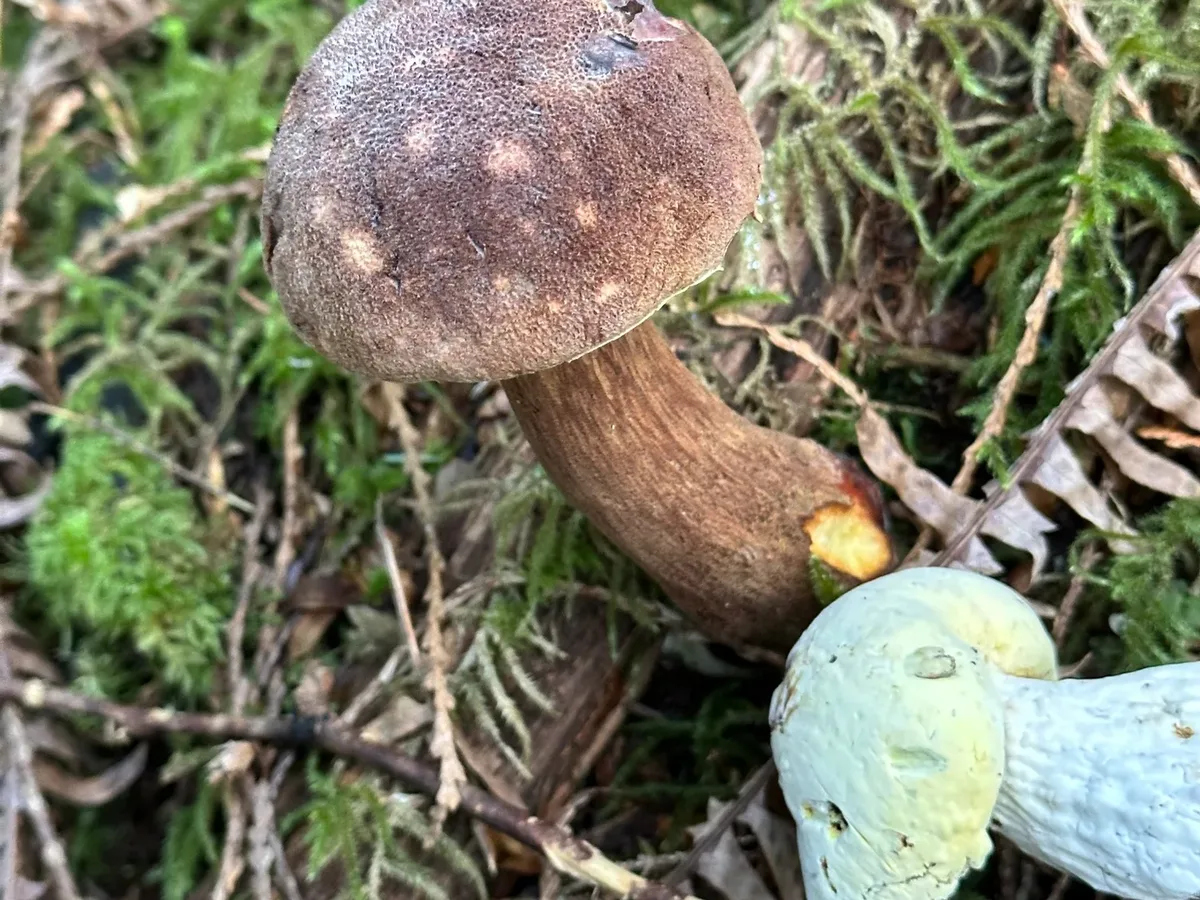 Tristan Lindgren (CC0)
 © Alexandria 'Alex' Wenninger (CC BY 4.0)© John Brew (CC BY 4.0)© Spencer Bierman (CC BY)
One of the best mushrooms you can bring home - once you are certain of the identification.
Never eat a mushroom you are not 100% sure of - check the look-alikes below, and always cook wild mushrooms.
How to recognise it
Few boletes stop you in your tracks quite like Aureoboletus mirabilis.
Cap
Large and convex, flattening gradually with age. It is covered in a rich dark maroon to wine-red velvety tomentum - a fine felt of matted fibrils and minute scales that makes the surface feel almost plush underhand.
Pores
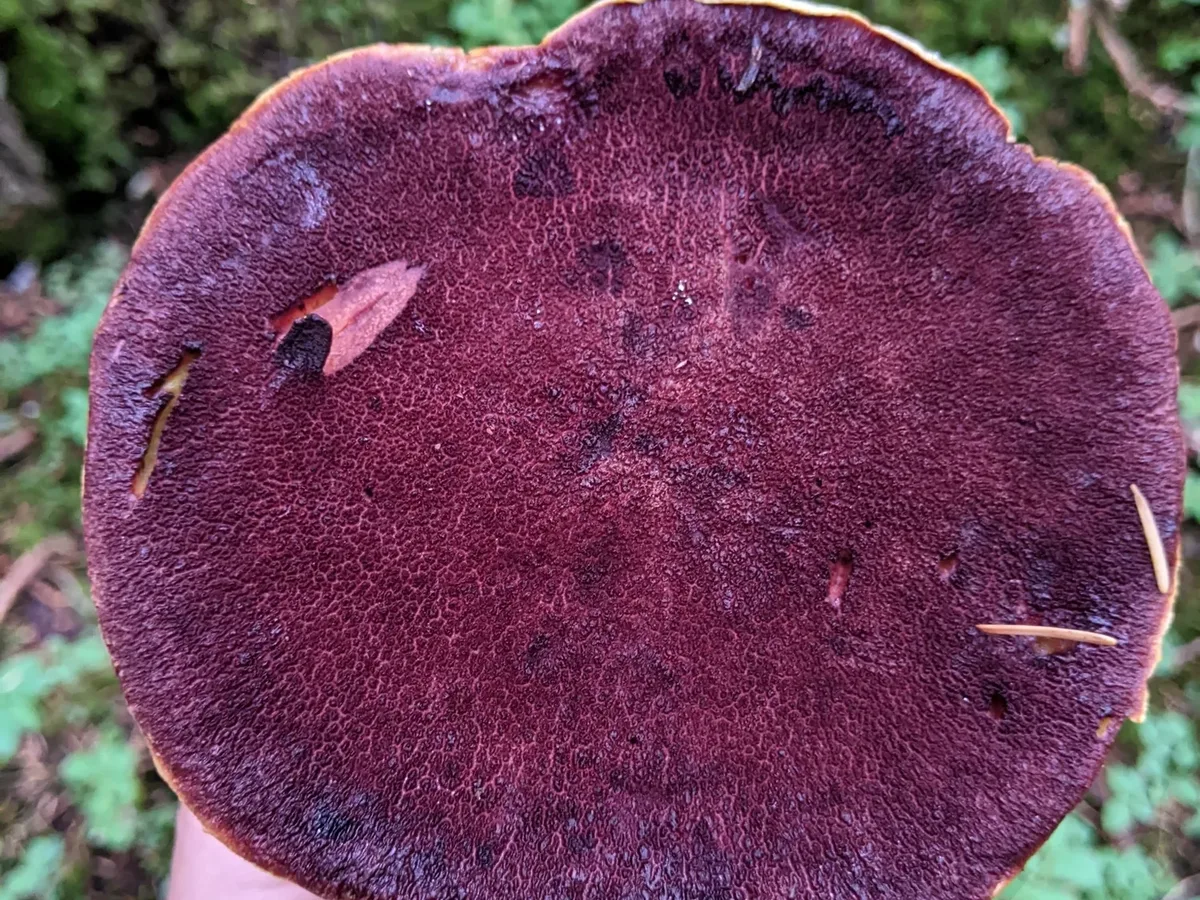
Against that dark reddish cap, the pore surface beneath glows a bright lemon-yellow to golden-yellow. Crucially, it does not bruise blue when pressed or cut.
Stem
Carries prominent, shaggy, coarse reticulation - a network of raised ridges in reddish-brown over a pale yellow ground - that looks almost hand-woven when you look closely.
Flesh
Cream to pale yellow throughout, firm, and holds that color when cut or exposed to air.
That non-bluing quality is a critical safety check that immediately separates it from several bluing boletes in the same forests.
Spore print olive-brown.
Where & when it grows
Habitat
This is a bolete of old trees and old logs. Its home is the tall, moss-draped, fog-damp coniferous forest of the Pacific Northwest - the kind where western hemlock (Tsuga heterophylla) towers overhead and fallen logs are so thoroughly rotted they've become part of the soil.
Aureoboletus mirabilis fruits directly from those mossy, decaying hemlock logs and the deep duff alongside them, often nestled at the base of a stump or rooting into wood that has been softening for decades. It also turns up with Sitka spruce, Pacific silver fir, and occasionally Douglas-fir.
Its range runs from northern California through Oregon, Washington, and British Columbia into southeast Alaska - anywhere the cool, wet, fog-rolled forests persist.
In interior mountain ranges it becomes rarer, though moist hemlock stands in the Cascades and Rockies occasionally host it. Elevation range spans from sea level to roughly 1800 m.
When
Look for the admirable bolete from late summer through autumn - predominantly August through October, peaking in September and early October across most of its range.
On favored coastal stretches where moisture lingers, it can appear as early as July and occasionally push through into November.
The trigger is soaking rain after a warm, dry summer spell: the mycelium responds, and fruit bodies typically push up 7-14 days later. A cold snap ending a warm period is often the final cue for a good flush.
Compared with many other boletes, Aureoboletus mirabilis is a reliable lateish fruiter and isn't put off by the first light frosts of autumn.
How it grows
Solitary or in small scattered groups; rarely clustered.
Individual fruit bodies push up quickly - over 3-5 days - so prime specimens at the button-to-medium stage don't wait long.
The rooting base often disappears several centimetres into decaying wood, anchoring the mushroom firmly to the log or duff it calls home.
One of the pleasures of finding a good spot is that the mycelium threads through that rotting substrate for years: if the log is still there next autumn, the mushroom very likely will be too.
Fruiting conditions
Best flushes follow substantial late-summer or early-autumn rain (25+ mm over 14 days) with soil temperatures between 6-16 °C. Often appears 1-2 weeks after the first significant fall rain ending a summer dry period. Cool nights accelerating after a warm spell are a strong trigger.
Look-alikes
Aureoboletus mirabilis is largely unmistakable once learned, but several boletes occur in the same habitat and deserve attention. The most critical safety check is against red-pored, bluing boletes in the same PNW forests.
Always confirm golden-yellow (never red or orange) pore color and absolutely no blueing before eating any bolete from this region.
- Rubroboletus pulcherrimus (red-pored bolete), the Pacific Northwest equivalent of Satan's bolete, is the most dangerous potential confusion. It shares conifer forest habitat in northern California and the Pacific Northwest, has caused at least one confirmed fatality (1994), and has a reddish to brownish cap with bright red pores that instantly blue intensely when cut - the exact opposite of A. mirabilis's golden-yellow non-bluing pores.
- Suillus lakei has a similarly scaly reddish cap but a distinctly sticky or slimy pore surface when moist, a partial veil leaving a fibrous ring, and is associated strictly with Douglas-fir; its flesh and pores both have a glandular, mucilaginous quality absent in Aureoboletus mirabilis.
- Imleria badia (bay bolete) is a common associate but has a smooth, bay-brown cap without the velvety tomentum, and its pore surface slowly blues faintly when cut.
- Rubroboletus satanas (Satan's bolete) is primarily a European species not native to the Pacific Northwest, but is noted here for reference: it has a pale whitish-cream cap and brilliant red pores that bleed blue instantly.
- Caloboletus radicans and related pale-capped boletes lack the reddish cap coloration.
The diagnostic combination of velvety dark-red cap + non-bluing golden-yellow pores + shaggy red reticulate stem is unique to A. mirabilis in this region.
Native to northern California and the Pacific Northwest; has caused at least one confirmed fatality (1994). Cap is reddish-brown to olive-brown (not dark maroon-velvety), pores are bright blood-red to orange-red (never golden-yellow), and all parts blue intensely and instantly when cut or bruised. The non-bluing golden-yellow pore surface of A. mirabilis is the definitive distinction. Do not eat any bolete with red or orange pores, or with any blueing reaction.
Primarily a European species, not native to the Pacific Northwest. Has a whitish to pale grey cap, blood-red to orange-red pores that blue intensely and instantly when cut or bruised, and a red-blotched stem. Has caused severe poisoning requiring hospitalization (184 cases in a single 2011 French outbreak) and is classified as seriously toxic. The pale cap, red pores, and instant bluing are all the opposite of A. mirabilis. Not expected in PNW, but included for completeness.
Has a smooth, chestnut to bay-brown cap (never velvety or maroon), a paler stem without prominent red reticulation, and its flesh and pore surface exhibit a faint but definite slow blueing reaction when cut - absent in A. mirabilis.
Has a brownish cap, pink to rose pores in maturity, a coarse reticulate stem, and intensely bitter flesh. Bitterness immediately distinguishes it from the mild, pleasant-tasting A. mirabilis. Not dangerous but renders any dish inedible.
Has a similarly reddish-brown scaly cap but its pore surface is slimy-glutinous when moist, it has a partial veil that leaves a fibrous ring on the stem, and it is strictly associated with Douglas-fir. No velvety dark maroon tomentum; stem lacks the bold shaggy reticulum of A. mirabilis. Edible but inferior in flavor and texture.
In the kitchen
Picking & cleaning
- Cut the stem cleanly at or near the substrate surface with a knife to minimize disturbance to the mycelium.
- The cap and stem are both firm and high-quality; there is no need to discard the stem.
- Check the pore surface: it should be bright yellow, not discolored or olive-brown (older specimens have looser, less flavorful tubes).
- Gently press the flesh - it should not blue.
- Carry in an open-weave basket rather than a plastic bag.
- Trim any hollow, insect-tunneled stem bases in the field.
The flesh is firm and durable and keeps well for 2-3 days refrigerated.
Cooking
The admirable bolete is a prized edible with a rich, meaty, nutty flavor and excellent firm texture that holds up well to various cooking methods. The cap and stem are both edible.
- Saute thick slices in butter with garlic for a simple preparation that highlights the flavor.
- It also excels in risottos, pasta sauces, soups, and braises, where its robust flavor enriches the dish.
- Dries well: slice thinly and dry at low heat (40-50 °C) until crisp; dried specimens rehydrate beautifully and intensify in flavor, making excellent dried mushroom powder.
- Can be frozen after brief blanching.
The pore layer can become soft and spongy in older specimens and may be removed before cooking if desired, though in prime specimens it is fully palatable.
Good to know
Aureoboletus mirabilis has a long history of safe consumption by foragers across the Pacific Northwest and is not known to cause toxicity.
However, the same conifer forests harbor Rubroboletus pulcherrimus (red-pored bolete), a genuinely deadly species that has caused at least one fatality in the region.
Always verify the absence of blueing: cut the flesh and pore surface and wait 60 seconds. If any blue, violet, or green color appears, do not consume under any circumstances.
Before consuming any bolete:
- Verify that the pore surface is golden-yellow and never red or orange.
- Cook it before eating, as with all wild boletes.
- Avoid any specimen where pore color is ambiguous or where any blueing is observed.
- Only collect in areas free from pollution or industrial contamination.
A reference guide - never an edibility guarantee. When in doubt, leave it out.