Dark honey fungus
Armillaria ostoyaesyn. Armillaria solidipes, Armillaria obscura, Agaricus melleus var. obscurus
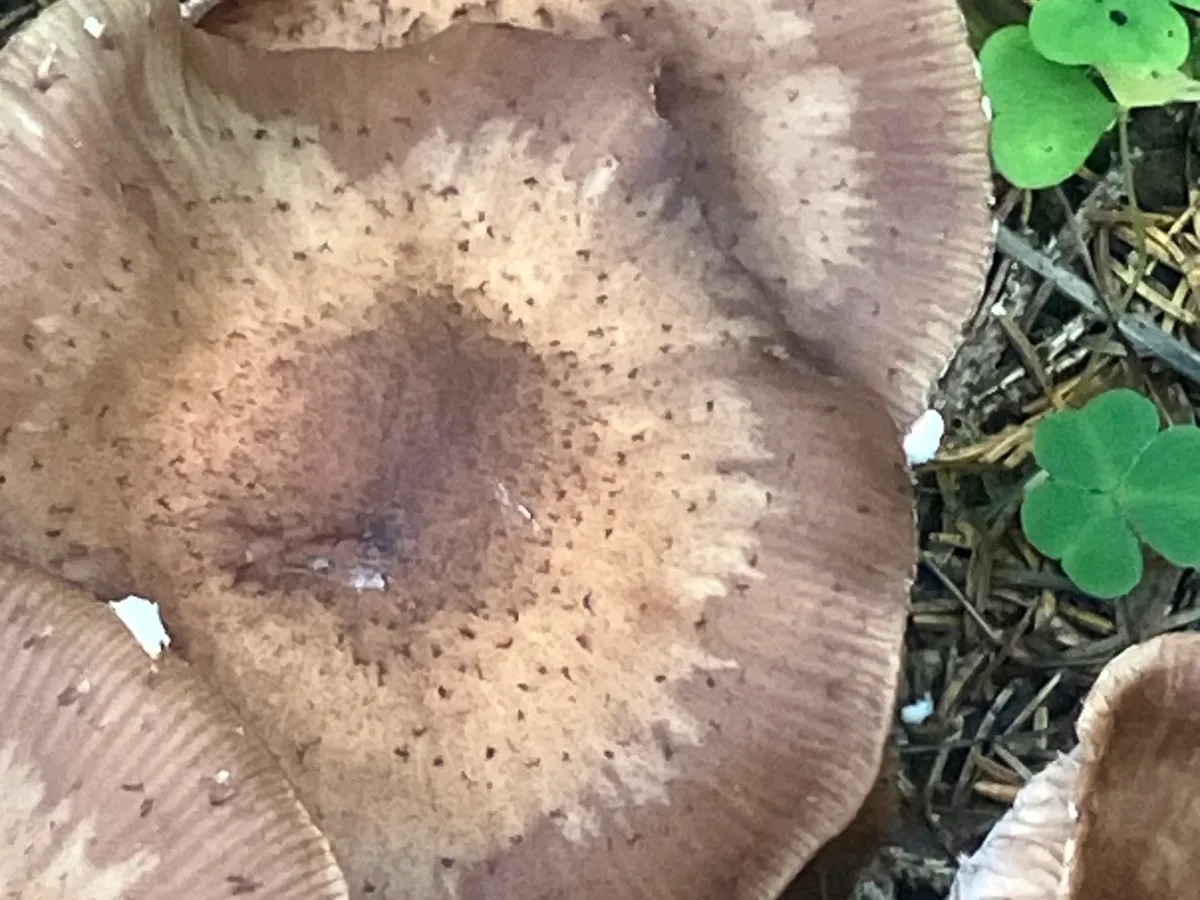 empressmoth (CC0)
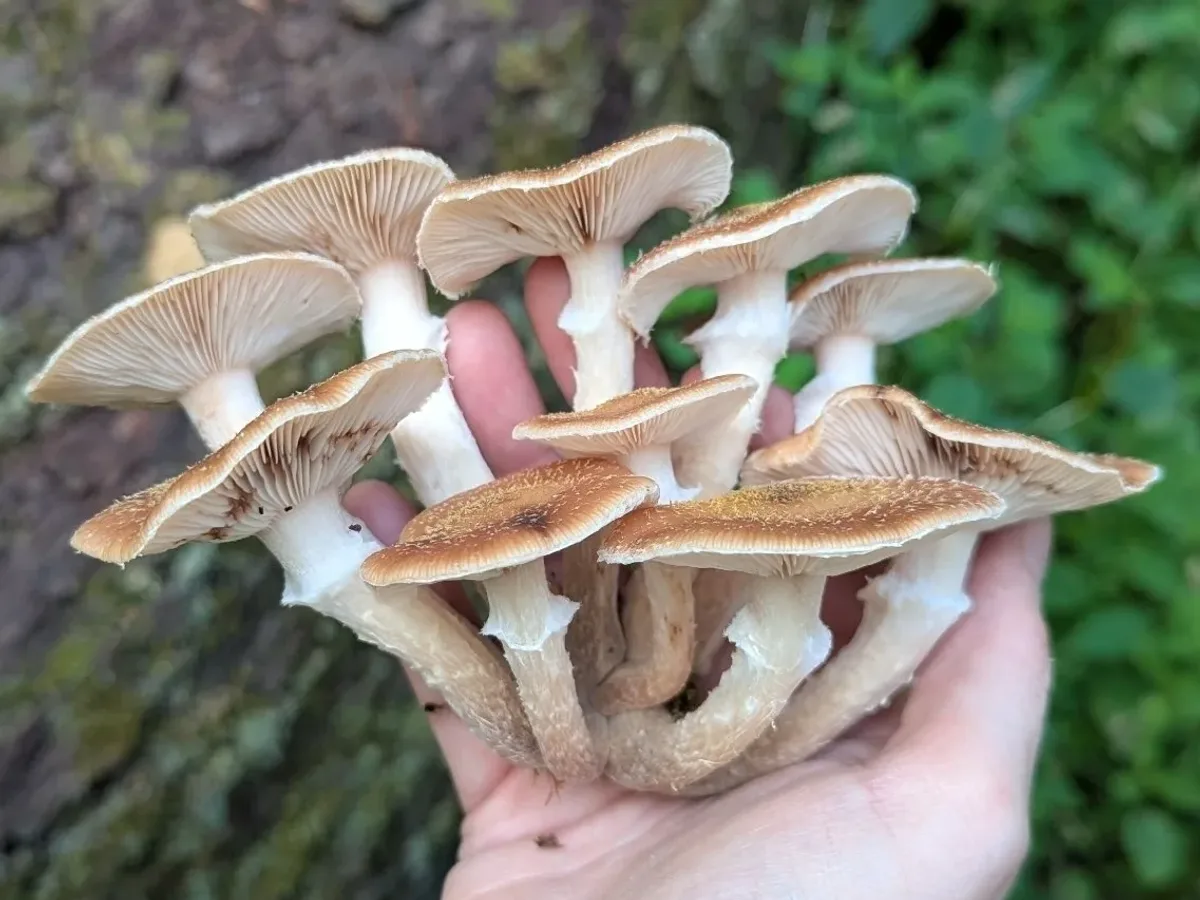 cgmayers (CC0)
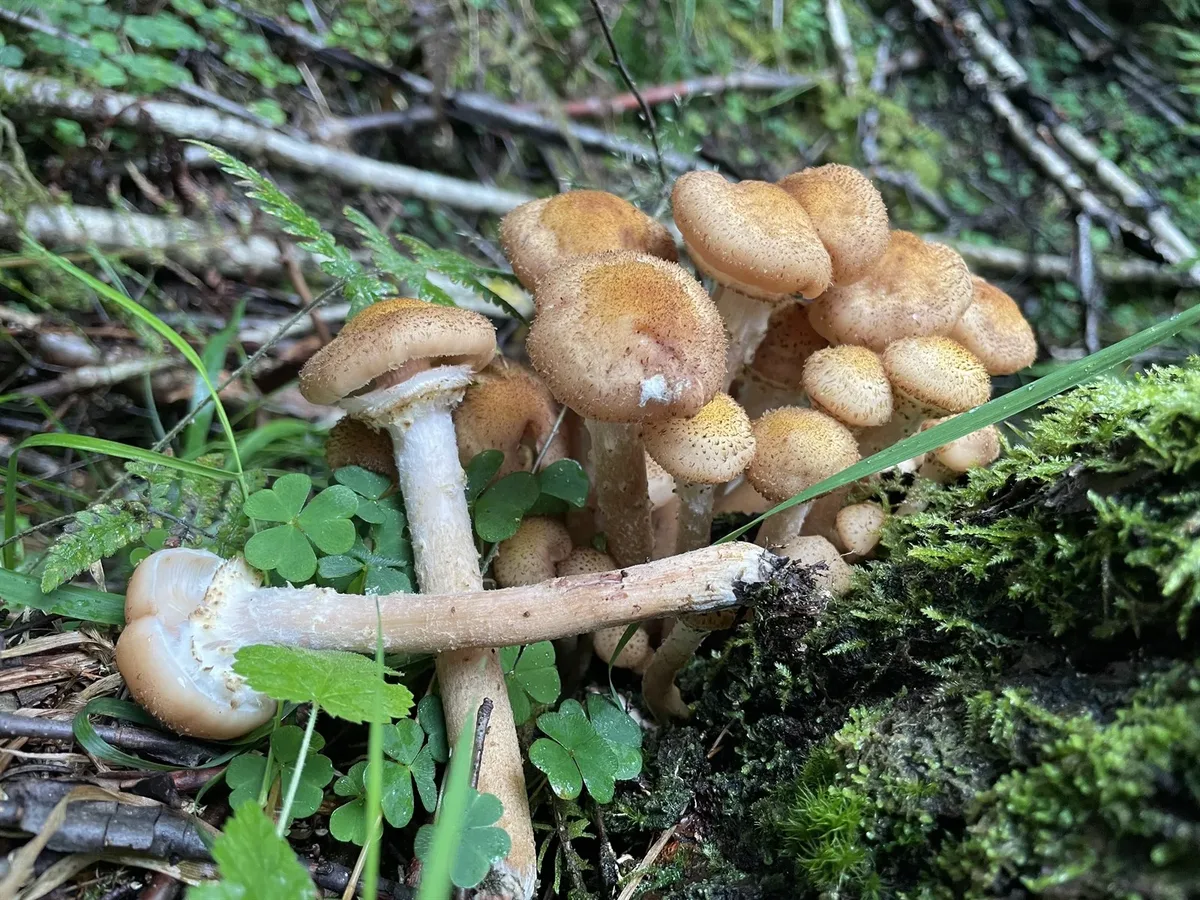 © Theodor Korsgaard (CC BY)
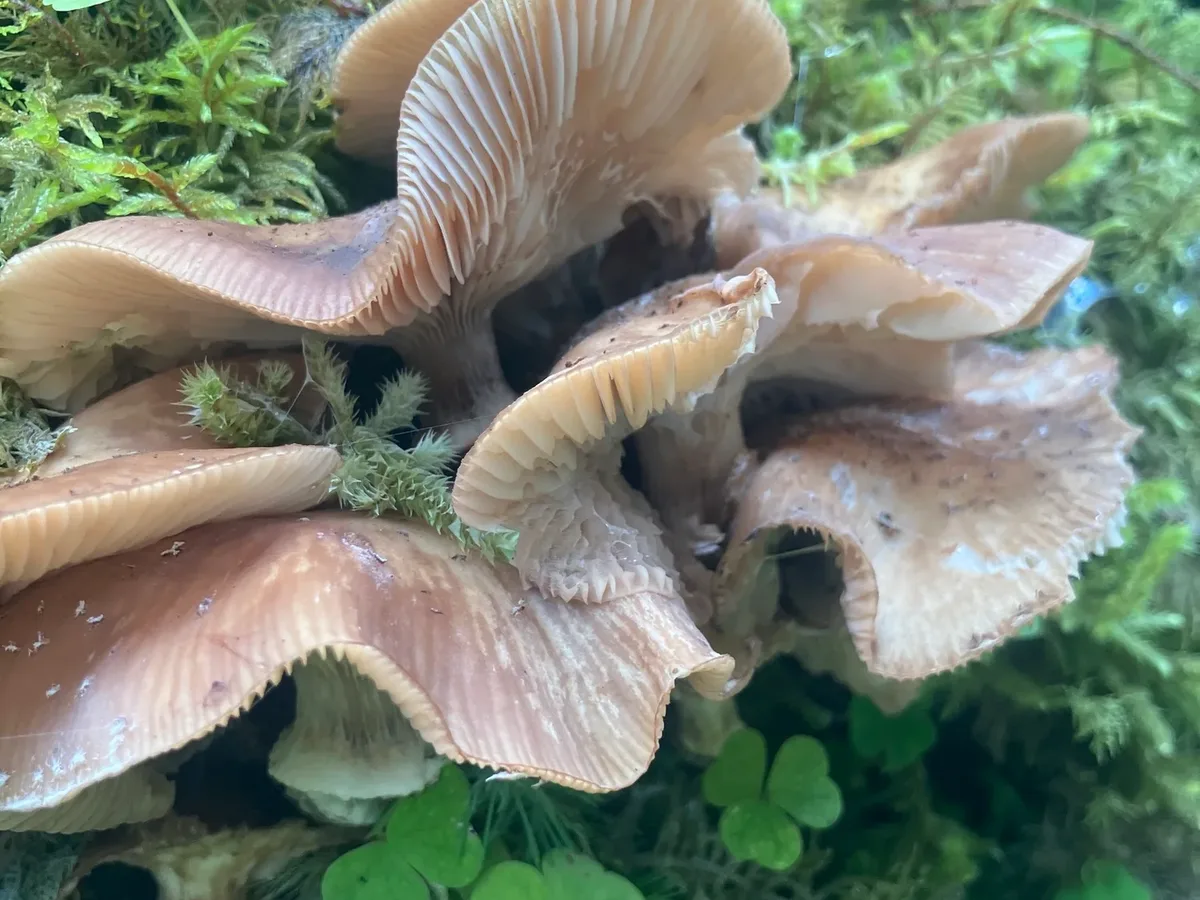 empressmoth (CC0)
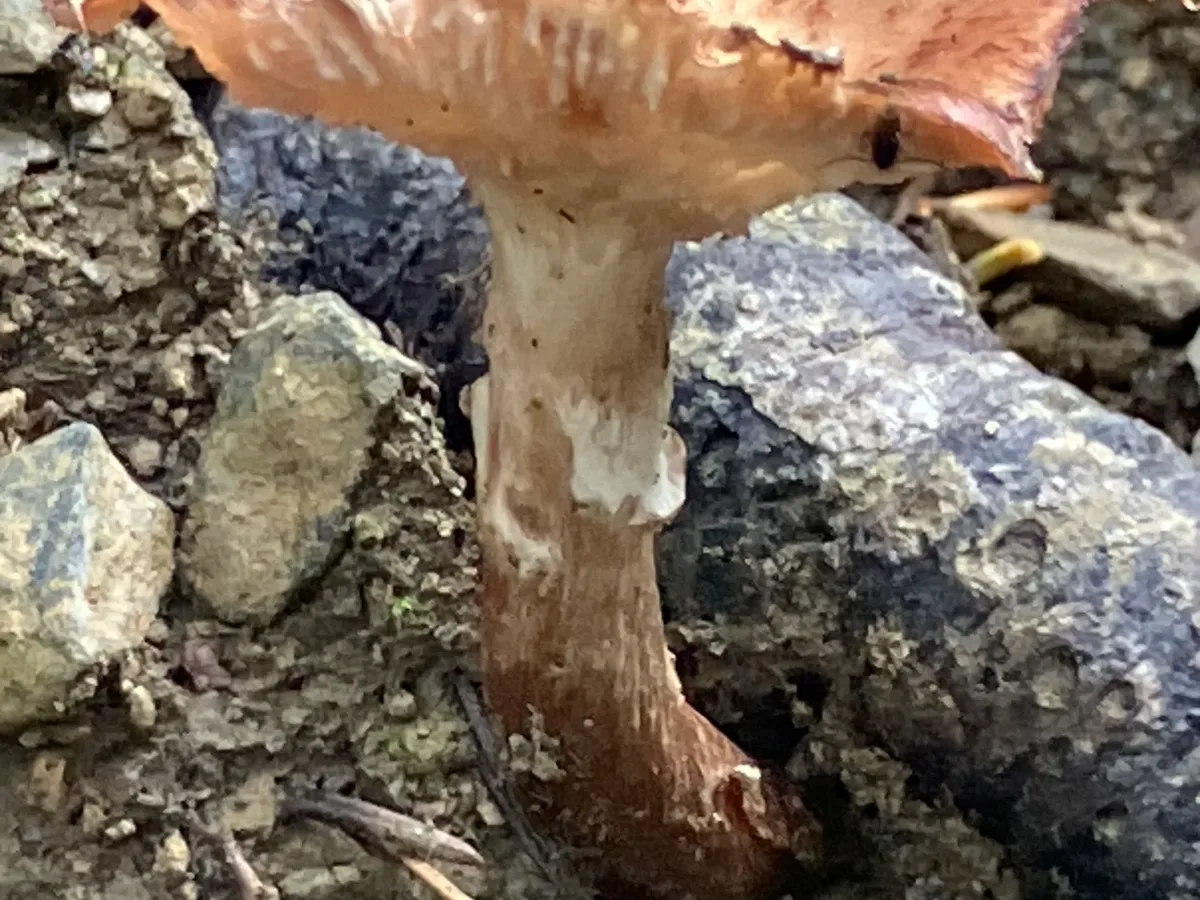 empressmoth (CC0)
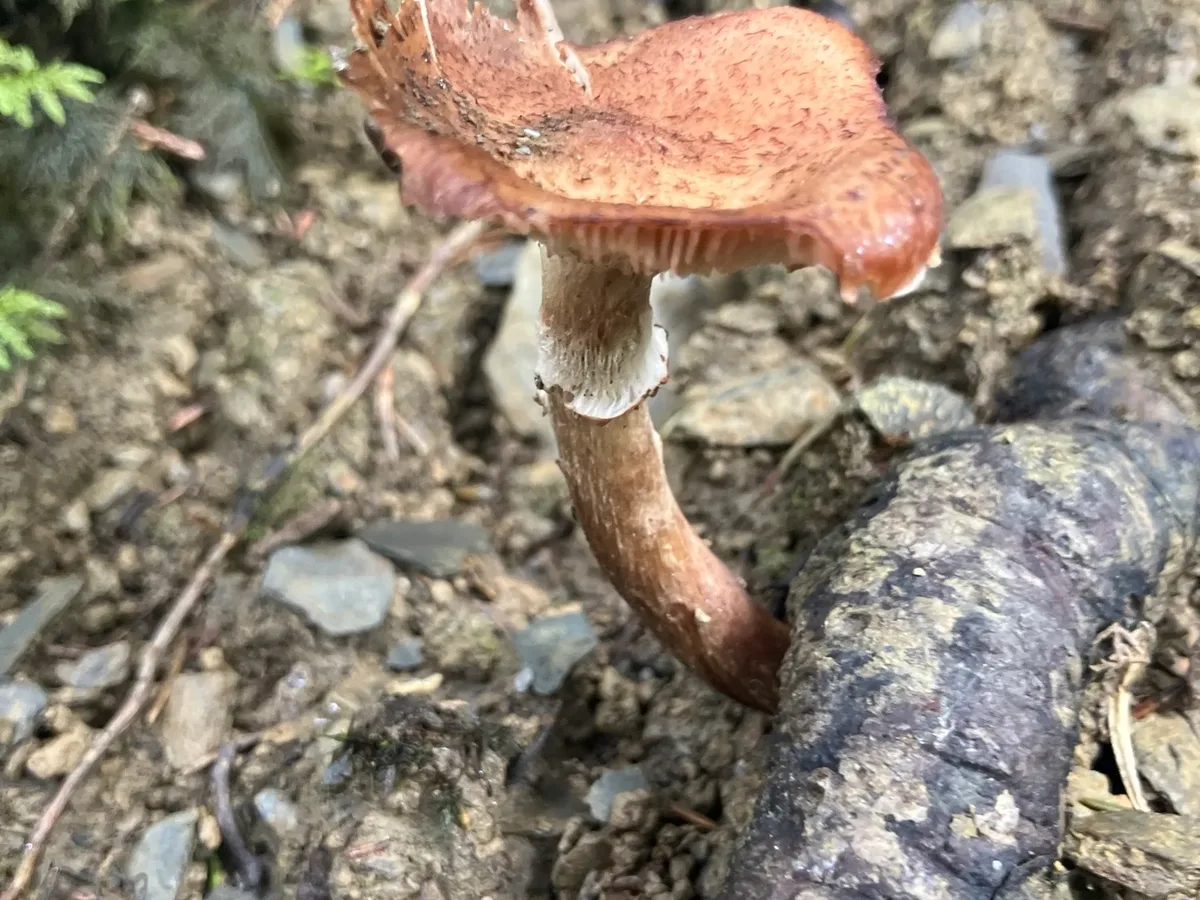 empressmoth (CC0)
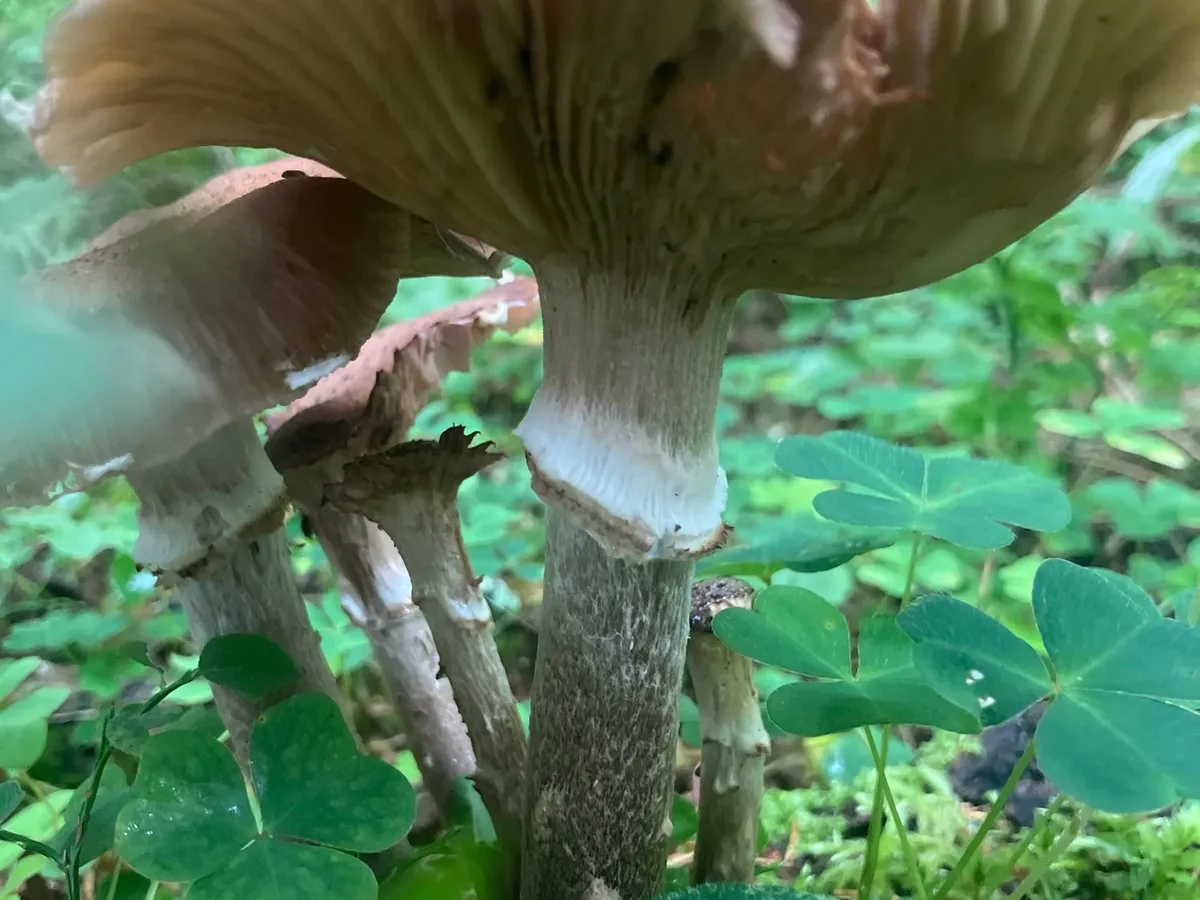 empressmoth (CC0)
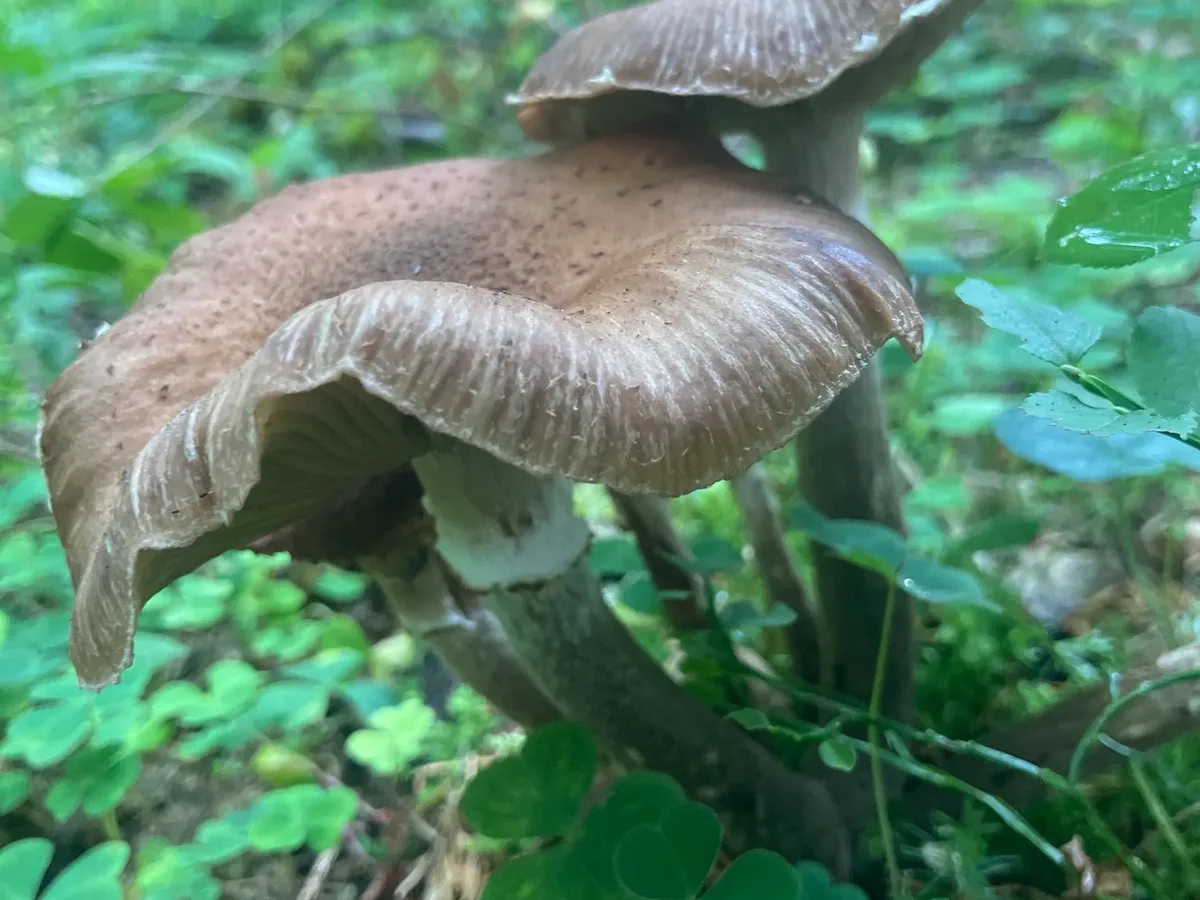 empressmoth (CC0)empressmoth (CC0)cgmayers (CC0)
Edible only with the right preparation - or safe for some people but not others. Learn the caveats first.
Never eat a mushroom you are not 100% sure of - check the look-alikes below, and always cook wild mushrooms.
How to recognise it
Armillaria ostoyae sits within the familiar honey mushroom group but distinguishes itself by being noticeably darker and shaggier than its relatives.
Cap
The cap is a deep tawny-brown to umber at the centre, grading paler toward the edge. The whole disc is peppered with raised, dark-brown to almost black fibrous scales that give it a somewhat rough or shaggy appearance - far coarser and darker than the neat fine scales of Armillaria mellea.
As the cap expands it begins convex, then develops a low central hump, and eventually flattens broadly; old specimens can become slightly wavy or irregular.
Gills
The gills start a clean whitish cream and slowly take on brownish blotches and buff discolouration with age. The white spore deposit sometimes dusts lower caps and the substrate conspicuously, and a spore print placed on paper is unambiguously white.
Stem
The stem is long, often twisted, and strikingly two-toned: creamy above the ring, darkening steadily to a deep rusty-brown or blackish below, often with a rooting, curved base that burrows into dead wood or attached root tissue.
The ring is the single most useful feature for ruling out the deadly Galerina. In A. ostoyae it is a substantial, persistent, fleshy skirt that is white to pale yellow on top and trimmed with a conspicuous band of dark-brown or blackish fibres or scales on its underside.
In Galerina marginata the ring is a thin, fragile, easily-lost cobweb-like membrane with a rusty-brown to ochre coloration and no dark banding whatsoever.
If the ring is gone, a spore print is non-negotiable: white from Armillaria, rusty-cinnamon from Galerina.
Why it's dangerous
The species' own GI irritants are a mild and manageable risk when food is properly cooked. The lethal risk comes from Galerina marginata, which can occur alongside or mixed into Armillaria clusters on the same wood substrate.
Galerina amatoxin poisoning is dose-dependent, delayed, and capable of causing fatal liver and kidney failure.
- Never skip a spore print when collecting this genus near wood.
- Always parboil, with the water discarded, before eating.
- Treat any delayed gastrointestinal or multi-organ symptoms following consumption as a medical emergency.
Toxin
The toxic compounds responsible for gastrointestinal illness in raw or inadequately cooked Armillaria species have not been fully chemically characterised. They are heat-labile, substantially degraded by thorough cooking and discarding of the cooking water.
Armillaria species also contain illudin sesquiterpenes - notably illudin S, originally isolated from Omphalotus species but also found at trace levels in Armillaria. Whether these contribute significantly to human toxicity at consumed doses is not established.
The primary clinical syndrome in reported cases is consistent with general gastrointestinal irritation rather than the severe cytotoxic damage of true illudin poisoning.
Symptoms
Gastrointestinal syndrome, typically beginning 30 minutes to 3 hours after ingestion of raw or inadequately cooked material:
- nausea
- vomiting
- abdominal cramps
- diarrhoea
Symptoms are usually self-limiting and resolve within 24 hours.
Any symptom onset delayed beyond 6 hours after eating, particularly with severe abdominal pain, jaundice, or deteriorating kidney function, must be treated as a medical emergency and presumed to be Galerina marginata (amatoxin) poisoning until proven otherwise. Immediate hospitalisation is required.
Staying safe
Armillaria ostoyae must never be eaten raw or undercooked. Raw or inadequately heated specimens cause gastrointestinal illness - nausea, vomiting, cramps, diarrhoea - in a significant proportion of people, attributed to heat-labile irritant compounds.
Even when properly cooked, a minority of individuals experience gastrointestinal upset, so eating for the first time should be approached cautiously with a small portion.
The standard safe preparation is thorough parboiling (boiling in salted water for at least 10-15 minutes) followed by discarding the cooking water before any further preparation.
The overriding safety concern, however, is not the species' own modest toxicity but the risk of Galerina marginata contamination in the harvest. Galerina contains lethal amatoxins; its poisoning onset is delayed 6-24 hours and manifests as severe liver and kidney failure, often requiring transplant and sometimes fatal.
A white spore print from every collected cluster is the single most effective safeguard, alongside careful examination of ring character and cap scaling on each specimen.
Where & when it grows
Habitat
This is the conifer-loving honey fungus. It lives most at home in montane and boreal conifer forests - spruce-fir, hemlock-Douglas fir, pine stands - where it acts as both a serious root pathogen of living trees and a saprotroph once a host dies.
Look for clusters arising at the root collars of conifers that show resin-soaked, discoloured bark at the base, and for the flat black rhizomorphs (resembling bootlaces) running under bark or through soil between infected trees.
The Humongous Fungus of Malheur National Forest in eastern Oregon is a single individual of this species covering an area of around 9 km² - testament to the species' capacity to extend its mycelium vast distances through forest soil rather than relying on spore dispersal.
It also occurs commonly on hardwood hosts in mixed-forest contexts, especially where conifers have previously stood.
When
Fruiting in late summer and autumn, broadly September through October in most of eastern North America and the Pacific Northwest, with stragglers into November.
The trigger is typically the first sustained autumn rains combining with cooler soil temperatures after the summer dry period.
On any single stump or root cluster the fruiting can be spectacular - dense tiers of dozens or hundreds of caps emerging over a few days - then subside until the following autumn. The same site commonly refruiting in subsequent years as long as the host wood persists.
How it grows
Strictly a wood-associated species, growing in dense tufted clusters from:
- infected root tissue
- the bases of standing dead conifers
- buried roots
- or large decaying logs
Fruiting bodies emerge in a single flush or in multiple waves following successive rain events.
The visible mushrooms are the reproductive tips of a vast underground organism. The mycelium ramifies through dead and living root tissue as flat black rhizomorphs that can be found peeling bark from colonised wood.
Brown root rot - a decay pattern breaking wood into reddish-brown crumbling cubes - is a diagnostic sign of Armillaria infection below the soil surface.
Unlike mycorrhizal fungi, A. ostoyae does not need a living root partner for nutrition; it generates energy by decomposing cellulose and lignin directly.
Fruiting conditions
Autumn fruiter triggered by the first sustained cooling rains after summer drought; mycelium resides in wood and roots rather than open soil, so the direct trigger is adequate moisture penetrating the wood substrate combined with falling air and soil temperatures. Flushes from the same stump in successive years while the host wood persists.
Look-alikes
Four species demand attention.
- Galerina marginata is the critical deadly lookalike: it grows on the same rotting wood and can fruit alongside or intermixed with Armillaria ostoyae. It is smaller (cap 2-5 cm), uniformly tawny to date-brown without coarse dark scales, has a thin fragile ring that stains rusty-brown rather than a robust dark-banded skirt, and - the decisive test - produces a rusty-cinnamon to ochre-brown spore print, never white.
- Armillaria mellea (honey fungus) is edible but closely similar; it typically has a paler, more honey-yellow cap with finer, less dark scales, a ring that lacks prominent dark banding on the underside, and a broader substrate tolerance including hardwoods.
- Hypholoma lateritium (brick cap) shares the stump habitat but is brick-red to rust-orange, not honey-brown, with a different gill colour sequence and a purple-brown spore print.
- Pholiota species (e.g. P. aurivella, P. squarrosa) occasionally share conifer stumps, have scaly caps, but produce a rusty-brown to tobacco-coloured spore print rather than white.
Coniophora puteana (cellar rot, inedible) and Phaeolus schweinitzii (dyer's polypore) grow near conifers but are structurally very different and not realistic confusions for an attentive collector.
Deadly - contains amatoxins at concentrations comparable to Amanita phalloides and has caused fatal poisonings. Smaller (cap 2-5 cm), uniformly tawny to date-brown with no coarse dark scales, ring is thin and fragile (not a robust dark-banded skirt), and produces a rusty-cinnamon to ochre-brown spore print - never white. Can grow on the same rotting wood substrate as A. ostoyae and intermingle in the same cluster. A white spore print is the decisive confirmatory test; it must be taken from any specimen where doubt exists.
Disputed edibility; grows in similar dense tufts on hardwood stumps. Distinguished by its brick-red to rusty-orange cap (not dark honey-brown), gills that mature to purplish-brown (not whitish-buff), and a dark purplish-brown spore print (vs. white). No prominent dark-scaled ring.
Edible with thorough cooking, but also requires parboiling. Cap is paler, more honey-yellow with finer and less dark scales; ring lacks the conspicuous dark-brown or blackish banding on the underside; tends to prefer hardwood hosts more than A. ostoyae. Spore print also white. Both species share the same basic edibility caution and Galerina risk.
Edible with cooking; a close relative occurring in similar boreal forest habitats. Paler cap with less dark scaling, ring without a prominent dark band on the underside, and generally smaller stature. Treated as the same edibility class; same Galerina separation checks apply.
Inedible and may cause GI illness; grows on wood in clusters and has a scaly cap that can superficially suggest A. ostoyae. Distinguished by dry, recurved yellowish-tan scales on both cap and stem, a yellower overall colour, a distinct garlicky-radish odour, gills that turn rusty-brown as spores ripen, and a tobacco-brown to rusty-brown spore print (vs. white).
A reference guide - never an edibility guarantee. When in doubt, leave it out.