Australian honey fungus
Armillaria luteobubalinasyn. Armillaria fuscipes (misapplied in Australia)
 River _ Forest (CC0)
 © Petra Holland (CC BY)
 © Petra Holland (CC BY)
 Cowirrie (CC0)
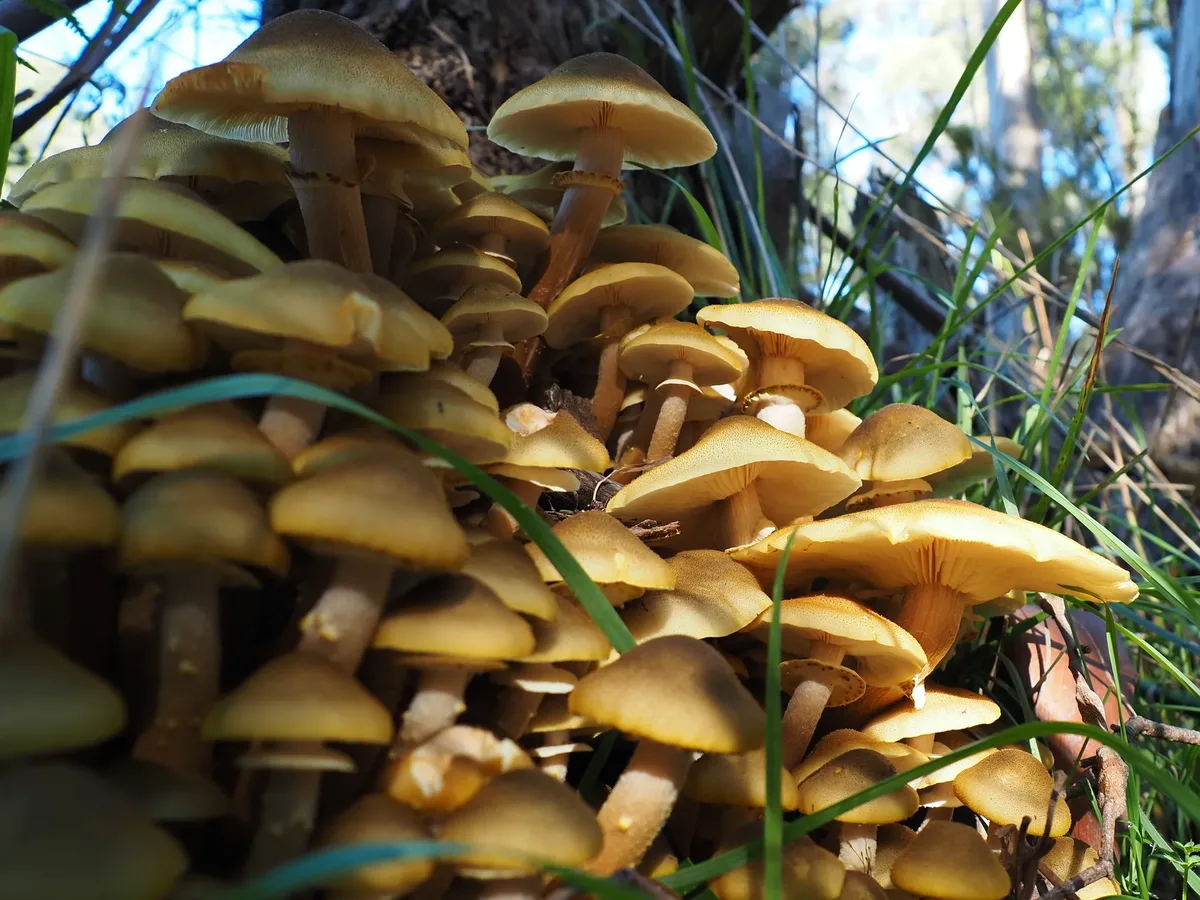 Cowirrie (CC0)
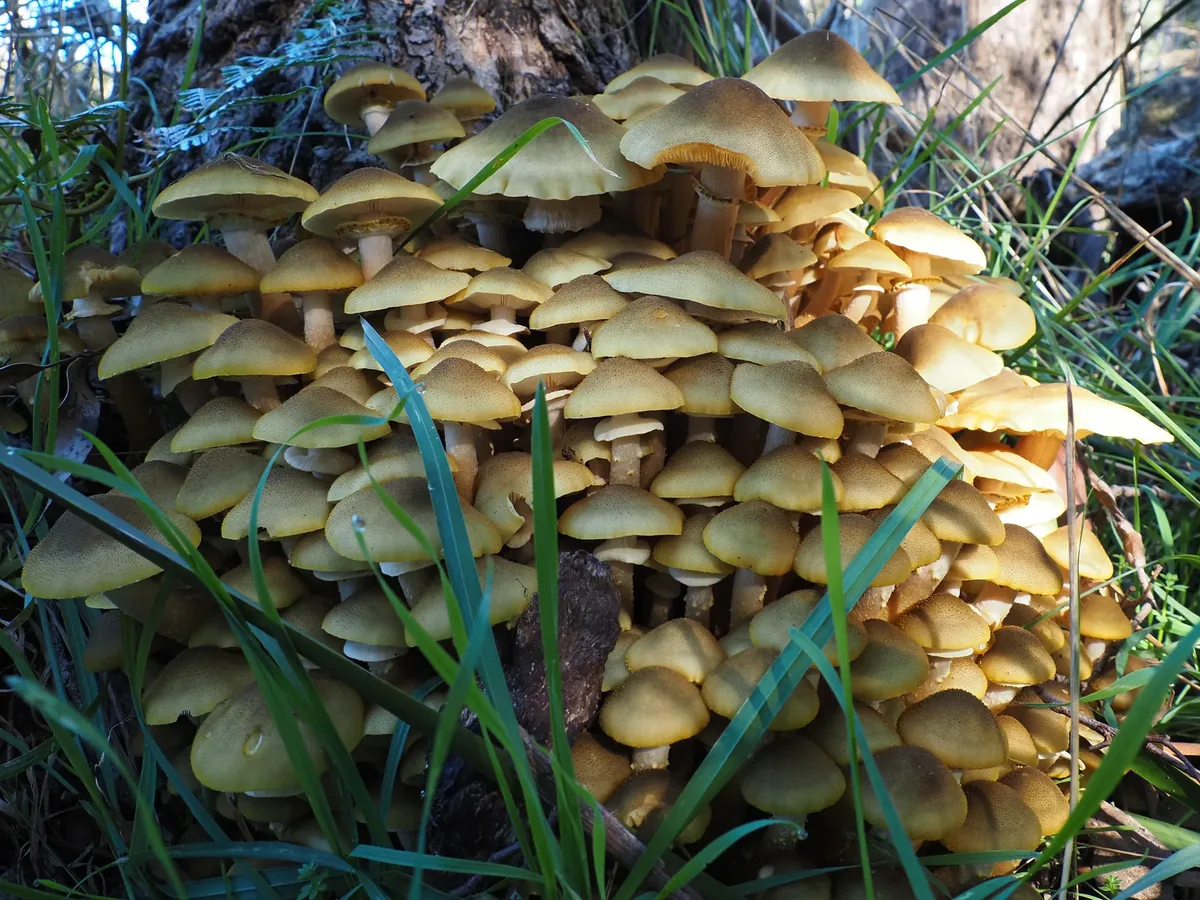 Cowirrie (CC0)
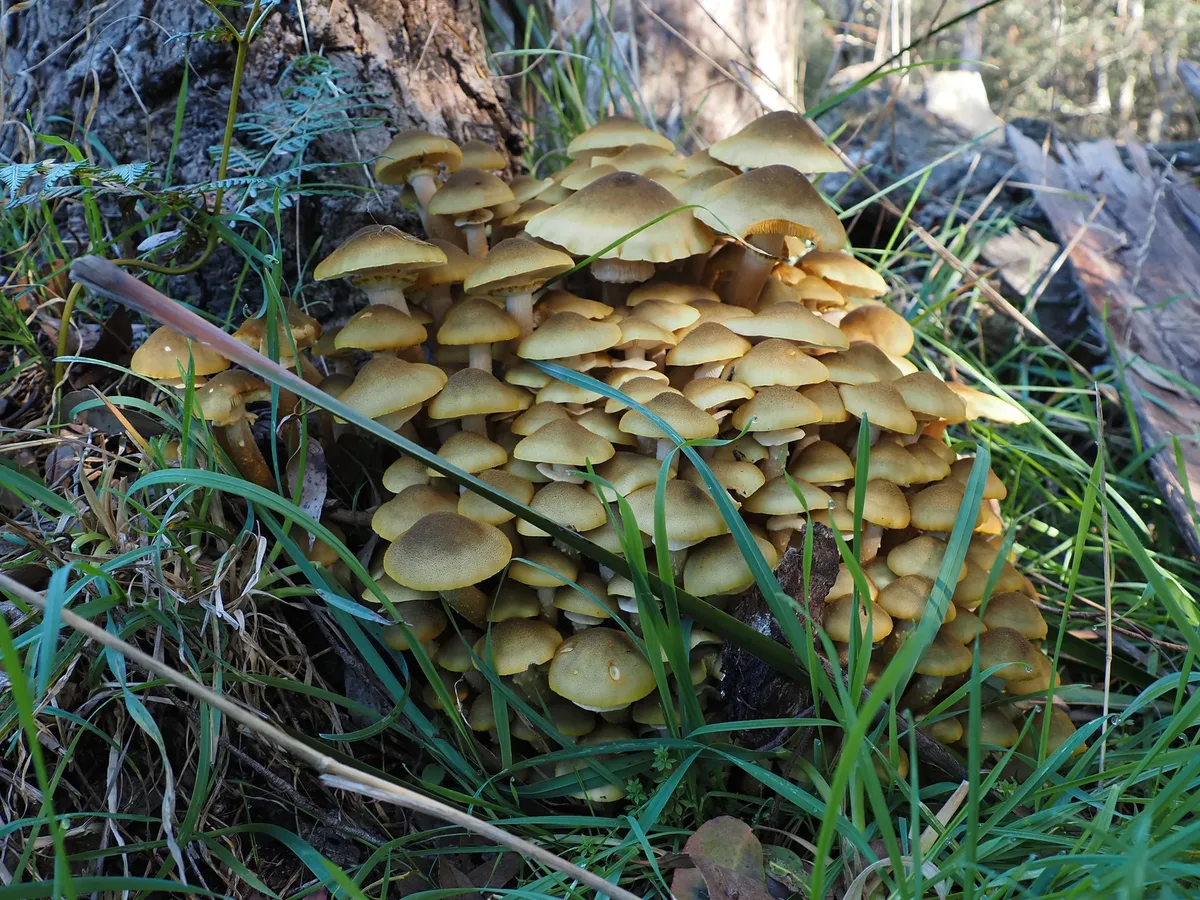 Cowirrie (CC0)
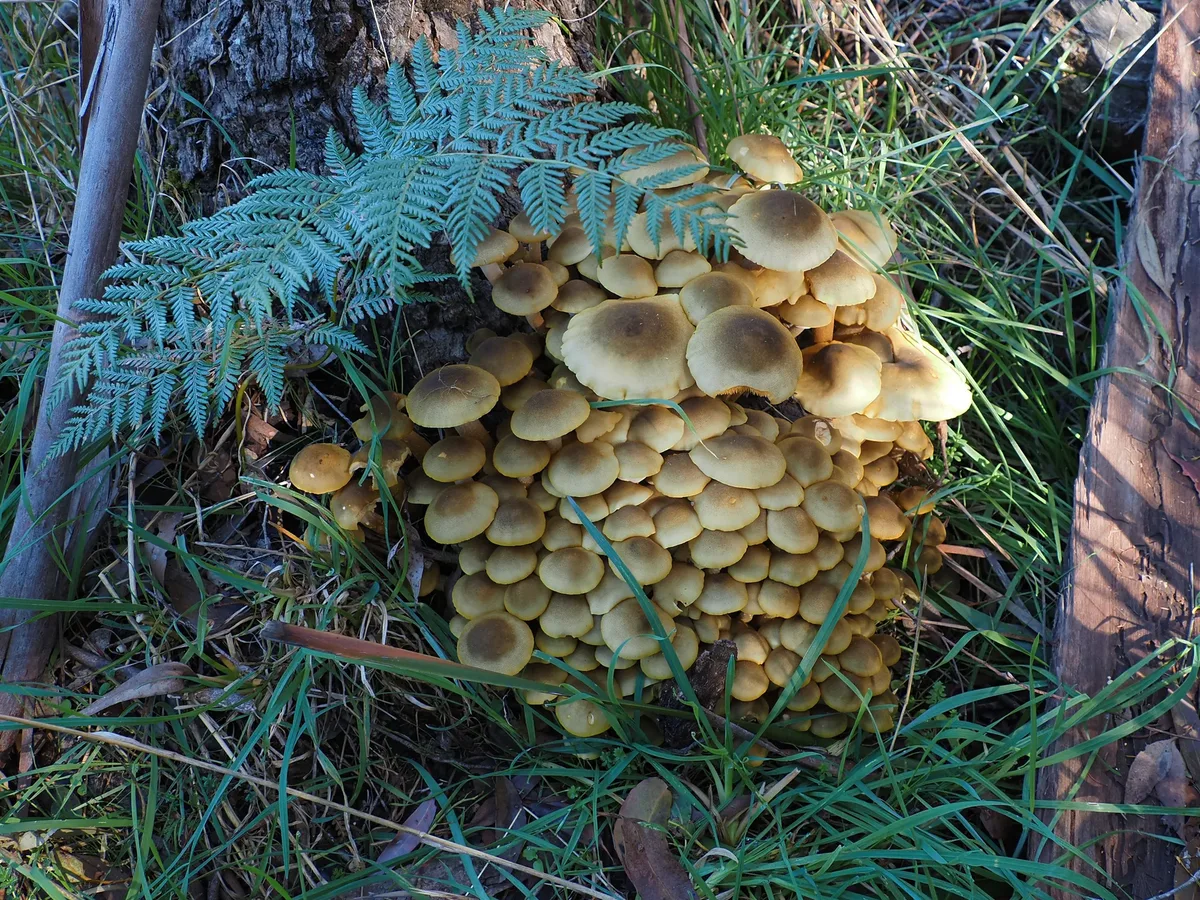 Cowirrie (CC0)River _ Forest (CC0)© Petra Holland (CC BY)
Edible only with the right preparation - or safe for some people but not others. Learn the caveats first.
Never eat a mushroom you are not 100% sure of - check the look-alikes below, and always cook wild mushrooms.
How to recognise it
Cap
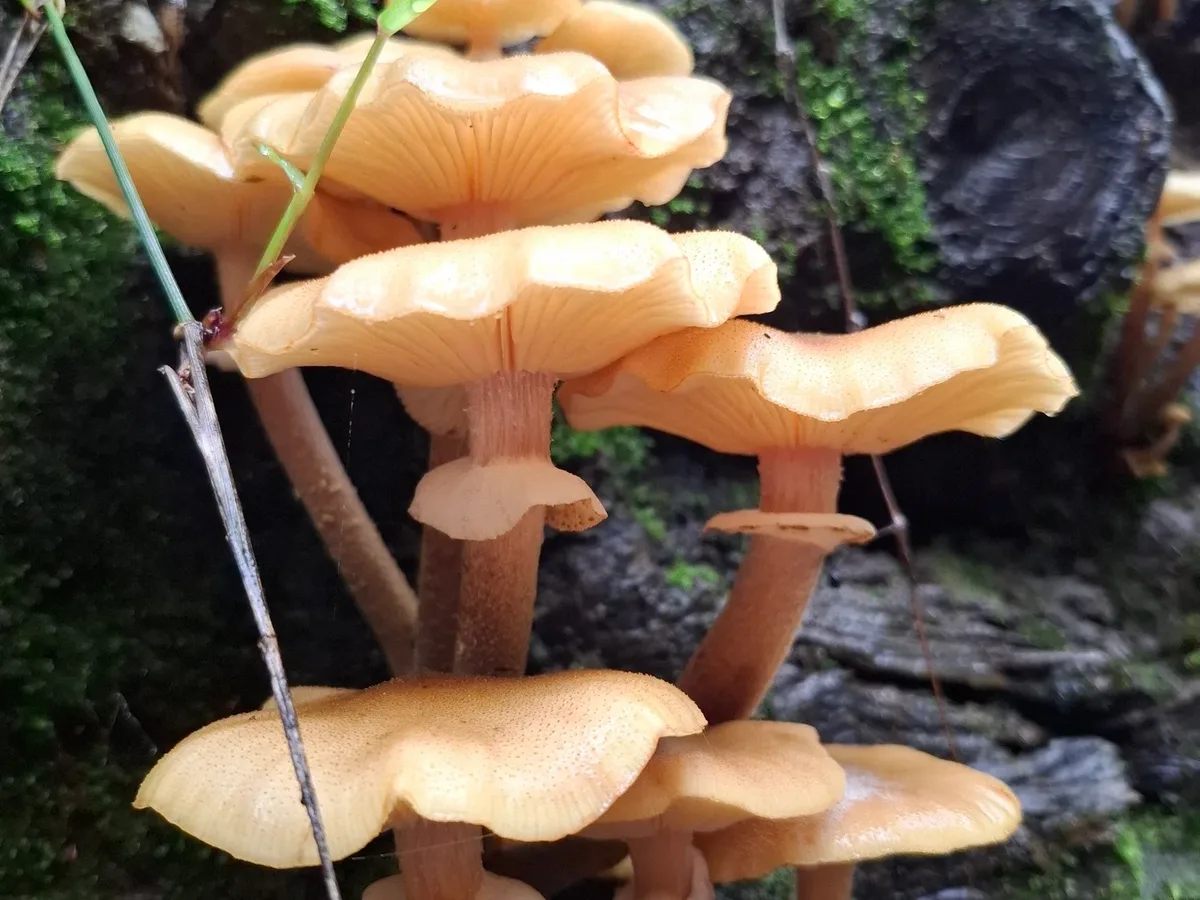
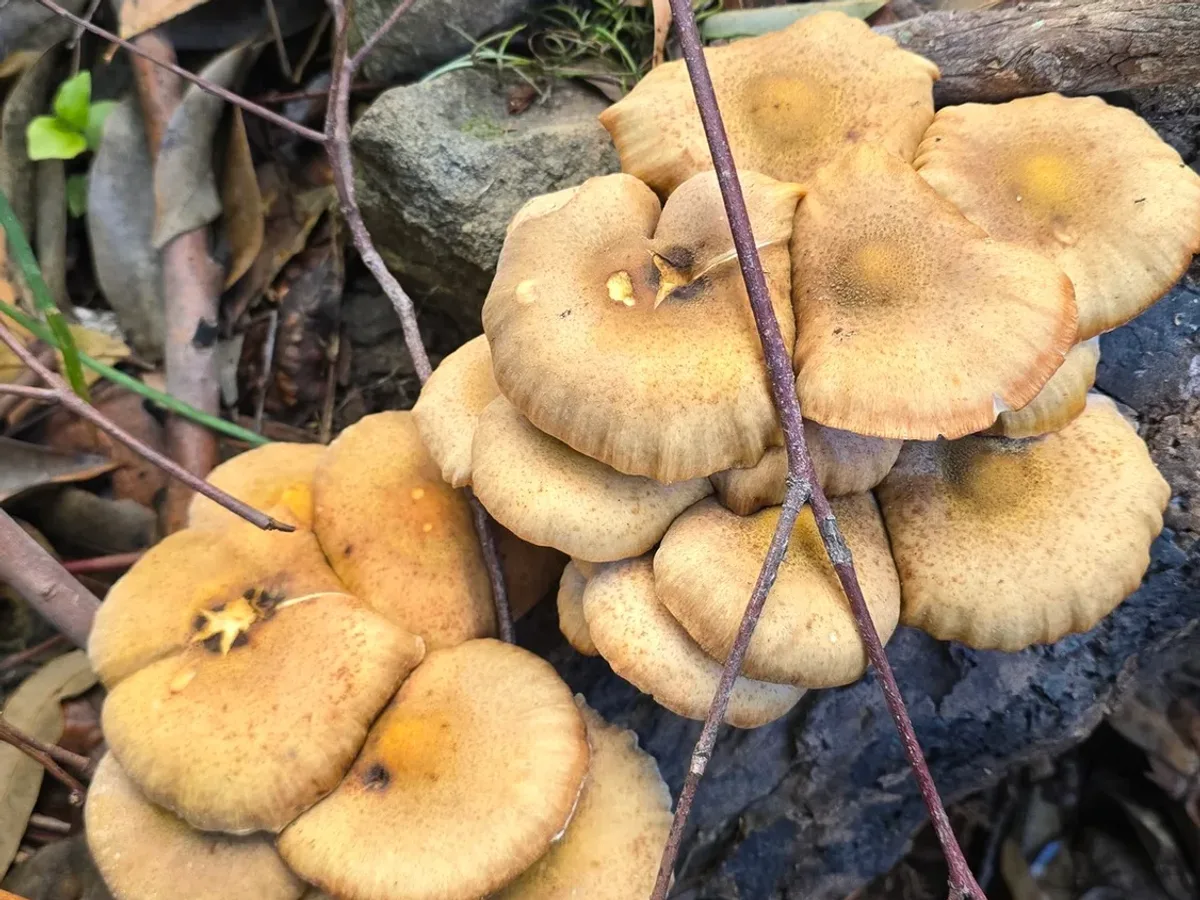
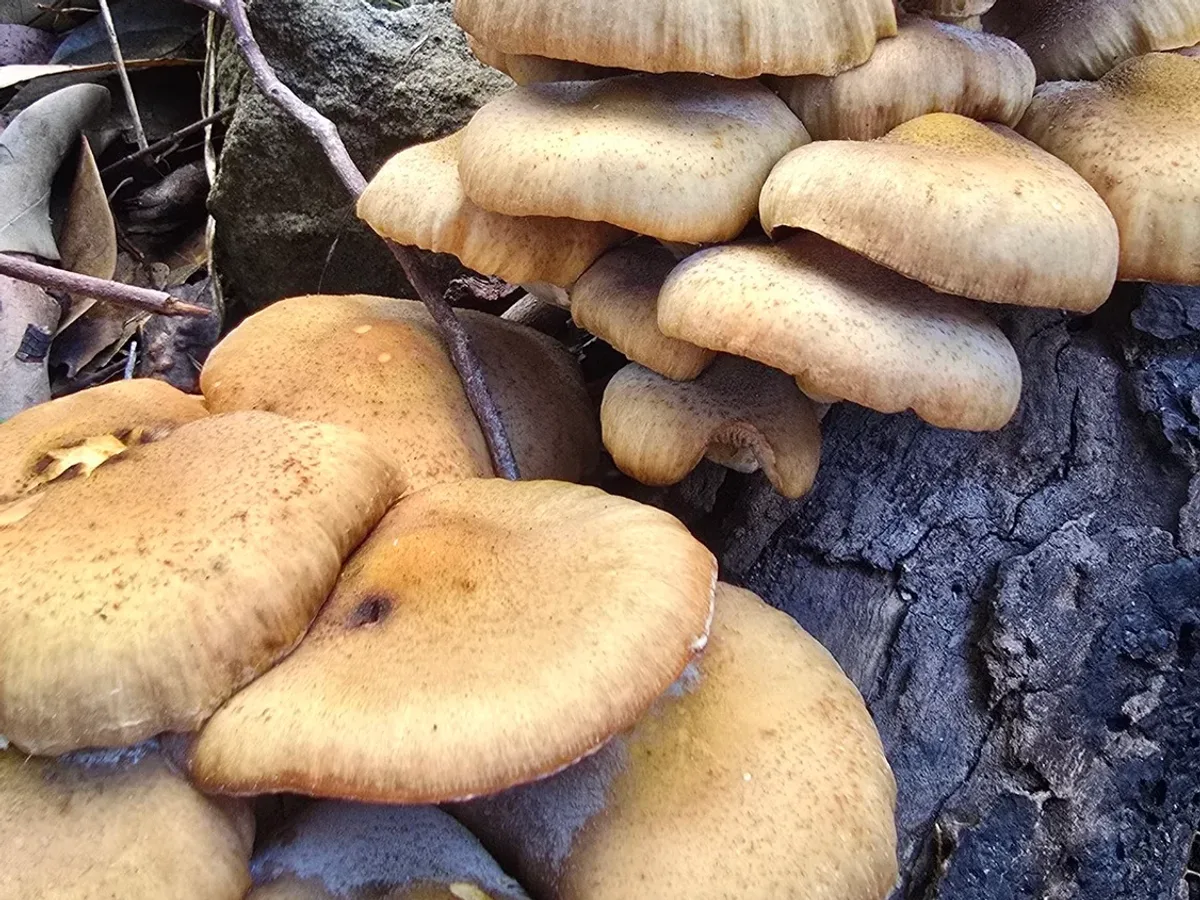
The cap of Armillaria luteobubalina spans 3-12 cm and passes through two distinct shapes with age: in youth it is stoutly convex with an inrolled margin; as it expands it flattens to broadly plane or shallowly depressed, losing the curvature but gaining breadth.
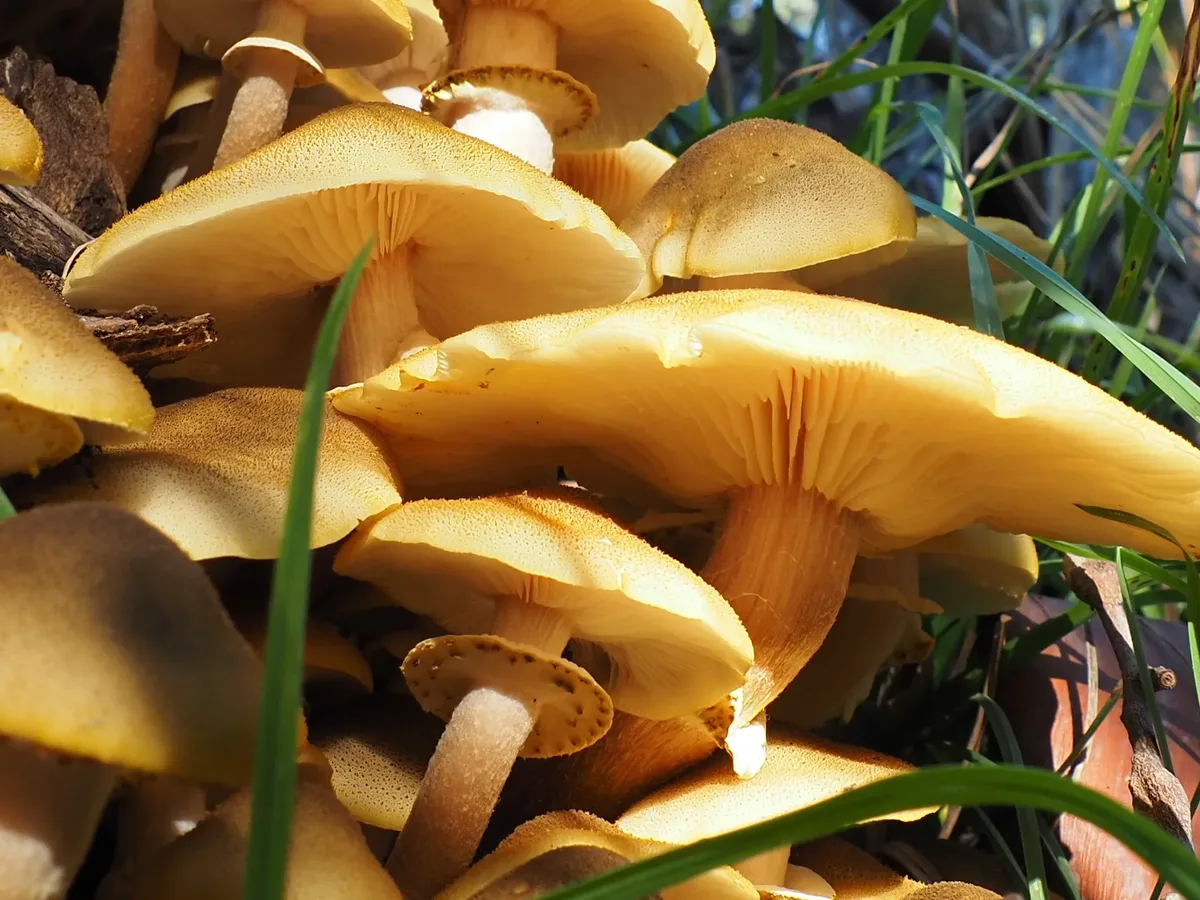
The background colour is a characteristic pale buff to warm ochre-buff or yellowish-tan - the scientific name luteobubalina captures this exactly, combining 'yellow' and 'buff' - typically paler toward the margin and more concentrated at the disc.
The centre carries small, fine, tawny-brown fibrillose scales that are most prominent in young caps and can wash away in heavy rain.
Gills
The gills are white to cream and stay that way for longer than in some related species, though they eventually develop faint rusty-yellow spotting with age - importantly, never pink at any stage.
Stem
The stem is 4-12 cm tall, tough and fibrous, pale white above the ring and streaked pale buff below it.
The ring is this genus's most consistent and reliable field mark: membranous, well-formed, persistent, positioned high on the stem, white to cream, and often slightly fringed on its lower surface.
There is no volva (no cup at the base), which separates it from potentially deadly Amanita species.
Spore print white - a critical check that must be confirmed before any harvest.
Under bark and in soil around the base of affected trees, the flat black cord-like rhizomorphs (bootlaces) of the mycelium are often visible, a characteristic structural feature of the Armillaria genus.
Why it's dangerous
The primary danger is accidental consumption of Galerina marginata, which:
- can grow on the same log or within the same cluster as A. luteobubalina
- shares the general appearance of a brown-capped ringed wood-dweller
- contains lethal amatoxins with no antidote
A spore print check is the only reliable field separator.
The secondary risk is eating A. luteobubalina itself without correct cooking (thorough boiling with water discarded), which causes gastrointestinal illness. Raw consumption should be strictly avoided.
Toxin
The toxic compounds in raw Armillaria species are sesquiterpene aryl esters known as melleolides and related structures, found in the fruitbodies and mycelium.
They inhibit cellular respiration at the mitochondrial level, and are responsible for the gastrointestinal symptoms (nausea, vomiting, cramps, diarrhoea) caused by raw or insufficiently cooked consumption.
Crucially, they are thermolabile - deactivated by thorough boiling - which is why the species is edible after correct preparation.
This class of compound is not the same as the amatoxins found in Galerina marginata or Amanita phalloides; they do not cause liver or kidney failure, and they do not persist after thorough cooking.
Symptoms
Raw or insufficiently cooked: nausea, vomiting, abdominal cramps, diarrhoea, typically within 1-3 hours of ingestion. Symptoms are self-limiting and resolve within a day or two in otherwise healthy adults.
If symptoms are severe, prolonged, or involve any neurological features, seek medical attention.
If there is any possibility that Galerina marginata was consumed (confirmed only by spore print, and the print was rust-brown), treat as an amatoxin emergency: onset of symptoms may be delayed 6-24 hours, and initial gastrointestinal symptoms may appear to improve before liver failure develops. Contact emergency services and poison information immediately.
Staying safe
Armillaria luteobubalina is edible only when thoroughly cooked. Like A. mellea and other honey fungus species, it contains heat-labile compounds - sesquiterpene aryl esters of the melleolide class - that cause gastrointestinal irritation when the mushroom is eaten raw or insufficiently cooked.
These compounds are deactivated by prolonged boiling. The standard safe preparation is a full rolling boil for at least 15-20 minutes in a generous volume of water, with the water then discarded before further cooking.
Eating raw or lightly sautéed specimens without parboiling is likely to cause nausea, vomiting, and stomach cramps. Even when properly cooked, a minority of people experience mild gastric upset, particularly on first consumption.
The practical safety rule: try a small portion after correct preparation and wait several hours before eating more.
The most serious safety concern is not the species itself but confusion with the deadly Galerina marginata, which can grow in the same cluster, on the same log, in the same season. A mandatory spore print check (white = safe to proceed; rust-brown = stop) is the non-negotiable step between basket and pan.
If you suspect you have eaten Galerina by mistake, seek emergency medical care immediately and contact the Poisons Information Centre (Australia: 13 11 26). Amatoxin poisoning has a deceptive delay of 6-24 hours before symptoms appear, and early intervention dramatically improves outcomes.
Where & when it grows
Habitat
Armillaria luteobubalina is the dominant Armillaria species in southern and south-western Australia and one of the most consequential wood-decay fungi in Australian ecosystems.
It is not a quiet forest resident: it acts as a simultaneous parasite and saprotroph, colonising living tree roots (where it causes progressive root rot) and persisting in dead stumps and logs long after the host has died.
Its host range is unusually broad for an Australian fungus, spanning native eucalypts, paperbarks, and wattles through to orchard trees, grapevines in wine regions such as the Barossa Valley and Coonawarra, and pine plantations. This breadth makes it one of Australia's most economically significant fungal pathogens.
In the forest, however, it plays a vital ecological role as a decomposer, converting structural cellulose and lignin back into nutrients.
Fruit bodies emerge at the base of trees, at stumps, or - strikingly - apparently from bare soil where the mycelium is colonising roots underground. The presence of flat black bootlace rhizomorphs under bark or in exposed soil near the fruiting site is a strong confirming signal.
The species is common throughout Victoria, South Australia, Tasmania, south-western Western Australia, and parts of New South Wales, favouring tall open forest, dry and wet sclerophyll forest, and sheltered woodland gullies.
When
Fruiting occurs in the Southern Hemisphere autumn through early winter, typically March through July, with the most productive flush in April-May after the first sustained cool-season rainfall has penetrated dry summer soils.
The biological trigger is a combination of falling soil temperature - below roughly 15 degrees C - and adequate moisture after a typically dry Australian summer. A second smaller flush may follow in June or July if rain continues.
Individual flushes are brief, often only days, reflecting the typical Armillaria pattern of rapid emergence and equally rapid deterioration. The same stump or root collar tends to produce fruitbodies year after year, making known sites reliably repeatable. Summer fruiting is essentially absent.
How it grows
Like all Armillaria species, A. luteobubalina spends most of its existence hidden from view. The bulk of the organism is a perennial mycelial network that threads through wood and soil, digesting cellulose and lignin from living root tissue and dead wood alike.
The network extends itself through the distinctive flat black rhizomorphs - bootlaces - that can travel metres through soil to contact new woody substrates, allowing the fungus to spread without relying solely on airborne spores.
At the base of colonised trees, white mycelial fans can be found beneath loosened bark at the root collar - a diagnostic sign of active Armillaria root rot.
The fruit bodies we see are the seasonal expression of this hidden mass: dense, overlapping clusters that push rapidly from the base of trees, stumps, or the ground above buried roots when autumn rain and cooling temperatures coincide. A single productive stump can generate hundreds of caps in a single flush.
Like its relatives A. mellea (Europe) and A. novae-zelandiae (New Zealand), A. luteobubalina produces foxfire - a faint cold bioluminescence emitted by the living mycelium in actively colonised wood, faintly visible on very dark nights.
Fruiting conditions
Fruits in Southern Hemisphere autumn as soils cool after summer dry-down and receive the first significant rain events of the cool season. Soil temperature drop below approximately 15 degrees C combined with 25+ mm over the prior 14 days triggers the main flush. Fruitbodies can emerge quickly (5-7 days after rain) from established perennial mycelium but may take up to 14 days in drier years. The same root systems and stumps fruit repeatedly year after year. Derived from published seasonal records for A. luteobubalina in Victoria and SA, combined with standard Armillaria fruiting ecology.
Look-alikes
The most critical and genuinely life-threatening confusion is with deadly galerina (Galerina marginata), a small to medium brown wood-dwelling mushroom that grows in clusters on stumps and logs - exactly the growth form of A. luteobubalina.
Galerina marginata contains alpha-amanitin, the same lethal amatoxin found in death caps (Amanita phalloides), which inhibits RNA polymerase II and causes fatal liver failure without an antidote. It can grow intermingled within a cluster of honey fungus on the same piece of wood.
The decisive separator is the spore print: G. marginata prints rust-brown to cinnamon; A. luteobubalina prints white.
Secondary features of Galerina:
- typically smaller (cap 1-5 cm, slender fragile stem)
- brown gills from the outset
- may have a more fragile, evanescent ring
But neither cap size nor ring alone is a reliable identifier. Never cook or eat any wood-dwelling clustered mushroom without a confirmed white spore print.
A second significant Australian lookalike is the sulphur tuft (Hypholoma fasciculare), which also grows in dense clusters on stumps. It has:
- distinctly yellow-green gills that never approach white
- a bitter taste (do not swallow)
- a purple-brown spore print
None of these match A. luteobubalina.
Other Armillaria species occur in Australia (A. hinnulea, A. fumosa) and overlap in region or habitat; all share the same white spore print and ring, and at the practical foraging level, all should be treated equivalently (cooked only, with the Galerina check in place). Armillaria novae-zelandiae (New Zealand) is closely related and treated similarly.
In orchards and parks, the introduced A. mellea (European honey fungus) may rarely be present; it is edible when cooked on the same basis.
Grows on the same logs and stumps, often intermingled within the same cluster as Australian honey fungus. Contains alpha-amatoxins identical to those in the death cap - lethal in small quantities. The decisive separator is the spore print: Galerina marginata prints rust-brown to cinnamon-brown; A. luteobubalina prints white. Secondary clues: Galerina is typically smaller (cap 1-5 cm), has brown (not white) gills from the outset, and the ring is more fragile and evanescent - but these features overlap and are not reliable on their own. Never harvest wood-dwelling clustered mushrooms without confirming a white spore print.
Other native Armillaria species occur in Australian forests. A. hinnulea tends toward darker brown caps with more prominent scales and grows primarily on Nothofagus in cooler regions; A. fumosa has a more olivaceous-brown cap and different host associations. At the foraging level all Australian Armillaria species share the white spore print, persistent ring, and tough fibrous stem. Species-level separation within the genus in Australia requires microscopy and molecular analysis. All should be treated identically: edible only after thorough boiling with water discarded, with mandatory spore print confirmation.
Edible species also growing in clusters on wood, bearing a ring. Distinguished by its hygrophanous cap (two-toned - drying paler from the centre outward, often clearly bicoloured), smaller size, and rust-brown spore print. The rust-brown print alone should stop collection; this is the same colour as deadly Galerina's print. Rarely encountered in Australia but possible under introduced trees.
Also grows in dense clusters on stumps and logs. Distinguished by distinctly yellow-green gills (never white or cream), an intensely bitter taste (do not swallow), and a purple-brown spore print. None of these features match A. luteobubalina, making separation straightforward if gills are examined and a spore print is taken.
A reference guide - never an edibility guarantee. When in doubt, leave it out.