Bulbous honey fungus
Armillaria gallicasyn. Armillaria bulbosa, Armillariella bulbosa, Armillariella gallica, Clitocybe bulbosa
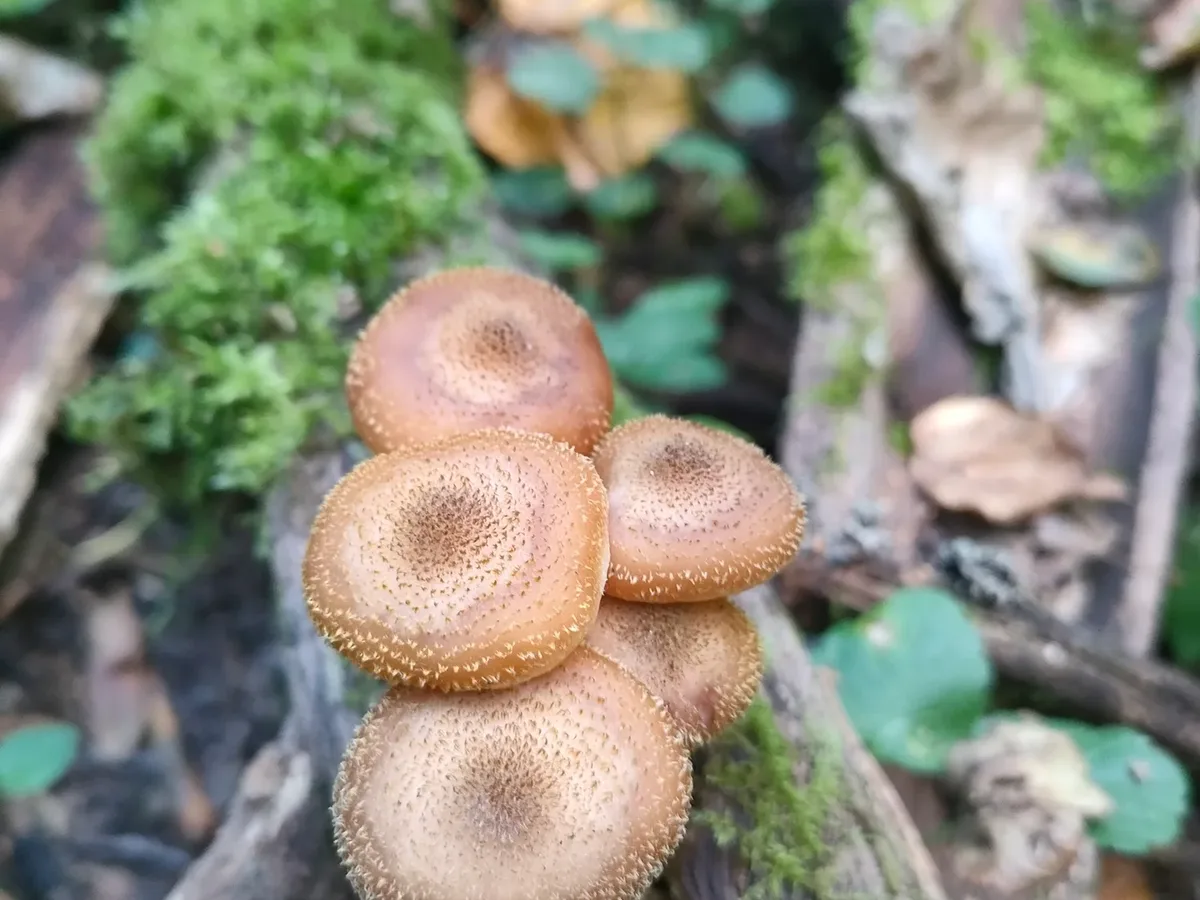 Капрал Натурал (CC0)
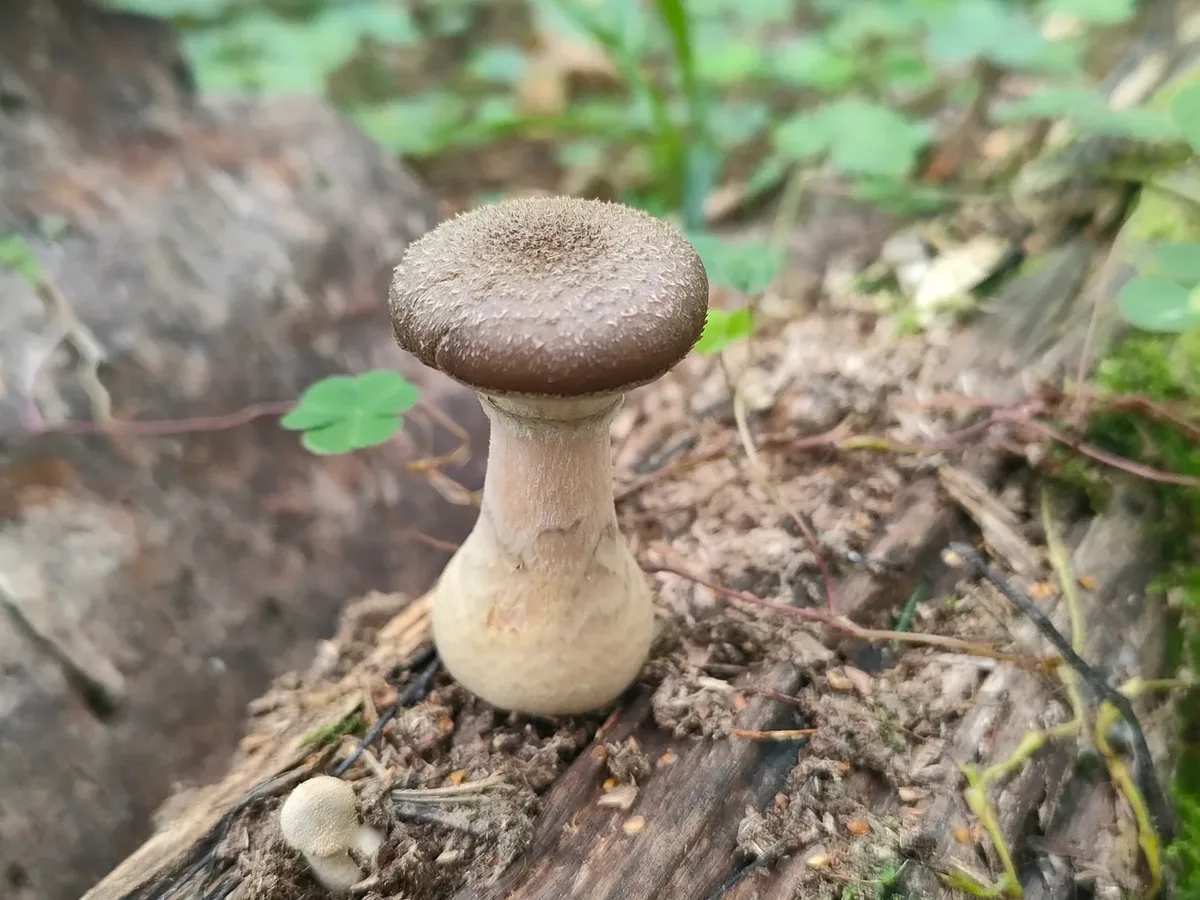 Капрал Натурал (CC0)
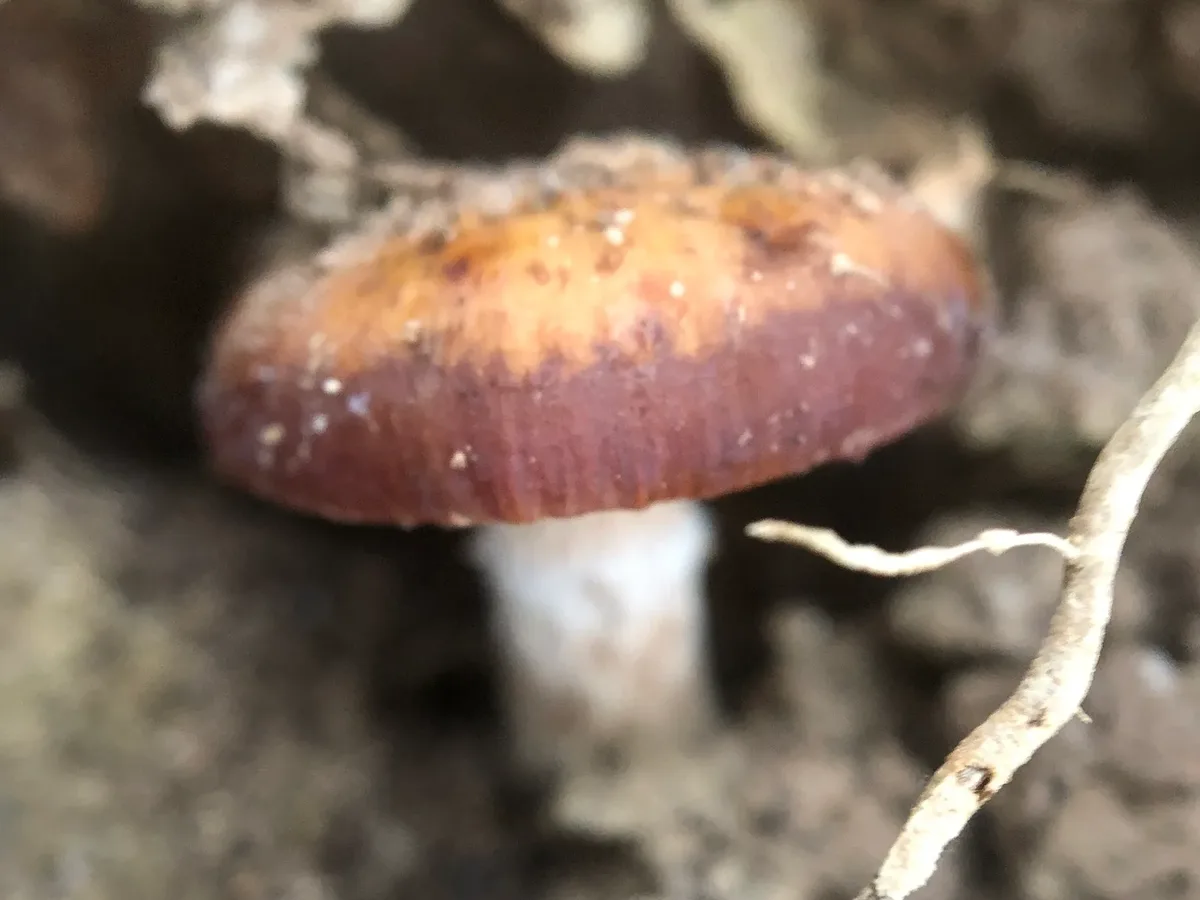 © James Kindt (CC BY)
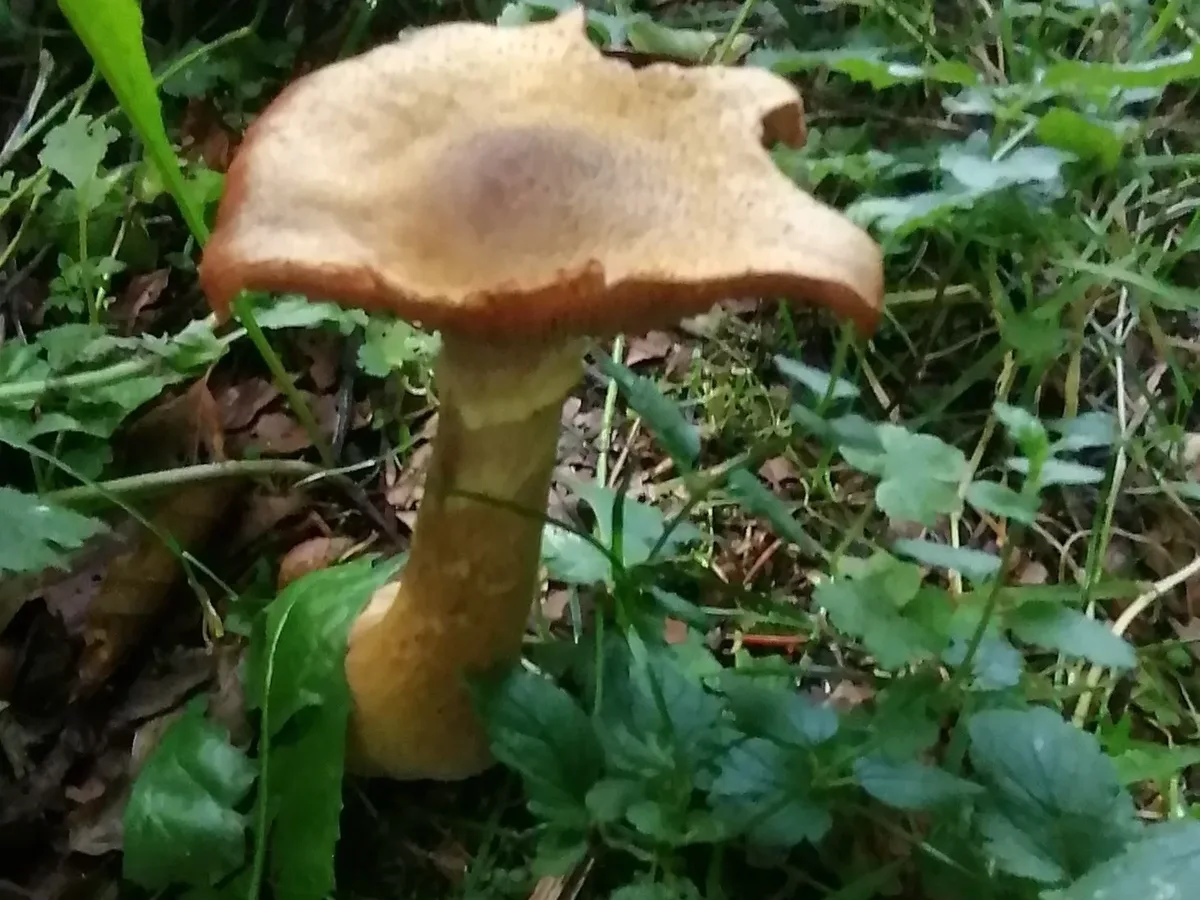 © tetyanakuchma (CC BY)
 © tetyanakuchma (CC BY)
 © tetyanakuchma (CC BY)
 Капрал Натурал (CC0)
 Капрал Натурал (CC0)Капрал Натурал (CC0)Капрал Натурал (CC0)
Edible only with the right preparation - or safe for some people but not others. Learn the caveats first.
Never eat a mushroom you are not 100% sure of - check the look-alikes below, and always cook wild mushrooms.
How to recognise it
Cap
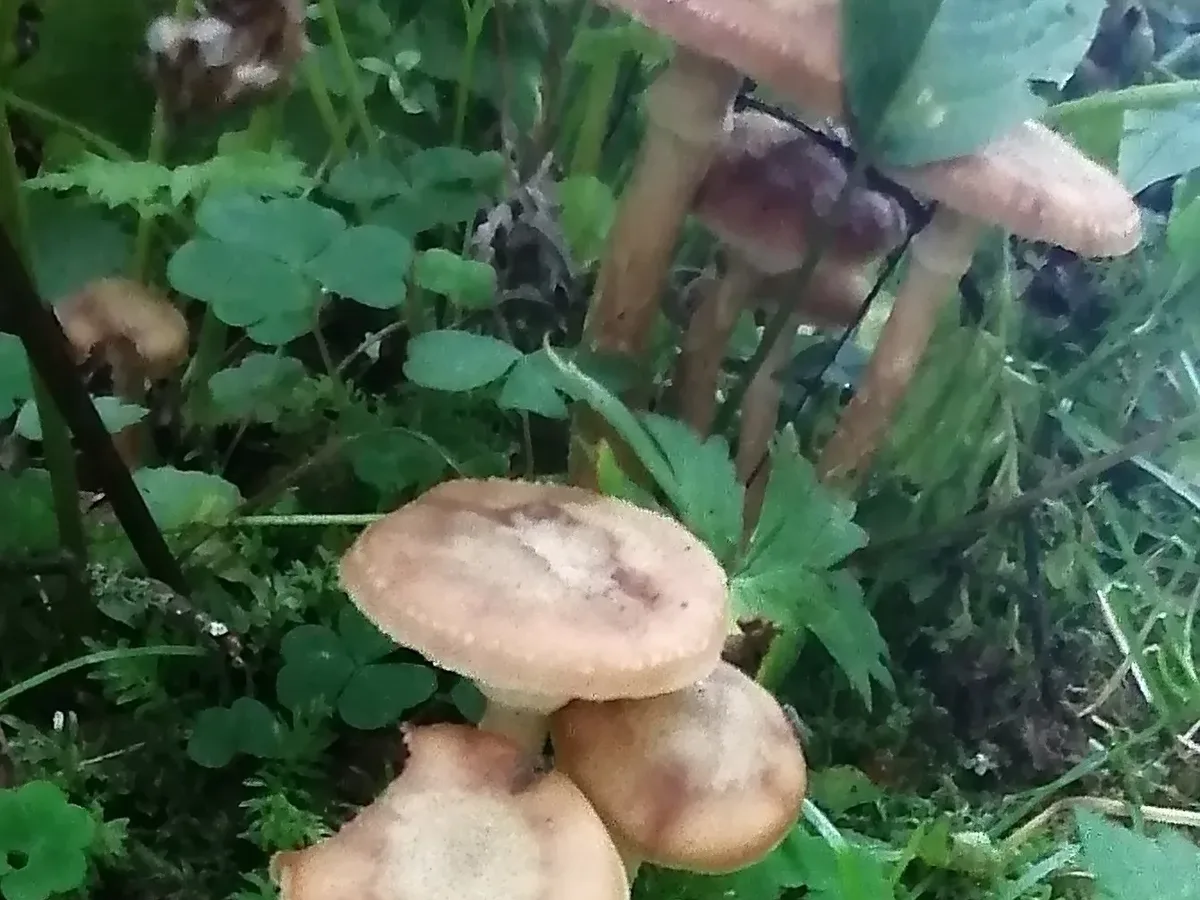
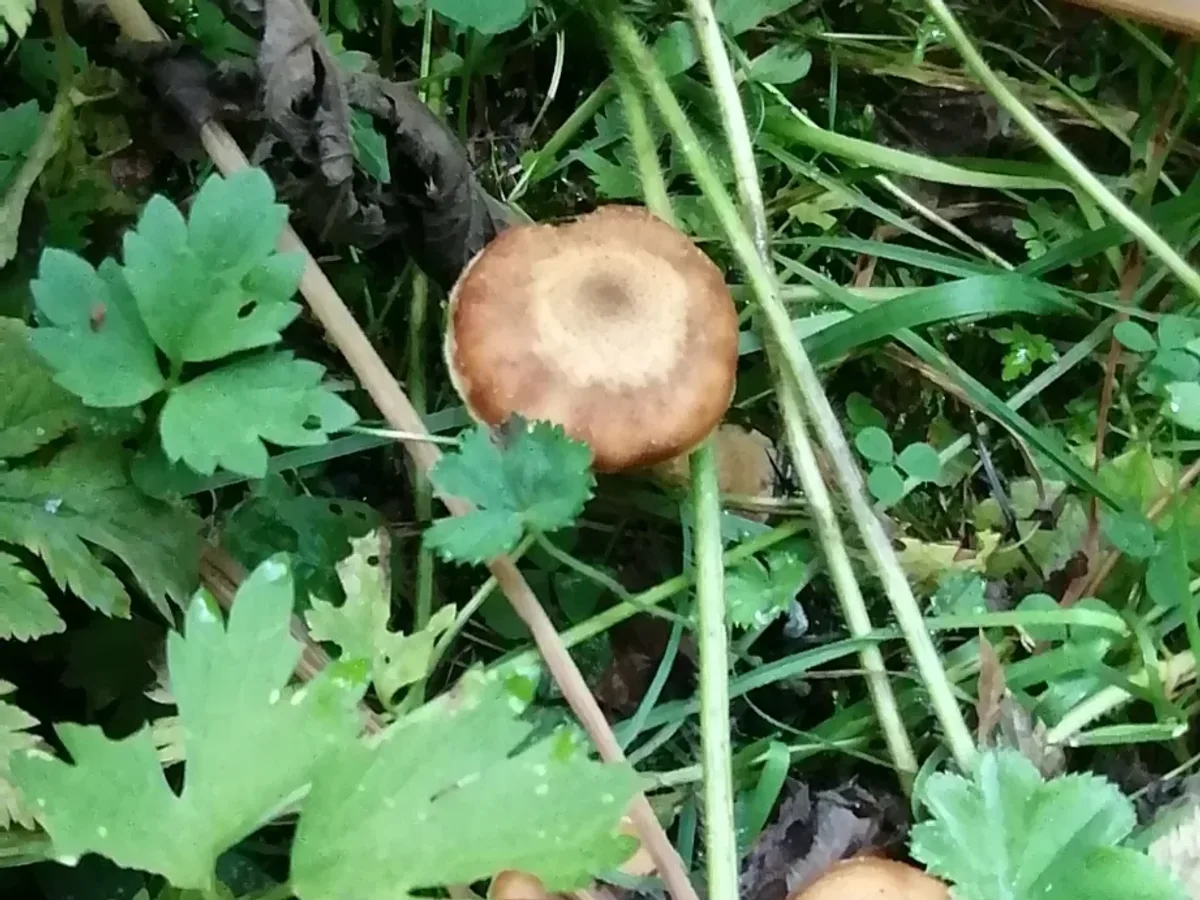
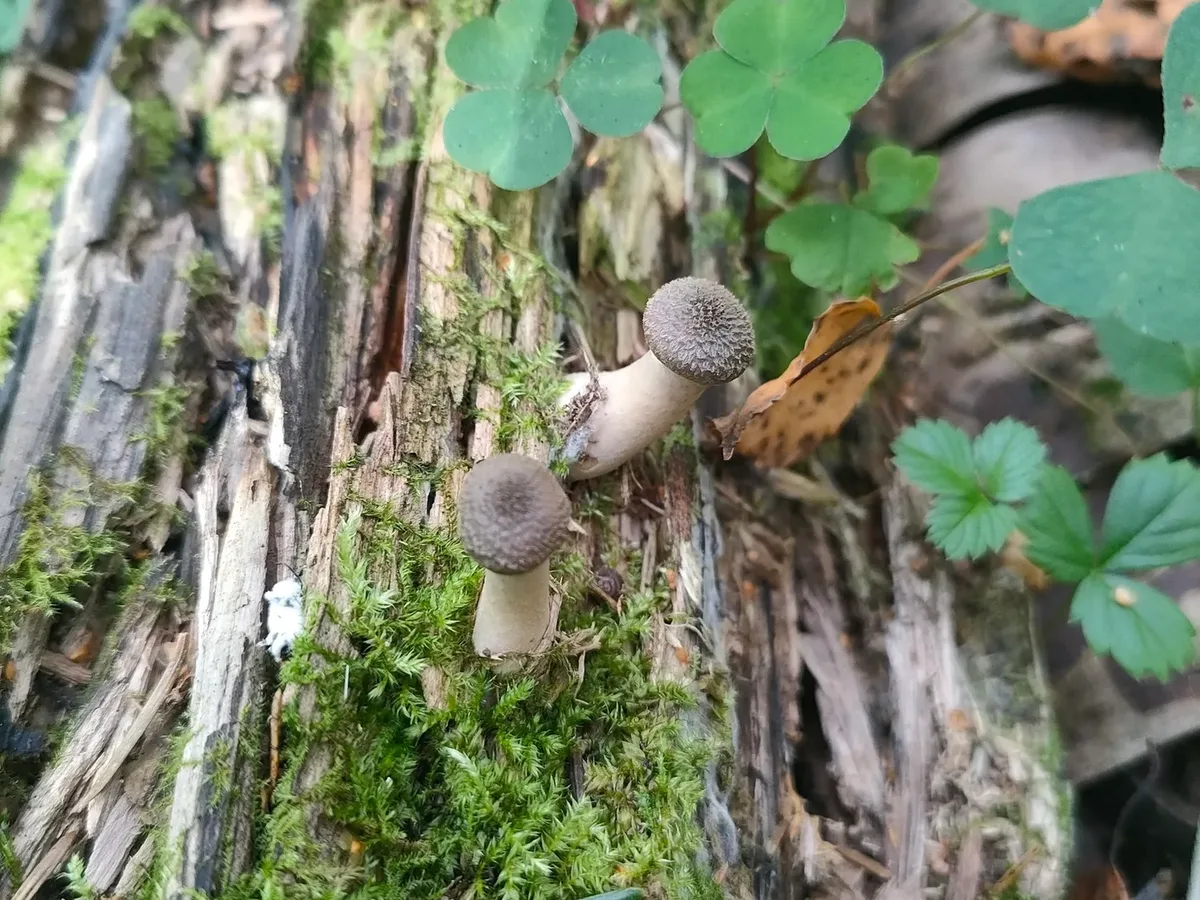
The cap is 3-9 cm across, honey-yellow to warm tawny-buff, dry, and dotted with small brownish fibrous scales toward the centre.
Gills / Pores
The gills are whitish then pale cream, slowly spotting rusty-brown with age; the spore print is white.
Stem
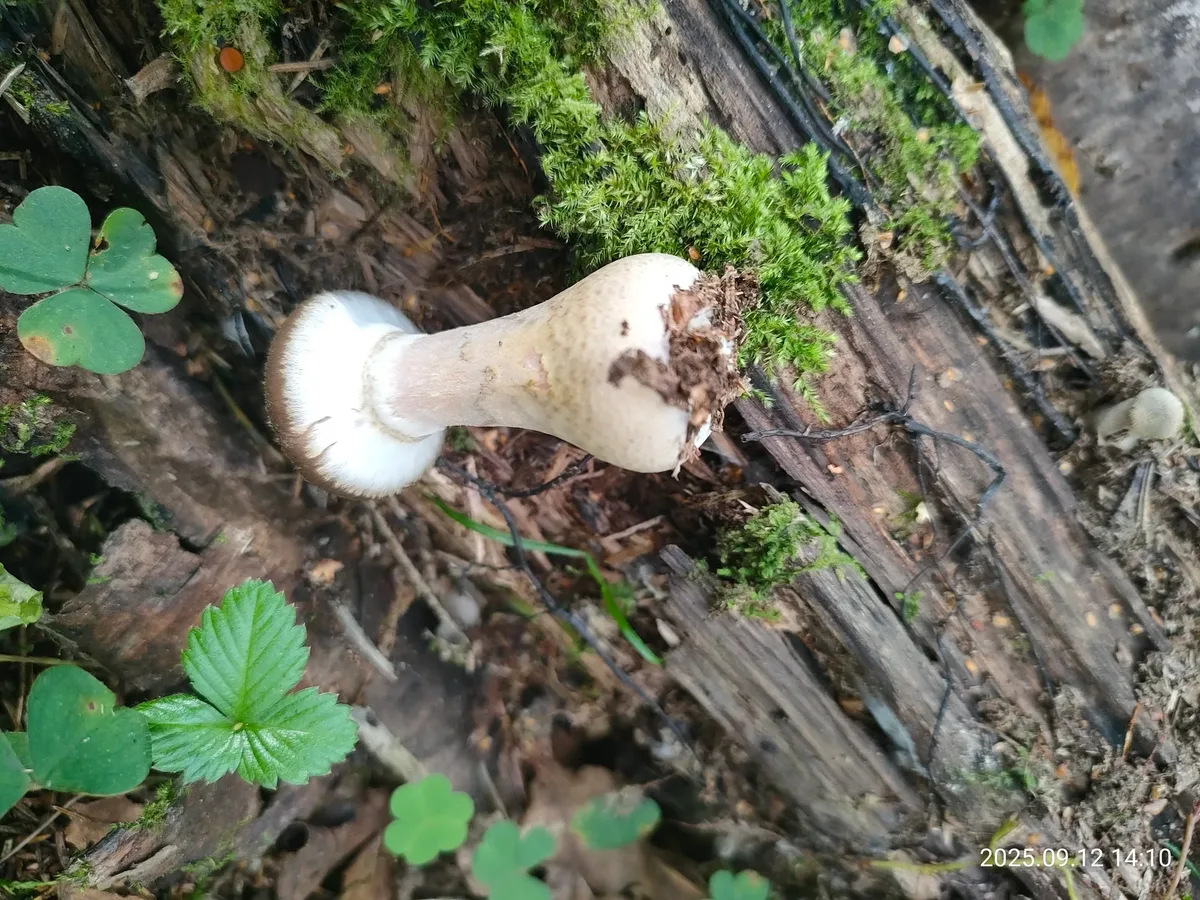
The most diagnostic feature of this species is the distinctly swollen, bulbous stem base - unusually fat and onion-like compared to the straight-stemmed Armillaria mellea - that is often partially buried.
The ring is yellowish to straw-coloured (not pure white as in A. mellea), typically with a cottony fringe.
Black bootlace rhizomorphs are present but less pronounced than in A. mellea.
Flesh
The flesh is firm and white with a mild smell.
Why it's dangerous
Non-lethal gastrointestinal irritant when raw or undercooked. Thoroughly cooked fruit bodies are considered safe for most people and are widely eaten across Europe and East Asia.
The primary life-threatening hazard in the field is misidentification: Galerina marginata, which can grow intermixed in the same cluster, contains alpha-amanitin and causes potentially fatal liver failure. Its amatoxins are NOT destroyed by cooking.
Always take a white-print confirmation and discard any rust-gilled individuals.
Toxin
Sesquiterpene aryl esters of the melleolide family (including melleolide, armillyl orsellinate, and related compounds).
These heat-labile compounds are produced by the fungal mycelium and are present throughout the fruit body.
They are structurally distinct from the amatoxins of Galerina and cause injury only to the gastrointestinal tract, not the liver or kidneys.
Full cooking (sustained boiling or high-heat sautéing) degrades them to non-toxic breakdown products.
Symptoms
Nausea, vomiting, abdominal cramps, and diarrhoea typically beginning 30 minutes to 3 hours after ingestion of raw or undercooked material. Onset is rapid compared to liver-toxic syndromes.
Symptoms are self-limiting in most cases, resolving within 6-24 hours with supportive care.
Even after thorough cooking, a minority of individuals with gastrointestinal sensitivity may experience mild nausea; first-time eaters should try a small portion.
Staying safe
All Armillaria species, including A. gallica, should be thoroughly cooked before eating - never eat raw. The responsible compounds are thermolabile and are inactivated by full cooking, but ingesting raw or undercooked material reliably causes gastrointestinal illness.
A minority of people experience digestive upset even after correct preparation; try a modest portion at the first sitting.
The primary safety hazard at harvest is accidental inclusion of Galerina marginata: its amatoxins are NOT destroyed by cooking and cause potentially fatal liver failure. Inspect and spore-print every collection.
Where & when it grows
Habitat
A wood-decay fungus growing from buried roots, stumps, and the bases of declining hardwood trees. Commonly appears to grow from bare soil when the wood substrate is fully underground.
Found in oak, maple, beech, and mixed deciduous forests, as well as in parks and gardens. Ranges widely across eastern North America, Europe, and East Asia.
When
Late summer to mid-autumn; primarily September-October in eastern North America.
A cool, wet September often triggers large flushes. Tolerates light frosts and is among the later honey fungi to finish the season.
How it grows
Saprotrophic and parasitic, attacking both living tree roots and dead stumps via black rhizomorphs that spread through soil.
Fruit bodies emerge in dense clusters, with many caps arising from a common base.
A single colony can fruit repeatedly from the same buried root system across many seasons. The underground organism can be very long-lived and extensive.
Fruiting conditions
Wood-decay saprotroph; fruiting triggered by the combination of autumn cooling and sustained moisture. Because the mycelium is within wood and buried roots, soil temperature is a secondary signal - air temperature cooling toward 10-15 °C and adequate rainfall are the primary triggers. Flushes appear 5-14 days after significant rain during the autumn cooling window. Returns to the same buried root system across multiple seasons.
Look-alikes
The most dangerous lookalike is Galerina marginata (deadly), which grows on the same substrates, contains lethal amatoxins, and can be intermixed in the same cluster. It is smaller, browner, has rust-brown spores and distinctly rust-brown (never whitish) young gills. Always take a spore print.
Other Armillaria species (A. mellea, A. ostoyae, A. sinapina) are closely similar but all are edible when cooked; the chief practical difference is the bulbous base of A. gallica.
Hypholoma fasciculare (sulphur tuft, poisonous) shares the cluster-on-wood habit but has bright sulphur-yellow to olive gills and a bitter taste.
Deadly. Grows on the same wood substrates and can be intermixed in the same cluster as Armillaria gallica. Galerina is smaller (cap 1.5-5 cm), warm brown to tawny throughout without a pale margin, has gills that are rust-brown from the outset (never whitish), a rust-brown to cinnamon spore print (never white), and a slender stem without a bulbous base. A. gallica always prints white. Contains alpha-amanitin; there is no antidote. Take a spore print from every collection.
Also edible when cooked. Distinguished by its darker brown to blackish-brown cap scales, darker gills that mottle more strongly, and a preference for conifers. Spore print white. The stem base is not as distinctly bulbous as in A. gallica. All Armillaria require the same spore print check against Galerina.
Very similar and also edible when cooked. A. mellea has a straighter, non-bulbous stem base, a white (not yellowish) ring, and often more pronounced dark scales on the cap. Black bootlace rhizomorphs are typically more robust. Both species are edible and the distinction matters mainly for botanical accuracy rather than safety.
Edible species also growing on wood with a ring. Distinguished by its strongly hygrophanous two-toned cap (date-brown when moist, drying from centre outward to pale ochre), a scaly lower stem below the ring, and rust-brown spore print. No bulbous base.
Poisonous. Grows in dense clusters on stumps and logs. Distinguished by bright sulphur-yellow to olive-green gills (never whitish), a yellow cap and stem, intensely bitter taste, and purple-brown spore print. Never has a bulbous base or yellowish ring.
A reference guide - never an edibility guarantee. When in doubt, leave it out.