Vermilion grisette
Amanita xanthocephalasyn. Amanitopsis xanthocephala
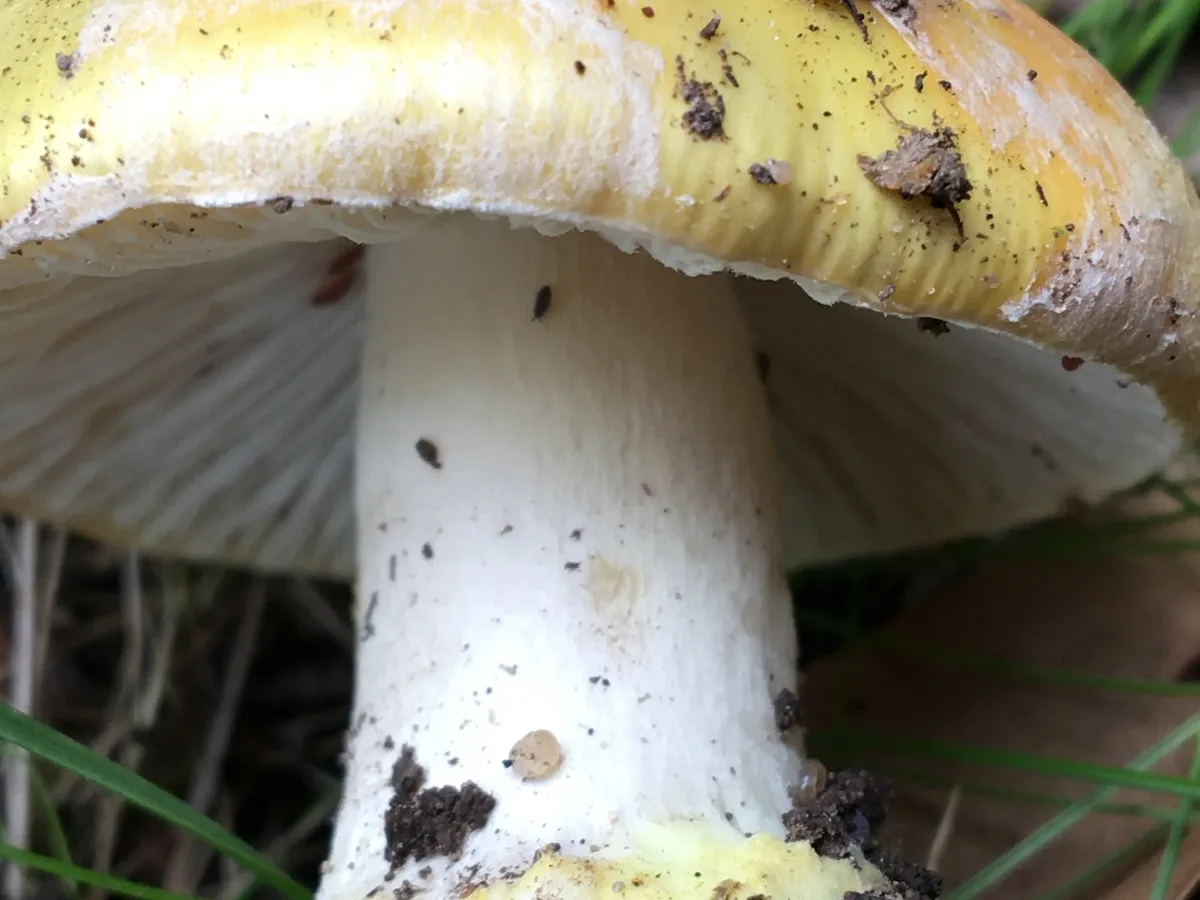 Eileen Laidlaw (CC0)
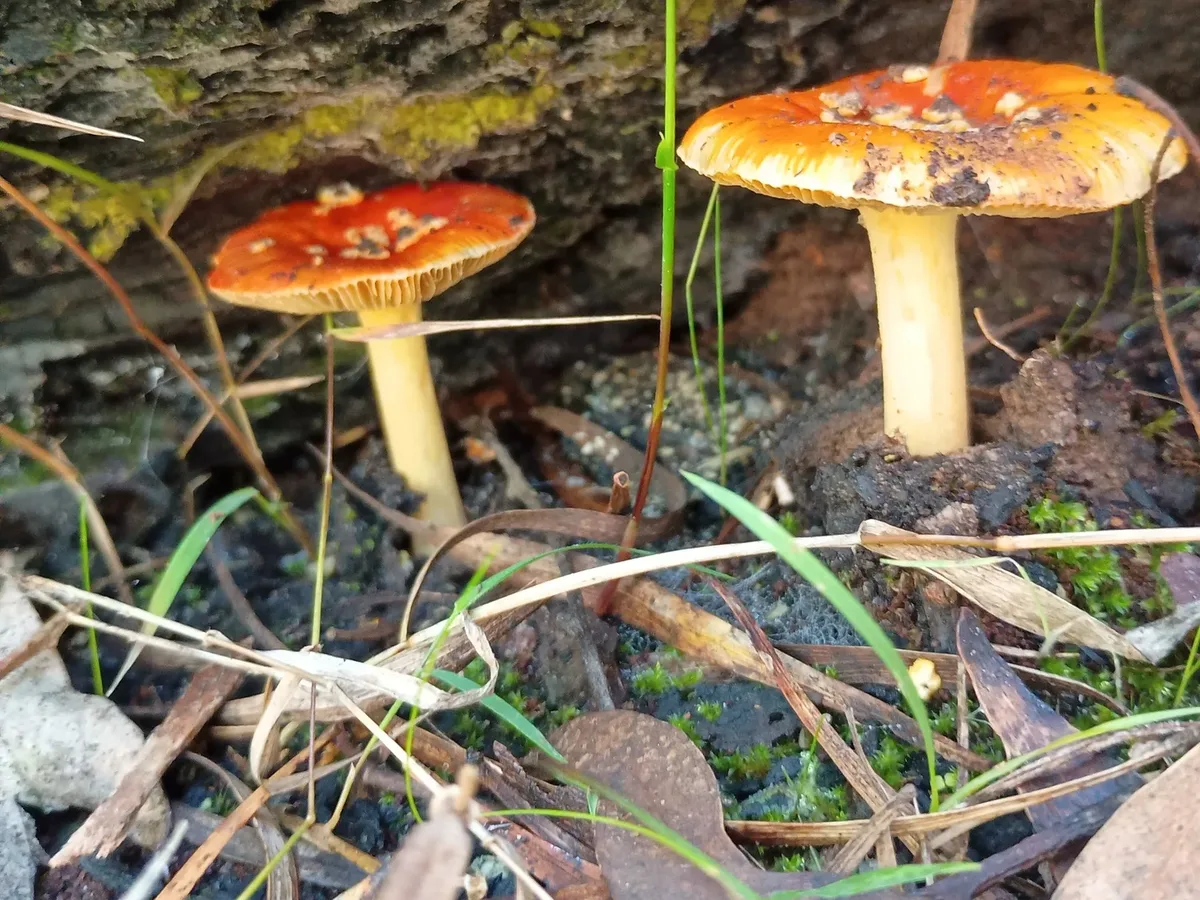 © grampianshiker (CC BY)
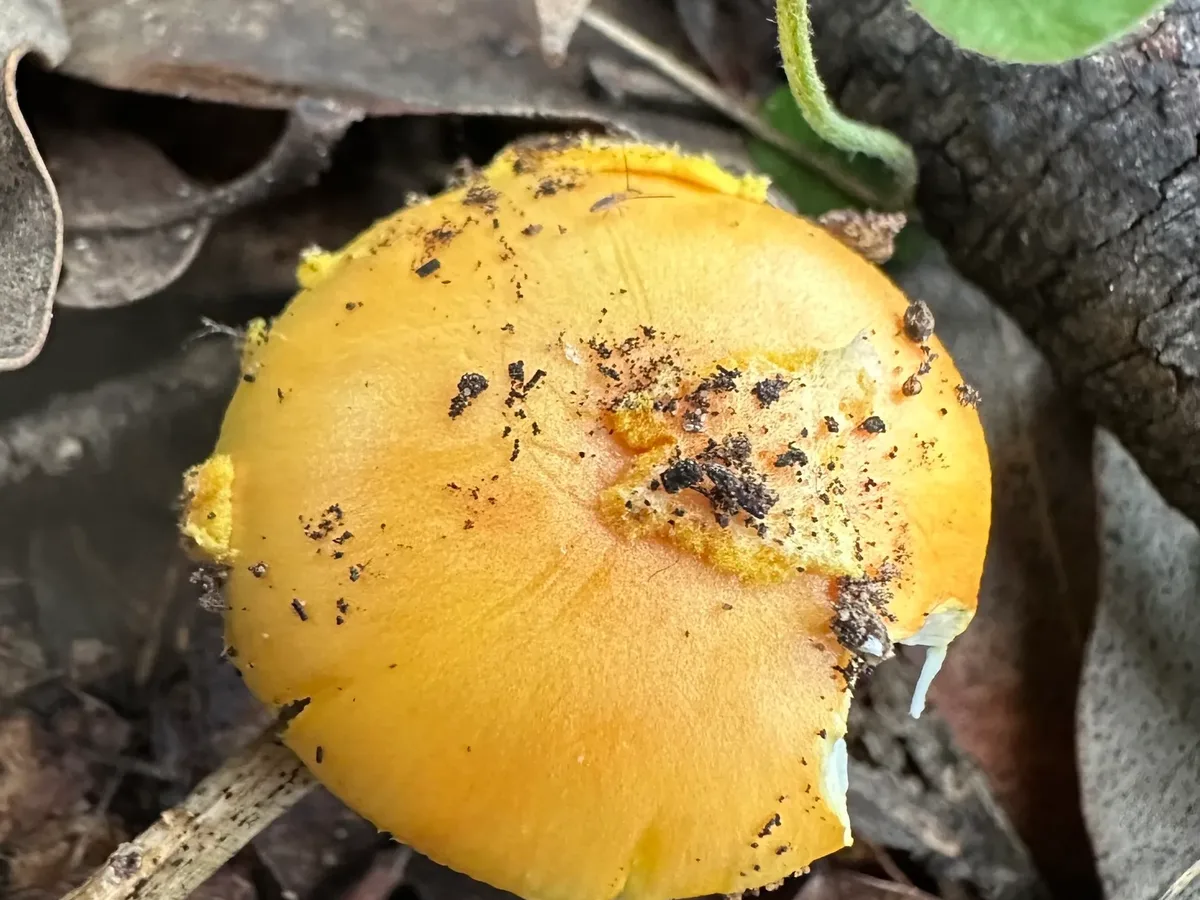 © prossington (CC BY)
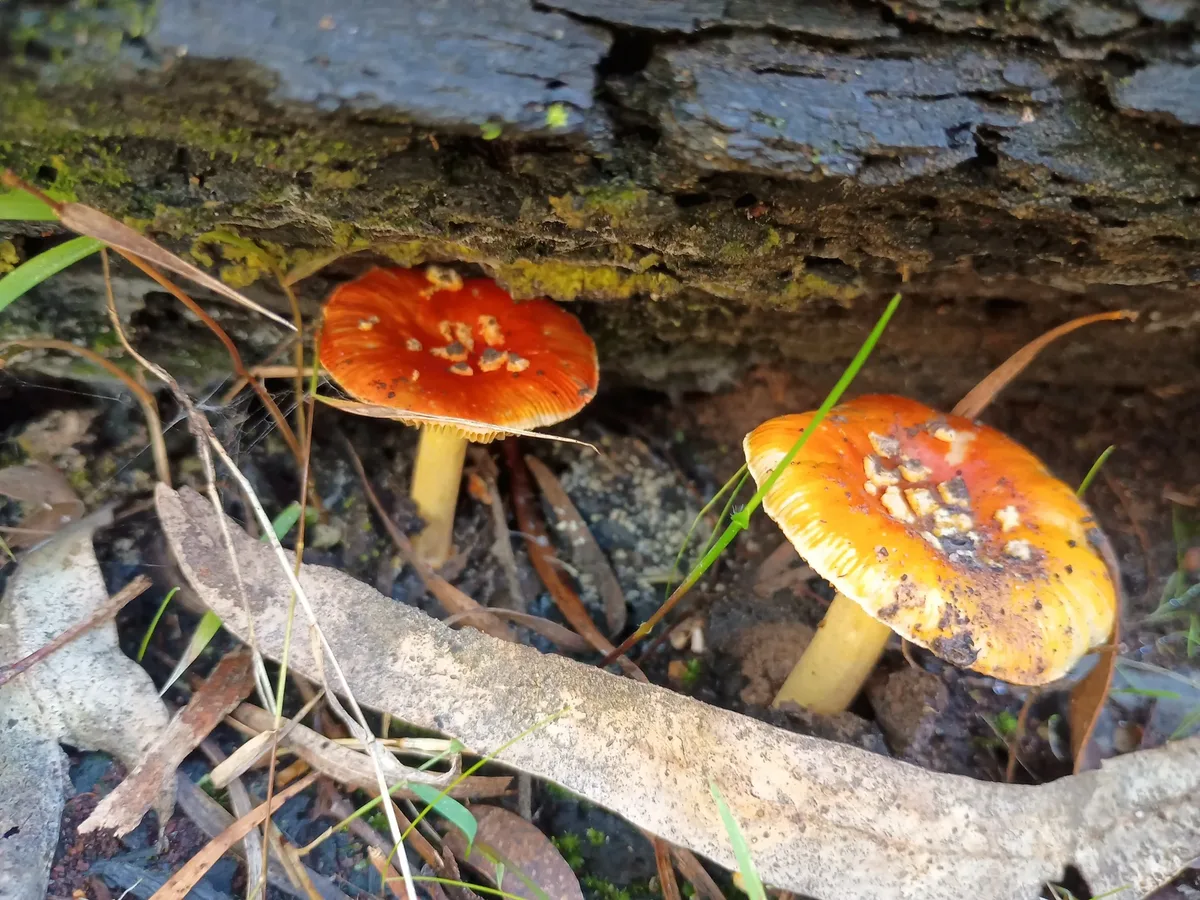 © grampianshiker (CC BY)
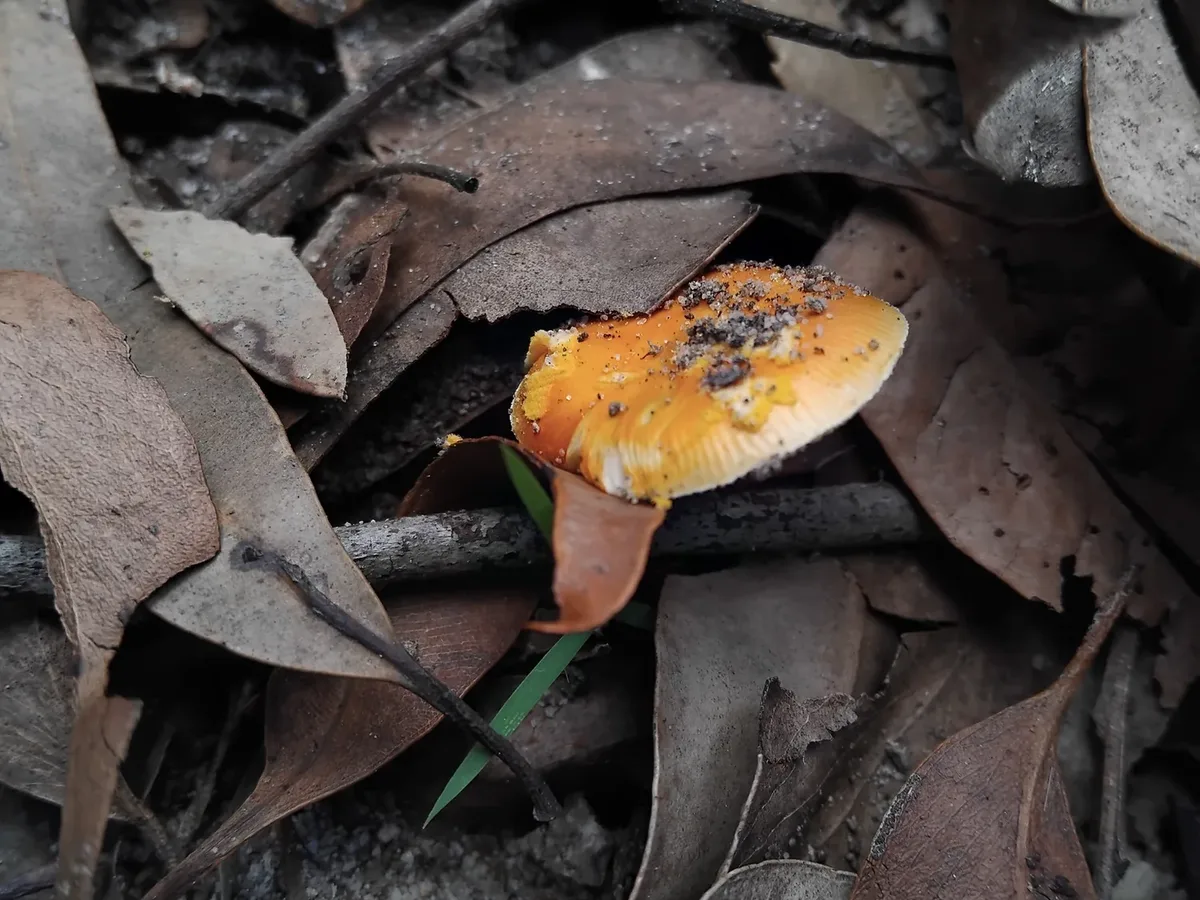 © Sofia Zvolanek (CC BY)
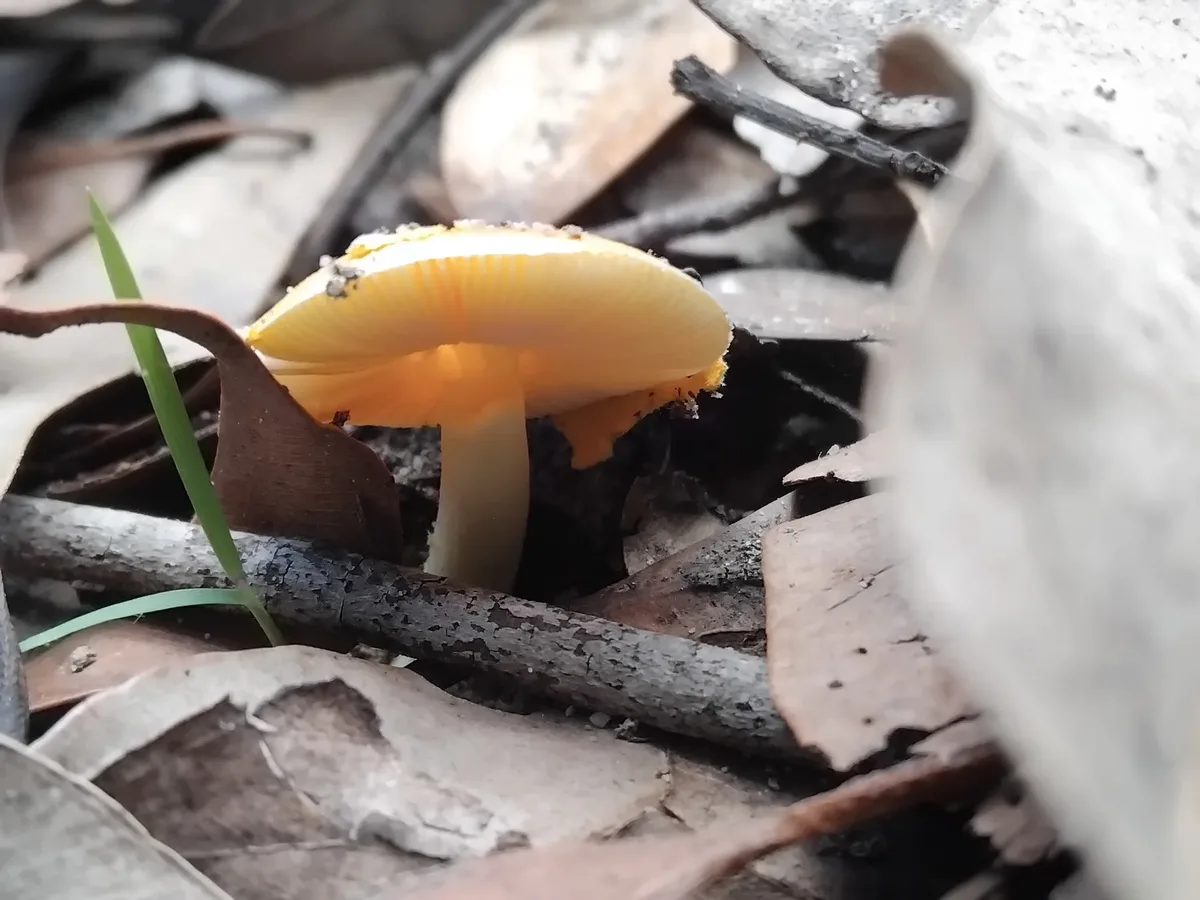 © Sofia Zvolanek (CC BY)
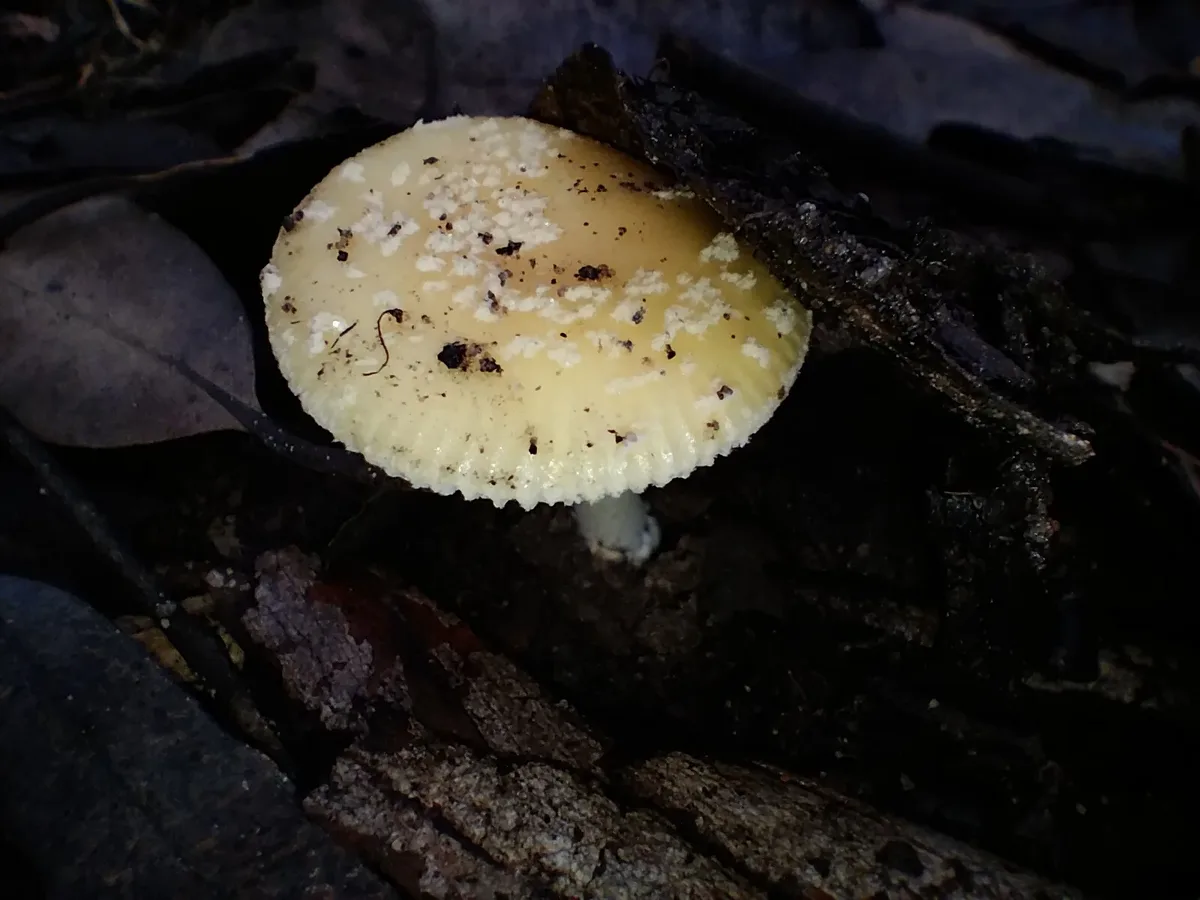 © Sofia Zvolanek (CC BY)Eileen Laidlaw (CC0)© grampianshiker (CC BY)
Edible only with the right preparation - or safe for some people but not others. Learn the caveats first.
Never eat a mushroom you are not 100% sure of - check the look-alikes below, and always cook wild mushrooms.
How to recognise it
The cap is the most immediately striking feature: vivid vermilion-orange to orange-red, 40-100 mm across, initially egg-shaped before expanding to broadly convex or nearly flat. The centre is often the most intensely coloured; the cap surface is smooth and dry in fine weather.
The key structural features are:
- 1A strongly striate (radially grooved) margin - run your finger along the cap edge and you will feel distinct ridges.
- 2White, free gills that do not change colour.
- 3NO ring on the stem - unlike Amanita muscaria or any ring-bearing Amanita, this species has a clean white stem with no skirt or ring remnant anywhere on it.
- 4A large, sac-like white volva at the buried stem base, often 25-45 mm wide.
Confirming all four characters is essential before drawing any conclusions.
Spore print is white; spores are non-amyloid (a laboratory character that confirms section Vaginatae).
Where & when it grows
Habitat
Strictly mycorrhizal with native Eucalyptus and related Myrtaceae across south-eastern and south-western Australia.
Unlike Amanita phalloides (the introduced death cap), which is found only near planted exotic trees such as oaks and chestnuts, A. xanthocephala grows deep in native eucalyptus bush.
It is one of the most visually conspicuous native mushrooms in Australian woodland, and its vivid colour sometimes encourages foraging curiosity. It can appear in suburban parks and gardens wherever mature Eucalyptus trees remain.
When
Autumn to early winter in the Southern Hemisphere (March-July), with peak fruiting in April-June.
Like most ectomycorrhizal fungi, fruiting requires the dual trigger of adequate soil moisture from autumn rains and declining soil temperatures.
After a dry summer, a series of good autumn rains - typically 30 mm or more over a 10-14 day window - followed by cooling temperatures to around 10-15 °C triggers the main flush. In dry years, fruiting may be sparse or delayed.
How it grows
Solitary or loosely scattered. Each fruiting body begins life as a white egg tucked just below the soil surface, wrapped entirely in the universal veil.
That egg stage can persist for several days - the fully formed mushroom already present inside, waiting on the right combination of moisture and temperature before it pushes free. When it does, the cap can expand noticeably within a single damp night.
Always dig carefully around the base to expose the entire volva rather than snapping the stem at ground level - the sac-like volva is a critical identification feature and must be seen intact.
Fruiting conditions
Autumn fruiter in the Southern Hemisphere; flushes follow soaking rains as soil cools below approximately 18 °C. Peak April-June.
Look-alikes
The vivid orange-red cap is distinctive among Australian fungi, but several important confusions exist.
Most critically, at the button stage (before the cap has emerged from the universal veil) A. xanthocephala is an oval egg in a white sac, indistinguishable in the field from the egg stage of Amanita phalloides, Amanita virosa, or other deadly species - never eat any Amanita egg.
Once expanded, the absence of a ring is the most important distinction from ring-bearing species. Amanita muscaria (fly agaric) shares vivid red to orange colouration but always has a membranous ring on the stem and wart-like white veil patches on the cap.
Amanita phalloides (death cap) is greenish-yellow to pale olive-brown with a ring and volva; it cannot be confused with the orange A. xanthocephala in mature specimens, but immature or pallid cap forms increase confusion risk.
Amanita hemibapha and related grisettes in the Caesareae/Vaginatae alliance are edible but share the grisette form; they are distinguished by cap colour (reddish-brown, tawny) and geographic distribution.
At the egg/button stage, before the cap has pushed out of the universal veil, A. xanthocephala is indistinguishable from the deadly death cap - both are white oval eggs in a sac-like volva. Never harvest any Amanita at the button stage. Once expanded, A. phalloides is greenish-yellow to pale olive-brown with a prominent ring on the stem; A. xanthocephala is vivid orange-red with NO ring. Both have a sac-like volva.
Like all Amanita species, A. virosa begins as a white egg in a sac - at this stage it is impossible to distinguish it from A. xanthocephala by external inspection alone. Once expanded, A. virosa is pure white with a ring; A. xanthocephala is bright orange-red without a ring. The egg-stage confusion is the primary danger.
Amanita hemibapha and related species in section Caesareae are edible grisette-like Amanitas with orange to red caps and yellow gills. A. xanthocephala has white gills. Additionally, A. hemibapha as recorded in Southeast Asia and Australasia has a distinct distribution. Yellow gills vs. white gills is a reliable separator if clearly observed.
Amanita muscaria shares vivid red to orange-red colouration but always has a membranous, skirt-like ring on the stem and white wart-like patches (veil remnants) on the cap surface. A. xanthocephala has NO ring and its cap is typically smooth without warts. A. muscaria is toxic (ibotenic acid/muscimol) though rarely fatal in adults; both species should be avoided.
Other grisettes share the ringless stem and sac-like volva of A. xanthocephala but differ in cap colour - typically grey-brown, tawny, or buff rather than vivid orange-red. All grisettes should be treated with caution given the risk of confusion with the deadly Phalloideae at the egg stage.
In the kitchen
Picking & cleaning
Amanita xanthocephala belongs to section Vaginatae - the grisettes - a group that lacks the amatoxins responsible for the majority of fatal mushroom poisonings worldwide. Some grisettes have been eaten after thorough cooking, and a few are well-regarded edibles in other parts of the world.
But formal toxicological studies on this specific Australian species are limited, and it is not an established part of any Australian foraging tradition. The honest position is that the safety data is incomplete.
If you are considering a harvest, three things must all be true:
- 1You are confident in the identification: striate cap margin, complete sac-like volva, and absolutely no ring on the stem.
- 2You would never harvest it at the button or egg stage, when it cannot be distinguished from a deadly species.
- 3You have read and understood the safety notes below.
This guide does not recommend harvesting it for food.
Cooking
If consumed, thorough cooking is non-negotiable - grisettes as a group are indigestible and potentially irritating when eaten raw. That is not merely tradition: raw consumption of Amanita section Vaginatae has caused gastrointestinal illness in documented cases.
Boil or sauté until fully cooked; do not treat it like a species where undercooking is a matter of preference.
That said, this guide does not recommend consuming this species. The formal safety data for the Australian A. xanthocephala is thin, and the risk of a misidentification with a genuinely deadly relative is real enough that no culinary value justifies the uncertainty.
Good to know
This species is in section Vaginatae (grisettes), which as a group lacks the amatoxins of the deadly section Phalloideae. However, three safety concerns are critical:
- 1At the egg/button stage, A. xanthocephala cannot be safely distinguished from deadly Amanita species in the field - never harvest Amanita eggs.
- 2No comprehensive toxicological analysis of the Australian A. xanthocephala has been published; caution is warranted in the absence of definitive safety data.
- 3Even if this species is non-toxic, it shares its habitat and general form with genuinely deadly Australian Amanita species including the native A. marmorata. An error in identification while pursuing A. xanthocephala could result in a lethal harvest.
Always confirm: striate cap margin, complete sac-like volva, and - most importantly - total absence of any ring on the stem.
A reference guide - never an edibility guarantee. When in doubt, leave it out.