Grisette
Amanita vaginatasyn. Agaricus vaginatus, Amanitopsis vaginata, Vaginata plumbea, Amanita vaginata var. vaginata
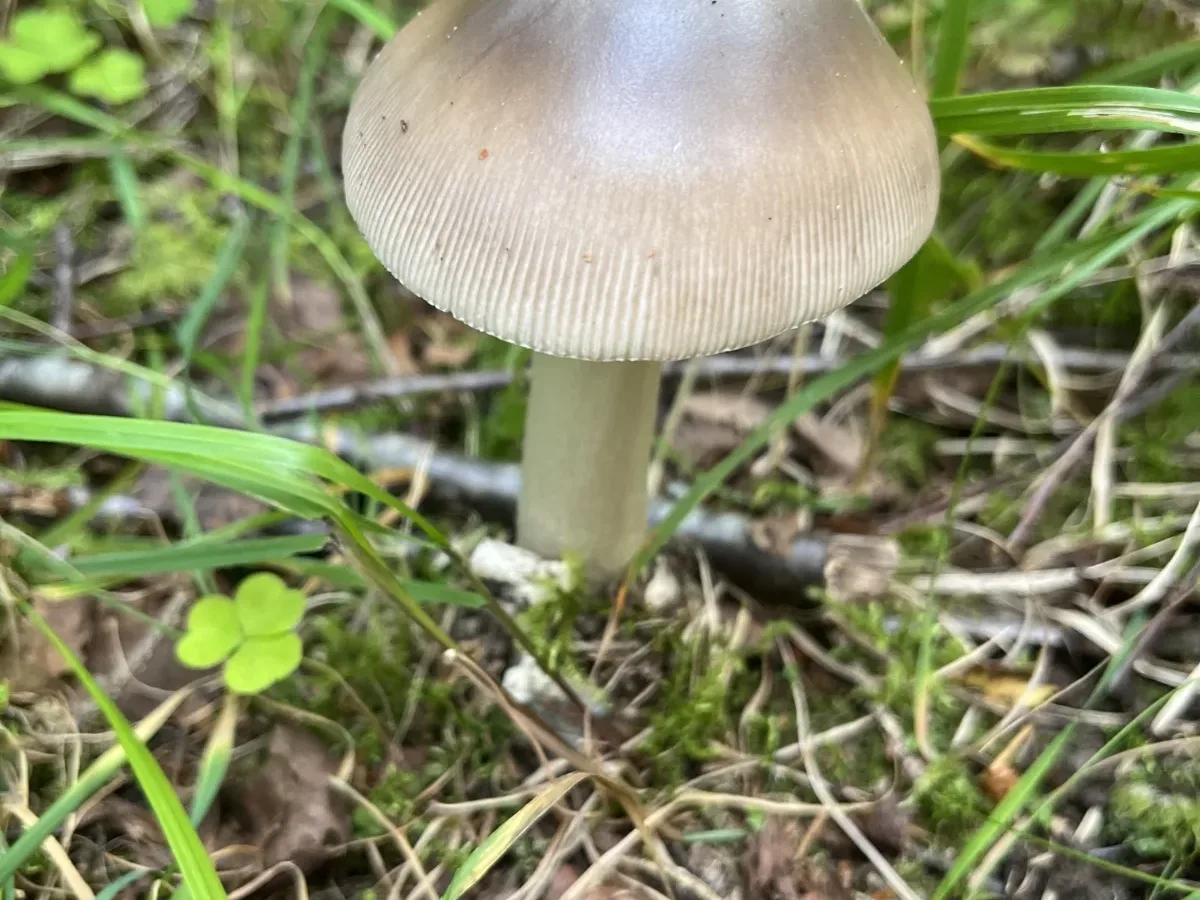 © Hans Andreas Sagstuen (CC BY)
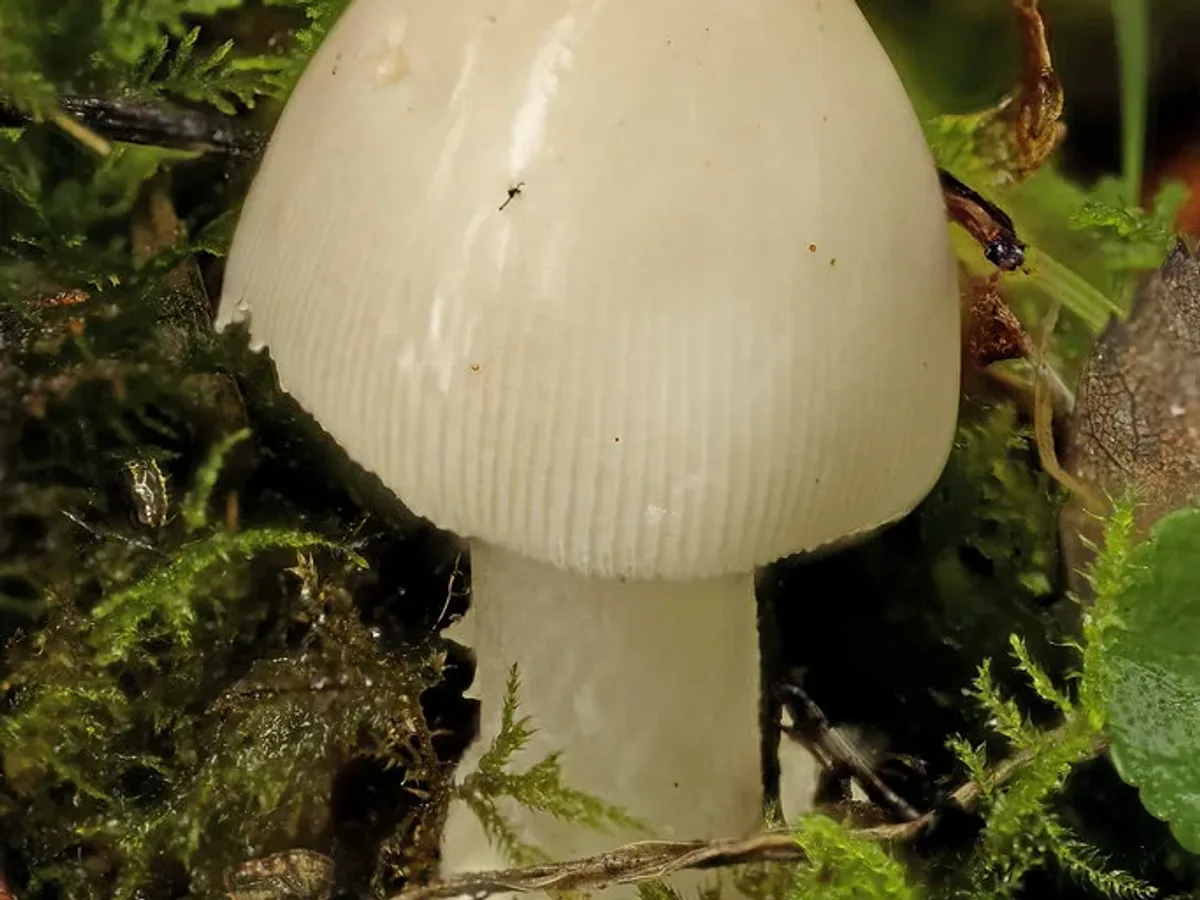 janetgraham84new (CC0)
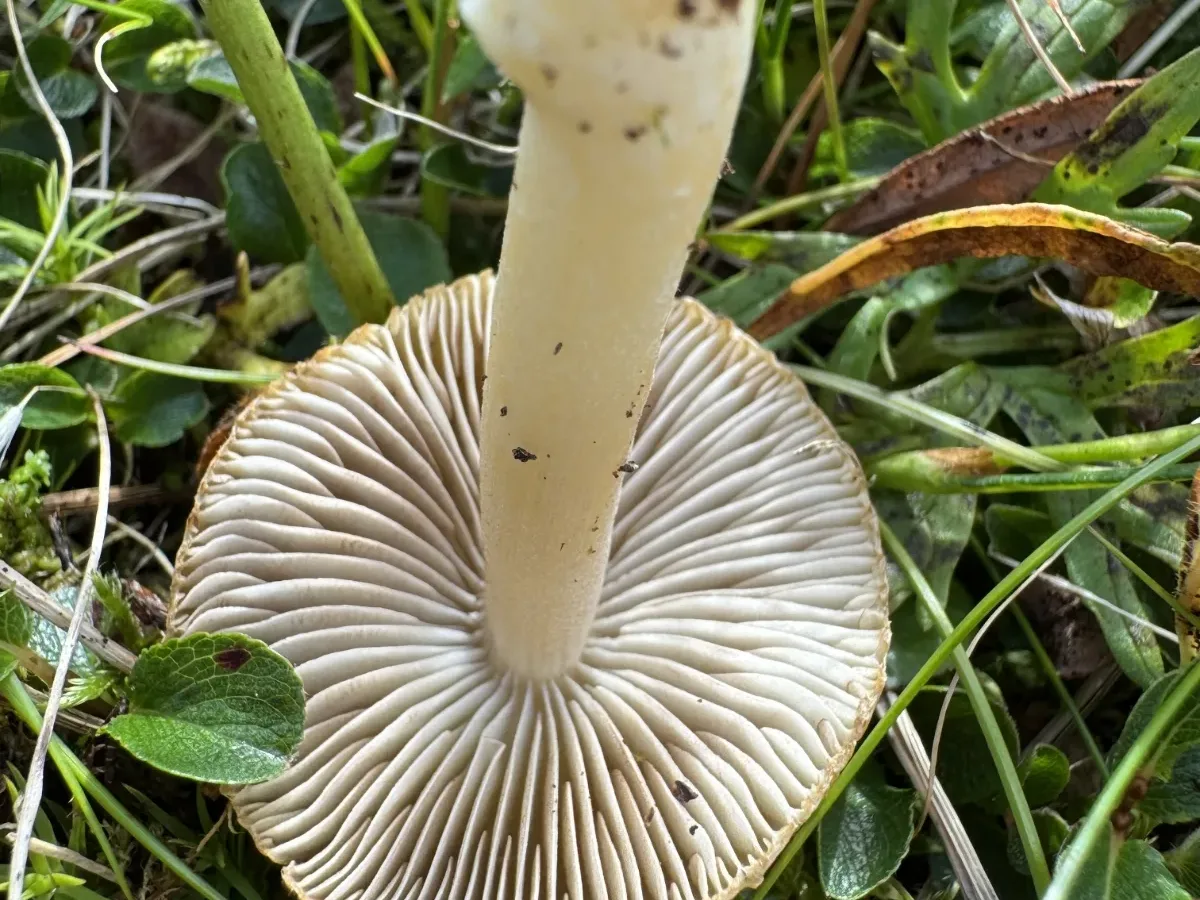 © Paul Andreas Aakerøy (CC BY-SA)
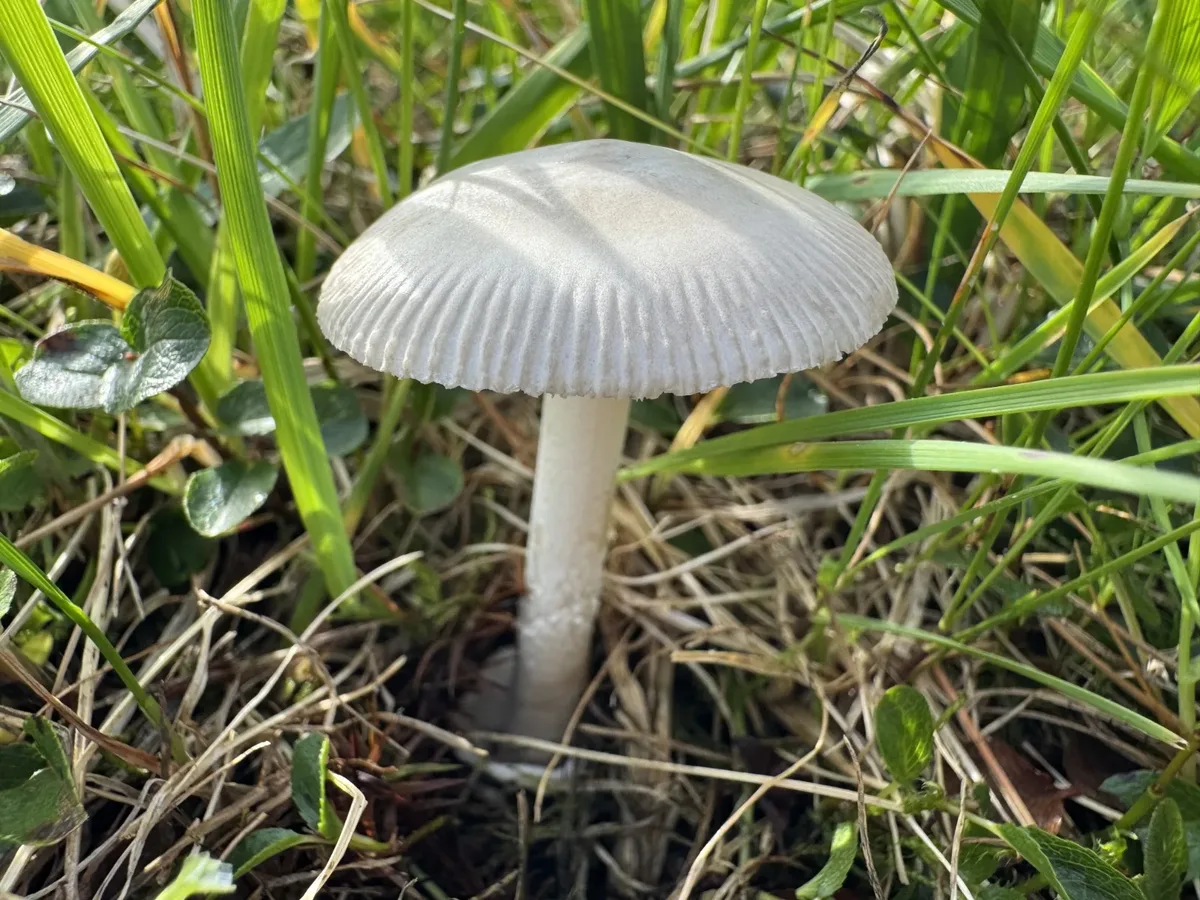 © Paul Andreas Aakerøy (CC BY-SA)
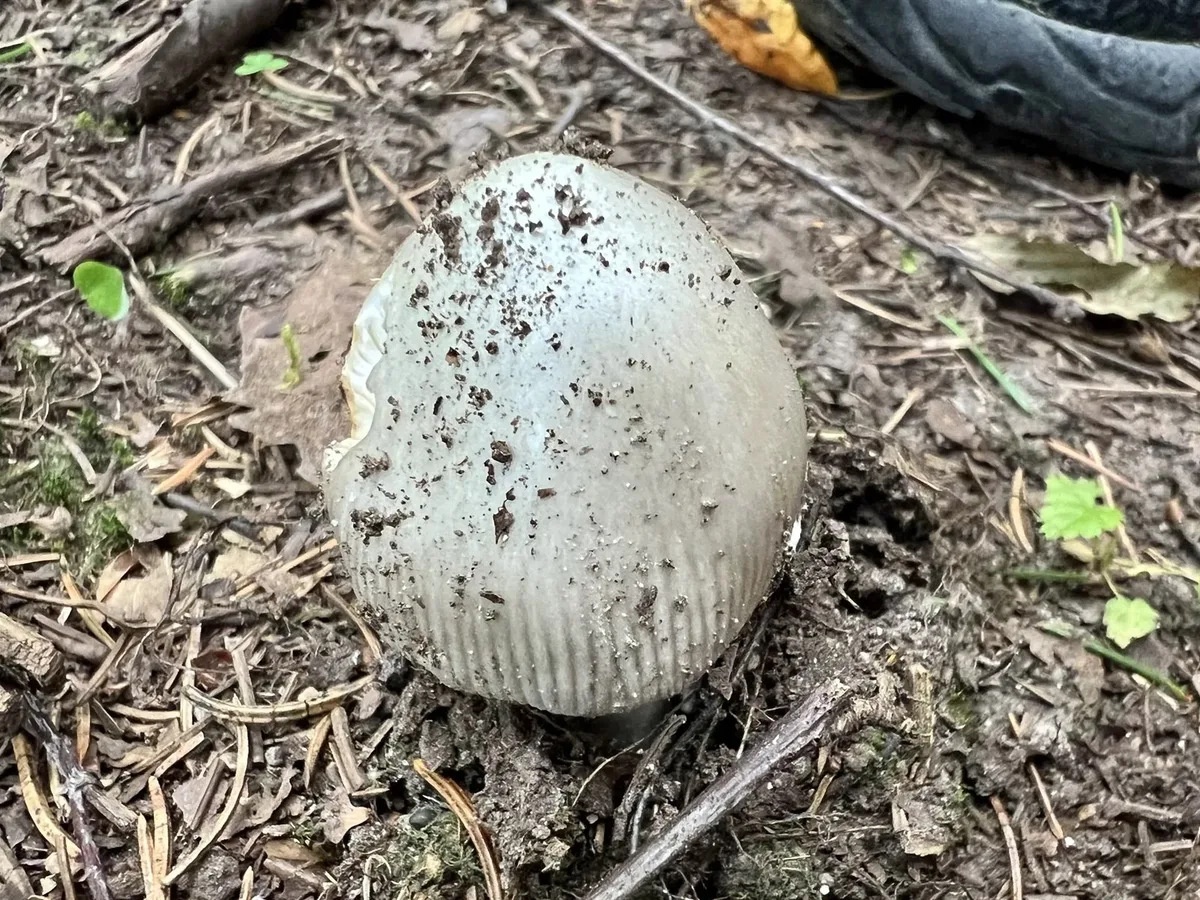 © Rune Zakariassen (CC BY)
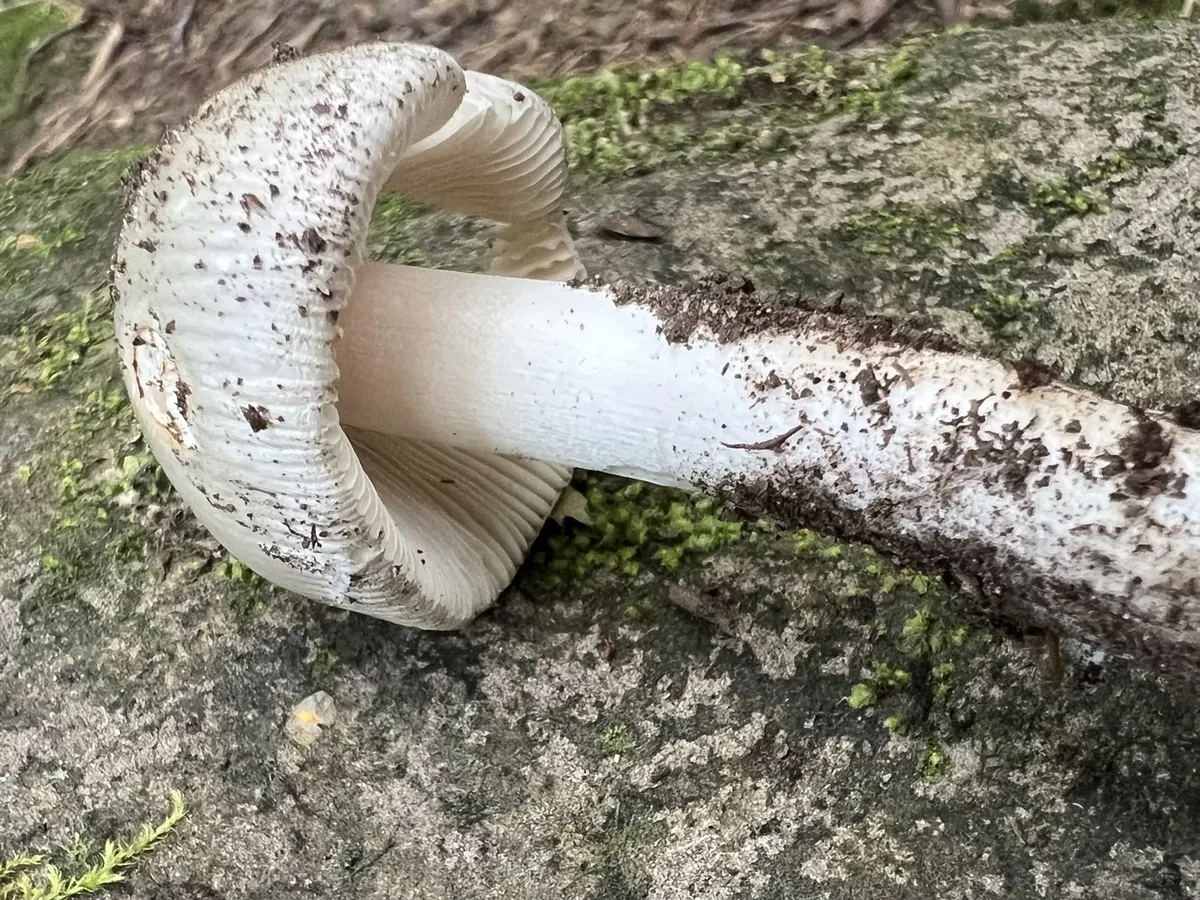 © Rune Zakariassen (CC BY)
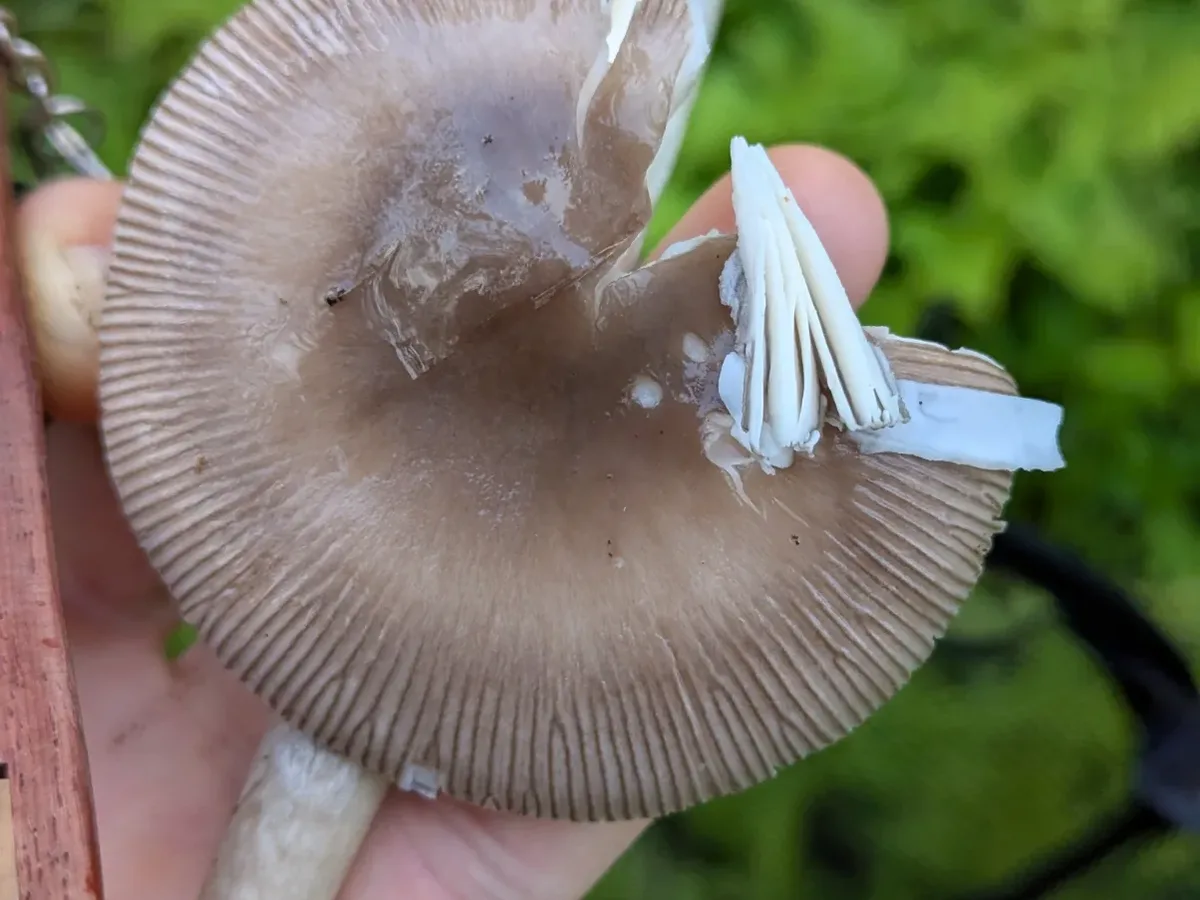 © Ole Christian Hagestad (CC BY)
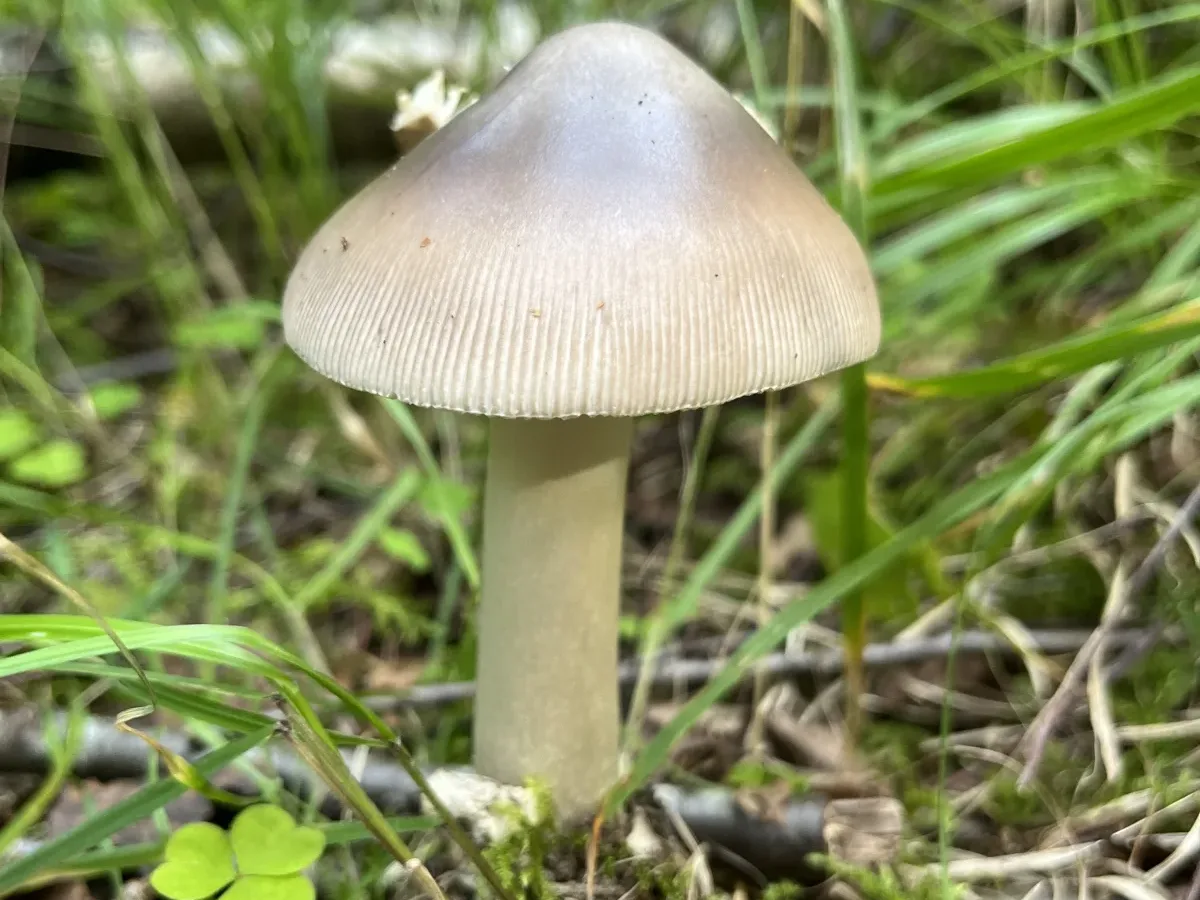 © Hans Andreas Sagstuen (CC BY)
 © Hans Andreas Sagstuen (CC BY)
 © Hans Andreas Sagstuen (CC BY)© Hans Andreas Sagstuen (CC BY)janetgraham84new (CC0)
Edible only with the right preparation - or safe for some people but not others. Learn the caveats first.
Never eat a mushroom you are not 100% sure of - check the look-alikes below, and always cook wild mushrooms.
How to recognise it
The Grisette is one of the most distinctive of the ringless Amanitas.
Cap
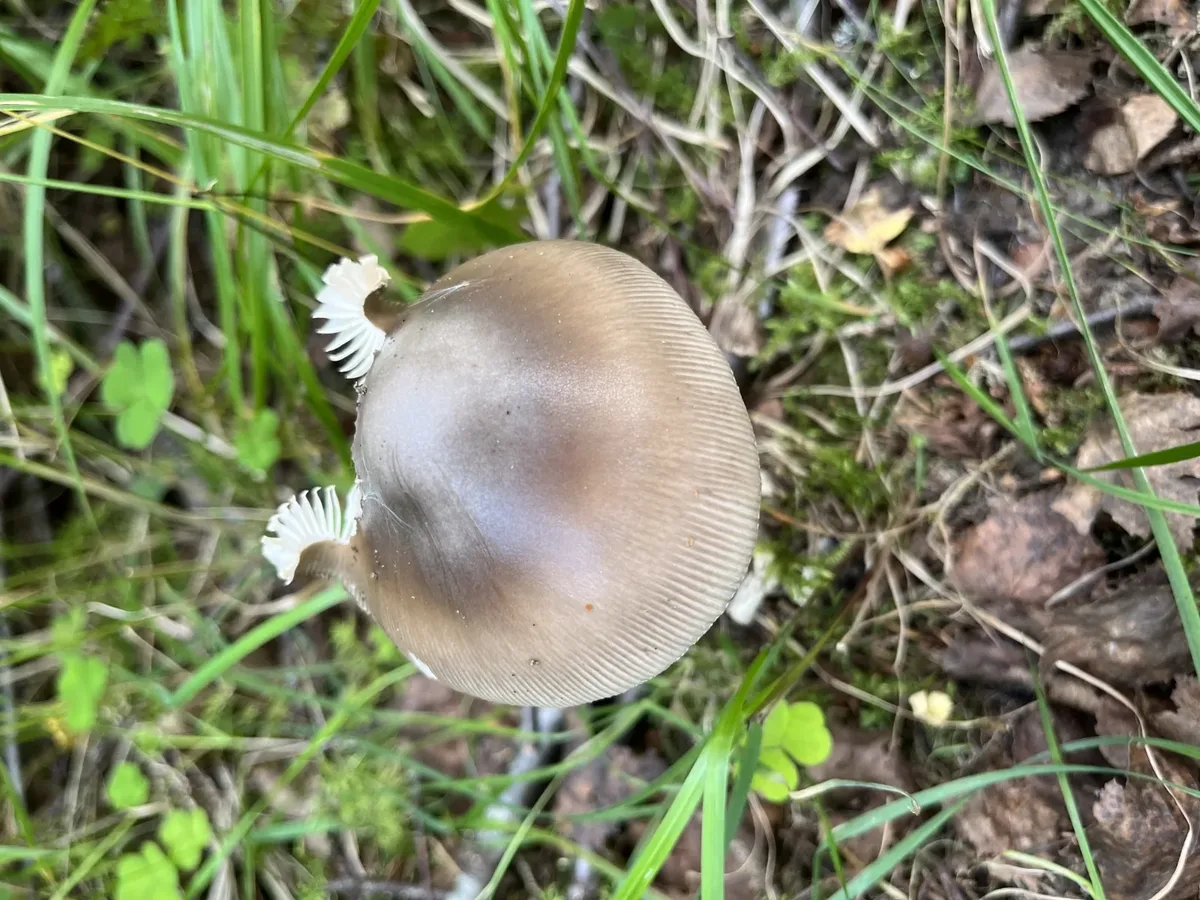
The cap is 4-10 cm across, opening from egg-shaped to bell-shaped and finally flat with a shallow central hump.
Its colour is some shade of grey, ranging from pale ash-grey to brownish-grey or lead-grey, and the surface is smooth, faintly greasy when damp, and usually clean of the white veil patches seen on many other Amanitas.
The single most reliable cap feature is the margin: it is strongly and evenly grooved (striate) with fine radial lines, like the rim of a tiny umbrella, extending a quarter to a third of the way toward the centre.
Gills
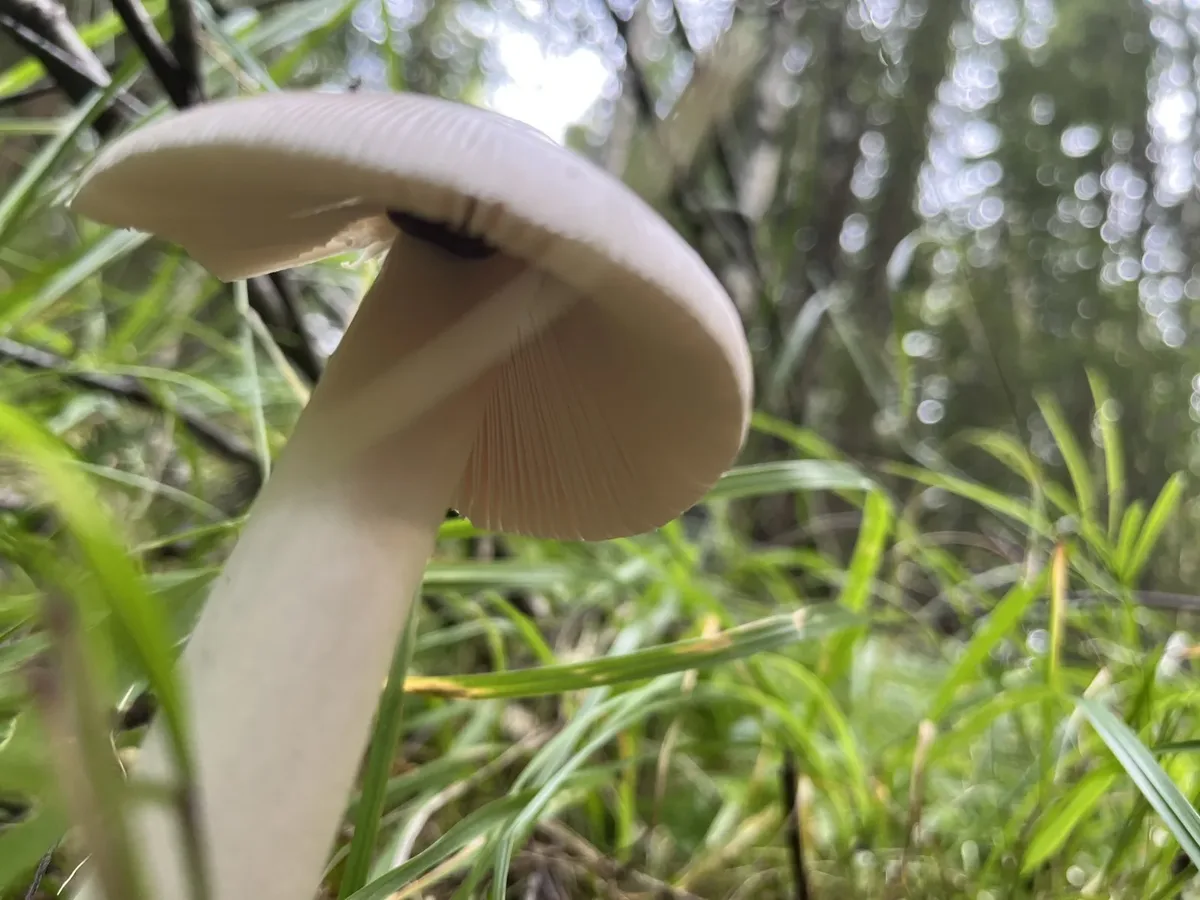
Underneath, the gills are free (not attached to the stem), crowded, soft and white to faintly cream, never bruising or discolouring.
Stem
The stem is tall and slender, 7-20 cm high and 1-2 cm thick, tapering upward and frequently decorated with delicate grey, woolly, zig-zag (chevron) banding.
Critically, the stem bears NO RING.
At the base sits a tall, loose, membranous, white to greyish sac (the volva) that wraps the stem base like a bag.
Flesh
The flesh throughout is thin, white and notably fragile.
Where & when it grows
Habitat
Amanita vaginata is a mycorrhizal fungus - it spends most of its life as a web of fine threads (mycelium) running invisibly through the soil and into the roots of nearby trees, exchanging water and minerals for sugars in a partnership that can persist for years.
The fruitbody you see above ground is just the brief, visible tip of that hidden network.
It is a generalist that associates with both broadleaved and coniferous trees, including oak, beech, birch, hazel, pine and spruce, so it turns up in a wide range of settings:
- deciduous, coniferous and mixed woodland
- woodland tracks and banks
- parkland with mature trees
- grassy or mossy heathland edges
It shows a clear preference for acidic, sandy or otherwise well-drained, nutrient-poor soils, and is very common across the temperate Northern Hemisphere.
When
Fruiting bodies appear over a long season, from June to November.
The Grisette is one of the earlier woodland mushrooms, often emerging in mid-summer well before the main autumn flush, and it continues steadily into the cooler months.
Its strongest fruiting is from late August through early October, typically triggered a week or two after warm, humid weather and rain.
How it grows
It appears singly or scattered, occasionally in small loose groups, but rarely in dense clusters.
Each fruitbody emerges from a soft white 'egg' (the universal veil), pushing the slender stem upward and leaving the lower part of that egg behind as the characteristic sac-like volva.
Growth is fairly rapid; specimens are short-lived and the fragile flesh deteriorates quickly, so fresh young material is best.
Fruiting conditions
Tends to fruit a week or two after warm, humid spells with adequate rainfall; favours acidic, well-drained soils and a moderately warm soil temperature.
Look-alikes
The genus Amanita contains the deadliest mushrooms known, so a confident identification is non-negotiable before eating.
The Grisette belongs to the ringless 'Vaginatae' group and is most easily confused with its harmless relatives: the Tawny Grisette (Amanita fulva), which is identical in form but warm orange-brown, and other similarly coloured grisettes, all edible-with-care.
The crucial danger lies in the RINGED, lethal Amanitas:
- The DEADLY Deathcap (Amanita phalloides)
- the Destroying Angels (Amanita virosa in Europe, A. bisporigera in eastern North America)
- the western North American Destroying Angel (Amanita ocreata)
They ALSO have free white gills and a basal volva, but every one of them possesses a distinct ring (skirt) on the upper stem and lacks the strongly grooved cap margin of the Grisette.
Amanita ocreata in particular has a thin, sac-like volva that can look superficially grisette-like and fruits in spring in Pacific-coast woodland, so the presence of a ring is the decisive warning.
Never rely on cap colour alone.
Young 'egg-stage' buttons of any Amanita are especially dangerous because the ring is still hidden inside; never collect Amanitas as unopened eggs.
Also compare with the deadly Fool's Funnel and other white species only after confirming the volva, free gills, white spore print, ringless stem and striate cap margin together.
DEADLY (eastern North America). Wholly white with a ring on the stem and an ungrooved cap edge. Distinguished from the ringless, grey, striate-margined Grisette by its ring and white colour.
DEADLY. Has a prominent ring (skirt) on the stem and a smooth, non-grooved cap margin; cap is greenish to yellowish or olive (though sometimes pale). The Grisette is ringless and has a strongly grooved (striate) cap margin. If a ring is present, never eat it.
DEADLY. Pure white throughout, with a distinct ragged ring on the stem and a smooth (non-striate) cap margin. The Grisette is grey, ringless, and has a grooved cap margin. A sac-like volva is present in both, so the ring and cap-margin grooving are the decisive features.
DEADLY (western/Pacific North America). White to pale ochre cap, a thin sac-like volva that can look misleadingly grisette-like, but it bears a ring on the stem and an ungrooved (non-striate) cap margin and typically fruits in spring. The Grisette is grey, ringless and strongly striate at the margin. Any ring means do not eat.
Inedible/suspect. Greyish-brown cap but bears veil patches, a ring, and a swollen ringed stem base rather than a free sac-like volva; cap margin not strongly grooved.
Poisonous (occasionally life-threatening). Brown cap dotted with white warts, a ring on the stem, and a rimmed volva. The Grisette lacks both warts and a ring and has a cleaner grey cap.
Edible and very closely related; identical structure (ringless, sac-like volva, grooved margin) but warm orange-brown to tawny rather than grey. Treated with the same safety care.
In the kitchen
Picking & cleaning
Always lift the entire mushroom out of the ground, gently easing the stem base free so that the volva (the sac at the base) comes up intact.
The volva is a key identification feature and is essential for safe naming, yet it is easily left behind in the soil if you simply cut or snap the stem.
Because the flesh is brittle, handle specimens carefully and carry them in a rigid container.
Take only young, firm, undamaged fruitbodies; old or waterlogged caps collapse and spoil quickly.
Cooking
Once correctly identified and thoroughly cooked, the Grisette is a pleasant edible with a mild, delicate flavour, though the flesh is thin and somewhat fragile so it does not have the substance of firmer species.
It must NOT be eaten raw, as it contains heat-labile (heat-sensitive) toxins that are destroyed by proper cooking; sauté or fry it well until fully cooked through.
Discard the gritty volva and any soil, slice the caps and stems, and use in mixed mushroom dishes, omelettes or as a side.
Because the texture softens readily, it suits gentle frying and quick dishes rather than long stewing, and the caps are generally preferred to the more fibrous stems.
Good to know
This is a mushroom for experienced foragers only, precisely because it is an Amanita.
The single most important safety rule is to confirm the COMPLETE set of features every time:
- a ringless stem
- free white gills
- a white spore print
- a tall sac-like volva at the base
- a clearly grooved (striate) cap margin
If a ring is present anywhere on the stem, DO NOT EAT IT and treat the find as potentially lethal.
Beginners are strongly advised to avoid eating any Amanita at all until they can reliably separate the edible ringless grisettes from the deadly ringed species.
Always cook thoroughly: like several Amanitas, the Grisette contains heat-sensitive haemolysins and is toxic raw, causing gastrointestinal upset and red-blood-cell damage if eaten undercooked.
Only ever eat a small amount of any species new to you.
A reference guide - never an edibility guarantee. When in doubt, leave it out.