Brown grisette
Amanita umbrinella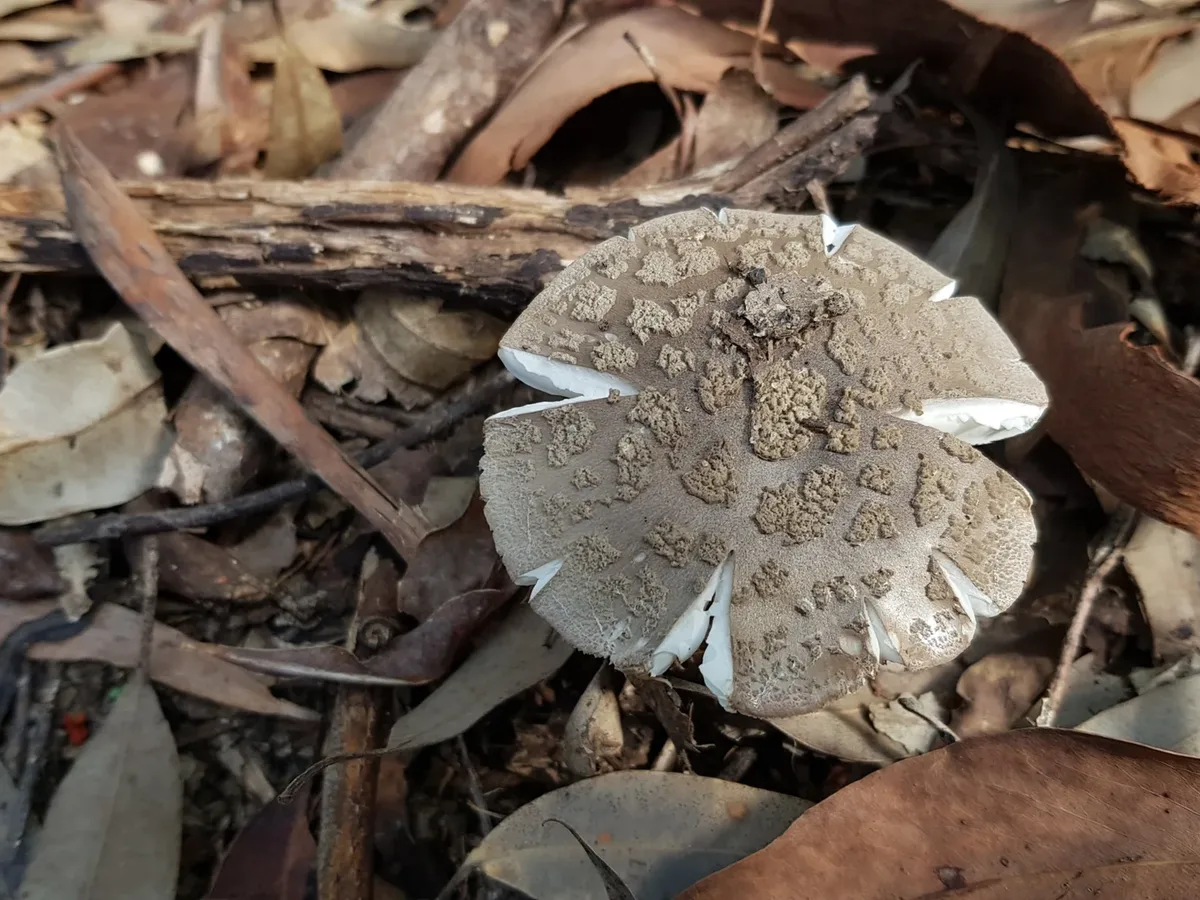 © Sofia Zvolanek (CC BY 4.0)
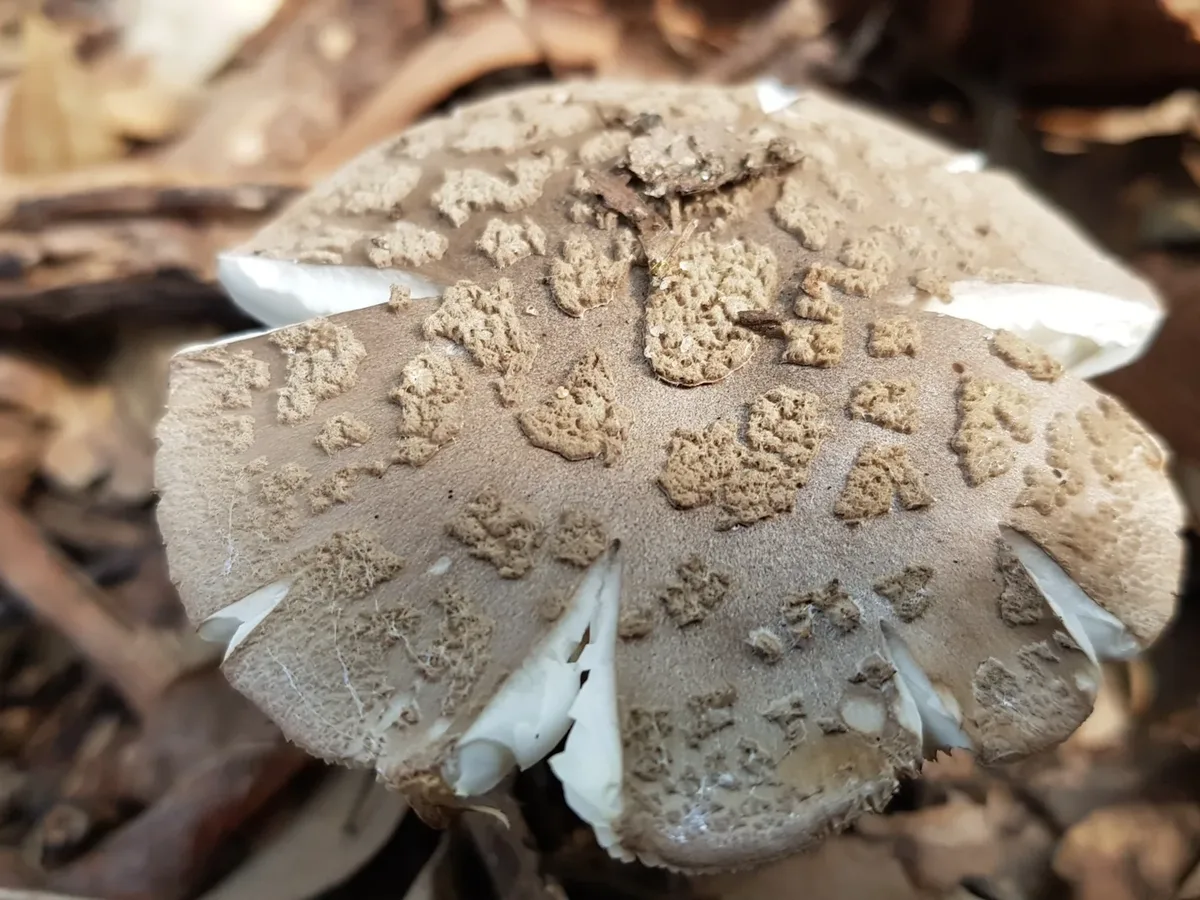 © Sofia Zvolanek (CC BY 4.0)
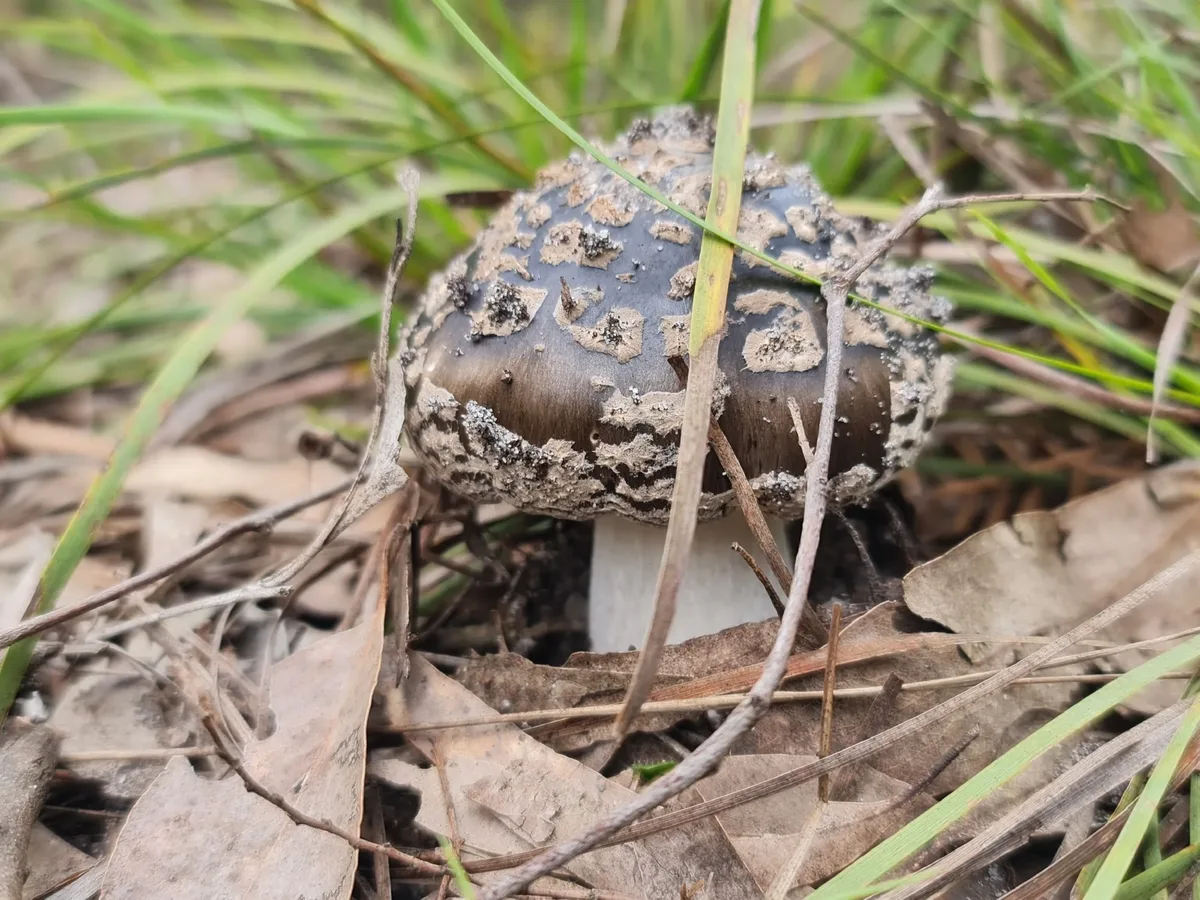 © Lek Khauv (CC BY)
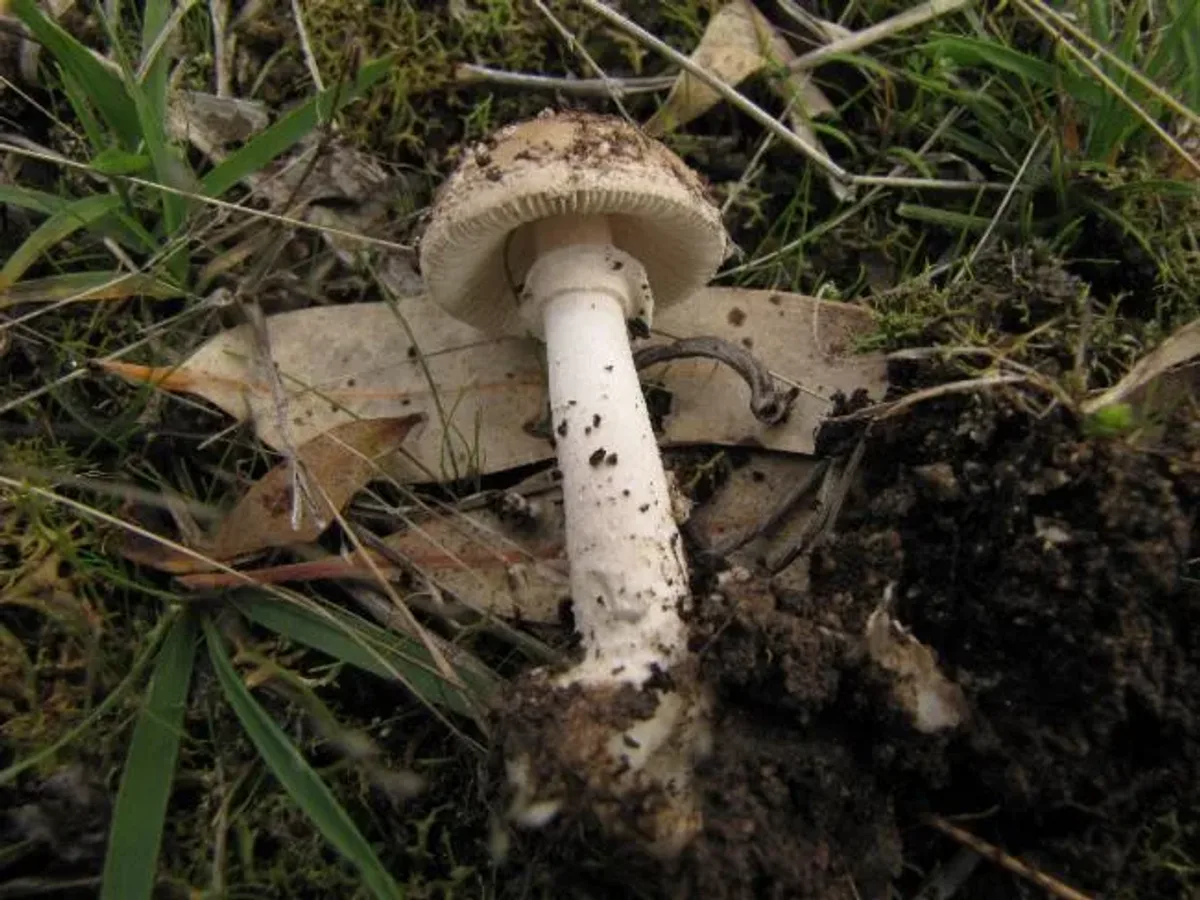 © Dave Munro (CC BY)
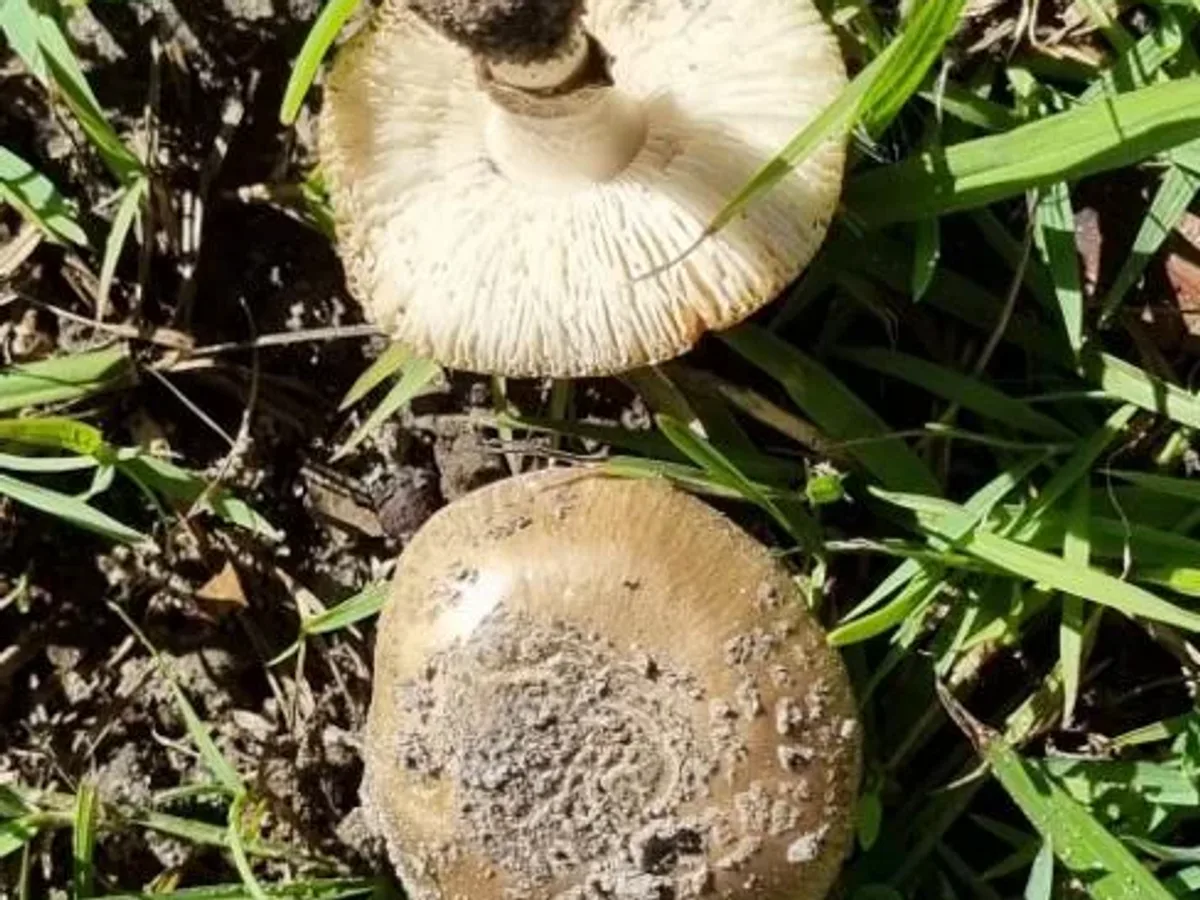 © Pat Leonard (CC BY)© Sofia Zvolanek (CC BY 4.0)© Sofia Zvolanek (CC BY 4.0)
Edible only with the right preparation - or safe for some people but not others. Learn the caveats first.
Never eat a mushroom you are not 100% sure of - check the look-alikes below, and always cook wild mushrooms.
How to recognise it
The brown grisette begins its life as an egg - a white oval bulge pushing up through the leaf litter, the whole fruit body still bundled inside its universal veil. At that stage it could be mistaken for almost any Amanita, including deadly ones, and should be left alone.
Cap
Once the cap breaks free and expands, the picture becomes clearer: medium-sized, with a dark umber-brown cap, smooth and dry, paling toward a margin that is deeply and regularly grooved - typically 12 to 18 radiating furrows etched into the rim. Those parallel grooves are one of its most reliable field marks, visible from a metre away on a good specimen.
Gills
Pure white, crowded, and free from the stem.
Stem
White to pale grey, cylindrical, and - this matters enormously - carries no ring. Where a death cap grows a skirt on its stem as it matures, A. umbrinella stays bare from cap to base. At the base, cupped in the soil, sits a membranous white sac - the volva, remnant of that original egg - and you must dig carefully to expose and confirm it.
Flesh
White flesh, unchanging when cut. White spore print.
Where & when it grows
Habitat
Native eucalyptus forest and open woodland across south-eastern Australia - this is a species of place.
It forms a mycorrhizal partnership with living Eucalyptus and Corymbia trees, meaning the mycelium is threaded invisibly through the roots of a specific tree, trading nutrients for sugars year-round. Where those trees are gone, this mushroom will not appear.
Look for it along forest tracks and at woodland margins where light reaches the ground, in soils with a decent layer of leaf litter that holds autumn moisture.
It is not a garden or suburban species unless native eucalypts are present and established.
When
Autumn and early winter in the Southern Hemisphere - March through July, peaking in April to June.
After a long dry summer the forest floor can seem lifeless, but once the first real autumn rains arrive and the soil temperature drops through the 14-18 °C range, the mycelium stirs.
Soil needs to be moist at depth, not just surface-wet after a light shower. In a dry autumn flushes may be sparse or absent altogether; a good autumn with steady rain produces the best results.
Individual fruit bodies typically last one to two weeks before softening and collapsing.
How it grows
A. umbrinella is mycorrhizal with Eucalyptus and Corymbia, spending most of its life as an invisible network woven through root tips in the soil - sometimes the same root partnership lasting for decades.
When autumn conditions are right, it builds a fruit body that begins as a white egg enclosed entirely in the universal veil, pushing up through the leaf litter.
The cap tears free from the egg as it expands, leaving the base cupped in the soft, membranous volva. Fruits singly or in small scattered groups.
The volva can partially close back over the stem base in wet conditions, so always dig carefully at the base to expose and confirm it.
Fruiting conditions
Autumn fruiter in the Southern Hemisphere; flushes follow autumn rains as soil cools from summer temperatures down through the 10-18 °C range. Peak April-June.
Look-alikes
The most dangerous confusion is with Amanita phalloides (death cap) and other ring-bearing deadly species in their egg or button stage - before the ring becomes visible, any buried or partially emerged Amanita egg is indistinguishable by eye alone.
- Amanita phalloides (death cap), once fully expanded, has a ring and a cap that is greenish-yellow to olive-brown or pale without prominent striations; A. umbrinella lacks a ring and has a deeply striate cap margin.
- Amanita virosa (destroying angel) and related all-white destroying angels also bear a ring and are deadly.
- Amanita vaginata and related grisettes are the most similar safe species, but distinguishing between grisette species requires microscopy or expert experience; this is not a foraging-level distinction.
- Volvariella volvacea (paddy straw) also has a volva but has pink maturing gills and a pink spore print and lacks striate cap margin.
The death cap has a ring (annulus) on the stem, a cap that is typically greenish-yellow to olive-brown or pale without prominent radial striations, and amyloid spores. A. umbrinella has no ring, a dark umber-brown cap with a deeply striate margin, and non-amyloid spores. In the egg/button stage before the ring is visible, the two are indistinguishable without dissection.
Pure white overall, ring present on stem, cap conical and rarely flattening fully, margin not striate. A. umbrinella is brown, ringless, with a clearly striate margin. Both have a volva. A. virosa is found under introduced trees in Australia; A. umbrinella under native Eucalyptus.
Very similar ringless Amanita with striate margin and volva; typically grey to grey-brown rather than dark umber-brown, and with a proportionally longer and more slender stem. Distinguishing A. umbrinella from A. vaginata and the broader vaginata complex requires microscopy or regional expertise. Both are edible-with-caution and not recommended for beginners.
Has a volva but belongs to Pluteaceae, not Amanitaceae. Gills are pink to salmon at maturity, spore print is pink, and it grows on decaying organic matter (straw, compost, wood chips), not associated with living trees. A. umbrinella has white gills, a white spore print, and is mycorrhizal with Eucalyptus.
Similar grisette in the same section with no ring and a striate cap margin, but tawny-orange to orange-brown rather than dark umber-brown. A. fulva is a Northern Hemisphere species not native to Australia; comparisons may arise in mycological literature but not in the field. Both are in the edible-with-caution tier.
In the kitchen
Picking & cleaning
Amanita umbrinella may be consumed by foragers with advanced identification skills, but this guide strongly advises against collecting any ringless Amanita unless you have direct mentorship from an expert who knows Australian species and has positively identified a specimen in the hand.
The critical safety requirement is ruling out all ring-bearing Amanita species, particularly in the button stage. Never collect button-stage specimens because the presence or absence of a ring cannot be confirmed until the cap has fully expanded.
Confirm:
- 1Cap margin clearly striate
- 2No ring on stem
- 3Volva present at base
- 4Association with native Eucalyptus only
Cooking
If you have positively identified this species and are confident ruling out all look-alikes, it should be thoroughly cooked before eating - sauteed, fried, or added to soups and stews.
The texture is soft and the flavour mild. Do not eat it raw; some raw grisettes have caused gastrointestinal illness.
It is not the most flavourful of Australian edibles, but it is a genuinely interesting find in the eucalyptus forest in a good autumn.
Good to know
Amanita umbrinella is not itself toxic and belongs to the grisette group, which as a whole is regarded as edible when thoroughly cooked.
However, it falls squarely in the most dangerous category for misidentification risk: it is a volva-bearing Amanita in the same genus as the world's deadliest mushrooms, and it passes through an egg stage where it cannot be distinguished from deadly ring-bearing species.
Furthermore, the eating of ANY raw or undercooked Vaginatae member carries uncertain risk as some raw grisettes have caused gastrointestinal illness.
This guide classifies it as caution because:
- 1It must be cooked.
- 2Its deadly lookalike risk is severe enough that only confident experts should collect it.
If there is any doubt about whether a specimen is ring-free, do not eat it.
A reference guide - never an edibility guarantee. When in doubt, leave it out.