Membranous grisette
Amanita submembranaceasyn. Amanita lividopallescens var. submembranacea
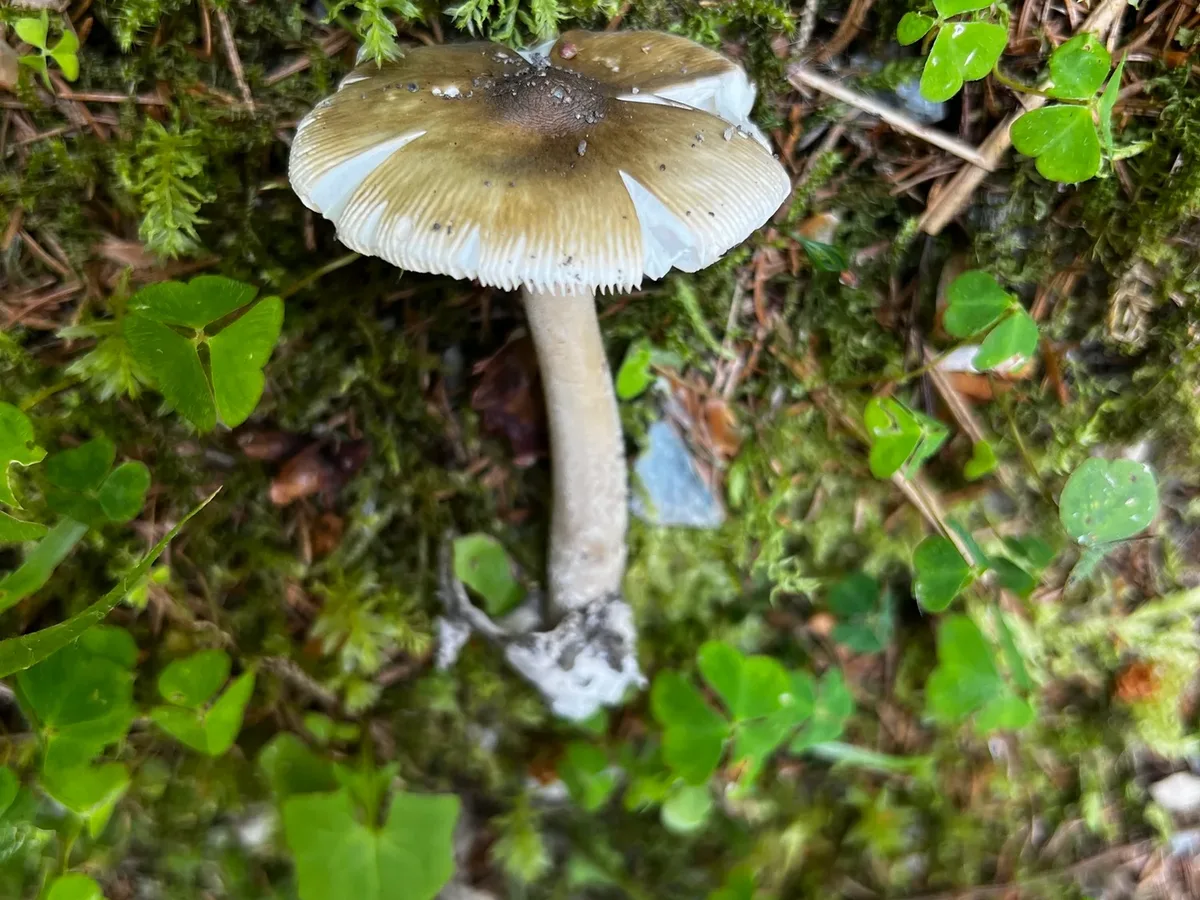 © Sigrid Jakob (CC BY 4.0)
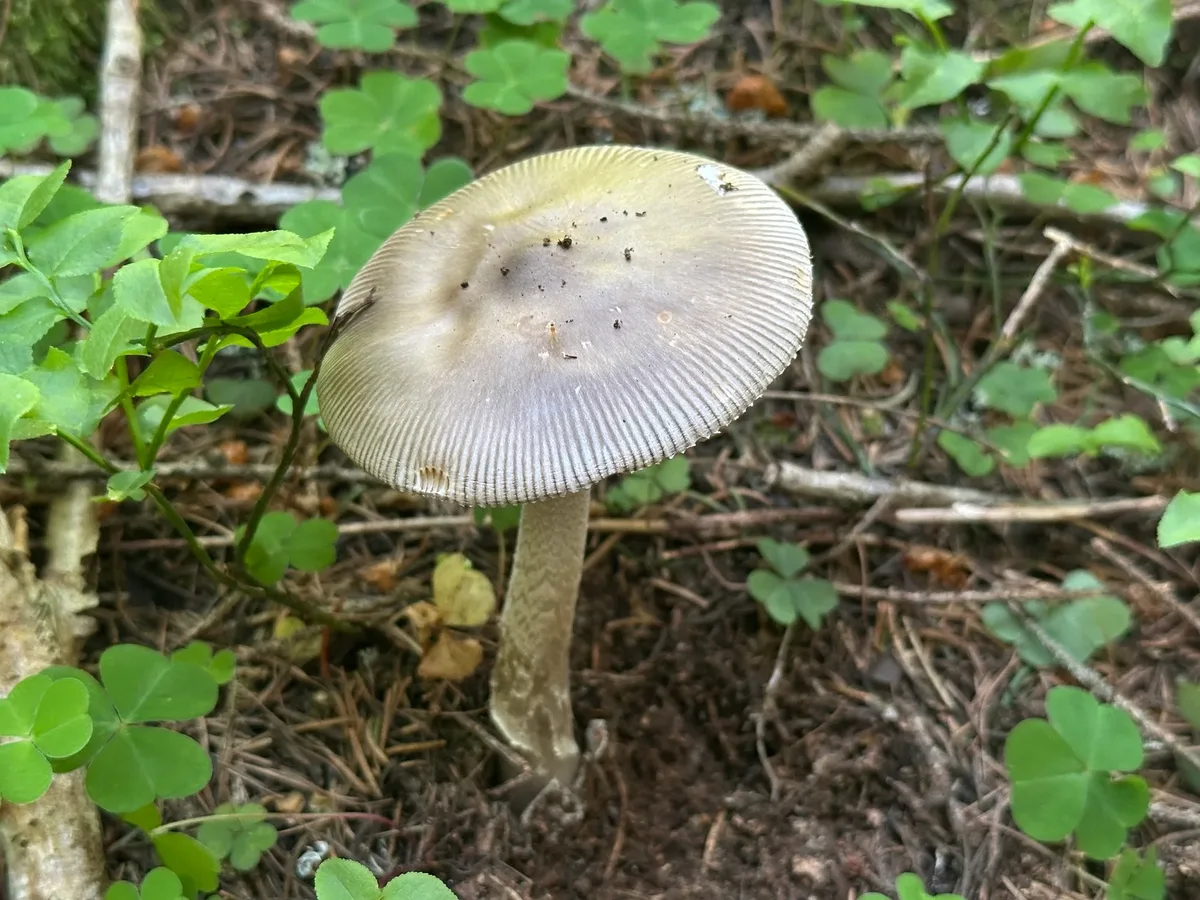 © Jason Grant (CC BY)
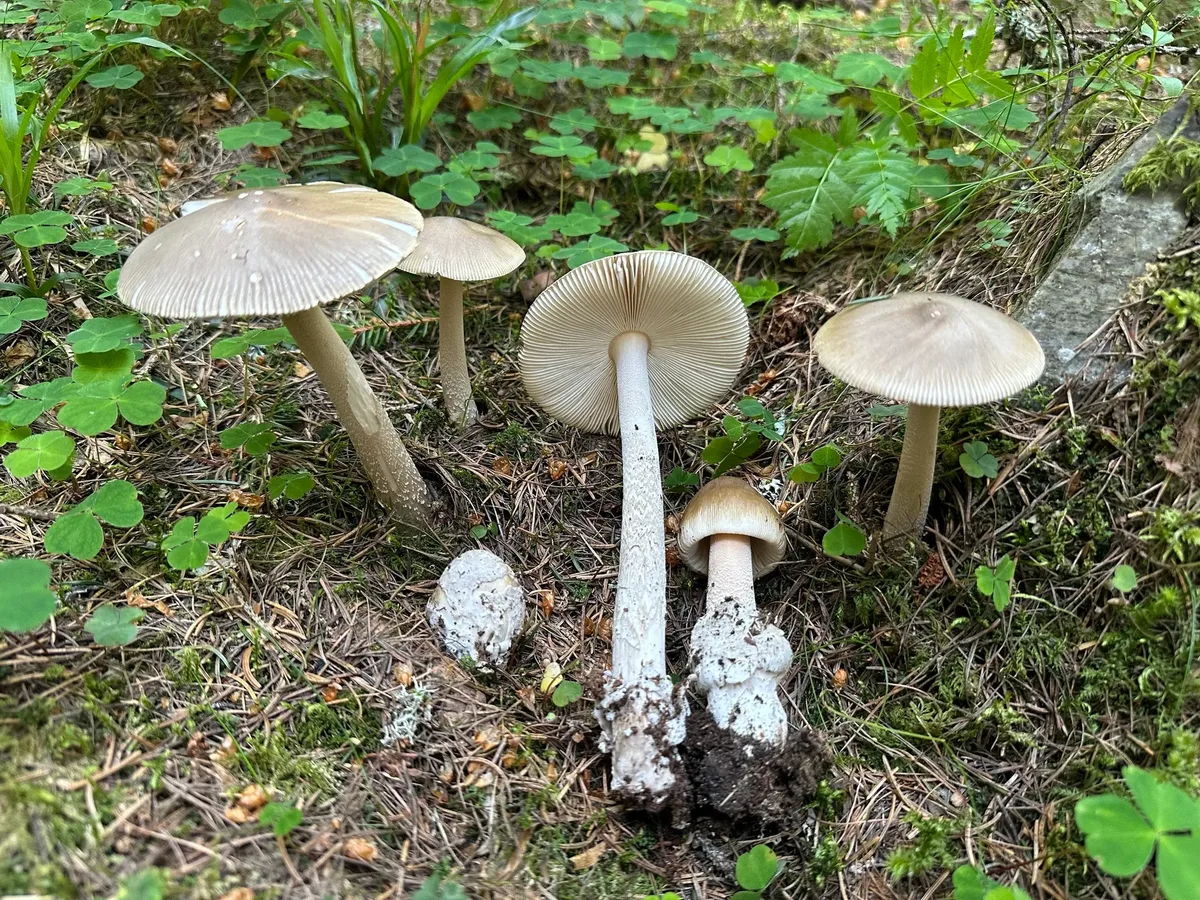 © Jason Grant (CC BY)
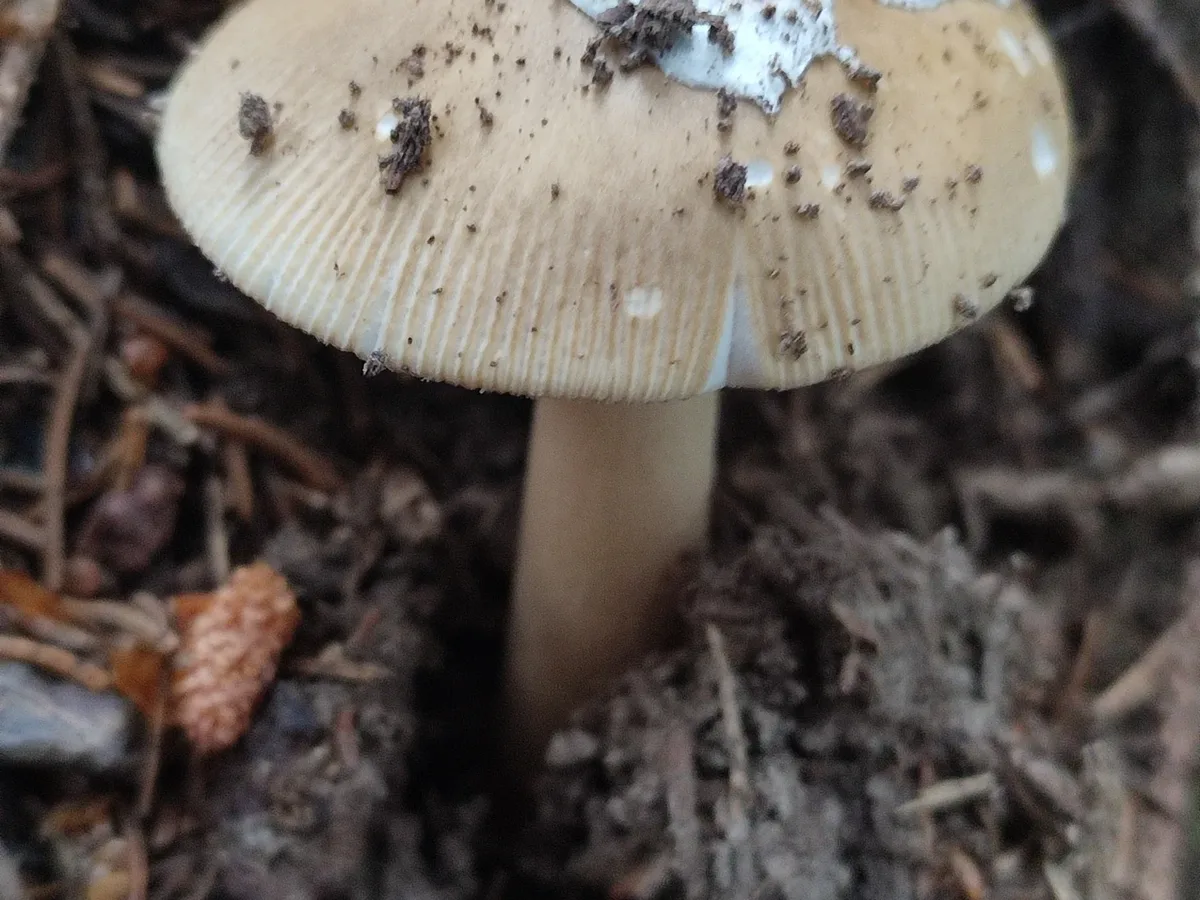 © victor laborde (CC BY)
 © victor laborde (CC BY)
 © Rob van Kruining (CC BY)
 © Rob van Kruining (CC BY)
 © Manuela Fiorini (CC BY)
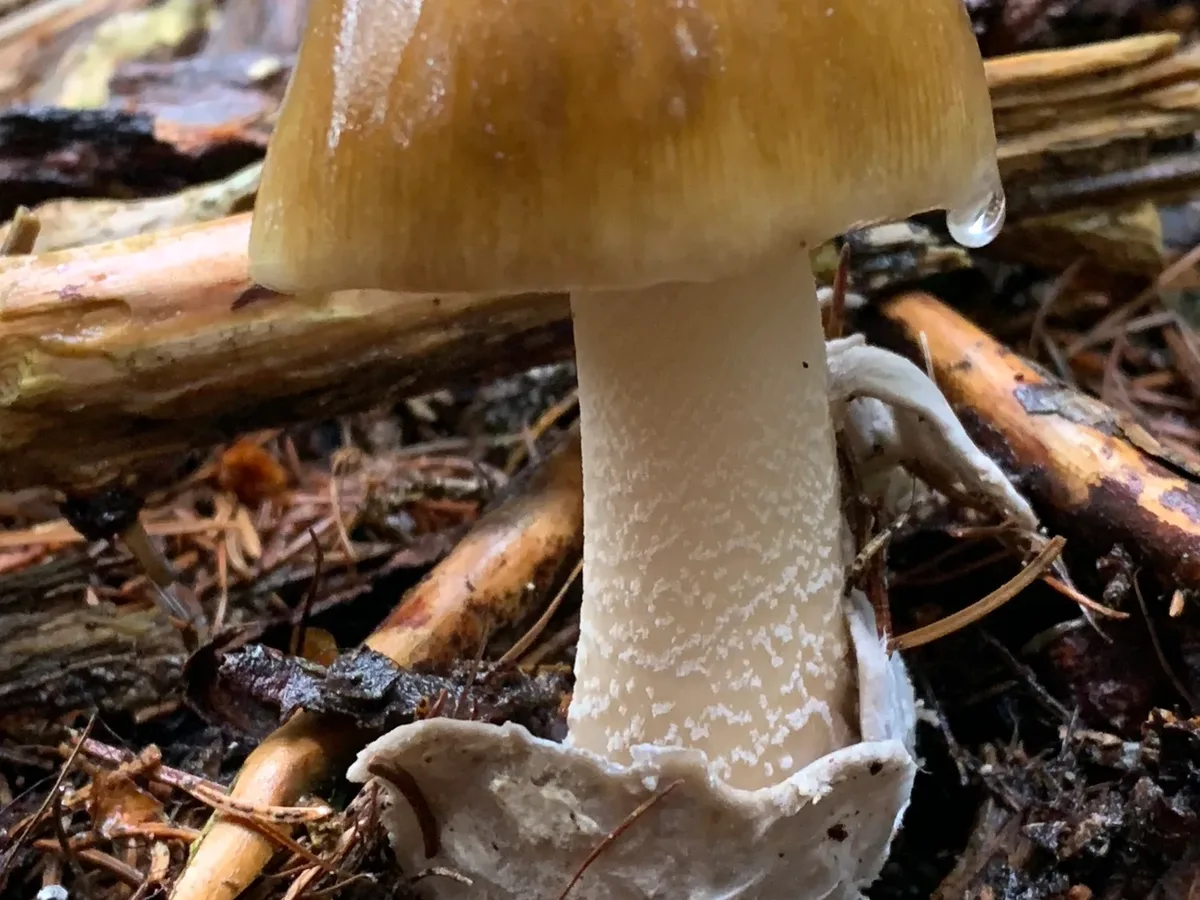 © Manuela Fiorini (CC BY)
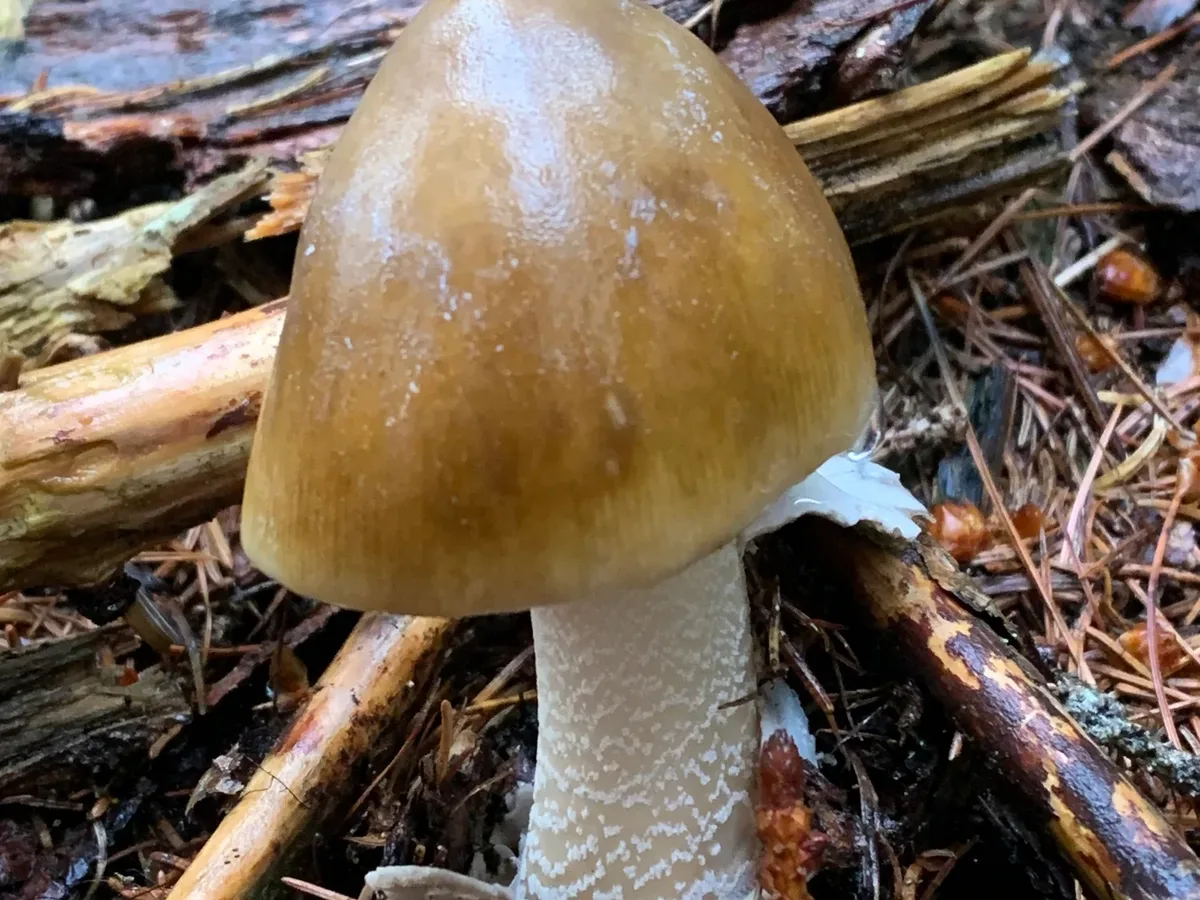 © Manuela Fiorini (CC BY)
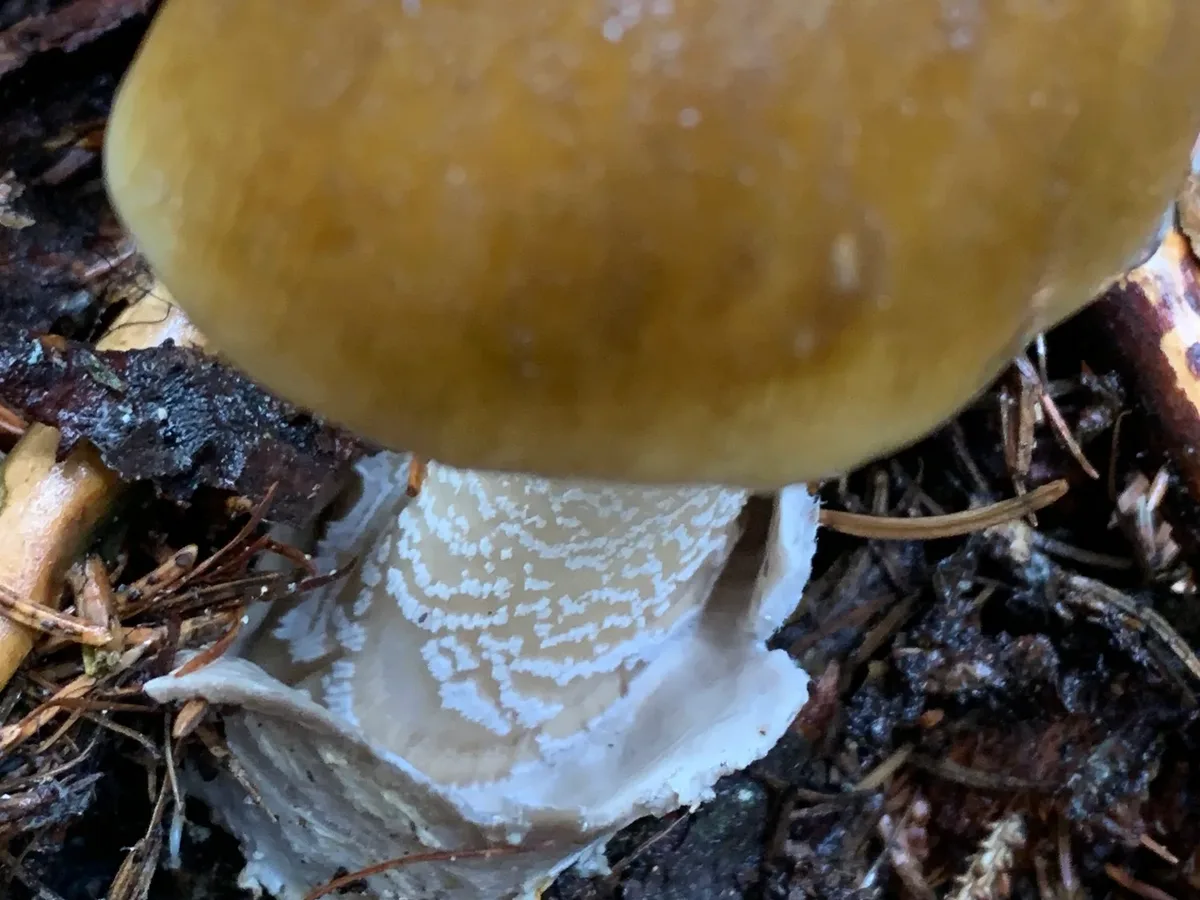 © Manuela Fiorini (CC BY)
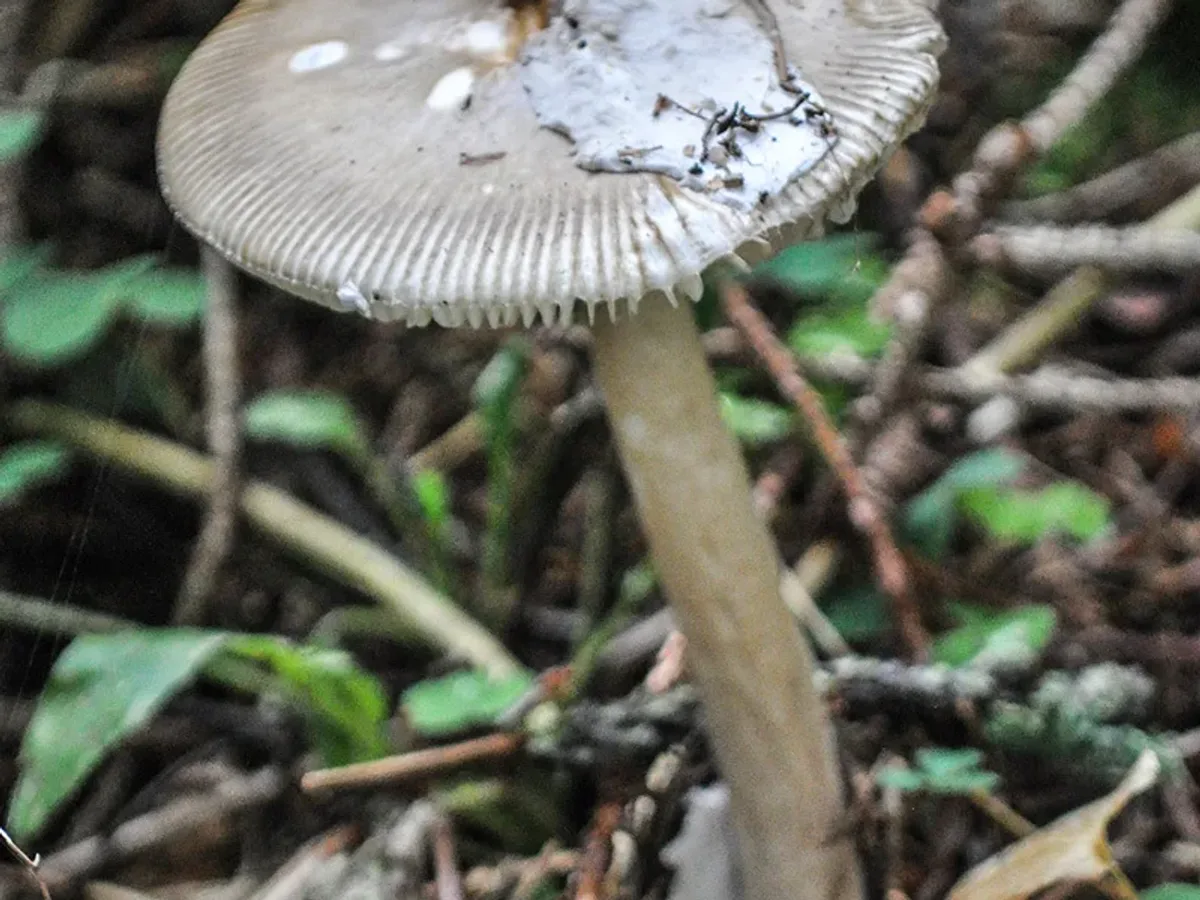 gianluigi (CC0)© Sigrid Jakob (CC BY 4.0)© Jason Grant (CC BY)
Not poisonous, but not worth eating - too tough, bitter, or bland for the pot.
Never eat a mushroom you are not 100% sure of - check the look-alikes below, and always cook wild mushrooms.
How to recognise it
Cap
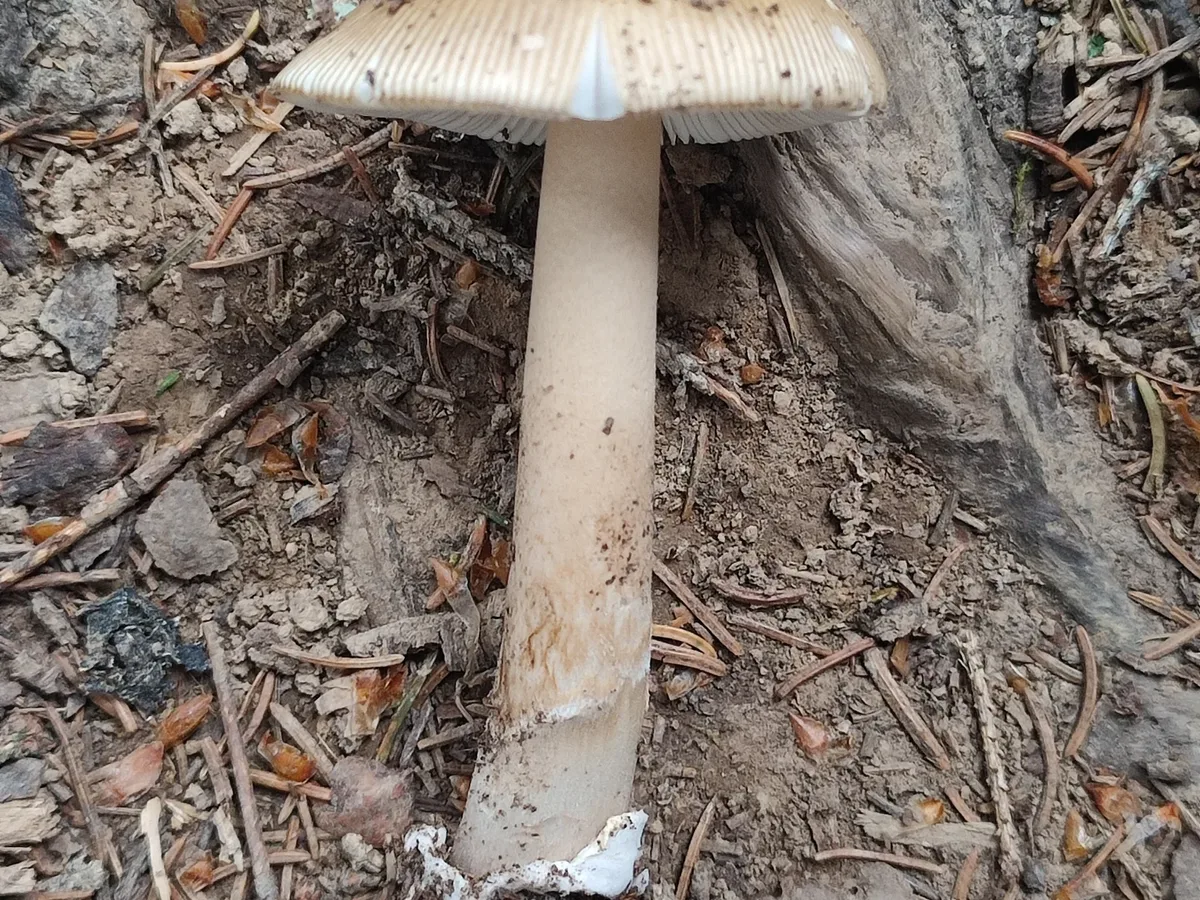
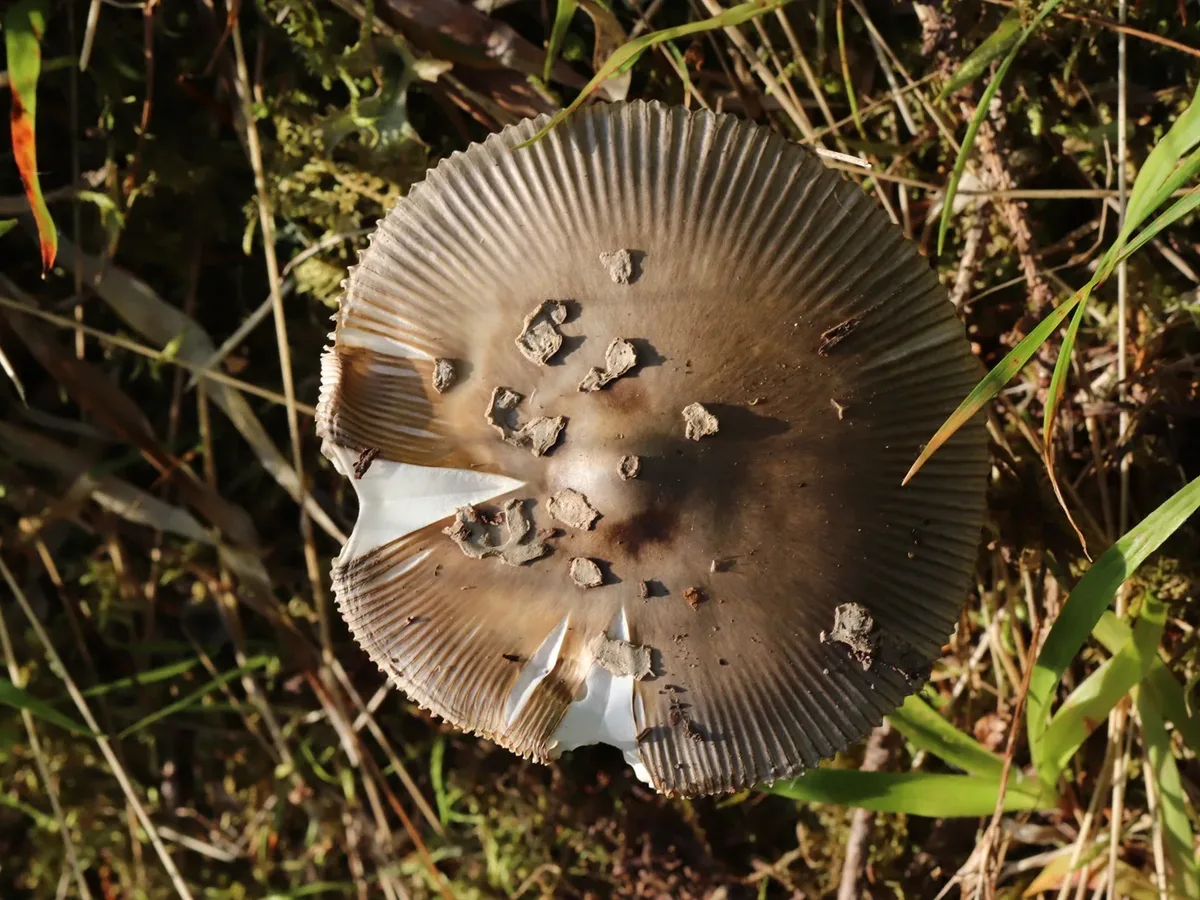
Cap 4-9 cm, convex then broadly flattened, grey-brown to mouse-grey or greyish-olive, smooth and slightly greasy when wet.
The margin carries well-developed radial striations - fine grooves pressed into the cap edge - reaching about a third of the way to the centre. This striate margin is a hallmark of the ringless grisette group and is worth checking carefully in the field.
Gills
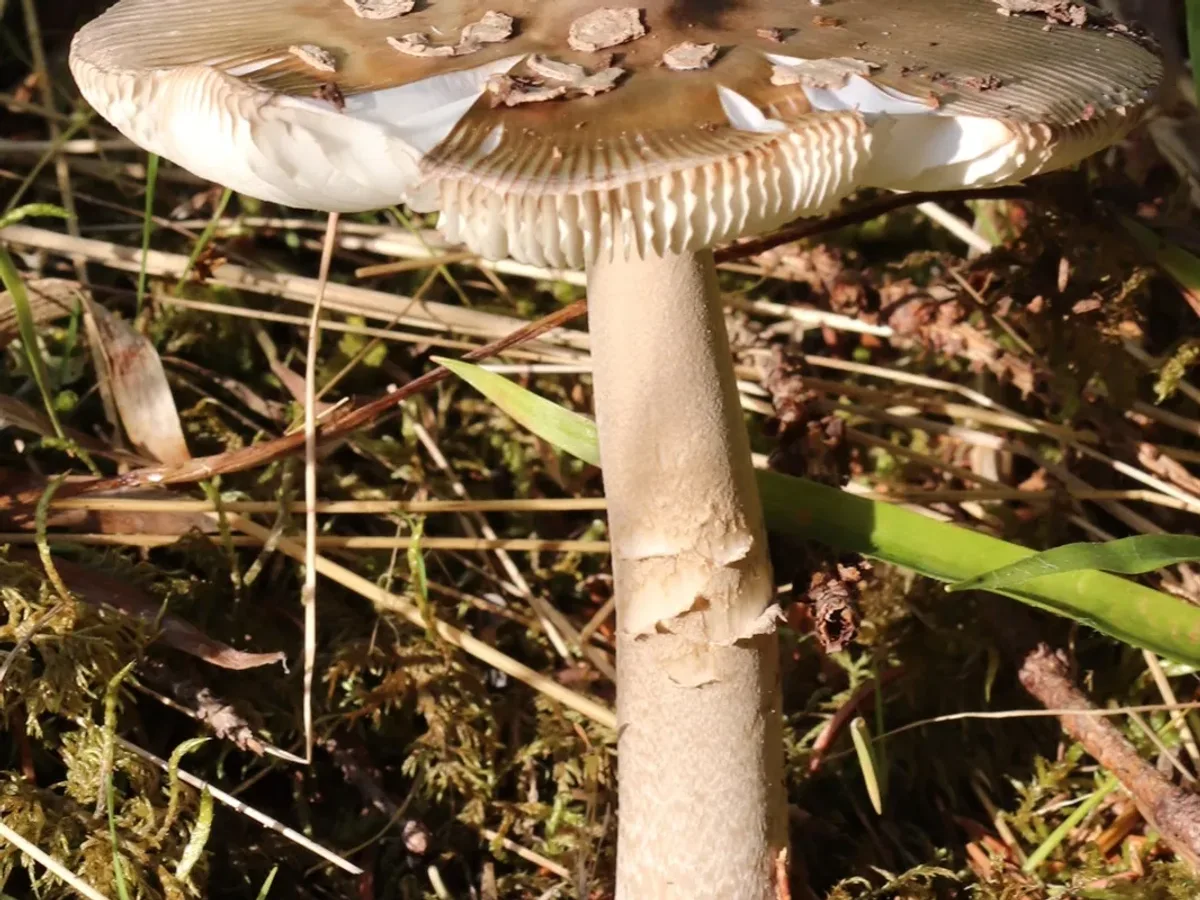
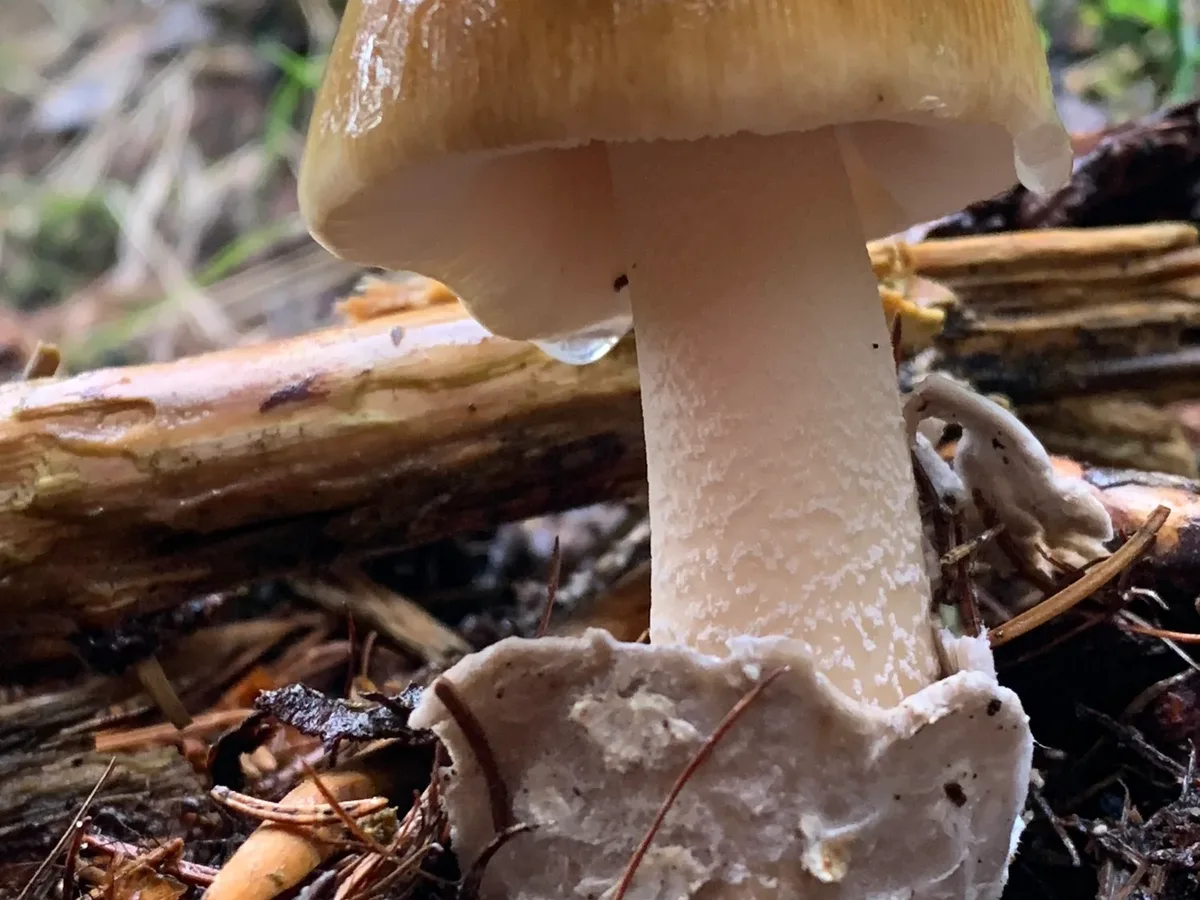
White, free from the stem, and crowded. Spore print white.
Stem
The stem is 7-14 cm, slender, whitish to grey, and has no ring at all - where deadly Amanita such as the death cap and destroying angel carry a pendant skirt on the stem, this species has none.
At the stem base sits a persistent, membranous, white to off-white volva, often partly buried; it tends to be taller and more robust than the volva of the common grey grisette (Amanita vaginata).
Smell & taste
No particularly distinctive smell.
Where & when it grows
Habitat
Lives in mycorrhizal partnership with conifers and montane broadleaves - spruce, fir, larch, beech, and birch - chiefly at middle to upper forest elevations (roughly 600-1800 m in the Alps and Carpathians).
The mycelium threads the soil around roots for years, quietly exchanging minerals for sugars with its host tree, before ever producing a fruiting body.
It prefers acidic, humus-rich soils and is more firmly tied to the montane conifer belt than its close relative A. vaginata, which grows at all elevations. Scarce in lowland woods; occurs across central and western Europe.
When
Mid-summer through early autumn.
Peak fruiting is typically late July to September, aligning with the main summer rains at altitude. The season ends as soils cool in October.
How it grows
Solitary or in scattered groups, fruiting from the same mycelium network over consecutive years in suitable montane forest.
As a mycorrhizal fungus it requires a living tree partner and will not fruit on decaying wood.
Fruiting conditions
Montane mycorrhizal fruiter; flushes follow summer rain events once soil temperatures at altitude reach 8-10 °C. The cooler montane thermal regime means peak fruiting is mid-summer to early autumn, earlier in warm years.
Look-alikes
The realistic confusion risks are significant.
- 1Grey grisette (Amanita vaginata) is extremely similar - also ring-less with a striate cap - and is considered edible by many mycologists, but is difficult to separate from A. submembranacea without microscopy; the populations intergrade and A. vaginata tends to occur at lower elevations with deciduous trees. Because of this difficulty, treat both as inedible unless you are a trained mycologist.
- 2The deadly death cap (Amanita phalloides) bears a strong resemblance to young grisette specimens emerging from their egg stage: at this stage the volva has not split and the ring-or-lack-of-ring is hidden inside the universal veil. A young unexpanded grisette can look identical to a young death cap button - fatal misidentifications occur this way every year.
- 3Amanita virosa (destroying angel), pure white and lethal, shares the general Amanita form with volva.
Never pick Amanita from the button stage for eating without being certain the fully emerged specimen has a striate cap and no ring.
The most dangerous confusion occurs at the button stage, before the mushroom has fully expanded. Young death cap buttons emerging from the ground in their unbroken universal veil look superficially identical to young grisettes - the ring and olive-green cap colour are concealed inside. Always allow Amanita specimens to fully emerge before attempting identification, and check for the presence or absence of a ring on the mature stem. A fully expanded A. submembranacea has a striate cap margin and absolutely no ring; a fully expanded A. phalloides has a non-striate cap with a well-formed pendulous ring.
Pure white and deadly. Distinguished from grisettes by the presence of a white ring on the stem and a non-striate cap. At the button stage, however, identification is unreliable. Any pure-white Amanita-type button should be treated with extreme caution.
Virtually identical in the field; both have a striate cap margin, no ring, and a membranous volva. A. vaginata tends to fruit at lower elevations with deciduous trees while A. submembranacea is more montane and associated with conifers, but these habitats overlap and the species intergrade. Separation requires microscopy. Treat both as inedible unless you are a specialist.
The tawny grisette is a close relative with a tawny/orange-brown cap and the same ring-less, striate-margin pattern. Considered edible by many mycologists but the same button-stage confusion risk with A. phalloides applies. A. submembranacea is greyer and colder-toned in cap colour.
In the kitchen
Picking & cleaning
This species is not gathered for food. If you encounter it, identify it by these points in combination:
- Striate cap margin
- White free gills
- NO ring on the stem
- A membranous sac-like volva at the base
- White spore print
Any one feature can be shared with other species; the combination must be checked. Always dig carefully around the stem base to expose the volva - it is often buried.
Do not collect any pale, ring-less Amanita unless you are highly experienced, because errors carry fatal risk.
Cooking
Not recommended for consumption. Do not eat.
Good to know
Treat this species as inedible. It has no established culinary tradition and no confirmed positive edibility; at least some authors consider it mildly suspect.
More importantly, it cannot reliably be separated from other ringless grisettes without microscopy. The grisette group as a whole is only safely gathered by experienced foragers who are already expert at Amanita identification - because the deadly button-stage confusion with A. phalloides makes the Vaginatae group statistically one of the most dangerous foraging targets in Europe.
A reference guide - never an edibility guarantee. When in doubt, leave it out.