East Asian death cap
Amanita subjunquillea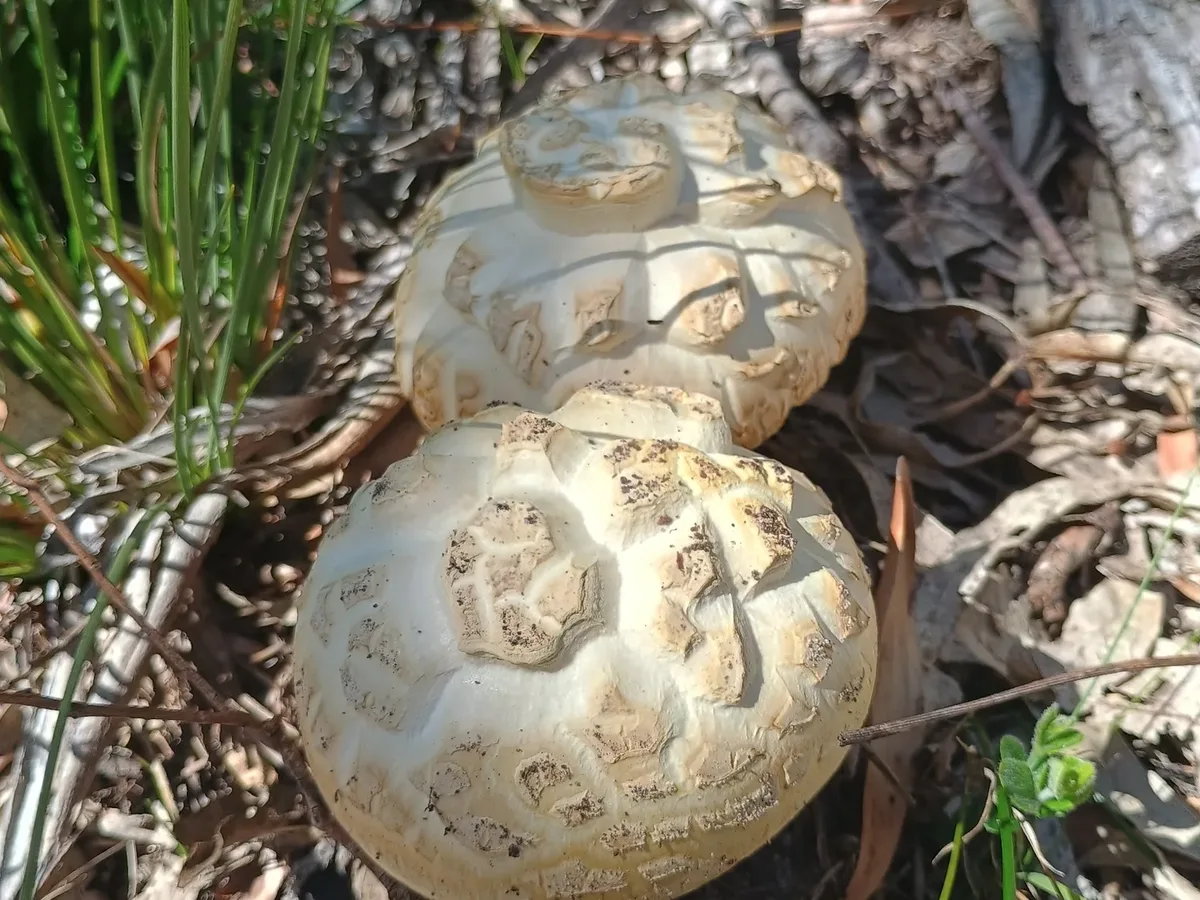 Atlas of Living Australia (CC0)
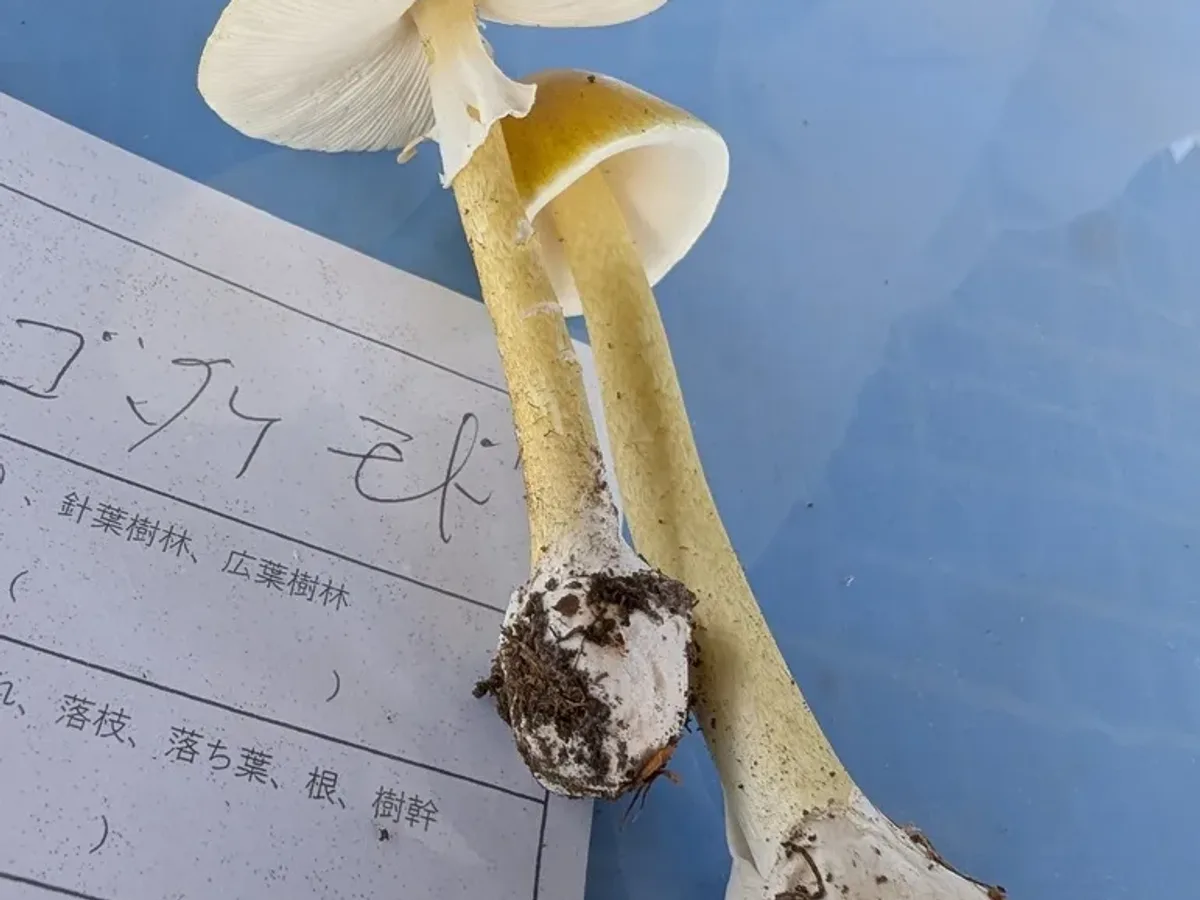 (c) Atsushi Nakajima, some rights reserved (CC BY)
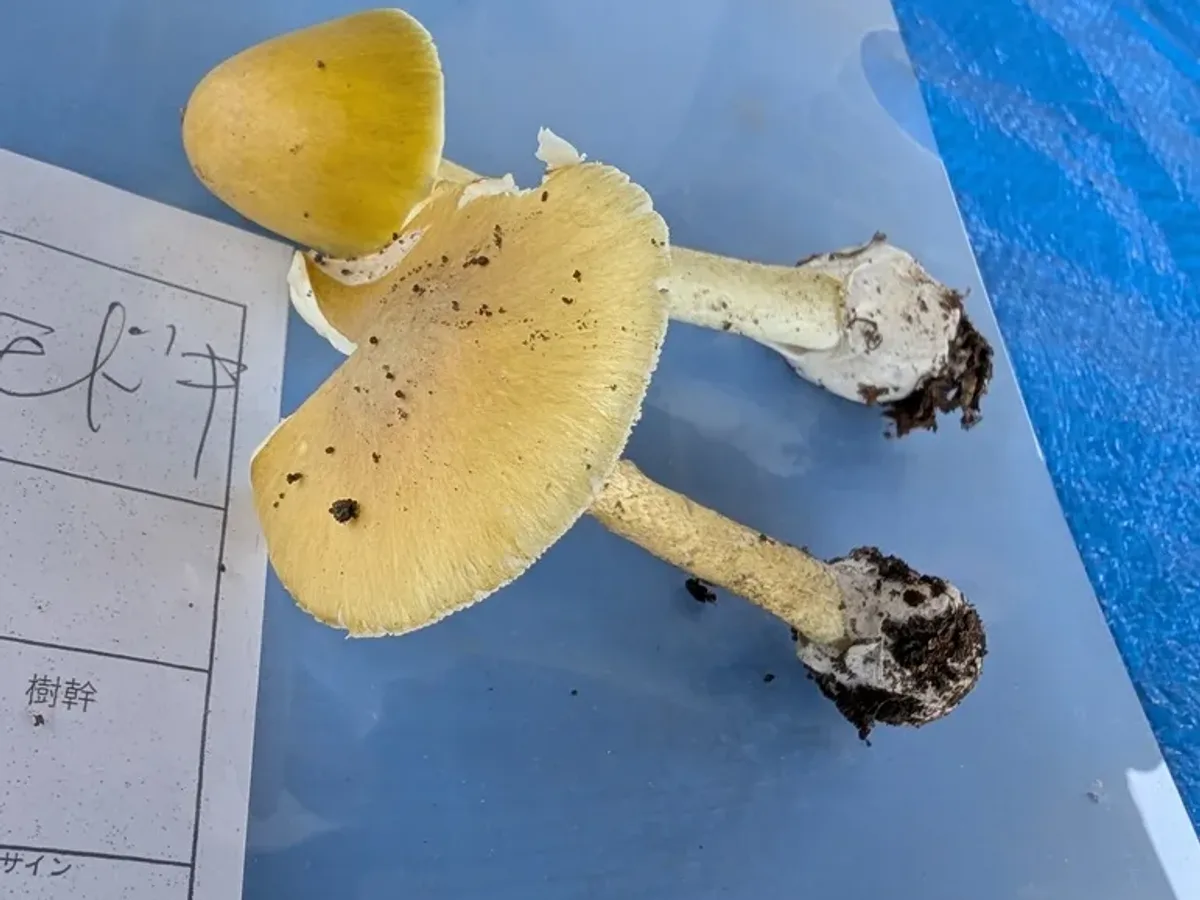 (c) Atsushi Nakajima, some rights reserved (CC BY)Atlas of Living Australia (CC0)(c) Atsushi Nakajima, some rights reserved (CC BY)
Toxic - and the most serious cases can be fatal. Never eat it, and wash your hands after handling.
Never eat a mushroom you are not 100% sure of - check the look-alikes below, and always cook wild mushrooms.
How to recognise it
A modest mushroom. Its identifying features:
- Cap: yellow-brown to olive-brown, 3-7 cm, sometimes darker at the centre and occasionally bearing veil flecks.
- Gills: white and free.
- Stem: whitish to pale yellow, with a ring.
- Base: wrapped in a sac-like white volva.
- Spore print: white.
Why it's dangerous
A lethal amatoxin Amanita whose dull olive-brown colour makes it easy to dismiss as an ordinary edible.
Like all its relatives, the toxin survives cooking, and the illness begins only after a deceptive delay of many hours.
Toxin
Amatoxins are cyclic octapeptides, chiefly α-amanitin. They shut down RNA polymerase II, so cells stop making protein and the liver and kidneys fail.
They are not destroyed by cooking, drying, freezing or soaking.
Symptoms
Poisoning runs in four phases:
- 1A symptom-free latency of 6-24 hours.
- 2Then violent vomiting and watery diarrhoea.
- 3Then a deceptive false recovery of one to three days while liver enzymes quietly climb.
- 4Then liver and kidney failure on days 3-5, often fatal without intensive care or a liver transplant.
The long silent start is what makes it so deadly - victims rarely connect their illness to the meal.
Staying safe
Never eat it. Amatoxins survive all cooking and preservation, and the delayed onset hides the danger until organ damage is underway.
Always uproot the whole stem to check for a volva. Treat every white-gilled, white-spored mushroom with a ring and a sac-like base as lethal.
Where & when it grows
Habitat
Ectomycorrhizal with conifers and broadleaf trees in temperate and subtropical forests of China, Japan, Korea and the Russian Far East.
When
A summer-to-autumn species, fruiting through the warm, wet months of the East Asian growing season.
How it grows
An ectomycorrhizal Amanita: the mycelium lives for years threaded through tree roots. A fruitbody is only the brief above-ground tip of that partnership, pushed up within a few days of warm rain.
Look-alikes
- Edible brown-capped mushrooms and knights (Tricholoma).
- The Caesar's-mushroom group, which also has a volva but golden gills.
- Other deadly Amanitas.
Fellow deadly East Asian death caps; all share white gills, white spores, a ring and a volva.
Tricholoma and other edibles lack the sac-like basal volva and the white spore print; always dig up the base.
A reference guide - never an edibility guarantee. When in doubt, leave it out.