Grey spotted amanita
Amanita spissasyn. Amanita excelsa var. spissa, Amanita excelsa subsp. spissa, Agaricus spissus
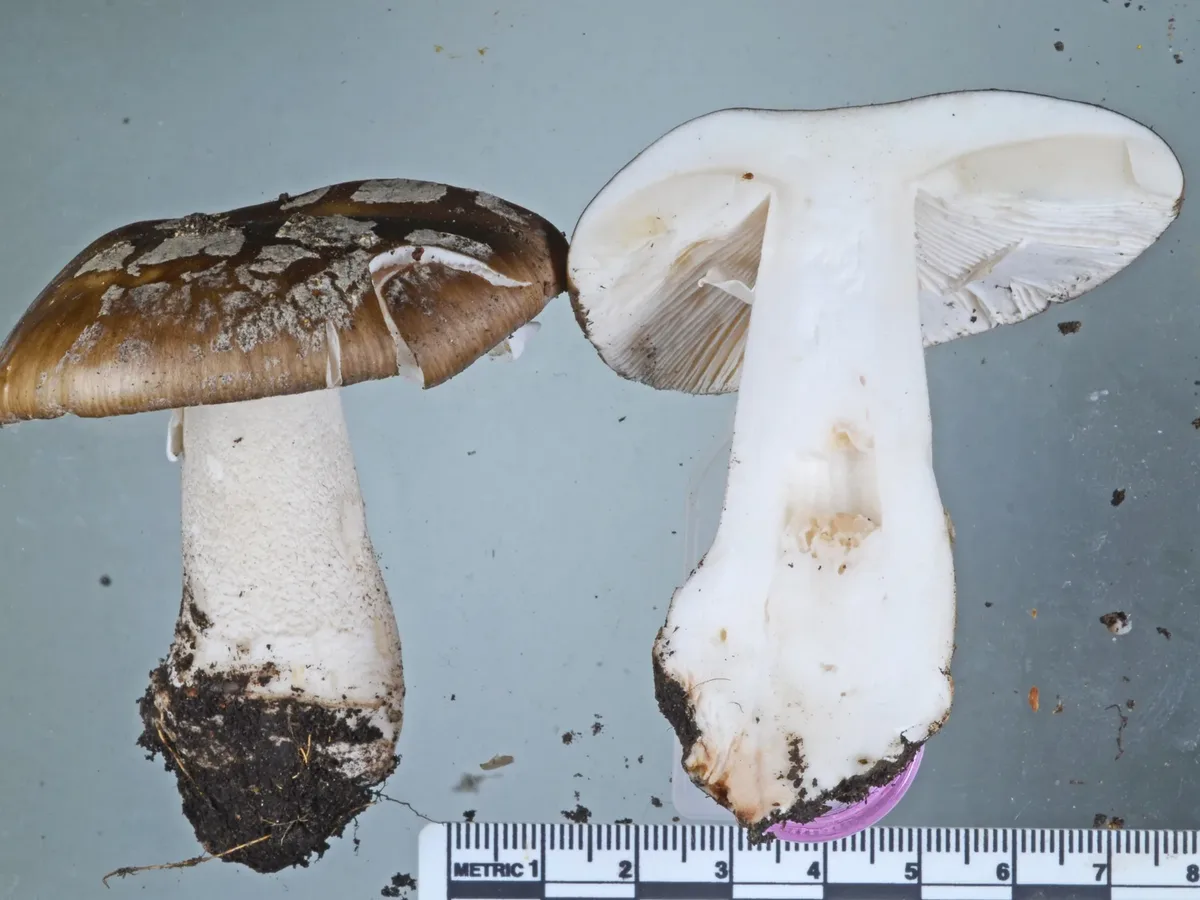 © Jerry Cooper (CC BY 4.0)
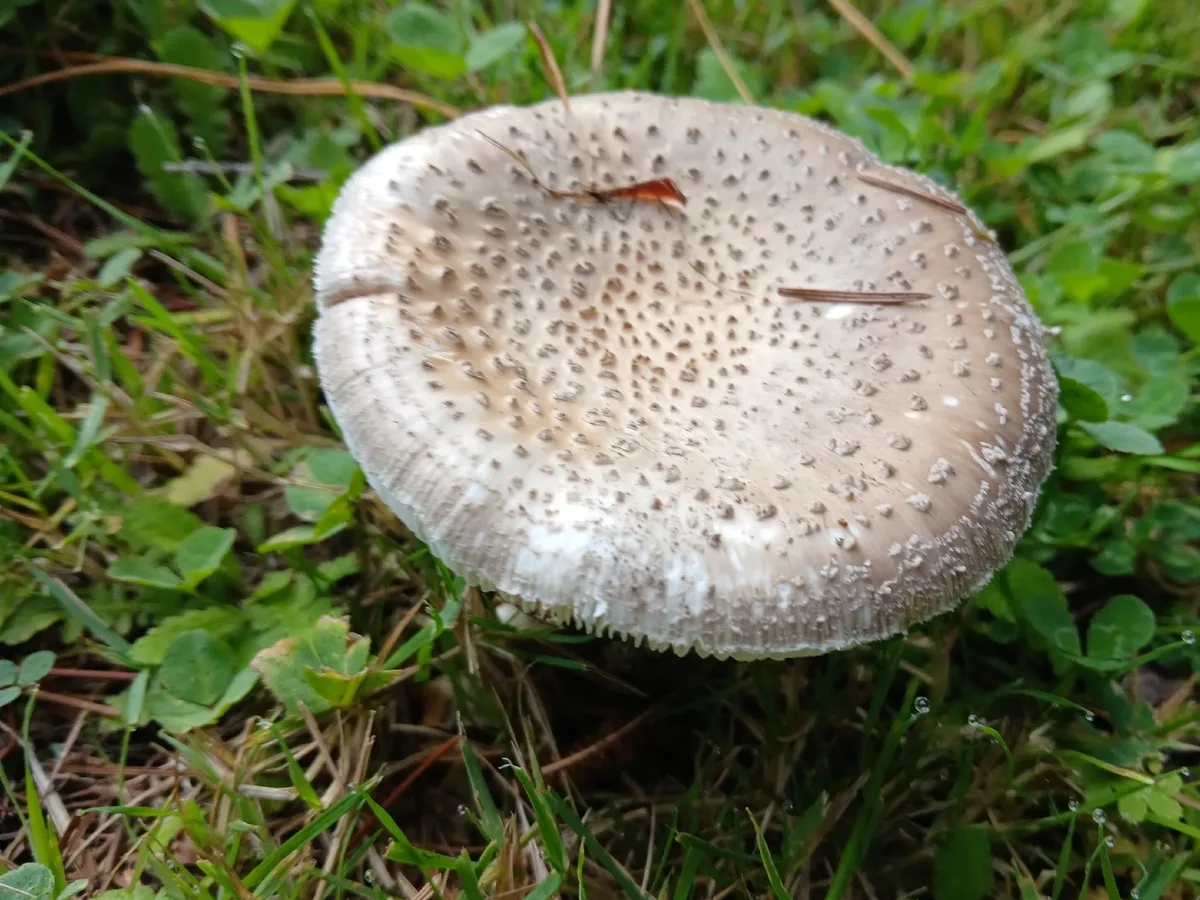 © claire (CC BY)
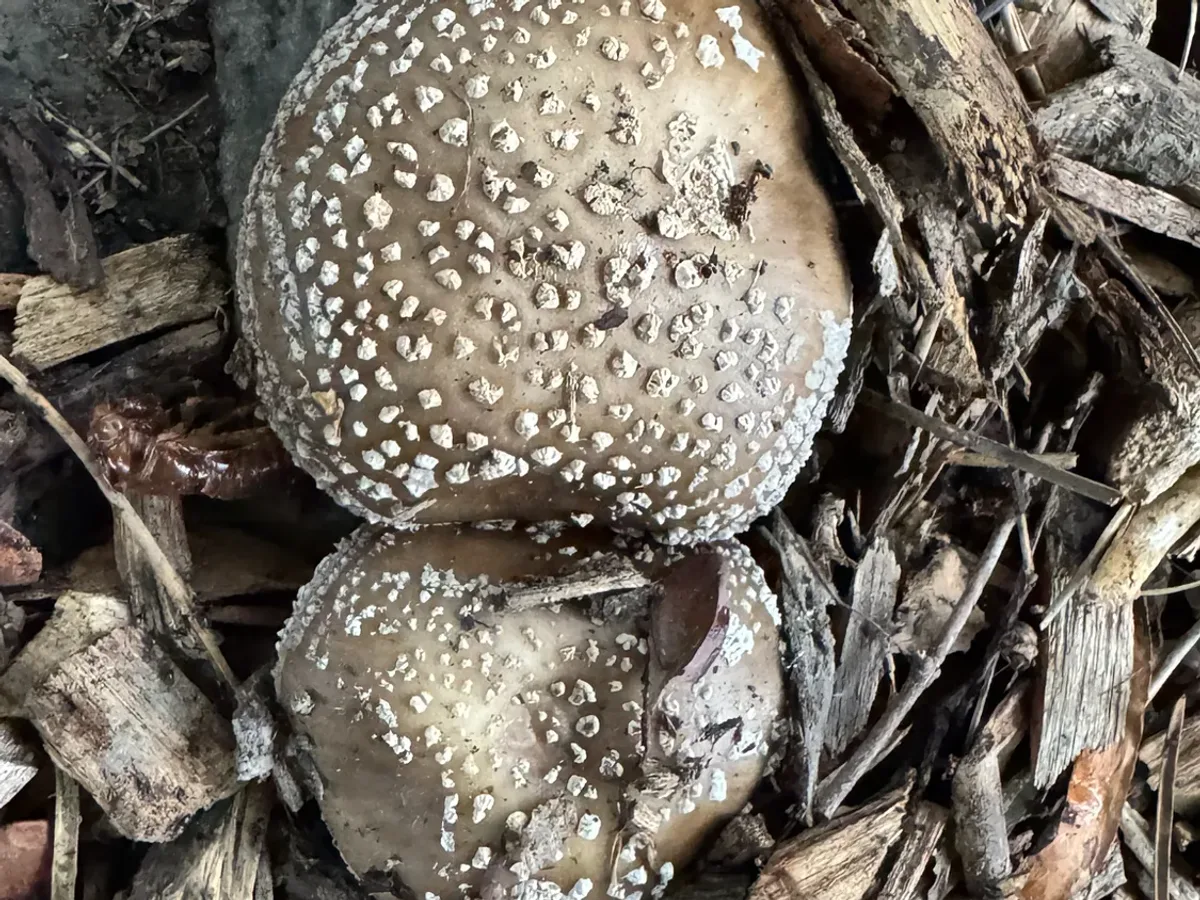 © Frank Ashwood (CC BY)
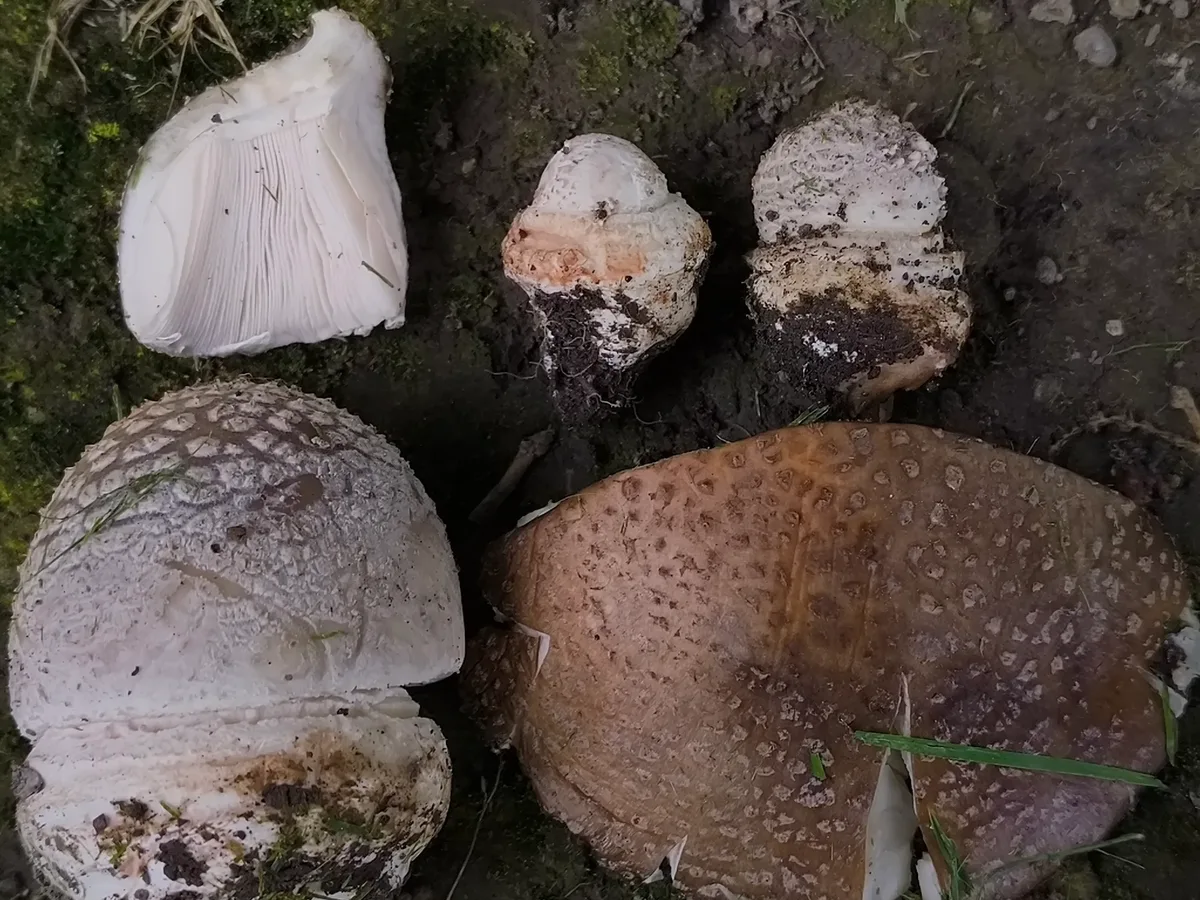 © Zac (CC BY)
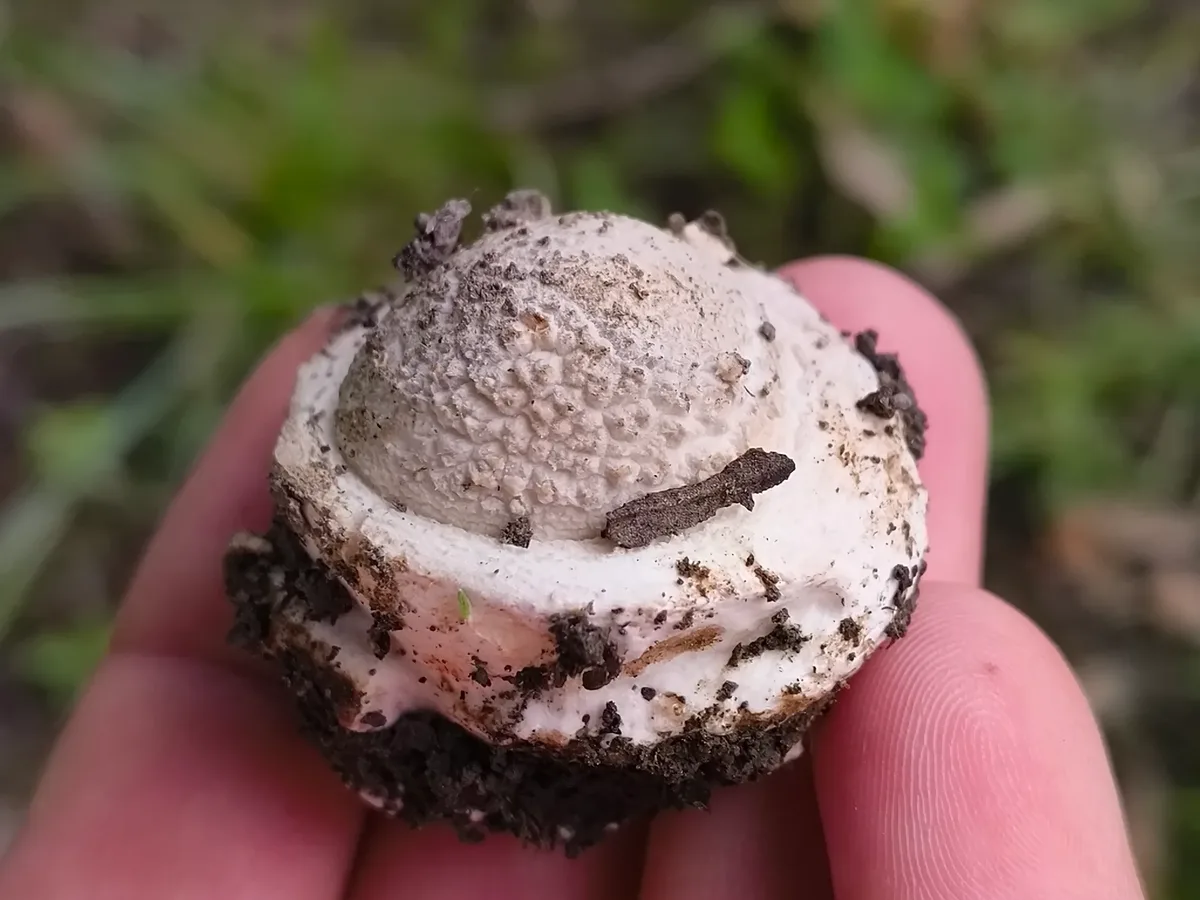 © Zac (CC BY)
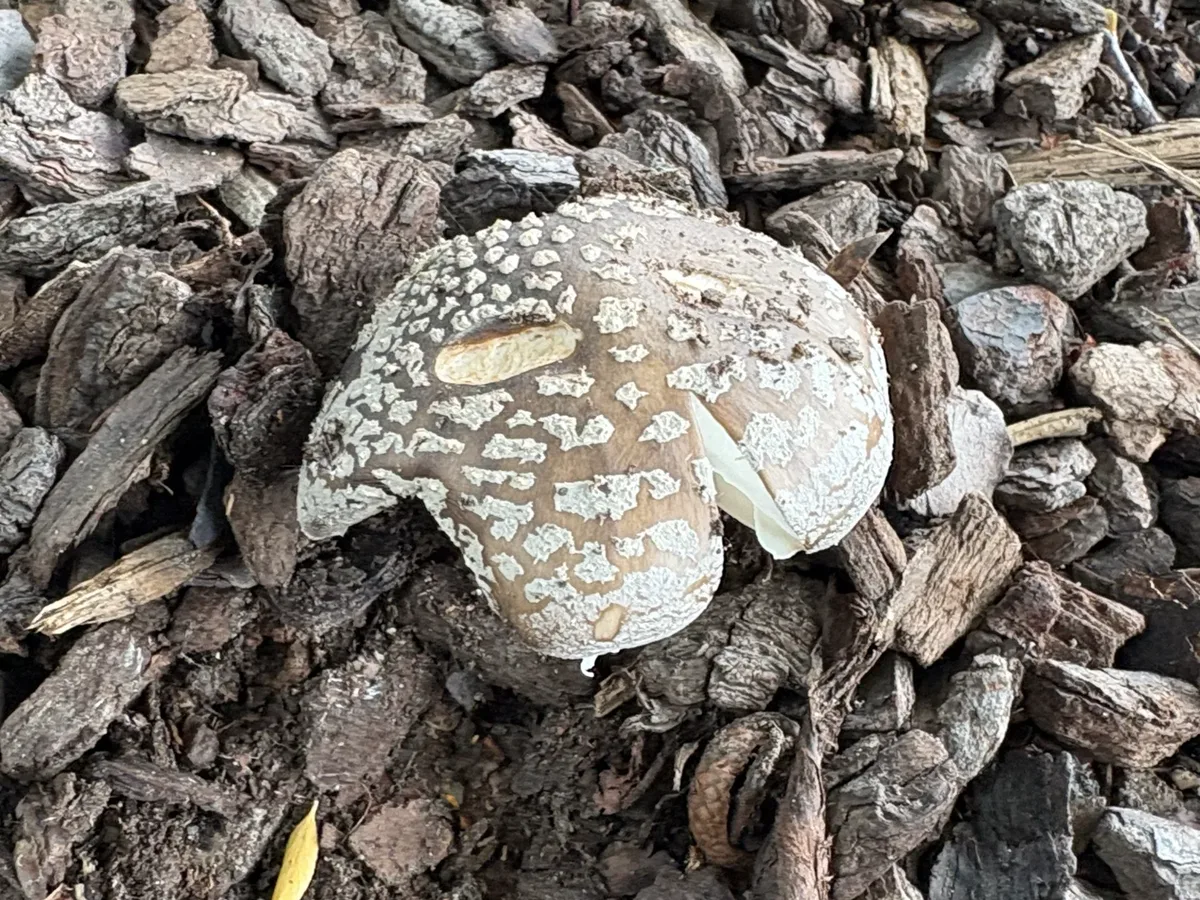 © Jenny Saito (CC BY)
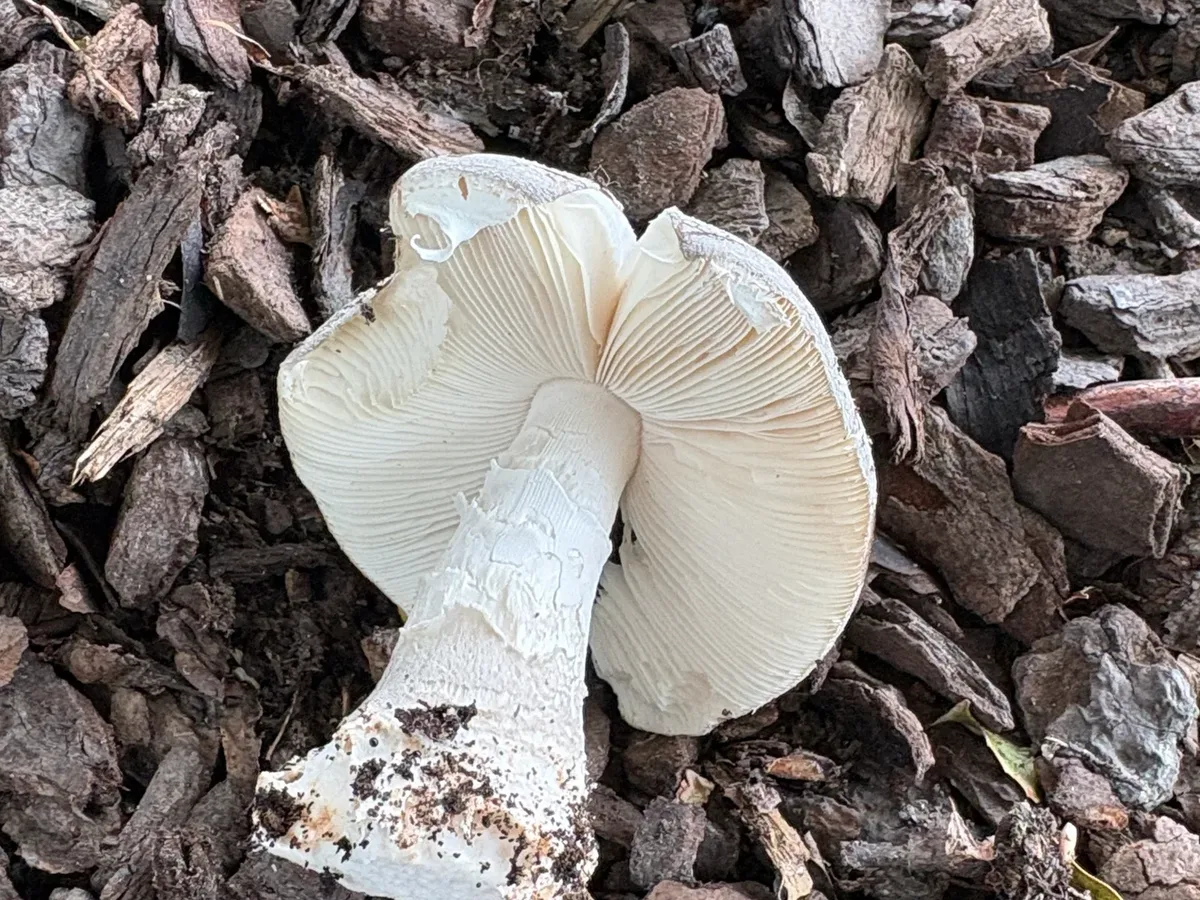 © Jenny Saito (CC BY)
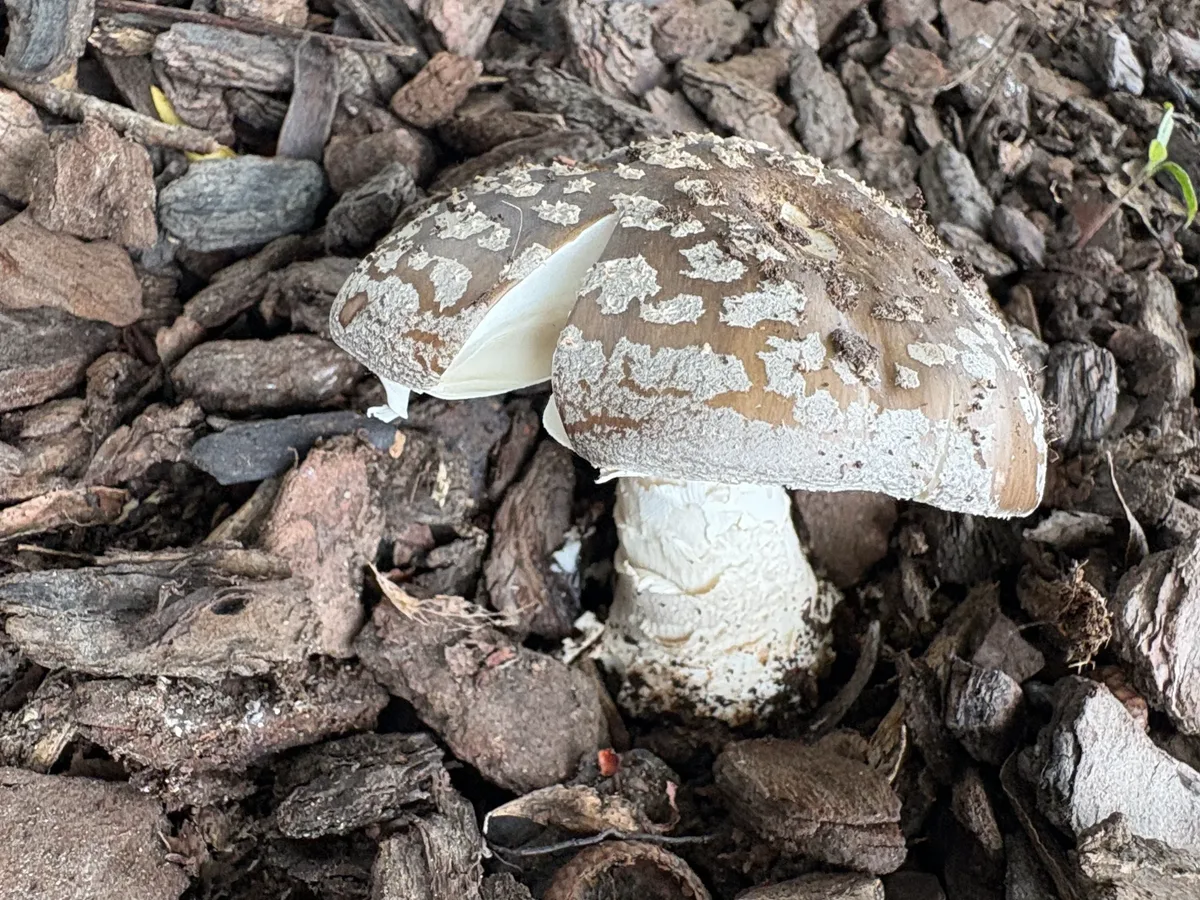 © Jenny Saito (CC BY)
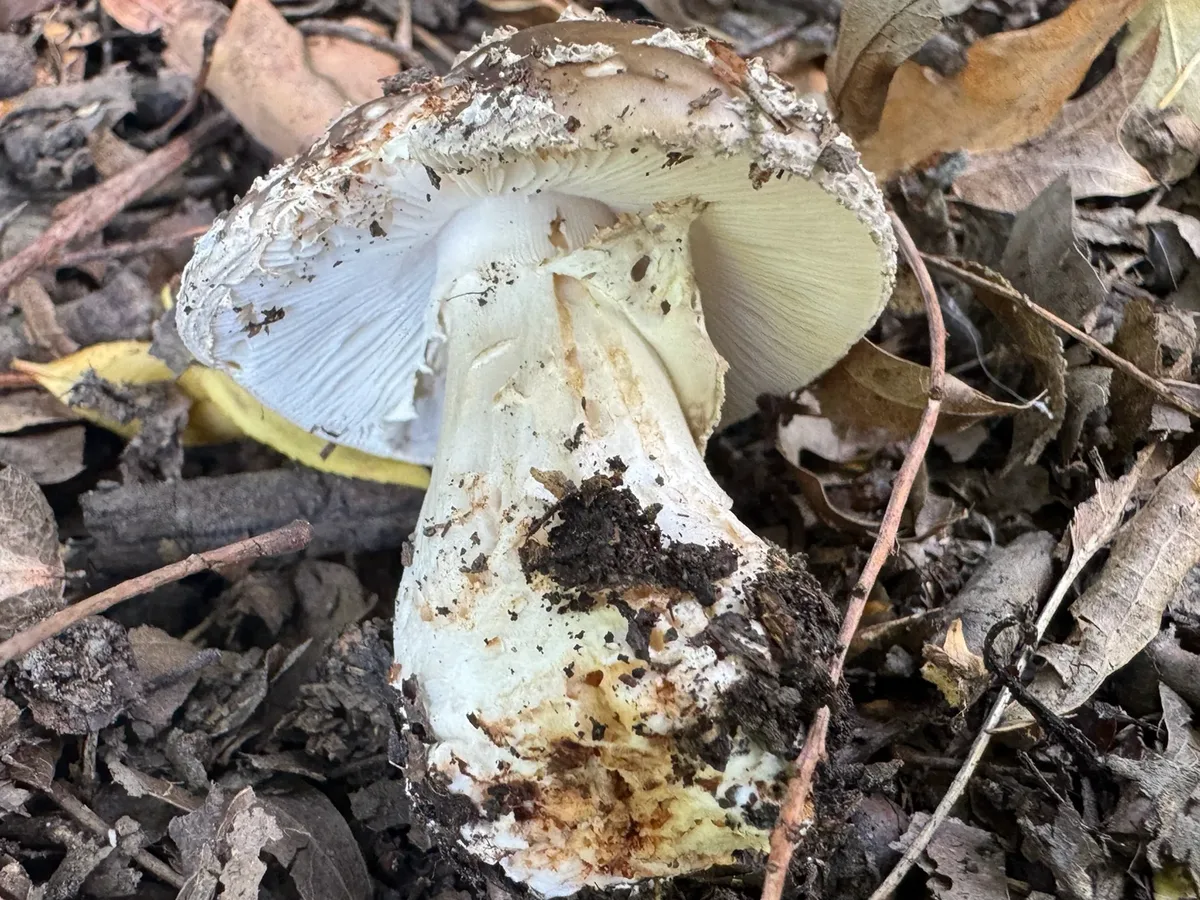 © Frank Ashwood (CC BY)
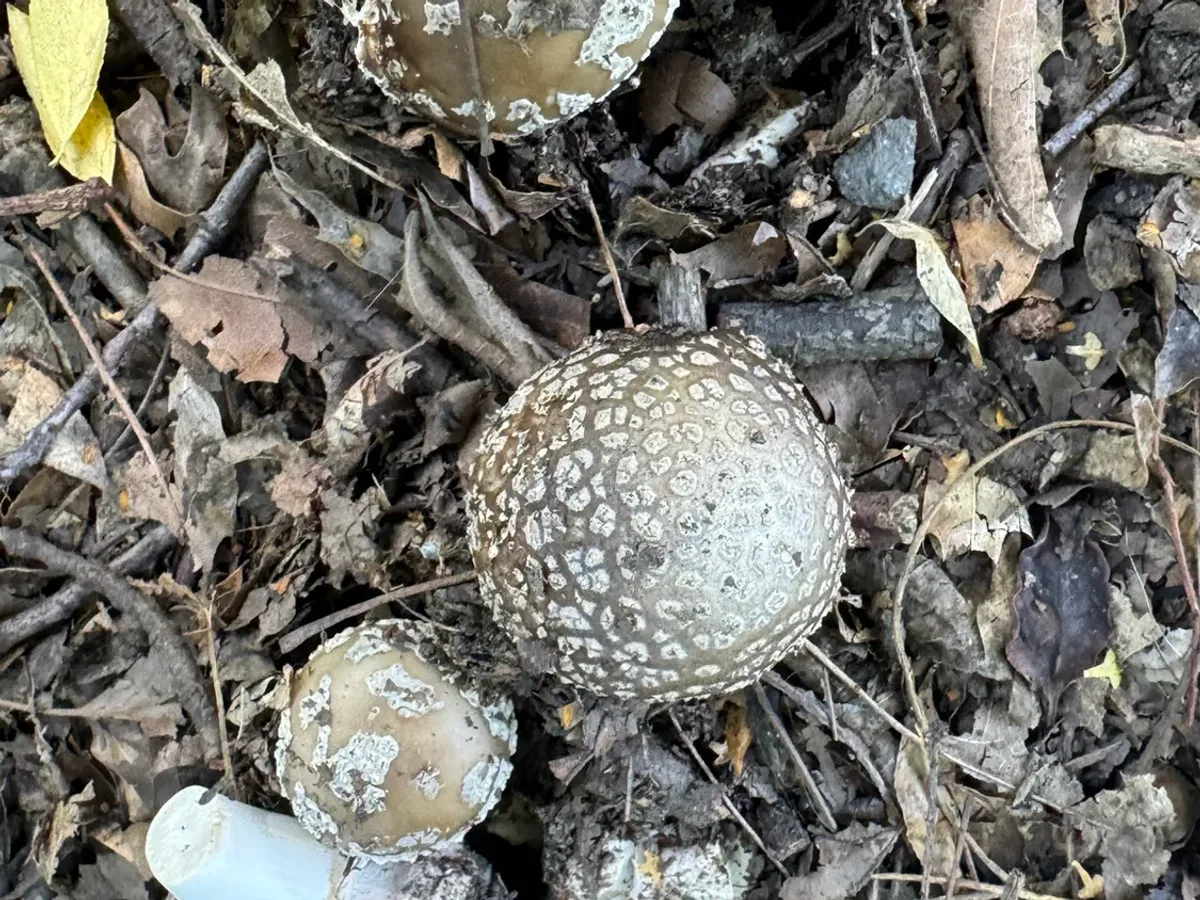 © Frank Ashwood (CC BY)
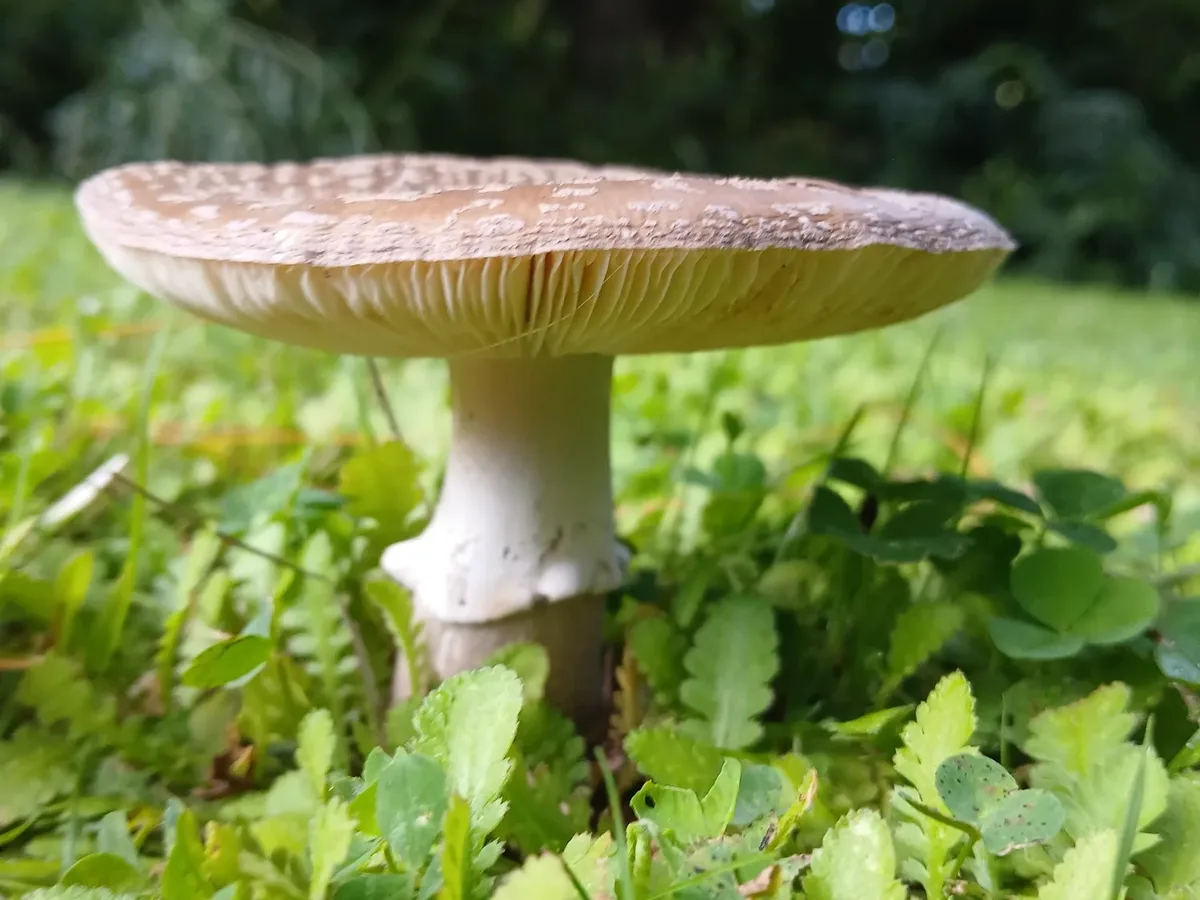 © claire (CC BY)
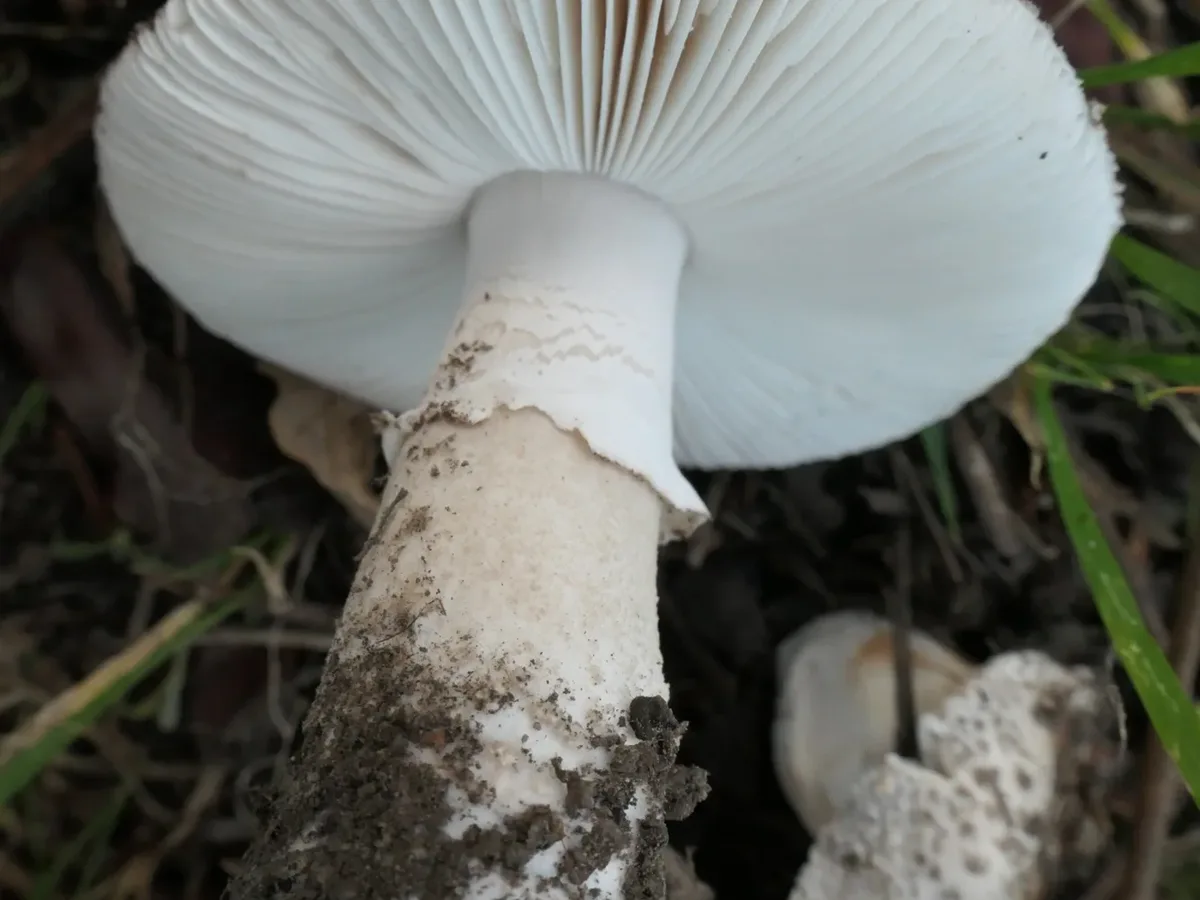 © bythepark (CC BY 4.0)© Jerry Cooper (CC BY 4.0)© claire (CC BY)
Edible only with the right preparation - or safe for some people but not others. Learn the caveats first.
Never eat a mushroom you are not 100% sure of - check the look-alikes below, and always cook wild mushrooms.
How to recognise it
Amanita spissa is a solid, grey-brown mushroom that begins life sealed inside a universal veil - a pale egg-shaped shell it shares with many Amanitas.
As the fruit body expands, the veil tears and its remnants land on the cap as soft, irregular grey-white warts, the trademark that gives this species its spotted look.
Cap
The cap (6-15 cm) is convex, flattening with age, greyish-fawn to mid-grey-brown, a little darker at the centre; the margin is smooth and not striate.
Gills / Pores
The gills are free, white, crowded, and never stain.
Spore print white.
Stem
The stout stem (8-14 cm × 2-3.5 cm) is whitish with a swollen, scaly-girdled base - no free bag-like volva.
The ring is large, pendulous, and white. Run a fingernail across its upper face and you feel the distinctive parallel grooves or ridges, a useful touch-test on the spot.
Flesh
The flesh is white throughout and stays white when cut, bruised or exposed to air.
Smell & taste
The smell is one of the most dependable field aids: a persistent earthy raw-potato or turnip-radish odour, quite different from the death cap's faintly sweet then unpleasant honey-carrion smell.
Where & when it grows
Habitat
An ectomycorrhizal woodland species, fruiting on the ground in broadleaf and mixed forest.
Beech and oak are the most frequent partner trees, but it also appears under birch, hornbeam and occasionally conifers on moderately well-drained soils.
Found in parks and roadside plantings as well as natural forest throughout temperate Central and Western Europe.
When
Season runs from late June to November, peaking from August to October.
Like most large Amanitas it typically flushes 7-14 days after soaking late-summer and autumn rains once soil temperatures have dropped slightly from summer highs.
How it grows
Solitary to scattered, never in tight clusters.
Fruit bodies push up from a rounded egg embedded in the soil, the universal veil tearing to leave the warty cap and the girdled bulb.
Caps expand over several days. Older caps lose their warts in wet weather and bleach slightly, making them harder to identify.
Fruiting conditions
Ectomycorrhizal fruiter under broadleaf trees; flushes after soaking late-summer and autumn rains once soil temperatures are below peak-summer levels. Standard 7-14 day flush-lag applies.
Look-alikes
Amanita spissa sits in an identification minefield. Its most dangerous lookalike is the PANTHER CAP (Amanita pantherina), which causes severe ibotenic-acid/muscimol poisoning.
The panther cap differs on several counts:
- typically richer mid-brown (never as grey as A. spissa)
- pure-white (not greyish) warts
- a SMOOTH (non-striate) ring
- usually a distinct rim or collar and encircling ridges at the top of the abruptly bulbous base
- crucially, no radish-like smell
A. spissa is known to overlap with pantherina in brown colour forms, and identification requires attending to all features simultaneously, never one alone.
The DEATH CAP (Amanita phalloides) is a further serious risk. Its distinctive greenish-olive or pale straw colouring and unmistakable bag-like volva at the base usually separate it clearly, but pale death caps can be overlooked by inattentive foragers, and the species contains amatoxins lethal in sub-cap doses.
The BLUSHER (Amanita rubescens) is greyer-brown and also carries a grooved ring and a girdled bulb, but its flesh distinctively reddens where cut or insect-damaged. If the flesh does not blush, do not assume it is safe.
Pale forms can also suggest the DESTROYING ANGEL (Amanita virosa), which is white throughout with a prominent free sac-like volva and no radish smell.
Young specimens may superficially resemble puffball buttons, but puffballs have solid white interiors with no gill structure.
Cap is typically greenish-yellow to olive-green (sometimes pale straw), smooth or with a few washable warts; the most decisive feature is the prominent, free, bag-like white VOLVA at the bulbous base - A. spissa has a girdled bulb, never a free sac. Faint sweet/honey then unpleasant smell when mature. Contains amatoxins; half a cap can kill an adult.
Pure white throughout, with a conspicuous free, bag-like volva, shaggy fibrous stem, smooth ring and no radish smell. Grey spotted amanita is never pure white and has a girdled (not free-sack) base. Contains amatoxins; lethal.
Cap is typically a richer, warmer mid-brown (not grey-brown); warts are pure white (not greyish); ring is smooth on the upper surface, NOT grooved/striate; the base of the stem has a distinct collar-like rim and often concentric ridges above the abruptly rounded bulb; no radish or turnip smell. Contains ibotenic acid and muscimol, causing severe central-nervous-system toxicity - confusion, agitation, ataxia, convulsions, occasionally life-threatening.
Very similar in overall form - grey-brown to pinkish-brown cap, girdled bulb, grooved ring - but flesh distinctively stains pink to dull red where cut, bruised or insect-damaged. If the white flesh does NOT redden within a few minutes, it is not the Blusher. The Blusher contains heat-labile haemolysins and is poisonous raw.
In the kitchen
Picking & cleaning
- Always excavate the full stem base - the girdled bulb (no free bag-like volva) and the grooved ring are essential for safe identification and cannot be confirmed from a cut stem.
- Use a knife to loosen the soil around the base rather than pulling.
- Keep any grey-brown Amanita separate from other edibles until each feature is verified at home against a trusted reference, preferably alongside a fresh panther cap image for direct comparison.
- Only collect in good condition; soft, waterlogged or heavily insect-damaged specimens are unsafe to identify with confidence.
Cooking
After rigorous, confident identification (and only then), the grey spotted amanita can be eaten cooked.
It is a mediocre to moderately good edible - firm, white flesh with a mild flavour, suitable for frying, sautéing or adding to mixed mushroom dishes.
No significant toxins are present, and standard cooking at eating temperatures is sufficient.
However, there is no reward commensurate with the risk. More rewarding and easily identified edible Amanitas (such as Amanita caesarea) and unrelated choice edibles (e.g., Cantharellus, Boletus edulis) offer a far better risk-benefit ratio.
Good to know
Amanita spissa has a long history as an edible mushroom in parts of Central and Eastern Europe, but its collection is strongly discouraged by most modern field guides and mycological societies in Western Europe and Scandinavia.
The reason is identification reliability: the species is genuinely difficult to separate from the panther cap (Amanita pantherina) in the field, especially in brown-capped forms.
No single feature is infallible. All of these must align:
- grey cap colour
- grey warts
- grooved ring
- radish smell
- non-blushing white flesh
Even experienced foragers make mistakes in this species pair.
Eating this species is therefore an expert-only proposition, and even then only from perfectly fresh, fully identified specimens.
Rating: CAUTION - the species itself is non-toxic after cooking, but the lookalike hazard justifies treating it like a poisonous species for practical purposes.
A reference guide - never an edibility guarantee. When in doubt, leave it out.