Red-volva Amanita
Amanita rubrovolvata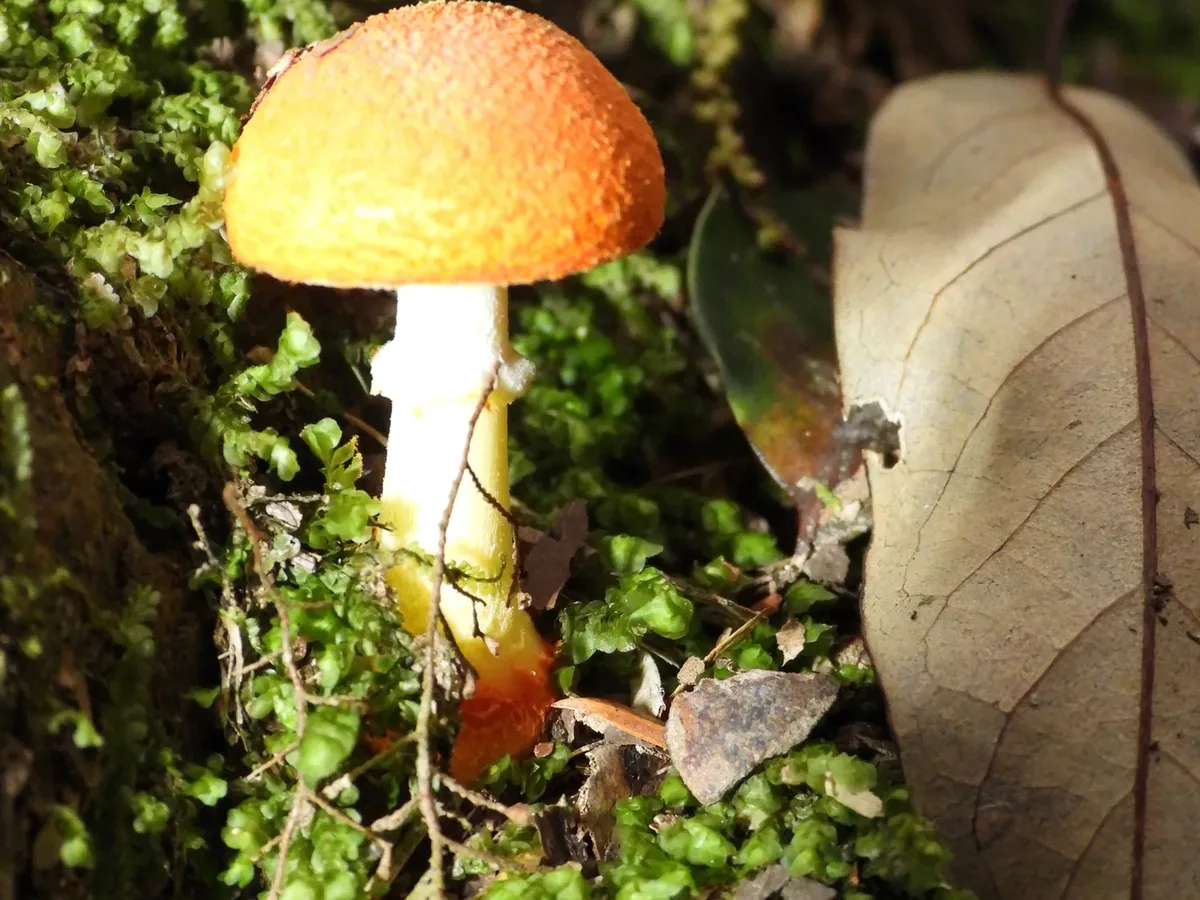 © Min-Hsuan NI (CC BY 4.0)
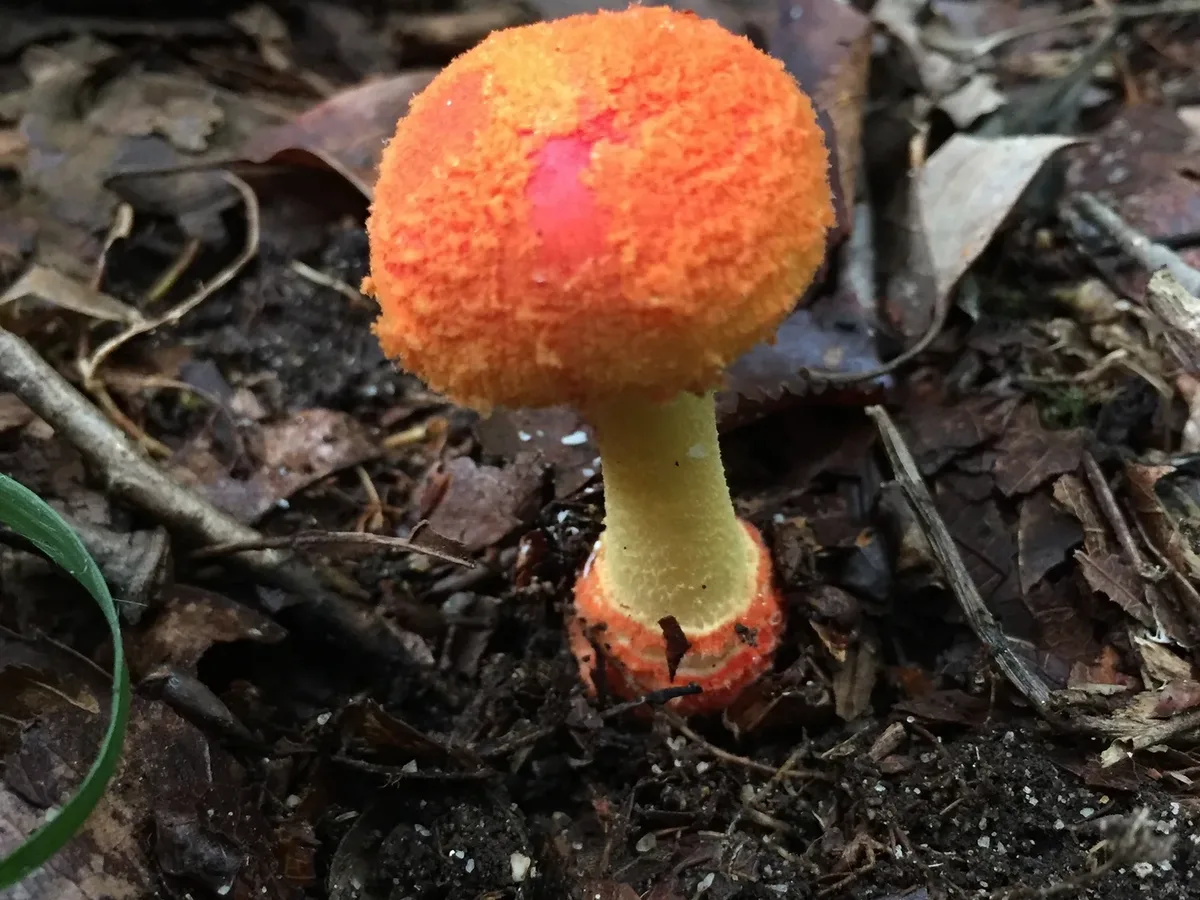 © Atsushi Nakajima (CC BY 4.0)
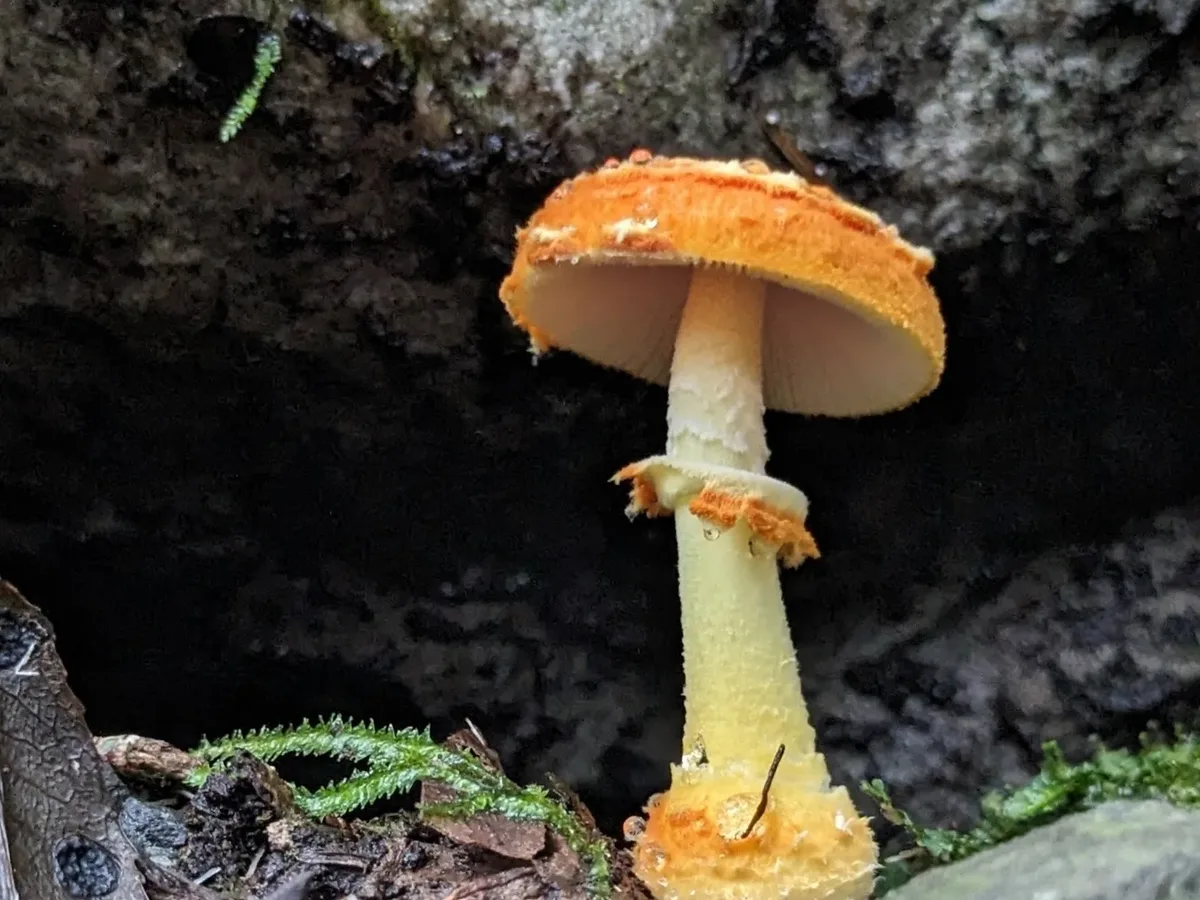 © 許文俊 (CC BY-SA)
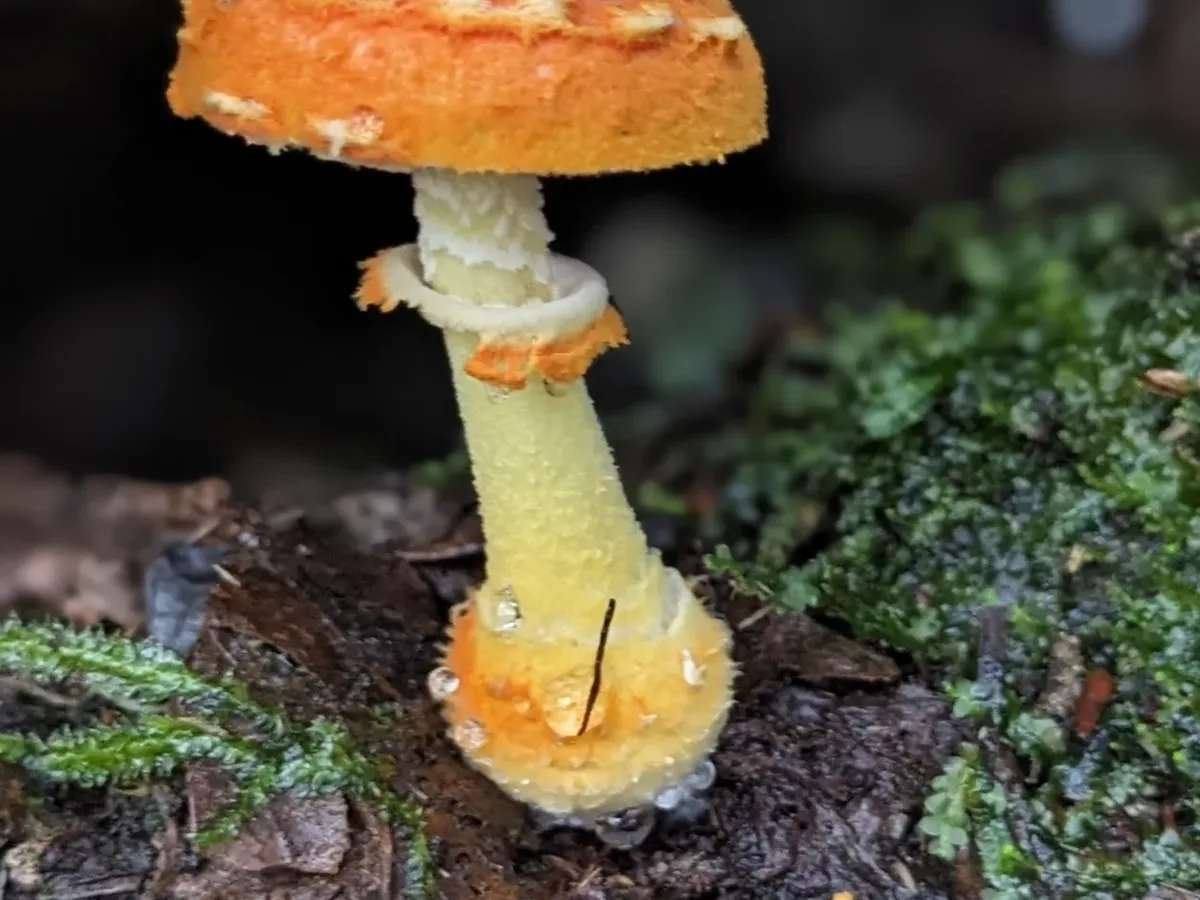 © 許文俊 (CC BY-SA)
 © Atsushi Nakajima (CC BY)
 © Atsushi Nakajima (CC BY)
 © Atsushi Nakajima (CC BY)
 © Atsushi Nakajima (CC BY)
 © Atsushi Nakajima (CC BY)© Min-Hsuan NI (CC BY 4.0)© Atsushi Nakajima (CC BY 4.0)
Edible only with the right preparation - or safe for some people but not others. Learn the caveats first.
How to recognise it
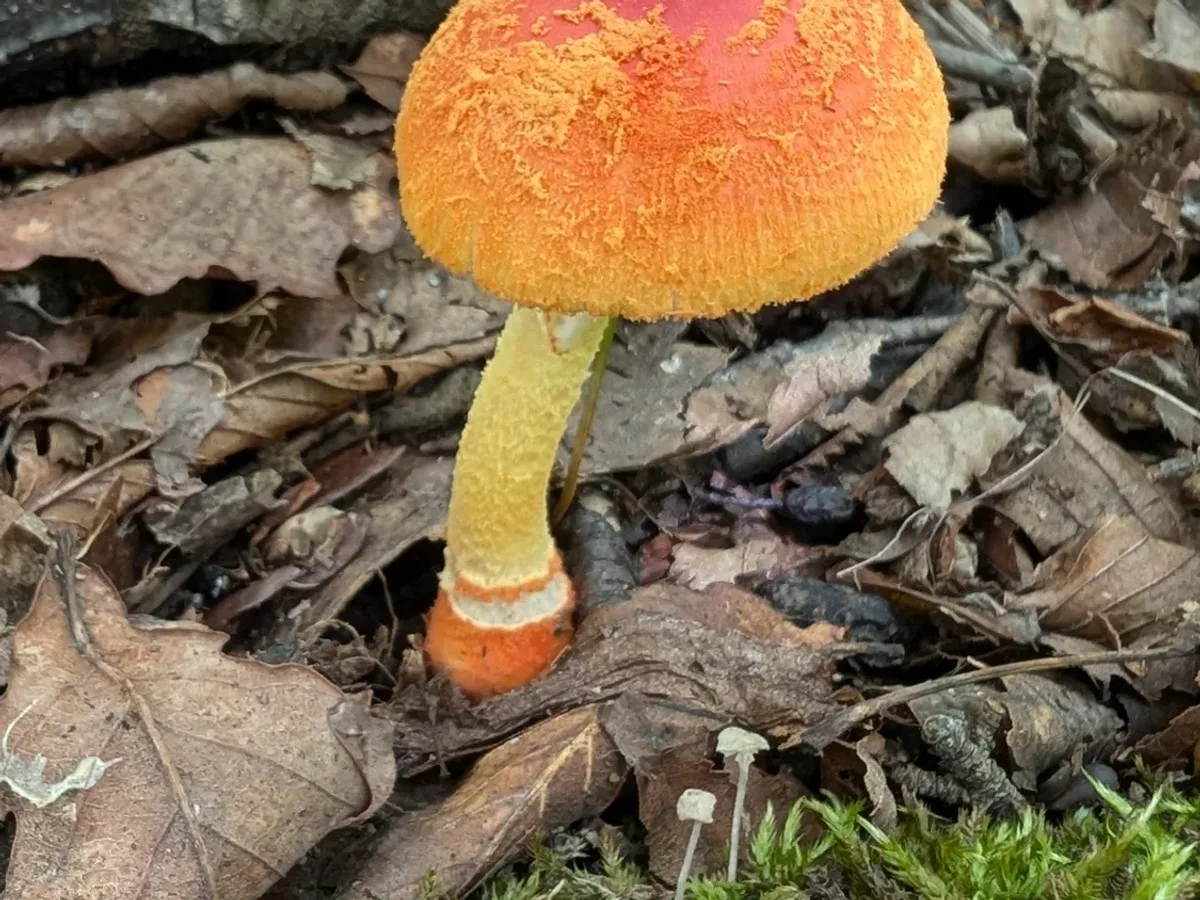
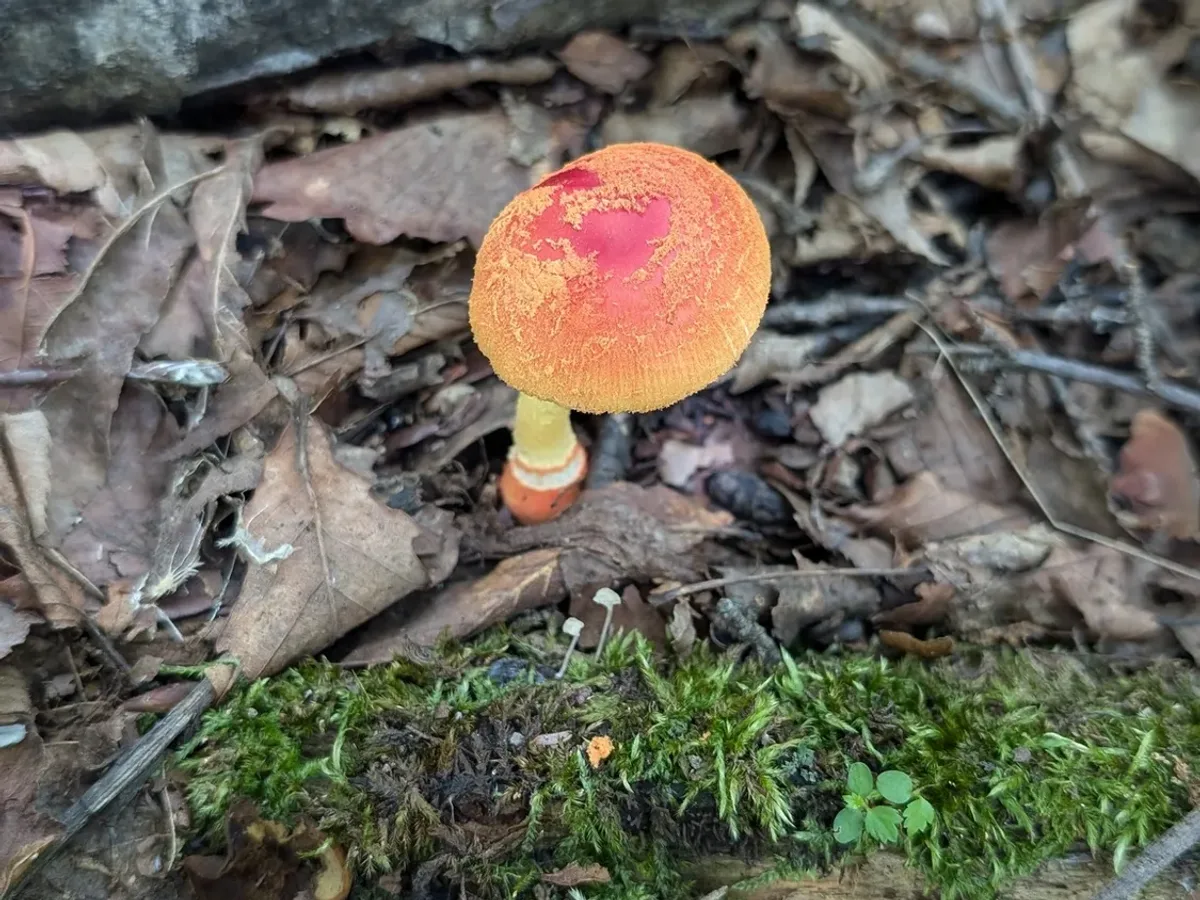
The Red-volva Amanita is a medium-sized mushroom that earns its name immediately. The most striking thing about it is the vivid scarlet to orange-red sac-like volva sitting at the base of the stem, bright and fleshy enough to catch the eye before anything else.
The volva itself - the fleshy sac the young mushroom burst from - remains at the stem base and is an unusually deep red or orange-red, quite unlike the white or pallid volvas of most other dangerous Amanitas in the same forests.
Cap
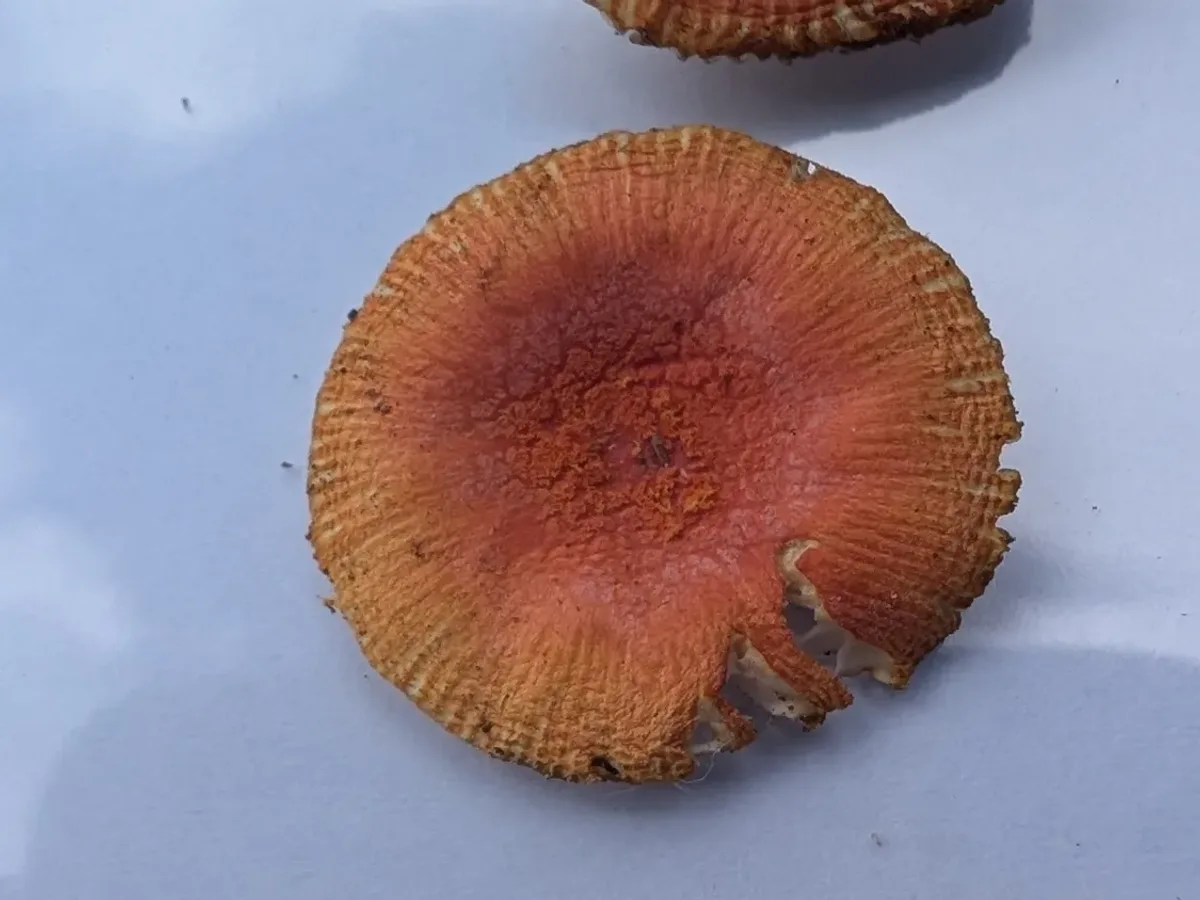
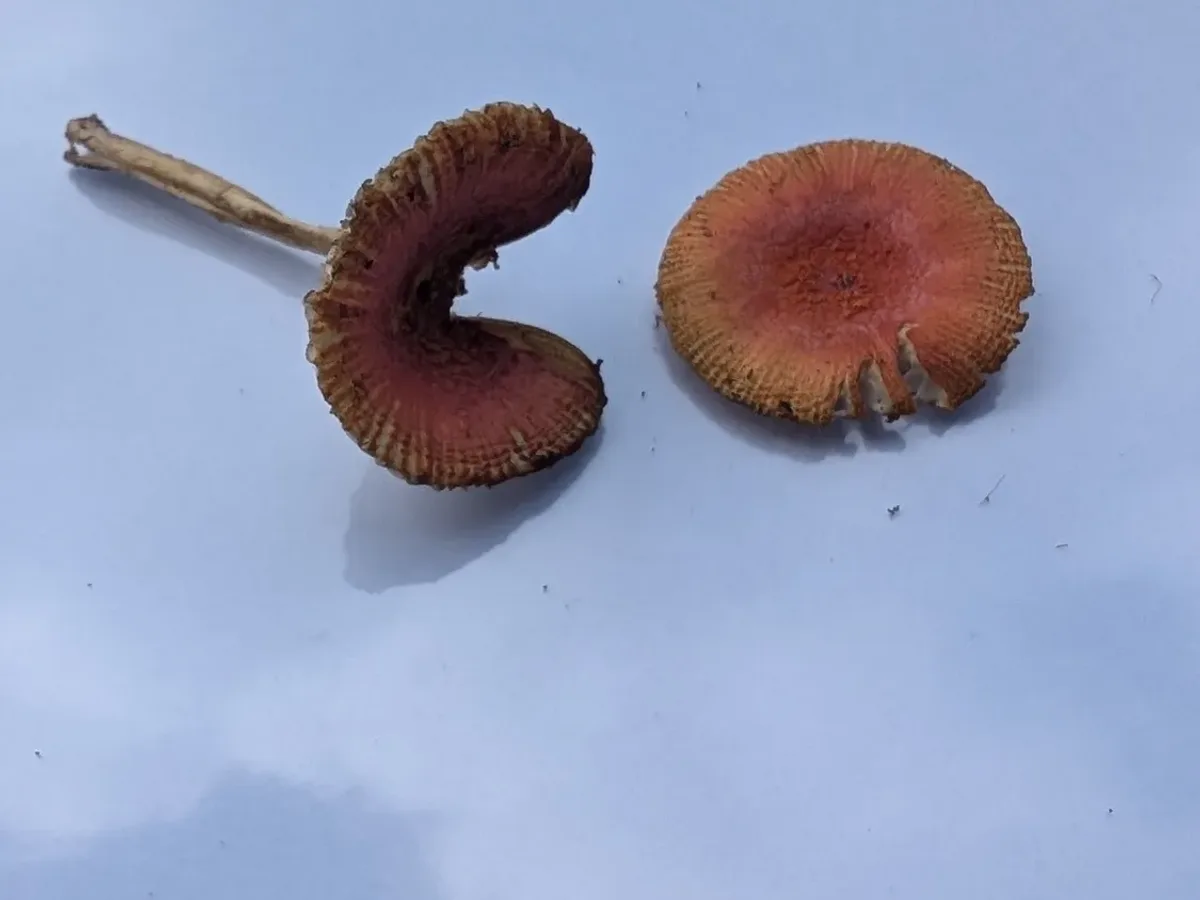
The cap (3-8 cm) opens from convex to broadly flat and is bright orange-red to brick-red, often dotted with reddish or pale wart-like remnants of the universal veil. Heavy rain can wash these away, leaving the cap clean and glistening.
Gills
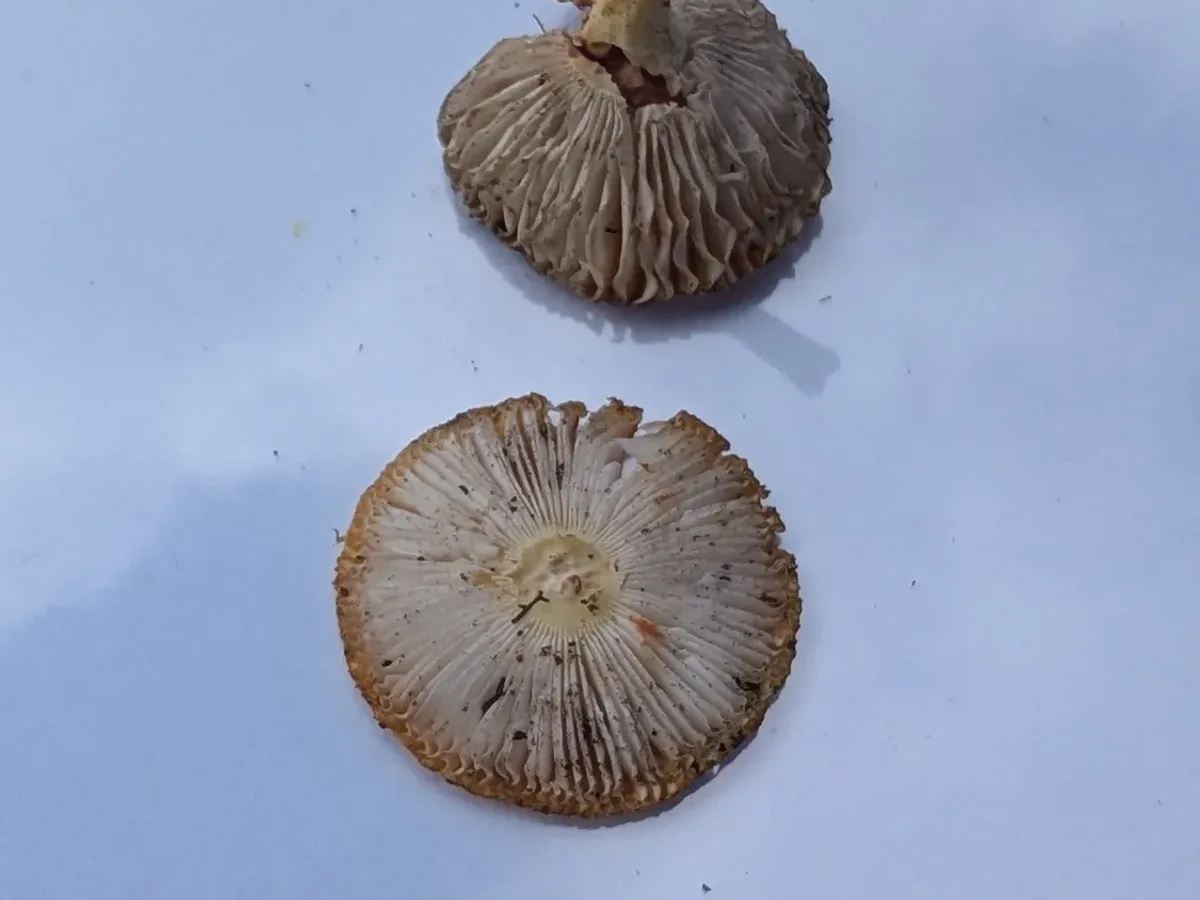
Gills are free from the stem, closely spaced, white to cream, and yield a white spore print.
Stem
The stem (5-12 cm) is white to pale yellowish, carrying a fragile, skirt-like ring high on its upper portion.
Flesh
Flesh white throughout, firm.
Smell & taste
Smell mild to faintly mealy.
Why it's dangerous
Multiple poisoning cases attributed to Amanita rubrovolvata have been reported in China and Japan.
The primary danger is misidentification as Amanita hemibapha, which is consumed as a traditional food in Japan and parts of Southeast Asia.
The two species share a similar overall form and reddish-orange cap, and are often found in overlapping habitats, making field confusion a realistic risk. Because A. hemibapha is deliberately sought for eating, A. rubrovolvata can be inadvertently collected in the same basket.
The toxin profile (ibotenic acid/muscimol) means that, unlike amatoxin Amanitas, there is typically no multi-day delayed onset with liver failure. But acute neurological symptoms can still be severe, particularly in vulnerable individuals.
Toxin
Presumed to contain ibotenic acid and muscimol (the main toxins of Amanita muscaria and related species in section Amanita). This is based on the species' phylogenetic placement and the character of documented poisoning symptoms.
Ibotenic acid is a structural analogue of glutamic acid. It acts as a potent agonist at ionotropic glutamate receptors, particularly NMDA receptors, causing neurological excitation.
It partially converts to muscimol in the body, a potent GABA-A receptor agonist causing CNS depression.
The relative amounts of these compounds vary with specimen age and preparation, making toxicity unpredictable.
Symptoms
Poisoning onset is typically 30 minutes to 2 hours after ingestion, much faster than amatoxin poisoning.
Symptoms include:
- confusion, disorientation, dizziness
- agitation or drowsiness (sometimes alternating)
- loss of muscle coordination (ataxia)
- involuntary muscle movements
- salivation
- in severe cases, hallucinations and loss of consciousness
Gastrointestinal symptoms (nausea, vomiting) are variable.
Recovery usually occurs within 4-12 hours with supportive care, but severe cases - especially in children or elderly individuals - may require hospitalisation.
No specific antidote exists; treatment is supportive.
Staying safe
Amanita rubrovolvata is documented as toxic and has caused multiple poisoning incidents in China and Japan.
The species belongs to section Amanita of the genus, which includes A. muscaria (the fly agaric) and A. pantherina. It is believed to contain ibotenic acid and muscimol - the same neurotoxic compounds responsible for fly agaric poisoning.
Ibotenic acid acts as a glutamate receptor agonist in the central nervous system; muscimol (a GABA-A agonist) causes sedation, confusion, and loss of coordination. Neither compound is destroyed by cooking.
The most dangerous scenario is mistaking this species for Amanita hemibapha (see Lookalikes), a traditional food mushroom in parts of East Asia. Confusion between these two species has led to serious poisoning events.
Never eat any Amanita without absolute identification certainty and specific regional edibility confirmation.
Where & when it grows
Habitat
Amanita rubrovolvata lives as an ectomycorrhizal partner, its underground mycelium woven into the fine roots of broadleaf trees in the oak family (Fagaceae).
It favours the signature trees of subtropical montane forest across southern and central China, Japan, Korea, Vietnam, and neighbouring parts of Southeast Asia:
- Quercus (oaks)
- Castanopsis (chinkapin)
- Lithocarpus (tanoaks)
That hidden partnership, which can persist for years through drought and cold without producing a single fruiting body, is what makes the mushrooms suddenly appear on the forest floor after monsoon rains.
Look on well-drained, acidic to slightly acidic mineral soils, sometimes in mixed broadleaf-pine forest at mid-mountain elevations of 400-2000 m, where the air is cooler and the soil holds moisture longer.
When
The species fruits from late spring through autumn in its subtropical range, with the main flush driven by the East Asian summer monsoon.
June and July - when soil temperatures consistently exceed 18 °C and cumulative rainfall is high - are the peak months. A secondary fruiting can follow typhoon-associated rainfall in August to September.
In the warmer parts of its range (southern China, northern Vietnam) occasional specimens appear as early as May. In the cooler northern fringe (central Japan, Korean peninsula) the season is compressed to July-September.
How it grows
Grows singly or in small scattered groups, never in dense clusters.
Like all Amanitas, the fruiting body begins life enclosed inside the volva. The earliest stage you might find looks like a vivid red egg half-buried in the leaf litter, before the stem has pushed up at all.
As it elongates, the volva splits open and stays behind at the base while the cap and ring develop above.
Always dig carefully at the base and examine the volva: its colour is the single most important feature distinguishing this toxic species from similar-looking edible Amanitas.
Fruiting conditions
Responds to warm monsoon rain pulses; requires sustained soil warmth (>16 °C) typical of East Asian subtropical summer. Most flushes appear 5-12 days after significant rainfall of at least 30 mm over 14 days.
Look-alikes
The most important lookalike confusion in the field is with Amanita hemibapha (the 'half-dyed Amanita' or 'Caesar's mushroom of Asia'). It has a red-orange to yellow-orange cap and a large white volva with a yellowish interior, and is consumed as food in parts of Japan and Southeast Asia after cooking.
The key distinction is the volva colour: A. rubrovolvata has a vivid red to orange-red volva, while A. hemibapha has a white (or whitish-yellow-tinted) volva. Confusion between these two species is dangerous because mistaking A. rubrovolvata for the edible A. hemibapha leads to poisoning.
Other species to distinguish:
- Amanita caesarea (Caesar's mushroom of Europe and the Mediterranean) also has an orange-red cap with a white volva but does not occur in East Asia.
- Brightly coloured but distinctly different Amanitas in the region include A. flavoconia (North America only) and A. kotohiraensis (Japan), which has more yellow tones.
The white spore print and the full ring-plus-volva structure will always distinguish A. rubrovolvata from the russulas, which lack both features and have brittle flesh.
A. caesarea does not occur in East Asia but is included for travellers: it has an orange cap, yellow gills (not white), and a white volva. A. rubrovolvata has white gills and a red volva.
A. muscaria has a red cap with WHITE warts (universal veil remnants) and a WHITE membranous volva that breaks up into rings or ridges at the stem base - never a sac-like red volva. Both are toxic with similar ibotenic acid/muscimol toxins.
Both species have an orange-red cap and a prominent volva, but A. hemibapha has a WHITE or whitish-yellow volva interior, while A. rubrovolvata has a vivid RED or orange-red volva. A. hemibapha also tends to have a more yellow stem with yellow tones on the ring and cap surface. Confusion in the field has caused poisoning incidents - always check the volva colour carefully before any identification decision.
A. pantherina has a brown to grey-brown cap with white warts and a white volva with a distinct rim (gutter). It lacks the vivid orange-red colouration of A. rubrovolvata. Both species contain ibotenic acid and muscimol.
A reference guide - never an edibility guarantee. When in doubt, leave it out.