Blusher
Amanita rubescenssyn. Agaricus rubescens, Amanita rubescens var. rubescens
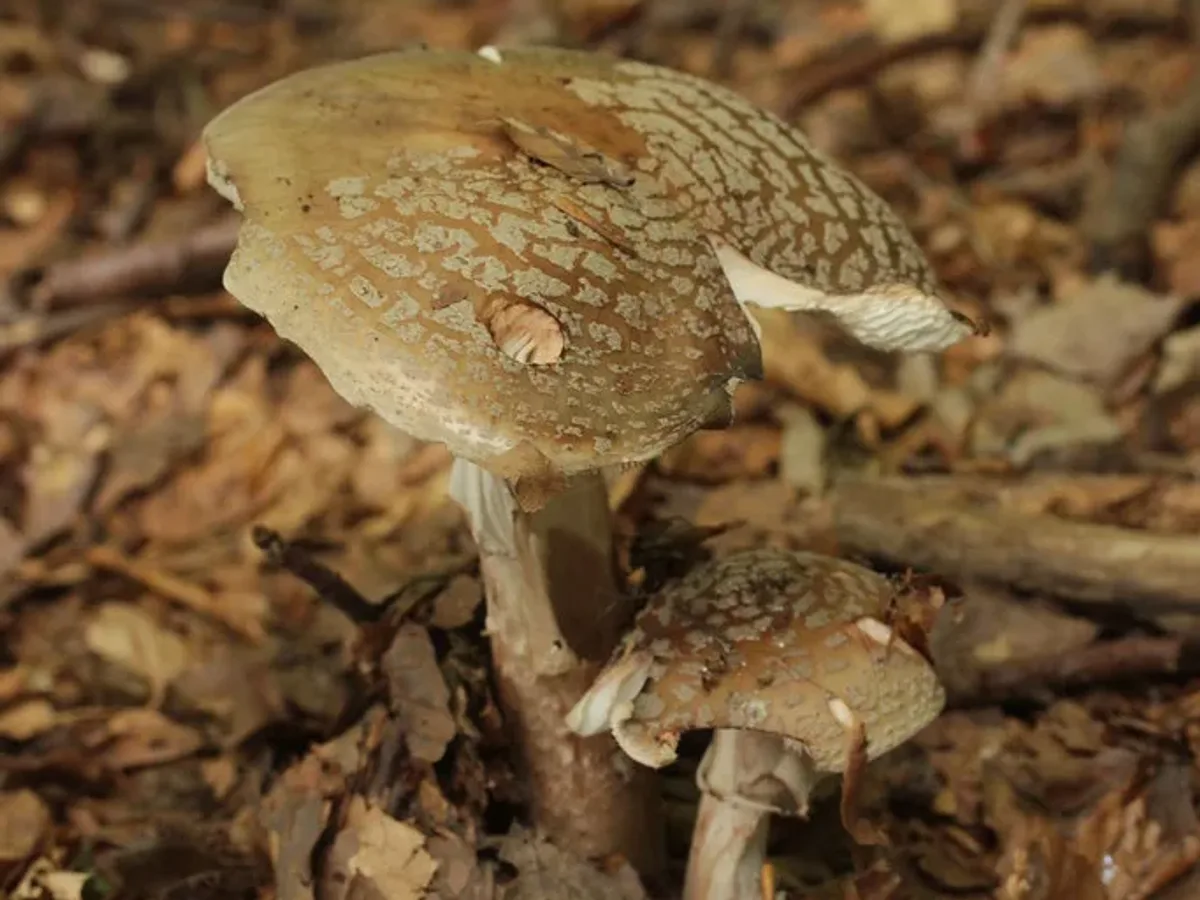 © Björn S... (CC BY-SA 2.0)
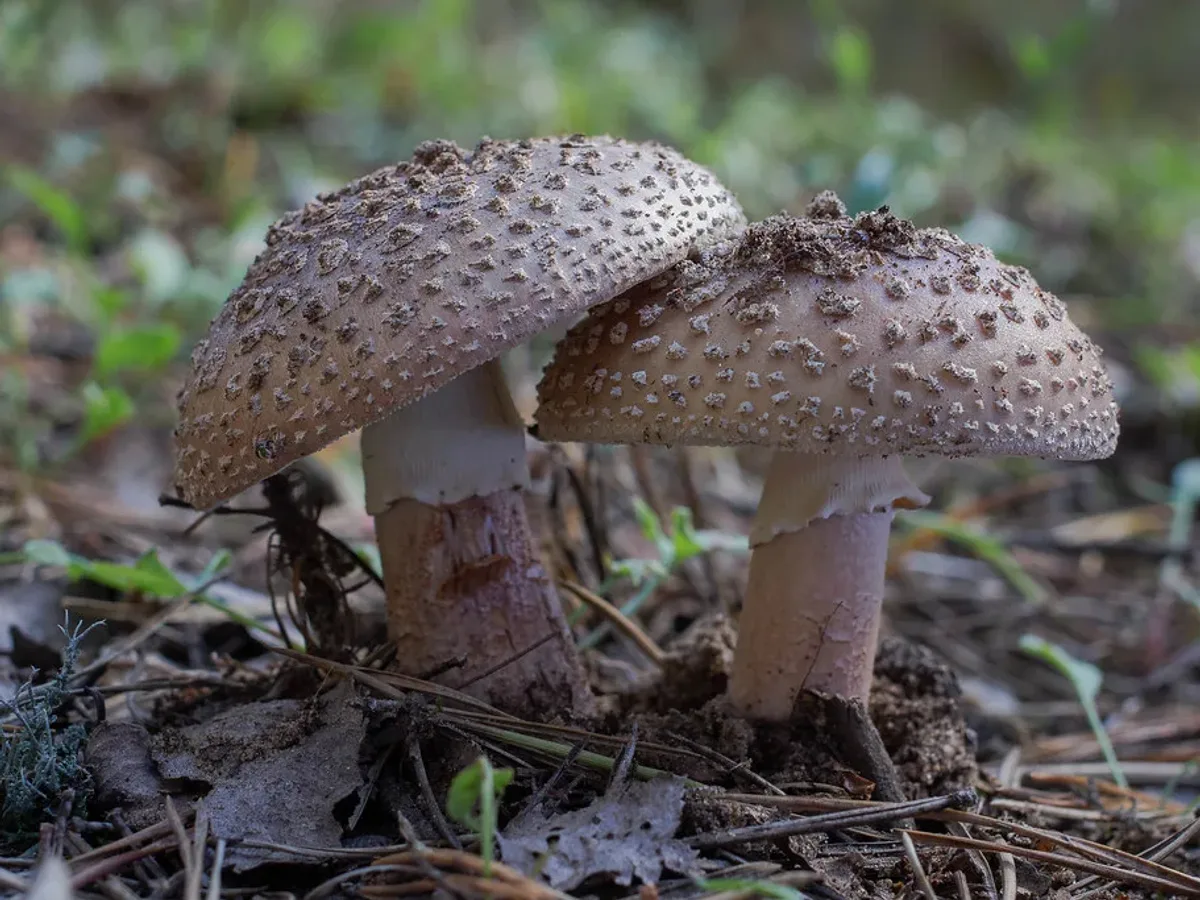 © Wolfgang Wollschweber (CC BY 2.0)
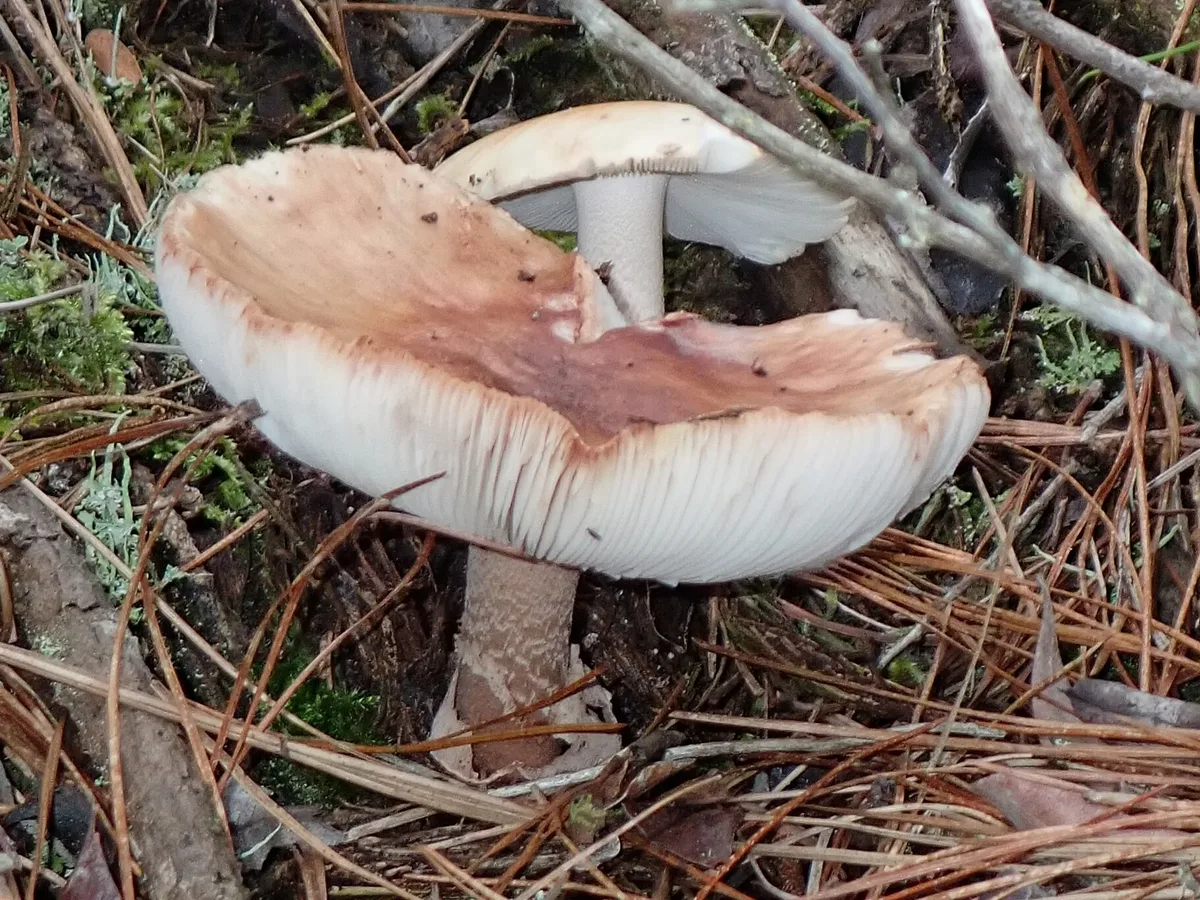 © Karen Eichholz (CC BY)
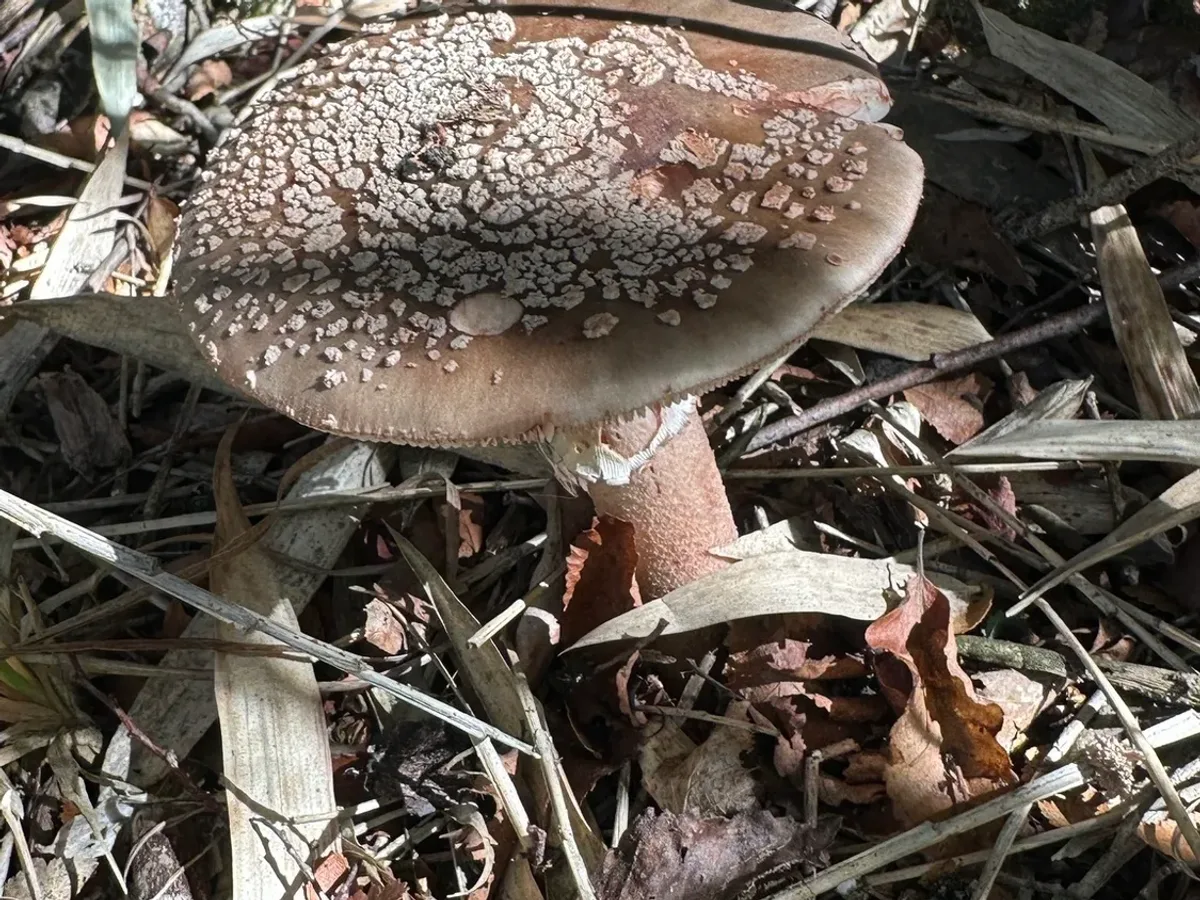 © nitsuga74 (CC BY)
 © nitsuga74 (CC BY)
 © nitsuga74 (CC BY)
 © nitsuga74 (CC BY)
 © Björn S... (CC BY-SA 2.0)© Björn S... (CC BY-SA 2.0)© Wolfgang Wollschweber (CC BY 2.0)
Edible only with the right preparation - or safe for some people but not others. Learn the caveats first.
Never eat a mushroom you are not 100% sure of - check the look-alikes below, and always cook wild mushrooms.
How to recognise it
The Blusher is an aptly named, highly variable Amanita whose single most reliable feature is its tendency to 'blush' - flesh, gills and stem slowly stain pink to dull vinaceous-red wherever they are cut, bruised, insect-bored or slug-grazed.
Cap
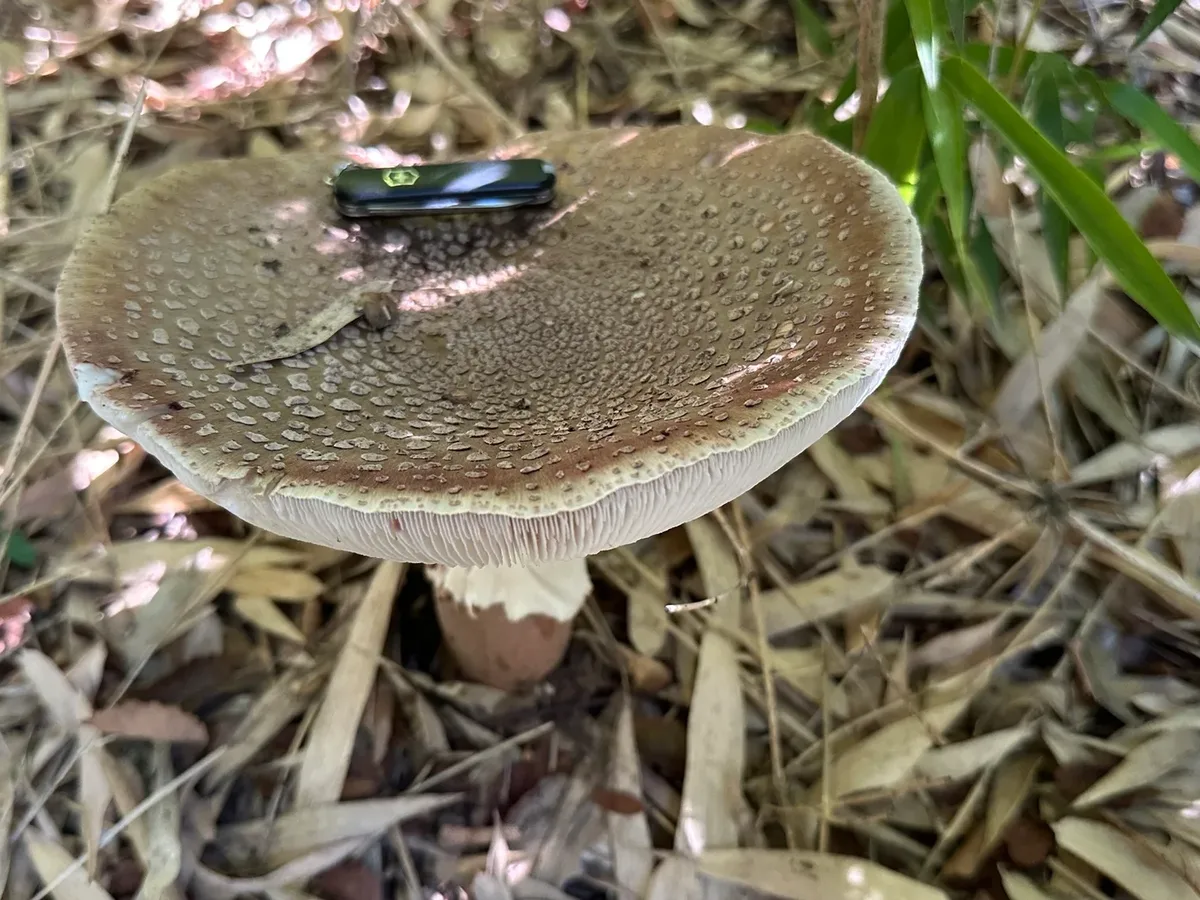
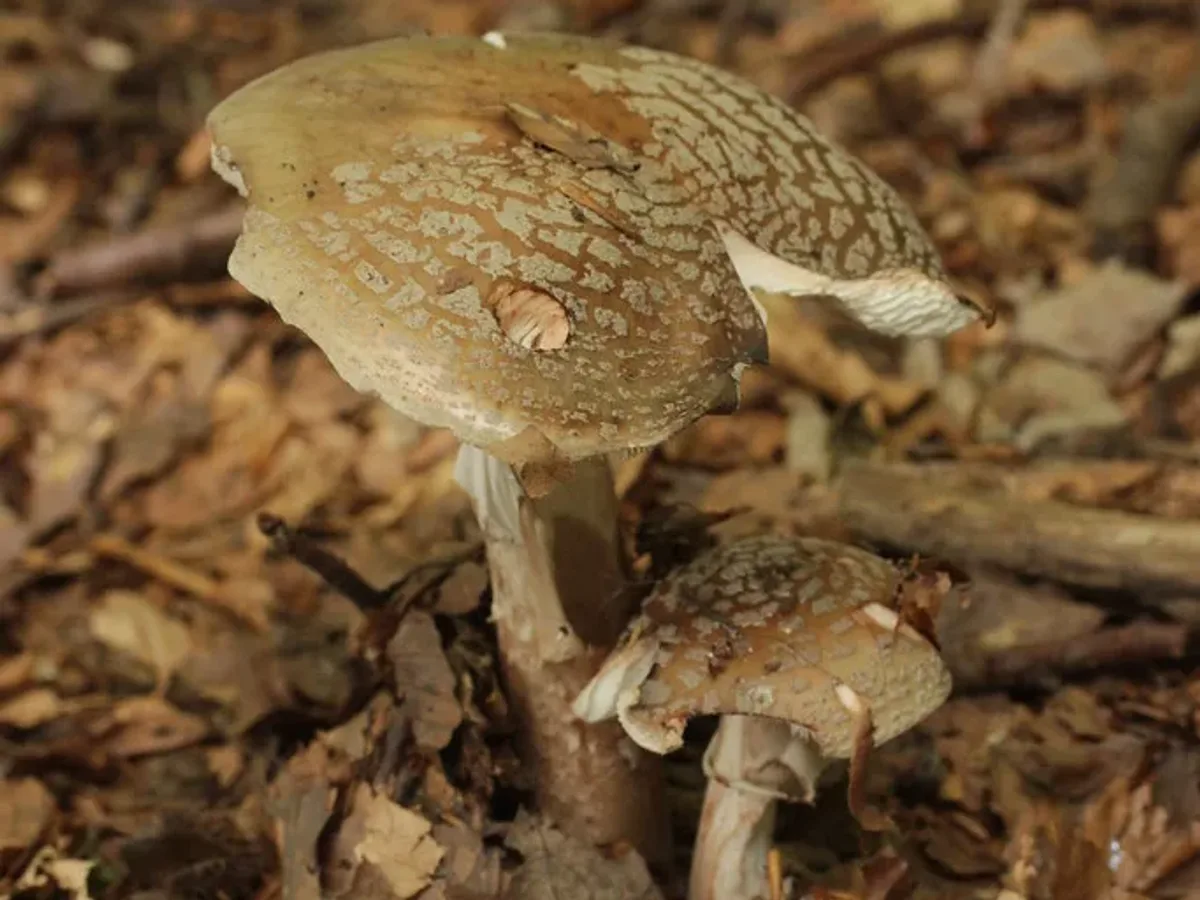
The cap (5-15 cm, sometimes larger) runs through a wide spectrum of dull pinkish-, reddish- and greyish-browns, often with a wine flush, and carries soft, irregular off-white-to-grey warts that are rain-washable veil remnants.
Gills
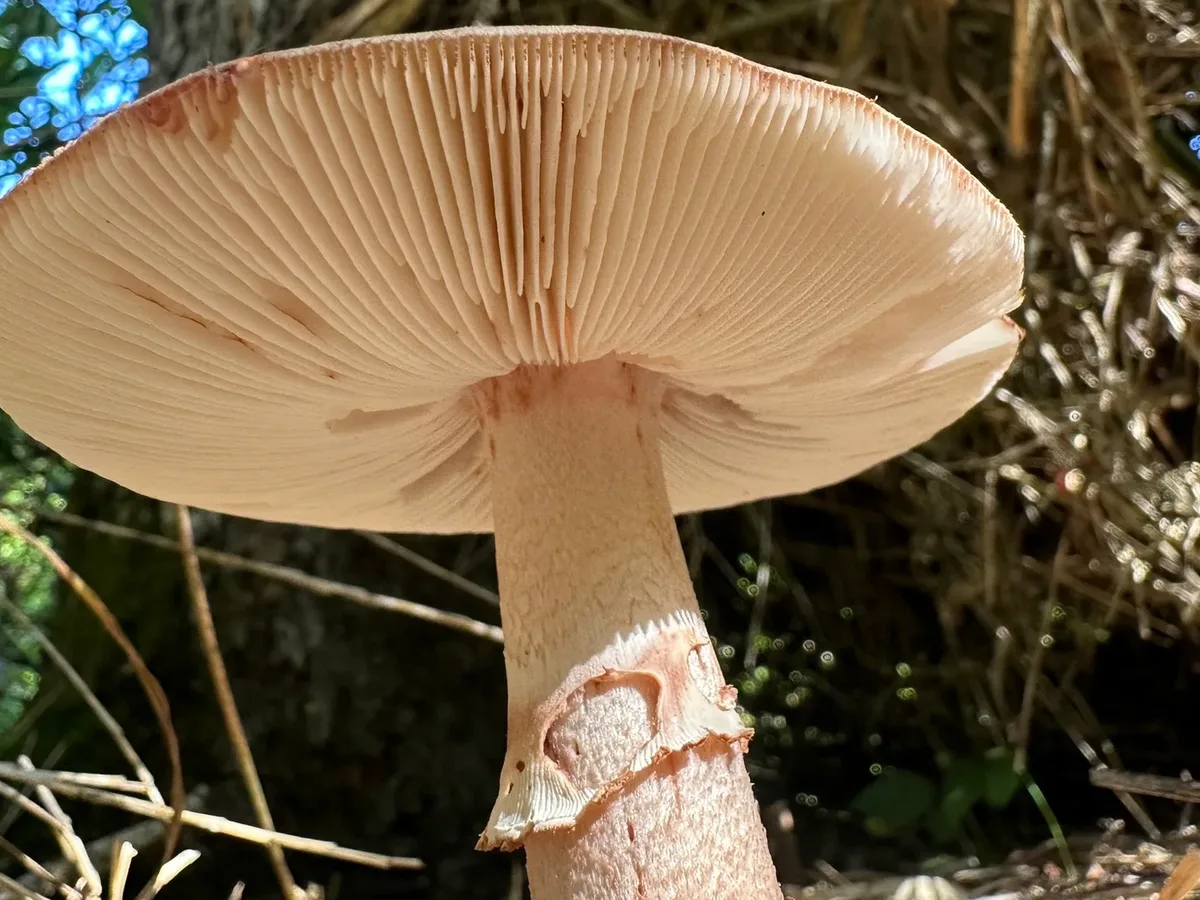
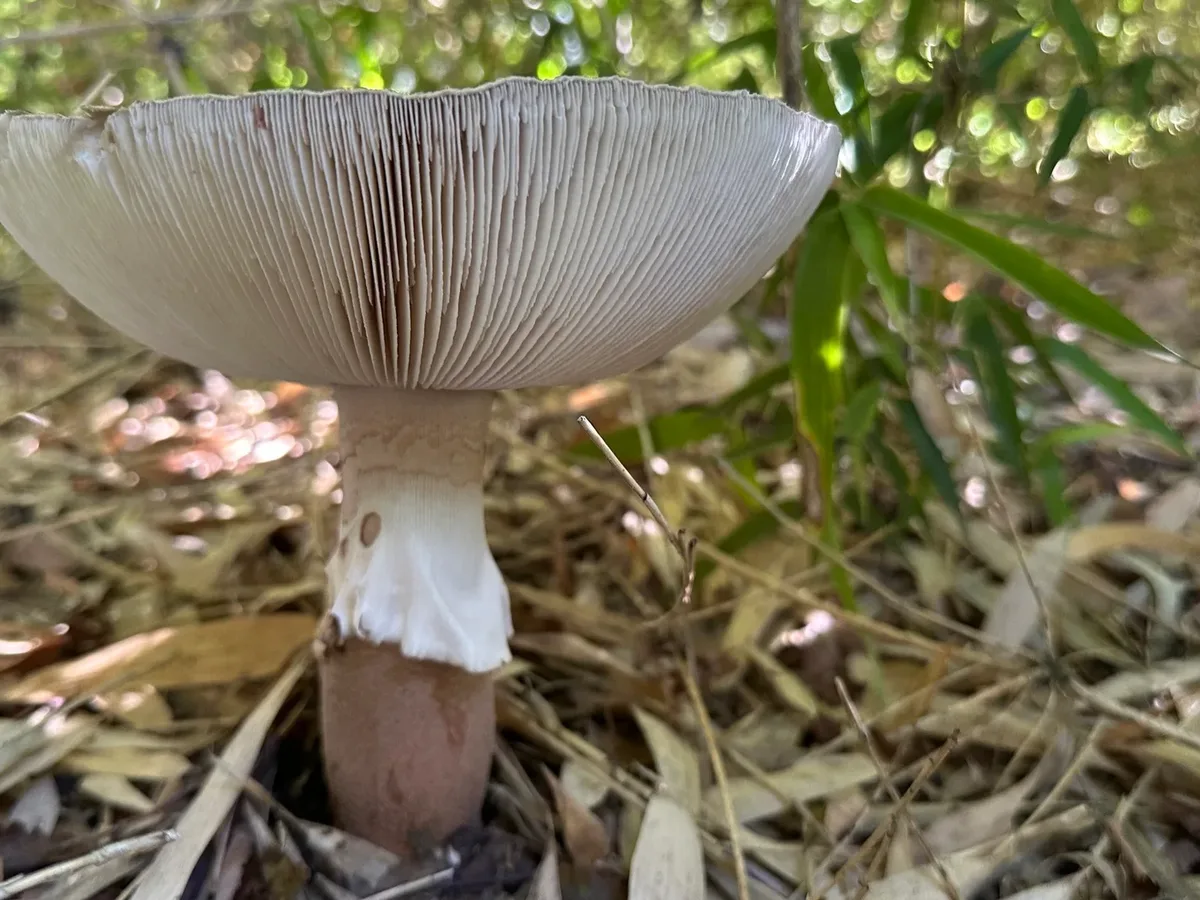
Gills are free, crowded and white, becoming spotted rusty-pink with age.
Stem
The stout white-to-pink stem is flushed reddish-brown toward a swollen, scaly bulb.
Crucially it bears a large, pendulous ring whose upper face is grooved/striate, and it has NO free sack-like volva - only scaly girdles on the bulb.
Spore print is white and spores are amyloid.
Why it's dangerous
The Blusher itself is not deadly when correctly identified and properly cooked, but it grows alongside, and superficially resembles, some of the most dangerous mushrooms in the world.
The realistic danger is twofold:
- 1Eating it raw (haemolytic poisoning).
- 2Far worse, confusing a pale specimen with a death cap or destroying angel, or a brown one with a panther cap.
Any such mistake can be severe or lethal.
Because of this, the species carries a deadly-lookalike flag and is recommended only to foragers with solid Amanita experience.
Toxin
Raw flesh contains heat-labile (thermolabile) haemolysins - proteins that lyse red blood cells - together with other minor irritant compounds.
These are denatured and rendered harmless by proper cooking, which is why the species is edible cooked but poisonous raw.
It does NOT contain the amatoxins responsible for fatal Amanita poisoning, but its close relatives do, which is the real danger of the genus.
Symptoms
Eaten raw or undercooked, the haemolysins can cause haemolytic effects (destruction of red blood cells) leading to anaemia, along with gastrointestinal upset - nausea, vomiting and abdominal discomfort.
Symptoms relate to the dose of raw material consumed.
Far more serious is misidentification:
- A panther cap mistaken for a Blusher produces an isoxazole (muscimol/ibotenic-acid) syndrome of confusion, agitation, delirium and convulsions.
- A death cap or destroying angel causes deceptively delayed (6-24 h) vomiting and diarrhoea followed by catastrophic, often fatal liver and kidney failure.
Staying safe
Treat every Amanita as potentially lethal until proven otherwise.
The Blusher is edible ONLY after thorough cooking and is strictly poisonous raw:
- never taste it raw
- never include it in a raw foragers' nibble
- never serve it to children, pregnant women or anyone you have not warned
This is a species for experienced foragers who can reliably read the grooved ring, the bulbous (non-volvate) base and the diagnostic reddening, AND who can rule out the death cap, destroying angels and the panther cap with certainty.
If you cannot positively exclude those four, leave it.
Because of the genus it belongs to and its raw toxicity, this entry is rated CAUTION rather than choice.
Where & when it grows
Habitat
A widespread and abundant mycorrhizal mushroom of woods, parkland and treed heath, growing on the ground in partnership with tree roots.
It is unusually catholic in its hosts, fruiting under both broadleaves (beech, oak, birch, sweet chestnut) and conifers (pine, spruce, fir, Douglas fir), and is especially common in conifer plantations on poor, acidic, well-drained soils.
When
A long season runs from June well into November.
Early summer specimens appear after warm rains, but the great majority fruit in the late-summer-to-autumn main flush (late August through October), peaking in September.
Mild seasons can carry a few into early winter.
How it grows
Fruit bodies arise singly, scattered or in loose troops, never in dense clusters.
They push up from leaf litter over a few days, the universal veil tearing into the wartlets seen on the cap and the girdles on the bulb.
As caps expand the partial veil drops to form the prominent striate ring.
Older specimens fade, the warts wash away, and slug- and insect-damage shows as the characteristic reddening, which deepens with age.
Fruiting conditions
Fruits after soaking rains once soils are warm; long season from early summer to late autumn, with the main flush in cooling, moist late-summer-to-autumn conditions about 1-2 weeks after significant rain.
Look-alikes
The Blusher sits in the genus Amanita, which contains the deadliest fungi known, so confident identification is non-negotiable.
The most frequent dangerous confusion is with the PANTHER CAP (Amanita pantherina):
- browner with pure-white veil warts
- a SMOOTH (non-grooved) ring
- often a distinct rim/collar at the top of the bulb with one or more encircling ridges
- decisively, its flesh does NOT blush red
The panther cap causes severe, occasionally life-threatening poisoning.
Pale or grey Blushers can also be confused, by the careless, with deadly white/greyish Amanitas such as the DEATH CAP (Amanita phalloides) and DESTROYING ANGELS (Amanita virosa / A. verna / A. bisporigera), which possess a prominent loose, bag-like white VOLVA at the stem base and do NOT redden when cut.
Grey-brown forms may also suggest the Grey-spotted Amanita (Amanita excelsa / A. spissa), which is milder and likewise does not blush.
In North America the local 'blusher' is now treated as separate species (the Amanita amerirubescens group), which behave similarly but underscore that range and warts vary regionally.
Rule: do not eat it if any of these is true:
- it does not slowly stain pink-red
- the ring is smooth rather than grooved
- there is a free sack-like volva
Greenish-, yellowish- or pale-olive cap that is typically smooth (warts usually washed off), a prominent loose, sack-like white VOLVA at the stem base, and flesh that does NOT redden. Faintly sweetish/honey then unpleasant smell. Contains amatoxins and is the world's most lethal mushroom.
Pure white throughout, with a conspicuous bag-like white VOLVA, a shaggy stem and flesh that does NOT blush. White forms of the Blusher can be confused with this - always check for the reddening reaction and the absence of a free volva. Contains amatoxins; lethal.
Browner cap with PURE-WHITE warts, a SMOOTH (non-grooved) ring, and usually a rim or encircling ridges at the top of a more abruptly bulbous base. Decisively, its flesh does NOT blush pink-red when cut or bruised. Contains isoxazole toxins (muscimol/ibotenic acid) and causes severe, occasionally life-threatening poisoning.
Greyer-brown cap with greyish warts and a grooved ring like the Blusher, but the flesh does NOT turn pink-red when cut, the stem base is differently scaled, and there is often a radish-like smell. Considered edible/mediocre but is regularly confused with the Blusher; the lack of blushing distinguishes it.
A reference guide - never an edibility guarantee. When in doubt, leave it out.