Grey veiled amanita
Amanita porphyriasyn. Agaricus porphyrius Alb. & Schwein., Amanita adnatifolius Peck, Amanita porphyria var. porphyria
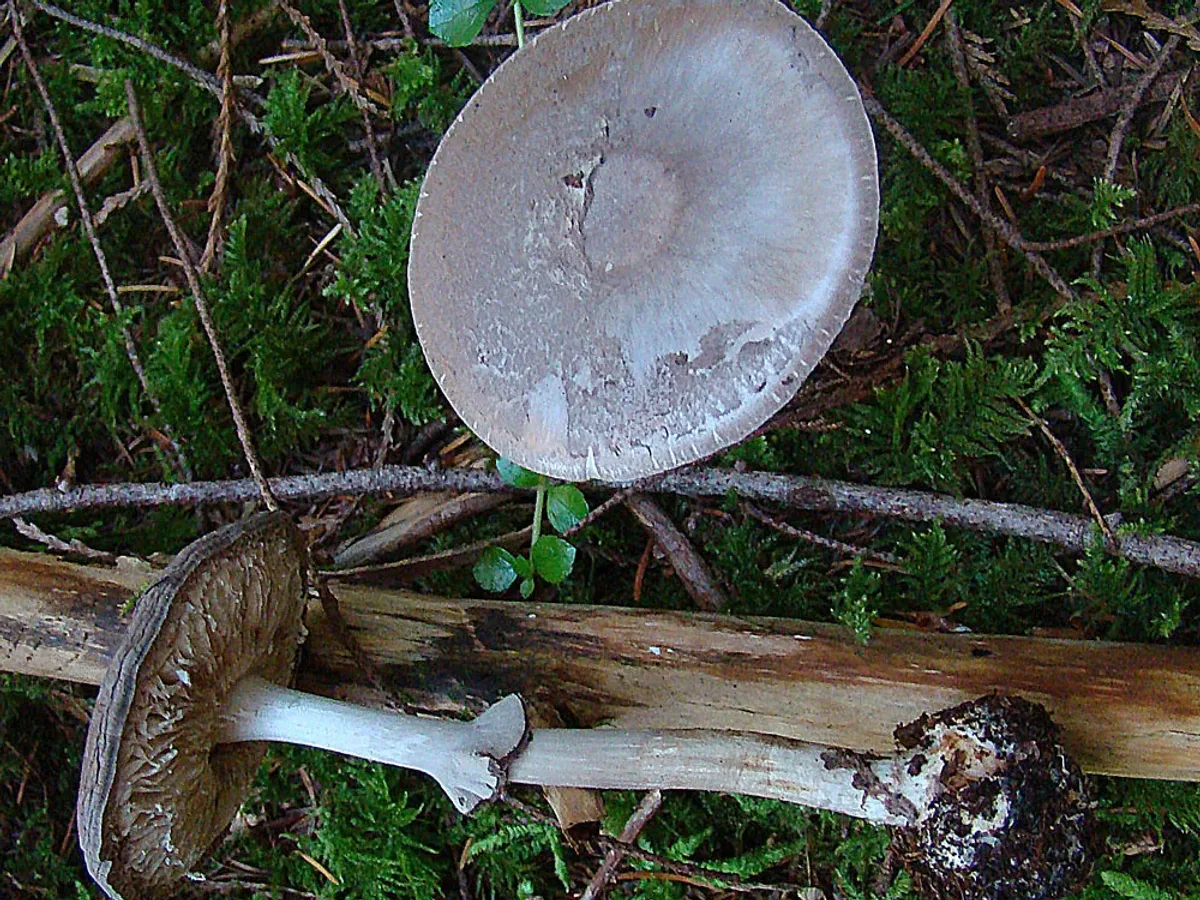 © Dick Culbert (CC BY 2.0)
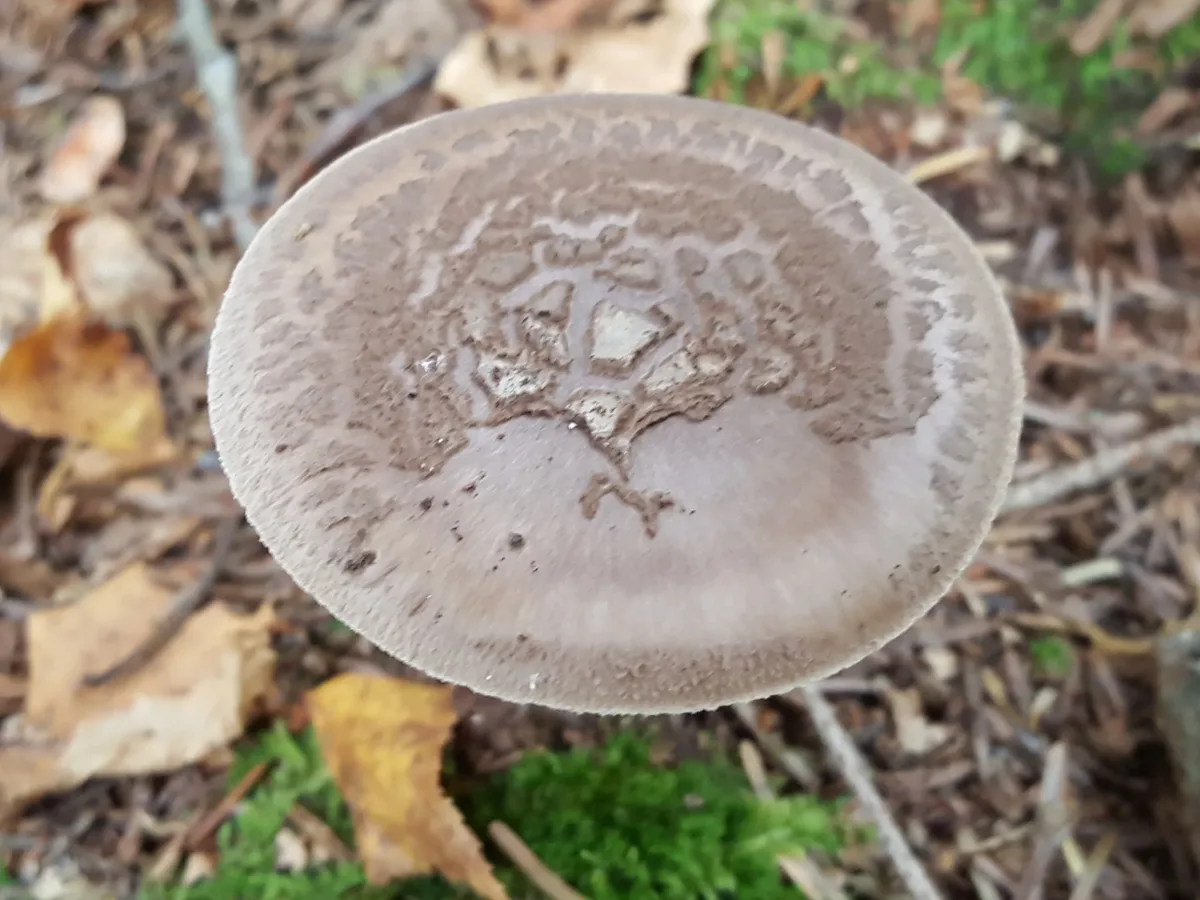 © Claire Moxon-Waltz (CC BY 4.0)
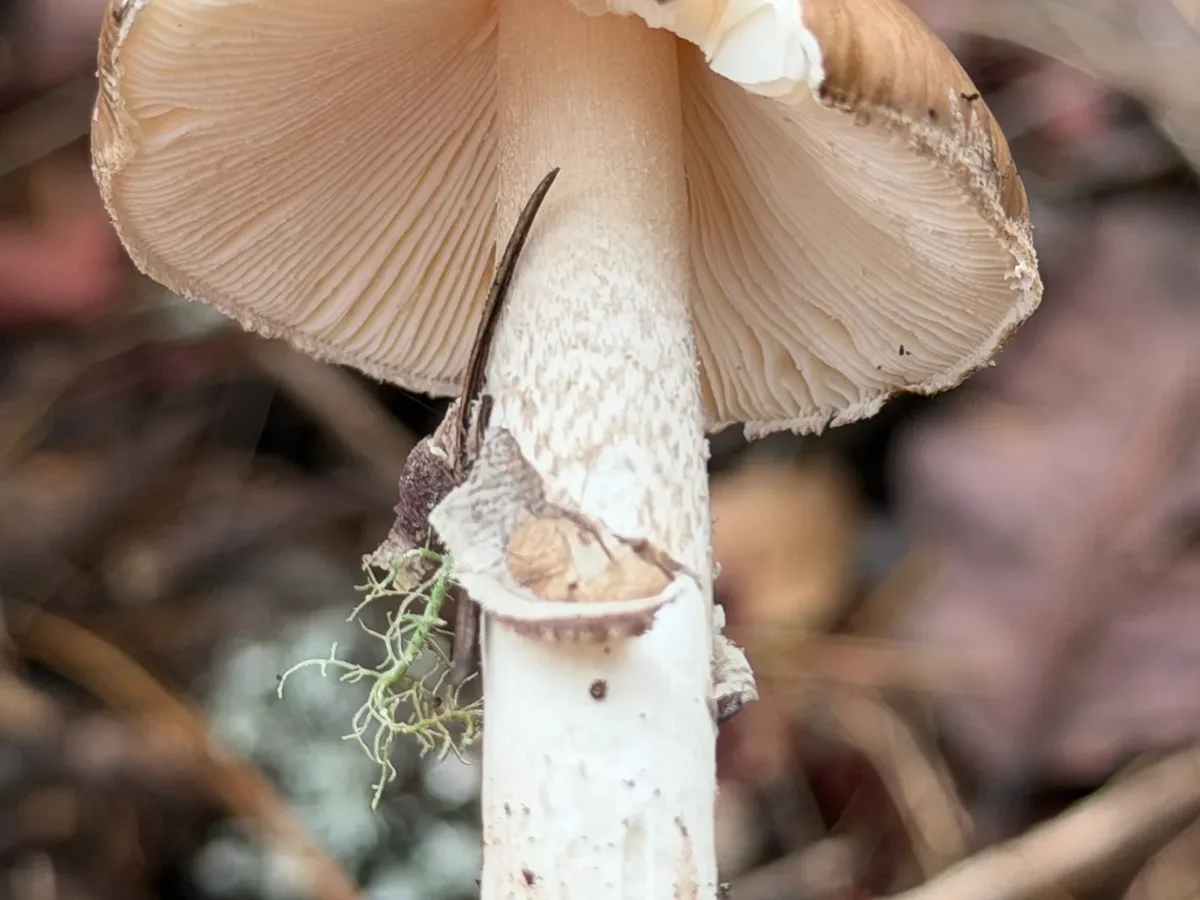 Alex Heyman (CC0)
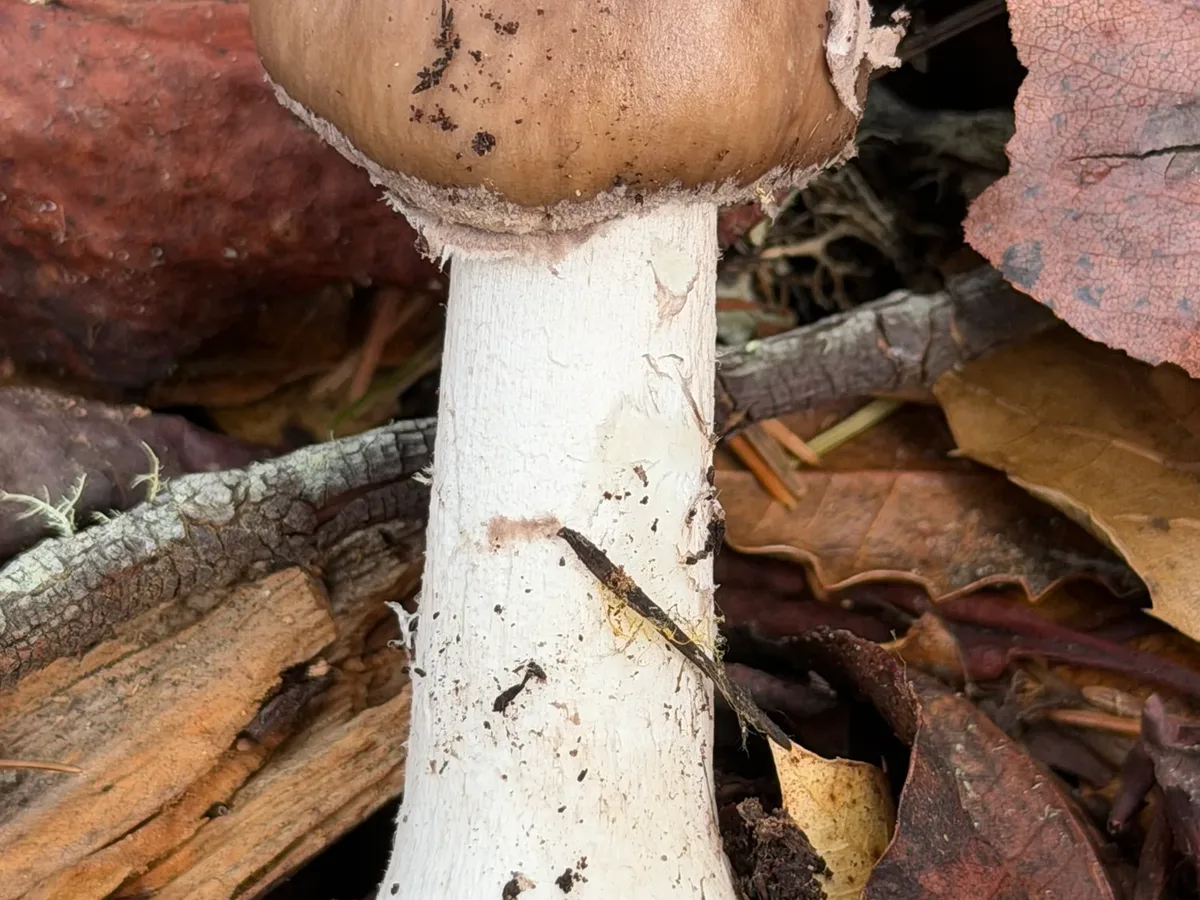 Alex Heyman (CC0)
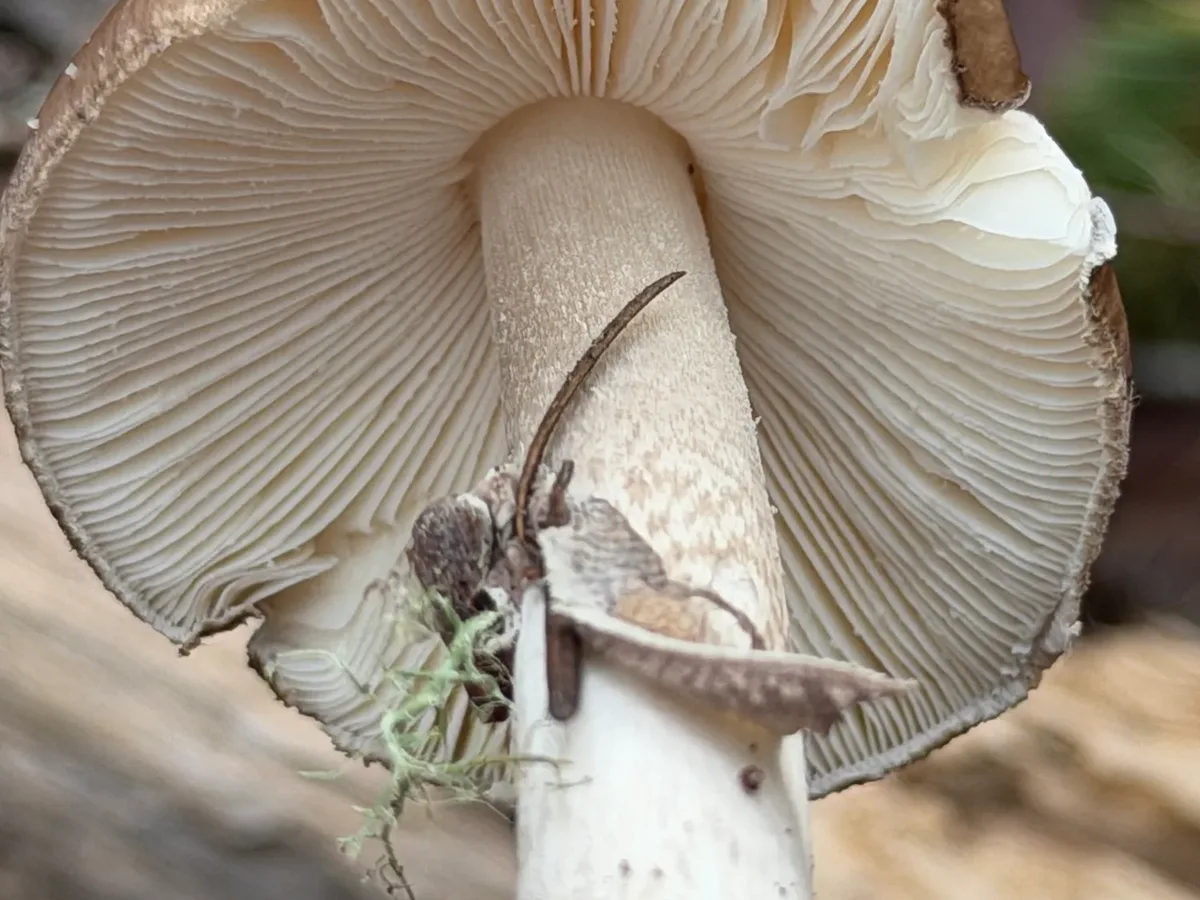 Alex Heyman (CC0)
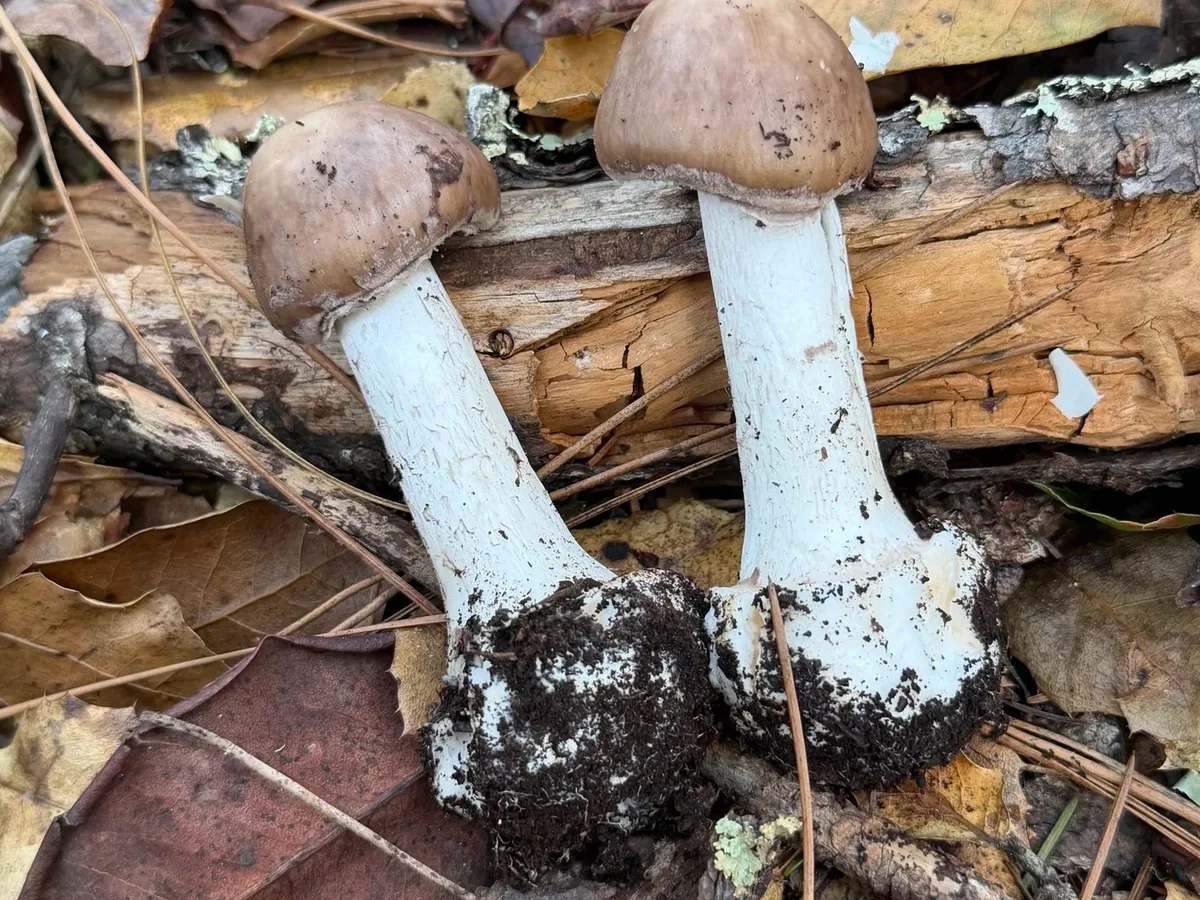 Alex Heyman (CC0)
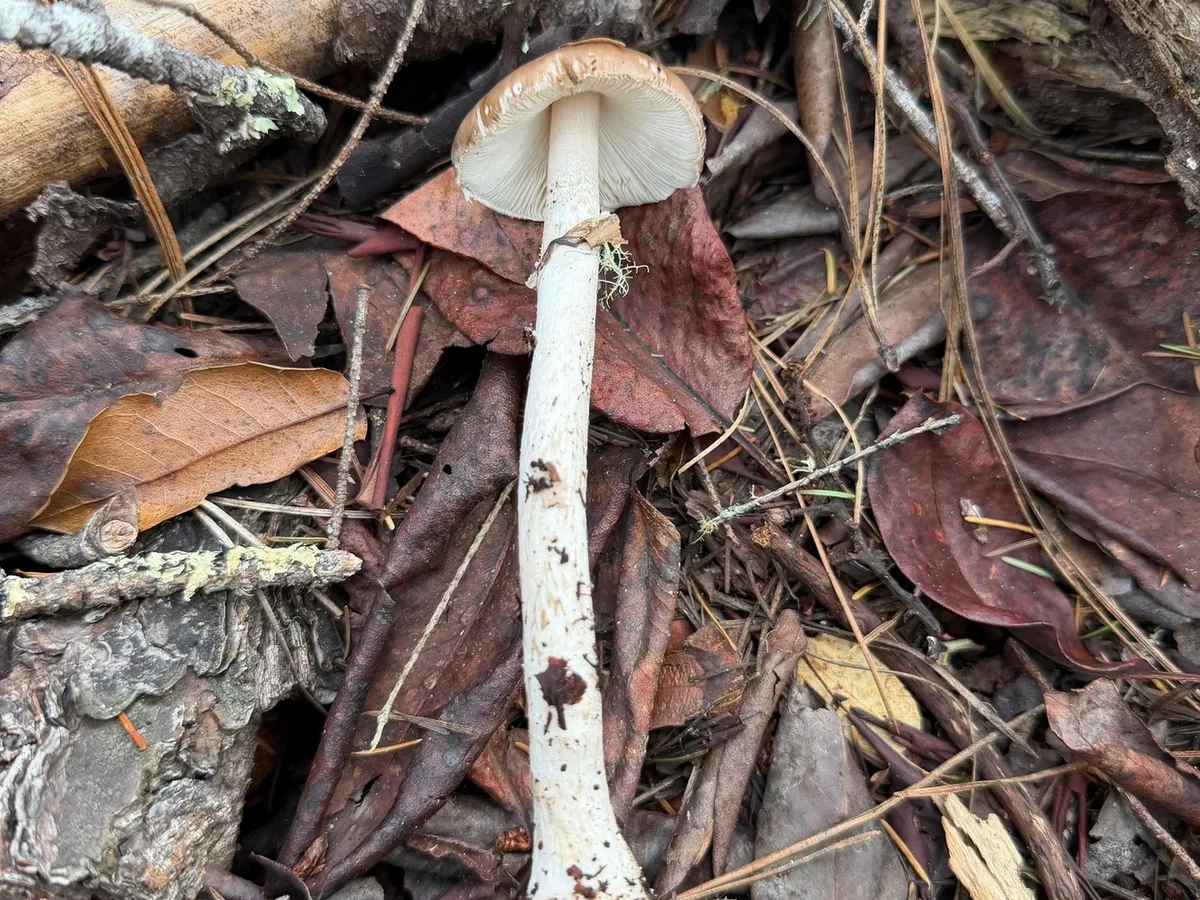 Alex Heyman (CC0)© Dick Culbert (CC BY 2.0)© Claire Moxon-Waltz (CC BY 4.0)
Edible only with the right preparation - or safe for some people but not others. Learn the caveats first.
Never eat a mushroom you are not 100% sure of - check the look-alikes below, and always cook wild mushrooms.
How to recognise it
At first glance, Amanita porphyria can drift past you as just another dull-grey woodland mushroom - and that is exactly what makes it worth studying carefully. Once you know the combination to look for, it becomes one of the more recognisable grey Amanitas in the forest.
The crucial four:
- 1A purplish-grey to mauve-grey cap, carrying a subtle violet or olivaceous tint that sets it apart from the purer grey-brown of A. spissa or the rich olive of A. phalloides.
- 2A large, pendant ring that is distinctly grey to lilac-grey - not white.
- 3A swollen basal bulb girded by a thin, low, gutter-like volval collar that clings close to the bulb rather than forming a free, open sac.
- 4A strong, unpleasant, radish-like or iodoform-like smell when you hold the base to your nose.
The sparse grey-lilac veil patches on the cap wash away readily in rain, leaving a smooth surface. The gills are free and white, and the flesh is firm and stays white when cut - there is no blushing reaction as in Amanita rubescens.
The whole mushroom carries that muted greyish-purple palette, unlike the clean white of the Destroying Angel.
Why it's dangerous
The intrinsic danger of Amanita porphyria is classified as CAUTION - poisoning is serious but not normally lethal.
The overriding danger, however, is misidentification. A pale or washed-out specimen mistaken for or collected alongside a Destroying Angel (A. virosa) or Death Cap (A. phalloides), or a browner specimen confused with the severely toxic Panther Cap (A. pantherina), could result in life-threatening or fatal poisoning.
Field-safe practice: treat any Amanita with a grey-purple cap, a ring, and a basal bulb as potentially lethal until every diagnostic feature has been checked against all three deadly neighbours.
Toxin
Amanita porphyria contains bufotenin (a tryptamine alkaloid) and related indolic compounds. Some analyses also indicate the presence of ibotenic acid and muscimol (isoxazole compounds) - the same toxins responsible for the severe poisoning caused by Amanita pantherina and Amanita muscaria.
Bufotenin has psychoactive and cardiovascular effects.
Importantly, A. porphyria does not contain the amatoxins (alpha-amanitin) responsible for the liver-destroying, often fatal poisoning of the Death Cap and Destroying Angel.
Symptoms
Poisoning by Amanita porphyria produces a neurological-type toxidrome rather than the delayed-onset liver-failure syndrome of the deadly amatoxin Amanitas.
Symptoms begin relatively quickly (30 minutes to 2 hours after ingestion) and include:
- nausea and vomiting
- confusion, agitation and delirium
- sweating and salivation
- in higher doses, mild hallucinatory effects
Cardiovascular effects (increased heart rate, raised blood pressure) have been attributed to bufotenin.
Although not typically fatal, severe poisoning can be debilitating, and individual responses vary widely. Supportive hospital care is the appropriate response to any suspected ingestion.
Staying safe
Amanita porphyria is a poisonous mushroom and must never be eaten.
It is classified as CAUTION (toxic, not typically lethal) in its own right, but it grows alongside and can be confused with the deadliest fungi in the world - the Destroying Angel and the Death Cap - and for this reason it carries a deadly-lookalike warning.
The principal danger is not the direct toxicity of A. porphyria itself but the potentially lethal consequences of confusing it with A. virosa, A. phalloides, or the severely toxic A. pantherina.
Any grey woodland Amanita with a ring should be treated as a potential death cap or panther cap until every feature has been carefully checked.
Where & when it grows
Habitat
Amanita porphyria lives its hidden life as a mycorrhizal partner - its underground mycelium woven into the roots of conifers, trading minerals for sugar in one of the forest's oldest arrangements.
At the surface, it fruits from the ground in the humus-rich litter beneath Scots pine and Norway spruce, and occasionally under birch or beech on acidic soils.
It favours sandy, well-drained, nutrient-poor ground typical of northern and upland conifer plantations.
In central-western Europe it turns up most reliably in lowland and montane pine or spruce woods; it is much less common in broadleaved forest without any conifers nearby.
Its mycorrhizal dependency keeps it firmly out of gardens, meadows, and rotting wood.
When
Amanita porphyria is an autumn mushroom at heart. Its main season runs from late August through October, peaking in September as soils cool and the first reliable autumn rains arrive.
It is rarely seen before July even in warm, wet summers.
Fruiting follows a reliable trigger: a decent rainfall event combined with soil temperatures dropping below roughly 15 °C, with the flush appearing 1-2 weeks after the rain.
In mild years late specimens hold on into November.
How it grows
Fruit bodies emerge singly or scattered, pushing up through the litter as the universal veil splits open in the Amanita way.
The cap evolves from a hemispherical egg-shape through convex to broadly flat over several days.
As the partial veil tears away it leaves the characteristic grey-lilac ring hanging pendant on the stem - a ring that holds its shape well in dry weather but can become ragged and pressed against the stem after rain.
Growth is moderate, and once fully open the fruit body is reasonably persistent, lasting several days in cool, calm autumn weather.
Fruiting conditions
Fruits after significant autumn rains once soils cool; requires cooler soil temperatures than many summer Amanitas. Peak flush is 1-2 weeks after 20+ mm rainfall when daytime soil temperatures are 7-16 °C. Favours acidic, well-drained sandy or humus soils under conifers.
Look-alikes
Amanita porphyria occurs alongside several of the most lethal fungi in Europe, and a confident identification is required before drawing any conclusions about what has been found.
The most dangerous confusion is with the DESTROYING ANGEL (Amanita virosa). Young, pale, or washed-out specimens of A. porphyria with bleached caps can superficially resemble the pure-white Destroying Angel. The decisive differences:
- A. virosa is pure white throughout (cap, gills, stem, ring and volva all white)
- it bears a prominent, free, bag-like (sac-like) volva rather than a low gutter-like collar
- it has no radish smell
The DEATH CAP (Amanita phalloides) is another deadly species worth consciously excluding. It has an olive-green to yellowish-green or pale cap with a distinct free sac-like white volva, ring, and sweet-then-unpleasant honey odour. Its cap colour is quite different, but pale phalloides in shade can alarm beginners.
The PANTHER CAP (Amanita pantherina) is the most toxicologically similar lookalike and the one most likely to be confused:
- it is browner with pure-white warts
- it has a smooth ring (not grey)
- it bears a collar-like rim at the top of the bulb
- its flesh does NOT smell of radish
It contains high levels of muscimol and ibotenic acid and causes severe, occasionally life-threatening poisoning.
Finally, the GREY-SPOTTED AMANITA (Amanita spissa / Amanita excelsa) is the closest non-deadly look-alike:
- similar grey-brown colouring and ring, but the ring is typically white (not grey)
- a greyish bulb with encircling rim but no true volva
- a faint radish-like smell (similar to A. porphyria)
- grey-brown warts on the cap
A. spissa is often considered inedible/suspect.
If you cannot definitively confirm all of the following, do not draw conclusions:
- the grey (not white) ring
- the thin gutter-like (not free-sac) volva
- the purplish-grey (not brown or olive) cap
- the lack of blushing
- the radish smell
DEADLY. Cap distinctly olive-green to yellowish-green or pale ochre-olive, with a prominent free sac-like white volva, a white to greenish ring, and a sweetish-then-unpleasant honey-like smell (not radish). The grey-purple cap and grey ring of A. porphyria together rule out a typical Death Cap, but pallid forms can overlap; always check the volva type and odour. Contains amatoxins; the world's most lethal mushroom.
DEADLY. Pure white throughout - cap, gills, stem, ring and volva all white. The volva is a prominent, free, sac-like bag at the stem base (not a low gutter-collar). No radish smell. A pale or bleached A. porphyria could be confused, but A. virosa lacks any grey or lilac tones and its volva is a conspicuous free white sac. Contains amatoxins; causes fatal liver failure.
Inedible. Shares a similar radish/potato smell and bulbous base with low volva collar, but the cap is pale lemon-yellow to greenish-white (not grey-purple) with large white or buff veil patches, and the ring is white. Its smell is essentially identical to A. porphyria, which can initially confuse identifiers - colour and ring colour are the first separating features.
Inedible/suspect. The closest non-deadly lookalike: similar grey-brown cap with greyish-white veil patches, ring and swollen base. Key differences: its ring is white to off-white (not distinctly grey-lilac); the cap is usually more brown than purple-grey; the base has a rimmed collar but no volva-like structure; and its faint smell is similarly radish-like. Not deadly but inedible, and regularly confused with both A. porphyria and the Blusher.
The Blusher has a similar brownish-grey cap with veil warts and a ring, but its ring is white and striate on the upper face, and - decisively - the flesh turns pink to dull red wherever it is cut, bruised or insect-bored. Amanita porphyria does not blush. The Blusher is edible only when cooked; it is also considered a caution species.
SEVERELY TOXIC (occasionally life-threatening). Similar size and woodland habitat, but the cap is medium-to-dark brown bearing conspicuous, pure-white veil warts; the ring is white and smooth (not grey); the bulb carries one or more distinct encircling ridges at its top and lacks a true gutter-like volva; and there is NO radish smell. The panther cap causes a severe muscimol/ibotenic-acid syndrome with confusion, agitation and convulsions. The grey-purple cap, grey ring and radish smell of A. porphyria together rule out a typical panther cap.
A reference guide - never an edibility guarantee. When in doubt, leave it out.