Yellow-gilled Amanita
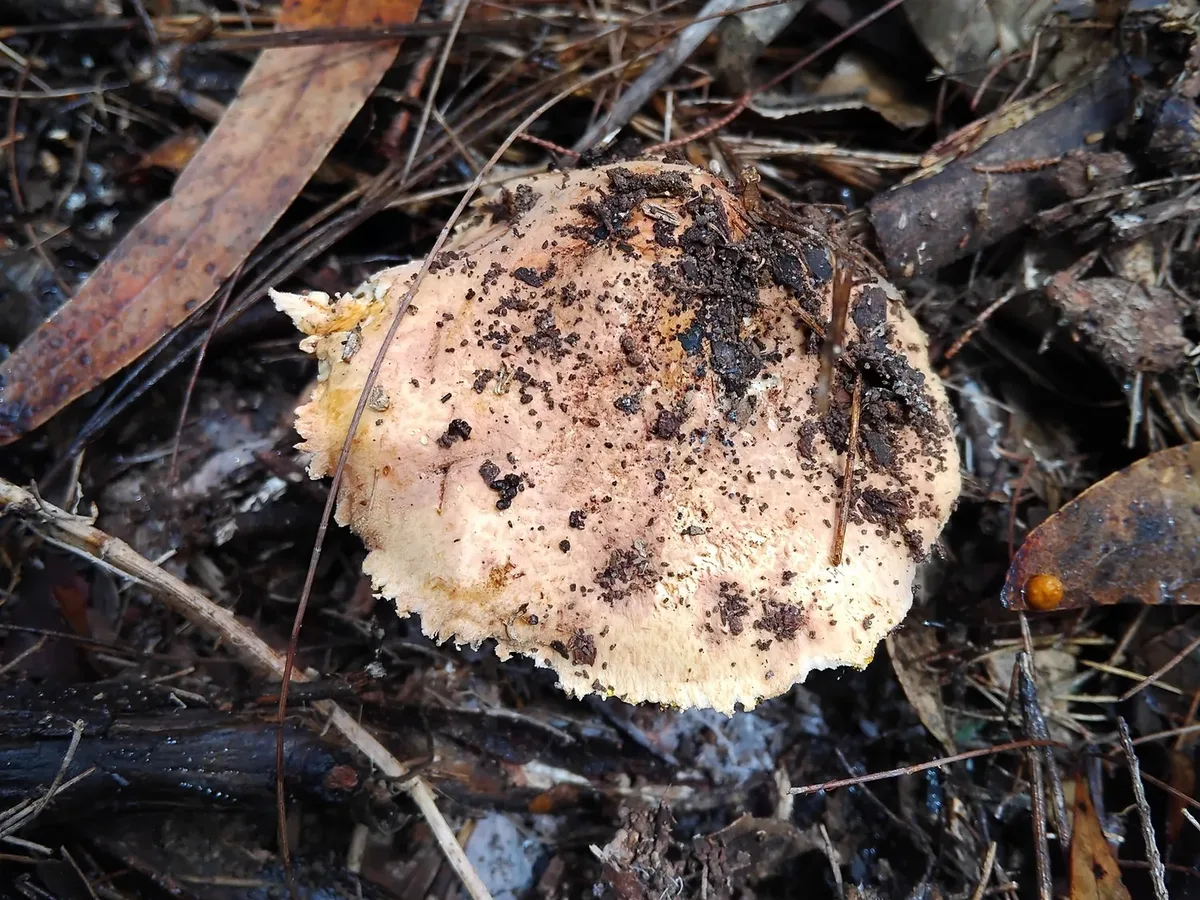
Amanita ochrophylla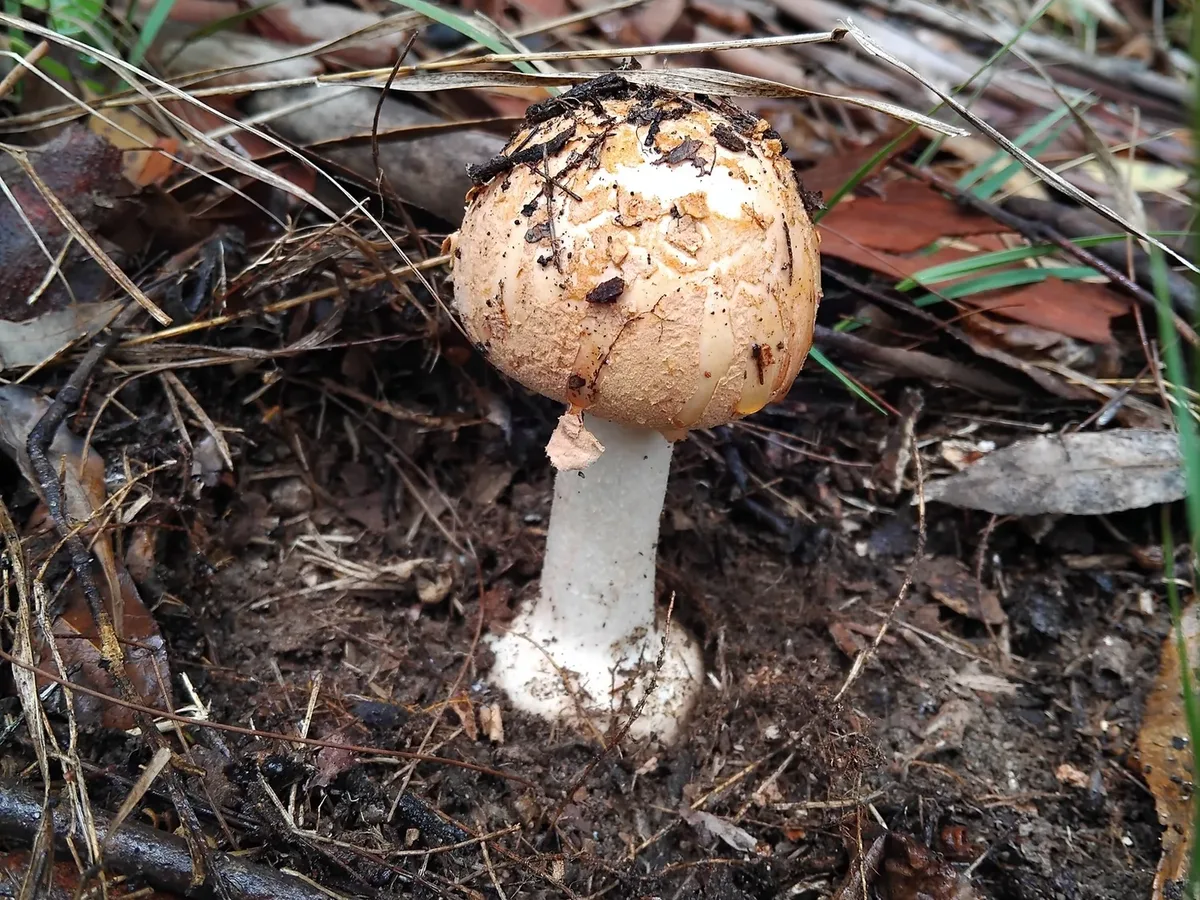 © Sofia Zvolanek (CC BY)
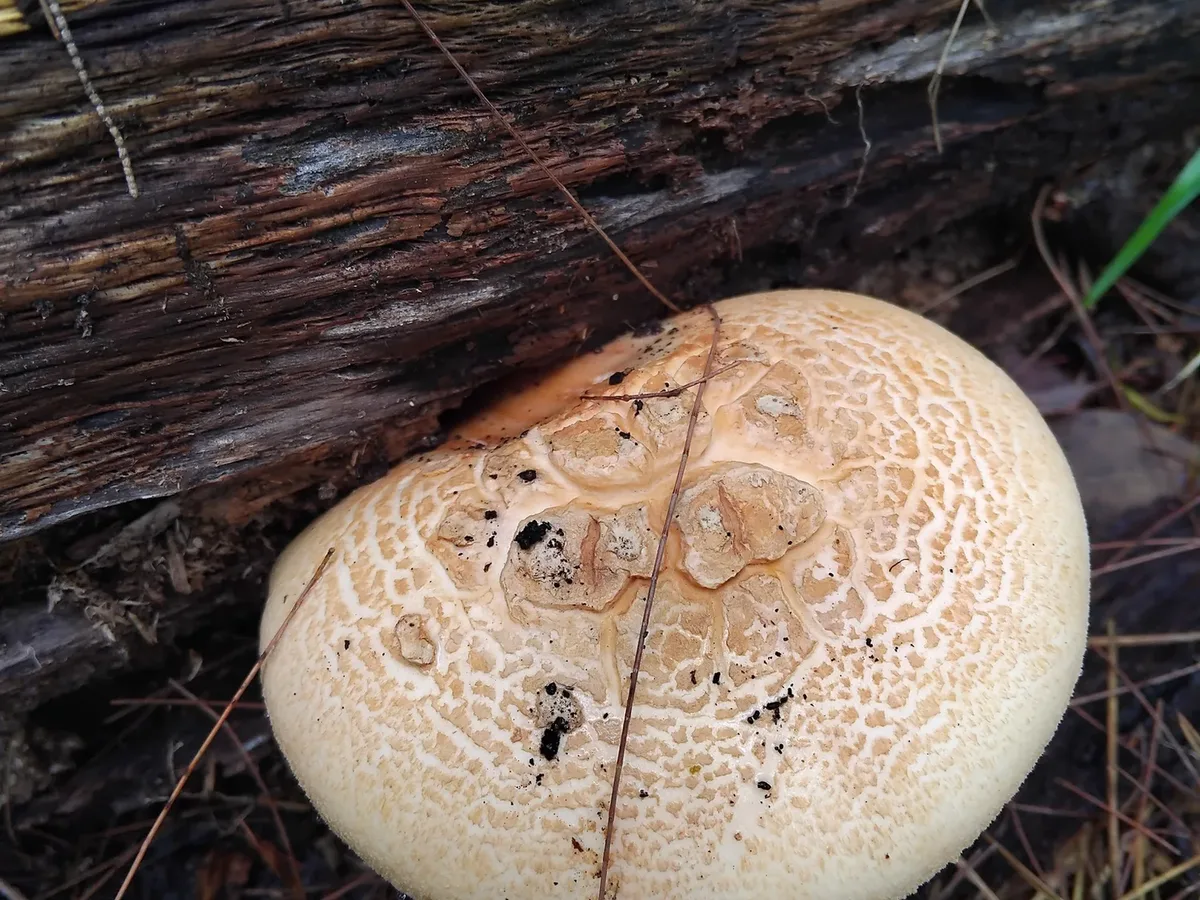 © Sofia Zvolanek (CC BY)
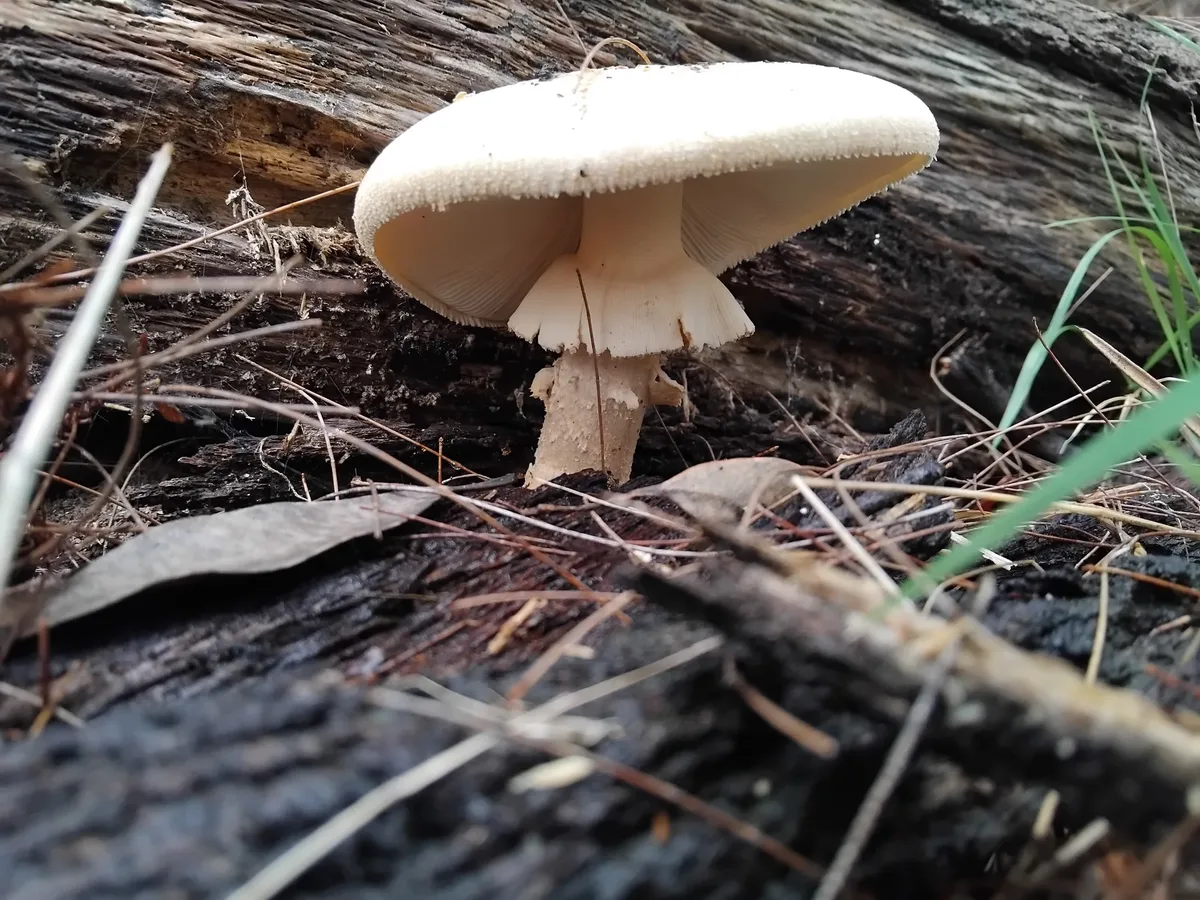 © Sofia Zvolanek (CC BY)
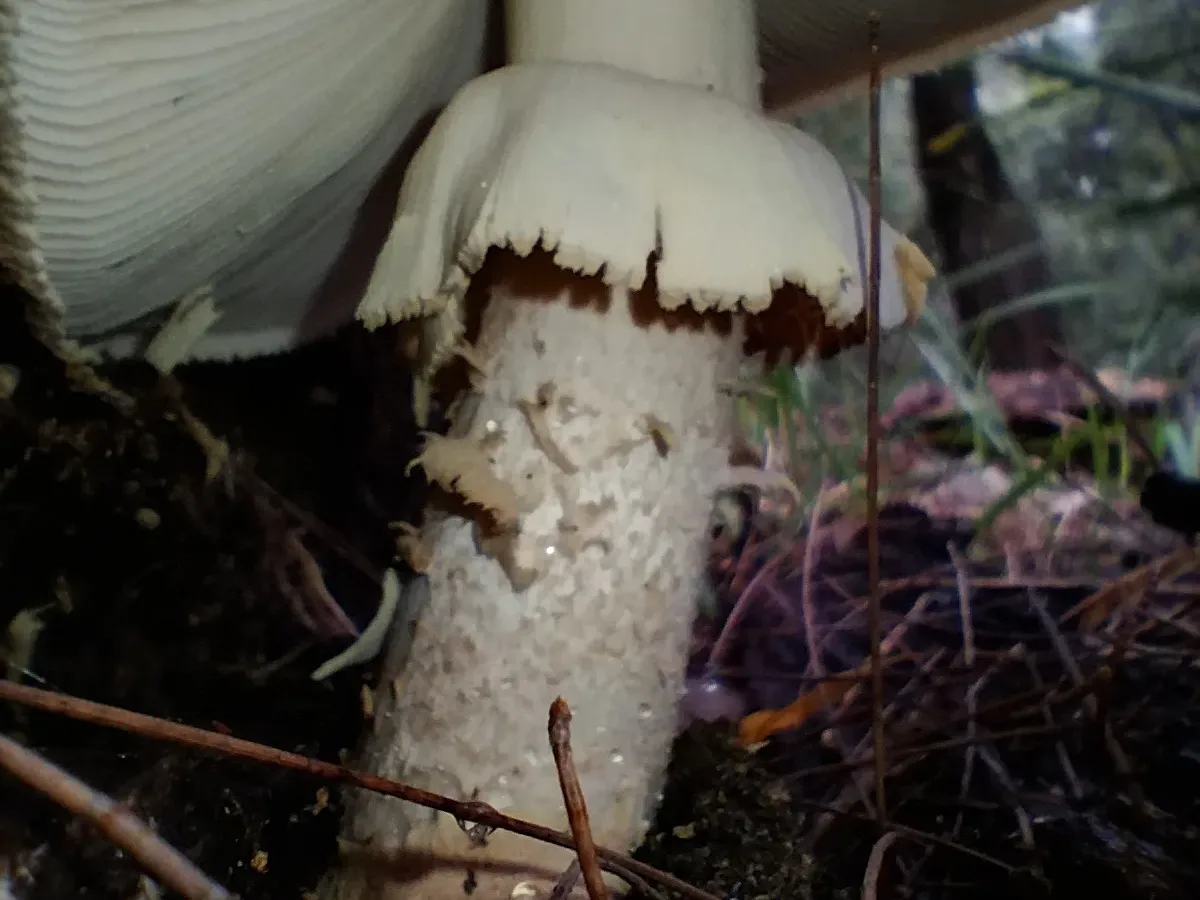 © Sofia Zvolanek (CC BY)
 © Sofia Zvolanek (CC BY)© Sofia Zvolanek (CC BY)© Sofia Zvolanek (CC BY)
Edible only with the right preparation - or safe for some people but not others. Learn the caveats first.
Never eat a mushroom you are not 100% sure of - check the look-alikes below, and always cook wild mushrooms.
How to recognise it
The Yellow-gilled Amanita is a medium-sized, unremarkable-looking mushroom by Australian standards - a pale ochre-buff to honey-brown cap, a stem with a ring, and a slightly swollen base - until you tip the cap and look at the gills.
Gills
They are yellow. Not white, not cream, but distinctly ochre-yellow to pale sulphur-yellow, and that unusual colour is the single most reliable field character the species possesses.
Within the genus Amanita, where gills are almost invariably white, seeing a yellowish gill surface immediately marks this as something to examine very carefully rather than collect without thought.
Cap
The cap (40-100 mm) is dry to slightly viscid when wet, smooth, and ranges from pale buff through ochre-brown to honey-brown; the margin is smooth and non-striate, which rules out the grisette group.
Young buttons may carry sparse pale veil patches on the cap surface, but these are easily detached.
Stem
The stem is whitish to faintly yellowish with a pendant membranous ring.
The base is slightly swollen to somewhat rooting, but the volva is poorly developed - never the large, clean, sac-like bag you see in the death cap or destroying angels.
Spore print is white; spores are amyloid, which aligns this species with the main amatoxin-bearing lineage of the genus even though A. ochrophylla's own toxicity remains unconfirmed.
Where & when it grows
Habitat
Strictly associated with native Eucalyptus and related Myrtaceae, forming ectomycorrhizal partnerships with the root systems of these trees across dry and grassy sclerophyll woodland in south-eastern and south-western Australia.
Unlike Amanita phalloides (the death cap), which is introduced and grows exclusively under planted exotic trees such as oaks and chestnuts, A. ochrophylla is a native species embedded in the ecology of bush and remnant bushland.
It turns up in national parks, roadsides, suburban parks and recreational areas wherever mature native eucalypts persist, sometimes at the edge of walking tracks where its pale ochre cap is easily overlooked against autumn leaf litter.
When
Autumn to early winter in the Southern Hemisphere, fruiting from March through July with the peak flush in April-June.
Like most ectomycorrhizal Amanitas, fruiting requires two concurrent triggers:
- Adequate soil moisture delivered by autumn rains (typically 25 mm or more over a 10-14 day window).
- Declining soil temperatures below roughly 18 °C as the season turns.
In drought years the flush may be very thin or entirely absent.
After a wet, warm late summer followed by a sharp autumn cool, fruiting can be almost overnight - the developing buttons already formed beneath the soil surface, waiting for the right moment to push free.
How it grows
Solitary or loosely scattered across the leaf-litter layer, never forming dense clusters or rings.
Each fruit body begins as a small, soil-covered button enclosed in the universal veil; the cap and stem develop inside that veil before the button pushes free and expands.
The partial veil persists as the ring on the adult stem, while remnants of the universal veil may leave sparse patches on the cap and contribute to the somewhat swollen stem base.
Always gently excavate the base rather than snapping the stem at ground level - the character of the base (swollen but not sac-like, unlike a death cap) is a critical identification point.
Fruiting conditions
Autumn fruiter in the Southern Hemisphere; flushes follow soaking autumn rains as soil temperatures cool below approximately 18 °C. Peak flush April-June.
Handle with care
Toxin
No specific toxins have been confirmed in Amanita ochrophylla. The species has not been subject to comprehensive chemical analysis.
The amyloid spore reaction aligns it taxonomically with major Amanita lineages that do contain amatoxins, but the presence of those specific compounds in this species is neither confirmed nor ruled out.
The yellow gills suggest distinctive secondary chemistry that merits investigation.
In the absence of any safety clearance, treating the species as potentially toxic is the only defensible position.
Symptoms
No poisoning cases are documented with certainty for Amanita ochrophylla as the confirmed culprit.
If symptoms follow consumption of any unidentified Amanita, treat the situation as a potential amatoxin emergency regardless of initial symptom timing. Amatoxin poisoning may then unfold in a sequence:
- 1Gastrointestinal symptoms (nausea, vomiting, diarrhoea, abdominal cramps) 6-24 hours after ingestion.
- 2A deceptive apparent improvement.
- 3Catastrophic liver and kidney failure 48-72 hours later.
Do not be reassured by early recovery - seek urgent medical care and bring a sample of the mushroom.
Look-alikes
The pale ochre-buff cap and yellowish gills, while distinctive in combination, do not make A. ochrophylla immune to confusion.
The most dangerous scenario is at the button or egg stage, before the cap has expanded and the yellow gills are visible - at this point it is indistinguishable in the field from other Amanita buttons, including the deadly death cap (Amanita phalloides) and native Australian deadly species.
Once expanded, the yellow gills separate it from essentially all other Amanitas (which have white gills), but an inexperienced observer examining only the cap colour and ring could still mistake pale or washed-out caps for various species.
On the other side, its pale tan-brown cap with a ring might attract attention from foragers looking for edible Agaricus species - field mushrooms and horse mushrooms have free pink-to-brown gills and lack a volva-remnant base.
No dangerous wild mushroom should be identified on cap colour alone, and no Amanita should be eaten without expert confirmation.
Why it matters
The primary danger is twofold:
- 1At the egg or button stage any Amanita is potentially indistinguishable from a deadly species, and a forager who picks A. ochrophylla buttons without waiting for the diagnostic yellow gills to be visible risks a lethal misidentification.
- 2Even as an adult specimen, the toxicological unknowns mean that consuming this species is an experiment with no verified safe outcome.
The unusual gills alone should discourage consumption - normal Amanita gills are white.
When a species differs from the expected in a genus as dangerous as this, the difference is a warning sign, not a novelty to be ignored.
At the button stage, before the cap has expanded and the yellow gills are visible, A. ochrophylla cannot be distinguished from A. phalloides in the field - both emerge as small pale amanita buttons. Once expanded, A. phalloides has WHITE (not yellow) gills, a well-developed free sac-like volva at the base, and a greenish-yellow to olive-brown cap. Never harvest any Amanita button. A. phalloides contains amatoxins and is responsible for most fatal mushroom poisonings worldwide.
Pure white throughout with white gills, a prominent free bag-like volva, and a shaggy stem surface. Easy to separate from an expanded A. ochrophylla by total white colouration. At the button stage, indistinguishable - both are pale Amanita eggs. Contains amatoxins; lethal.
Amanita marmorata and related native Australian deadly species (A. austrophalloides, A. murina, A. murinaster) share habitat under Eucalyptus with A. ochrophylla. They typically have white gills and amyloid spores; the presence of a free sac-like volva distinguishes most of them from A. ochrophylla's poorly developed base, but at early growth stages all are risky. These species are suspected or confirmed to contain amatoxins.
Agaricus species have pink-to-dark-brown gills (never yellow) and a dark chocolate-brown spore print; they lack the ring-plus-volva-remnant base of Amanita; caps often smell of anise or almonds. A. ochrophylla's yellow gills and whitish spore print, plus its woodland (not open grassland) habitat, separate them clearly. Still, any pale tan mushroom with a ring deserves careful gill-colour and spore-print checks.
Another native Australian Amanita, but vivid vermilion-orange to orange-red rather than pale ochre-buff, with WHITE gills, NO ring, and a strongly striate cap margin and large sac-like volva. The colour, gill colour, and absence of a ring separate them reliably in adult specimens. A. xanthocephala is in section Vaginatae and has non-amyloid spores; A. ochrophylla has amyloid spores.
In the kitchen
Picking & cleaning
Amanita ochrophylla has no established edibility record and its toxicological profile has not been formally characterised. It is not eaten in any documented Australian foraging tradition.
While no toxins have been confirmed, the absence of evidence is not evidence of safety - particularly in a genus that includes the world's most lethal mushrooms, and for a species whose amyloid spores indicate placement in the same major lineage as the amatoxin-bearing Phalloideae.
The unusual yellow gills suggest unusual biochemistry that has not been investigated.
This guide strongly advises against collecting or eating A. ochrophylla. For foragers who encounter it in the bush, treat it as a species to observe and photograph, not to harvest.
Good to know
This species carries a 'caution' classification for two compounding reasons:
- Its toxicity is genuinely unresolved (no comprehensive safety study exists).
- It belongs to a genus whose members include the world's most lethal mushrooms.
At the button stage, before the diagnostic yellow gills are exposed, it cannot be safely distinguished from deadly Amanita species in the field.
Even in the adult stage, the unusual yellow gills indicate that this species has a chemistry that sets it apart from other Australian Amanitas - and that chemistry has not been formally investigated.
Do not eat it. If you suspect ingestion of A. ochrophylla (or any unidentified Amanita), contact the Poisons Information Centre immediately (Australia: 13 11 26) - do not wait for symptoms.
A reference guide - never an edibility guarantee. When in doubt, leave it out.