North American Fly Agaric
Amanita muscaria var. guessowiisyn. Amanita muscaria subsp. guessowii, Amanita muscaria var. guessowii Veselý
 © wildflowerwatching (CC BY)
 © Chris Sulots (CC BY)
 © Chris Sulots (CC BY)
 © Chris Sulots (CC BY)
 © Megan “Moe” Morelock (CC BY)
 © Megan “Moe” Morelock (CC BY)
 © Megan “Moe” Morelock (CC BY)
 Noah's Ark Zoo Farm (CC0)
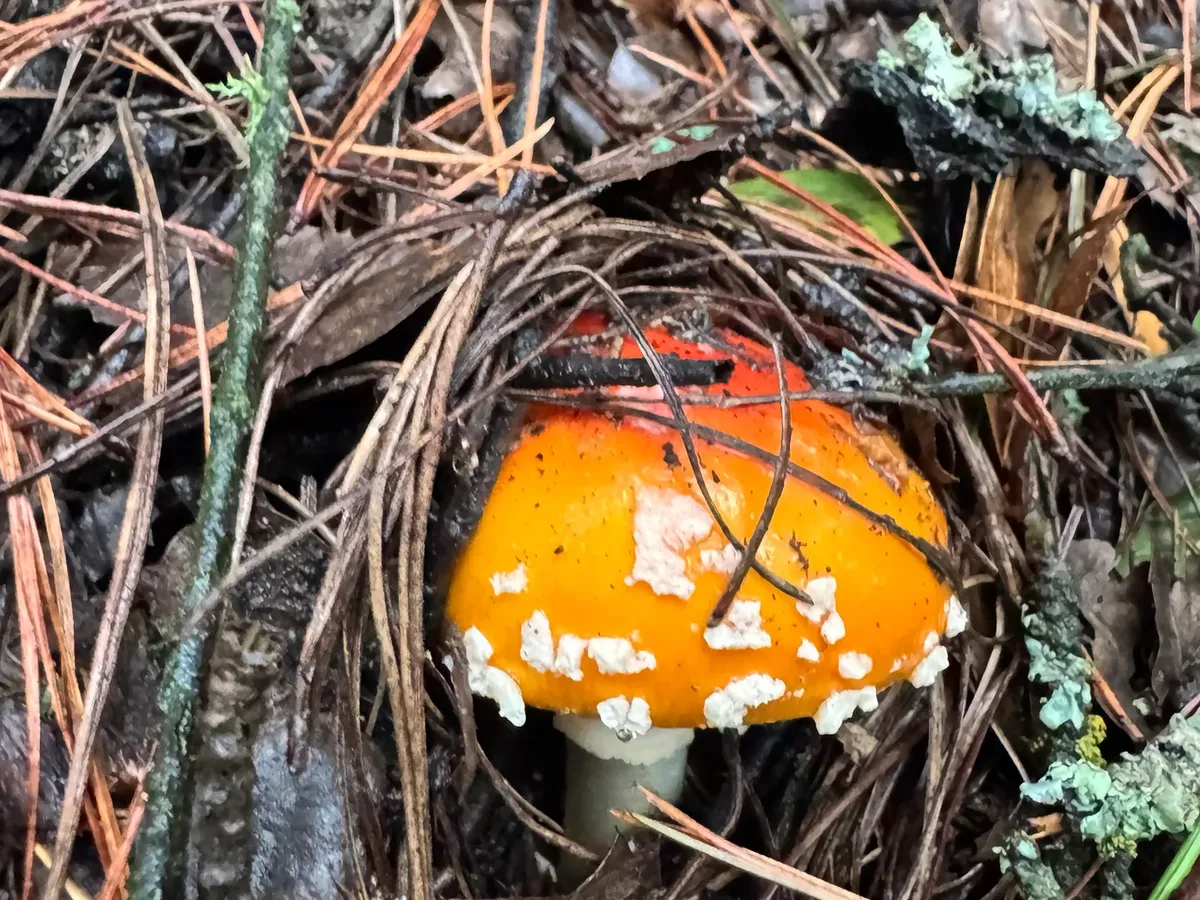 © wildflowerwatching (CC BY)
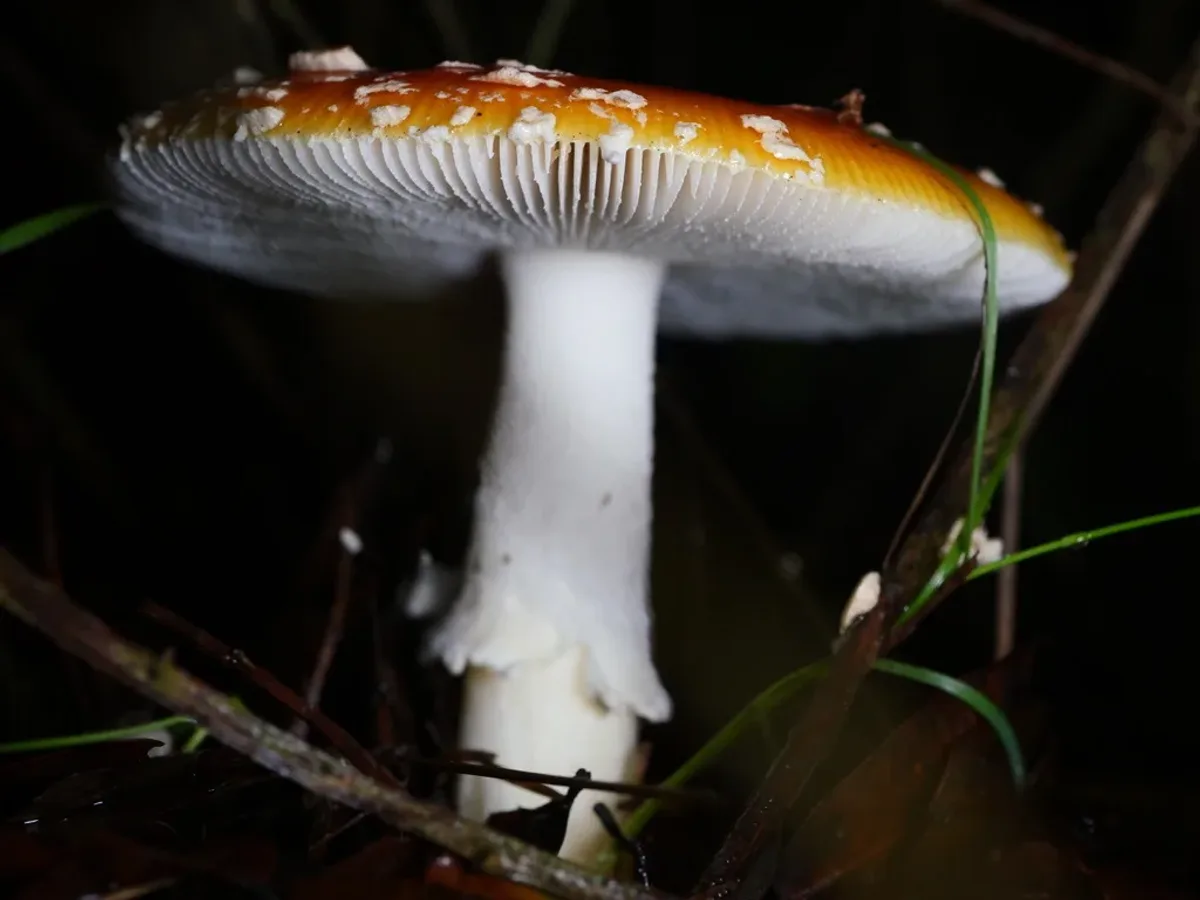 caseyhh (CC0)© wildflowerwatching (CC BY)© Chris Sulots (CC BY)
Edible only with the right preparation - or safe for some people but not others. Learn the caveats first.
Never eat a mushroom you are not 100% sure of - check the look-alikes below, and always cook wild mushrooms.
How to recognise it
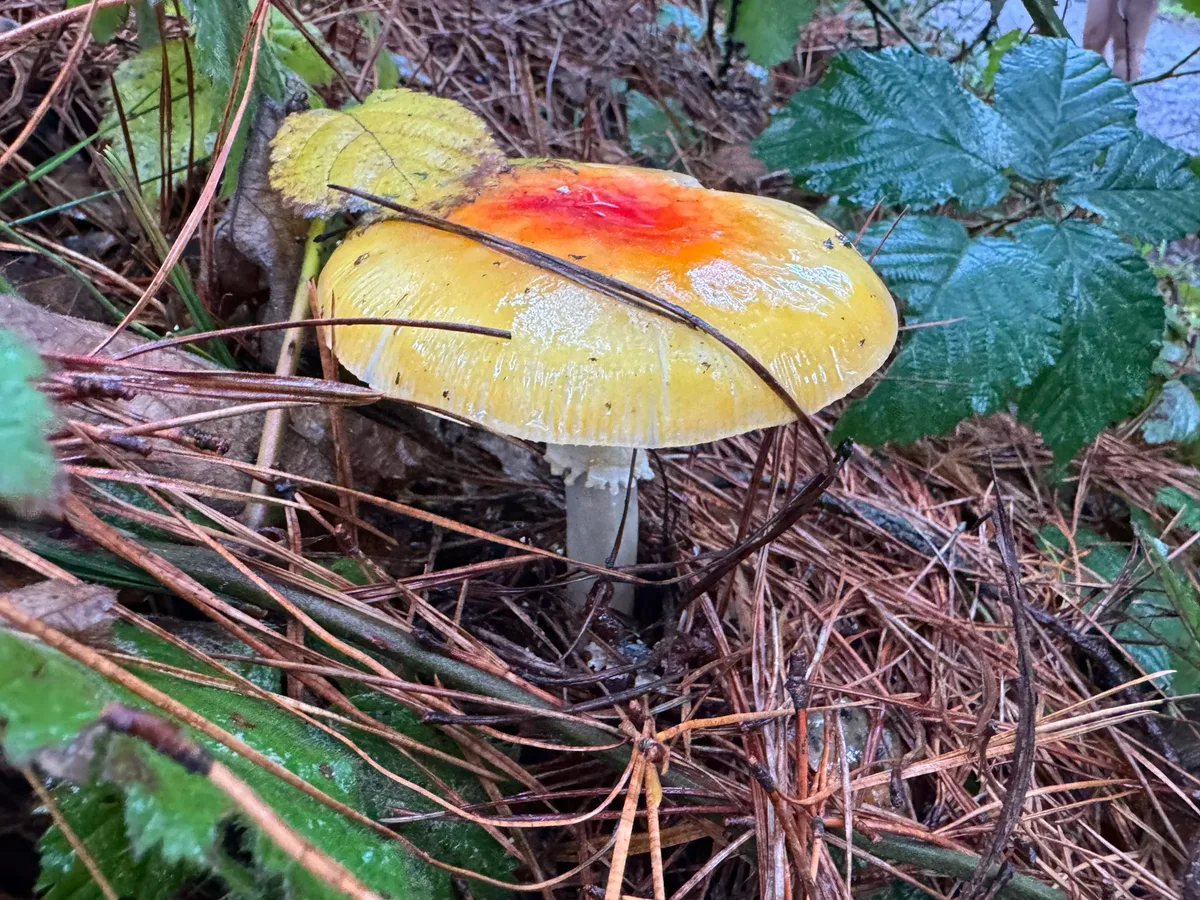
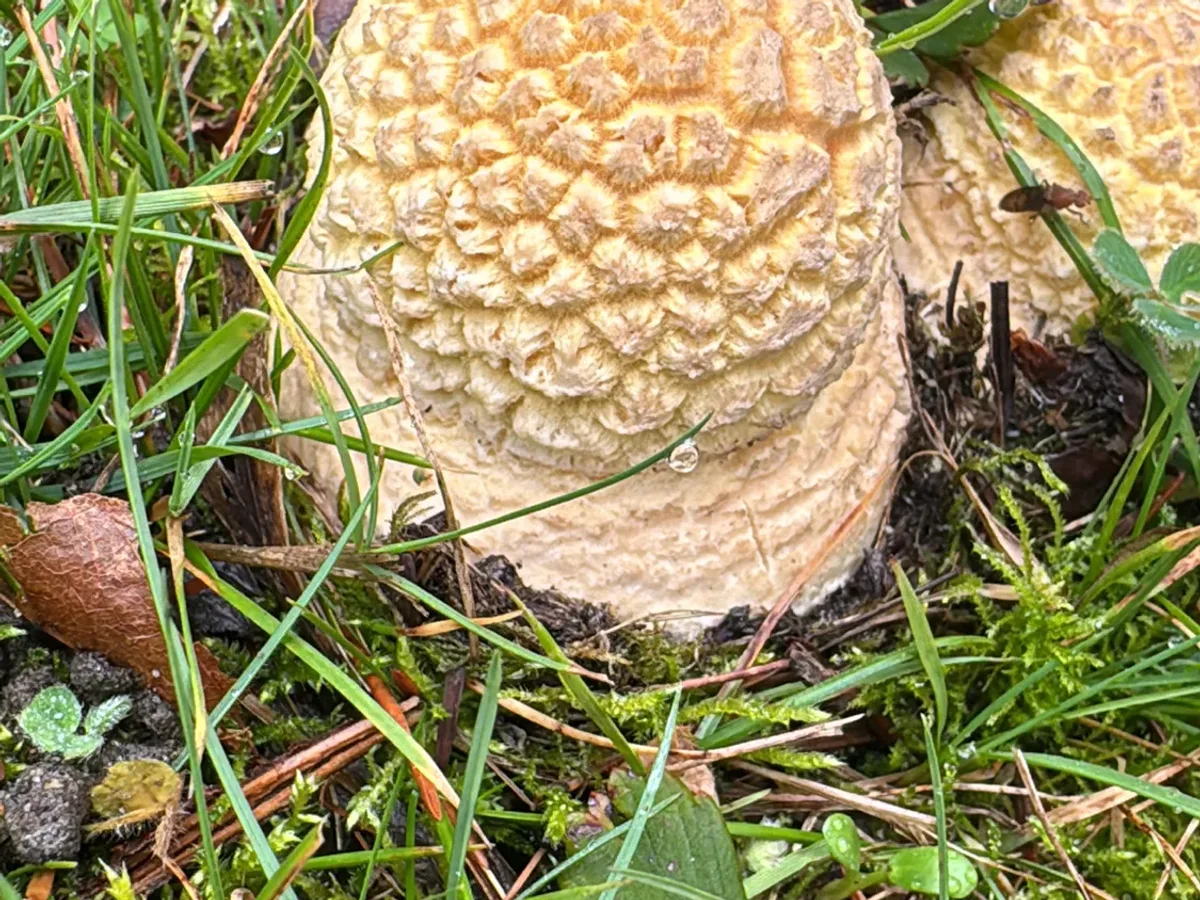
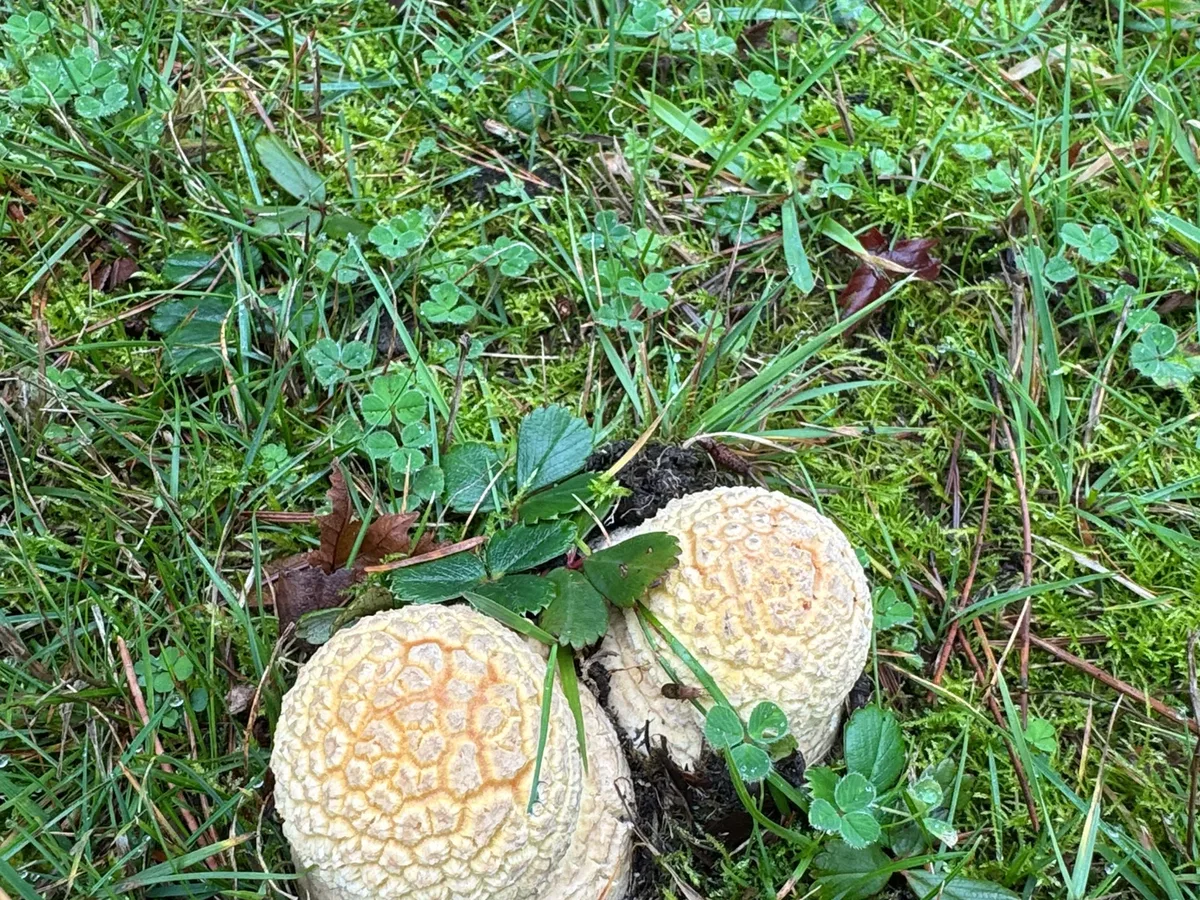
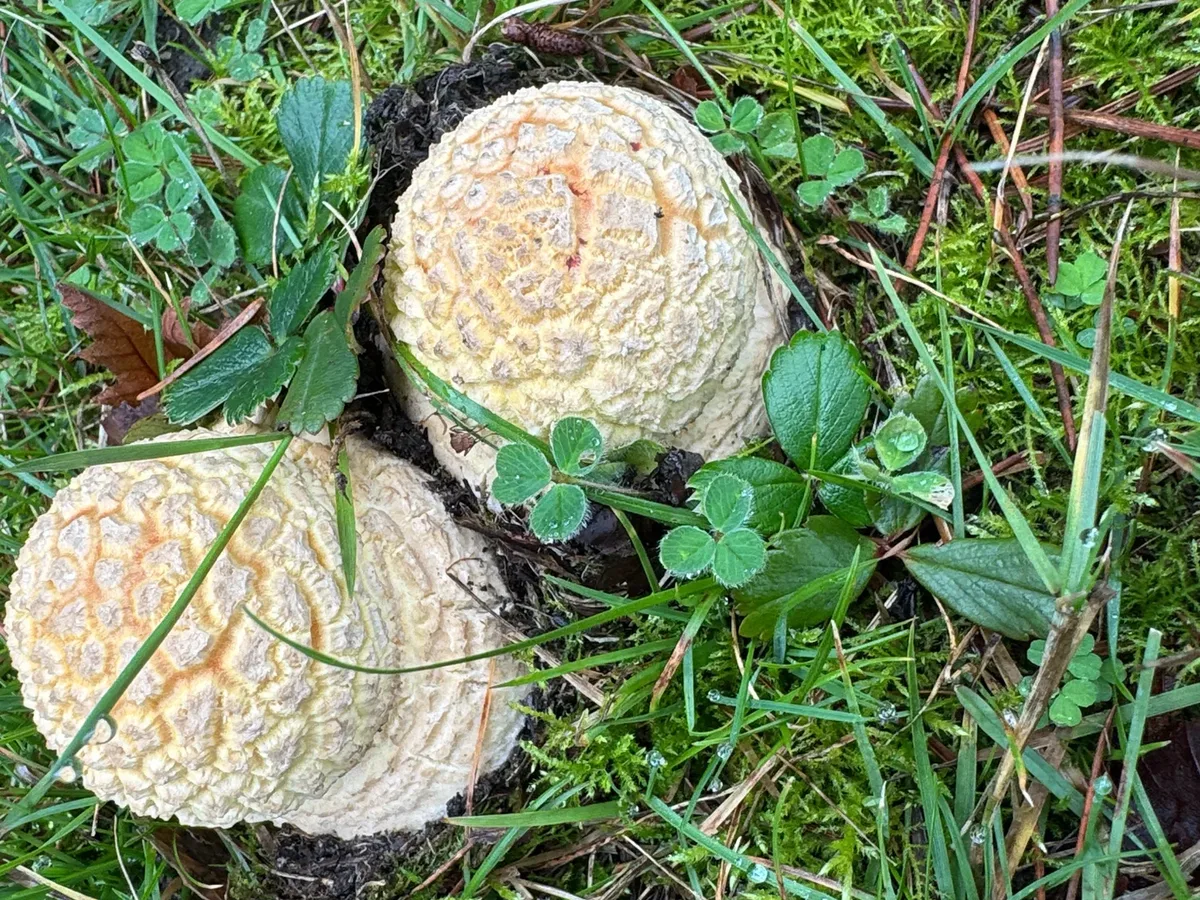
A large, unmistakably Amanita-shaped mushroom, distinguished from the familiar red European fly agaric by its yellow cap.
Cap
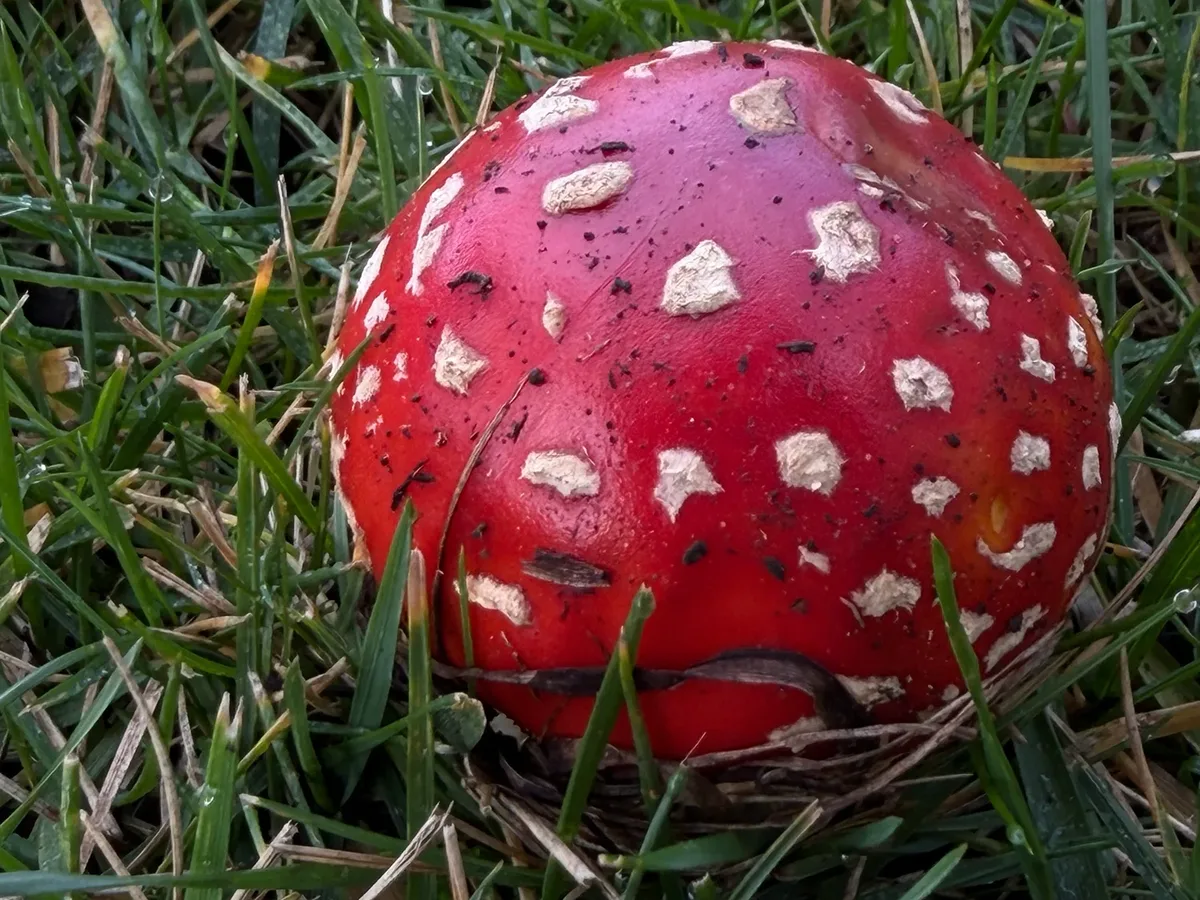
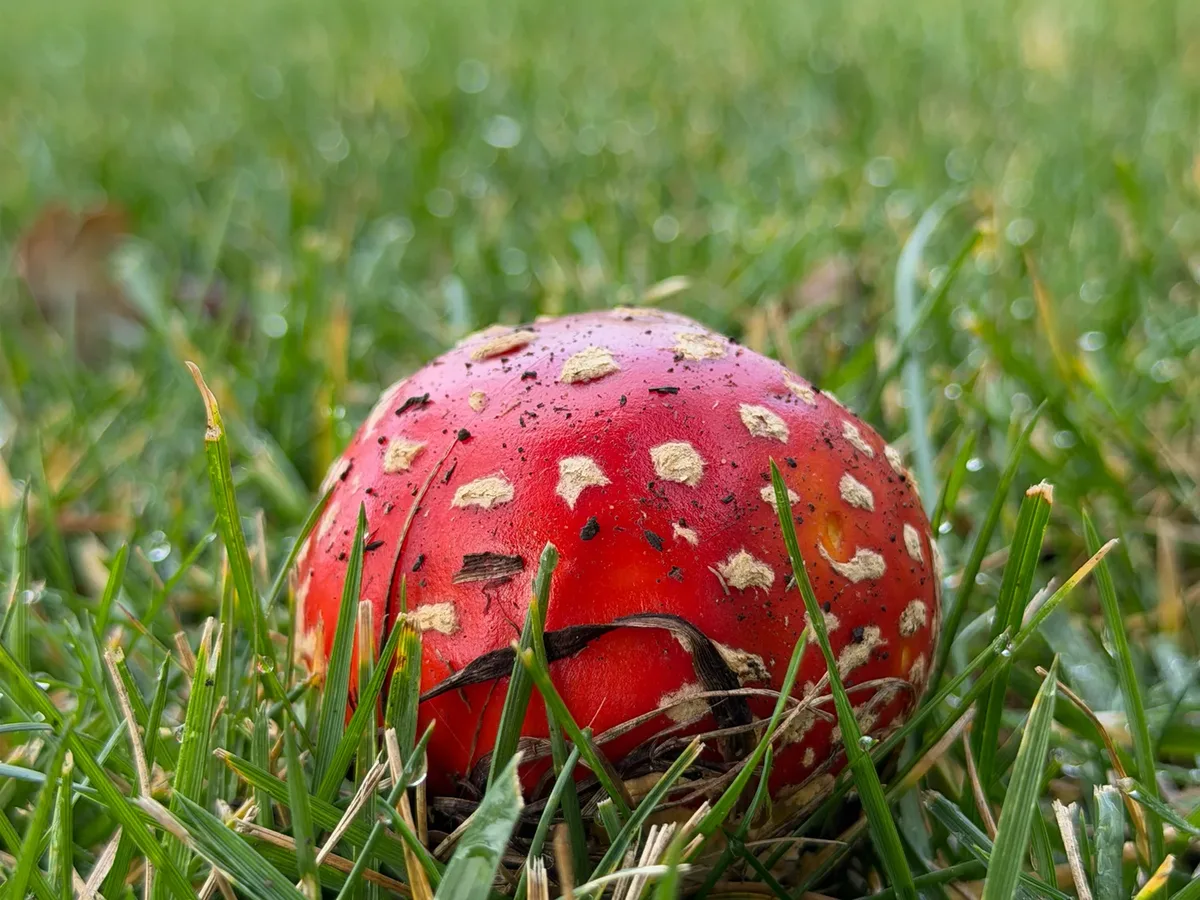
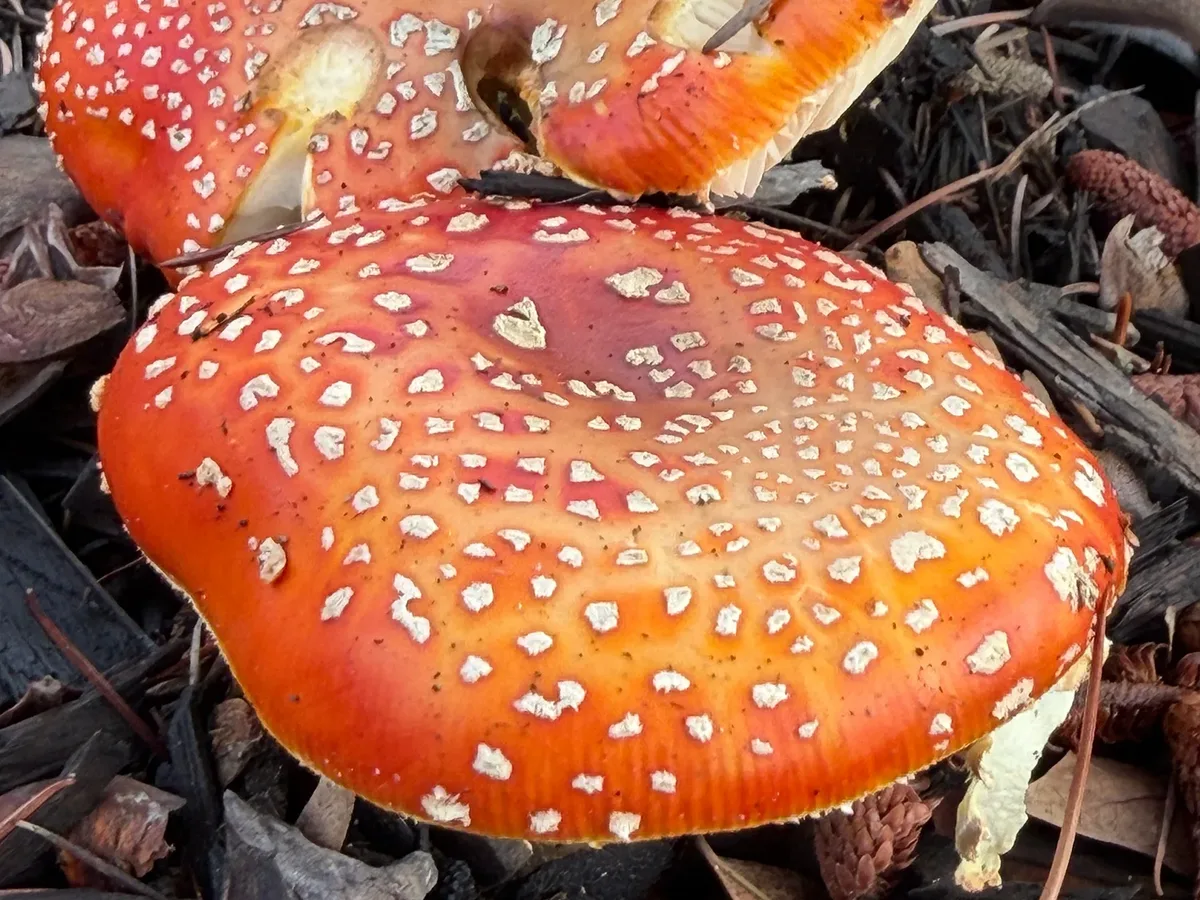
Egg-yolk yellow to orange-yellow, 6-20 cm. Decorated with soft white to yellowish warts - veil fragments - that rain easily washes away, leaving a plain yellow surface.
Gills
White, free from the stem, and densely crowded.
Stem
White, carrying a pendant, skirt-like ring. Most importantly, a swollen base wrapped in concentric ridges or girdles of yellowish cottony volval material - not a free, sac-like cup as seen in deadly Amanita species.
Flesh
White throughout, non-staining. Spore print white.
Why it's dangerous
Rarely fatal in healthy adults if treated promptly, but severity is unpredictable because toxin concentrations vary widely between individual fruitbodies.
The most serious real-world hazard in eastern North America is misidentification of the deadly Amanita phalloides as this species. A. phalloides is now present in eastern North America through association with introduced European trees, and its yellow-capped forms superficially overlap with guessowii in colour.
A single cap of A. phalloides delivers a potentially lethal amatoxin dose, with a deceptive 6-24 hour symptom-free period - by which time the liver damage is already established.
Any yellow-capped Amanita with white gills must be examined in full, including the stem base, before any identification conclusion is drawn.
There is no antidote for either ibotenic-acid poisoning or amatoxin poisoning; contact emergency services immediately if any Amanita ingestion is suspected.
Toxin
The two principal toxins are ibotenic acid and muscimol, both isoxazole compounds.
Ibotenic acid activates ionotropic glutamate receptors (NMDA/AMPA subtypes), producing excitatory neurotoxic effects. It decarboxylates in vivo, and during drying or heating, to muscimol.
Muscimol is a potent, selective GABA-A receptor agonist, producing sedative, hypnotic, and hallucinogenic effects.
Muscarine is present only in trace amounts and does not contribute significantly to the clinical syndrome. Toxin concentrations vary substantially between individual specimens.
Symptoms
Onset is fast: symptoms typically begin within 30 minutes to 2 hours of ingestion.
The early syndrome includes nausea, vomiting, abdominal discomfort, excessive salivation, and dizziness, followed by drowsiness, confusion, and disorientation.
As muscimol effects deepen: agitation, ataxia (loss of coordination), visual and auditory hallucinations - often involving distorted perception of size (macropsia/micropsia) - and delirium. Severe cases may progress to convulsions, stupor, and loss of consciousness.
Children and elderly individuals are at substantially higher risk of severe or life-threatening outcomes.
Recovery in healthy adults typically occurs within 4-8 hours with supportive care, though severe ingestions may require 24 hours or longer of hospital observation.
Staying safe
Poisonous. Amanita muscaria var. guessowii must not be eaten.
The toxins ibotenic acid and muscimol are present throughout the fruitbody - cap, gills, flesh, and especially concentrated in the outer cap skin - and cannot be reliably removed by any domestic preparation.
Drying is especially dangerous: it converts ibotenic acid to the more potent muscimol, increasing the effective dose. Toxin content varies widely between individual specimens, meaning no safe dose can be estimated from size or appearance.
The greatest real-world risk is misidentification. A yellow-capped Amanita in eastern North America must be treated with extreme caution, because the deadly Amanita phalloides (now established in parts of eastern North America via introduced European tree species) can produce similar-coloured caps.
If ingestion is suspected, contact emergency services immediately.
Where & when it grows
Habitat
Ectomycorrhizal with a broad range of hardwood and coniferous trees across eastern North America. Most frequent under:
- Paper birch, aspens, beeches, maples, and oaks in temperate hardwood forest
- White pine and spruce in mixed or boreal forest
Grows singly to loosely scattered in leaf or needle litter on moderately acidic, well-drained soils.
The mycelial network is perennial; fruitbodies tend to reappear at the same locations each autumn for many years.
When
Late summer through late autumn. In the Great Lakes and eastern Canada the season opens in August; the peak across the northeastern US runs September through October.
A warm wet spell of 15-25 mm of rain, followed by cooling temperatures - soil dropping toward 8-14 °C - reliably triggers fruiting 7-14 days later.
The season ends with the first hard frosts.
How it grows
Solitary to scattered, never tufted or clustered.
The young fruitbody erupts from the soil as a white to pale yellow egg enclosed in the universal veil. As it expands, the veil tears, depositing warts on the expanding cap and leaving the characteristic volval ridges on the basal bulb.
Growth is rapid - a button can reach maturity within 48-72 hours of a triggering rain event. The cap flattens and begins to decay within a week of emergence.
The underlying mycelium, by contrast, is a long-lived perennial organism that has often colonised its host trees' root tips for many years before each autumn's fruitbodies appear.
Fruiting conditions
Autumn-fruiting ectomycorrhizal Amanita of eastern North American temperate and boreal forest. Fruiting is triggered by sufficient autumn rainfall (15-25 mm over 14 days) as soil temperatures drop from summer highs toward 8-14 °C. The flush lag is 7-14 days. In the Great Lakes and eastern Canada the season peaks in September; in New England and the Mid-Atlantic the main flush runs late September through October. Hard frost ends the season.
Look-alikes
The most critical dangerous confusion is with yellow-capped forms of Amanita phalloides (the death cap), a lethal amatoxin-bearing species introduced to eastern North America.
The death cap can produce a yellow to greenish-yellow cap that overlaps in colour with var. guessowii, but it has a distinct sac-like white cup volva at the base (never ridges or girdles), a greenish tint to the cap, and a faint sweetish-sickly odour.
Always excavate the stem base completely before examining any yellow Amanita: the free-cup volva of A. phalloides versus the ridged-wart volva of guessowii is a decisive feature.
Other look-alikes:
- Amanita flavoconia (yellow patches) is smaller (cap to 8 cm), slender, and has fine orange to yellow powder at the base rather than concentric ridges; it is not safely edible either and co-occurs in the same forests.
- Amanita gemmata (jewelled death cap) is a pale-yellow, smaller species with a more cup-like volva and white patches; it is considered toxic.
- Amanita muscaria var. flavivolvata (the red western American variety) is virtually identical in structure and toxicity but has a scarlet to blood-red cap rather than yellow.
- Amanita citrina (false death cap) is whitish to pale yellow, has a bulbous base with a broad rim, and smells strongly of raw potato - not closely similar at maturity but young specimens could confuse novices.
The most dangerous confusion: yellow to greenish-yellow capped forms of the death cap overlap in colour with guessowii, but A. phalloides has a pronounced free sac-like white cup volva at the base (not concentric ridges or warts), a greenish to olive tint on the cap, a characteristic sweetish-sickly smell, and contains lethal amatoxins. Always excavate the full stem base - a free cup means deadly species; ridged warts mean fly agaric. Onset of amatoxin poisoning is deceptively delayed (6-24 hours) compared to ibotenic-acid syndrome. Introduced via European trees; now established in parts of eastern North America.
Entirely white, not yellow, but the white Amanita destroying angels co-occur in the same eastern North American forests and are the deadliest mushrooms on the continent. Young buttons of both guessowii and A. bisporigera are globose and white before the cap pigment develops. Always allow any Amanita button to develop fully before identification, and always excavate the full base: the destroying angel has a prominent free sac-like white volva, not concentric ridges.
The western North American and Neotropical red variety is structurally nearly identical to guessowii but has a scarlet to blood-red cap, not orange-yellow. The two varieties have essentially the same toxin profile and are distinguished primarily by cap colour and geographic range. Confusion between them is of no safety consequence - both are equally toxic.
A choice edible species with a vivid orange-red cap that at a distance overlaps with orange-yellow guessowii caps. A. jacksonii has distinctly yellow to orange gills (never white), an orange-yellow stem and flesh - all features absent in guessowii, which has white gills, white flesh, and a white-to-pale stem. A. jacksonii also emerges from a distinct free white sac-like volva. The white gills of guessowii versus the orange gills of jacksonii are the single fastest separation.
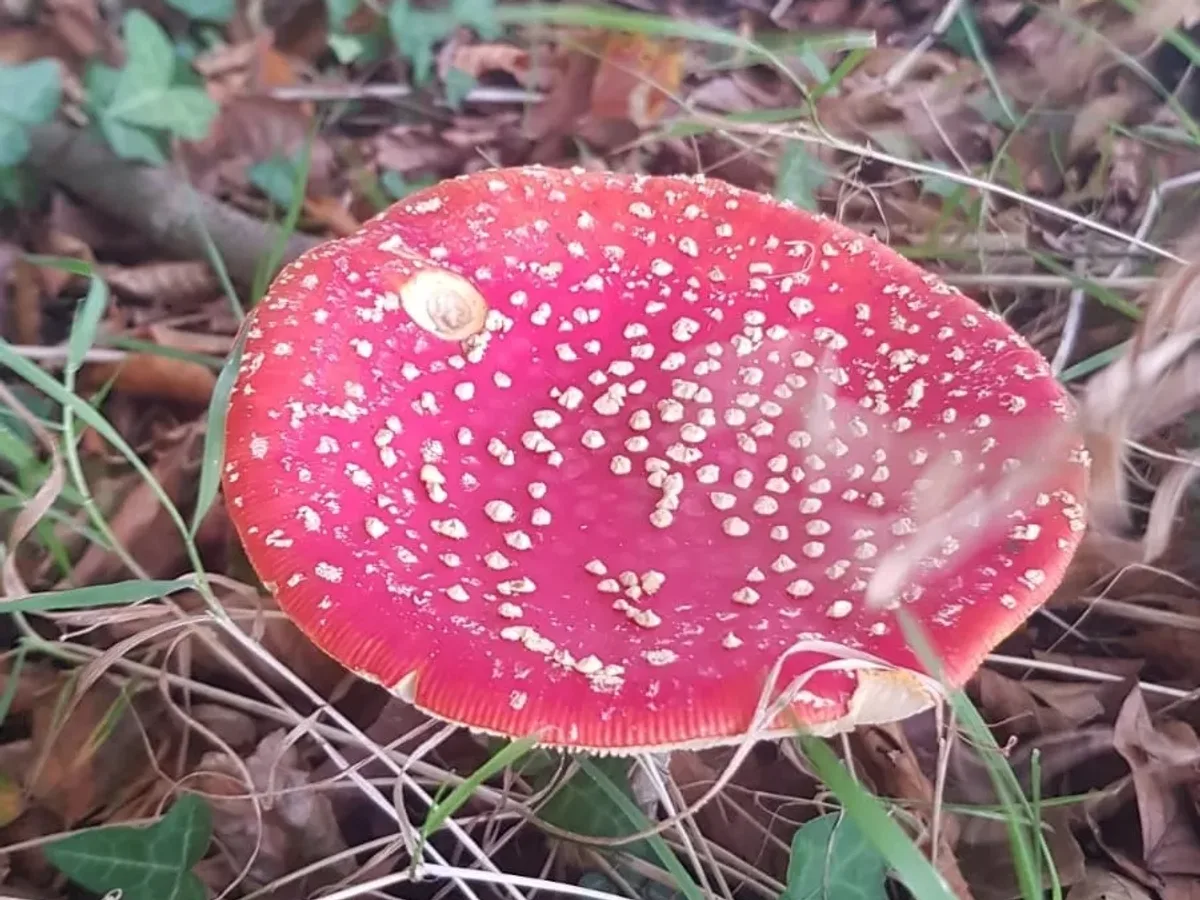
The European variety has a vivid scarlet to orange-red cap - a clearly different colour from the orange-yellow to yellow of guessowii, though faded old specimens and young unexpanded caps can blur the distinction. Both varieties have white warts, white gills, a pendant ring, and a ridged volva at the base - and identical toxicity. The colour difference is the primary field mark; biology and danger are the same.
Pale to medium yellow, smaller than guessowii (cap 3-10 cm), with white to pale yellow patches, a more clearly sac-like to sub-cup volva, and a ring that tends to be more persistent. Considered toxic (suspected ibotenic acid / muscimol, possibly also amatoxin traces - status debated). Do not eat. Cap colour paler than guessowii; volva shape is the critical separating feature.
A smaller (cap 3-8 cm), more slender eastern North American Amanita with bright egg-yellow to tawny-orange cap. A. flavoconia has fine orange to yellow powdery patches at the base rather than the concentric ridged girdles of guessowii, and the ring is thinner and more fragile. Both species are poisonous and co-occur in the same forests; neither should be eaten. The size difference alone (guessowii up to 20 cm cap) usually makes separation straightforward.
A reference guide - never an edibility guarantee. When in doubt, leave it out.