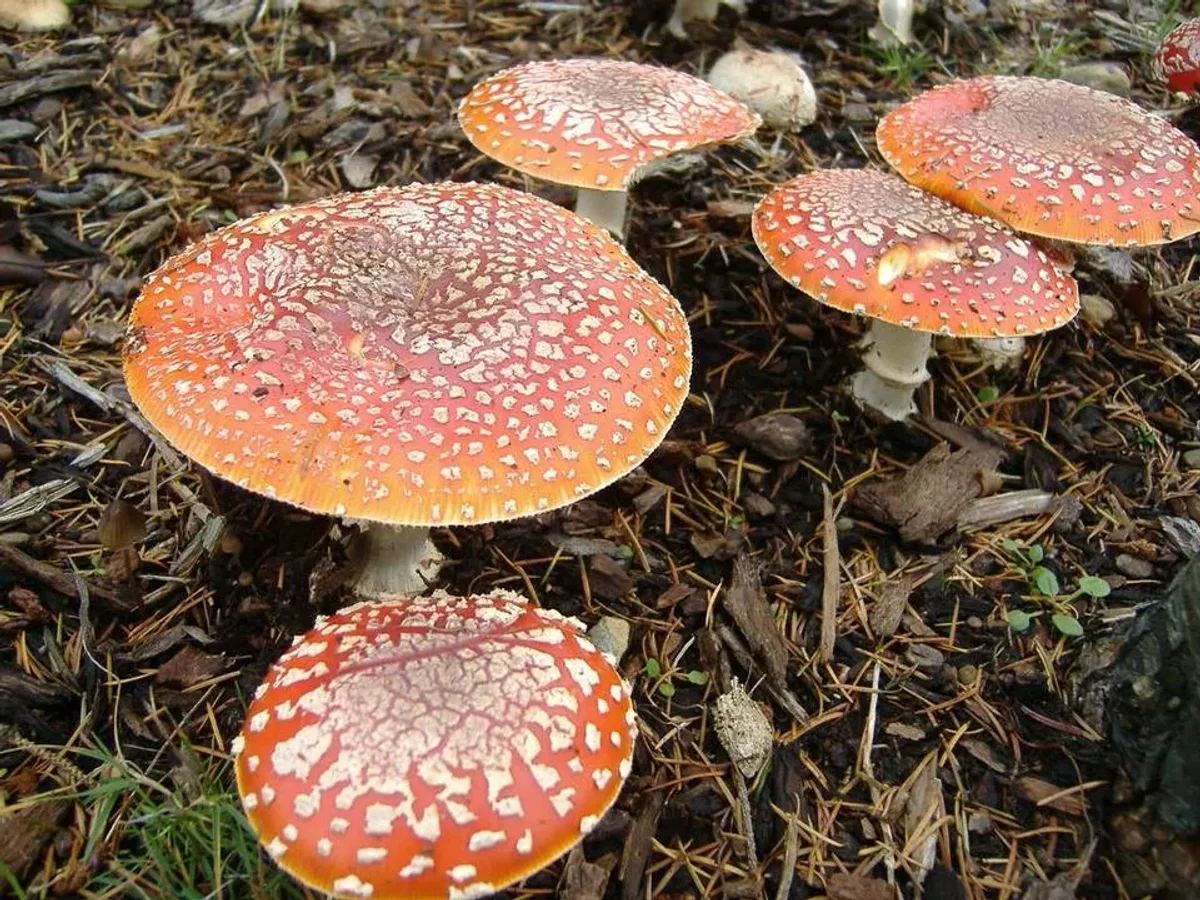
Fly agaric (red American variety)
Amanita muscaria var. flavivolvatasyn. Amanita muscaria subsp. flavivolvata, Amanita muscaria var. flavivolvata Singer
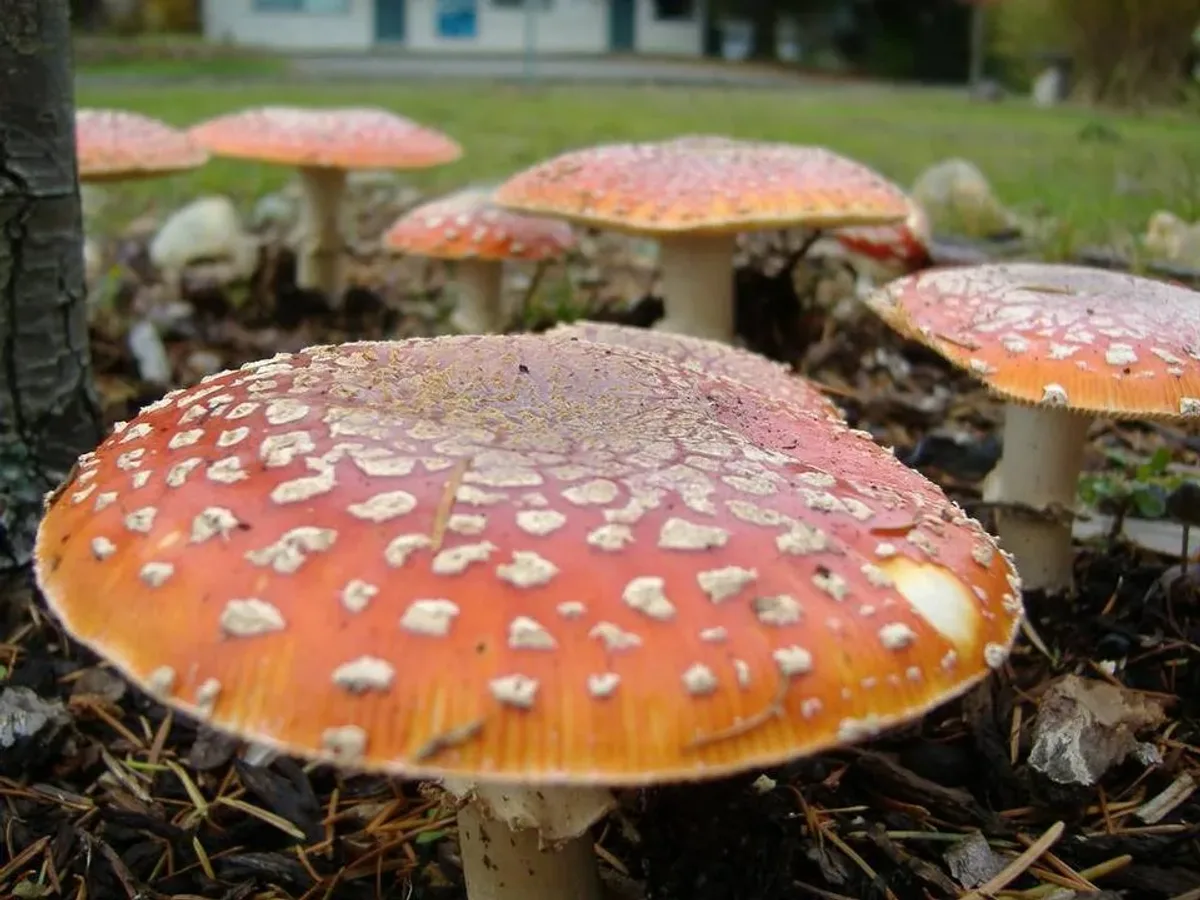 © Tim Sage (CC BY-SA)
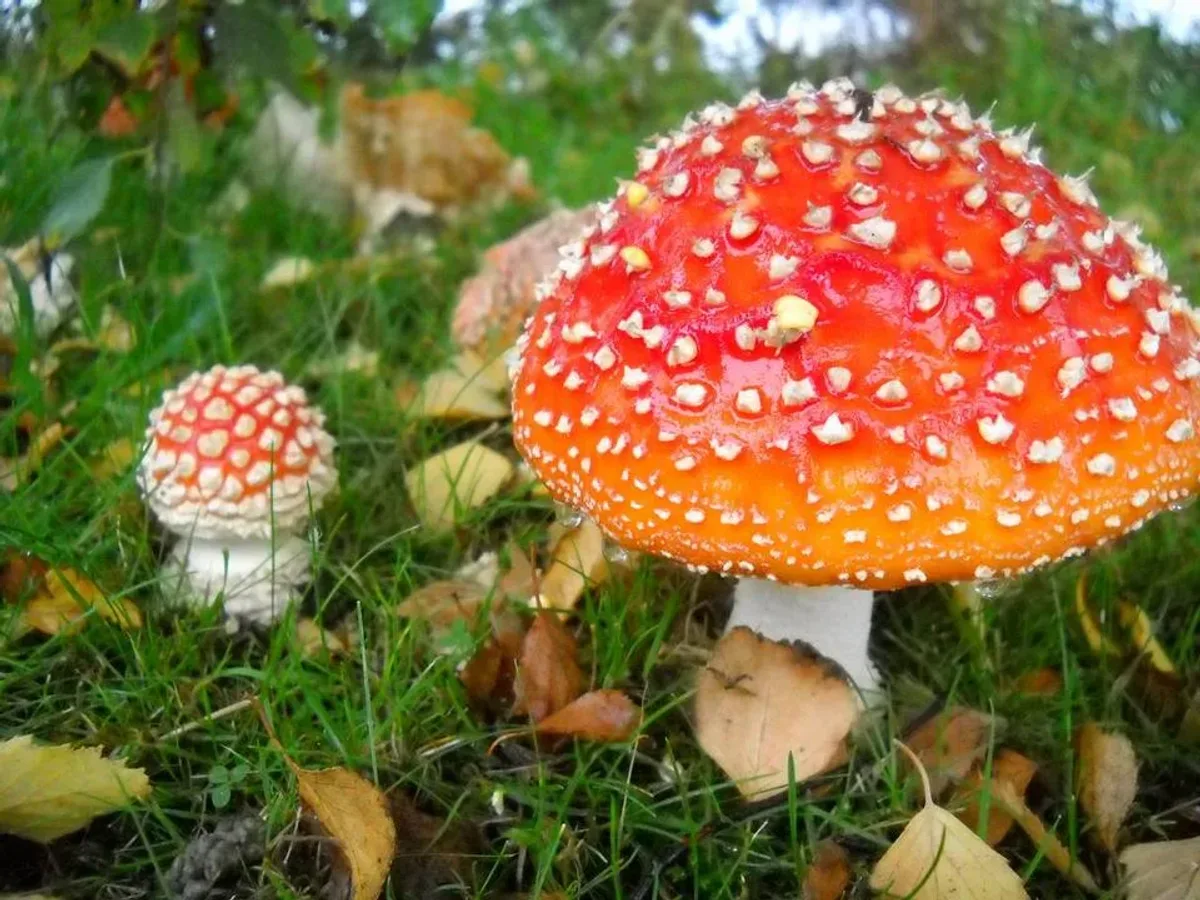 © Tim Sage (CC BY-SA)
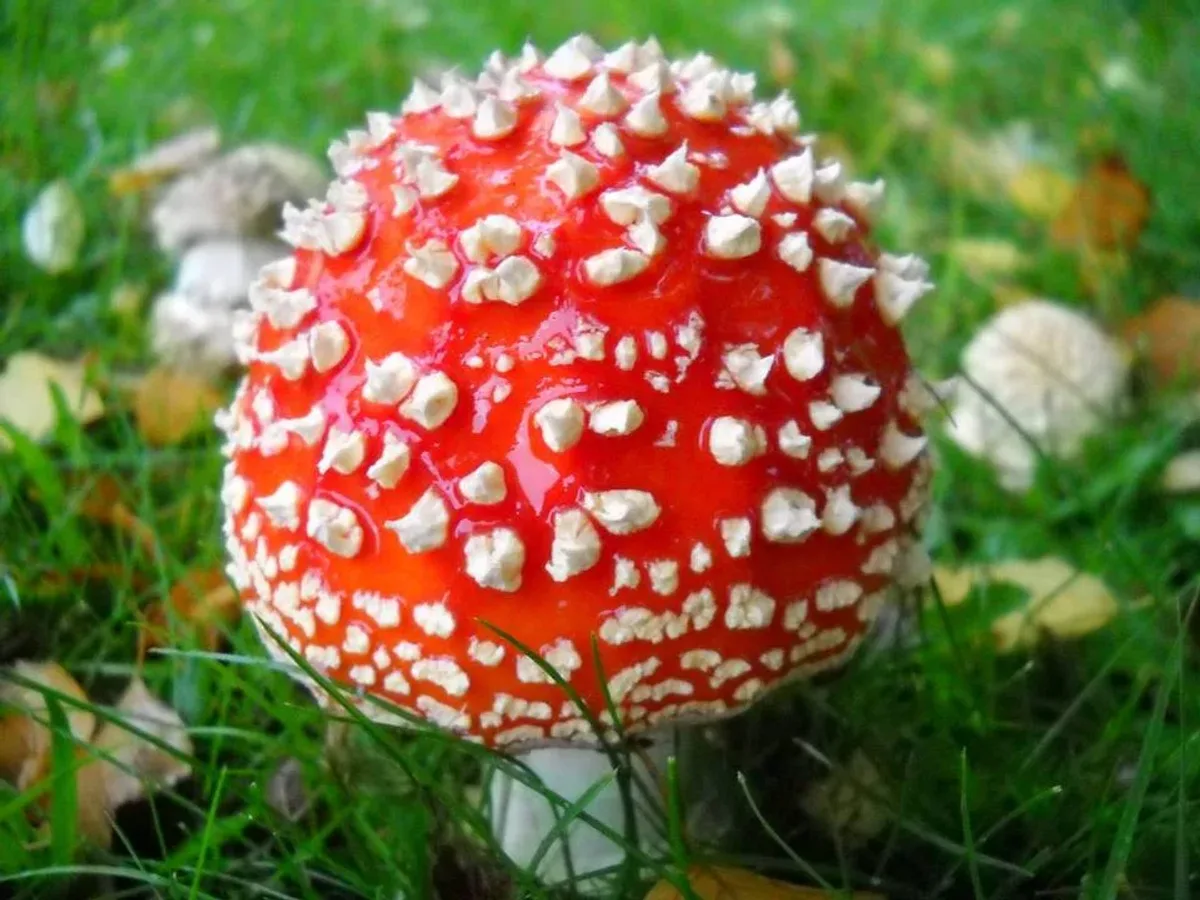 © Tim Sage (CC BY-SA)
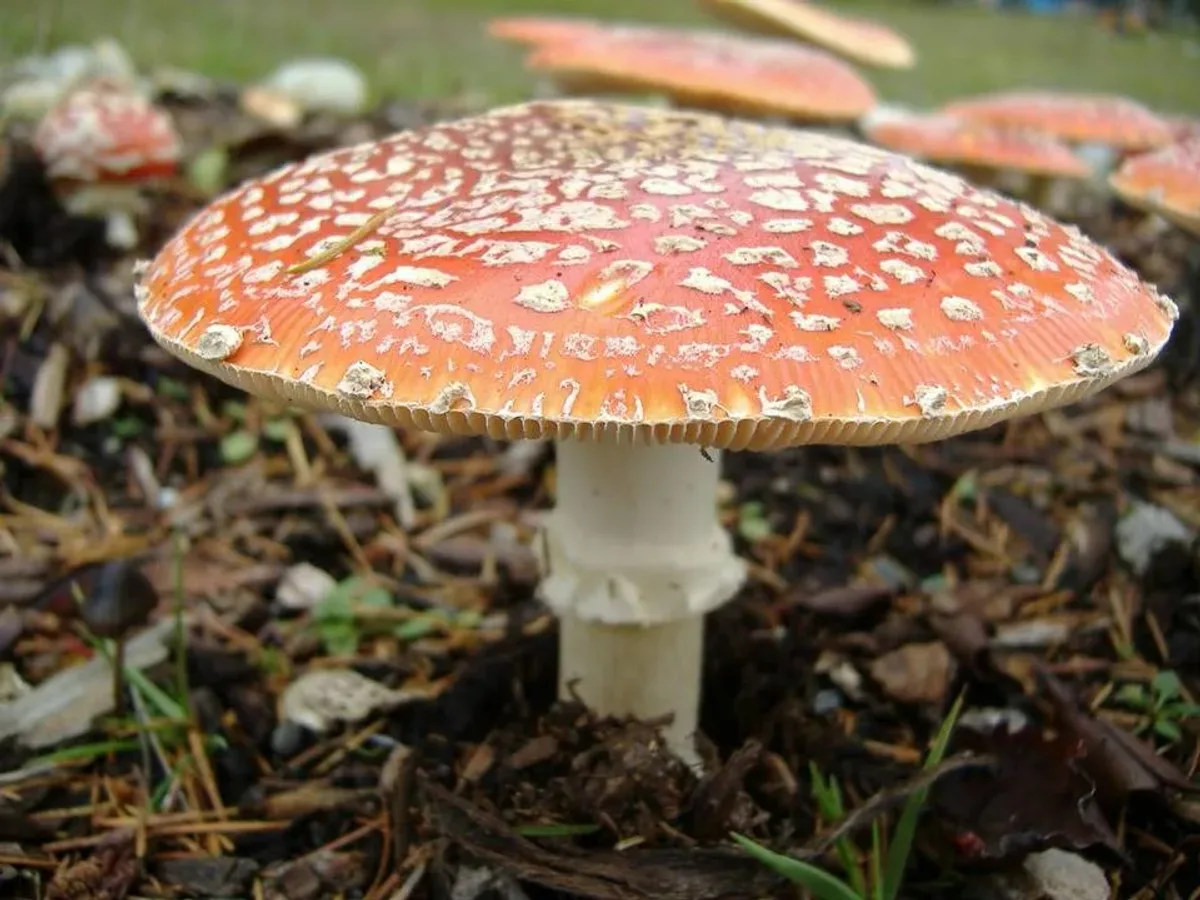 © Tim Sage (CC BY-SA)
 © Tim Sage (CC BY-SA)© Tim Sage (CC BY-SA)© Tim Sage (CC BY-SA)
Edible only with the right preparation - or safe for some people but not others. Learn the caveats first.
How to recognise it
A large, iconic Amanita with a vivid scarlet to blood-red cap (6-20 cm) covered in soft white warts that wash off in rain.
The stem is white with a pendant ring and a characteristic yellow to yellowish-buff cottony volva at the swollen base. This is the most reliable single feature separating this variety from the European fly agaric (var. muscaria), which has white volval material.
White free gills, white flesh, white spore print. Does not stain when cut.
Why it's dangerous
Rarely fatal in healthy adults if treated promptly, but severity can be unpredictable and dangerous for:
- children
- the elderly
- those with cardiac or respiratory conditions
- anyone consuming it in quantity
The psychoactive effects are not recreational in any predictable sense - the ratio of hallucinogenic to toxic dose is low and uncontrollable.
The species' greatest real-world danger in South America and Mexico is misidentification as the edible Amanita caesarea-type species (including Amanita jacksonii and related taxa). These are prized edible mushrooms in Mexico and the Andes, and their resemblance to the fly agaric at certain stages of development has caused accidental poisonings.
Any red-capped Amanita must be examined for gills, stem and volva colour before touching lips.
Toxin
The primary toxins are ibotenic acid (α-amino-3-hydroxy-5-isoxazoleacetic acid) and muscimol (5-aminomethyl-3-isoxazolol).
Ibotenic acid is a neuroexcitatory amino acid that acts at glutamate receptors; it is also a GABA-A agonist precursor.
Upon ingestion or drying, ibotenic acid decarboxylates to muscimol, which is 5-10 times more potent on a weight basis. Muscimol acts primarily as a GABA-A receptor agonist, producing sedative, hypnotic and hallucinogenic effects.
Muscarine is present only in trace concentrations (unlike in Inocybe and Clitocybe species) and does not drive the clinical picture.
Toxin content varies substantially between individual specimens and even between caps of the same collection.
Symptoms
Onset is rapid - typically 30 minutes to 2 hours after ingestion.
The syndrome includes nausea, vomiting, abdominal cramps, excessive salivation, drowsiness, confusion, dizziness and visual disturbances.
As muscimol effects deepen: agitation or stupor alternating with sedation, ataxia, delirium, and vivid hallucinations (often of distorted size perception, micropsia/macropsia).
In severe cases: convulsions, coma and respiratory depression.
Children and elderly individuals are at substantially higher risk of severe or life-threatening outcomes.
Fatalities are rare in healthy adults with supportive care but have been recorded.
Staying safe
Poisonous. Amanita muscaria var. flavivolvata contains ibotenic acid and muscimol and must not be eaten without specialised preparation - and even then the margin of safety is narrow and unacceptable.
In some cultures (notably Indigenous Siberian use of the European variety) the species has been used as a psychoactive, but this has no bearing on safety for foraging purposes:
- concentrations vary wildly between individual fruitbodies
- cooking does not destroy the toxins reliably
- the psychoactive and somatic effects are involuntary and can be severe
Do not attempt to detoxify by boiling or drying; drying actually converts ibotenic acid to the more potent muscimol.
There is no antidote. Emergency contact should be sought immediately if ingested.
Where & when it grows
Habitat
Strictly mycorrhizal with conifers (pines, firs, spruces) and occasionally oaks in montane and subalpine forest.
In South America and Mexico it follows pines and oaks up into the mountains at 1,500-3,500 m; in western North America it inhabits coastal and interior conifer forest.
Fruits singly or in loose groups in needle/leaf litter, recurring at the same site year after year.
When
Late summer through autumn and into early winter; timing follows the first heavy rains after the dry season.
Regional flushes:
- Andes and Mexican highlands: July-November
- California: September-December
A warm wet spell of 10-20 mm rain over several days, with soil temperatures cooling toward 8-15 °C, reliably triggers fruiting 7-14 days later.
How it grows
Solitary to scattered, never tufted.
The mycelial network is perennial and can persist for decades, producing fruiting bodies each year in roughly the same spots. Foragers in South America and Mexico often know specific trees where it appears reliably.
The young button pushes up as a white egg enclosed in the universal veil. As it expands, the veil breaks to leave warts on the cap and the distinctive yellow volval material on the basal bulb.
Fruiting conditions
A mycorrhizal autumn fruiter that requires a soaking rain event (20+ mm over 14 days) and cooling soil temperatures. In the Andes and Mexican highlands the trigger is the break of the summer rainy season; in California it follows the first autumn rains after the long dry summer. Fruiting typically 7-14 days after rainfall when soil temperatures are between 7 and 16 °C.
Look-alikes
The most important dangerous confusion is with Amanita caesarea (Caesar's mushroom, Europe) and its close New World relative Amanita jacksonii (American Caesar's mushroom).
Both are choice edible species with red-orange caps and yellow to orange gills, stems and flesh. That orange-yellow colouration on gills and stem immediately separates them from var. flavivolvata, which has white gills, white flesh and a white stem with only the volva yellow.
Additionally, the Caesar's mushroom group emerges from a distinctive intact egg-like white or yellowish volva (a free, cup-like sac), rather than the powdery yellow warts of var. flavivolvata.
Amanita caesarea does not occur naturally in the Americas; Amanita jacksonii (and related species such as A. arkansana) is its regional ecological counterpart.
A careless picker relying solely on cap colour could fatally confuse the toxic fly agaric with the edible Caesar's group.
Two other close relatives:
- Amanita muscaria var. guessowii (American yellow fly agaric of eastern North America) - closely related, yellowish-orange rather than red, and equally toxic.
- Amanita muscaria var. muscaria (European fly agaric) - essentially identical in biology but with white rather than yellow volval material; the distinction is a minor taxonomic one and it is equally toxic.
Several red-capped, yellow-gilled Amanita species in the Neotropics belong to the Caesar's mushroom functional group and are prized edibles locally. All share yellow to orange gills and flesh, and emerge from a white cup volva. These features immediately distinguish them from the fly agaric, but the cap colour overlap is strong enough that confirmation of gill and flesh colour is mandatory every time.
The American yellow fly agaric of eastern North America is orange-yellow rather than scarlet-red. Equally toxic. The colour difference is the primary field mark; both have the same yellow volval material at the base.
A choice edible with a vivid orange-red to scarlet cap superficially similar to the fly agaric. The decisive differences: A. jacksonii has YELLOW to orange gills, a yellow-orange stem, and yellow-orange flesh - none of these are present in var. flavivolvata, which has white gills, white stem (excepting the yellow volval patches) and white flesh. A. jacksonii also has a clean, intact, white sac-like volva (cup) rather than powdery yellow warts at the base. Never eat a red Amanita without confirming gill and flesh colour.
The European choice edible is not native to the Americas but is increasingly confused in educational contexts and in regions where it has been introduced. It also has yellow gills, orange-yellow stem, orange flesh, and emerges from a clear white egg sac - all features absent in the fly agaric. Gill colour is the single fastest separating feature.
Essentially the same species; the European variety has WHITE volval material (warts and basal girdles) rather than yellow. Toxicity is identical. Telling them apart in the field requires close examination of the volval colour; behaviour, habitat ecology and toxin profile are the same.
The panther cap is brown rather than red, with pure-white warts and a pronounced rim (collar) at the top of the volval bulb. It contains the same ibotenic acid / muscimol toxins and is arguably more dangerous per gram than the fly agaric. Cap colour distinguishes them easily in typical specimens, but pale fly agarics can approach the brown range - confirm the yellow volval material and red cap remnants.
A reference guide - never an edibility guarantee. When in doubt, leave it out.