Marbled death cap
Amanita marmoratasyn. Amanita marmorata subsp. marmorata
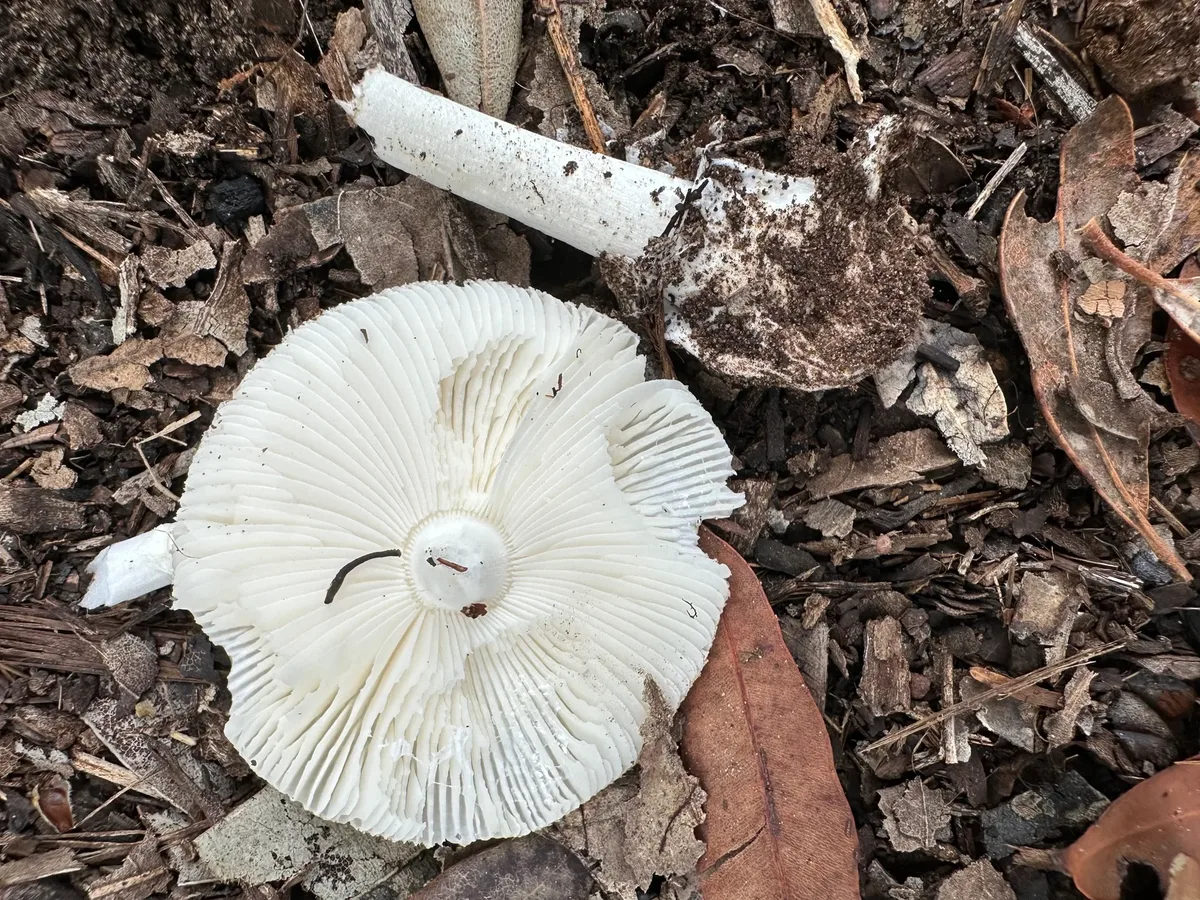 © prossington (CC BY)
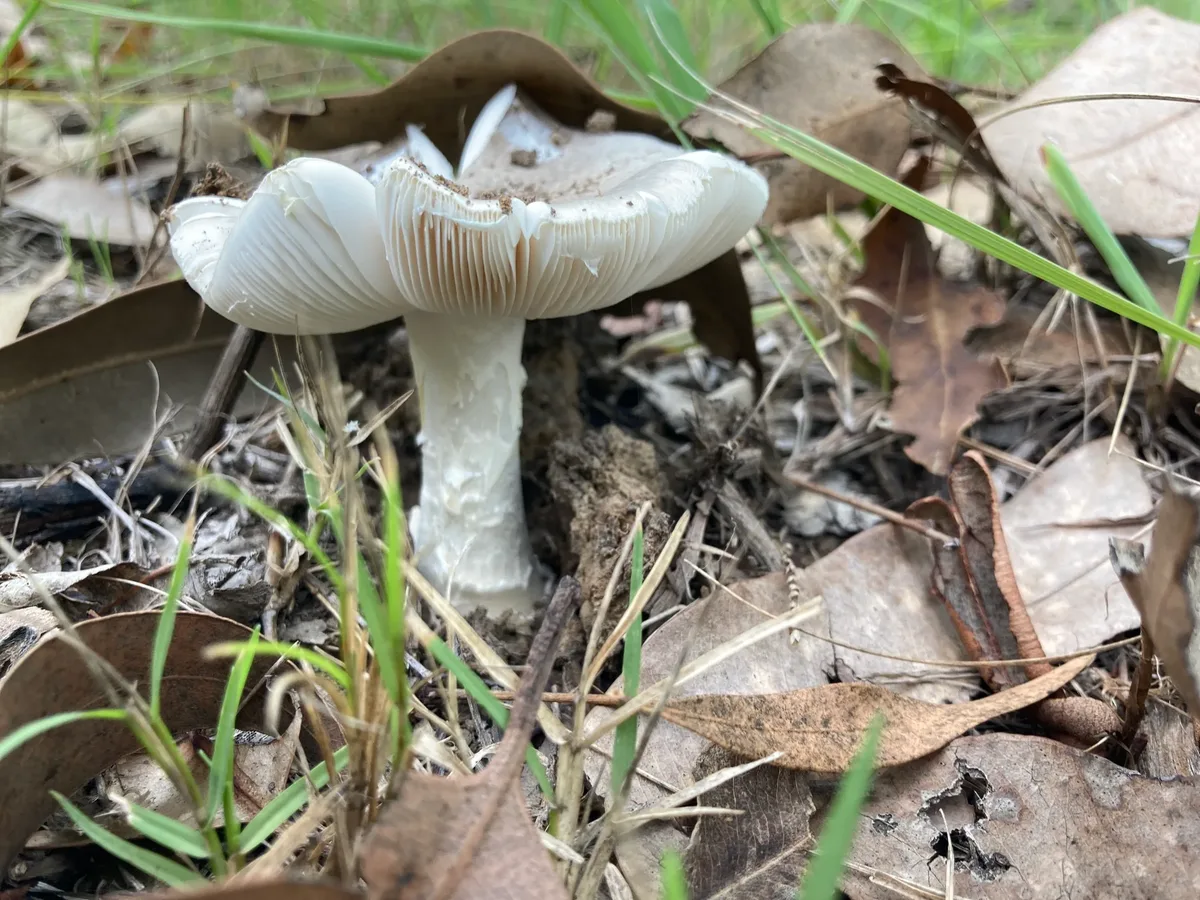 © Laura Fernández Winzer (CC BY)
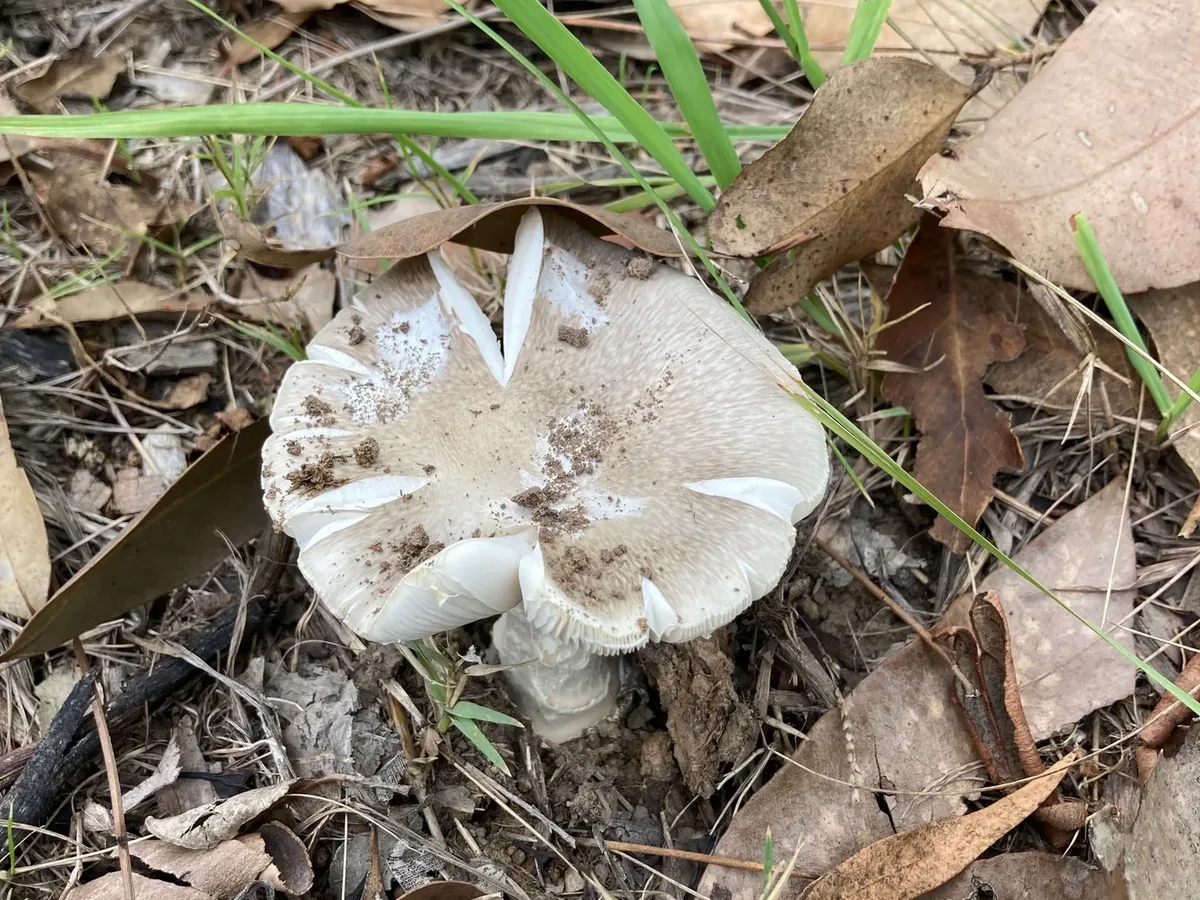 © Laura Fernández Winzer (CC BY)
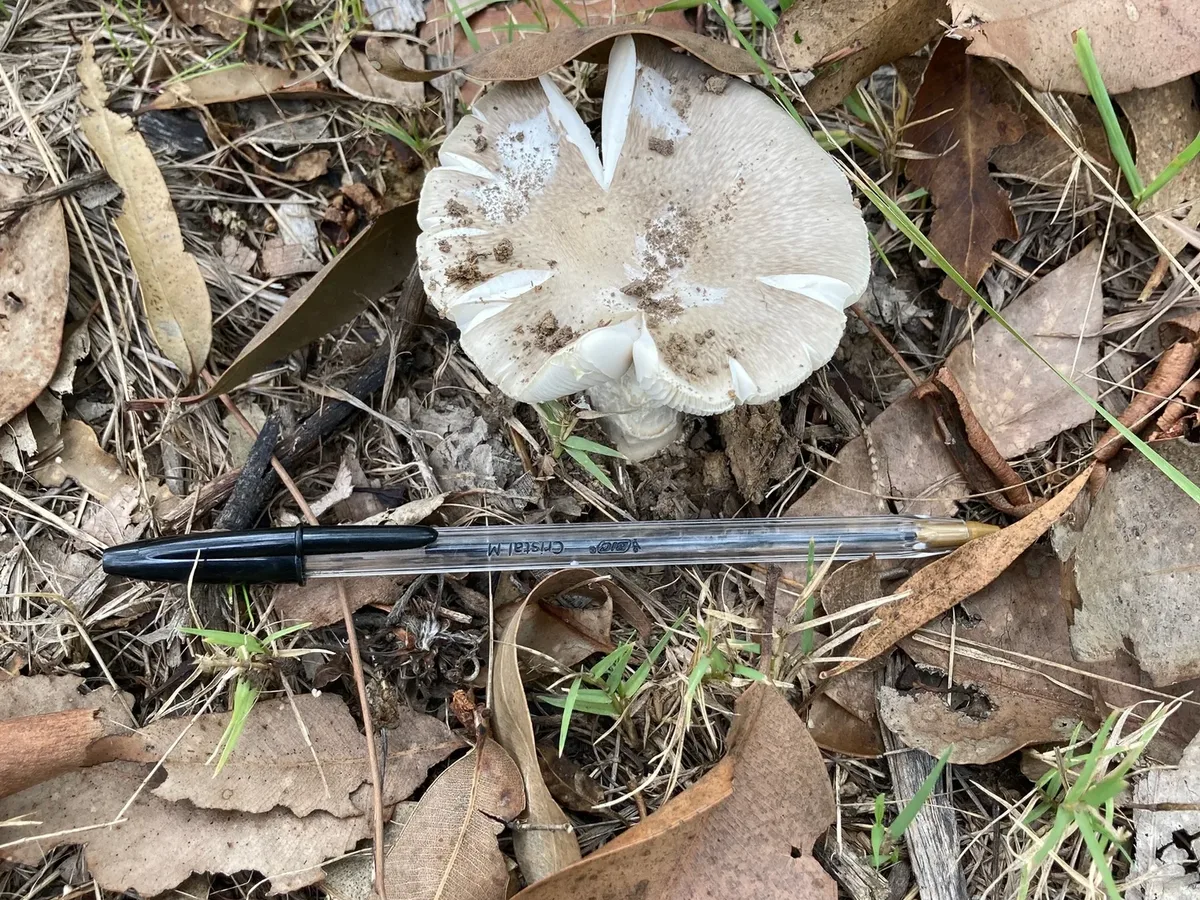 © Laura Fernández Winzer (CC BY)
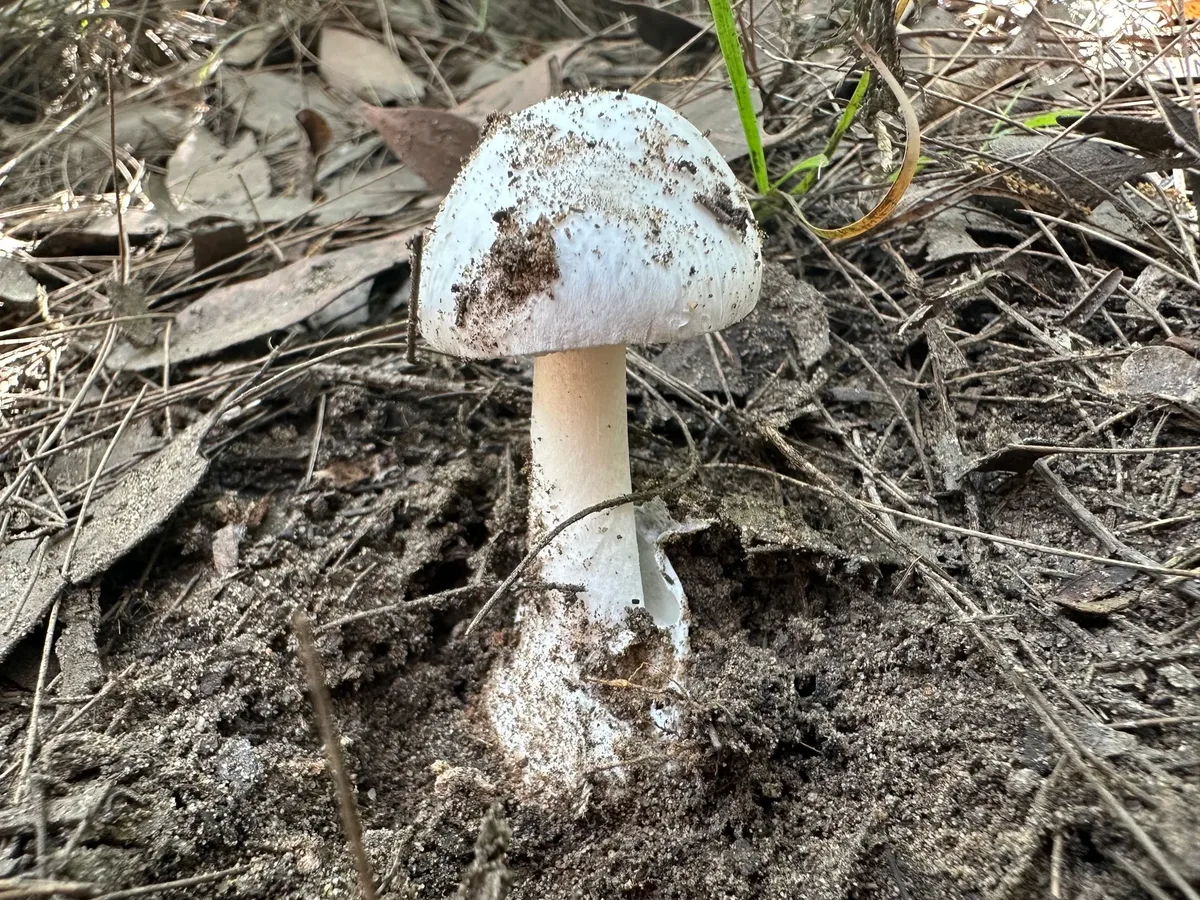 © prossington (CC BY)
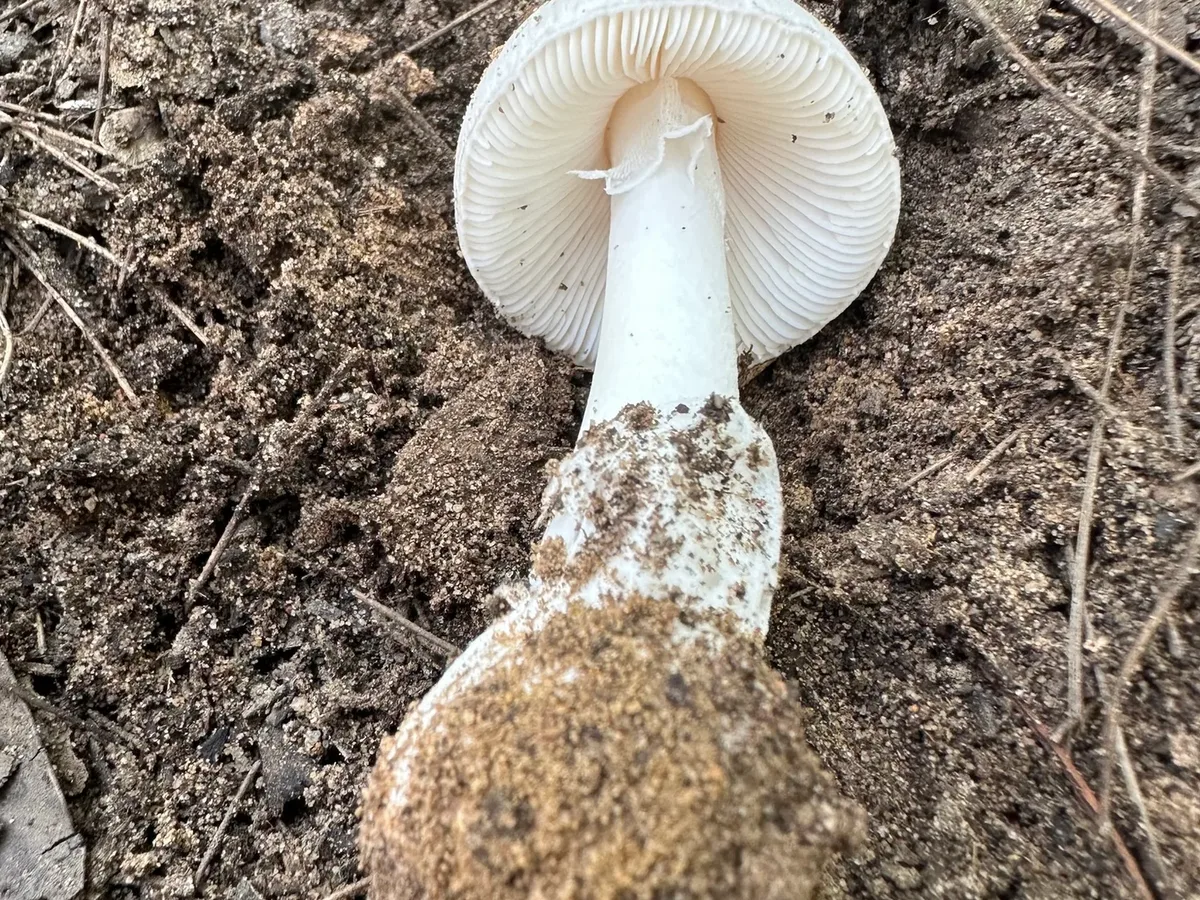 © prossington (CC BY)
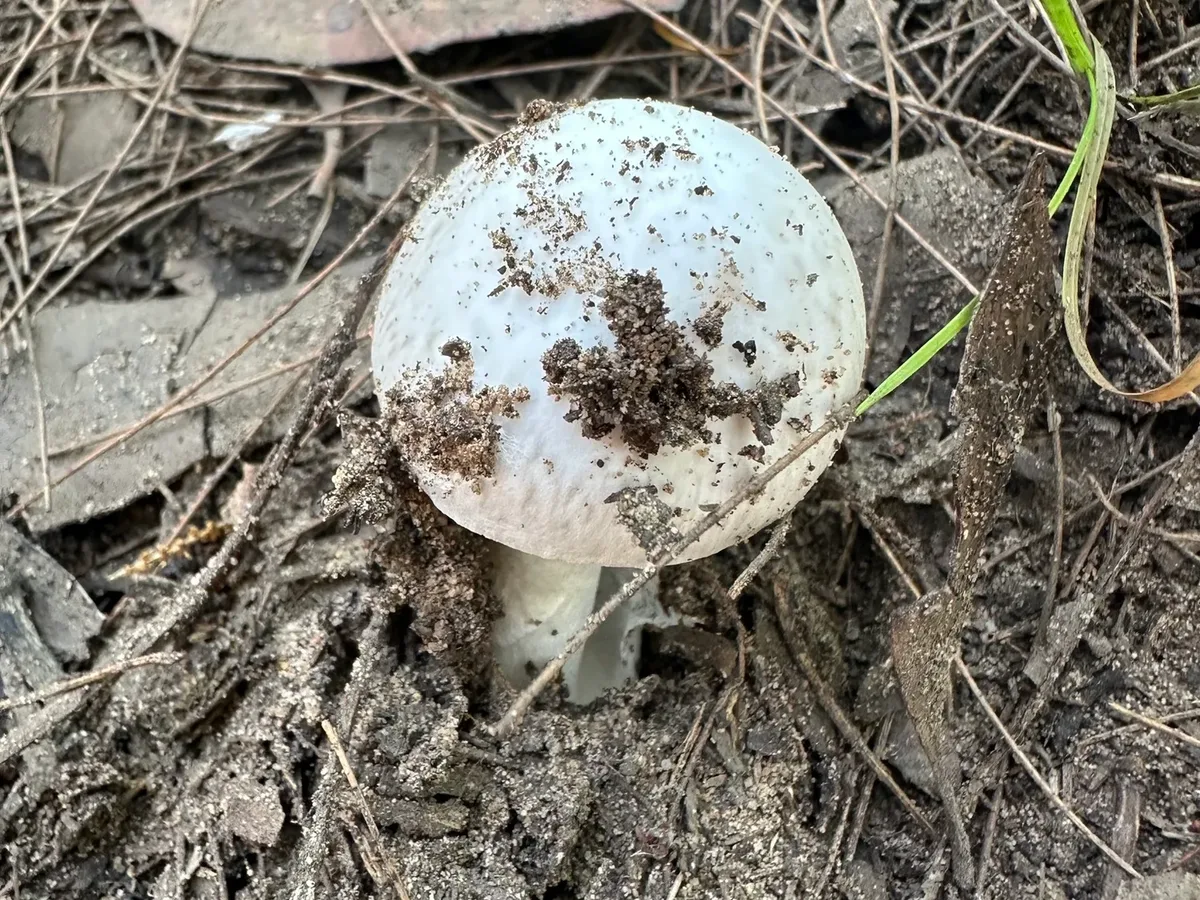 © prossington (CC BY)
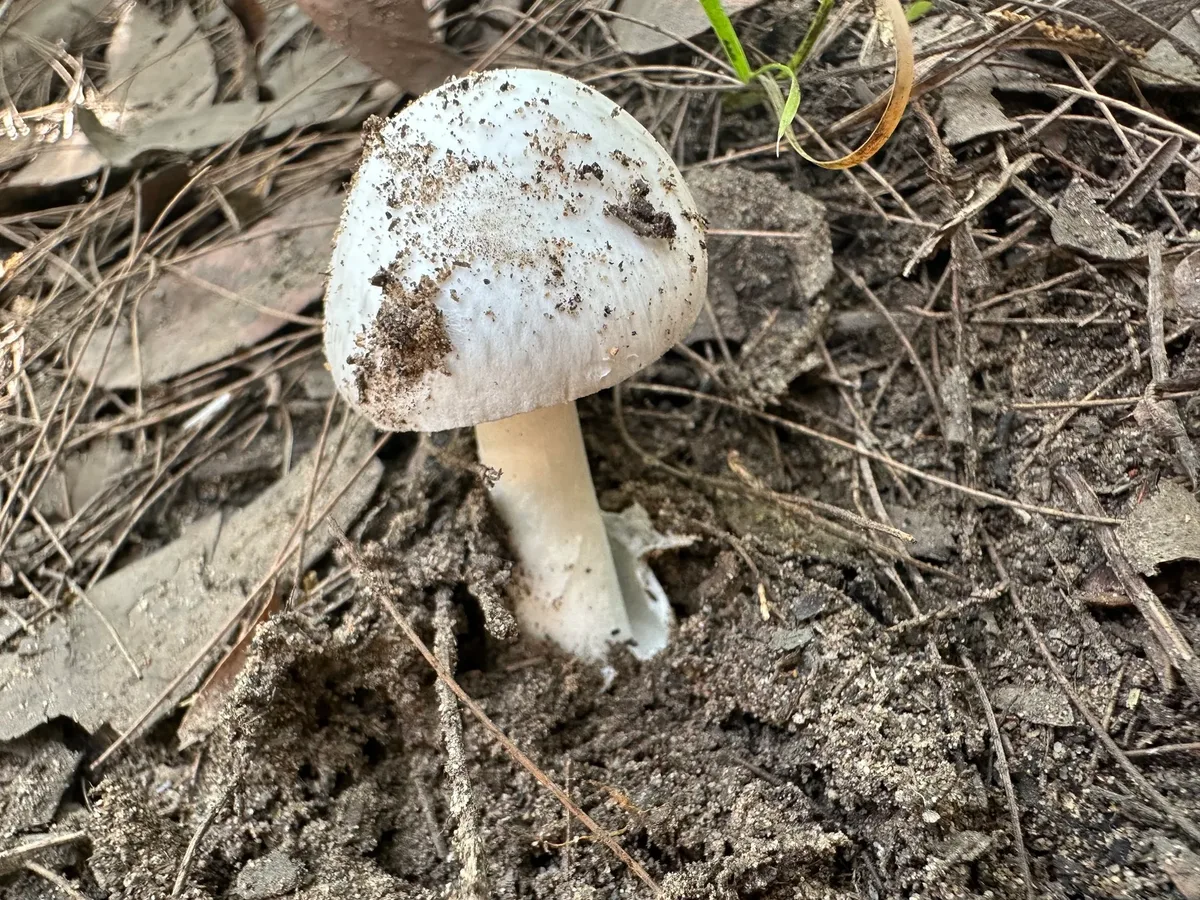 © prossington (CC BY)
 © prossington (CC BY)© prossington (CC BY)© Laura Fernández Winzer (CC BY)
Toxic - and the most serious cases can be fatal. Never eat it, and wash your hands after handling.
Never eat a mushroom you are not 100% sure of - check the look-alikes below, and always cook wild mushrooms.
How to recognise it
Cap
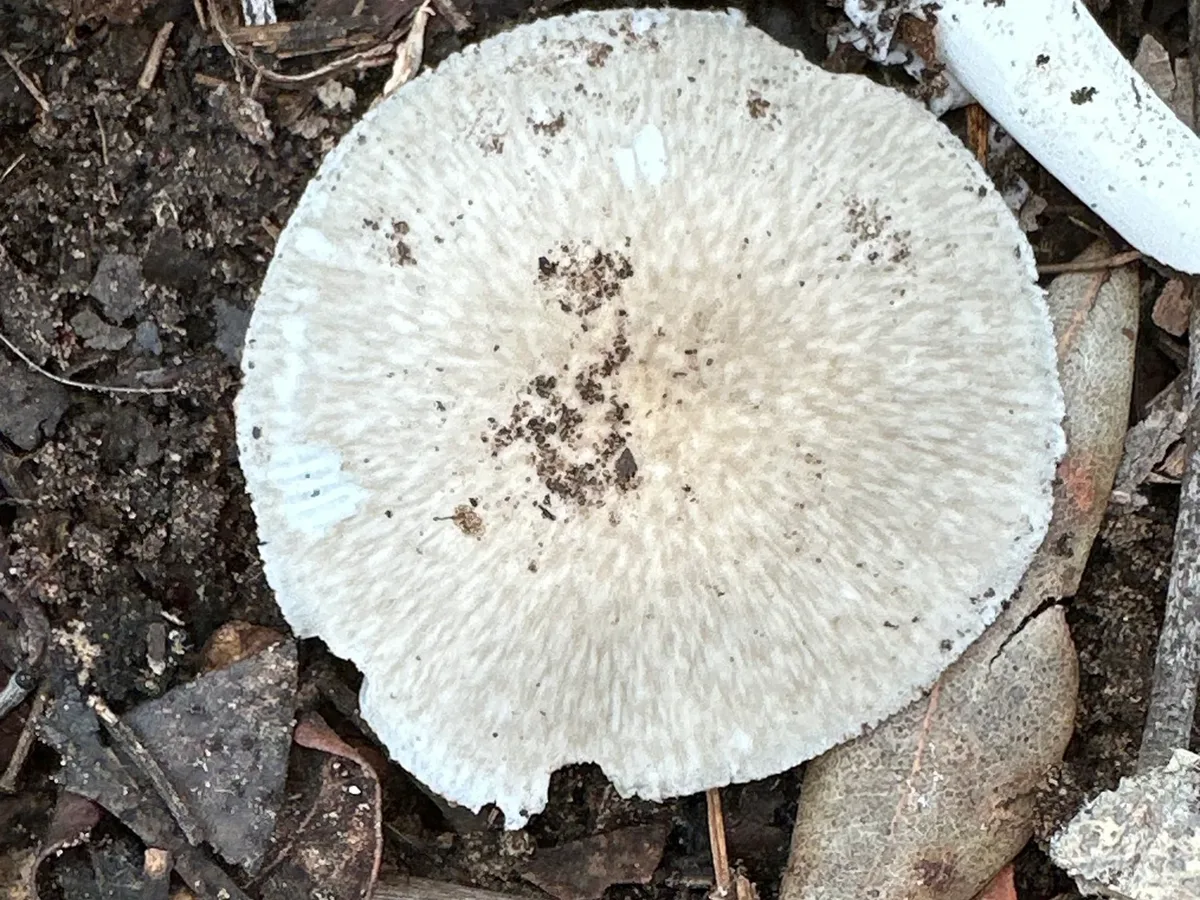
The cap is 40-100 mm across, starting as a neat hemisphere and flattening to broadly convex with age.
It is white to pale greyish-white, decorated with a striking marbled pattern - irregular greyish-brown patches left as the universal veil breaks up across the surface.
That marbling is what sets it apart from the introduced death cap (A. phalloides), which tends to greenish-yellow or pale olive-brown and lacks these strong patchy remnants. The cap edge is faintly grooved.
Gills
Gills are white, free from the stem, and tightly crowded.
Stem
The stem is white, 60-120 mm tall, with a thin drooping ring that is fragile and may collapse flat against the upper stem in older fruit bodies.
Most importantly: at the base of the stem, partly buried in the soil, sits a conspicuous sac-like white volva - always dig carefully to expose it and confirm it is there.
Flesh
Flesh is white throughout and does not stain. Spore print is white.
Why it's dangerous
Amanita marmorata is a native Australian species in the most dangerous genus of fungi known to science.
All members of Amanita section Phalloideae must be treated as deadly until proven otherwise by rigorous toxicological analysis.
The combination of three factors makes this species a significant public health hazard:
- delayed symptom onset
- the absence of an antidote
- its presence in native Australian bushland, where foragers may be falsely reassured that exotic-tree restrictions on A. phalloides apply
Toxin
Amatoxins - cyclic octapeptide toxins, principally α-amanitin - are strongly suspected, based on the species' membership in Amanita section Phalloideae and molecular phylogenetic proximity to confirmed amatoxin-producing species.
Alpha-amanitin irreversibly inhibits RNA polymerase II, halting protein synthesis and causing progressive cell death, primarily in hepatocytes (liver) and renal tubular cells.
The minimum lethal dose in humans is estimated at approximately 0.1 mg/kg body weight; a single specimen may contain several milligrams of amatoxin.
Amatoxin content has not been directly measured in A. marmorata specimens at the time of writing, but the phylogenetic and morphological evidence strongly points to its presence.
Symptoms
Amatoxin poisoning follows a characteristic three-phase course:
- 1Latent phase - no symptoms for 6-24 hours after ingestion, despite toxins already being absorbed.
- 2Gastrointestinal phase - sudden onset of severe abdominal cramps, profuse watery (sometimes bloody) diarrhoea, vomiting, and dehydration, lasting 1-3 days.
- 3Apparent recovery phase followed by organ failure - a brief improvement at 24-48 hours that misleads patients and caregivers, followed by progressive liver and kidney failure, jaundice, coagulopathy, hepatic encephalopathy, and multi-organ failure.
Fatalities typically occur 4-10 days after ingestion.
The critical danger of the latency phase is that patients may not seek care promptly; by the time symptoms appear, toxic damage is already severe.
Staying safe
This is a safety-critical species. It is a native Australian Amanita in the Phalloideae section, the same section responsible for the majority of the world's fatal mushroom poisonings.
Laboratory analyses of related native Australian Amanita species have detected amatoxins, and A. marmorata is morphologically, ecologically, and phylogenetically indistinguishable from an amatoxin-producing species. Treat it as deadly.
There is no antidote to amatoxin poisoning. If you believe you have eaten this species, seek emergency hospital care immediately - do not wait for symptoms.
Symptom onset is typically delayed 6-24 hours, during which the toxins are already causing irreversible liver damage.
Where & when it grows
Habitat
Home in dry sclerophyll eucalyptus forest and grassy woodland across south-eastern and south-western Australia, this is a true native - its mycelium has been threaded through Australian soil long before European settlement.
Unlike the introduced death cap (Amanita phalloides), which needs exotic oaks and chestnuts, A. marmorata partners with native Eucalyptus in pristine bushland.
That distinction carries a critical safety implication: foragers who believe they are safe picking mushrooms in native bush, far from any exotic trees, are wrong in areas where this species is present.
When
Autumn to early winter (March-July in the Southern Hemisphere), with the main flush in April-May.
Fruiting is triggered by the combination of post-summer rains and cooling soil temperatures. Because Australia's autumn rains are irregular, fruiting can be sporadic in dry years.
How it grows
Mycorrhizal, forming obligate symbioses with Eucalyptus and related Myrtaceae.
Fruit bodies emerge singly to loosely scattered, typically arising from a buried volva that may not be visible until you carefully scrape away leaf litter and soil around the base.
The volva is a critical identifying feature - always dig to confirm its presence before drawing any conclusions.
Fruiting conditions
Autumn fruiter in the Southern Hemisphere; flushes follow soaking rains as soil cools below approximately 18 °C. Peak April-May.
Look-alikes
The primary danger is confusion with Amanita phalloides (death cap), especially white or pale-coloured forms of that introduced species. Both have a white volva, white ring, white gills, and amyloid spores.
Amanita marmorata's distinctive marbled cap surface is the most useful distinguishing character, but this patterning can fade in wet conditions.
The native paddy melon mushroom and various edible Agaricus species are occasionally confused with pale Amanita species by inexperienced foragers. However, Agaricus species have pink-to-brown gills and a dark spore print and lack a volva entirely.
The introduced Amanita phalloides is associated with exotic oaks and chestnuts; A. marmorata grows with native Eucalyptus - but this habitat distinction is NOT a reliable safety cue, because the two species can theoretically co-occur if exotic trees are planted near native bush.
The introduced death cap and A. marmorata share white gills, a membranous ring, a sac-like volva, and amyloid spores. A. phalloides is typically greenish-yellow to pale olive-brown and is found only under introduced exotic trees (oaks, chestnuts). A. marmorata has a white to pale grey cap with a marbled velar-patch pattern and grows under native Eucalyptus. Both are deadly - this distinction matters for identification only, not for safety.
The European destroying angel (occasionally introduced in Australia with exotic plantings) is pure white without mottling, with a more strongly conical cap that rarely flattens, and a grooved ring. A. marmorata has a marbled cap surface. Both are deadly amatoxin-containing species.
Agaricus species have pink gills when young that turn chocolate-brown to black at maturity, a dark (brown-black) spore print, and no volva at the base. A. marmorata has white gills throughout, a white spore print, and the diagnostic sac-like volva.
Grisettes (Amanita section Vaginatae) have a volva but lack a ring entirely. The absence of a ring is a reliable distinction. Grisettes are considered edible when cooked, but should only be collected by experts who can confirm the absence of a ring with certainty.
The edible paddy straw mushroom also has a volva but belongs to an entirely different family. It lacks a ring, has pink to salmon gills at maturity and a pink spore print, and is found on decaying organic matter (not associated with trees). A. marmorata has white gills, a white spore print, and a membranous ring.
A reference guide - never an edibility guarantee. When in doubt, leave it out.