Kotohira Amanita
Amanita kotohiraensis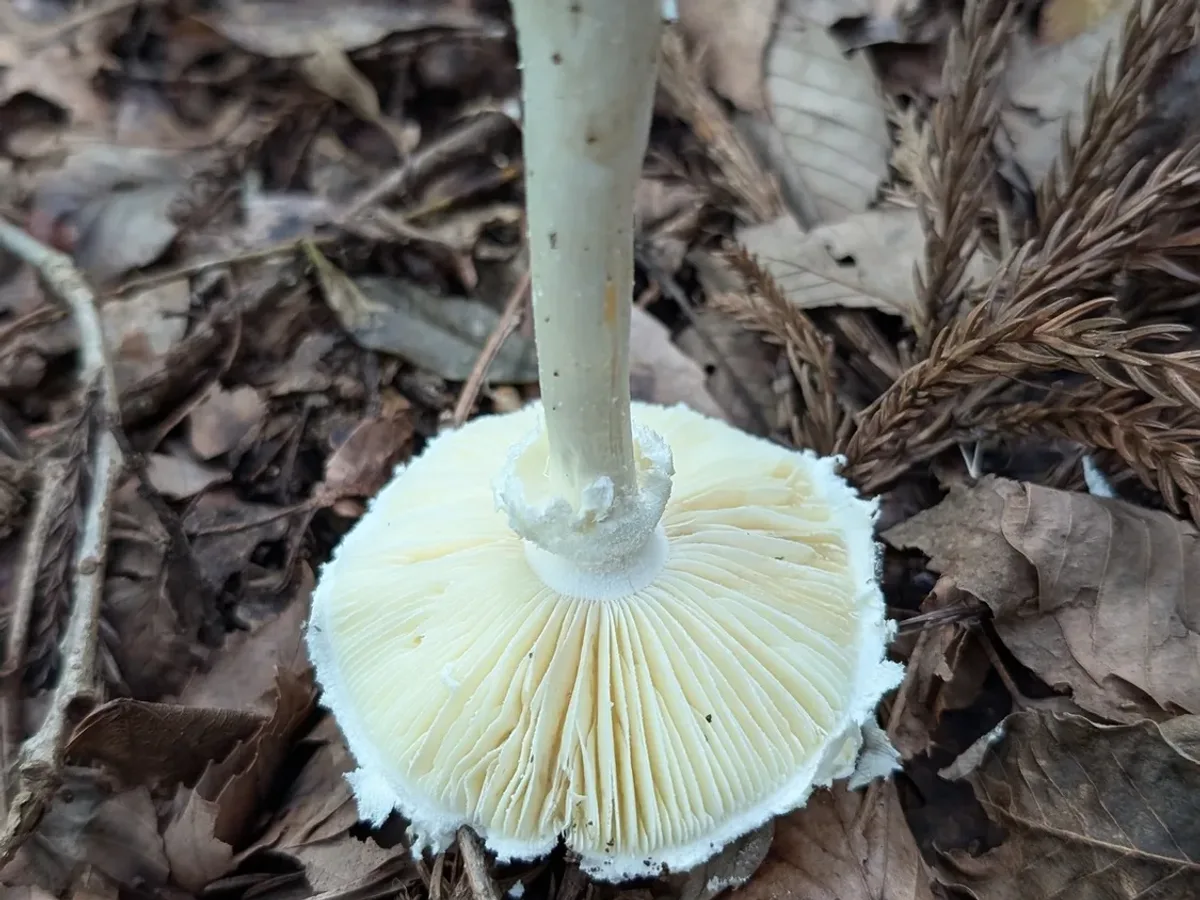 © Atsushi Nakajima (CC BY)
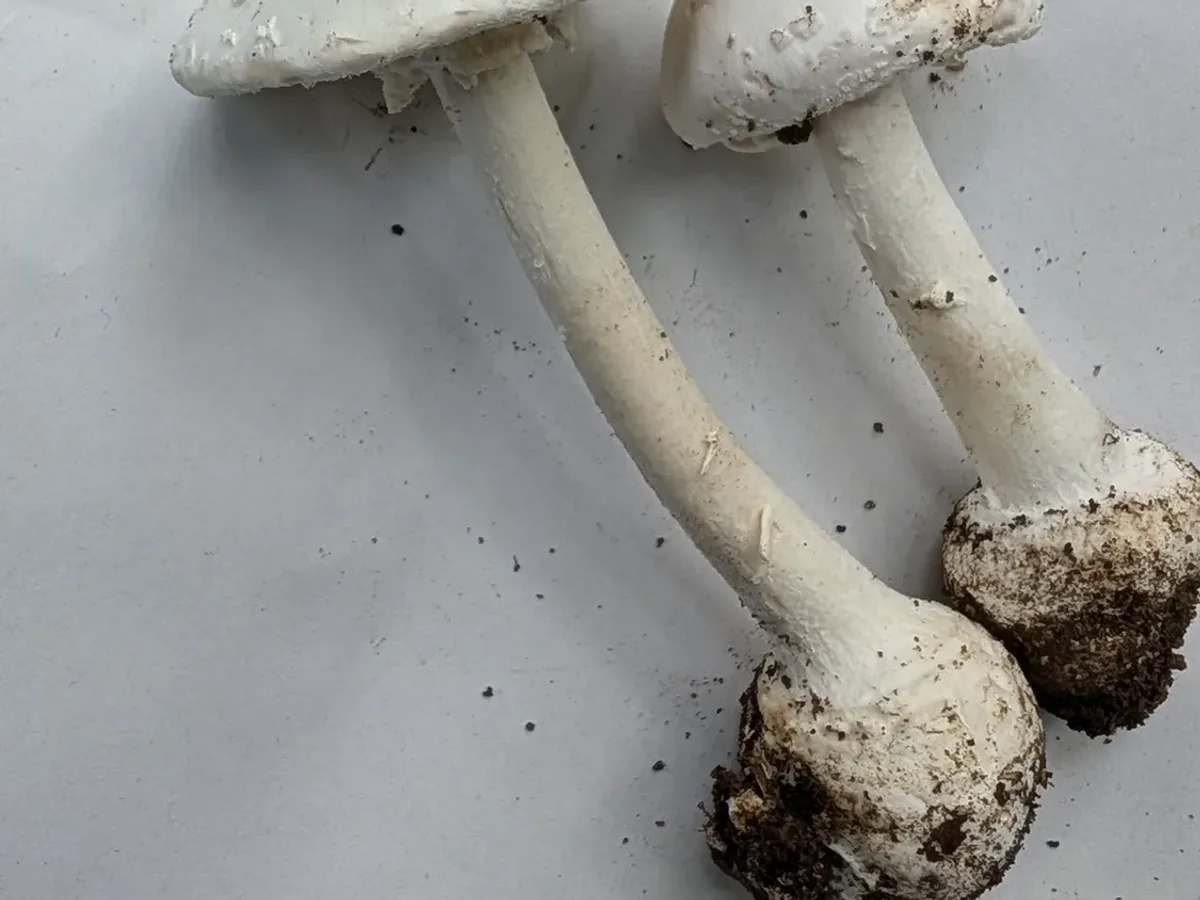 © Atsushi Nakajima (CC BY)
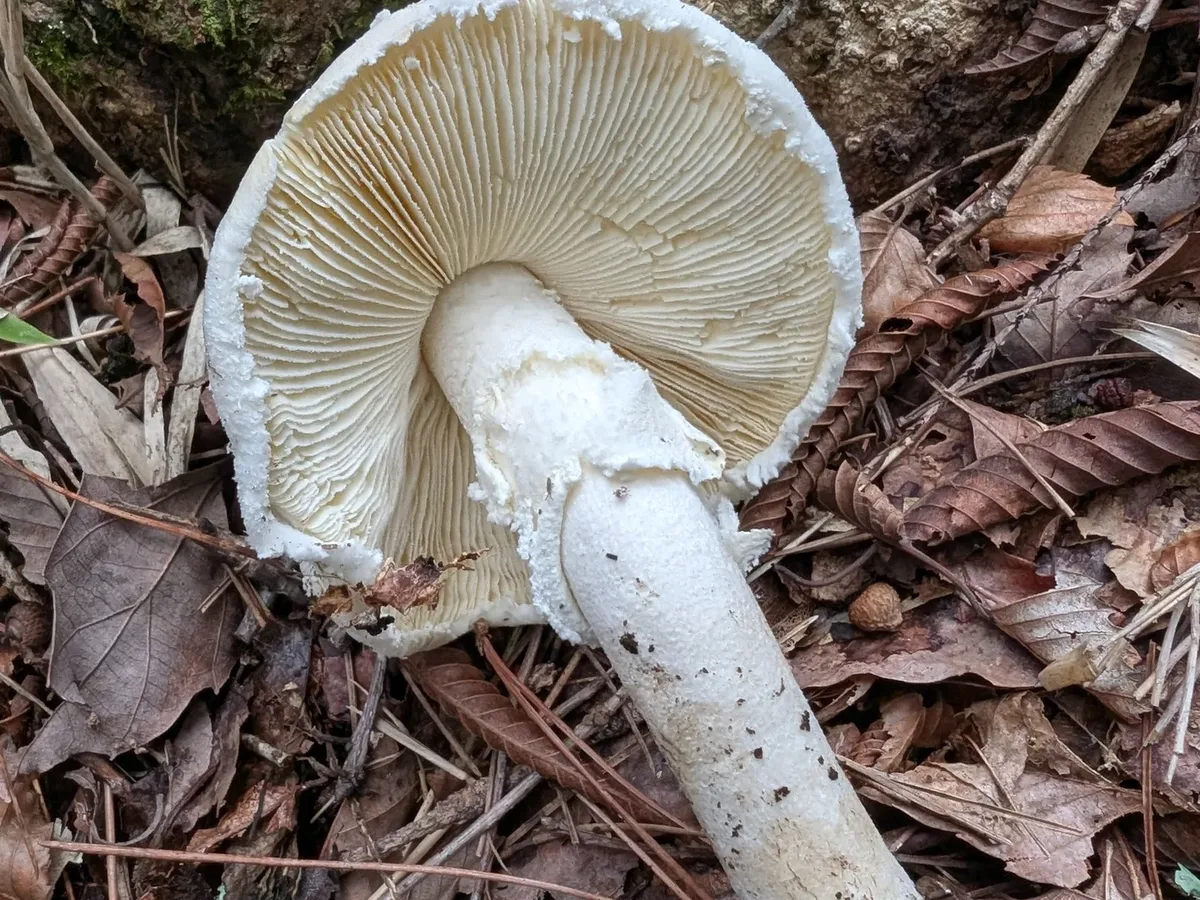 © Atsushi Nakajima (CC BY)
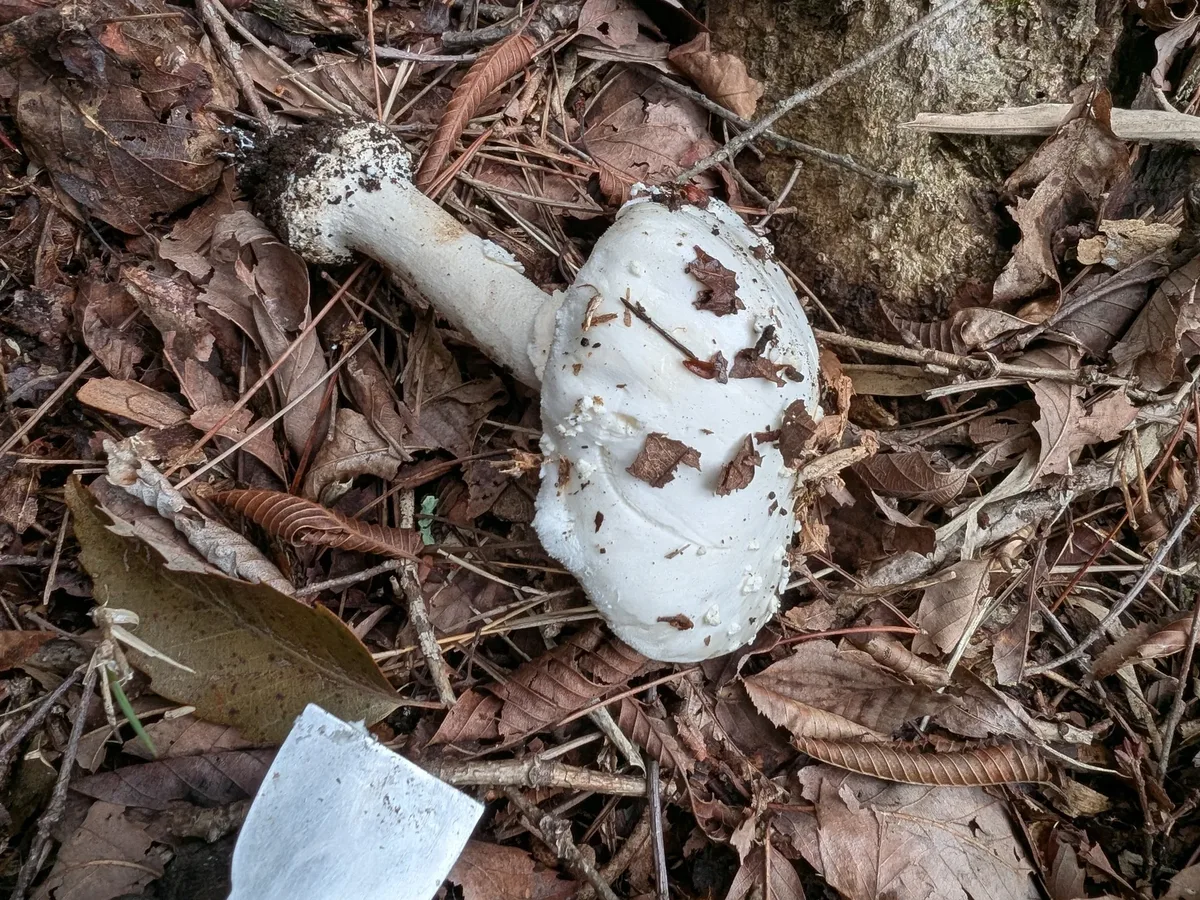 © Atsushi Nakajima (CC BY)
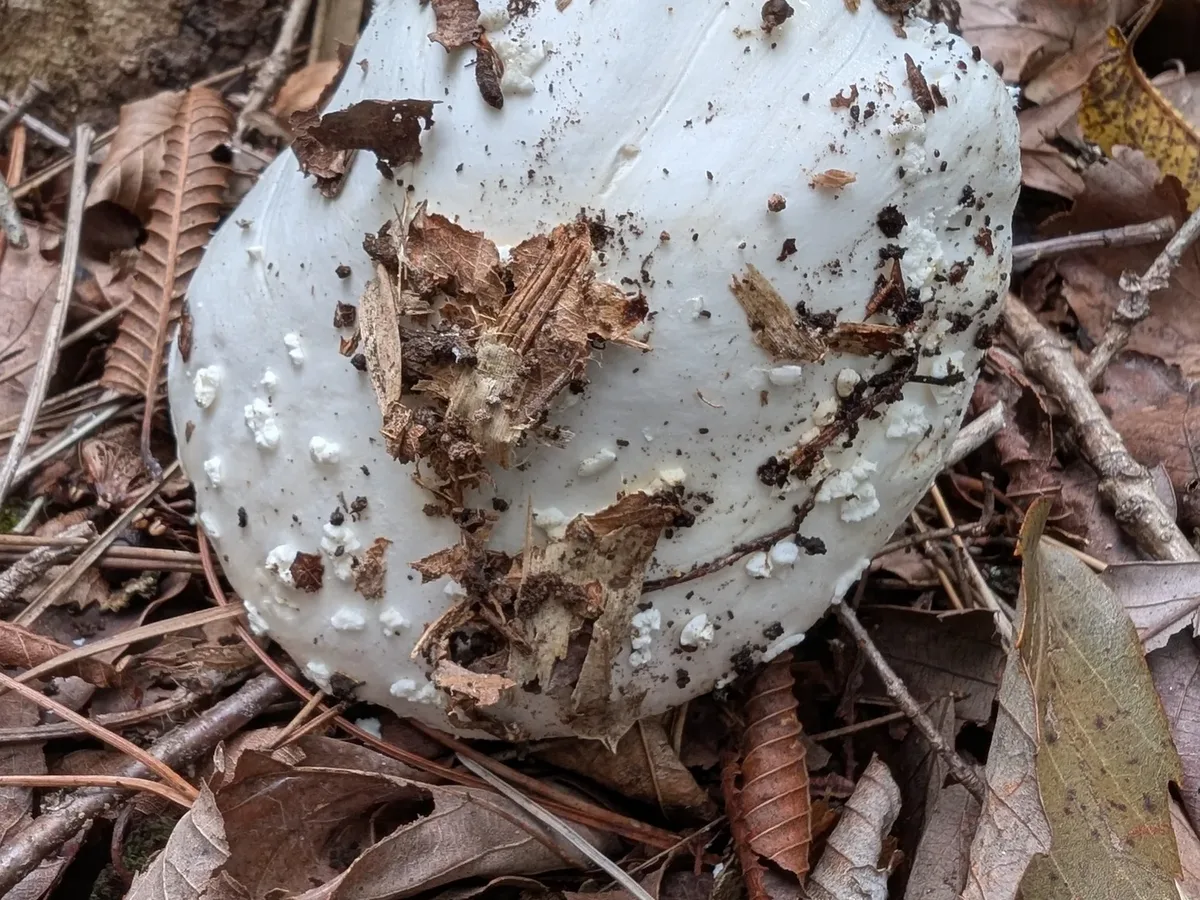 © Atsushi Nakajima (CC BY)
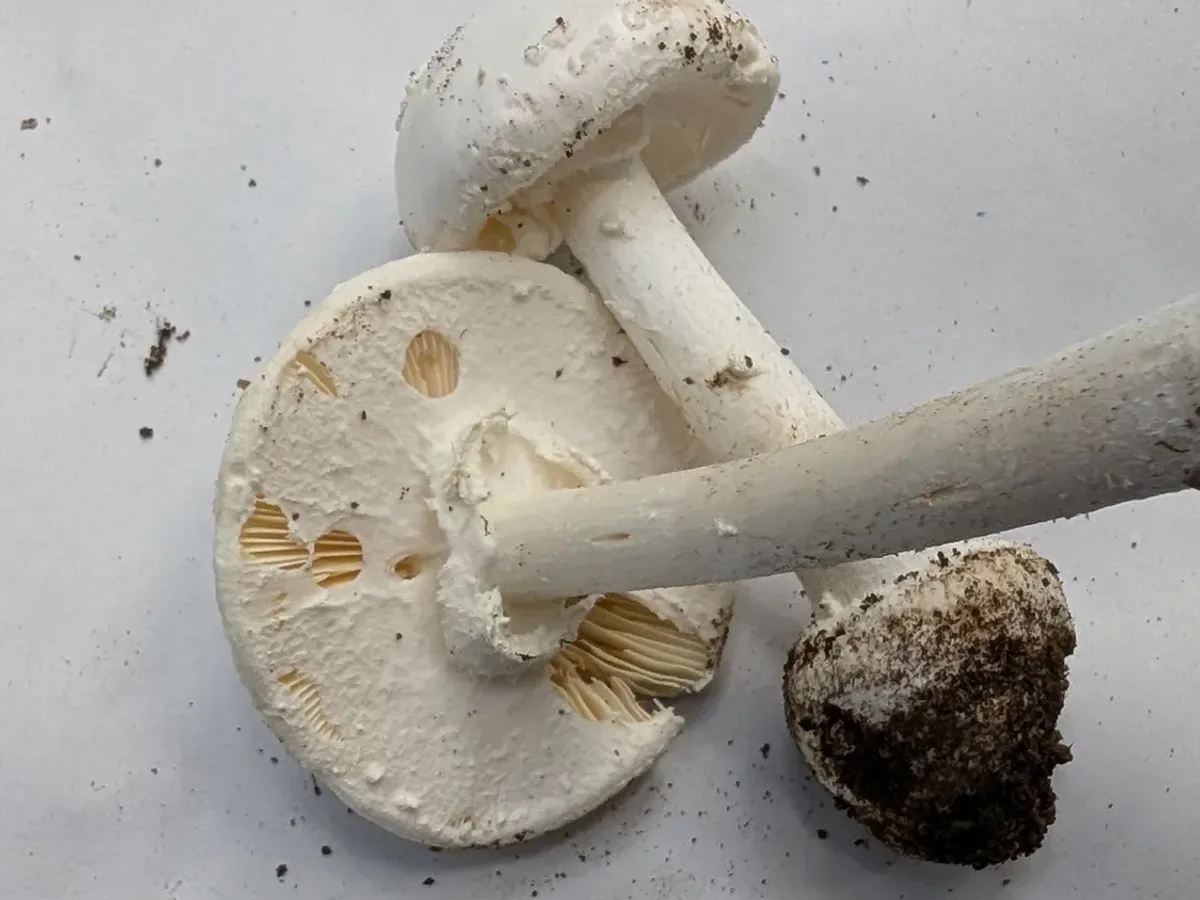 © Atsushi Nakajima (CC BY)
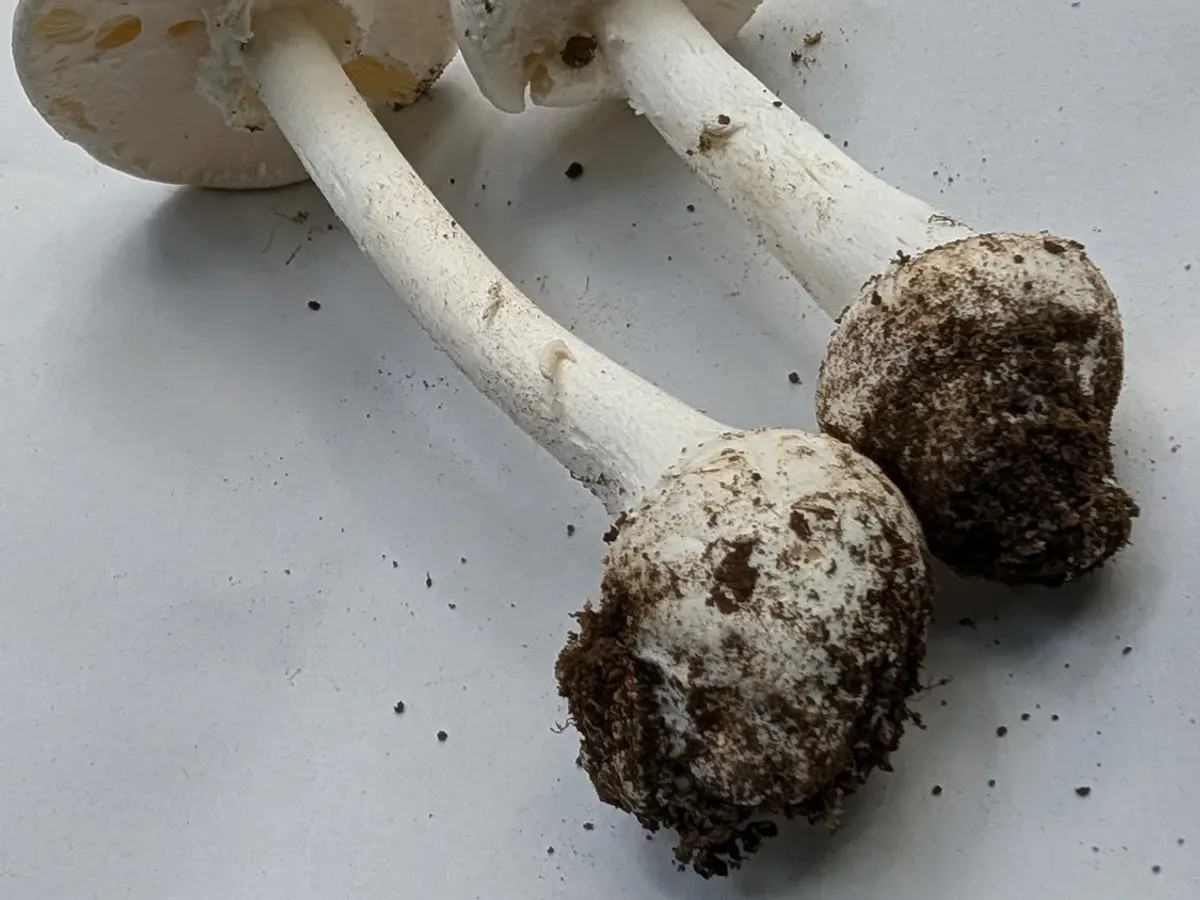 © Atsushi Nakajima (CC BY)
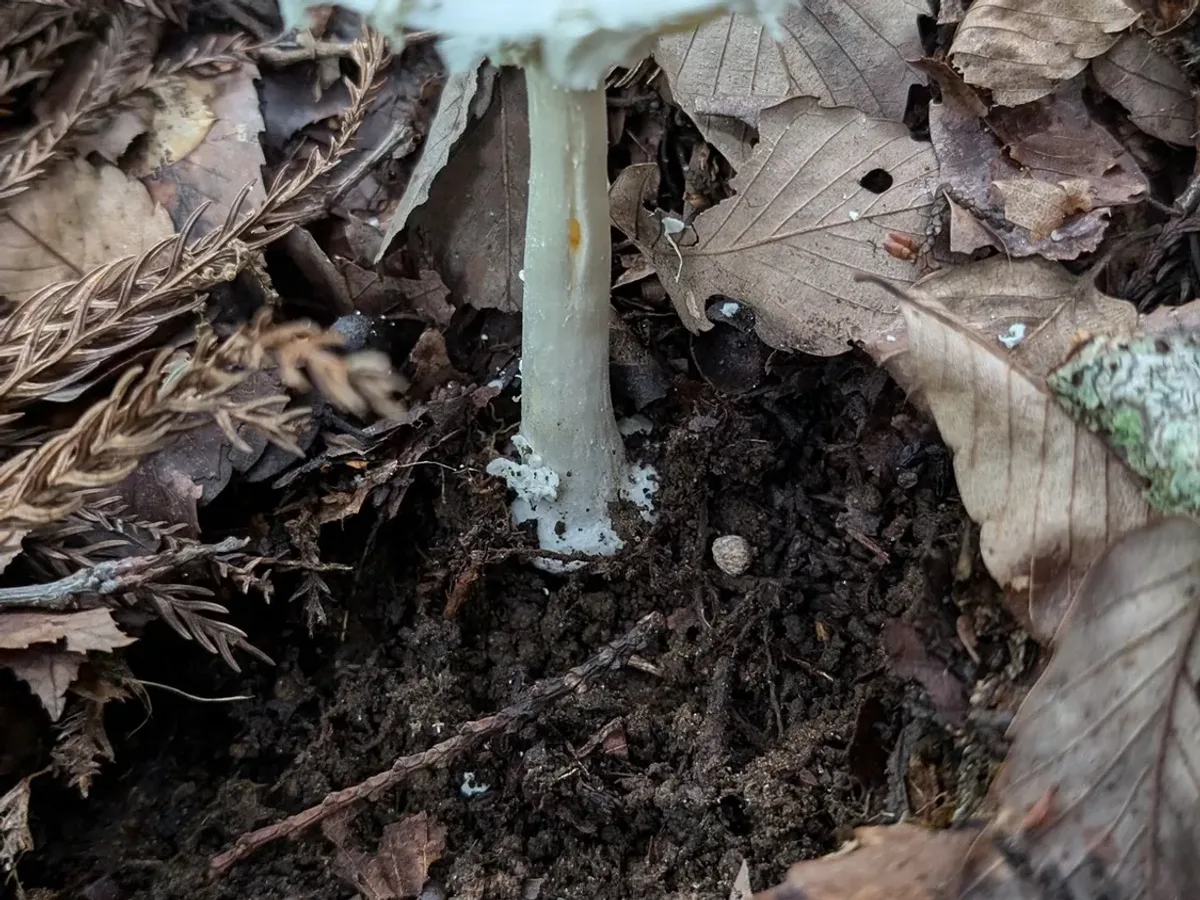 © Atsushi Nakajima (CC BY)
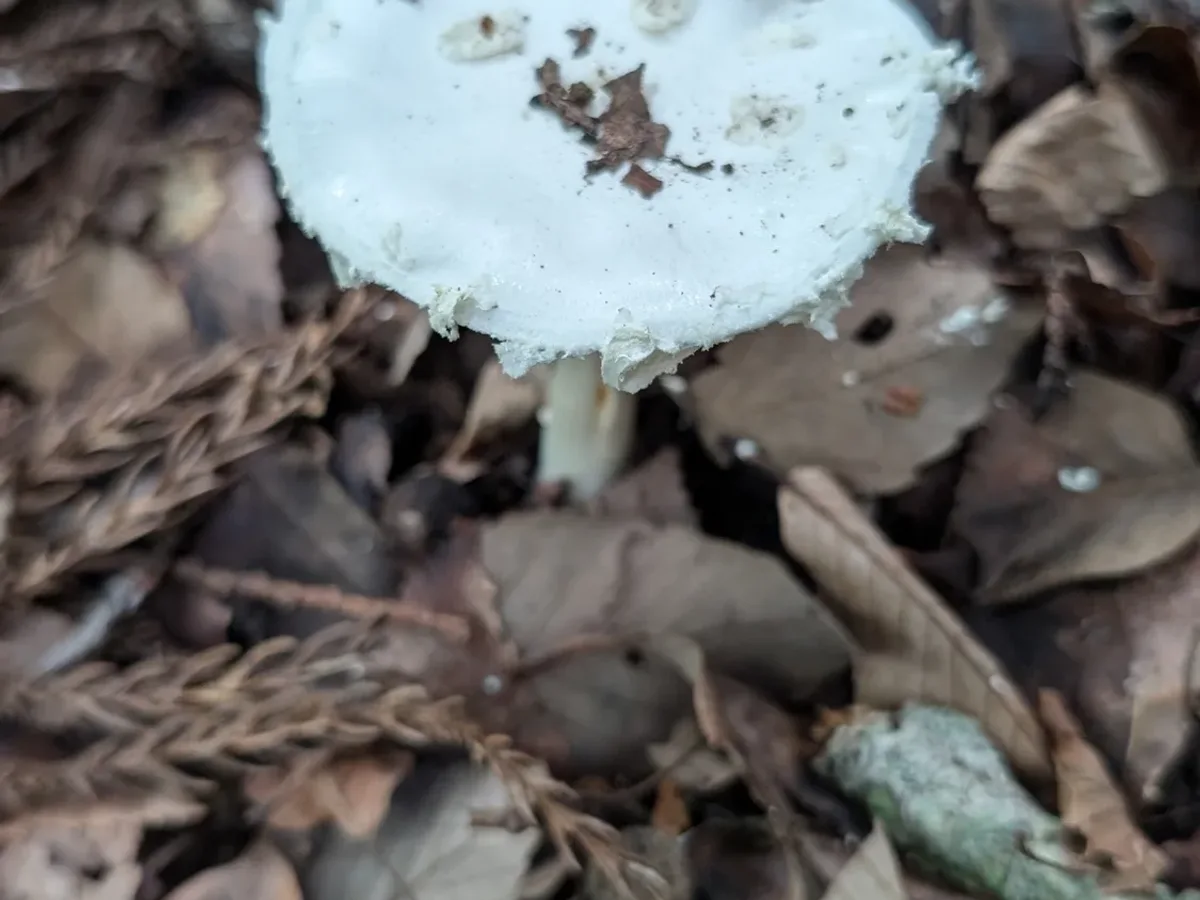 © Atsushi Nakajima (CC BY)© Atsushi Nakajima (CC BY)© Atsushi Nakajima (CC BY)
Toxic - and the most serious cases can be fatal. Never eat it, and wash your hands after handling.
Never eat a mushroom you are not 100% sure of - check the look-alikes below, and always cook wild mushrooms.
How to recognise it
Amanita kotohiraensis is a medium-sized, entirely white to pale ivory mushroom belonging to the deadly Phalloideae section of the genus Amanita.
Cap
The cap (40-90 mm) starts egg-shaped and gradually broadens to nearly flat with age.
Its most distinctive surface feature is a dusting of soft white powdery or granular warts - remnants of the universal veil - which give the cap a finely mealy texture. In wet weather, these warts may partly wash away, leaving the cap looking completely smooth and clean white.
That spotless, unremarkable appearance is exactly what makes this species so hazardous: it has none of the olive-green colouration typical of Amanita phalloides and could easily pass for a harmless all-white mushroom to someone not looking closely.
Gills
The gills are white, crowded, and free from the stem.
Stem
The stem is white, 60-130 mm tall, and carries a membranous, pendant white ring that is often fragile and may droop or collapse against the stem as the fruit body matures.
At the base, the stem arises from a firm white volva - a bag-like sac that is one of the most important identification features and is usually buried in the soil. Always dig carefully at the base to expose it before drawing any conclusions.
Flesh
The flesh is entirely white and does not stain when cut.
Spore print white; spores amyloid under the microscope.
Why it's dangerous
Amanita kotohiraensis is one of Japan's native amatoxin-containing Amanita species. It is ecologically distinct from the more widely known Amanita phalloides (most commonly an introduced species in Japan) but is equally lethal.
The white, unassuming appearance and occurrence in broadleaved forest environments where edible mushrooms are commonly gathered make it a significant poisoning risk for foragers in western Japan.
The rule is absolute: any all-white mushroom with ring, volva, and white gills found in Japanese forest must be treated as potentially lethal and never eaten.
Toxin
Amatoxins, specifically alpha-amanitin and related cyclic octapeptide toxins, have been detected in Amanita kotohiraensis.
Alpha-amanitin binds irreversibly to RNA polymerase II, the enzyme responsible for transcribing DNA into messenger RNA in eukaryotic cells. By blocking this fundamental process, amatoxin causes progressive cell death primarily in hepatocytes (liver cells) and renal tubular epithelium (kidneys).
The lethal dose in humans is estimated at approximately 0.1 mg alpha-amanitin per kilogram of body weight. A single medium-sized fruit body may contain several milligrams of amatoxins, far exceeding the lethal dose for an adult.
Because the gastrointestinal tract readily absorbs amatoxins, and they undergo enterohepatic recycling - reabsorbed from the gut after being excreted in bile - toxin exposure continues long after the mushroom material has been digested. This is why simply inducing vomiting is insufficient treatment.
Symptoms
Amatoxin poisoning follows a three-phase clinical course:
- 1Latent phase - no symptoms for 6-24 hours (sometimes up to 48 hours) after ingestion, despite ongoing toxin absorption and the start of cellular damage. This delay is the most dangerous feature because patients do not seek care and may be falsely reassured.
- 2Gastrointestinal phase - sudden onset of severe abdominal pain, profuse watery (sometimes bloody) diarrhoea, nausea, and vomiting, beginning at 6-24 hours and lasting 1-3 days; dehydration and electrolyte imbalance can be severe.
- 3Hepatorenal failure phase - after a deceptive apparent improvement at 24-72 hours, progressive liver and kidney failure develops: jaundice, coagulopathy (abnormal bleeding), rapidly rising liver enzymes, hepatic encephalopathy (confusion, then coma), and cessation of urine output.
Without aggressive medical intervention, including silibinin infusion and in severe cases liver transplantation, the fatality rate in serious poisonings is high. Death typically occurs 4-10 days after ingestion.
Staying safe
Amanita kotohiraensis belongs to Amanita section Phalloideae, the deadliest group of fungi known to science, responsible for the vast majority of fatal mushroom poisonings worldwide. This species has been confirmed to contain amatoxins.
The clean-white, visually inoffensive appearance offers no warning of its lethality. There is no antidote to amatoxin poisoning. Eating even a small portion of a single fruit body can cause irreversible liver and kidney failure.
If you suspect ingestion, do not wait for symptoms - seek emergency hospital care immediately, as symptoms are typically delayed 6-24 hours during which severe internal damage is already occurring. State clearly that Amanita poisoning is suspected.
Where & when it grows
Habitat
This species lives as a mycorrhizal partner with broadleaved trees, predominantly oaks and chestnuts, in the warm deciduous and mixed forests of western Japan.
It is known primarily from Shikoku island - the type locality is near the Kotohira-gu shrine in Kagawa Prefecture - and from adjacent parts of Honshu.
It favours the forest floor of humid, low-to-mid elevation woodland and appears to be a native member of the Japanese forest mycobiota rather than an introduced species.
The woodland it favours is often close to rural settlements and well-used paths, which brings it into regular contact with foragers.
When
Fruits from June through October, with the main flush running July to September.
Japan's rainy season (tsuyu) and the hot, humid months that follow create the conditions this species needs: significant rainfall and soil temperatures in the 18-28 °C range.
Individual fruit bodies push up quickly after heavy rain, and this fruiting season overlaps almost exactly with the traditional autumn mushroom-gathering period - one reason identification accuracy matters so much here.
How it grows
Mycorrhizal, forming a close, long-term symbiosis with its host oaks and chestnuts - the kind of underground partnership that can persist for many years, with the mycelium threading quietly through the soil between flushes.
Fruit bodies emerge singly or in small loose groups directly from a buried volva.
Young specimens may still be enclosed in their universal veil, producing the characteristic rounded 'egg' stage seen in all Phalloideae - an appearance that can, dangerously, resemble the edible paddy straw mushroom.
Do not attempt to identify any white Amanita without digging carefully to expose and inspect the volva at the base.
Fruiting conditions
Summer-autumn fruiter in warm-temperate Japan; flushes follow significant rainfall events (including monsoon and typhoon precipitation) when soil temperature is 18-28 °C. Peak July-September.
Look-alikes
The greatest confusion risk arises with other all-white or pale mushrooms in the same habitat.
- Amanita vaginata (grisette) is edible when cooked and has a conspicuous volva but NO ring - the absence of a ring is the key differentiating feature.
- Amanita phalloides in its white form is also deadly, normally shows olive-green to pale greenish tones on the cap but white forms can look identical to A. kotohiraensis; both are lethal and carry identical amatoxins.
- Volvariella volvacea (paddy straw mushroom) is edible, has a volva but no ring, with pink to salmon gills at maturity and a pink spore print, and grows on compost rather than forest soil.
- Amanita virosa (destroying angel) is also deadly, white throughout, with a grooved ring and a more conical cap.
White forms of other native Japanese Amanita species with both a ring and a volva should all be treated as potentially lethal unless confirmed by an expert mycologist.
White forms of the death cap can appear macroscopically identical to A. kotohiraensis. Typical Amanita phalloides shows olive-green to pale greenish-yellow tones on the cap, especially at the centre, and a more strongly streaky-fibrous cap surface; however, white forms lack any pigment and cannot be reliably separated without microscopy. Both are deadly amatoxin species - the distinction is academic from a safety standpoint.
Also entirely white with ring, volva, and white gills; equally lethal (amatoxin). Amanita virosa has a more conical cap that rarely fully flattens, a strongly grooved pendant annulus, and tends to occur in cooler boreal-type forests. Microscopic examination is often needed to separate white Phalloideae species with certainty - treat both as deadly.
Several other native white-capped Amanita species occur in Japanese forests; some are in section Phalloideae and lethal, others in section Vaginatae (ringless) or section Amanita sensu stricto. Without expert mycological examination and molecular confirmation, no all-white Amanita with both a ring and a volva should be considered safe. The rule: ring + volva = treat as an amatoxin risk.
Has a prominent volva and a striate cap margin but completely lacks a ring on the stem. The absence of a ring is the single most reliable distinguishing character. Grisettes are generally grey-brown to pale ochre, not pure white. They are edible when thoroughly cooked, but should only be collected by experts who can confirm with complete certainty the absence of a ring - it can be overlooked when deteriorated or still attached as a skirt.
Has a volva but no ring on the stem. Gills turn pink to salmon at maturity and the spore print is pink, not white. Grows on compost, rice straw, and decaying organic matter - not in forest soil under trees. The different ecology, pink gills at maturity, pink spore print, and absence of a ring reliably distinguish it from A. kotohiraensis.
A reference guide - never an edibility guarantee. When in doubt, leave it out.