Kitamagotake
Amanita kitamagotakesyn. Amanita hemibapha subsp. kitamagotake
 © Atsushi Nakajima (CC BY)
 © Atsushi Nakajima (CC BY)
 © Atsushi Nakajima (CC BY)
 © Atsushi Nakajima (CC BY)
 © Atsushi Nakajima (CC BY)
 © Atsushi Nakajima (CC BY)
 © Atsushi Nakajima (CC BY)
 © Atsushi Nakajima (CC BY)
 © Liem Malarney (CC BY)
 © Liem Malarney (CC BY)© Atsushi Nakajima (CC BY)© Atsushi Nakajima (CC BY)
Good to eat, once you have identified it with certainty and cooked it through.
Never eat a mushroom you are not 100% sure of - check the look-alikes below, and always cook wild mushrooms.
How to recognise it
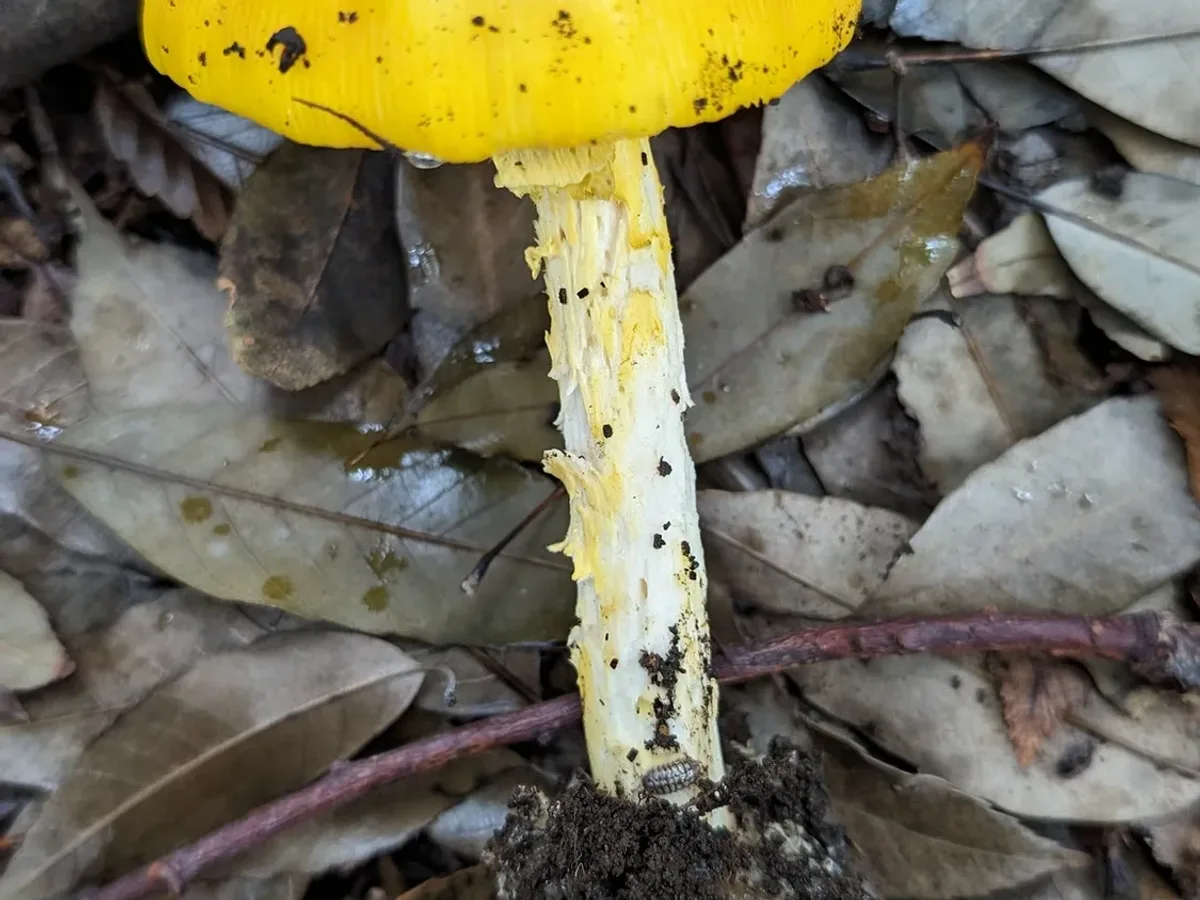
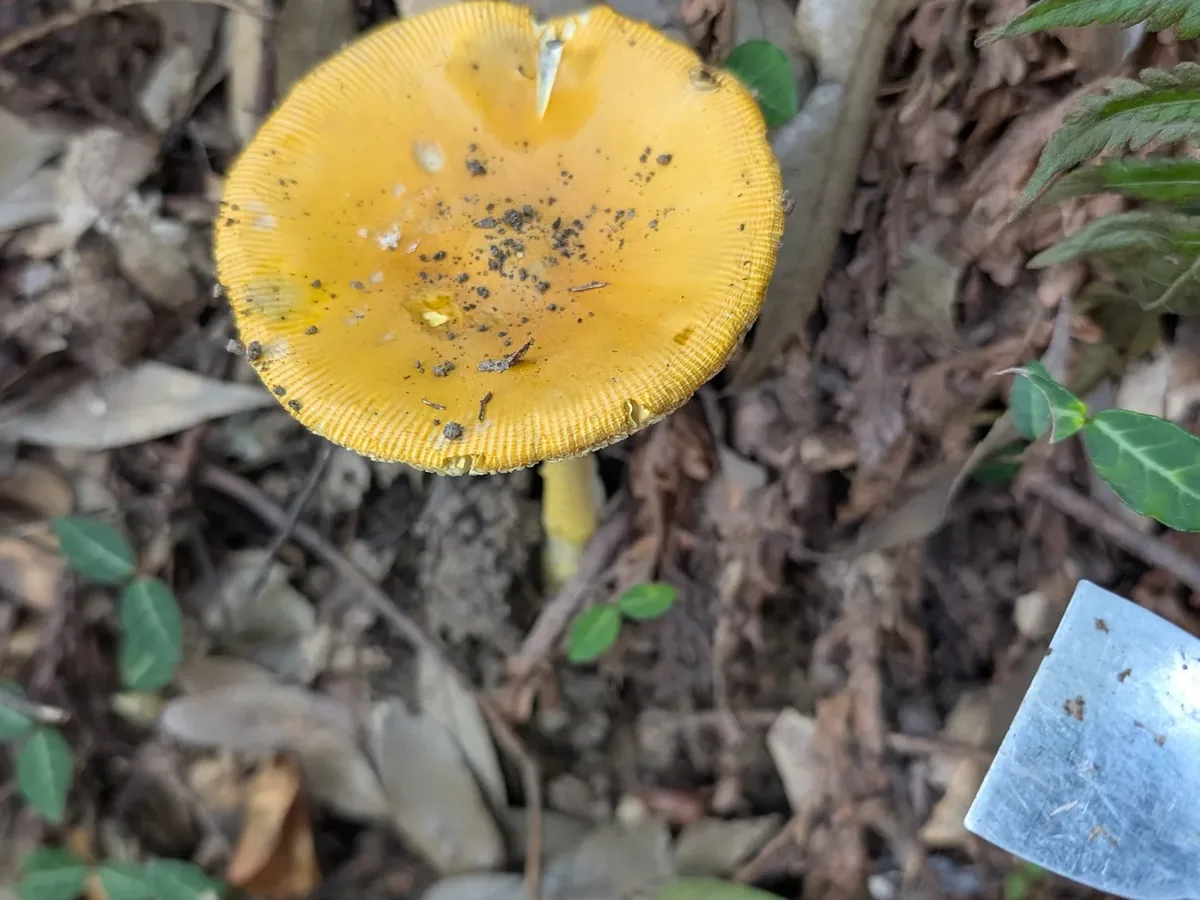
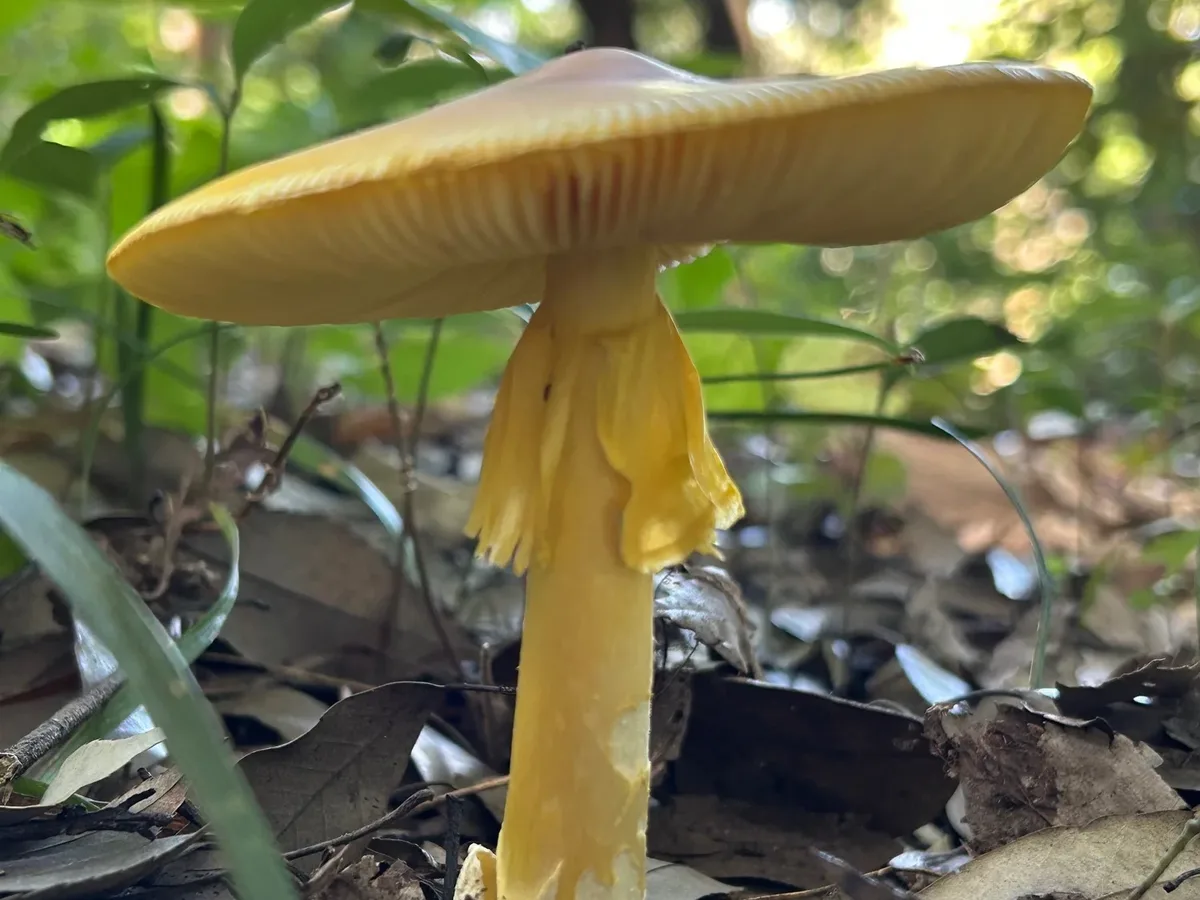
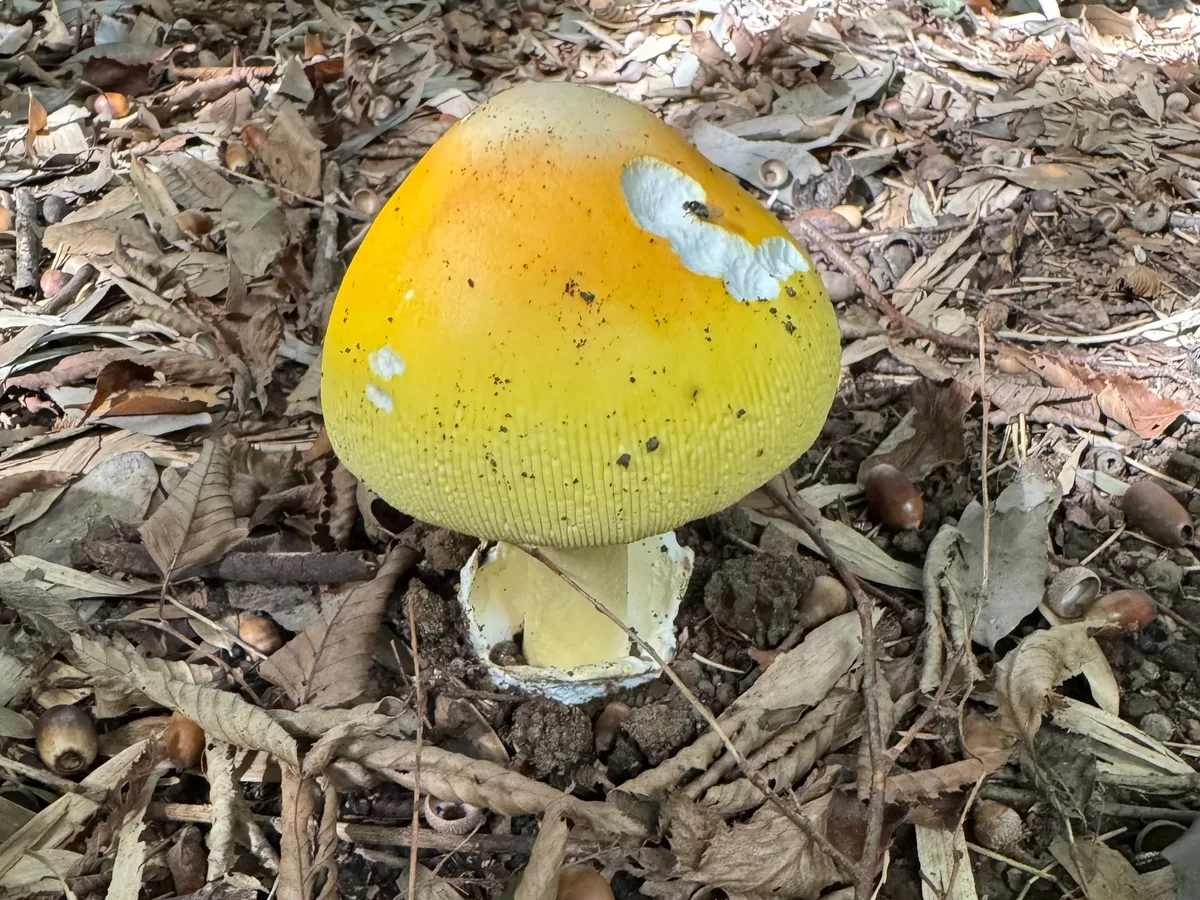
Amanita kitamagotake announces itself with an elegance that is quiet compared to its more gaudy southern relative. Where Amanita hemibapha burns scarlet-orange, kitamagotake settles into a warmer, more muted golden-yellow to amber-orange - the cap colour of a late summer afternoon rather than high noon.
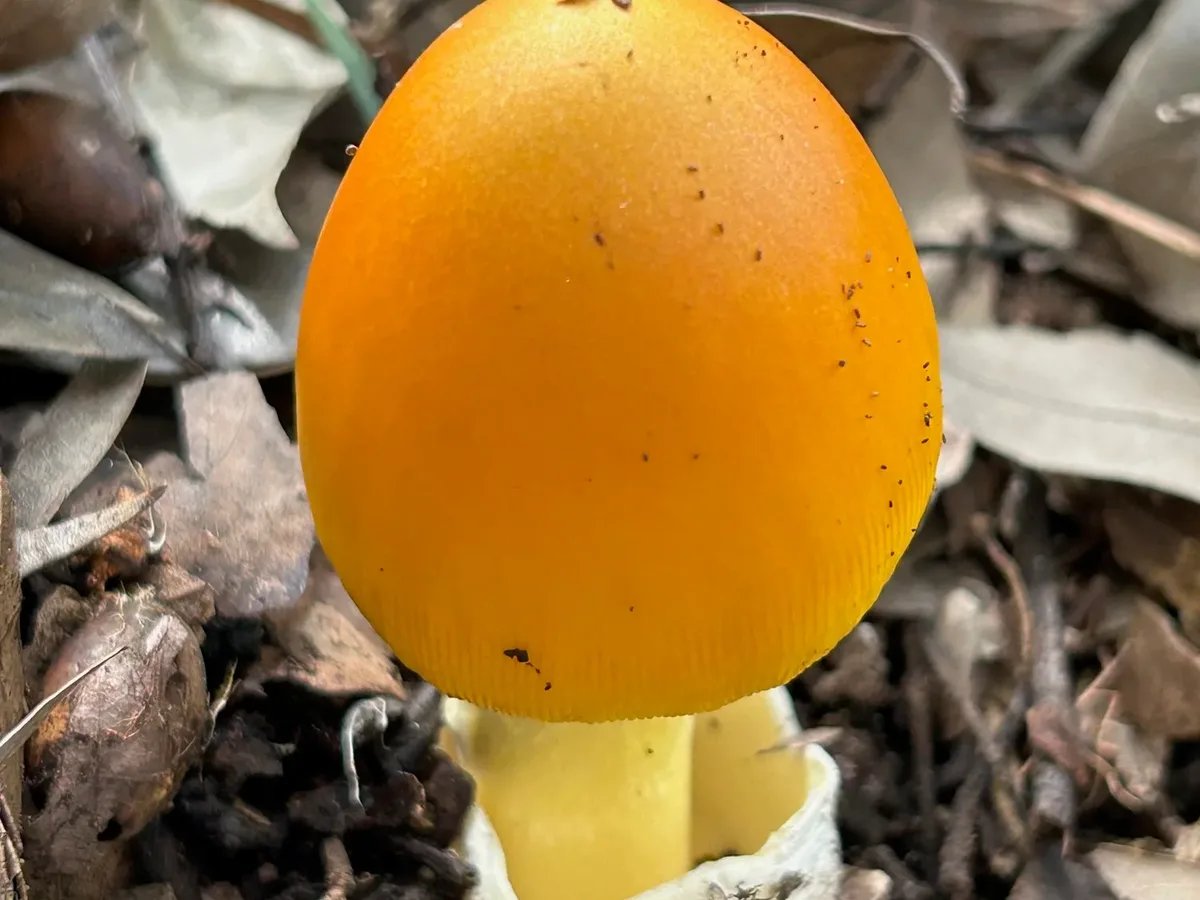
It begins, like all of its Caesar's-clade relatives, as a smooth white to cream-coloured ovoid egg sitting in the soil, 30-60 mm tall and seemingly placed there by hand.
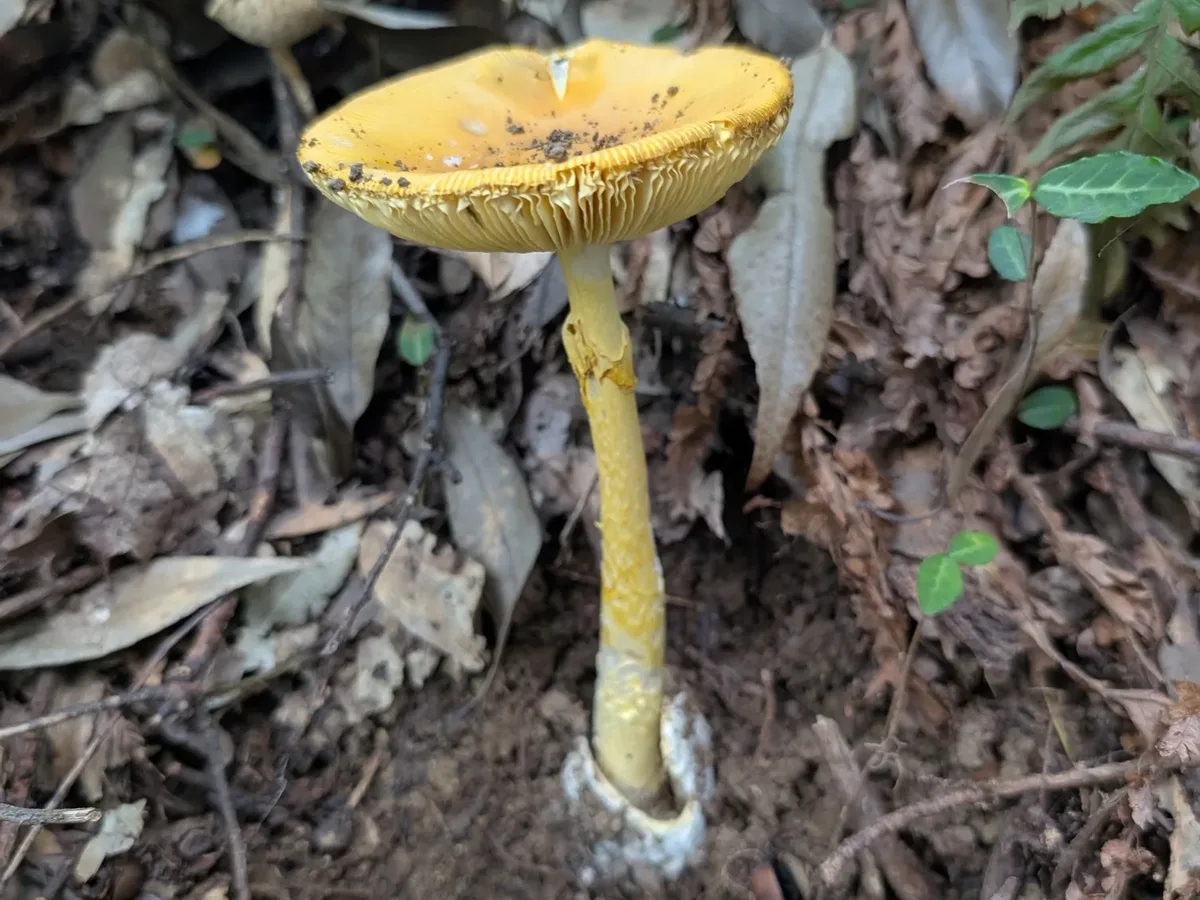
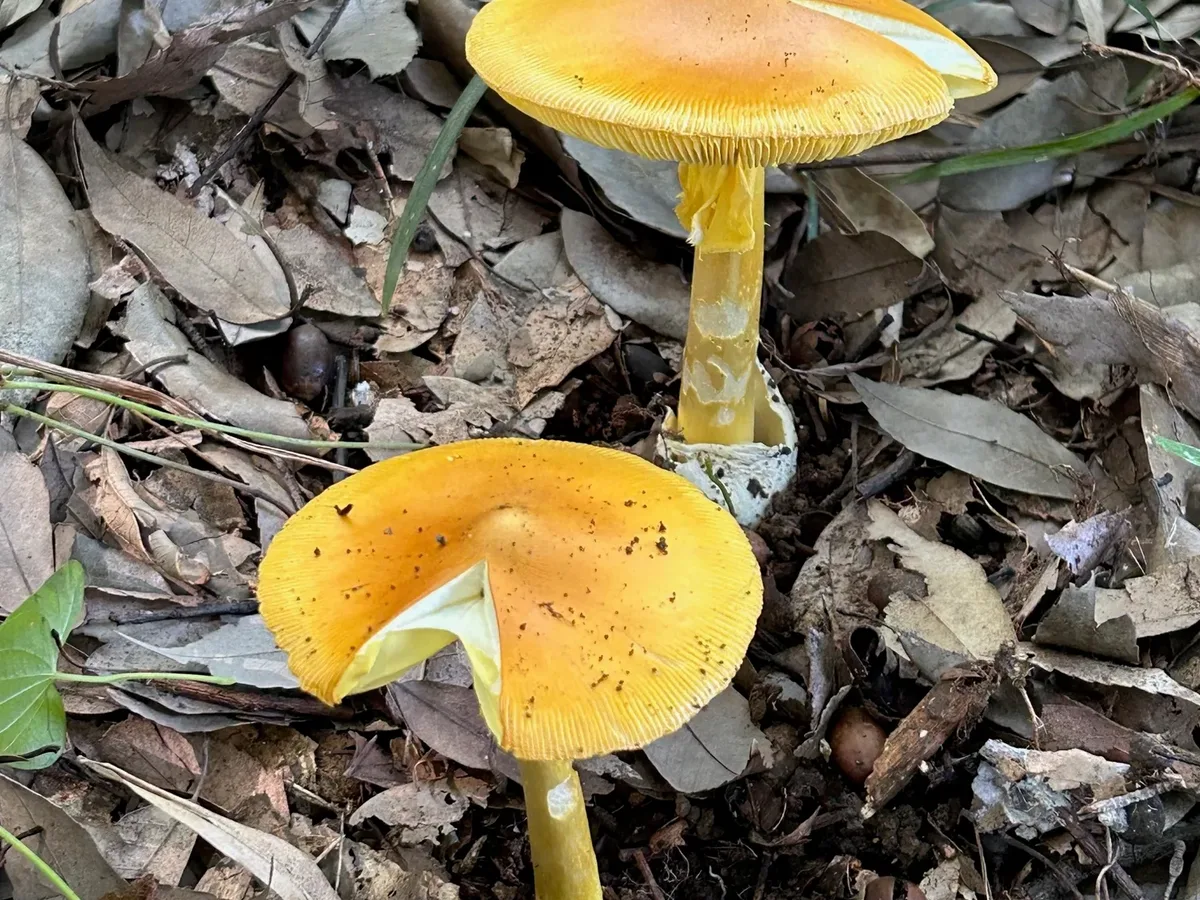
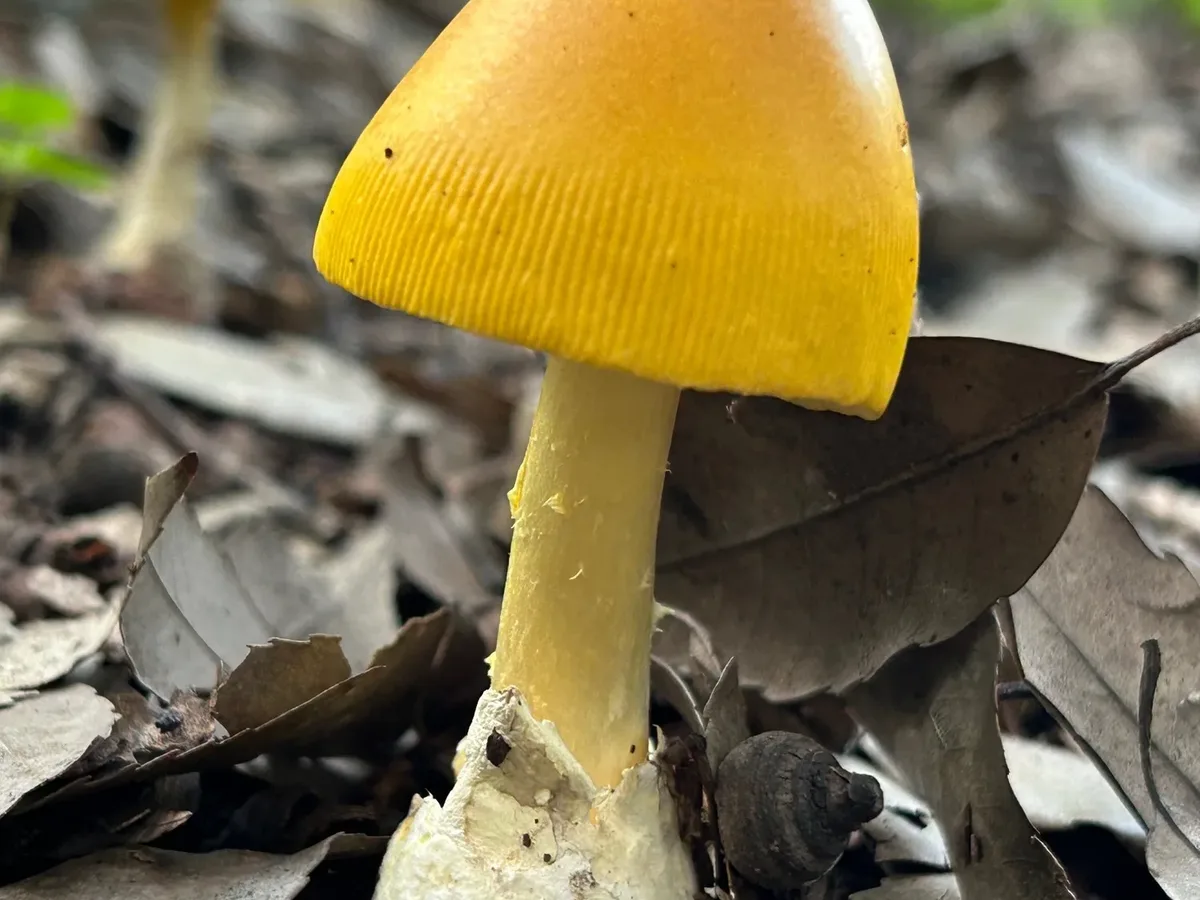
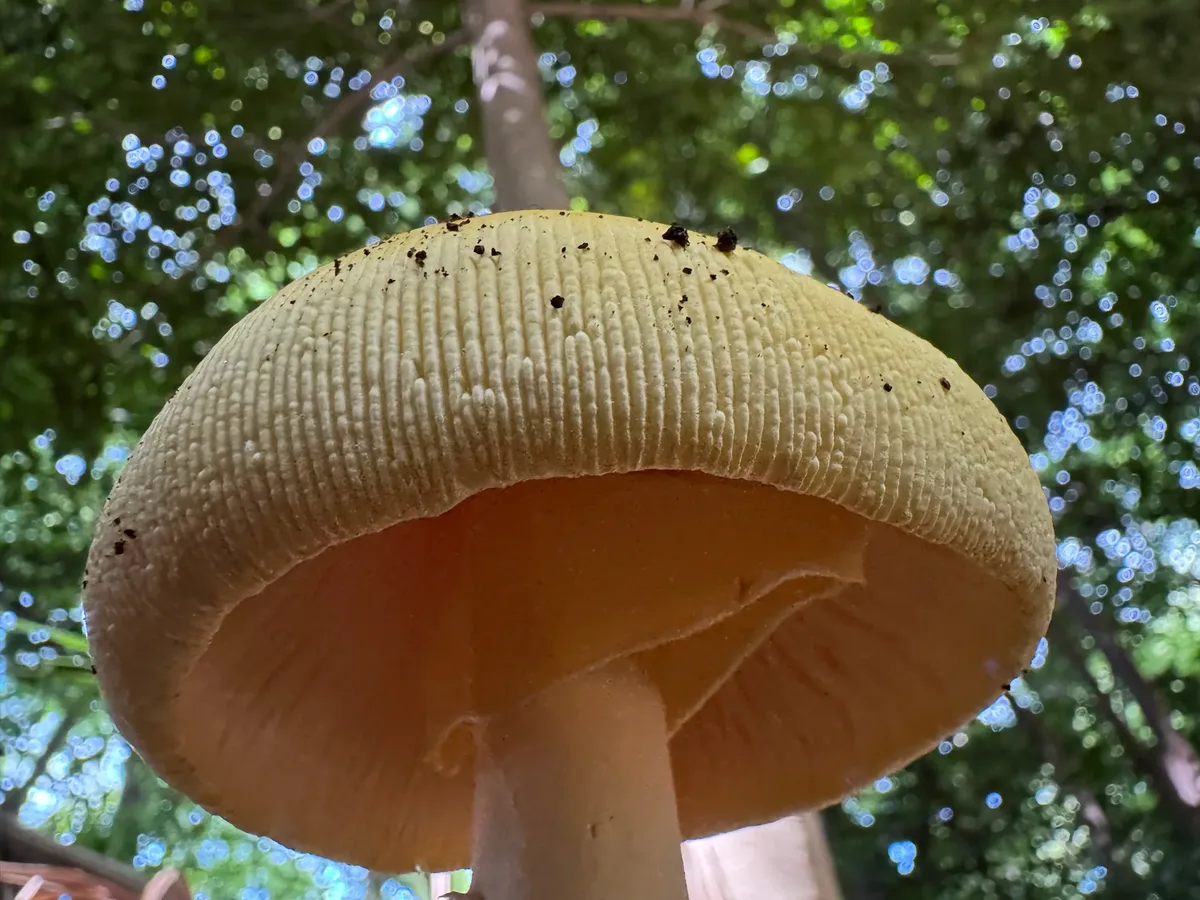
As warmth and moisture do their work, the veil splits and the cap pushes out and expands to 60-140 mm, eventually flattening to nearly plane with a very gentle broad umbo. The margin retains those characteristic striate radial grooves - 10-18 of them, pressed like a maker's mark into the cap edge.
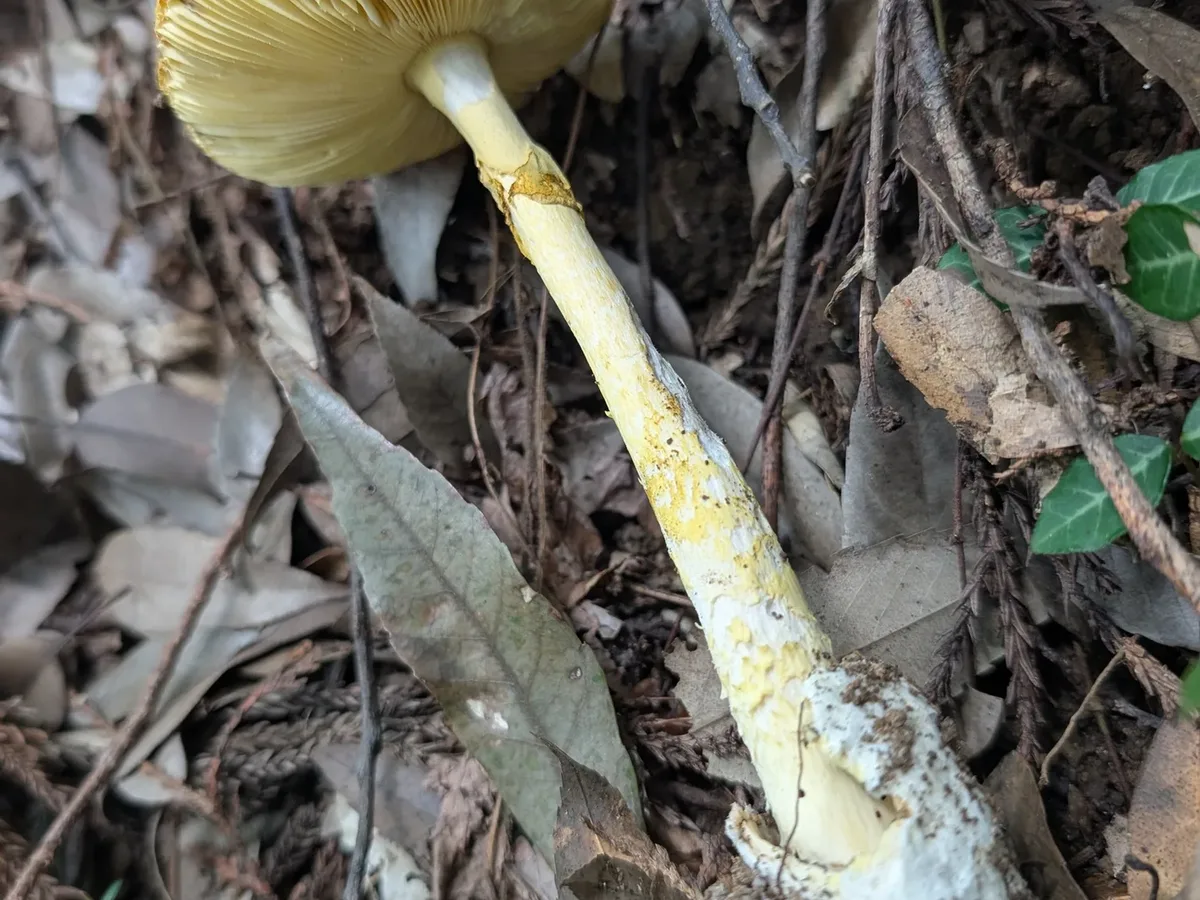
Beneath the cap, the gills are crowded, free, and pale yellow to bright yellow; this gill colour is one of the most reliable field marks separating the Caesar's-clade species from the deadly white-gilled Amanitas of the same forests.
The stem (80-170 mm, slender to moderately stout) is pale yellow to yellow-orange, bearing a pendant membranous ring that often becomes tattered and droopy in age; confirm the ring is present before concluding identification.
At the base, a firm white sac-like volva arises from the soil - often partially buried, always important: excavate it carefully rather than pulling the stem.
Flesh is white throughout, not staining when cut, with a mild pleasant odour.
The overall palette - golden-orange striate cap, yellow free gills, yellow-orange stem and ring, white volva - is the identifying signature.
Where & when it grows
Habitat
This is a species of cooler temperate Japan: think the beech-and-oak woodland of northern and central Honshu, the mixed forest of Hokkaido, and the equivalent broadleaved forest of Korea and northeastern China.
It partners most often with oaks and Japanese chestnuts in the Fagaceae, occasionally extending into birch woodland.
Look for it on well-drained, humus-rich, slightly acidic forest soil - forest slopes and edges where the canopy is relatively open and summer warmth penetrates to the ground.
Unlike the subtropical A. hemibapha of warmer Japanese and Southeast Asian forest, A. kitamagotake is anchored in the temperate zone, which gives it a slightly later and cooler fruiting window.
Once you know the right oak-chestnut woodland and the right conditions, it tends to appear reliably in the same spots year after year - a testament to the long-lived underground mycorrhizal network that quietly maintains the relationship between fungus and tree root.
When
The main fruiting season runs July through October in the core Japanese range, with the peak falling in August and September after the tail of the rainy season and through the warm, humid early autumn.
The combination of post-monsoon soil moisture and still-warm (but not oppressively hot) soil temperatures of 15-25 °C is the trigger.
In Hokkaido and northern Honshu, flushes tend to occur slightly earlier than in central Honshu, tracking the earlier onset of warm summer conditions at higher latitudes. In Korea and northeastern China, August-October is the main window.
How it grows
Emerges singly or in small loose groups, never in dense clusters.
Each fruit body begins as a buried volva from which the egg-stage primordium is extruded; the white egg can sit in the soil for several days before expanding.
The mycelium maintains a long-term ectomycorrhizal partnership with its host trees - roots and fungal hyphae intertwined in a mutually beneficial exchange that can persist for decades. This is why returning to the same productive patch of oak or chestnut woodland in the right season is such a reliable strategy.
Each flush is the surface expression of that continuing underground relationship.
Fruiting conditions
Temperate summer-to-autumn fruiter; flushes follow significant rainfall when soil temperatures are 15-25 °C. Cooler optimum than the subtropical A. hemibapha, reflecting the northern temperate range. Peak fruiting August-September in northern and central Japan.
Look-alikes
The most critical lookalike danger is at the egg stage, which is shared with all Amanita species in the same habitat. Externally identical white Amanita eggs in temperate Japanese woodland may belong to the death cap (A. phalloides), the destroying angel (A. virosa), or native Japanese amatoxin species - all lethal.
At maturity, the distinctive combination of a golden-orange striate cap, yellow free gills, yellow-orange ring, and white sac-like volva separates A. kitamagotake clearly from all white-capped deadly species, which carry white gills and typically lack yellow or orange pigment at maturity.
Amanita hemibapha, its close relative, is essentially the subtropical version: more southerly in distribution, typically with a more vivid scarlet-red cap rather than the golden-orange of kitamagotake. They are both edible and confusing them is toxicologically unimportant. The two are sometimes treated as subspecies.
The European Amanita caesarea is a closely related choice edible of southern Europe under oaks - more robust, with a deeper pure orange cap; its range does not overlap with A. kitamagotake.
At the egg stage, externally indistinguishable from A. kitamagotake - both produce smooth white ovoid eggs in the soil. Cutting an egg in half is the only reliable check: A. kitamagotake shows a yellow-orange to golden-orange cap primordium; A. phalloides shows undifferentiated white to yellowish-greenish flesh with no orange or golden colouring. At maturity, A. phalloides has a pale greenish-yellow to olive-brown cap with white gills and a white pendant ring - entirely lacking the golden-orange cap and yellow gills of A. kitamagotake. Both have a prominent sac-like volva. Fatal poisonings have occurred when foragers collected death-cap eggs mistaking them for edible tamagotake or kitamagotake eggs - this is the central danger.
Entirely white at all stages - conical to broadly convex white cap, white gills, white fibrous-shaggy stem, white pendant ring. At maturity completely unlike A. kitamagotake's golden-orange cap and yellow gills. The egg stage is dangerous: both produce smooth white ovals in the soil. Cutting the egg reveals white undifferentiated interior in A. virosa vs. a coloured cap outline in A. kitamagotake. Found in cool temperate woodland, including the same habitats as A. kitamagotake, particularly at higher elevations and in cooler northern forests.
Amanita subjunquillea and related native Japanese amatoxin-containing Amanita species produce eggs in the same habitats and season as A. kitamagotake. At maturity these species have white to pale yellow-green or olive-buff caps with white gills - they lack the consistent golden-orange cap colour and yellow free gills of A. kitamagotake. However, the egg stage of any of these species is externally identical. Cut all eggs open; confirm the golden-orange cap primordium before any further consideration of eating. The co-occurrence of multiple Amanita species in Japanese broadleaved forest makes rigorous identification at every stage non-negotiable.
The European archetype of the group - a choice edible of Mediterranean and central European oak woodland. More robustly built than A. kitamagotake, with a deeper, more uniformly rich orange cap (typically deeper orange than the golden-amber of kitamagotake), and restricted to Europe and North Africa. No geographic range overlap with A. kitamagotake. Toxicologically unimportant to distinguish since both are edible.
The close relative and southern counterpart. A. hemibapha typically displays a more vivid scarlet-red to scarlet-orange cap rather than the golden-yellow to amber-orange of A. kitamagotake; it is also a more slender species on average and is distributed in warmer subtropical and tropical forest from central and southern Japan, Korea, Taiwan, and across Southeast Asia. The two are sometimes treated as subspecies of each other. Confusing them is toxicologically harmless - both are edible - but they represent ecologically distinct entities adapted to different temperature regimes.
In the kitchen
Picking & cleaning
Collect only fully expanded, mature specimens where all five key characters are clearly visible and confirmed:
- 1Golden-orange to amber-orange striate cap.
- 2Pale yellow to bright yellow free gills.
- 3Yellow-orange pendant ring on the stem.
- 4Yellow-orange stem.
- 5White sac-like volva at the base - which must be exposed by gentle excavation, not assumed.
Never collect the egg stage: white Amanita eggs in temperate Japanese forest cannot be distinguished externally from the eggs of deadly species including the death cap (Amanita phalloides), the destroying angel (Amanita virosa), and Japanese native white amatoxin species.
If you must investigate an egg, cut it vertically through the centre: A. kitamagotake will show a yellow-orange to golden-orange cap primordium inside - deadly species show white or yellowish-white undifferentiated interior.
Transport specimens in an open basket and re-examine each one at home before cooking.
Cooking
A prized edible in northern Japan, sought in the same spirit as the southern tamagotake but less frequently encountered due to its more restricted range and cooler habitat requirements.
The flavour is mild, lightly earthy, and pleasant; the texture is firm and holds up well to heat.
- Sauté in butter or oil.
- Add to soups or hotpot.
- Combine with rice.
Cook thoroughly before eating - while A. kitamagotake does not contain amatoxins, cooking thoroughly is standard practice for all wild-collected Amanita species.
Begin with a moderate portion the first time to test individual tolerance.
Good to know
Amanita kitamagotake is an established edible species in Japan, consumed in the same tradition as the related tamagotake (A. hemibapha).
As with all Caesar's-clade Amanitas, the species is safe to eat when fully identified, but it presents a serious safety challenge in two situations:
- 1The egg stage, which is externally indistinguishable from the eggs of deadly Amanitas.
- 2Collecting in mixed or uncertain light conditions where yellow gills might be missed or the volva not confirmed.
The rule in Japan is clear: never collect Amanita eggs from woodland soil without first cutting the egg open to confirm the coloured cap primordium inside, and never eat a woodland Amanita without fully confirming all five diagnostic characters.
Cook thoroughly before eating - raw consumption of any Amanita is inadvisable.
A reference guide - never an edibility guarantee. When in doubt, leave it out.