Jonquil amanita
Amanita junquilleasyn. Amanita gemmata var. junquillea, Amanita gemmata auct. p.p.
 © Lukas Large (CC BY-SA 2.0)
 Max Elysian (CC0)
 © Carl Ramirez (CC BY)
 © Carl Ramirez (CC BY)
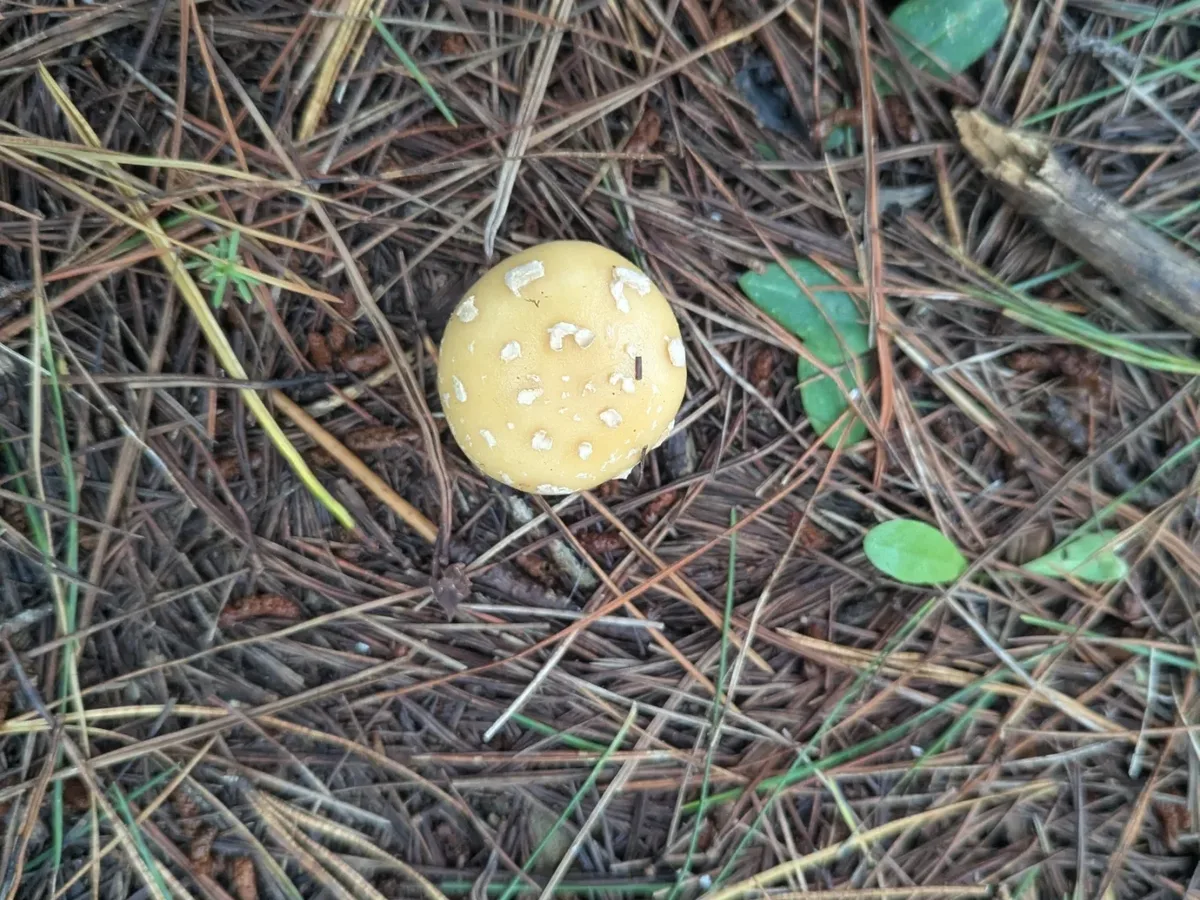 kohatuer (CC0)
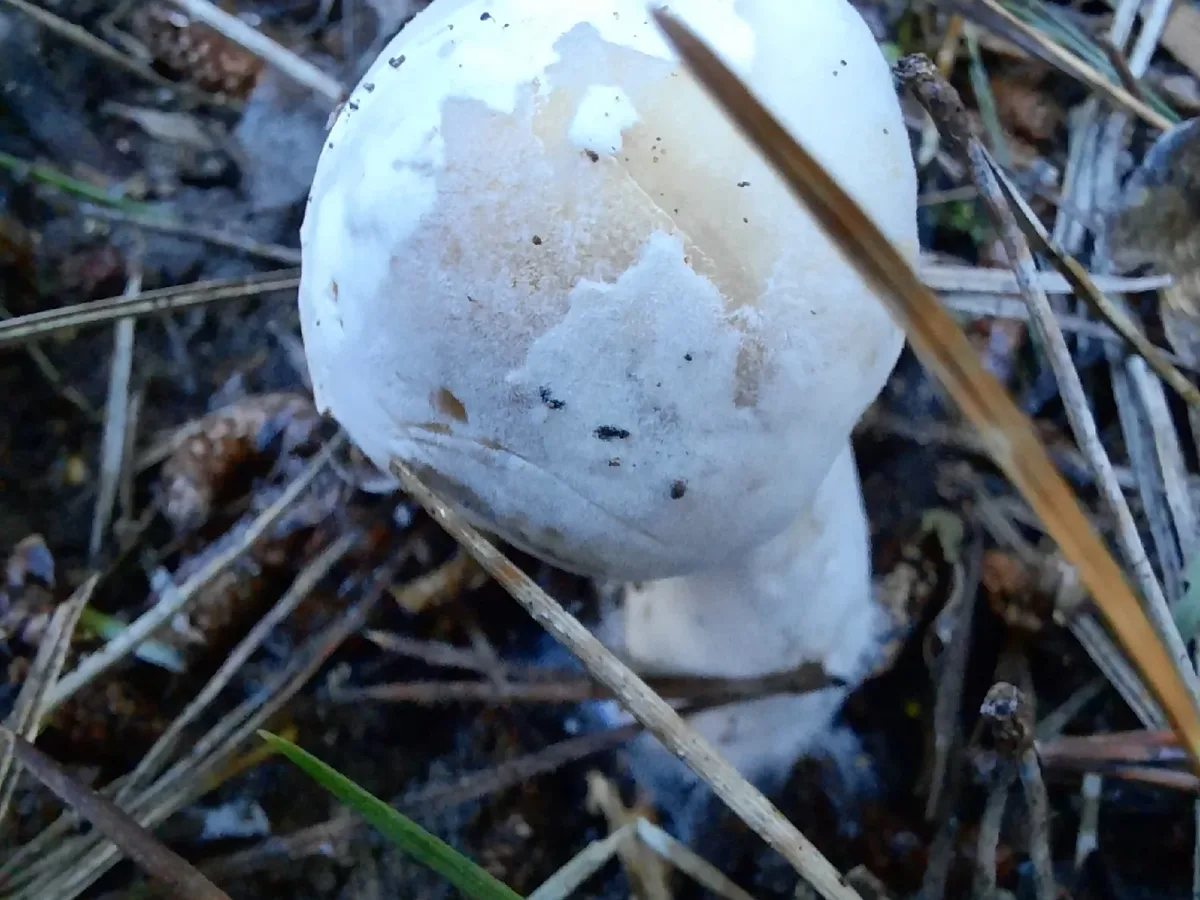 Max Elysian (CC0)
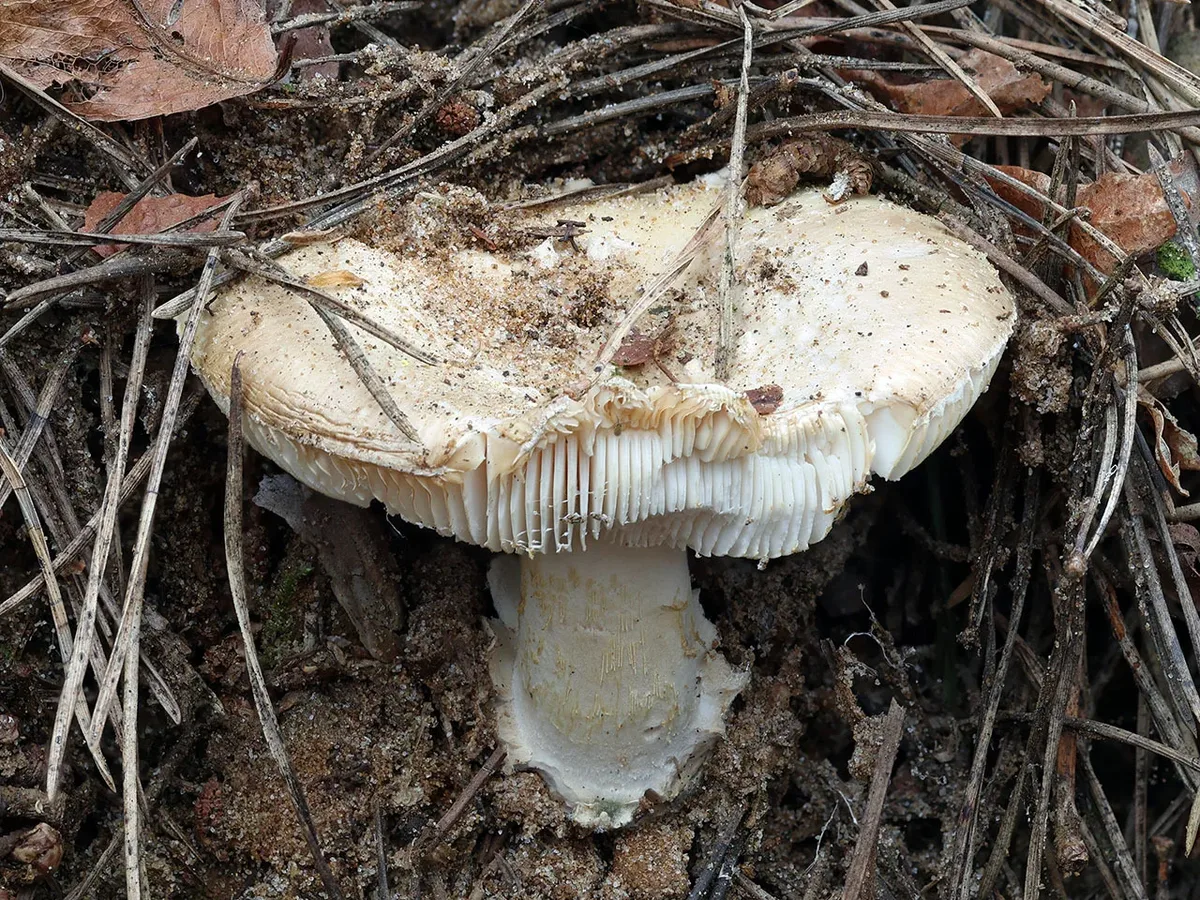 © Daniel Ghyselinck (CC BY)
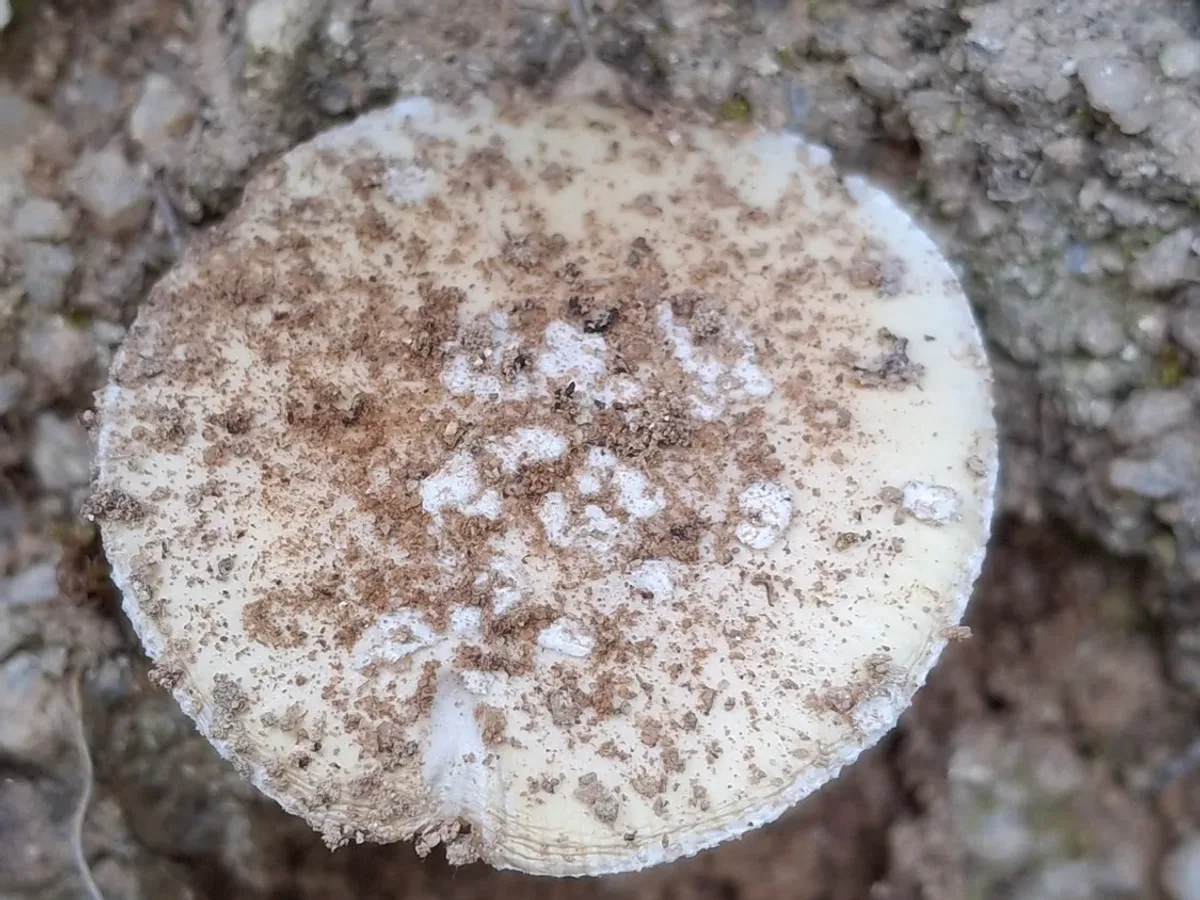 © Carminda Santos (CC BY)
 © Lukas Large (CC BY-SA 2.0)© Lukas Large (CC BY-SA 2.0)Max Elysian (CC0)
Edible only with the right preparation - or safe for some people but not others. Learn the caveats first.
Never eat a mushroom you are not 100% sure of - check the look-alikes below, and always cook wild mushrooms.
How to recognise it
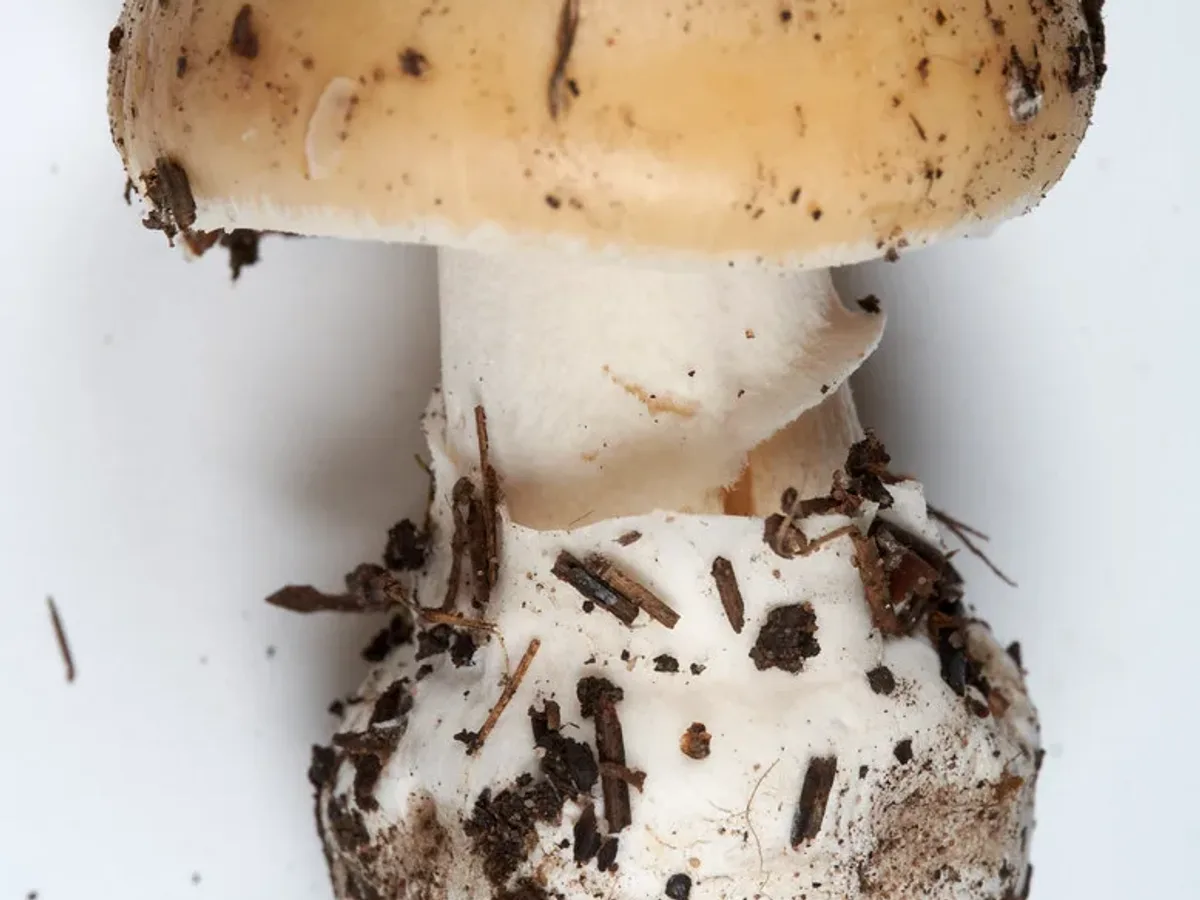
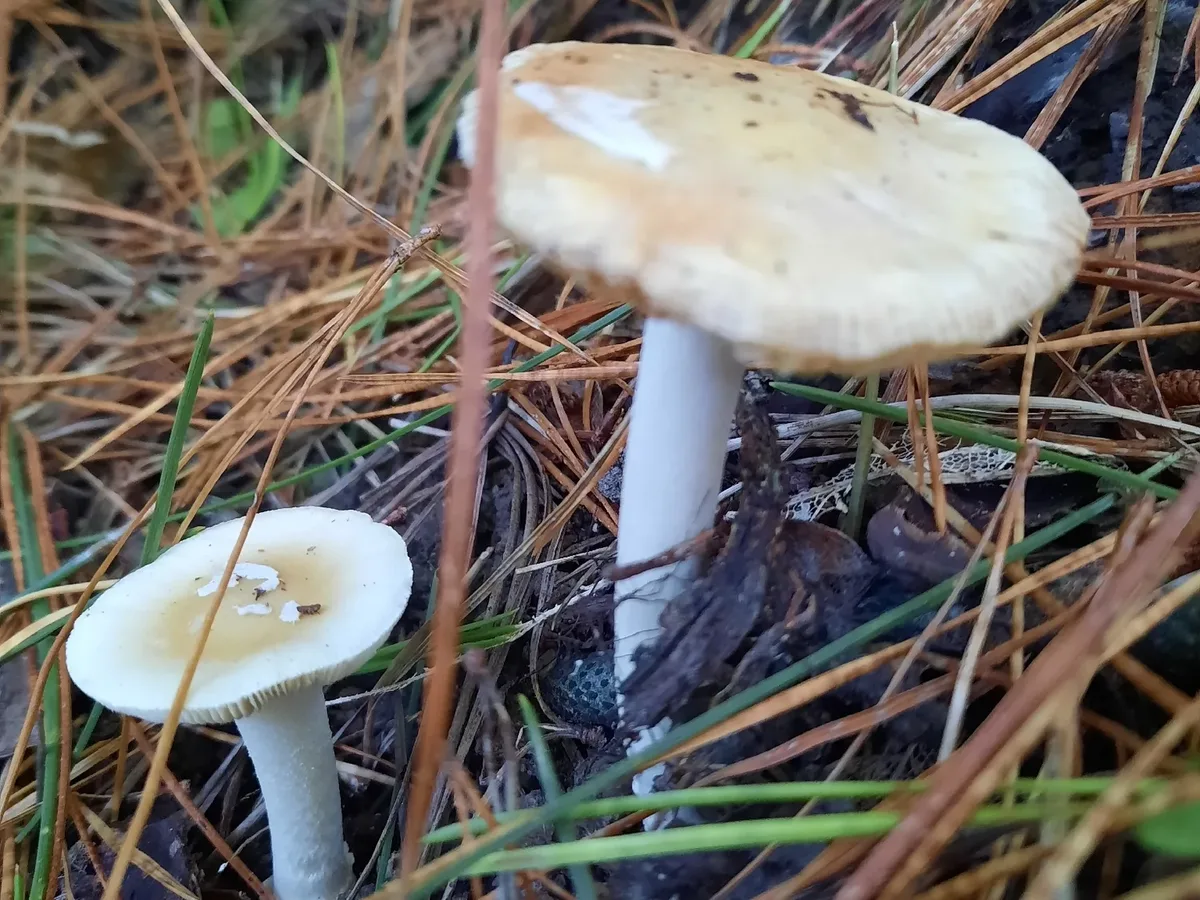
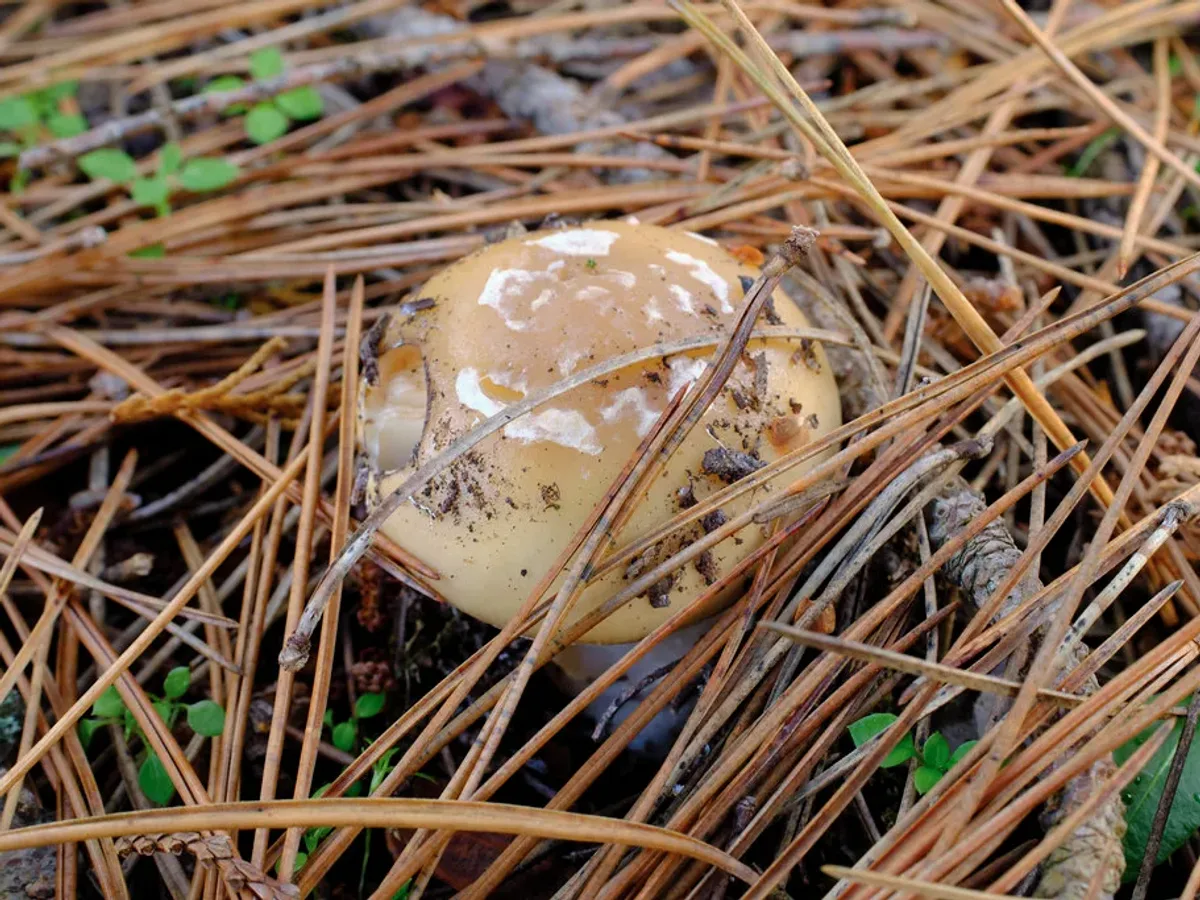
Amanita junquillea is a slender, softly coloured Amanita, most easily recognised by its combination of a jonquil to pale lemon-yellow cap, a grooved (striate) margin, white veil remnants on the cap, a fragile ring on the stem, and a small sac-like volva at the base.
Cap
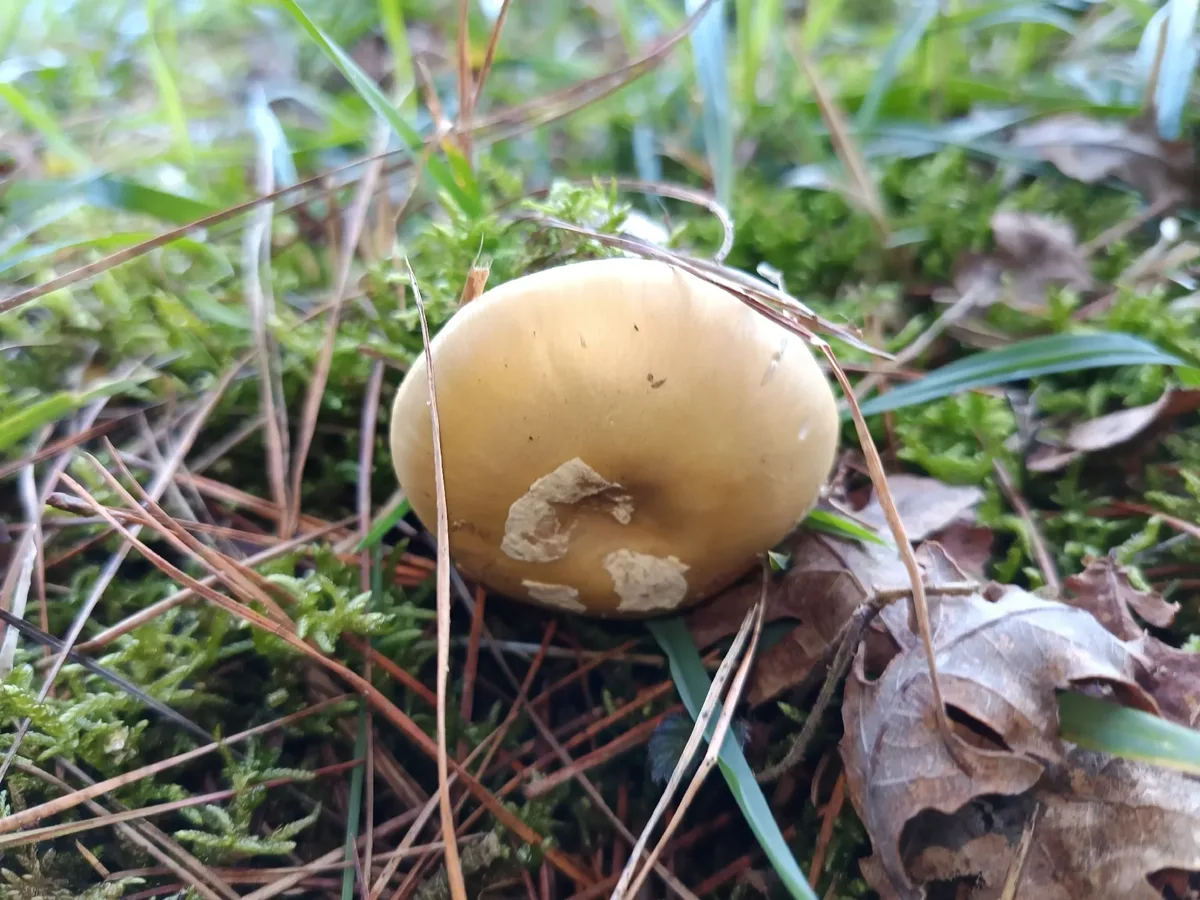
The cap (4-10 cm) shifts from a deeper jonquil-yellow at the centre to paler ochre or near-cream toward the distinctly grooved edge, and fades further to buff or straw in dry weather.
White wart patches from the universal veil sit on the cap surface, but these are among the most unreliable field marks in the genus: they wash away in rain and drop in dry spells, leaving what can look like a clean, plain yellow cap.
The grooved margin is one of the more consistent things to check. The striations run clearly a quarter to nearly half the cap radius, a feature that sets it apart from many flat-margined Amanitas.
Gills
Gills are free, crowded, and white, unchanging when handled.
Stem
The slender stem (5-12 cm) is white to faintly yellowish; the ring is thin and easily draped flat against the stem, or already gone on older caps.
The volva at the base is sac-like but often small, and not as dramatically bag-shaped as those on the larger Amanitas of section Vaginatae.
Flesh
Flesh is white throughout and stays white when cut.
Why it's dangerous
The primary danger of Amanita junquillea is twofold:
- 1It is an intrinsically poisonous species whose ibotenic-acid/muscimol toxins can cause severe neurological poisoning requiring hospital care.
- 2It is a yellow Amanita that co-occurs with, and can be confused with, the DEATH CAP (Amanita phalloides) in its less-green, pale-yellow forms - a confusion that has caused fatalities.
Anyone identifying a pale yellow Amanita in a Mediterranean or warm-temperate European setting without complete, expert-level confirmation of all diagnostic features faces a genuine life-threatening risk if they proceed to eat it. This species must be flagged as having a deadly lookalike.
Toxin
Amanita junquillea contains ibotenic acid (a neuroexcitatory amino acid analogue) and its decarboxylation product muscimol (a potent GABA-A receptor agonist).
These isoxazole compounds act primarily on the central nervous system: ibotenic acid is excitatory in small amounts, and muscimol is strongly sedating and hallucinogenic at higher concentrations.
They are NOT heat-stable in the same way as amatoxins. Partial detoxification by cooking has been reported but is unreliable, varying with method, dose and individual.
The toxins are NOT amatoxins - the mushroom does not cause delayed hepatic/renal failure - but the syndrome it causes can itself be dangerous. Some sources also note mild gastrointestinal irritants are present.
Symptoms
Poisoning typically begins 30 minutes to 2 hours after ingestion (contrast with amatoxin-type, where onset is 6-24 h).
Symptoms include:
- nausea and vomiting
- salivation
- drowsiness, dizziness and loss of coordination (ataxia)
- confusion and disorientation
- visual and auditory disturbance
- euphoria or dysphoria
- agitation or sedation (sometimes alternating)
- in severe cases, convulsions, deep sedation and coma
Children and elderly individuals are at greater risk of serious outcomes from a given dose.
Recovery usually occurs within 4-8 hours but may take up to 24 hours. Fatalities from this toxin group alone are rare but have been reported, particularly in vulnerable individuals and at high doses.
Staying safe
Amanita junquillea is POISONOUS and must never be eaten.
It contains ibotenic acid and muscimol - the same central-nervous-system-active compounds found in Amanita muscaria and A. pantherina - which cause a toxidrome characterised by confusion, dizziness, euphoria, agitation, visual disturbance, sedation and, in higher doses, convulsions and coma.
Additionally, it grows in the same habitats and shares superficial features with some of the world's most lethal fungi, making safe identification by non-specialists extremely hazardous.
Particular caution is warranted in southern Europe, where multiple Amanita species co-occur in spring and autumn. Any yellow or pale Amanita found in the Mediterranean region should be treated as dangerous until positively identified by an expert.
Suspected ingestion should be treated as a medical emergency.
Where & when it grows
Habitat
This is a woodland and scrubland mushroom of warm, sandy, well-drained soils, rooted - sometimes quite literally - in the mycorrhizal partnerships it keeps with pines and oaks.
Its underground threads run in quiet alliance with the fine roots of maritime pine, stone pine, holm oak, and downy oak - a relationship that has shaped where it grows just as much as climate or soil type.
That preference for warmth and open, lightly acid ground explains why it is most at home in the Mediterranean: in open pine forests, forest margins, rides, garrigue, and maquis across southern France, Spain, Italy, and the Iberian Peninsula. It becomes rarer and more scattered further north.
In central Europe it appears in the warmer, sandier pockets of mixed woodland. Never found on wood or in treeless habitats.
When
Where this species is most frequent - the Mediterranean basin - its fruiting year has two distinct chapters.
A spring flush runs from March to May, as winter rains ease and the soil warms past about 10 °C. At lower Mediterranean elevations this is often the first Amanita of the year to push through the ground.
Then the summer drought closes things down.
The autumn chapter, typically the more generous one, opens when the first meaningful autumn rains break the dry season and soil temperatures drop below roughly 20 °C, running from September to November.
Each flush typically follows its triggering rainfall by one to two weeks - the mycelium needs time to absorb moisture and build the fruit body before sending it up.
Northern and central European populations fruit mainly in autumn.
How it grows
Fruit bodies emerge singly or scattered - never in dense clusters.
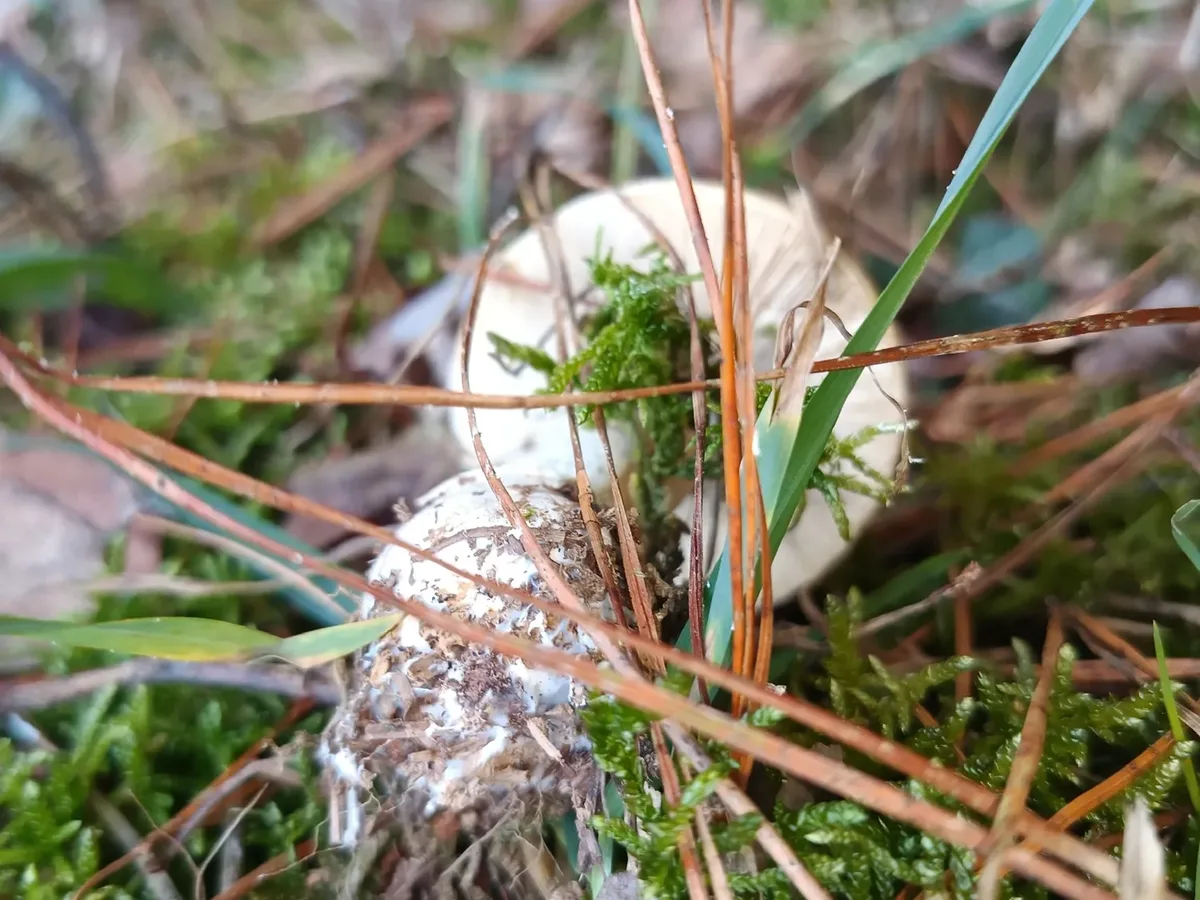
Each one begins as a white egg-like button in which the universal veil wraps the entire future mushroom. As the stem elongates and pushes upward, the veil tears: its upper portion breaks into the white wart patches or central patch on the expanding cap, while its lower portion remains anchored at the base as the volva.
The partial veil, connecting cap margin to stem in the button stage, later tears free to leave the ring.
Young intact eggs are particularly worth treating with caution: the ring and volva are still hidden inside, and the mushroom presents as a simple white oval - similar to the deadly egg stage of Amanita phalloides.
Fruiting conditions
Bimodal fruiting in Mediterranean region: spring flush (March-May) once winter rains have saturated soil and temperatures rise above 10 °C; autumn flush (September-November) after the first meaningful autumn rains break the summer drought and soils cool below ~20 °C. Each flush lags 1-2 weeks behind triggering rainfall events. Central European populations fruit mainly in autumn.
Look-alikes
Amanita junquillea is most dangerously confused with lethal Amanitas and must be identified carefully even as a non-edible species, to avoid accidentally handling or misidentifying a related deadly species.
The DEATH CAP (Amanita phalloides) is usually greenish-yellow to olive, occasionally nearly white or pale yellow-green, with a prominent bag-like volva and a large ring. Its cap is typically smooth to faintly fibrous and mostly NOT striate at the margin. Despite colour differences, an atypically pale death cap and a clean-capped (wart-free) A. junquillea can overlap visually.
The DESTROYING ANGELS (Amanita virosa, A. verna) are white throughout with a large ring, prominent volva and smooth cap margin. They are least likely to be confused with the yellow A. junquillea, but must be mentioned because their egg stage is wholly white.
Amanita GEMMATA (gem-studded Amanita) is a closely related and similarly coloured species with which A. junquillea was long confused and sometimes lumped. A. gemmata tends to have a more abruptly bulbous base (less clearly saccate volva), often slightly more ochre cap colour, and a margin that may be less markedly striate, but the two are genuinely difficult to separate in the field. Both are poisonous (same ibotenic-acid/muscimol toxin group).
Amanita MUSCARIA (fly agaric) is much larger and more vividly coloured (scarlet to orange with white warts), and A. PANTHERINA (panther cap) is brownish-grey with pure white warts and a rimmed bulb with encircling ridges. Both are readily distinguished but share the same ibotenic-acid toxin group.
Among innocuous yellow-capped species, Amanita CAESAREA (Caesar's mushroom) is a southern European edible with a bright orange-red cap (never jonquil-yellow), free white gills, and a very prominent white volva - a very different appearance when fresh.
Caution: any yellow Amanita encountered in the Mediterranean should be treated as suspect until all features (cap striae, veil remnants, ring, volva structure, colour) are fully assessed.
DEADLY. Typically greenish-yellow to olive cap (occasionally pale yellow or nearly white), smooth or faintly fibrous surface, cap margin NOT or only faintly striate, large prominent sac-like volva, and a large ring on the stem. Contains amatoxins; the world's most lethal mushroom. A pale, wart-free A. junquillea and an atypically pale phalloides can overlap visually - always confirm striation, volva form and colour exactly.
DEADLY. Pure white throughout, silky cap surface (not striate), large white volva, prominent ring. Resembles A. junquillea only if the yellow pigment is missed or in an egg-stage button; the white colour and absence of cap striation are decisive. Contains amatoxins; lethal.
DEADLY. All-white, smooth, non-striate cap, large ring and prominent sac-like volva. Fruits in spring in Mediterranean and central Europe, overlapping with A. junquillea's spring flush. White colour distinguishes it, but note that dirty or soil-stained caps can look yellowish. Contains amatoxins.
Edible and prized. Larger mushroom with a vivid orange-red to scarlet cap (never jonquil or lemon-yellow), bright yellow gills (not white), yellow stem and ring, and a very prominent, large, white sac-like volva. These colour differences are striking in fresh material; confusion is unlikely in good condition but could occur in faded old specimens or from memory.
Poisonous (ibotenic-acid/muscimol). Much more vivid red to orange-red cap with conspicuous pure-white warts, non-striate margin, and a ringed bulbous base with concentric rings or girdles (not a free sac-like volva). Yellow forms exist but tend to be more orange-yellow. The same toxin group as A. junquillea.
POISONOUS (same ibotenic-acid toxin group). Closely related species, formerly lumped with A. junquillea by some authors. Cap similar yellow-ochre colour; tends to have a more abruptly bulbous, less clearly saccate stem base, and may have white warts more consistently; cap margin striation can be less marked. Both species are poisonous; field separation is difficult and ultimately immaterial from a safety perspective.
Poisonous (ibotenic-acid/muscimol; more severe than A. muscaria). Brown to greyish-brown cap with pure white warts, striate margin similar to A. junquillea but cap colour is brown not yellow, ring smooth and horizontal, stem base with a distinct rim or collar and concentric girdles rather than a free sac-like volva. Unlikely to be confused directly with A. junquillea due to different cap colour.
A reference guide - never an edibility guarantee. When in doubt, leave it out.