Japanese Panther
Amanita ibotengutake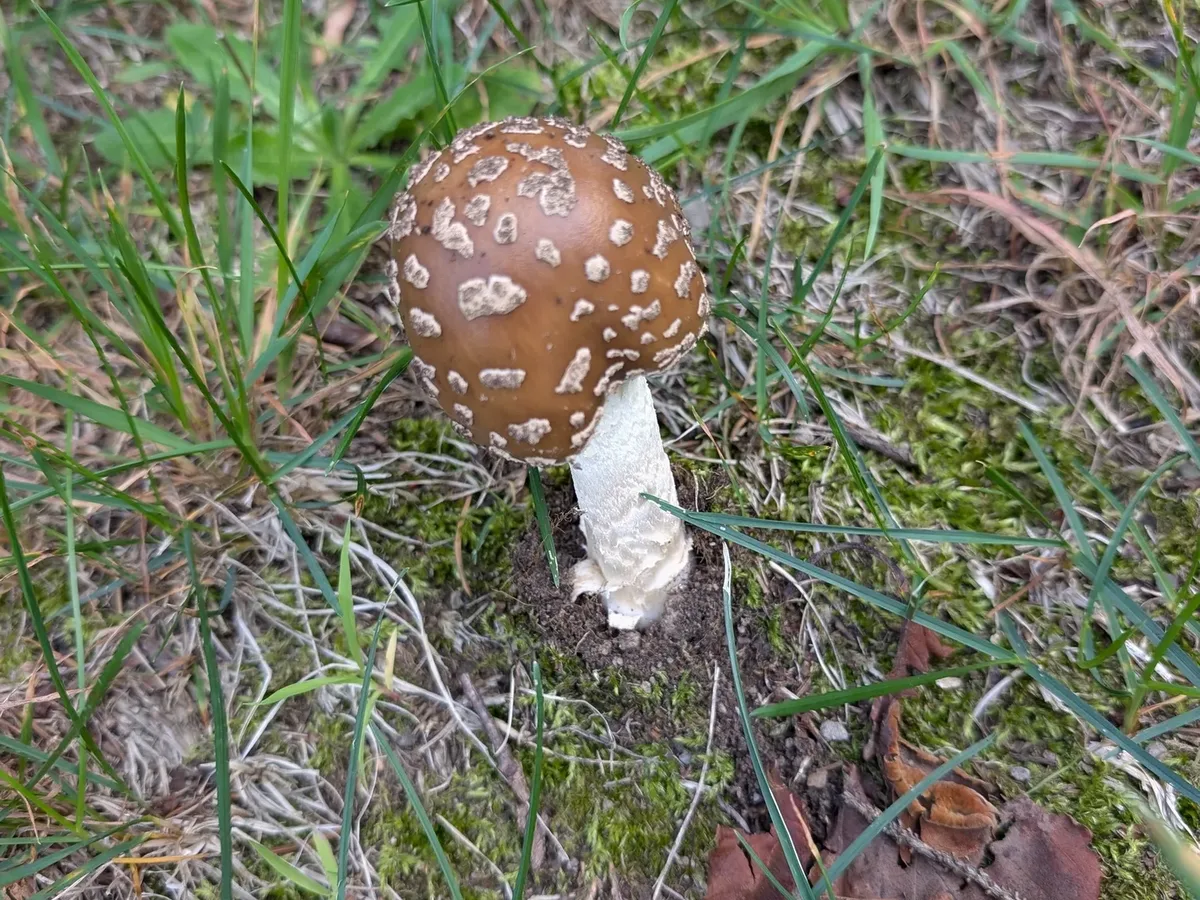 © Atsushi Nakajima (CC BY)
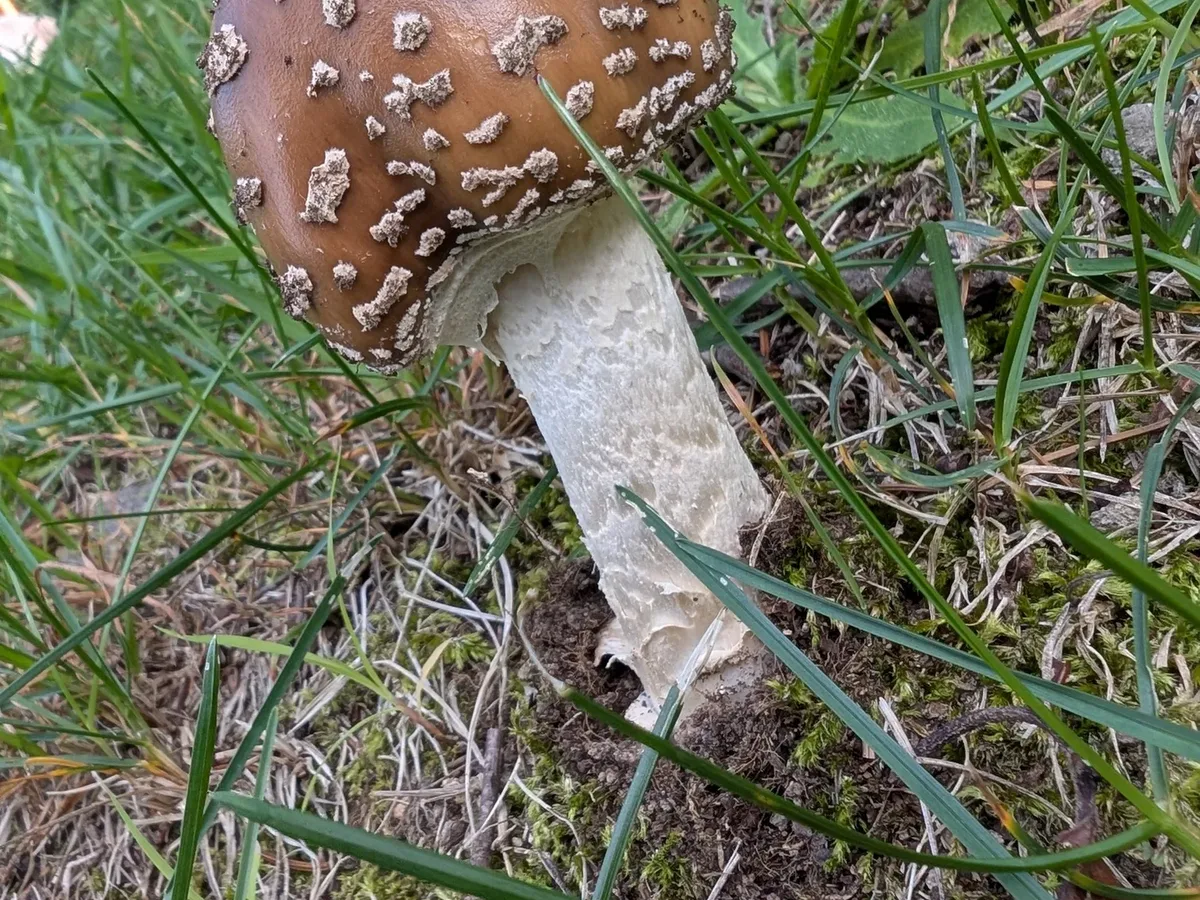 © Atsushi Nakajima (CC BY)
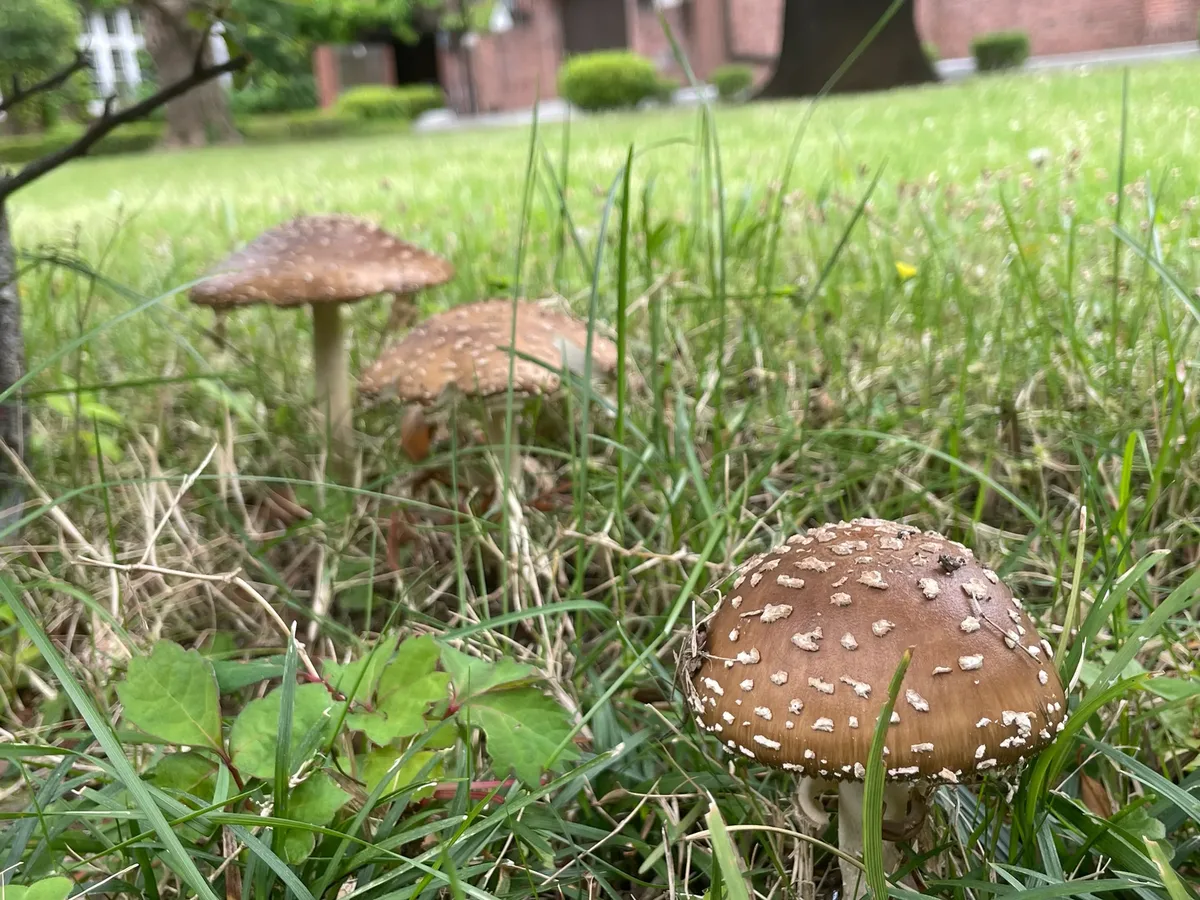 Brad Barker (CC0)
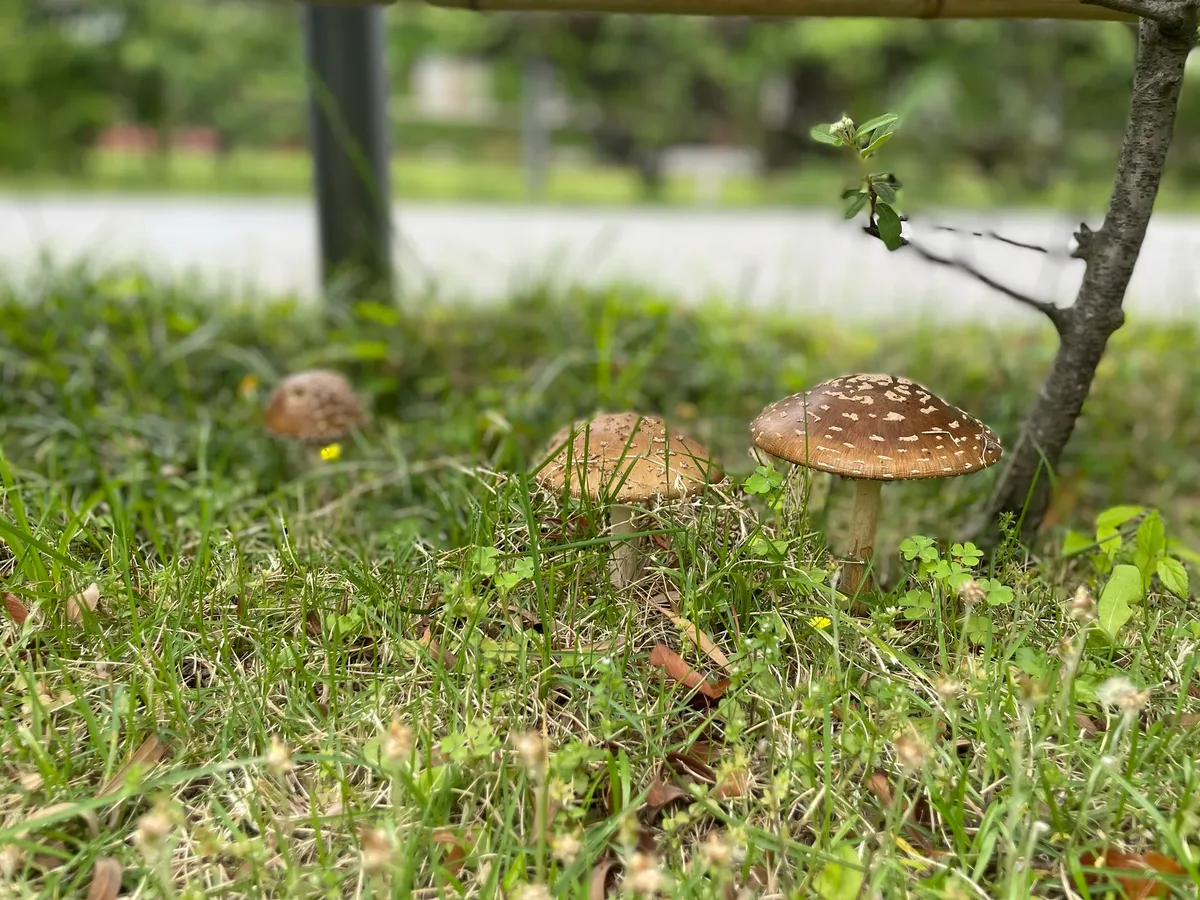 Brad Barker (CC0)
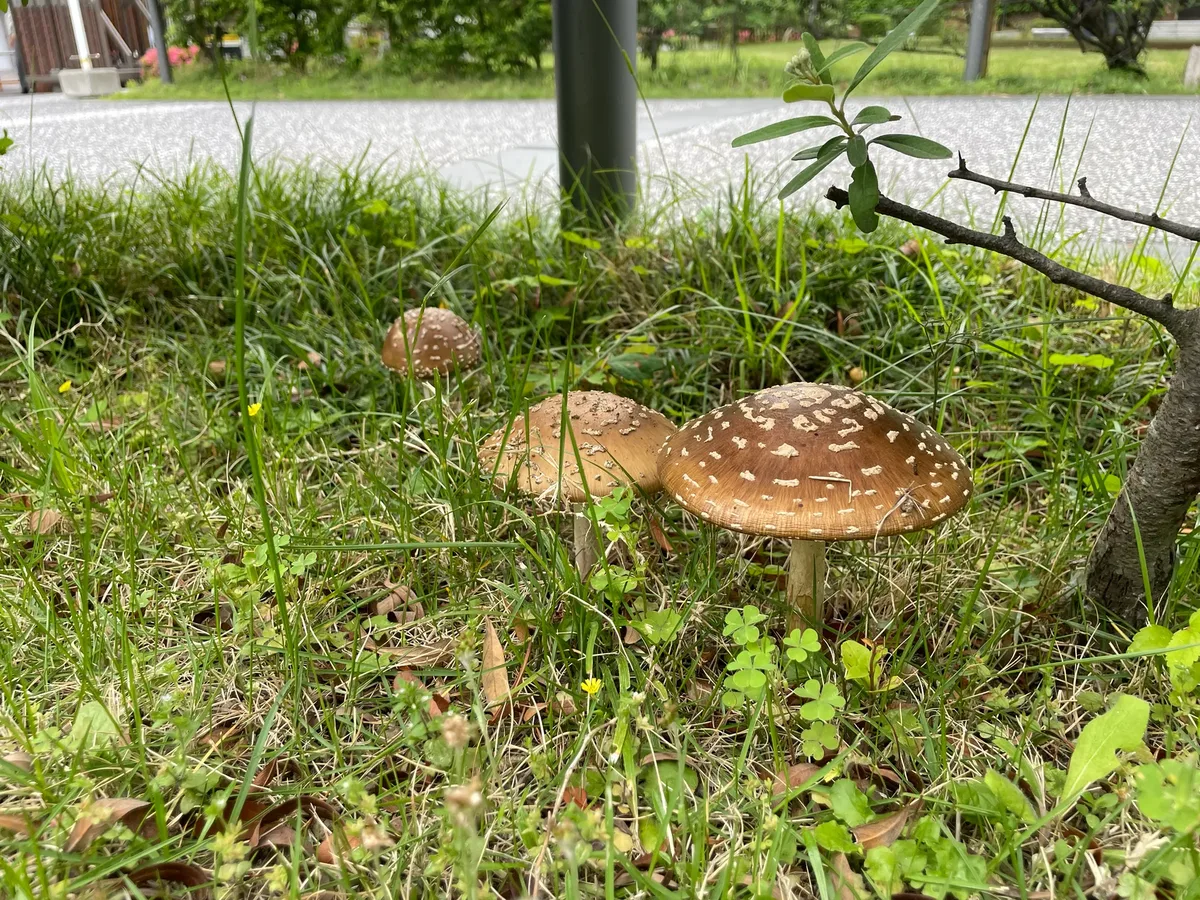 Brad Barker (CC0)
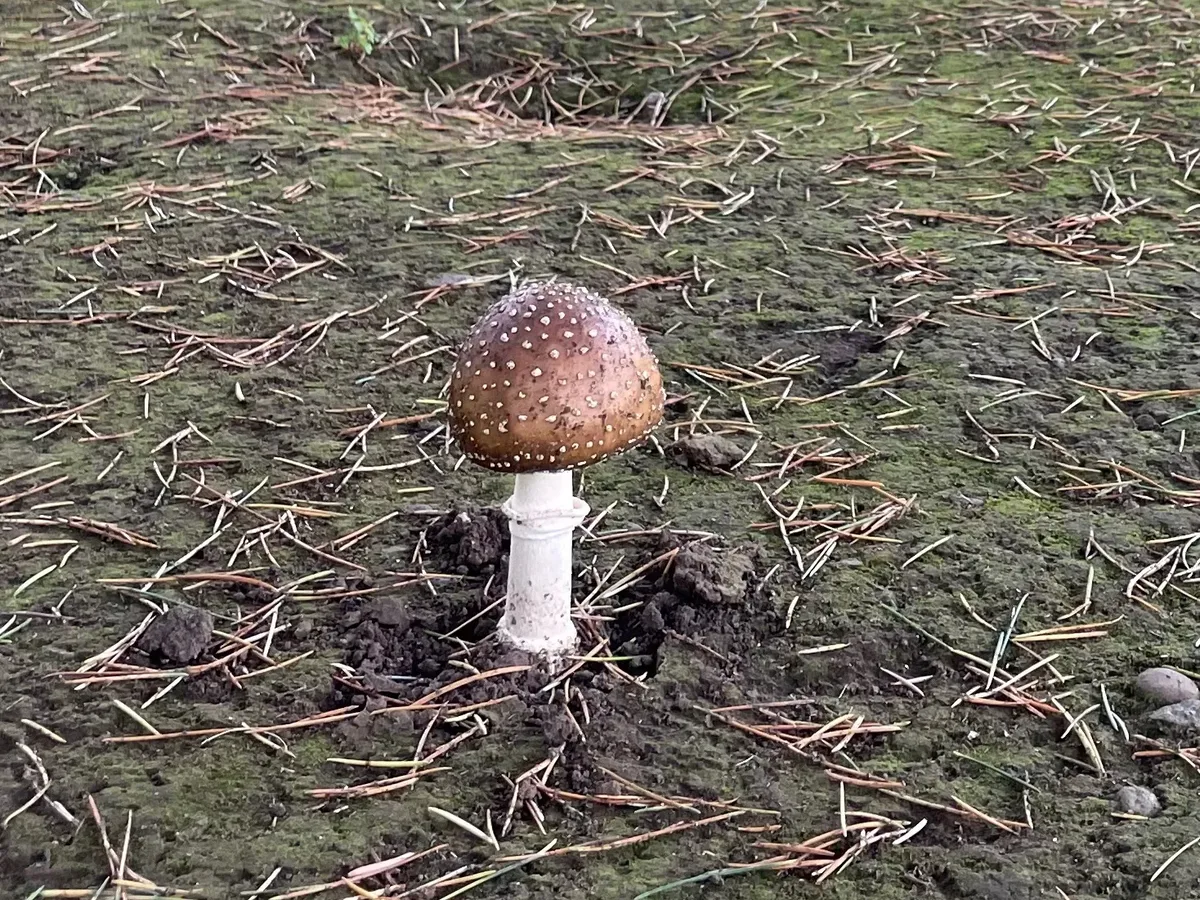 Brad Barker (CC0)
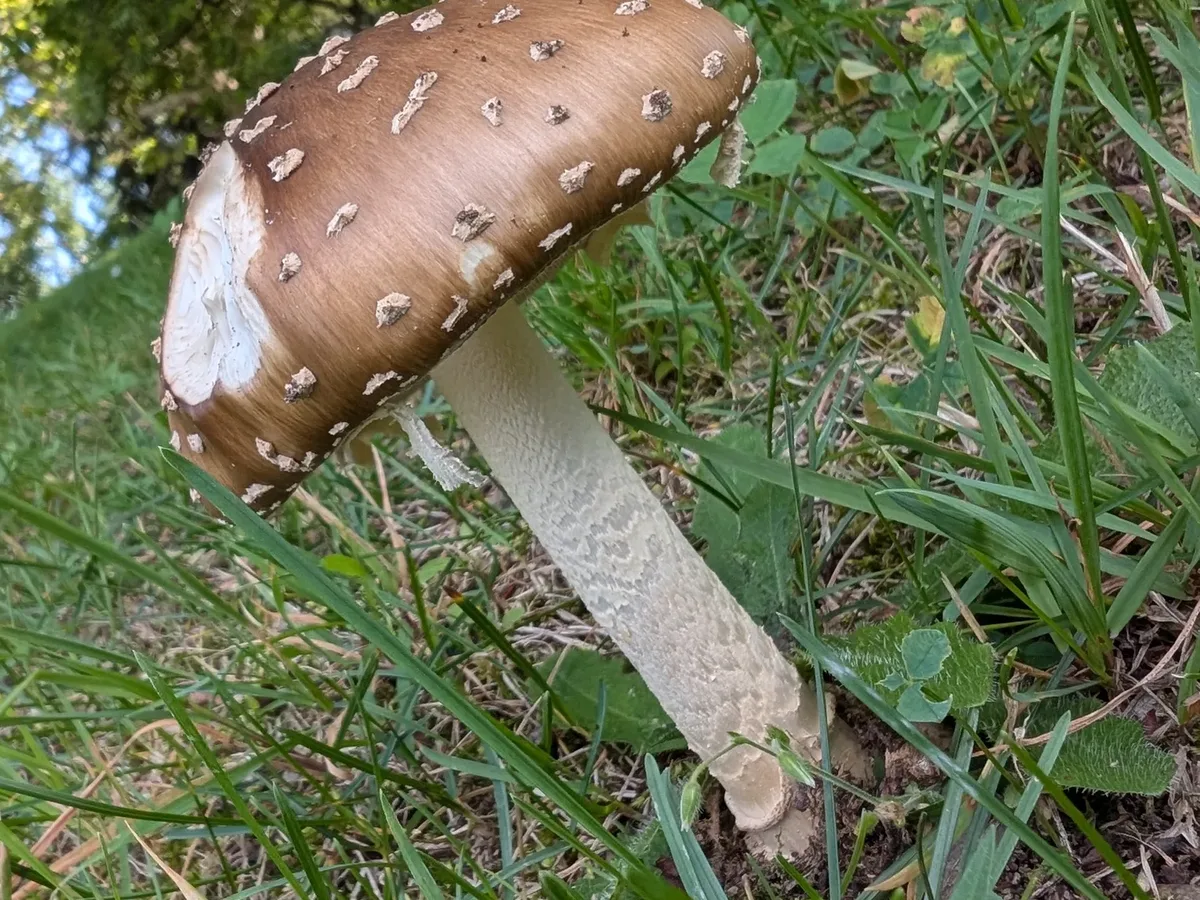 © Atsushi Nakajima (CC BY)© Atsushi Nakajima (CC BY)© Atsushi Nakajima (CC BY)
Edible only with the right preparation - or safe for some people but not others. Learn the caveats first.
Never eat a mushroom you are not 100% sure of - check the look-alikes below, and always cook wild mushrooms.
How to recognise it
Amanita ibotengutake is the East Asian counterpart of the European panther cap (Amanita pantherina). Like that species, it combines a deceptively natural-looking brown cap with a toxin load far more potent than its moderate appearance suggests.
Cap
The cap (5-12 cm) opens broadly convex to nearly flat, coloured a warm mid-brown to hazel or greyish-brown, typically darkest at the centre.
Its surface is dressed with small, neat, pure-white warts - the remnants of the universal veil that once enclosed the whole fruiting body - scattered evenly across the cap.
These warts are firm and diagnostic in dry weather, but rain washes them away, and a rain-washed specimen can look almost unremarkably plain brown, stripping away the most visible warning sign.
The cap margin is smooth and lacks the radial grooves seen in grisettes and other ringless Amanitas.
Gills / Pores
The gills are free, crowded, white, and yield a white spore print.
Stem
The stem (6-14 cm) is white to pale greyish-white, with a characteristic abruptly swollen bulbous base.
This base is one of the most important features to examine: the volva has not formed a free sac but remains attached as one or more concentric collar-like rings or ridges encircling the top of the bulb - you need to gently excavate the soil to see this clearly.
A pendant white ring sits in the upper portion of the stem; it is smooth on its upper face (not grooved), which helps distinguish this species from the grey spotted amanita (A. spissa) and the blusher (A. rubescens).
Flesh
Flesh is white throughout and does not stain or blush - the absence of blushing is a key distinction from the edible-when-cooked blusher.
Why it's dangerous
Amanita ibotengutake is the principal ibotenic-acid poisoning species in Japan, responsible for a significant number of mushroom poisoning cases recorded annually by the Japanese Ministry of Health, Labour and Welfare.
Poisoning incidents overwhelmingly arise from misidentification as Amanita rubescens (the blusher), a traditionally gathered edible mushroom in Japanese oak and beech forest.
Because the blusher is a genuinely popular and commonly gathered species, ibotengutake reaches the table more often than might be expected - baskets of mixed blushers sometimes contain ibotengutake mixed in by an inattentive hand.
At least one fatality has been associated with this species in Japan, though severe non-lethal poisonings are the more common outcome.
The public health burden is amplified because the poisoning season coincides with autumn mushroom festivals, media features on foraging, and the peak of recreational forest gathering - all circumstances that increase the number of people in the field with variable skill levels.
Toxin
Amanita ibotengutake contains ibotenic acid and muscimol, the same principal toxins as the European fly agaric (A. muscaria) and panther cap (A. pantherina). But they are reported at substantially higher concentrations than in A. pantherina - a difference that helps explain why ibotengutake poisoning cases in Japan tend to be clinically more severe.
Ibotenic acid is a structural analogue of the excitatory neurotransmitter glutamate and acts as a potent agonist at NMDA and other ionotropic glutamate receptors in the central nervous system.
Once absorbed, ibotenic acid partially decarboxylates to form muscimol - a highly potent GABA-A receptor agonist, producing CNS depression, sedation, and loss of coordination.
The two compounds thus act somewhat oppositely: ibotenic acid excites, muscimol inhibits. Their interplay in the poisoned patient produces the characteristic alternating agitation and stupor that makes ibotenic-acid poisoning so alarming to witness.
Neither compound is an amatoxin; there is no mechanism of delayed liver destruction. The gastrointestinal symptoms that sometimes accompany poisoning are thought to be caused by additional irritant compounds or by the direct neuroactive effects on the gut.
The species was formally described by Oda, Tanaka & Tsuda in 1999, distinguishing it from the European A. pantherina on morphological and chemical grounds.
Symptoms
Onset is typically rapid, usually within 30 minutes to 2 hours of ingestion - much faster than amatoxin poisoning. While alarming, this at least means poisoning is rarely attributed to an innocent meal the day before.
Early symptoms commonly include dizziness, confusion, and an intoxicated sensation that can resemble alcohol inebriation.
This is followed quickly by more pronounced neurological signs: agitation, excitement, delirium, and sometimes hallucinations alternating with profound drowsiness, stupor, or apparent coma.
Muscle twitching, uncoordinated movements (ataxia), and in severe cases convulsions have been reported. Gastrointestinal symptoms (nausea, vomiting, hypersalivation) are variable and not always prominent.
In children and elderly individuals, or at high dose, the central nervous system effects can be severe enough to require hospitalisation, respiratory support, and close monitoring.
Recovery in most adults occurs within 4-12 hours with supportive care, but the window of maximum danger - deep sedation, respiratory depression - requires medical observation.
The poisoning caused by ibotengutake in Japan is reported to be clinically more severe on average than typical A. muscaria poisoning in Europe, likely reflecting higher ibotenic acid concentrations.
Staying safe
Amanita ibotengutake is one of the most important toxic mushroom species in Japan, causing more recorded poisoning incidents than many other amatoxin-bearing species and carrying broader public health significance than its relative obscurity in Western mycology might suggest.
The key danger is misidentification as Amanita rubescens (the blusher), a popular and deliberately-gathered edible mushroom in Japan.
Both species grow in the same oak and beech forests during the same season, and the blushing test - cut the flesh and watch for pink staining - is the only reliable field test that separates them.
Never rely on cap colour, cap shape, or wart presence alone; these features can overlap and can be obscured by weather.
If you have any suspicion that a person has ingested ibotengutake or any ibotenic-acid-containing Amanita, seek emergency hospital care immediately. Do not wait for symptoms to escalate.
Where & when it grows
Habitat
This species lives underground much of the year as a network of mycelium threaded through the fine roots of forest trees, drawing carbon from its partners and exchanging water and minerals in return - the classic ectomycorrhizal exchange that underpins the productivity of East Asian temperate forest.
On the surface it appears only when conditions align: summer monsoon warmth, sustained soil moisture, and the right host trees.
Oaks (particularly Quercus mongolica, Q. serrata, Q. acutissima) are the most frequently named hosts in Japanese and Chinese literature, with chestnuts and beeches also documented.
The forests where ibotengutake grows are the same forests where foragers seek choice edibles:
- Amanita hemibapha (the Asian Caesar's mushroom)
- Tricholoma species (shimeji)
- matsutake
It grows on the forest floor of hill and lower-mountain woodland, typically at 200-1500 m, often in forested areas near villages that have been used for mushroom gathering for generations - places where cultural familiarity with some mushrooms can lower caution toward others.
When
The fruiting season in Japan runs from June through October, peaking in July, August, and September.
This window is driven almost entirely by the summer monsoon: the tsuyu rainy season delivers sustained soil moisture, and the warm post-monsoon weeks that follow provide the soil temperatures (15-26 °C) that trigger fruiting.
Individual fruit bodies push up quickly after rainfall events and can mature and deteriorate within a week or two, so the season is not one continuous flush but a series of episodic pulses following significant rain.
The timing is important context for poisoning risk: this peak coincides precisely with Japan's traditional mushroom-gathering season, bringing ibotengutake onto the forest floor exactly when and where foragers are most active.
How it grows
Grows singly or in small widely-spaced groups, never in tight clusters.
Like all Amanitas, the young fruit body begins life fully enclosed within a universal veil. The very first stage you might encounter is a rounded, partly soil-buried form resembling a small egg or golf ball.
As the stem elongates and the cap pushes up and expands, the universal veil tears. Fragments land on the cap as the distinctive white warts, while the lower portion of the veil remains as the ridged or collared rings around the swollen bulb.
This developmental sequence means young specimens still enclosed in the veil look entirely unlike mature ones, making early-stage identification difficult.
Always excavate the full base of any brown cap in oak or beech forest - you need the stem base in your hand to make a safe identification.
Fruiting conditions
Ectomycorrhizal; flushes after significant monsoon and post-monsoon rainfall events (>25 mm over 14 days) when soil temperature is in the 15-26 °C range. Peak July-September in temperate Japan. Individual flushes appear 5-12 days after triggering rain events.
Look-alikes
The most dangerous and common field confusion in Japan is with Amanita rubescens (the blusher) - an edible-when-cooked species actively gathered by Japanese foragers under the name 'tamago-takemodoki'.
The blusher's flesh reddens distinctly where cut, scratched, or insect-damaged; ibotengutake's flesh remains pure white. This blushing test is the most important single character to apply, and it requires actually cutting or scratching the flesh, not merely looking at the cap.
A second important lookalike is Amanita hemibapha (the half-dyed Amanita, an Asian relative of Caesar's mushroom), which has an orange-red to orange cap rather than brown and is consumed as food in parts of Japan. These species would rarely be confused at the colour level, but in wet conditions when warts have washed from ibotengutake the resemblance to any wart-less Amanita increases.
Young specimens still in the 'egg' stage can be mistaken for young paddy straw mushroom (Volvariella volvacea) buttons, though the habitats differ.
The European panther cap (Amanita pantherina) is very similar morphologically and toxicologically; it occurs in Central Asia and parts of mainland China but is replaced in Japan by ibotengutake.
Finally, Amanita pantherina-type morphology overlaps with the grey spotted amanita (A. spissa / A. excelsa), a mediocre edible that itself has a deadly lookalike problem. The distinction here (grooved ring in A. spissa, smooth ring in ibotengutake) requires careful examination.
Neither species should be treated as safe without full identification.
Amanita phalloides typically has a pale greenish-yellow to olive cap (though white forms exist), a free bag-like white volva at the base (not a ridged collar), and contains amatoxins - a fundamentally different and more acutely lethal toxin mechanism. Any doubt about whether a pale or whitish Amanita is A. phalloides rather than ibotengutake is itself a reason to immediately discard the specimen and seek medical advice if ingestion is suspected, as the clinical courses and urgency of treatment differ.
Amanita hemibapha has a vivid orange to orange-red cap (not mid-brown), yellow gills (not white), and a large white volva that is sac-like (not a ridged collar). The bright orange-red colour and yellow gills make visual confusion unlikely in good light, but rain-soaked or sun-bleached specimens can look less vivid. Always check gill colour and volva structure.
The blusher is edible when thoroughly cooked and is actively gathered in Japanese oak and beech forest - the primary misidentification scenario. The single most reliable field test: cut or scratch the flesh and wait 1-2 minutes; the blusher's flesh stains distinctly pink to dull red where damaged or insect-eaten. Amanita ibotengutake flesh stays pure white throughout. The blusher also typically shows a more pinkish-brown to vinaceous-brown cap tone and its warts are often more variable in size and greyish rather than purely white. Never rely on cap colour alone; always do the flesh test.
Amanita spissa is a mediocre edible (in continental Europe) with a grooved or striate ring surface on the upper face - ibotengutake has a smooth ring upper surface. The cap of A. spissa is typically greyer and the warts more greyish than white. A. spissa has a distinctive earthy raw-potato smell absent in ibotengutake. Note that A. spissa itself has the panther cap (A. pantherina) as a dangerous lookalike, making any brown warty Amanita with a bulbous stem base suspect.
Young Amanita ibotengutake in the undifferentiated 'egg' stage can superficially resemble paddy straw mushroom buttons. Paddy straw mushroom grows on compost, rice straw, and decaying organic matter - not in forest soil under oaks and beeches. If an egg-stage button is cut open, Volvariella shows no gills yet but the internal structure and smell differ from Amanita. Never harvest egg-stage buttons of unknown species.
The European panther cap is morphologically very similar and contains the same ibotenic acid/muscimol toxins. In Japan A. pantherina sensu stricto is largely replaced by A. ibotengutake; overlaps may occur in parts of mainland China. Both are toxic; field separation requires microscopy or molecular analysis and is irrelevant from a safety perspective - treat them identically.
A reference guide - never an edibility guarantee. When in doubt, leave it out.