Franchet's amanita
Amanita franchetiisyn. Amanita aspera (Pers.) Gray, Agaricus asper Pers., Amanita aspera var. franchetii
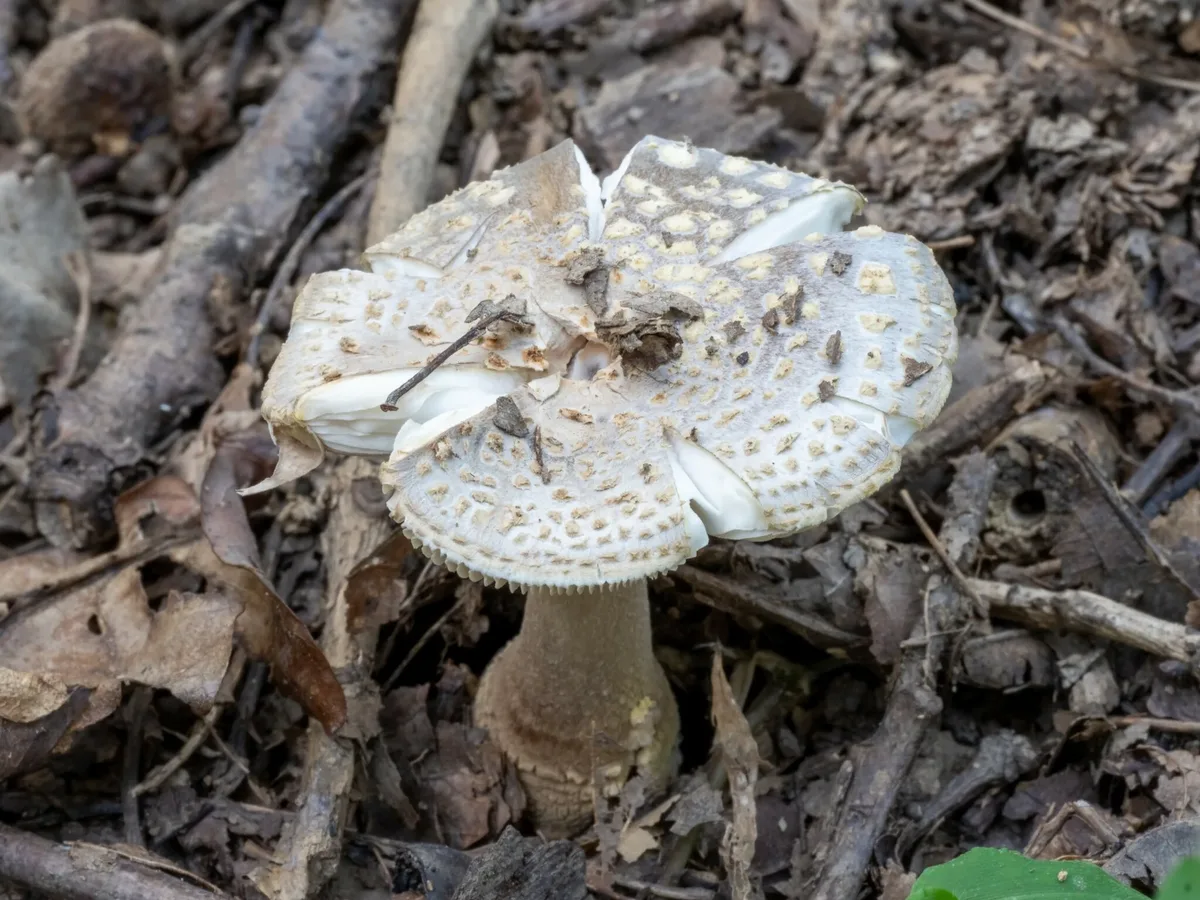 © Matej Frančeškin (CC BY 4.0)
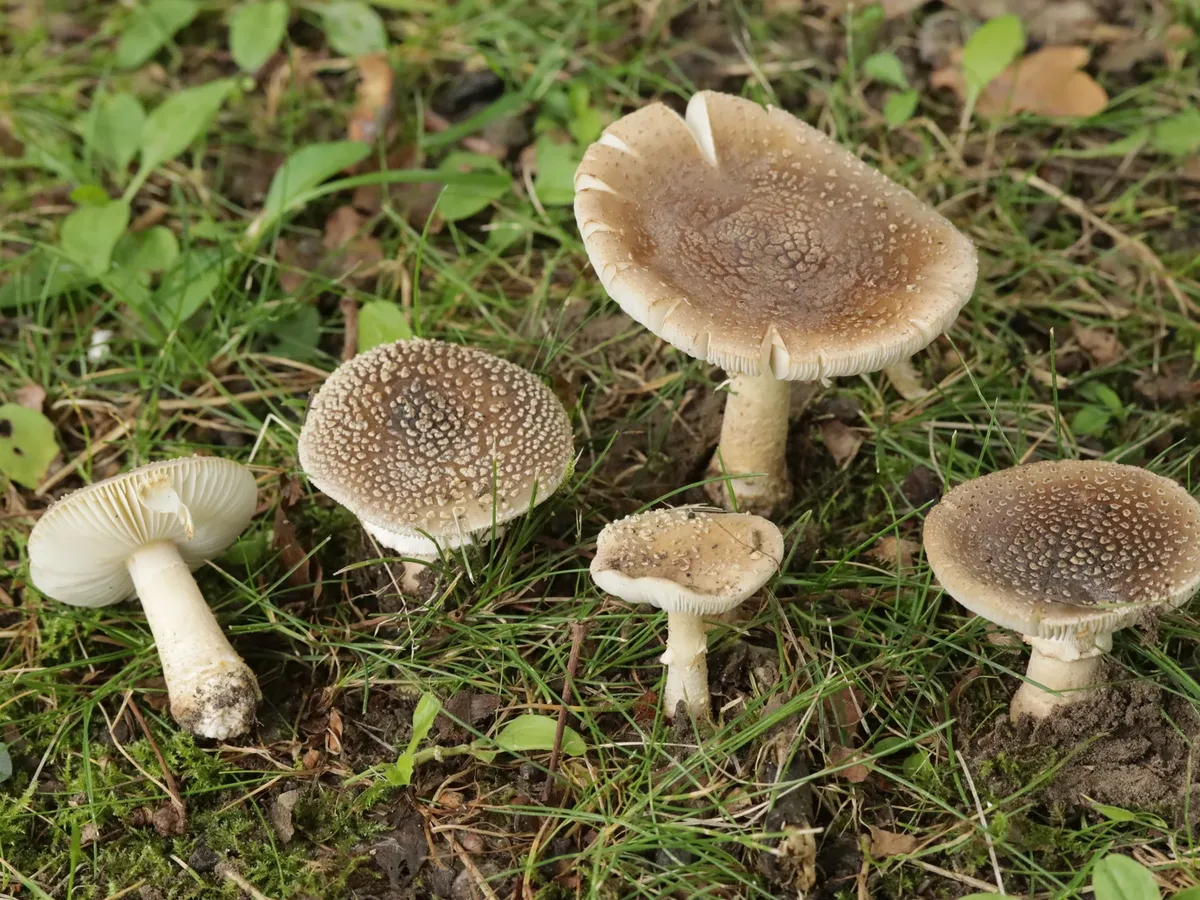 © Björn Sothmann (CC BY-SA)
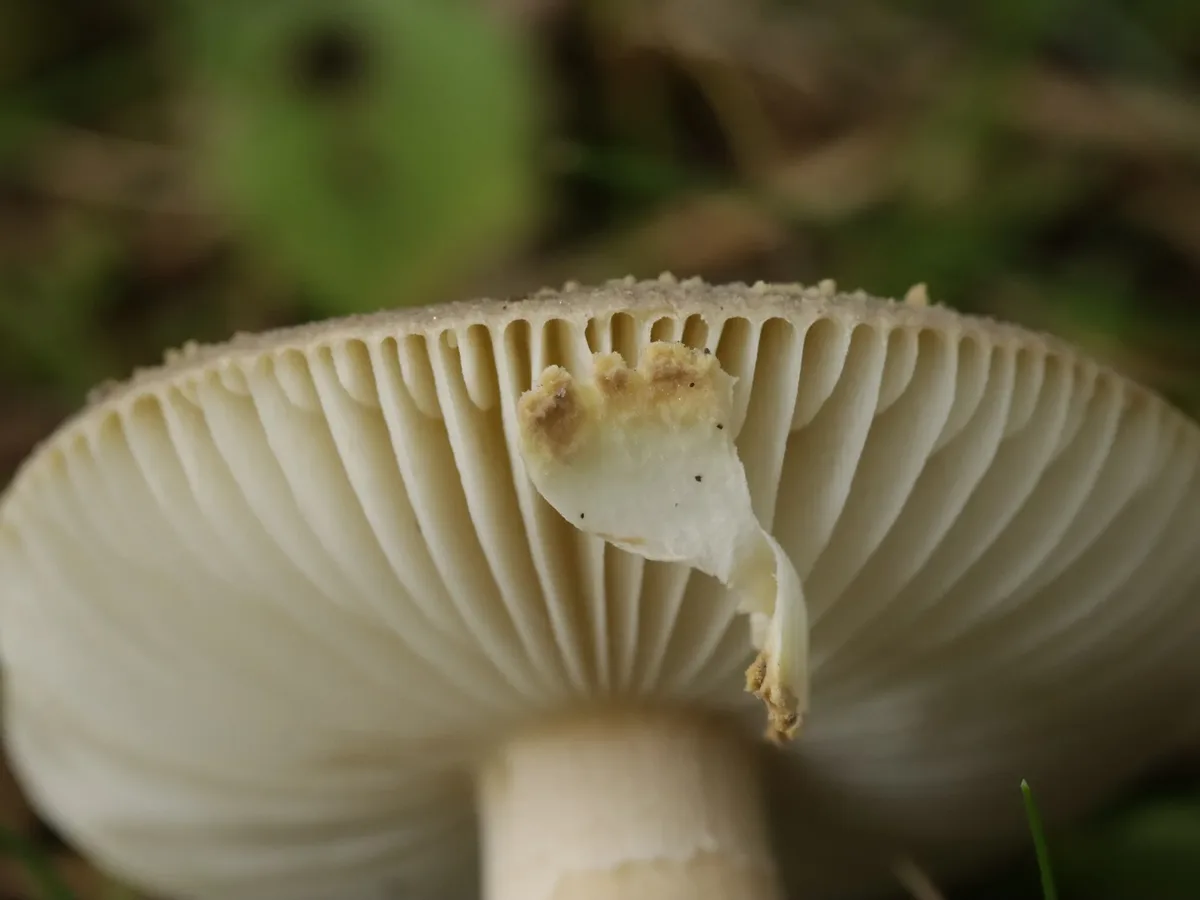 © Björn Sothmann (CC BY-SA)
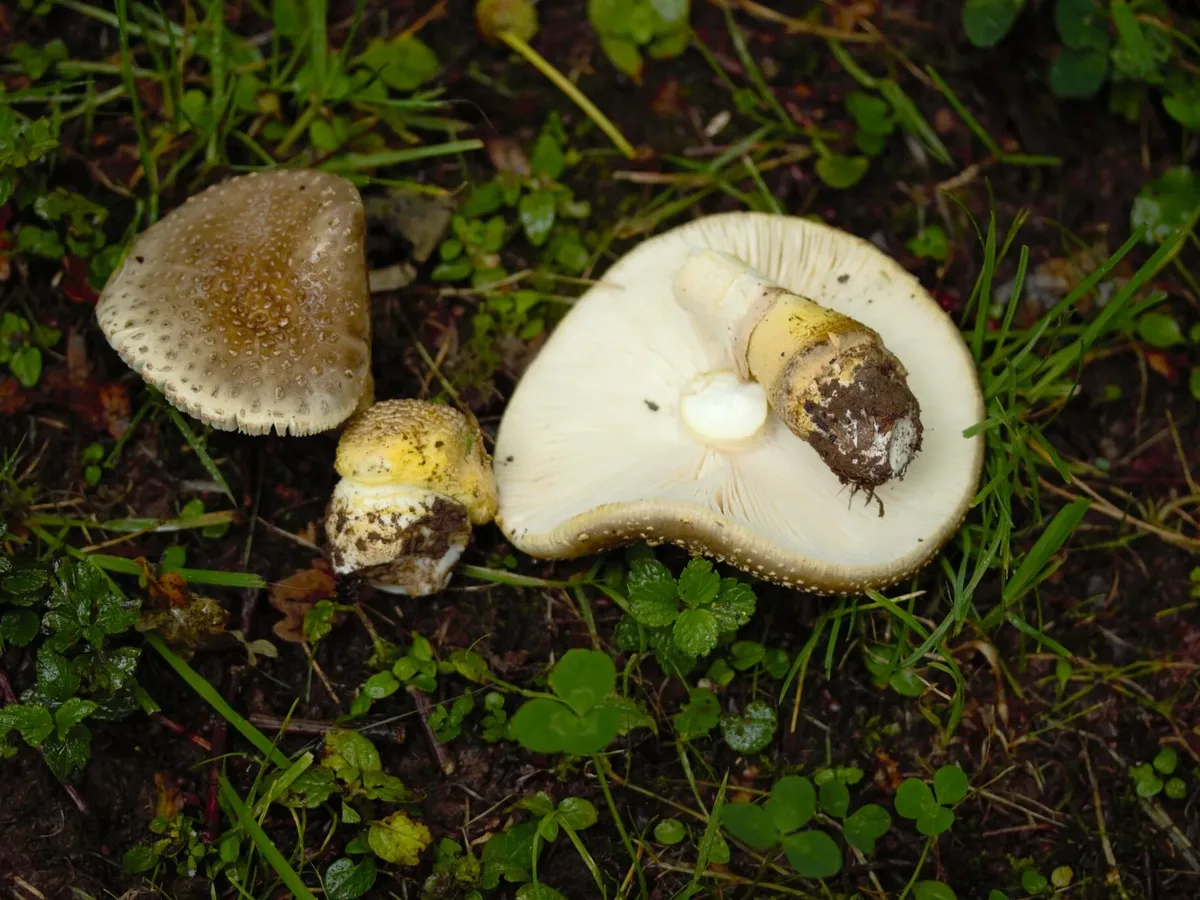 © Patrick Bayan (CC BY)
 © Patrick Bayan (CC BY)
 © Patrick Bayan (CC BY)
 © vuikaan (CC BY)
 © vuikaan (CC BY)
 © vuikaan (CC BY)
 © vuikaan (CC BY)
 © Lukas Large (CC BY-SA 2.0)
 dbmhartley (CC0)© Matej Frančeškin (CC BY 4.0)© Björn Sothmann (CC BY-SA)
Edible only with the right preparation - or safe for some people but not others. Learn the caveats first.
Never eat a mushroom you are not 100% sure of - check the look-alikes below, and always cook wild mushrooms.
How to recognise it
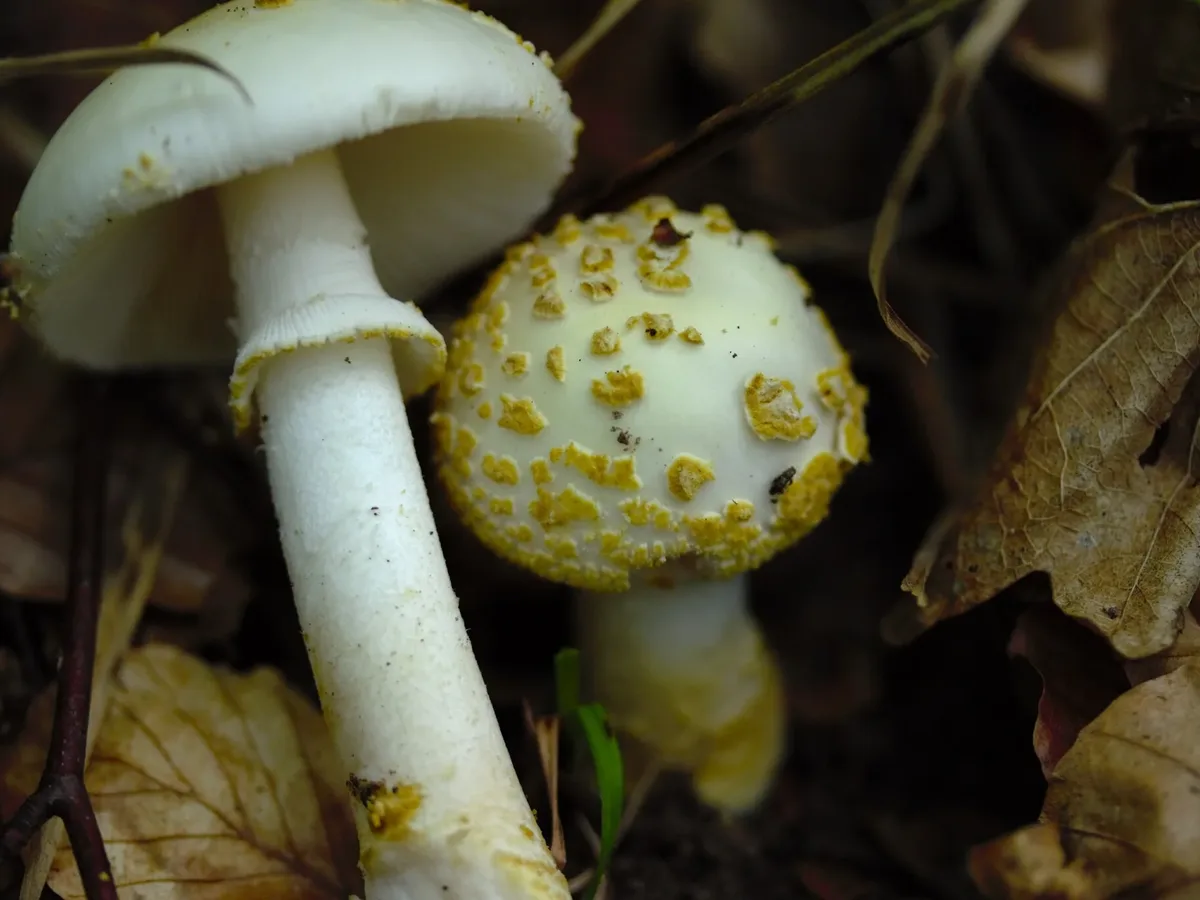
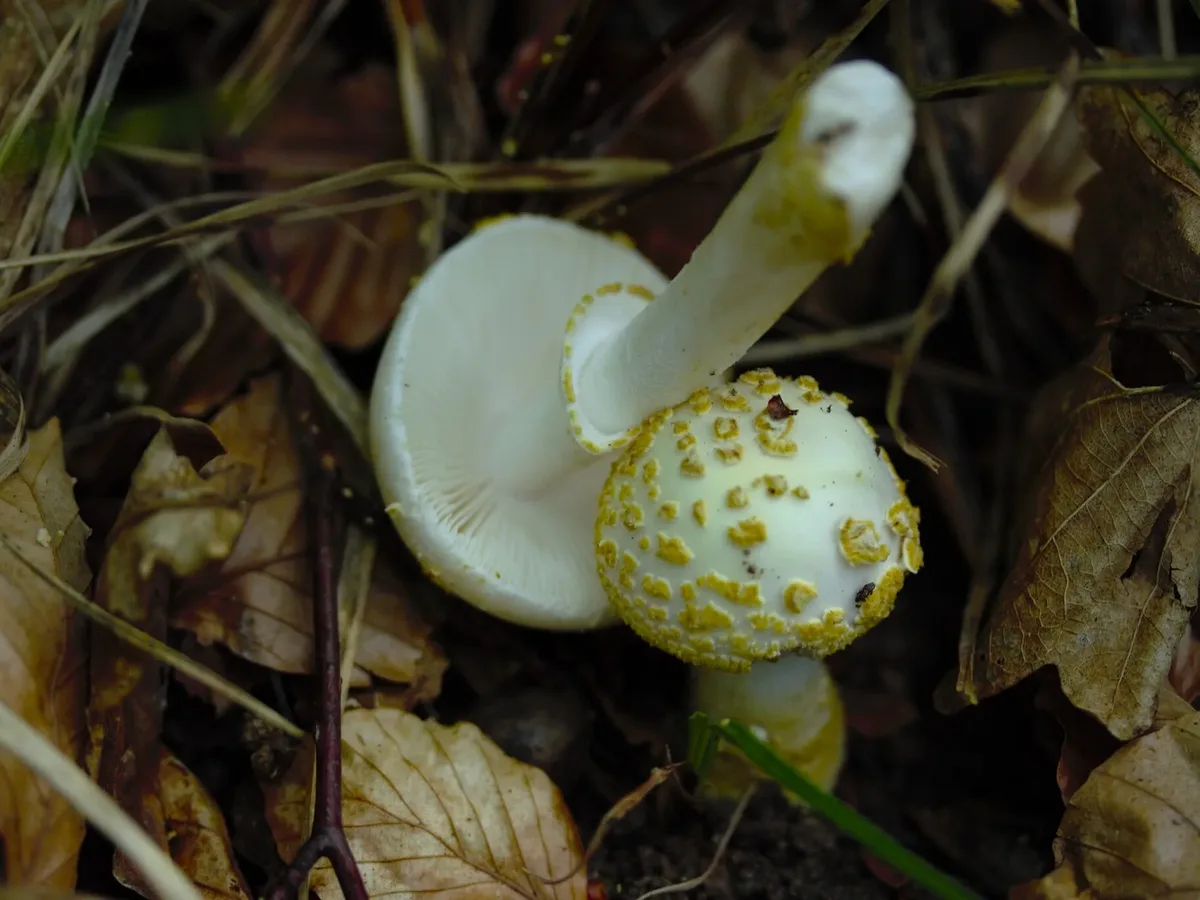
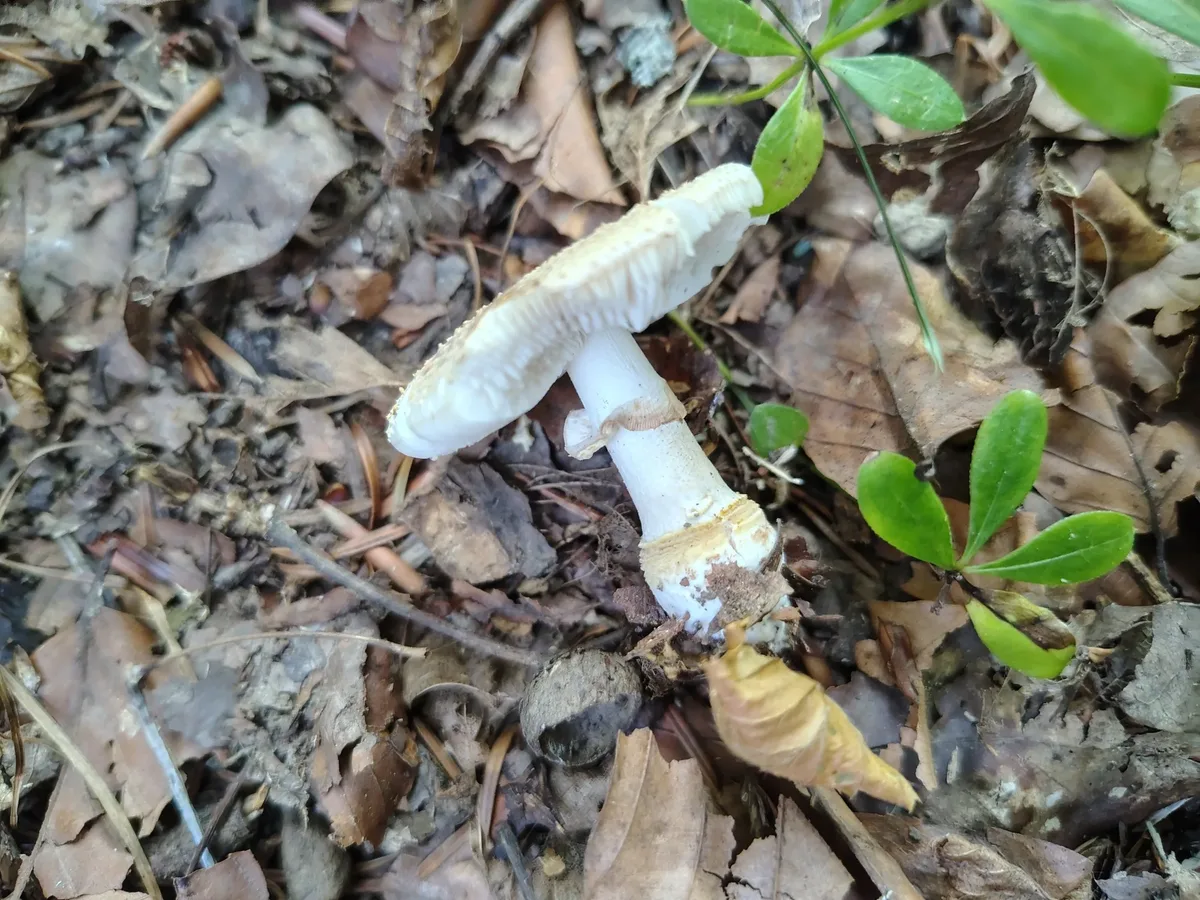
Franchet's amanita is a medium-sized Amanita, most easily recognised by a combination of features:
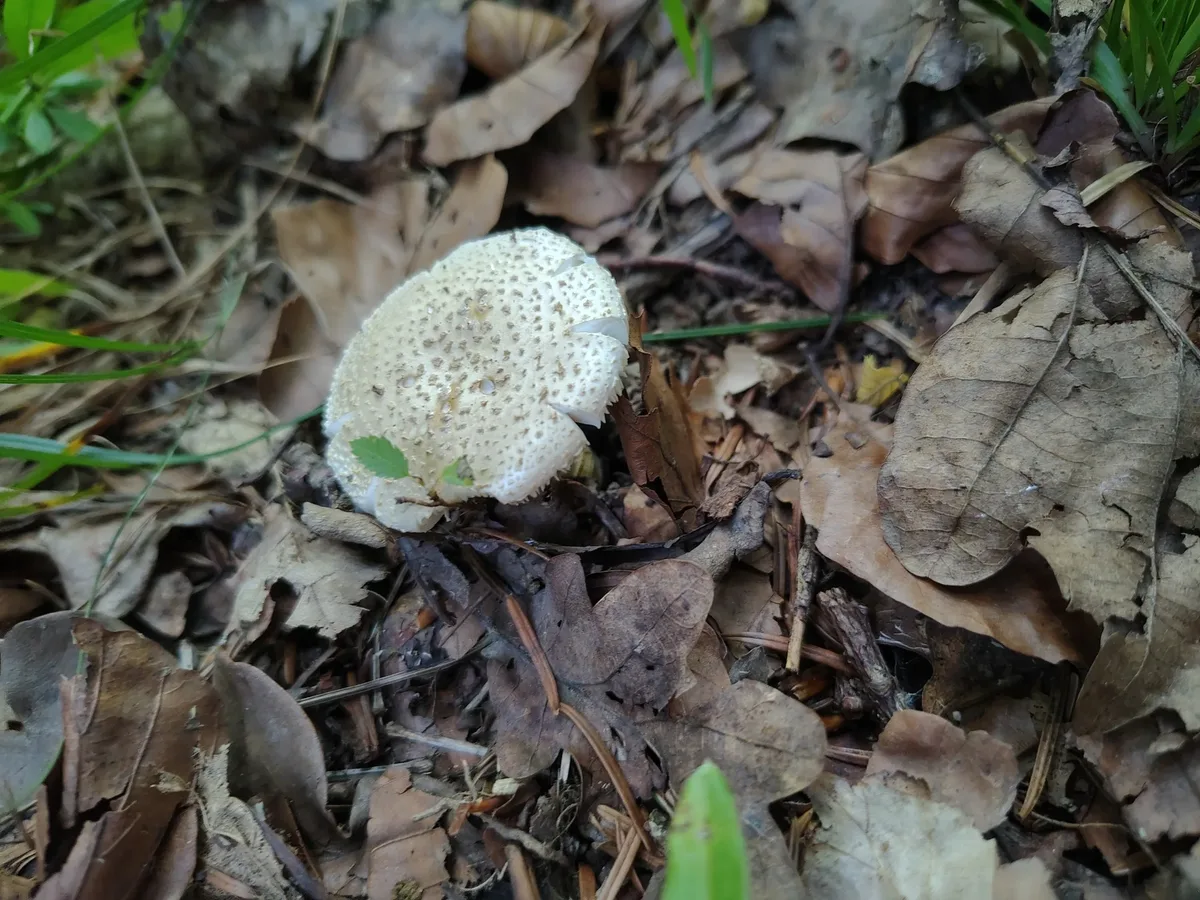
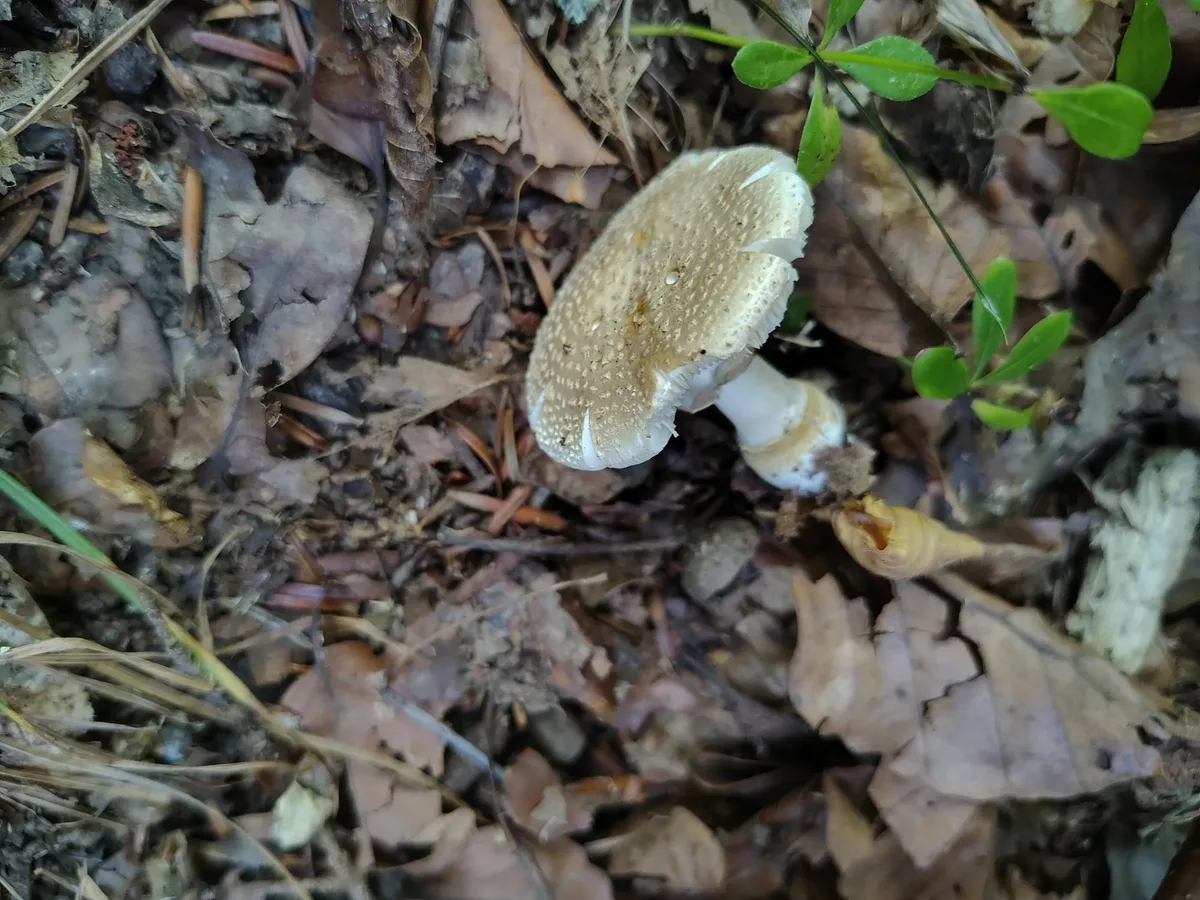
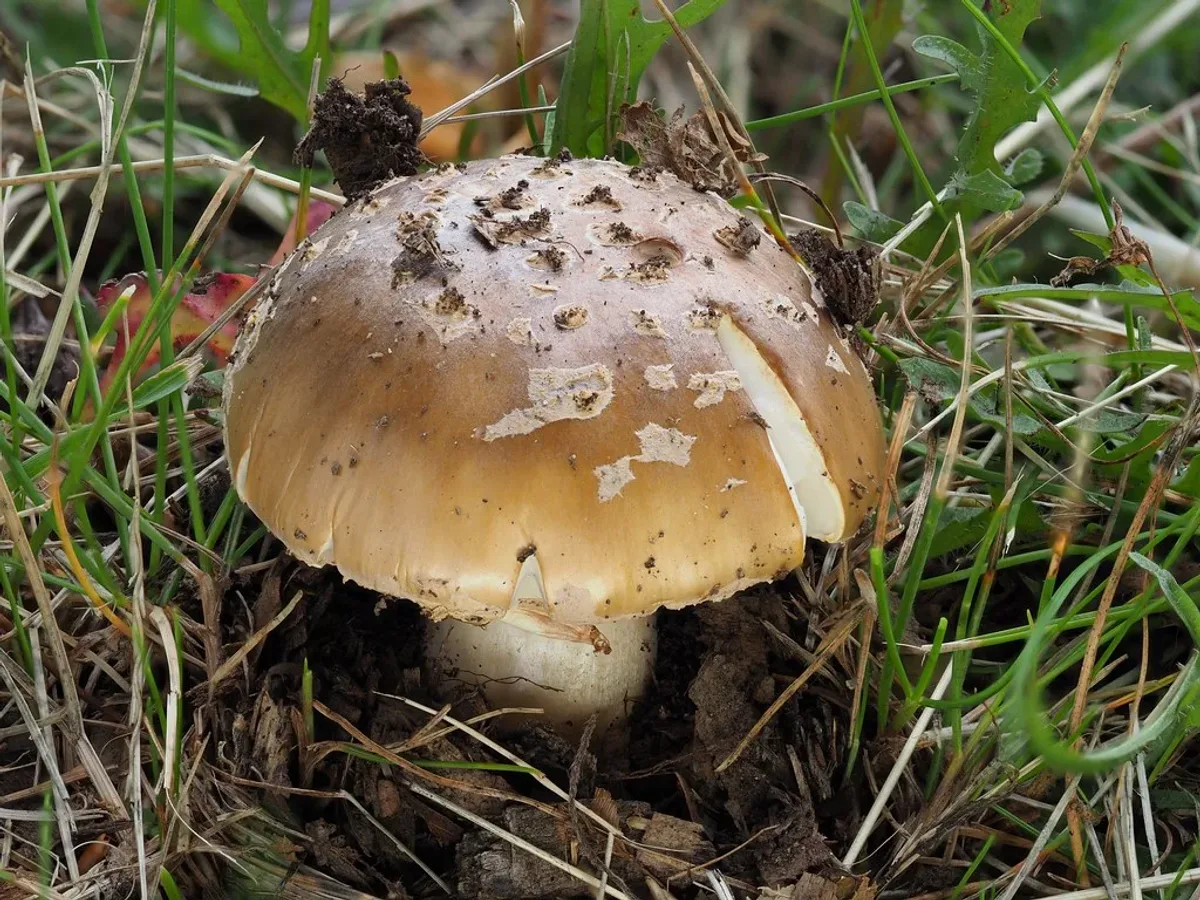
- a honey-brown to ochre cap covered in soft, yellowish (sometimes lemon-yellow) warts or irregular patches
- white flesh that does not change colour when cut
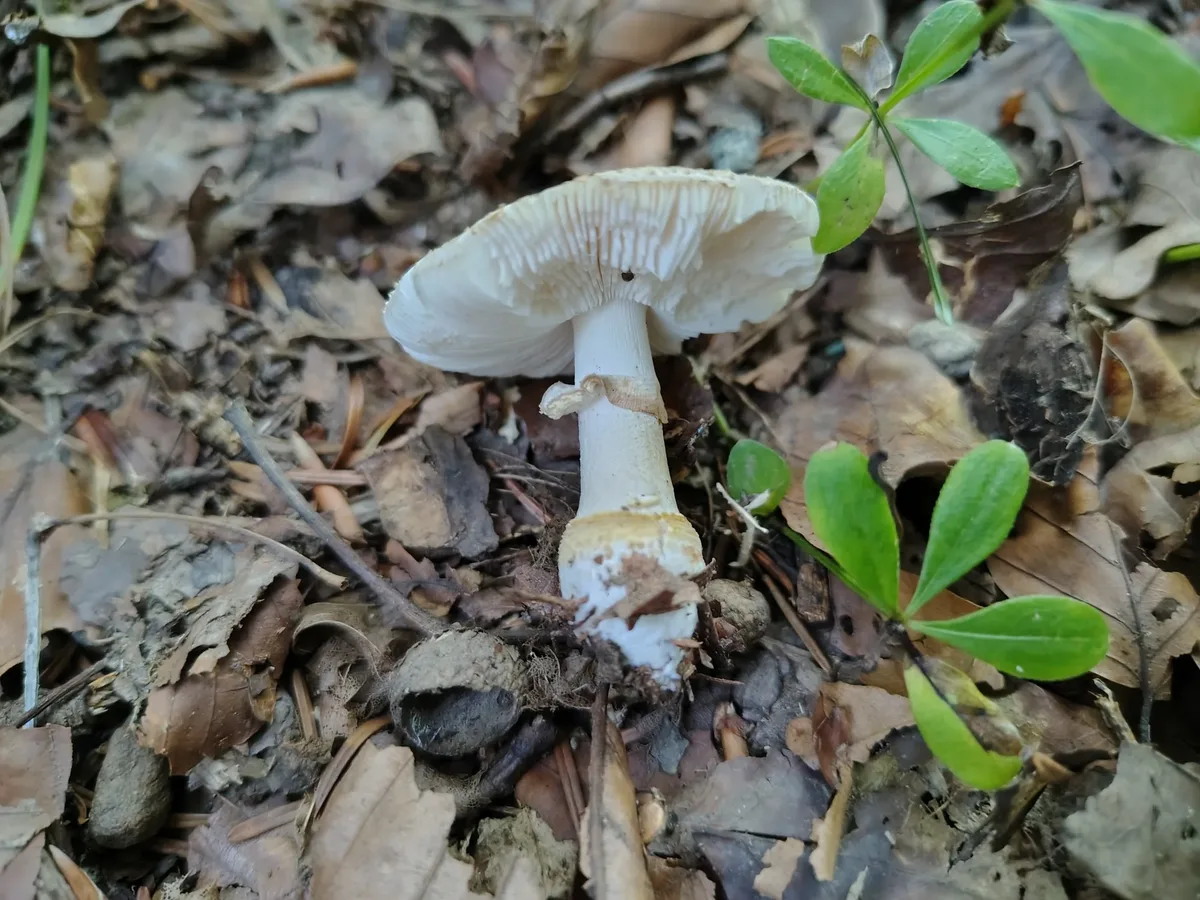
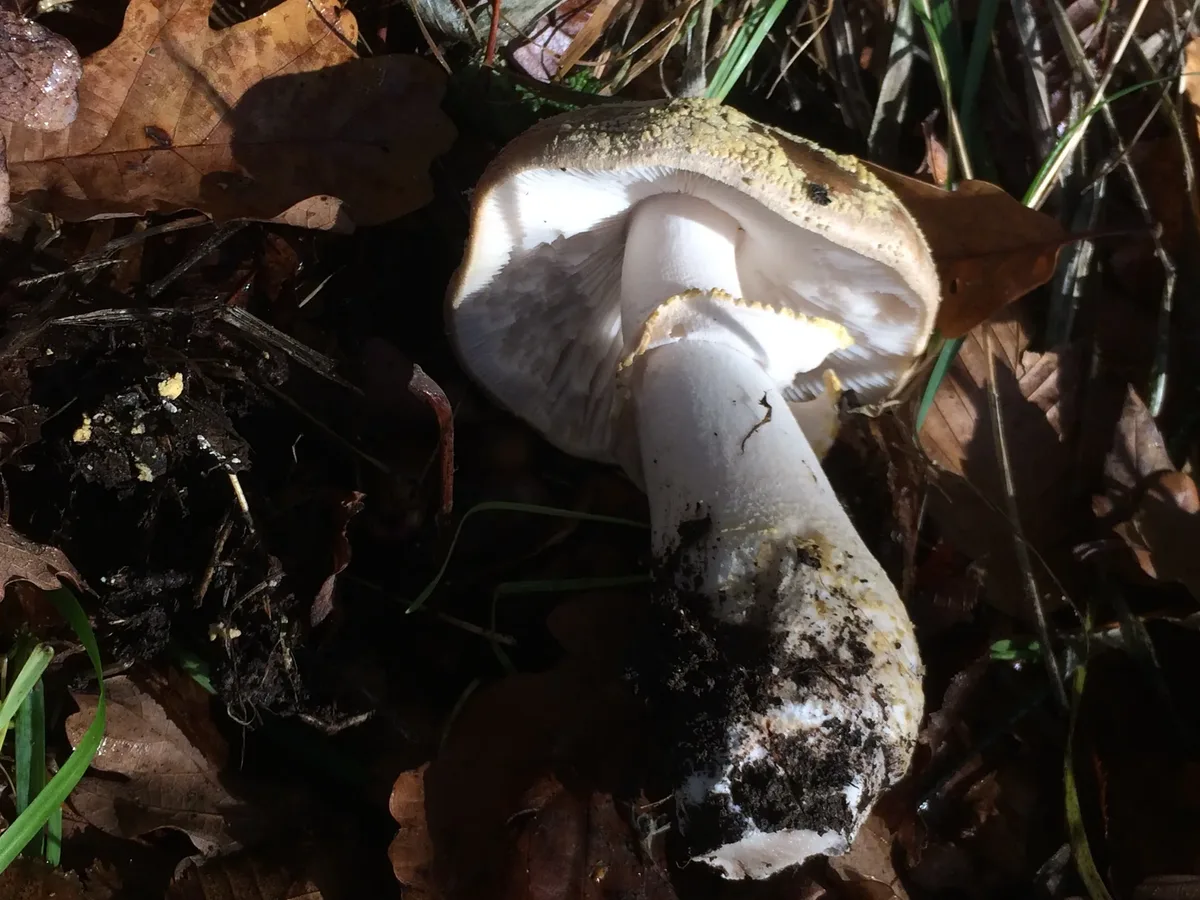
- a pendant yellowish-tinged ring
- a bulbous but non-volvate base
The yellowish tint of the veil warts, rather than the stark white seen on the fly agaric or grey-spotted amanita, is the most consistent field clue.
Gills are free and white to cream. The cap margin lacks striations.
In age or after rain the warts may partially wash off, making identification harder - which is exactly when dangerous confusion with death-cap group species becomes most likely.
Because the colour palette and size overlap with several other Amanitas, always examine the base of the stem and verify the absence of a free volva.
Why it's dangerous
The principal danger is not the toxicity of A. franchetii itself, but its capacity to be mistaken for the death cap (Amanita phalloides) or other deadly Amanitas, particularly by foragers who pick young or rain-washed specimens from which the diagnostic yellow warts have been partially lost.
In the Mediterranean, A. phalloides occurs in the same woodland habitats at the same season, creating genuine proximity and confusion risk.
Any amanita that cannot be unambiguously identified by an experienced mycologist should be left untouched.
Toxin
The exact toxin composition is not fully characterised, but the species is confirmed to contain gastrointestinal irritants, probably including unstable proteins and phenolic compounds similar to those in other mildly toxic Amanitas.
Importantly, amatoxins (alpha-amanitin, beta-amanitin, phalloidin and related cyclopeptides) have NOT been reliably detected in A. franchetii in standard analyses, which distinguishes it from the death cap and destroying angels.
Nevertheless, its toxicology is not exhaustively studied and individual sensitivity may vary.
Symptoms
Consumption typically produces gastrointestinal syndrome: nausea, vomiting, abdominal pain and diarrhoea beginning one to four hours after ingestion and resolving within 24-48 hours in most cases.
Symptoms are usually self-limiting and not life-threatening when the species has been correctly identified.
However, if there is any chance of misidentification with Amanita phalloides or a destroying angel, seek urgent medical attention - amatoxin poisoning presents with a deceptive initial recovery phase before catastrophic and potentially fatal liver and kidney failure sets in 48-72 hours later.
Staying safe
Amanita franchetii is classified as a toxic species not to be eaten.
Although it does not contain the deadly amatoxins responsible for lethal Amanita poisonings, it produces gastrointestinal irritants that cause nausea, vomiting and abdominal cramps.
More critically, its appearance overlaps with the death cap and, less markedly, with the destroying angel and panther cap - species responsible for the majority of fatal mushroom poisonings in Europe.
Never collect this species to eat. If there is any uncertainty in the field as to whether a specimen is A. franchetii or A. phalloides, treat it as a death cap.
Where & when it grows
Habitat
A mycorrhizal species of mixed broadleaved and mixed woodland across central and western Europe and the Mediterranean basin.
The strongest associations are with oak (including holm oak in the Mediterranean), beech, hornbeam and sweet chestnut, on well-drained, moderately acidic soils.
It shows a preference for established, mature woodland rather than scrub or young plantations.
In the Mediterranean it tends to occur at slightly higher elevations (oak and chestnut belts) rather than in the coastal lowlands.
When
Fruits from midsummer (July) through late autumn (November), with the main flush in September and October.
Mediterranean populations may begin producing fruit bodies slightly earlier after summer thunderstorms.
Like most Amanitas, fruiting follows significant rainfall by roughly one to two weeks, once soil temperatures have cooled below about 15 °C in autumn.
How it grows
Solitary or in widely scattered groups on leaf-litter-covered soil, never forming dense clusters.
The fruit bodies emerge from the universal veil as typical amanita 'buttons', the veil splitting and leaving the yellowish wart fragments on the cap and a few fibrous remnants on the bulb.
Fully developed specimens are often consumed quickly by slugs and insects, meaning the window for clean picking is relatively short.
Fruiting conditions
Fruiting follows significant autumn rainfall (20+ mm over 14 days) once soil temperatures drop below about 18 °C; peak flush appears roughly 7-14 days after rain, in cooling September-October conditions.
Look-alikes
Multiple dangerous and non-dangerous confusions exist.
- Death cap (Amanita phalloides): can have a partially brownish-yellowish cap when growing in hot, dry conditions, and in the button stage both species resemble each other closely. It is distinguished by the prominent free, sack-like white volva at its stem base, greenish to olive-yellow hues in the cap (in typical forms), and white gills that do not turn cream.
- Grey-spotted amanita (Amanita excelsa / A. spissa): paler, greyer warts, a grooved ring, and a radish-like smell but no velvety-yellow tint. It is not poisonous in the same sense but is not recommended either.
- Blusher (Amanita rubescens): similar brownish colours, but warts that are dirtier grey-pink, flesh that slowly blushes pink-to-red when cut, and a distinctly grooved ring.
- Fly agaric (Amanita muscaria): an orange-red to red cap with white warts - colour alone separates them.
- Panther cap (Amanita pantherina): browner with pure-white warts and a rimmed volva rim; it causes serious poisoning via isoxazole toxins.
Any yellowish-ochre amanita with warts growing in broadleaved woodland deserves extreme caution.
The death cap has a prominent, free, sack-like white volva at the stem base - A. franchetii has no such volva, only scattered fibrous remnants on the bulb. Typical A. phalloides has greenish-to-olive-yellow cap hues, but pale or brownish forms in hot conditions look worryingly similar. Gills are white (not cream-turning) and the smell becomes sweetish then unpleasant with age. Contains amatoxins; lethal.
Entirely white with a prominent bag-like volva, shaggy stem surface and white cap lacking coloured warts. Easy to separate from a typical A. franchetii by the white colour, but young specimens of A. franchetii before the cap colour develops could be misread. Contains amatoxins; lethal.
Browner cap with distinctly pure-white (never yellowish) warts, a smooth (non-grooved) ring, and a characteristic narrow rim or collar at the top of the abruptly bulbous base. Flesh does not change colour when cut. Causes severe isoxazole poisoning (muscimol/ibotenic acid); occasionally lethal.
Very similar cap colour, but the flesh slowly blushes pink-to-red when cut or where damaged by slugs and insects. Warts are dirtier grey-pink rather than yellowish, and the ring's upper surface is grooved/striate. Raw flesh of A. rubescens is also toxic; it requires thorough cooking.
Greyer warts and cap; ring has a grooved upper surface; often has a radish-like smell; flesh does not blush and lacks yellowish tints. Not known to be seriously toxic but not recommended for eating.
A reference guide - never an edibility guarantee. When in doubt, leave it out.