Yellow patches
Amanita flavoconia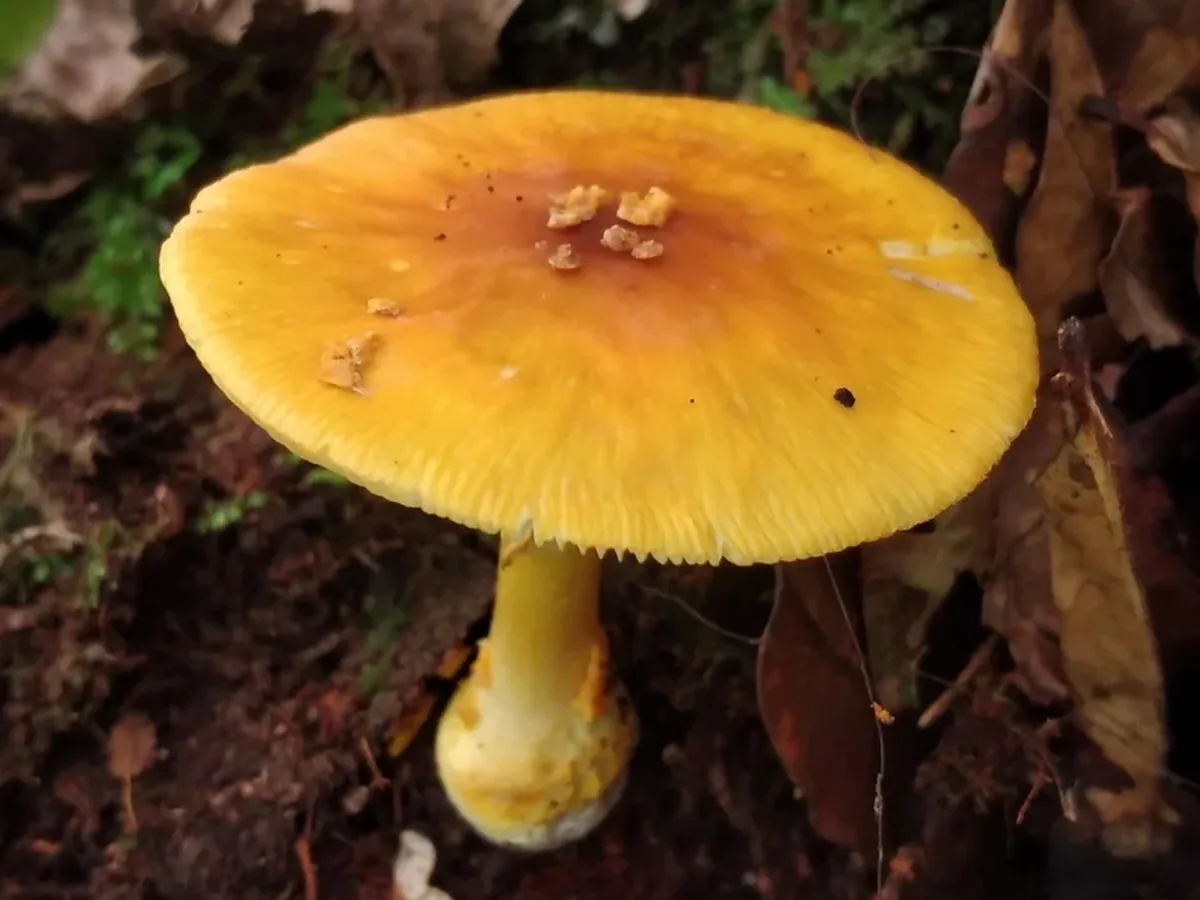 © Andrey Loria (CC BY-SA 4.0)
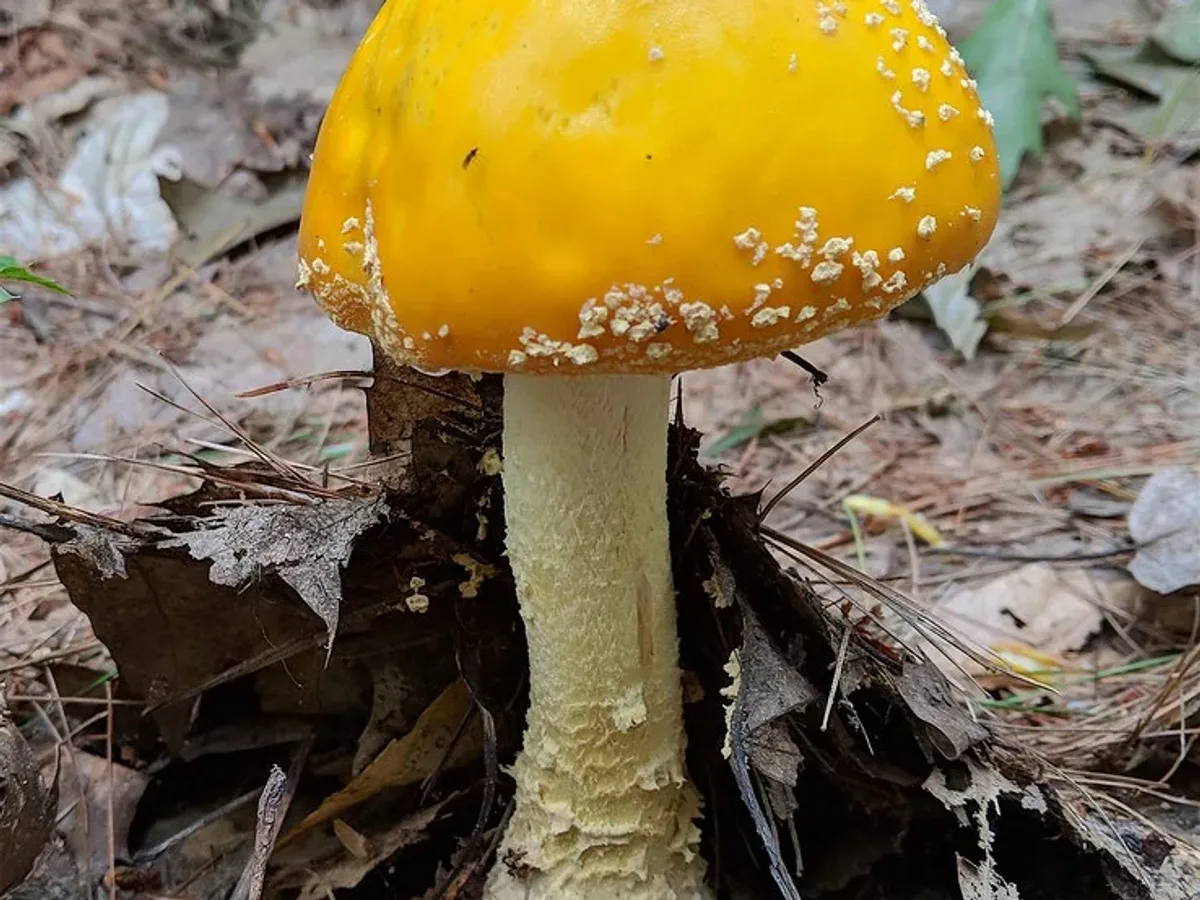 © Under the same moon... (CC BY 2.0)
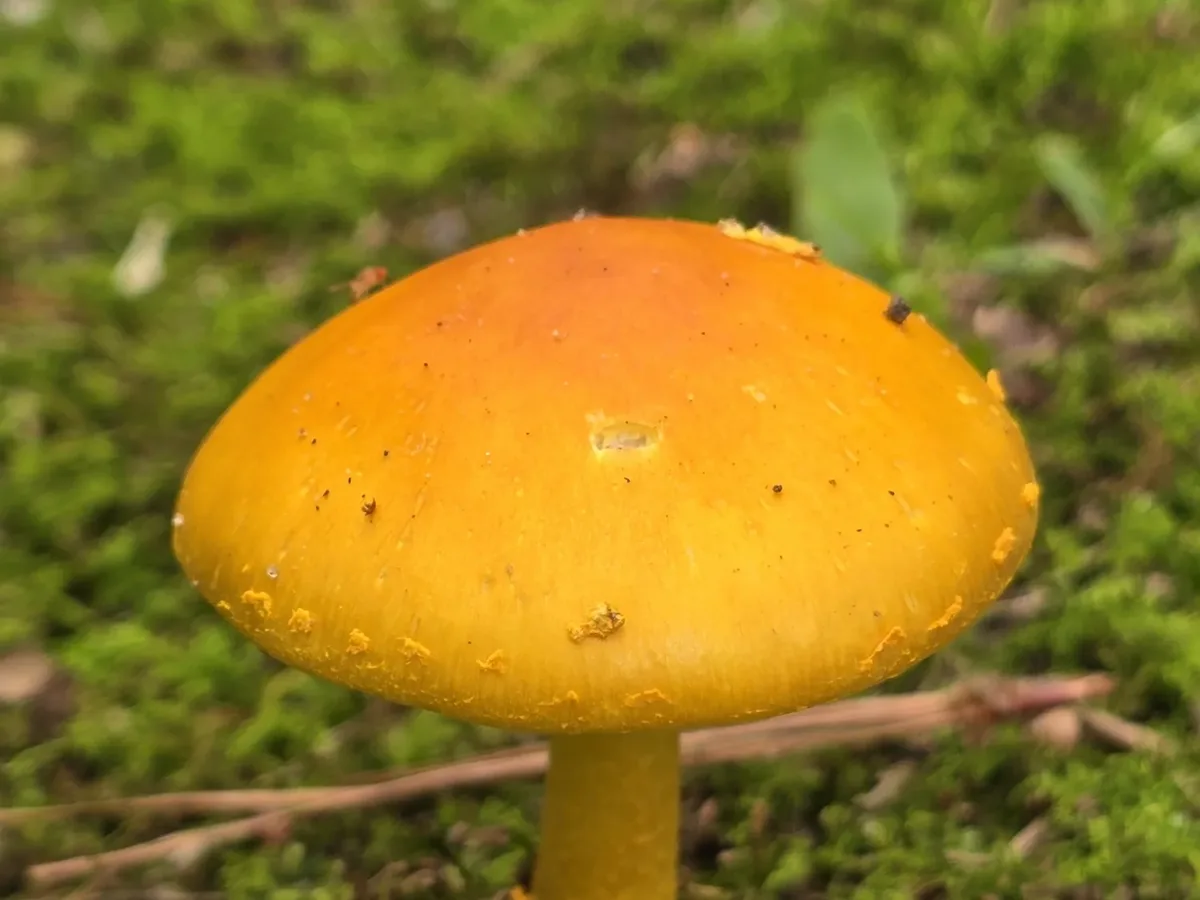 Christine Braaten (CC0)
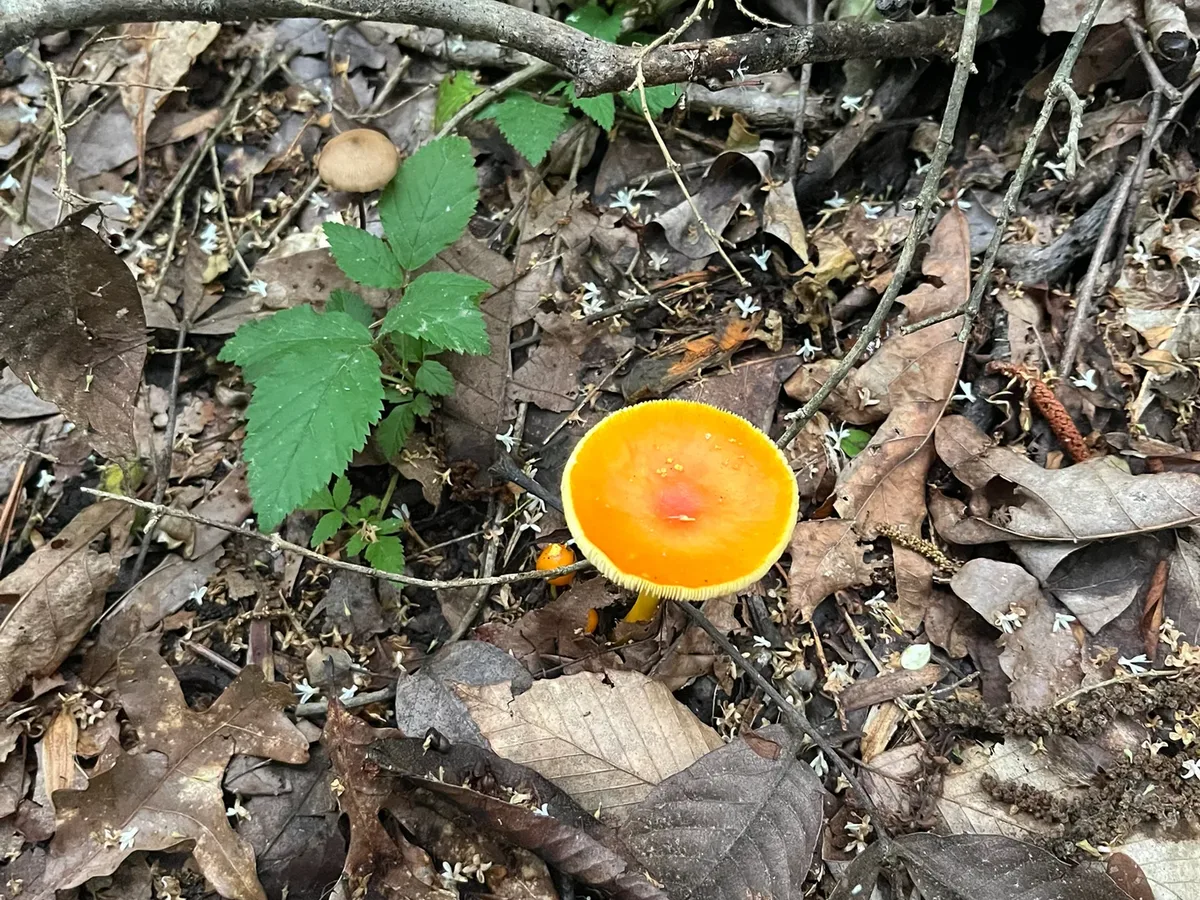 Niyan Shehan (CC0)
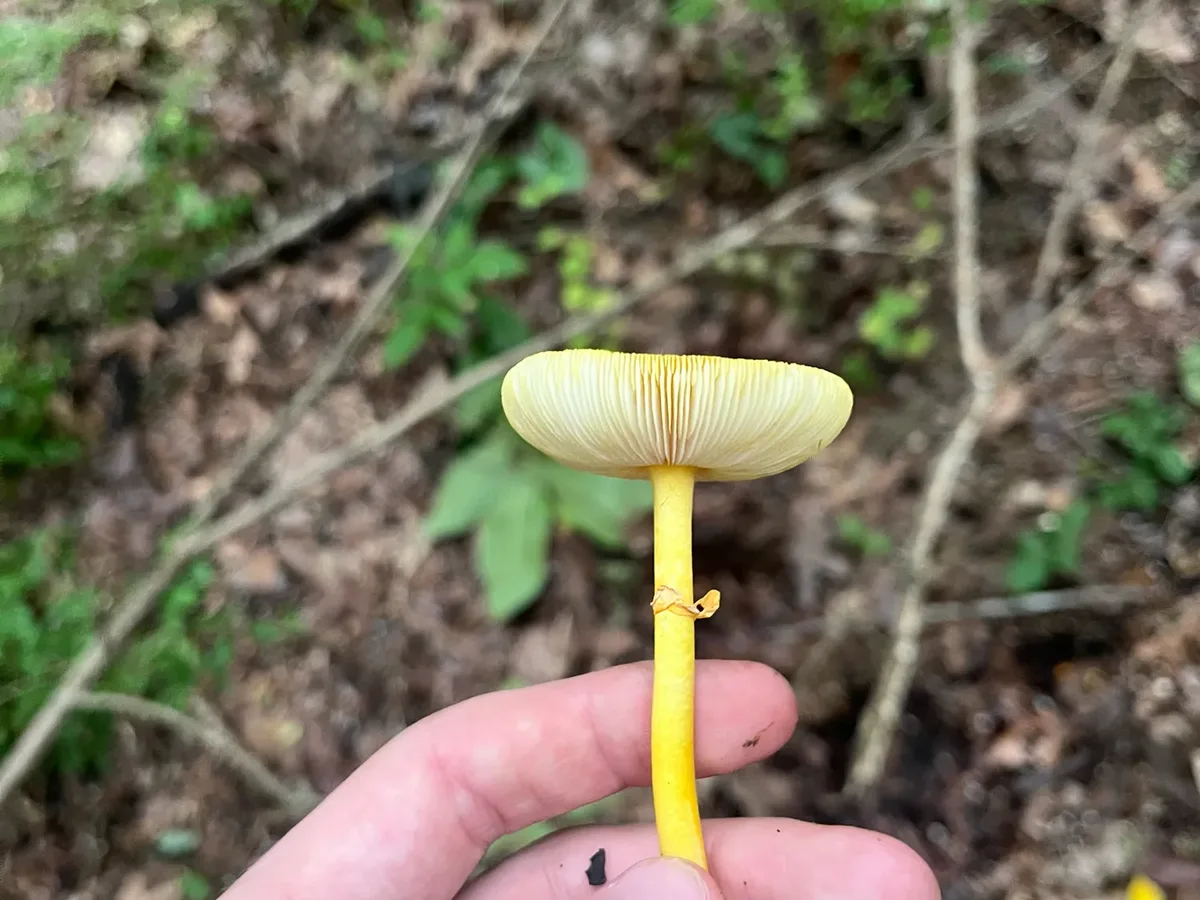 Niyan Shehan (CC0)
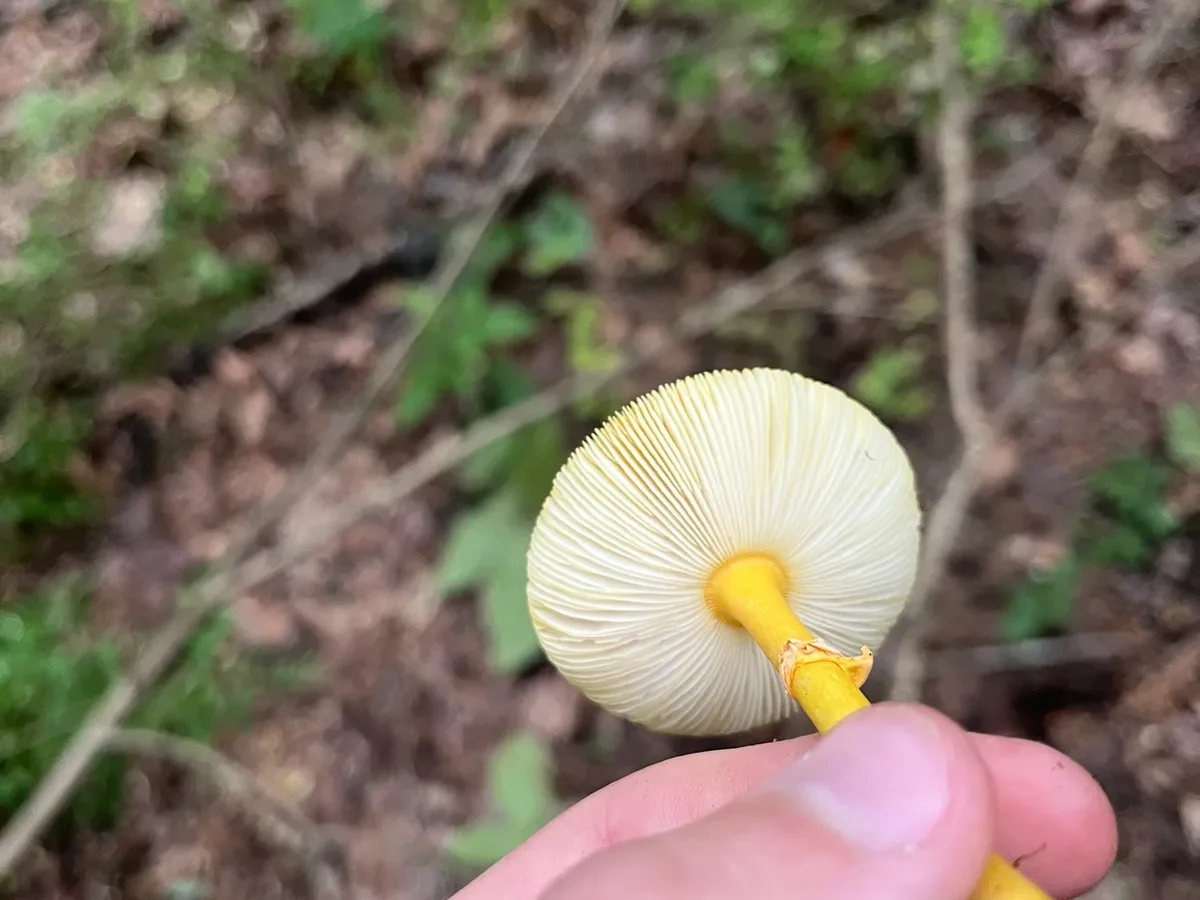 Niyan Shehan (CC0)
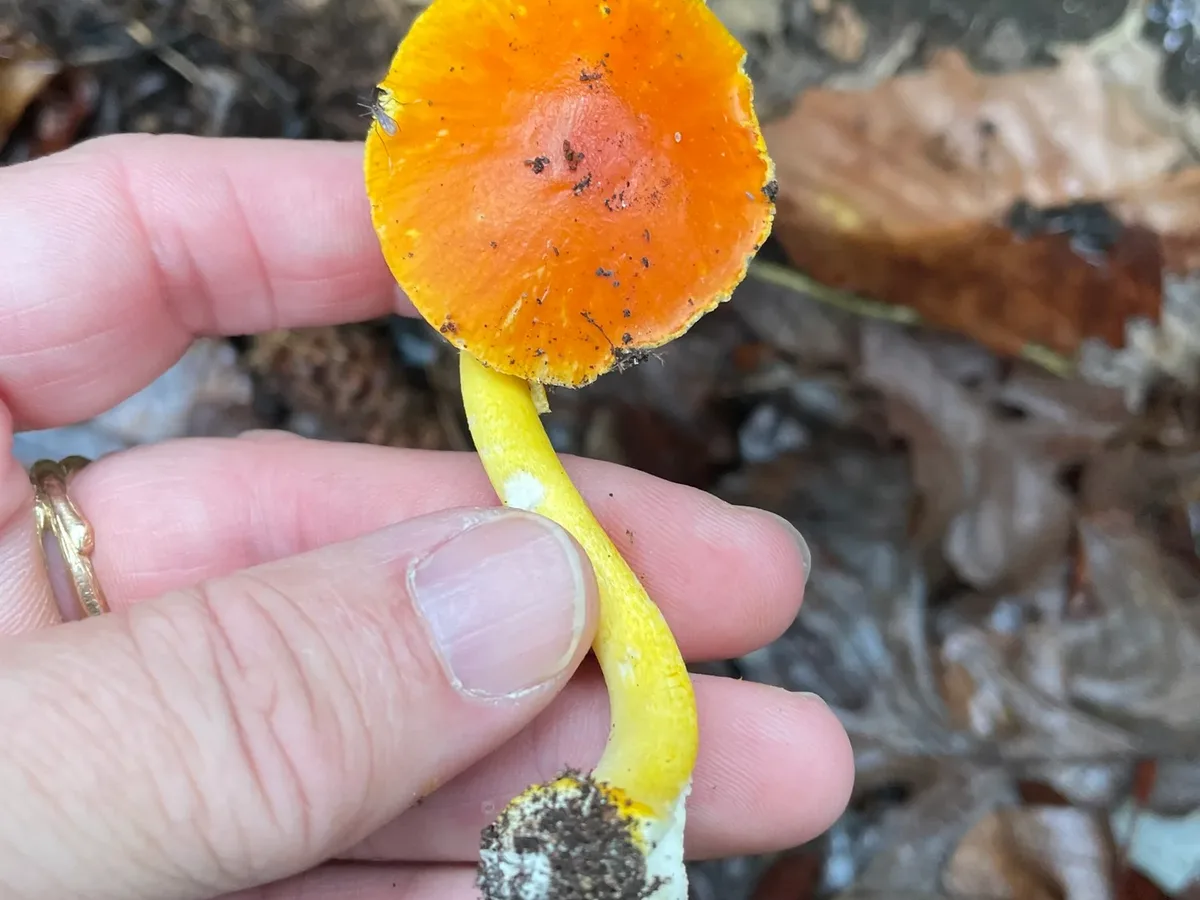 © Sam Kieschnick (CC BY)
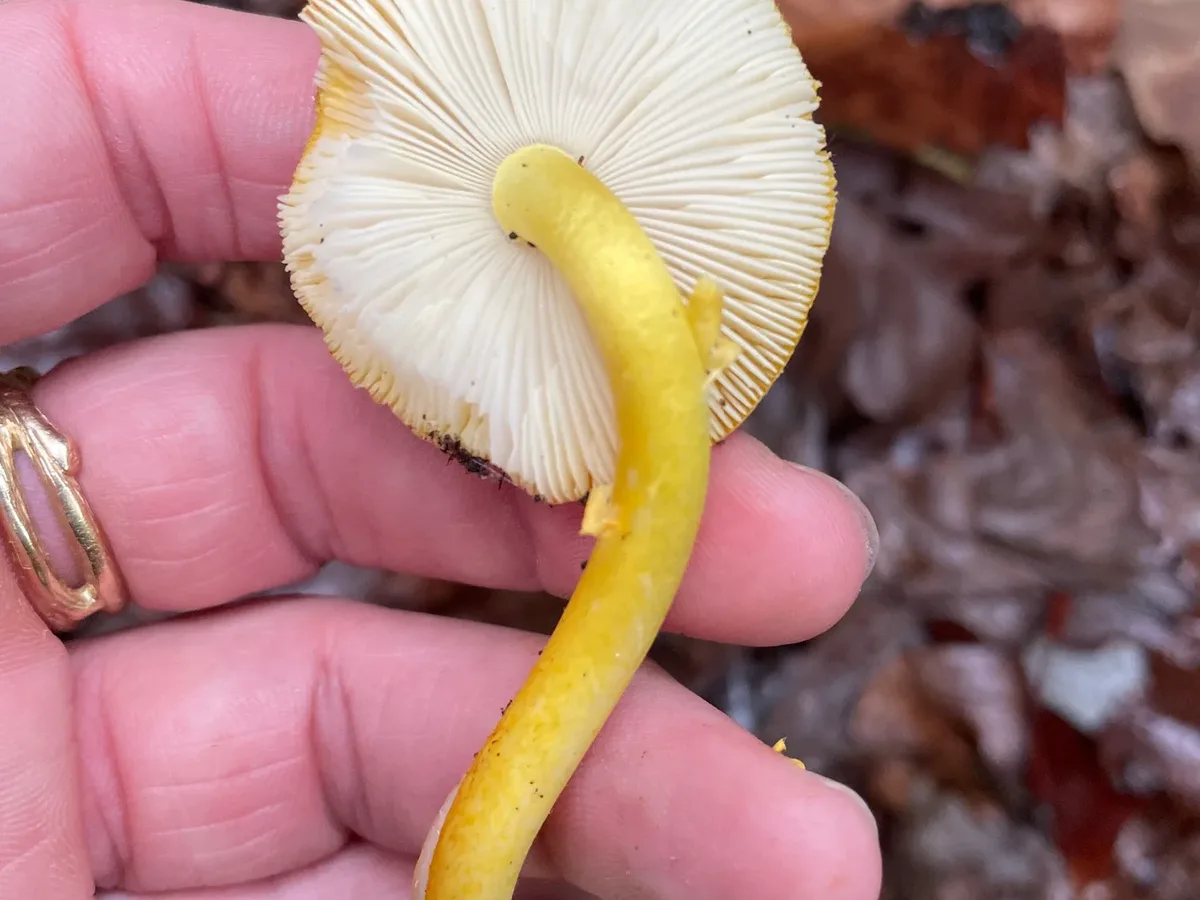 © Sam Kieschnick (CC BY)
 decaturjosh (CC0)© Andrey Loria (CC BY-SA 4.0)© Under the same moon... (CC BY 2.0)
Edible only with the right preparation - or safe for some people but not others. Learn the caveats first.
Never eat a mushroom you are not 100% sure of - check the look-alikes below, and always cook wild mushrooms.
How to recognise it
Cap
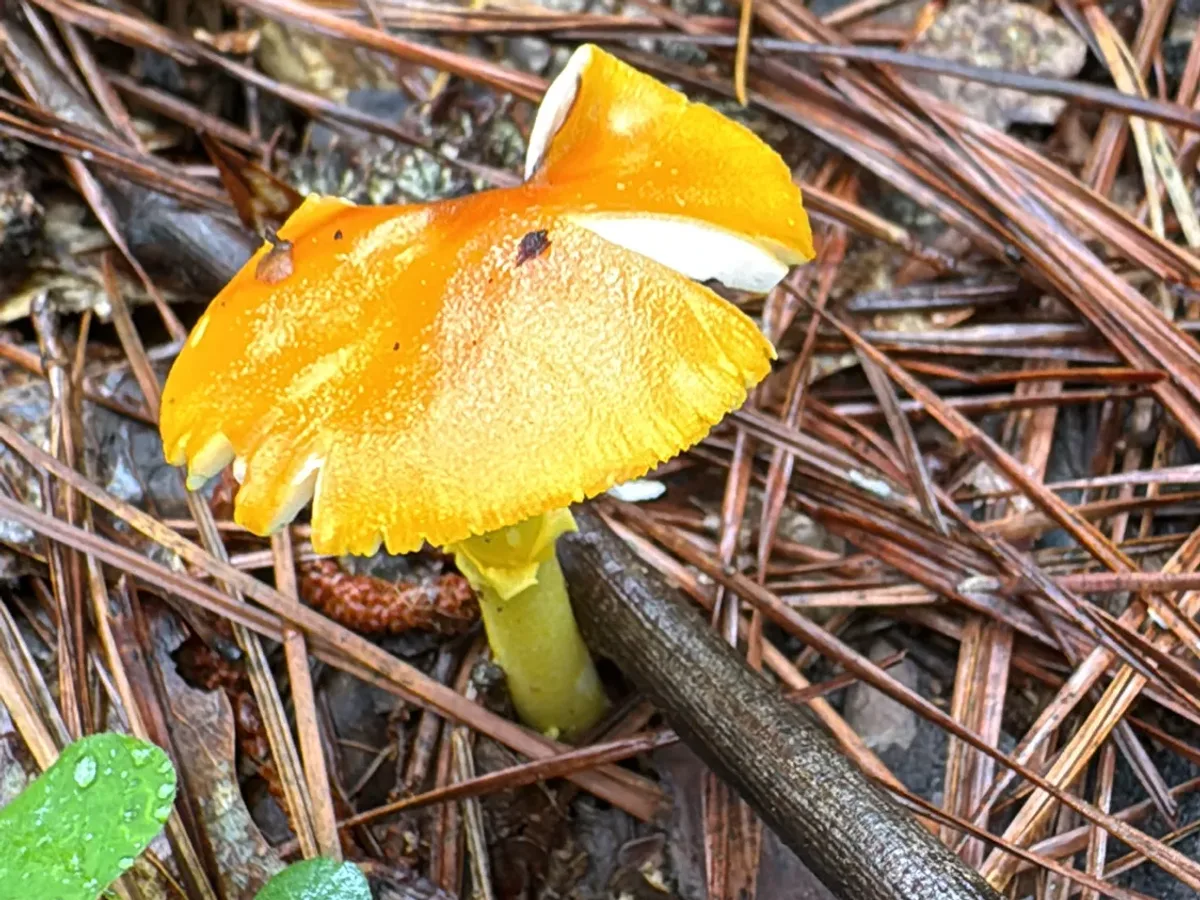
Cap 3-8 cm, convex and becoming broadly umbonate to nearly flat, bright egg-yellow to tawny-orange.
Its most reliable field mark is the scattered yellow to orange powdery or cottony patches on the cap - remnants of the universal veil it burst through as a button. These patches can be dense when fresh but are easily knocked off by rain, leaving a smooth, slightly tacky surface.
Gills
Gills white to pale cream, free, close-spaced, with finely fringed edges.
Stem
Stem 5-12 cm × 0.8-1.5 cm, white to pale yellowish, with a thin and fragile yellowish ring (annulus) that collapses readily.
Critically, the swollen base carries characteristic yellow-to-orange powdery or flaky volval patches - not the sac-like cup volva of deadly species like Amanita phalloides or Amanita bisporigera.
Flesh
Flesh white, odourless, not staining on cutting.
Spore print white.
Why it's dangerous
The primary danger is misidentification. A. flavoconia resembles two dangerous species:
- Amanita phalloides - amatoxin-bearing, responsible for the majority of fatal mushroom poisonings worldwide
- Amanita gemmata - suspected ibotenic-acid toxicity
A single cap of A. phalloides can deliver a lethal dose of amatoxin.
Any yellow-capped Amanita with white gills in eastern North American forest must be treated with extreme caution.
If accidental ingestion of any Amanita is suspected, seek emergency medical care immediately.
Toxin
The specific toxin content of Amanita flavoconia has not been rigorously characterised. The species does not appear to contain lethal amatoxin concentrations, but this has not been confirmed by comprehensive analysis across multiple specimens.
Until proven safe by peer-reviewed study, treat as potentially toxic.
Symptoms
No well-documented cases of human poisoning by Amanita flavoconia are recorded. Even so, the species should be avoided: its toxicity is unresolved, and misidentification with truly deadly congeners is a realistic risk.
Staying safe
Amanita flavoconia is not established as edible and should not be consumed.
The toxin profile is not definitively characterised; some mycological sources list it as of unknown edibility, and no documented tradition of safe eating exists.
The genus Amanita contains the world's deadliest mushrooms, and any misidentification within the genus can be fatal. The principal danger is misidentification of nearby deadly Amanita species (death cap, destroying angel) as A. flavoconia or vice versa.
Never eat any yellow-capped Amanita without absolute certainty of identification by an expert.
Where & when it grows
Habitat
A mycorrhizal fungus of mixed deciduous and coniferous woodlands in eastern North America. Grows most abundantly under oaks, maples, and American beech, and less commonly under eastern hemlock and other conifers.
Found singly or scattered in forest duff and leaf litter on moderately acidic, well-drained soils.
Range spans Nova Scotia and southern Quebec south through the Appalachians to northern Florida and west to the Mississippi valley. Abundance increases in warm, wet summers.
When
Summer through early autumn. First fruitings appear from late June onward; the main flush spans July through September, with stragglers to late October in mild years.
Peak fruiting follows warm, moist periods when soil temperatures are settled above 15 °C.
How it grows
Grows singly or in scattered groups in forest duff, always anchored to a mycorrhizal relationship with a nearby host tree. Not clustered; typically one to a few fruitbodies per patch.
Fruiting follows summer rainfall rather than arriving in predictable seasonal pulses - a wet week in July or August is more reliable as a trigger than the calendar.
Fruiting conditions
Warm-season ectomycorrhizal Amanita in eastern North American mixed forest. Fruits after summer rainfall events when soil temperatures are above 14 °C; peak July-September.
Look-alikes
Yellow patches grows alongside several dangerous lookalikes.
- Amanita phalloides (death cap) - the most important confusion: yellow-capped forms have a more greenish-yellow cap, a prominent sac-like white volva, and no orange volval powder.
- Amanita gemmata (jewelled death cap) - very similar, with a pale yellow cap, white to pale yellowish patches, and a more cup-like volva; suspected to contain ibotenic acid and considered toxic.
- Amanita muscaria var. guessowii (American yellow fly agaric) - larger and more robustly warted, with a skirted ring and a basal volva with concentric ridges rather than scattered orange powder; contains ibotenic acid/muscimol.
- Amanita caesarea group (Caesar's mushroom lookalikes) - orange-capped, but do not occur in eastern North America.
Young buttons resemble puffballs; always cut through suspected puffballs to check for a pre-formed cap and gills inside.
Yellow-capped forms of A. phalloides share the yellow-orange colour range and white free gills, but A. phalloides has a greenish to olive-yellow tint, a prominent sac-like white volva (cup), a more pendant skirt-like ring, no powdery orange patches, and a faint sweetish-unpleasant odour. Spore print of both is white. In the button stage the volva is buried - always dig up the base. Any doubt means do not eat.
A. bisporigera is entirely white, not yellow, but young buttons of any white-to-pale Amanita pulled from the soil can be confused at the button stage. The destroying angel has a prominent sac-like white volva, white ring, and white spore print; KOH turns the cap yellow. Fatal amatoxin content. Always dig up the full base before any identification.
Amanita gemmata (and the closely related A. junquillea) has a pale to medium yellow cap with whitish to pale patches, a partial to cup-like volva, and a more pronounced annulus; patches tend to be whiter, not orange-yellow. Considered toxic (suspected ibotenic acid). The two are very similar; both should be avoided.
Young Amanita buttons (including A. flavoconia) are globose and can resemble puffballs. Cut any suspected puffball in half: a uniform white interior is a true puffball; a miniature cap-and-stem structure inside reveals an Amanita egg.
The yellow North American fly agaric is larger (cap to 20 cm), robustly warted with white to yellowish warts rather than fine orange powder, has a more substantial pendant ring, and a basal bulb with concentric volval ridges or a partial cup - not scattered orange flakes. Contains ibotenic acid and muscimol; not safe to eat.
A reference guide - never an edibility guarantee. When in doubt, leave it out.