Floury Amanita
Amanita farinacea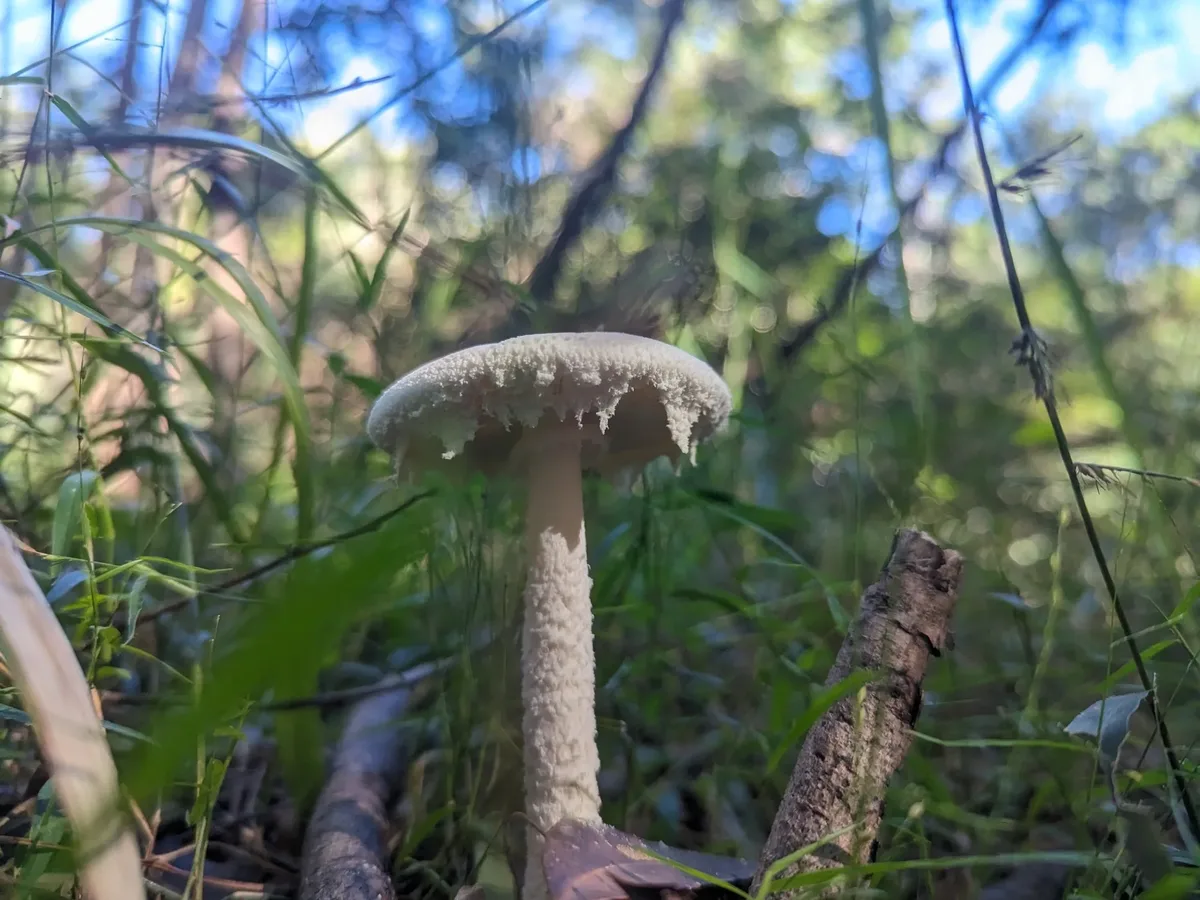 neilbags (CC0)
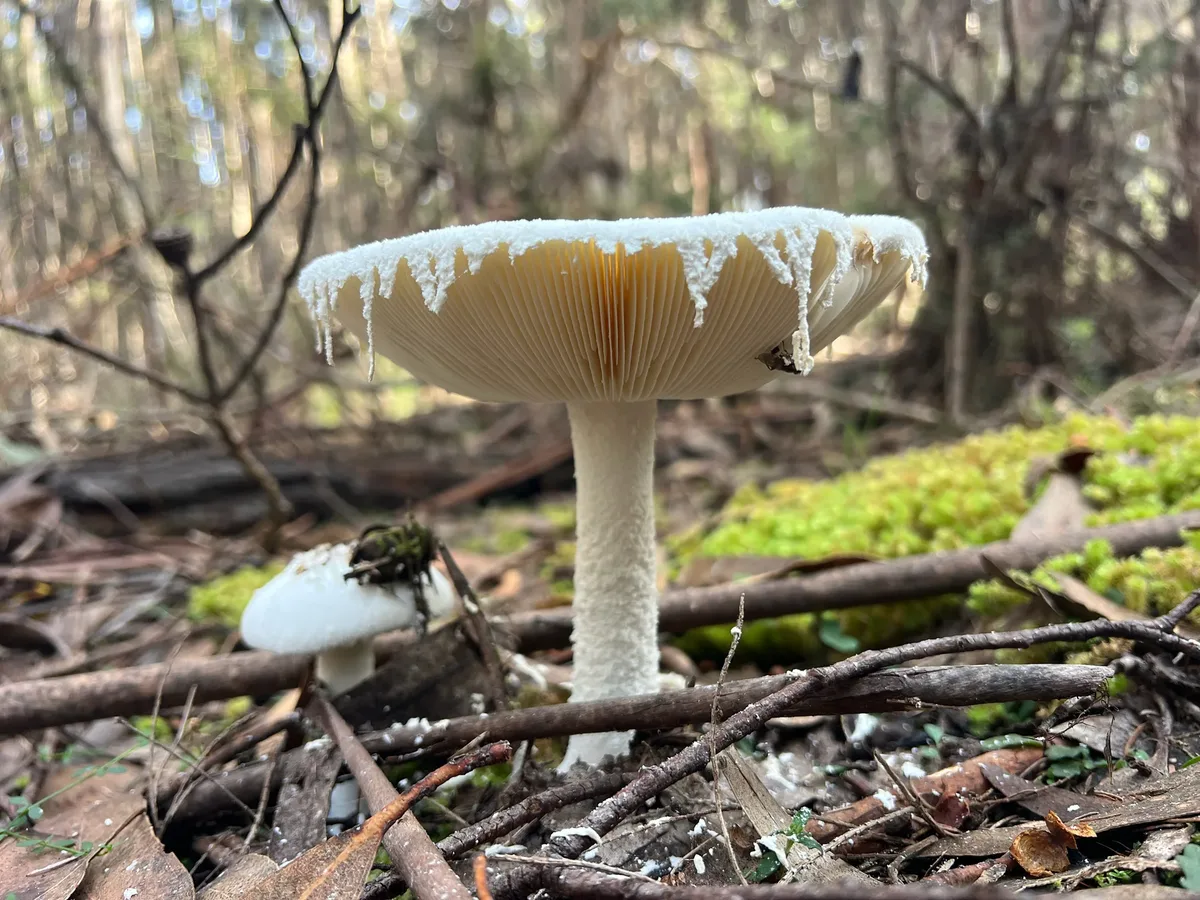 © Ramit Singal (CC BY)
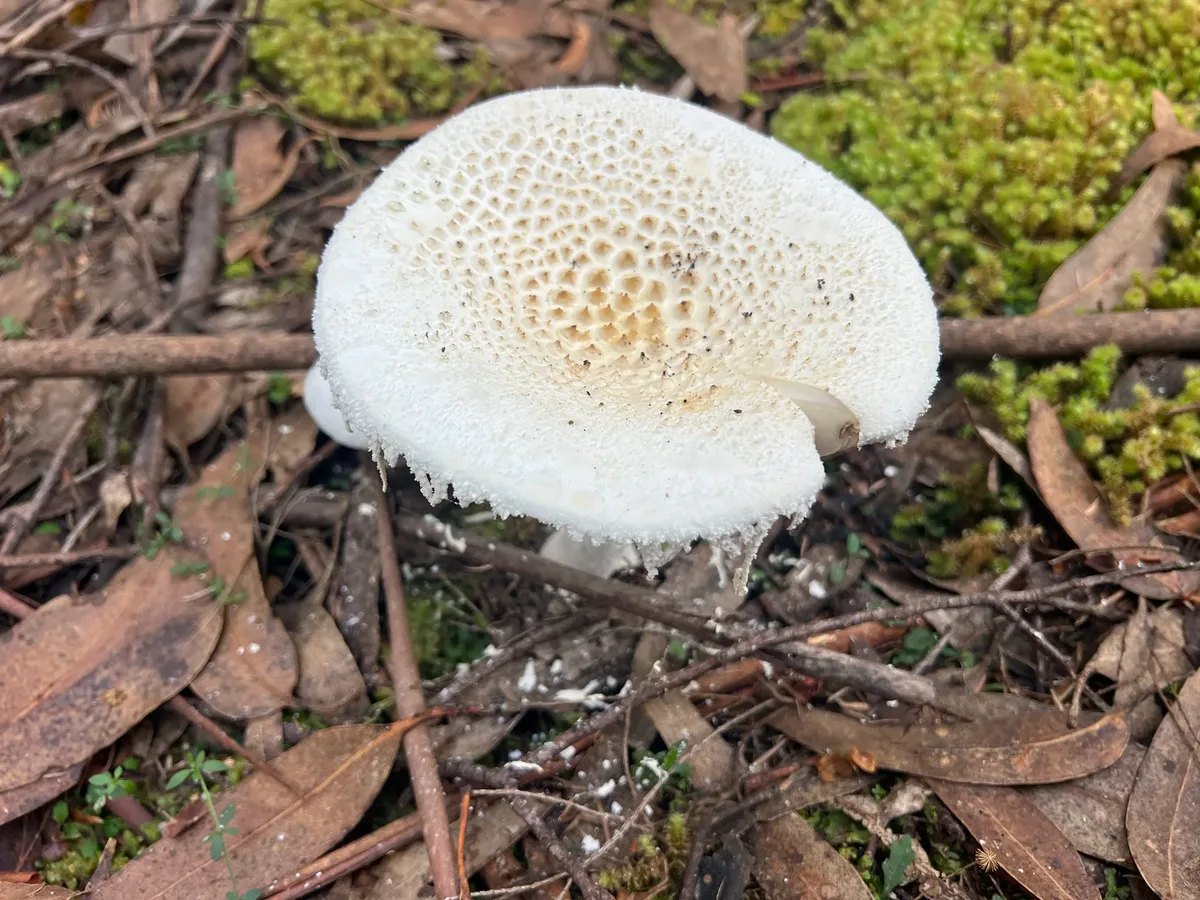 © Ramit Singal (CC BY)
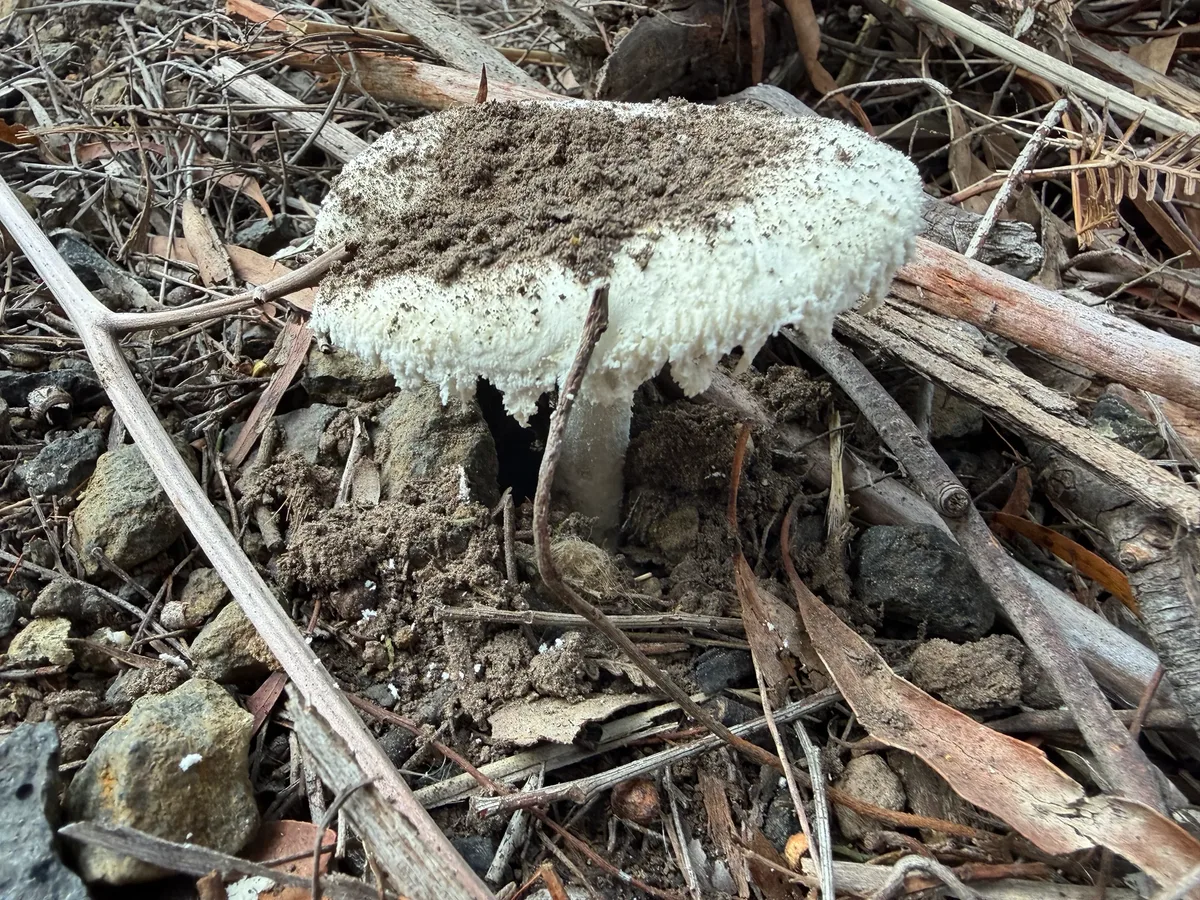 jstarspots (CC0)
 jstarspots (CC0)
 jstarspots (CC0)
 jstarspots (CC0)
 jstarspots (CC0)
 jstarspots (CC0)
 jstarspots (CC0)neilbags (CC0)© Ramit Singal (CC BY)
Edible only with the right preparation - or safe for some people but not others. Learn the caveats first.
Never eat a mushroom you are not 100% sure of - check the look-alikes below, and always cook wild mushrooms.
How to recognise it
Cap
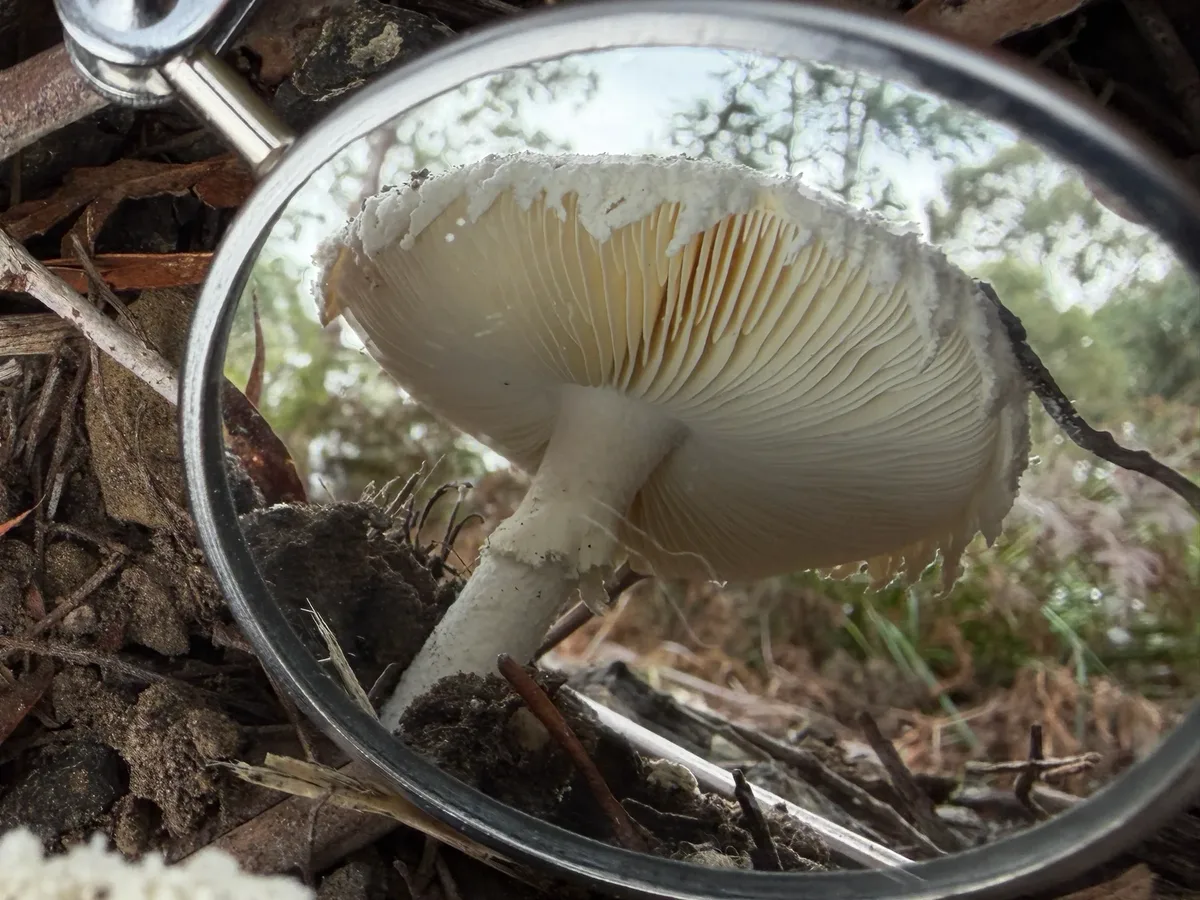
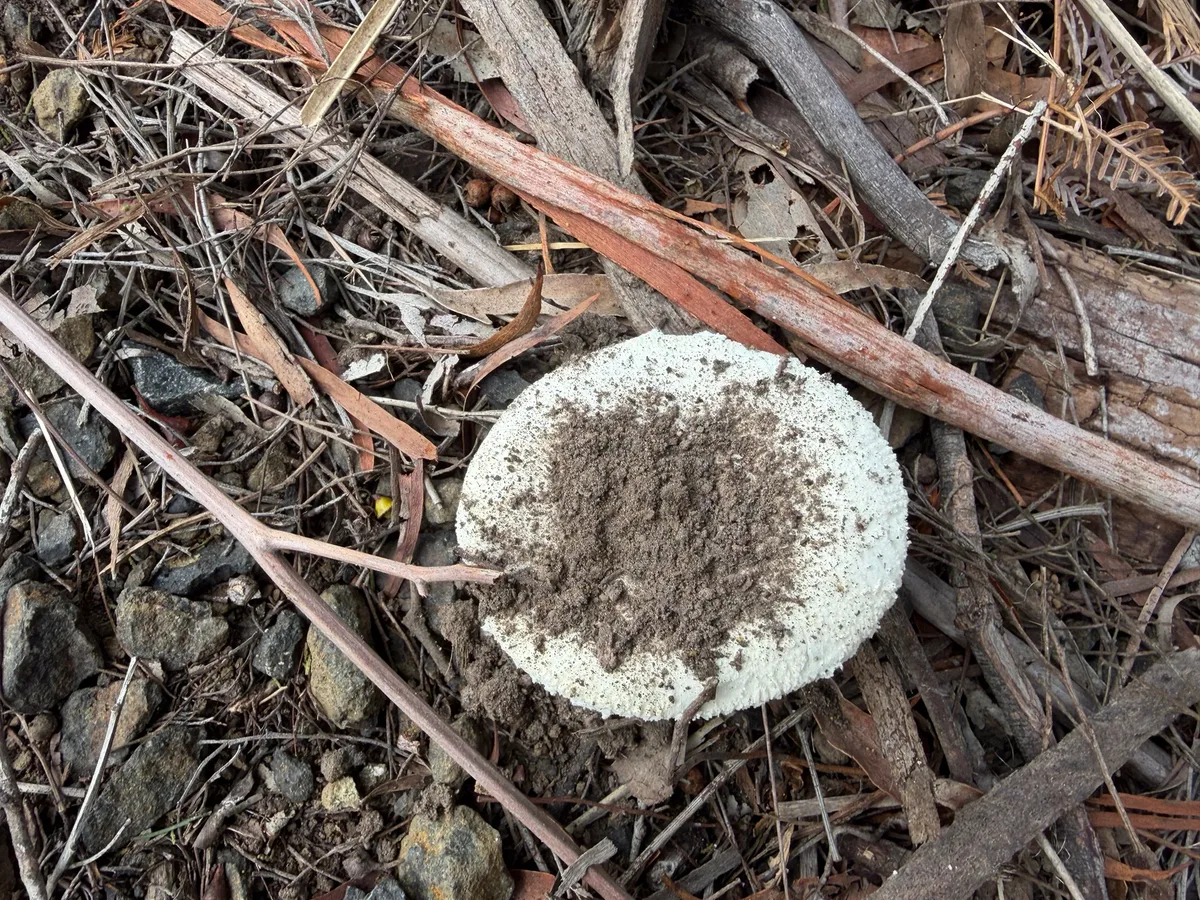
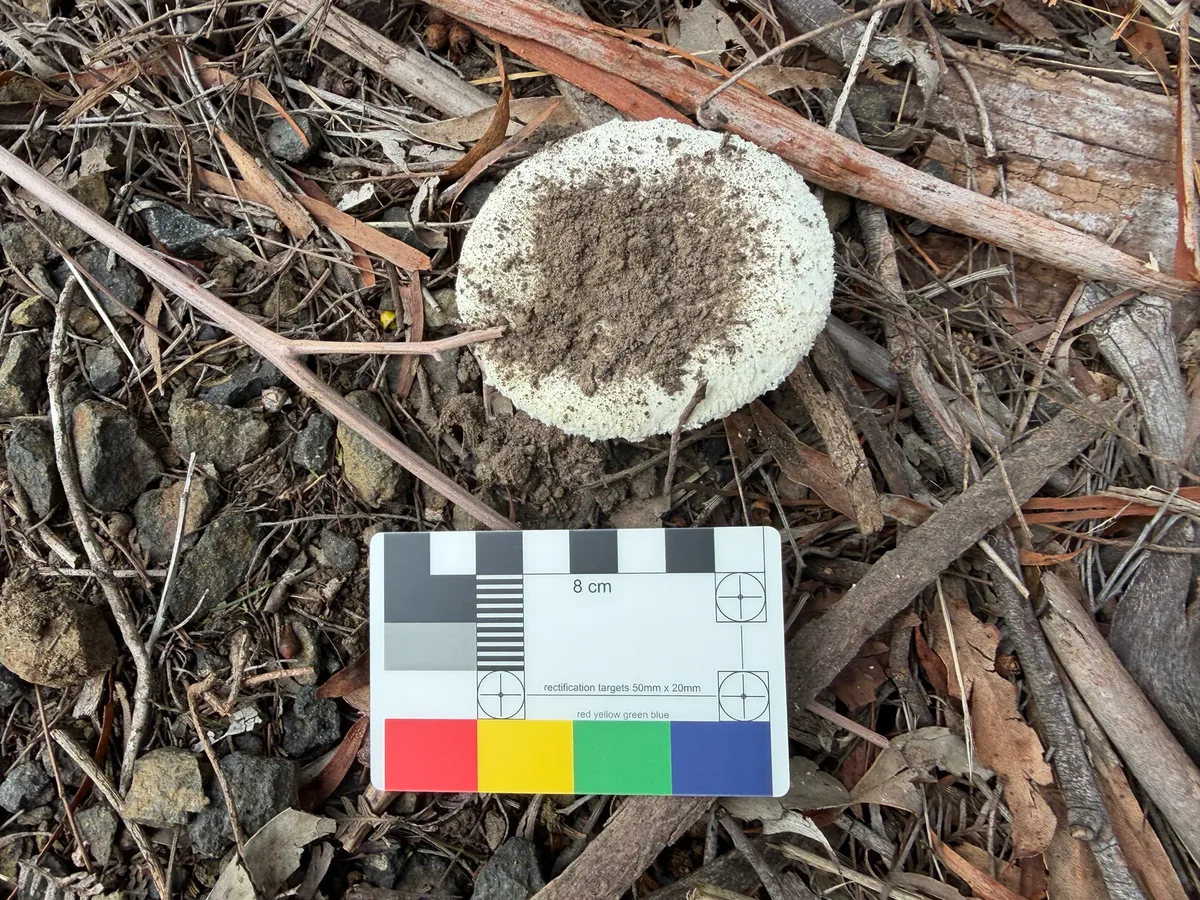
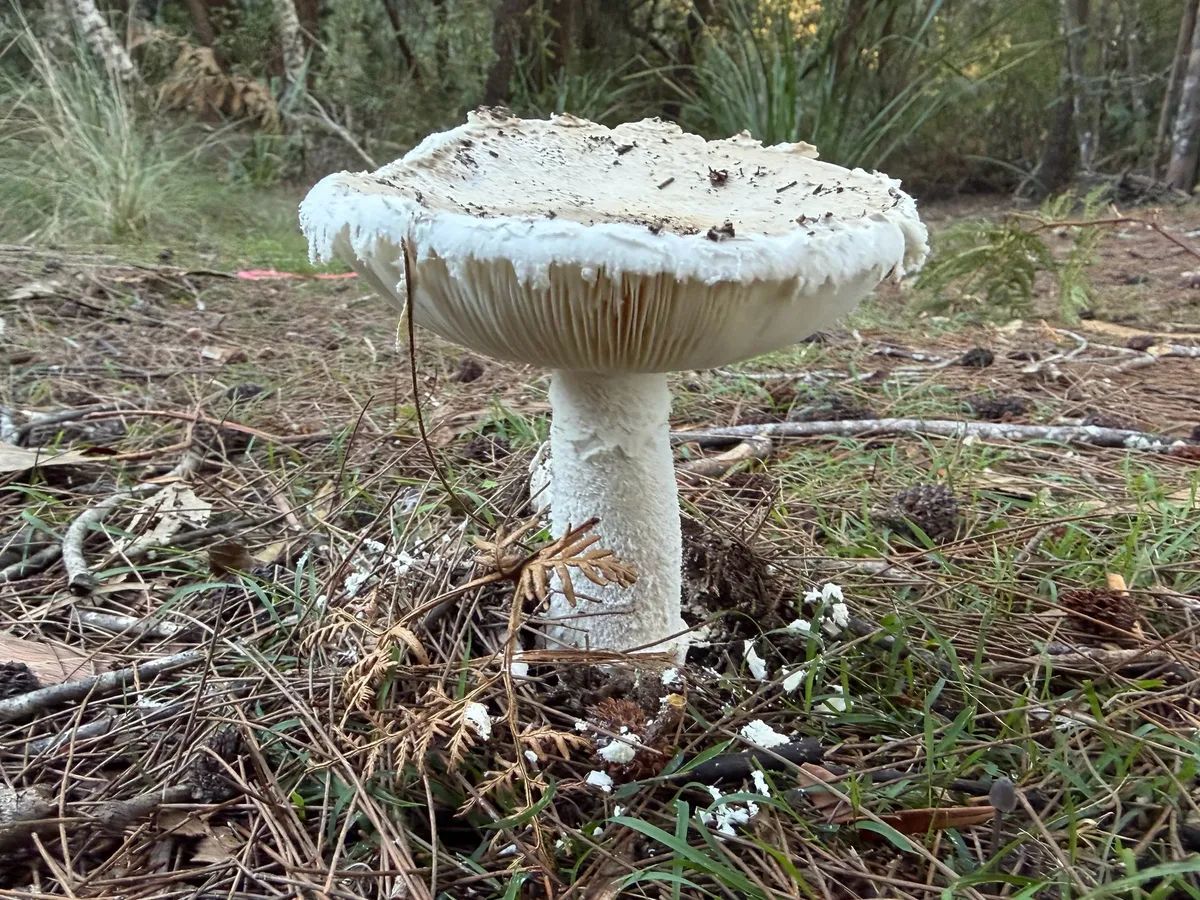
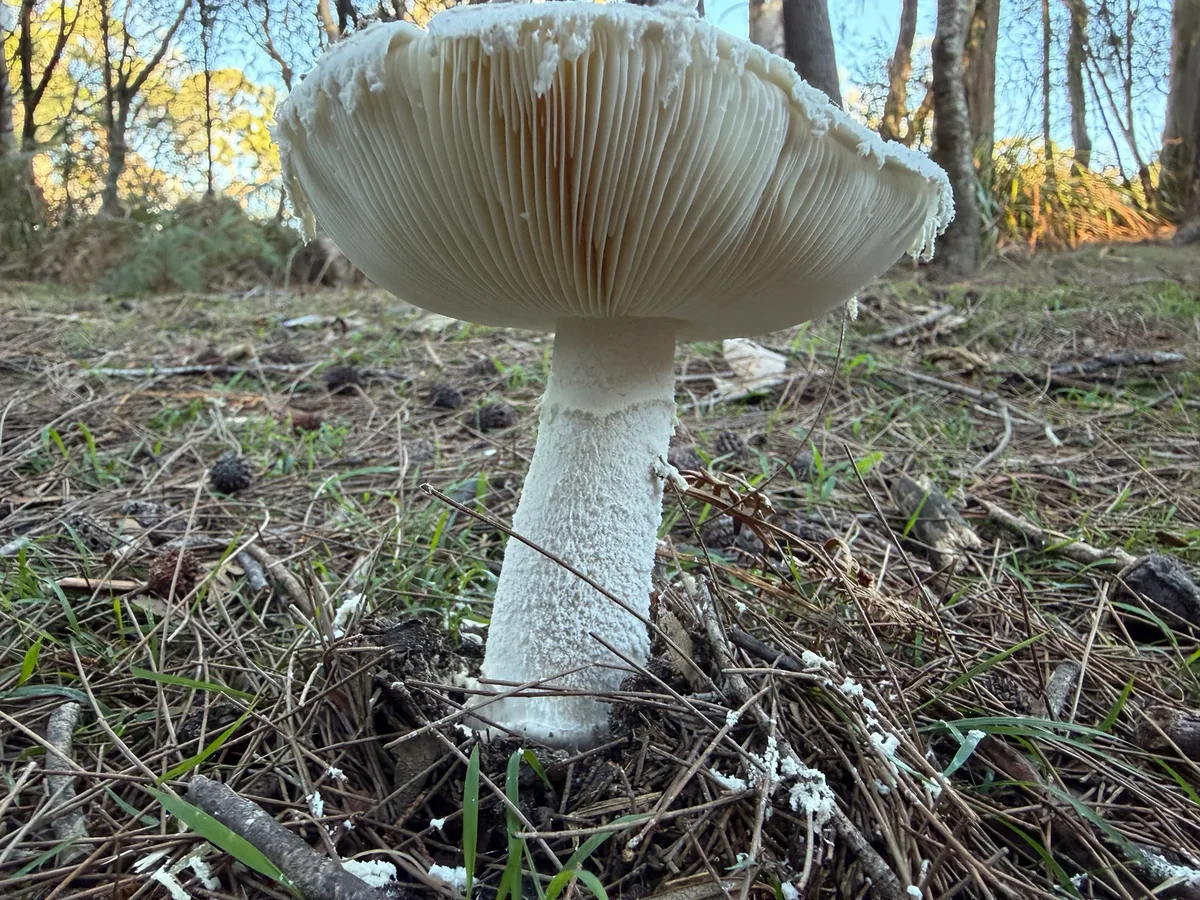
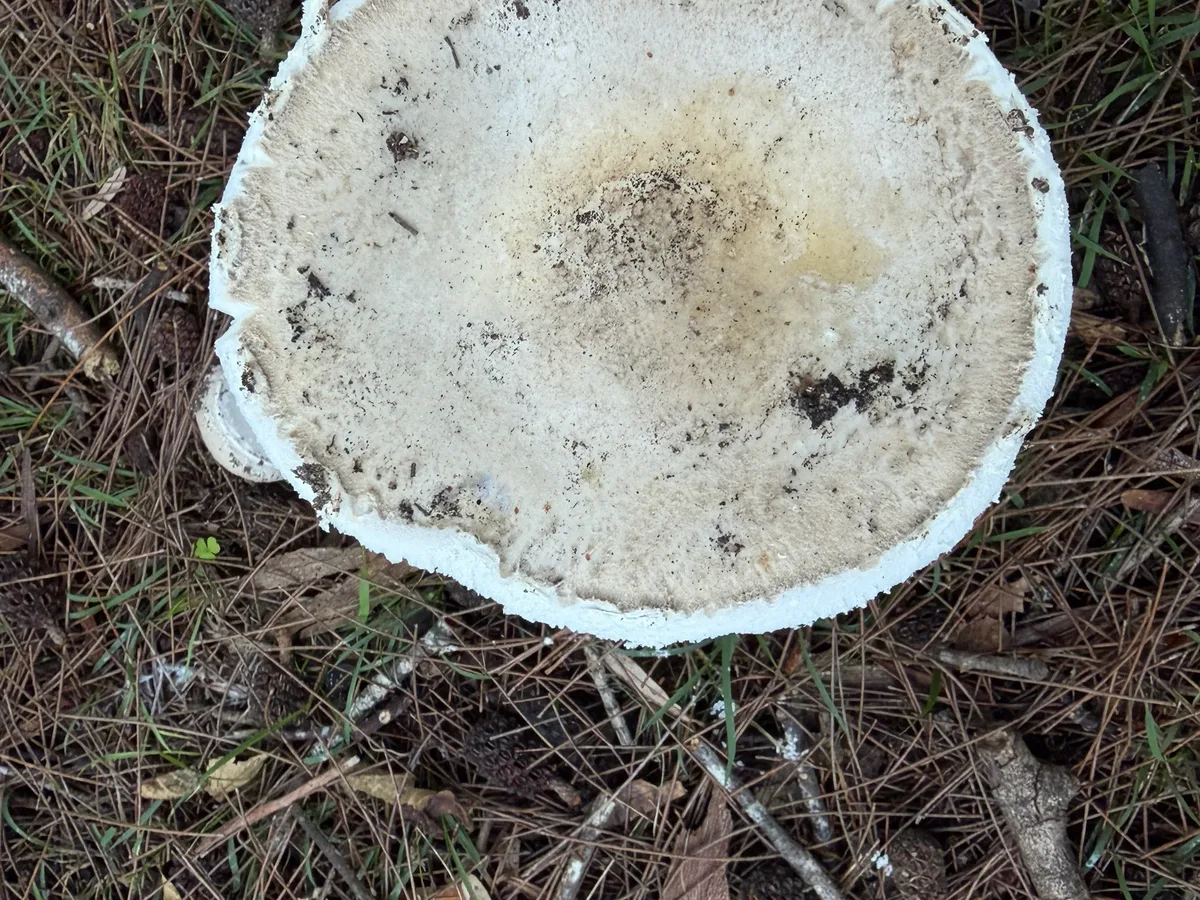
The cap is 30-80 mm across, convex then broadly flattened, white to pale cream-grey, dusted with dry, powdery to mealy universal veil remnants that give the surface its floury texture.
The margin is smooth and non-striate - unlike some other Australian Amanita species whose cap margins show faint radial striations.
Gills
Gills are white, free, and crowded. They stay white throughout the mushroom's life and never turn pink or brown as they would in the edible Agaricus genus.
Stem
The stem is white and carries a thin, fragile, drooping ring that can be easily dislodged.
The base sits in a white, thick-walled sac-like volva that is often half-buried in soil. Always gently dig around the base and fully expose the volva before making any identification in this genus.
Flesh
Flesh is white, firm, and unchanging when cut. Spore print is white.
Smell & taste
The mealy or floury odour - like fresh flour or wet dough - is the most immediately noticeable field character and gives the species its name.
Why it's dangerous
The primary danger posed by A. farinacea is not its own confirmed toxicity but its role as a lookalike gateway. A forager is at severe risk of lethal poisoning if they are:
- accustomed to collecting and eating A. farinacea, or
- someone who misidentifies a deadly Amanita as A. farinacea.
The visual similarity between A. farinacea, A. marmorata, and white forms of A. phalloides in the field is extreme.
Any white, ring-and-volva-bearing mushroom in Australian native forest must be treated as potentially deadly. There is no safe field shortcut.
Toxin
The specific toxins in A. farinacea have not been fully characterised in published literature. Gastrointestinal irritant compounds are suspected.
Critically, amatoxin content has not been rigorously ruled out. Molecular phylogenetic proximity to amatoxin-producing Amanita sections means this species cannot be presumed toxin-free.
Gastrointestinal symptoms following ingestion have been reported in the clinical literature.
Symptoms
Reported effects include:
- nausea
- vomiting
- abdominal cramps
- diarrhoea
Onset of gastrointestinal symptoms would typically occur within 30 minutes to several hours of ingestion for irritant compounds.
The critical concern is distinguishing this poisoning pattern from the early gastrointestinal phase of amatoxin poisoning, which also begins with GI symptoms but then proceeds to liver failure.
Any GI symptoms following ingestion of a white-gilled, ring-and-volva-bearing mushroom from Australian native forest must be treated as potentially amatoxin-related until proven otherwise.
Staying safe
Exercise the highest caution. Although A. farinacea is not confirmed as an amatoxin-bearing species, it belongs to the genus Amanita and shares almost identical visual characters with confirmed deadly species.
Gastrointestinal poisoning has been attributed to this species.
More importantly, the risk of misidentifying it as a deadly species - or of misidentifying a deadly species as it - means that collecting white-gilled, ring-and-volva-bearing mushrooms in native Australian forest is inherently dangerous for anyone who cannot perform spore microscopy and chemical spot tests.
If any Amanita ingestion is suspected, contact the Poisons Information Centre (Australia: 13 11 26) and seek emergency care immediately. Do not wait for symptoms, especially given the delayed-onset risk if a deadly lookalike was consumed.
Where & when it grows
Habitat
A native Australian ectomycorrhizal species that grows beneath Eucalyptus and related Myrtaceae in dry to moist sclerophyll forest across southeastern Australia.
Unlike the introduced death cap (Amanita phalloides), which is tied to exotic trees such as oaks and chestnuts, A. farinacea is a native species that fruits under native trees.
This distinction matters: the common guidance to avoid mushrooms near exotic trees does not protect you from native toxic Amanita species in Australian bush.
Grows at low to moderate elevations on loamy or sandy forest soils with good leaf-litter cover.
When
Fruits in Southern Hemisphere autumn through early winter - March to June - with the main flush in April and May.
Fruiting is triggered by soaking autumn rains combined with cooling soil temperatures, usually after the first sustained cold fronts of the season. In dry years fruiting can be sparse or delayed.
Seeing other autumn Amanita species and native webcaps (Cortinarius) fruiting nearby is a useful cue that conditions are right for A. farinacea as well.
How it grows
An obligate ectomycorrhizal fungus, it forms a symbiotic relationship with living Eucalyptus roots and cannot grow without a tree partner.
Fruiting bodies emerge singly or in loose groups, not dense clusters.
The base always arises from a buried volva - if you lift the stem you should be able to feel it anchored in the soil.
Failing to expose the base fully is a common and potentially fatal mistake when attempting to identify any Amanita species.
Fruiting conditions
Southern Hemisphere autumn fruiter following soaking autumn rains as soil temperatures fall through the 8-18 °C range. Peak April-May in southeastern Australia.
Look-alikes
Amanita farinacea sits within a complex of white Australian Amanita species that are extremely difficult to separate in the field without microscopy.
The most dangerous confusions are with:
- Amanita marmorata (marbled death cap)
- white or pale forms of the introduced Amanita phalloides (death cap)
Both carry amatoxins at potentially lethal concentrations, and both share the white gills, membranous ring, and sac-like volva of A. farinacea.
The floury odour and powdery cap surface are helpful distinguishing characters of A. farinacea, but these can be subtle and variable.
Safer lookalikes to know:
- The edible paddy straw mushroom (Volvariella volvacea) also has a volva but lacks a ring and has pink gills at maturity with a pink spore print.
- Agaricus species (field mushrooms) have pink-then-chocolate-brown gills and a dark spore print and lack a volva entirely.
The introduced death cap typically has a greenish-yellow to pale olive-brown or yellowish cap - but white and pale forms exist and are well-documented. Both species share white gills, a membranous ring, a sac-like volva, and grow in autumn. A. phalloides is usually associated with introduced exotic trees (oaks, chestnuts, hornbeam) rather than native Eucalyptus, but this distinction is unreliable in areas where exotic plantings border native bush. The floury odour and more powdery cap surface of A. farinacea may help, but these characters are not reliable enough to stake one's life on.
The destroying angel is pure white with a conical to broadly convex cap that retains some umbo, a shaggy stem surface, and a grooved or pleated ring. It is found under exotic trees in Australia as an introduced species. A. farinacea has a more flatly expanded cap and a mealy odour. Both are impossible to safely distinguish for a non-expert in the field.
A. marmorata is a native Australian Amanita in the same amatoxin-bearing section (Phalloideae), growing under Eucalyptus in the same habitats and season. It is distinguished by its mottled or marbled greyish-brown velar patches on a white cap - but the marbling can be subtle or washed off by rain. A. farinacea's cap surface is more uniformly floury-powdery. Both have white gills, a ring, and a volva. Treat as deadly if in doubt.
Australia has a diverse and incompletely described native Amanita flora, and several white or pale-coloured native species are found in sclerophyll forest. Without laboratory analysis, field separation of A. farinacea from other native white Amanitas - some of which may carry amatoxins - is unreliable. The full extent of amatoxin distribution across Australian native Amanita species is not yet established in the scientific literature. Treat all white, ring-and-volva-bearing mushrooms in Australian native forest as potentially lethal.
Agaricus species have pink gills when young, turning to chocolate-brown to near-black at maturity, and a dark (brown-black) spore print. They entirely lack a volva at the base. A. farinacea has white gills throughout, a white spore print, and the diagnostic basal sac. The presence of a volva is a definitive separation - always dig around the base to check.
The edible paddy straw mushroom also has a prominent volva, but critically lacks a ring entirely. Its gills are pink to salmon at maturity and it produces a pink spore print. It grows on organic matter (rice straw, compost, wood chips), not as a mycorrhizal forest species. These characters - absence of ring, pink gills, pink spore print, non-forest habitat - distinguish it reliably from A. farinacea.
A reference guide - never an edibility guarantee. When in doubt, leave it out.