Edible amanita
Amanita esculenta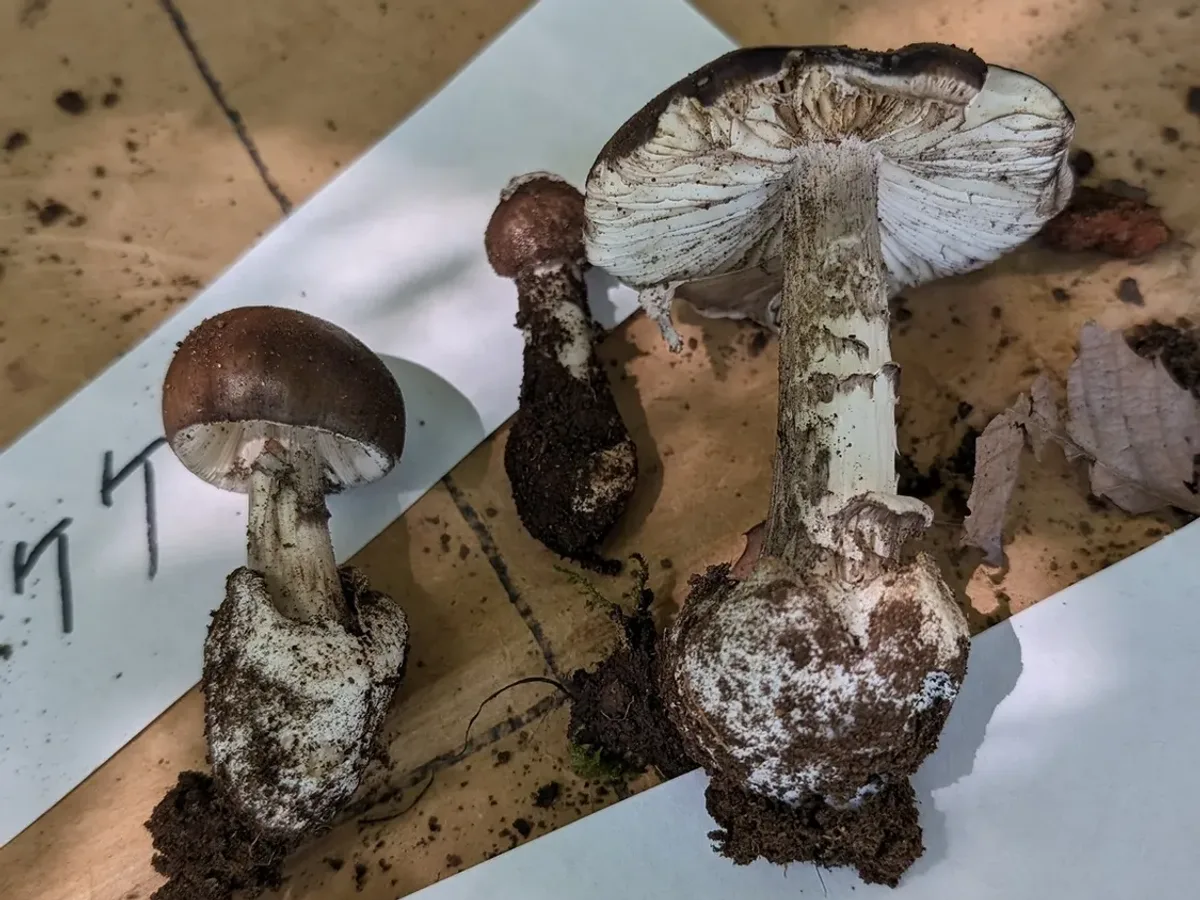 © Atsushi Nakajima (CC BY)
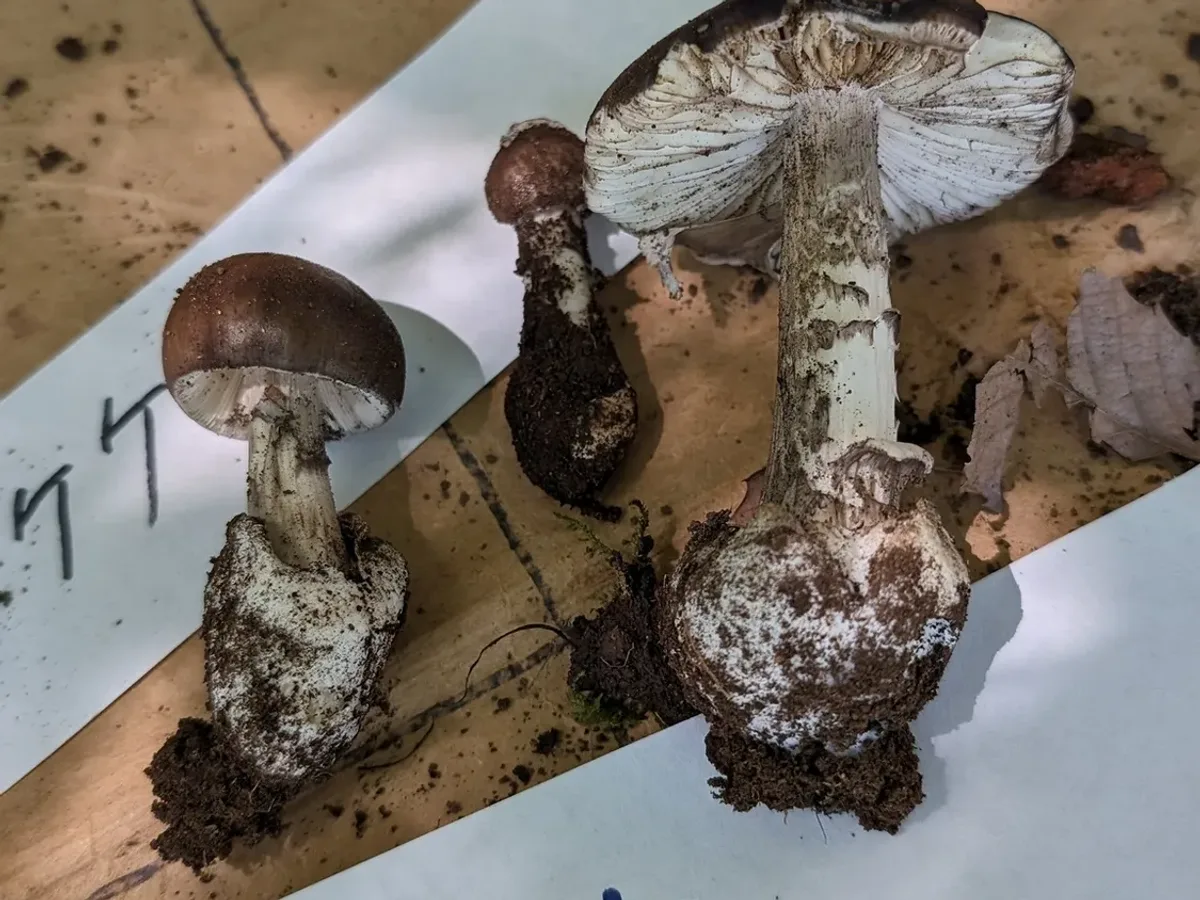 © Atsushi Nakajima (CC BY 4.0)
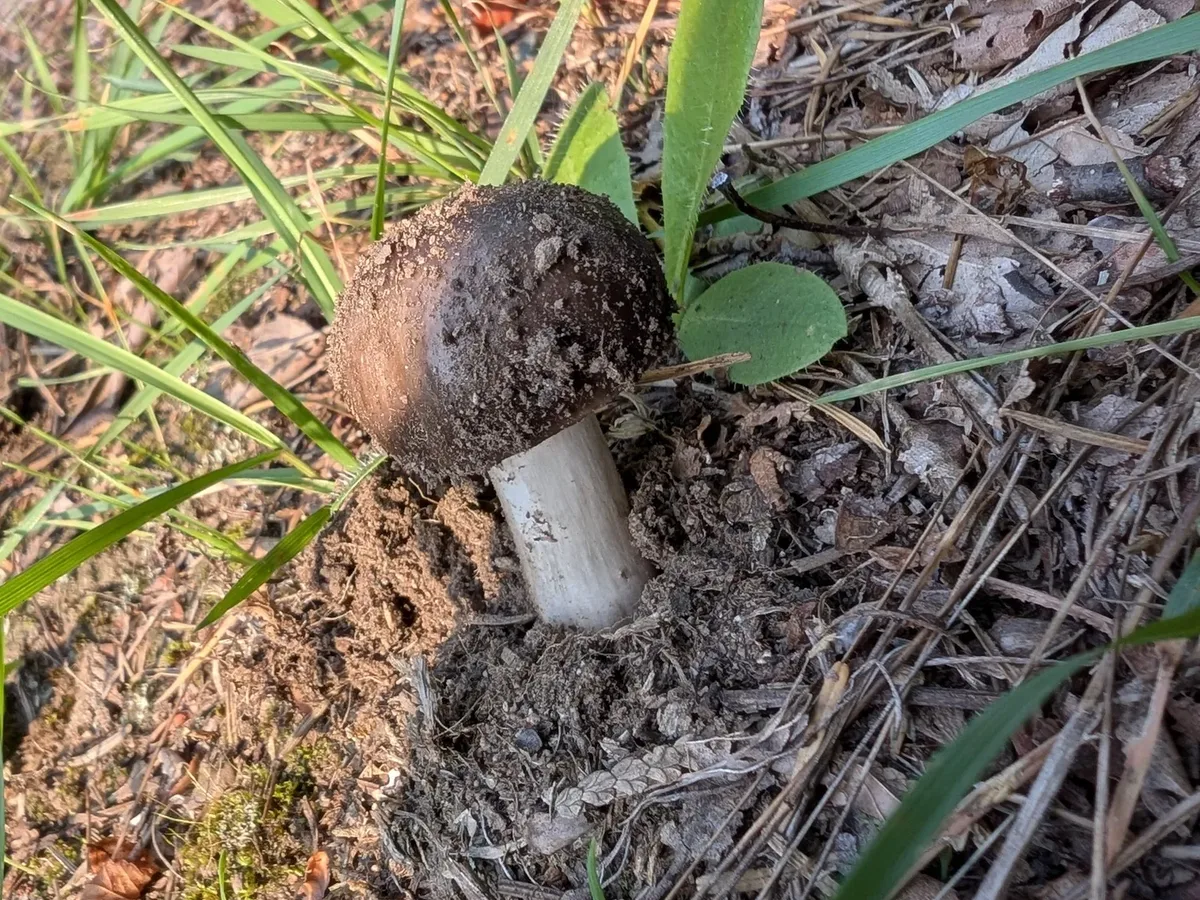 © Atsushi Nakajima (CC BY)
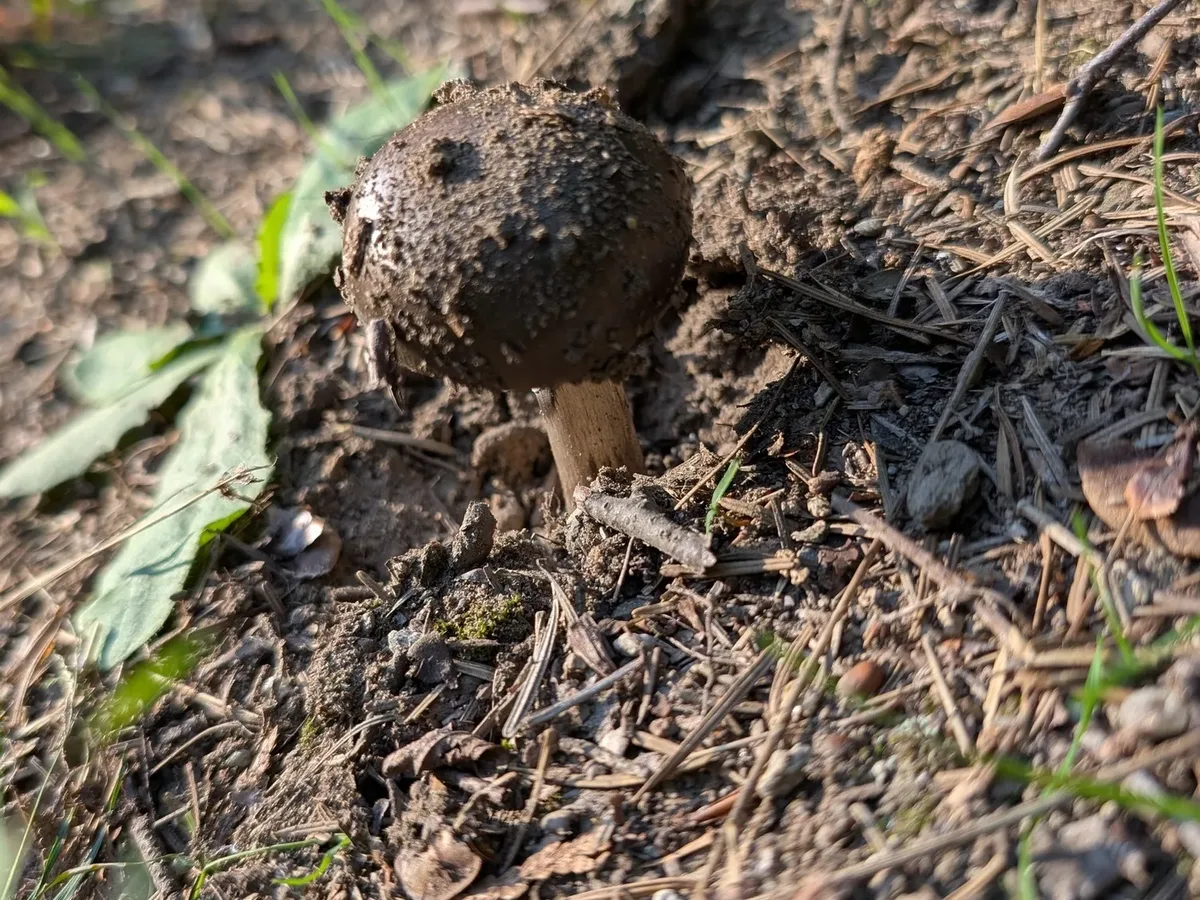 © Atsushi Nakajima (CC BY)© Atsushi Nakajima (CC BY)© Atsushi Nakajima (CC BY 4.0)
Edible only with the right preparation - or safe for some people but not others. Learn the caveats first.
Never eat a mushroom you are not 100% sure of - check the look-alikes below, and always cook wild mushrooms.
How to recognise it
Amanita esculenta is a mid-sized white Amanita that superficially resembles several deadly species - careful examination of every macro-character is essential before any identification is accepted.
Cap
White to ivory or pale cream, 50-100 mm across, scattered with white to pale greyish velar patches (remnants of the universal veil that once enclosed the young mushroom) which may partly weather away in rain.
Gills
White, free from the stem, and crowded.
Stem
White, up to 130 mm tall, with a pendant, membranous ring that can be fragile and may collapse against the upper stipe in older specimens.
Most critically, the base of the stipe emerges from a well-developed, sac-like white volva - a cup-like structure that is partially buried in the soil and easy to miss if the base is not carefully excavated. This volva, combined with white gills and a white spore print, places this firmly in the genus Amanita.
Flesh
White throughout; does not stain or discolour when cut.
Smell
Odour is mild and not unpleasant.
Where & when it grows
Habitat
Found in warm-temperate to subtropical broadleaf and mixed forest throughout Japan and East Asia, living its hidden life as an ectomycorrhizal partner to oaks, chestnuts, and various conifers.
Like all mycorrhizal Amanitas, this species spends most of its existence as a network of mycelium threaded through the soil in tight association with tree roots - the mushroom above ground is just the brief, reproductive tip of that long partnership.
Critically, it tends to grow in the same forest types as the deadly destroying angel (Amanita virosa group) and white forms of the death cap (Amanita phalloides).
Habitat context can never be used to distinguish this species from its deadly lookalikes; the edible and deadly white Amanitas can and do grow in the same forest at the same time.
When
Summer to early autumn in temperate East Asia, most reliably July through September in Japan.
Fruiting follows adequate summer rainfall - a 15-20 mm rain event with soil temperatures between 15 and 25 °C typically brings a flush within 5-10 days.
East Asia's two great seasonal rain pulses are the most reliable triggers for heavy fruiting years: the tsuyu (Japan's rainy season, roughly June-July) and the heavy precipitation that follows late-summer typhoons.
The biology is straightforward: the mycelium has been growing all along; rain and warmth are simply the cue it waits for.
How it grows
Emerges singly or in small scattered groups from forest soil. The fruiting body expands from a buried egg-like stage enclosed by the volva, the same pattern seen in the destroying angels and the egg stage of Amanita caesarea.
The volva is critical for identification, but it is also the feature most often overlooked by inexperienced pickers, who dig up only the stipe without exposing the base.
Always clear away leaf litter and soil around the base of any white forest mushroom to check for the presence of a volva before drawing any conclusions.
Fruiting conditions
Summer fruiter in East Asia; flushes follow warm summer rains. Tsuyu (rainy season) and post-typhoon rainfall are the main triggers. Peak July-September in Japan.
Look-alikes
The most dangerous lookalikes are the destroying angels (Amanita virosa in Europe, Amanita bisporigera in North America, and related taxa in East Asia) and white forms of the death cap (Amanita phalloides var. alba).
All of these are deadly amatoxin-containing species that share the same overall appearance:
- white cap
- white free gills
- white spore print
- membranous ring
- sac-like volva
Distinguishing features that separate A. esculenta from the destroying angels include:
- velar patches on the cap (destroying angels typically have a smoother, clean-white cap without prominent patches)
- a broader, less conical cap profile at maturity
Spore dimensions require microscopy to verify reliably.
Amanita vaginata (grisette) and related Vaginatae-section species also have a volva but lack a ring entirely; their ring-less state is a reliable distinguishing character.
Leucoagaricus leucothites (the white dapperling) is sometimes confused with white Amanita species by beginners but lacks a volva.
White or pale forms of the death cap (var. alba) share the white cap, white gills, ring, and volva of A. esculenta. Typical A. phalloides has a greenish-yellow to olive-brown cap; the white form can be almost indistinguishable from A. esculenta to the naked eye. Death cap contains amatoxins in lethal concentrations. Spore morphology and molecular analysis are needed for definitive separation.
Amanita virosa and related destroying angels (including A. bisporigera and East Asian equivalents) are pure white, typically without pronounced velar patches on the cap, and the cap tends to be more narrowly conical at maturity. Most importantly, A. virosa contains lethal amatoxins. In practice, these species are very difficult to distinguish in the field and the distinction requires expert evaluation; the only safe rule is never eat a white ringed-and-volvaed Amanita unless identified by an expert familiar with the local flora.
Grisettes (Amanita section Vaginatae) have a volva but lack a ring entirely. The absence of a ring, confirmed by examining the upper stipe carefully for any membranous remnant, is a reliable distinguishing feature. Grisettes are edible when cooked but should only be eaten by experts who can confirm the ring-less condition.
The white dapperling grows in grassy or disturbed habitats rather than deep forest, has a ring but NO volva at the base, and can have a pinkish spore print in some forms versus the pure white print of A. esculenta. The absence of a buried volva is the key separating feature.
In the kitchen
Picking & cleaning
Only expert mycologists with direct regional field experience should consider picking this species for consumption.
The edibility of Amanita esculenta is documented in Japanese mycological literature (Hongo 1957 and subsequent flora treatments), and it is consumed locally in Japan. However, the white Amanita group represents the single most dangerous identification challenge in all of mushroom foraging.
All of the following must be confirmed before any specimen is collected for eating:
- 1white cap with velar patches;
- 2free white gills throughout;
- 3white spore print;
- 4well-developed sac-like white volva at the base, confirmed by digging;
- 5pendant membranous ring;
- 6no discolouration of flesh when cut;
- 7mild, non-unpleasant odour;
- 8collection in the known range (East Asia).
Even if all features match, beginners should never eat this species because the consequences of a mistake are fatal.
Cooking
Traditionally cooked and eaten in Japan, where it has a long history of use in home cooking and regional cuisine.
No special preparation is required to neutralise toxins - this species has none confirmed - but it should always be cooked through before consumption, as with most wild mushrooms.
It suits the mild, umami-forward flavours of Japanese cooking well. Use it in soups (miso or clear broth), stir-fries, or hotpot dishes.
Its flavour is mild and pleasant, with a firm texture that holds up to heat.
Good to know
This species is classified as caution not because it is toxic itself, but because it is nearly indistinguishable in the field from lethally toxic destroying angels, and misidentification by non-experts is a realistic and potentially fatal outcome.
This is the single most important safety warning in this entry: Amanita esculenta is edible and consumed in Japan, but it is a white-gilled, volvaed, ringed Amanita in the same biological territory as some of the world's most lethal fungi.
Eating any white Amanita that has not been identified with absolute certainty by a regional expert is potentially fatal.
The toxins in destroying angels (amatoxins) kill silently, with a 6-24 hour symptom-free window after ingestion during which irreversible liver damage is already occurring.
If you have any doubt whatsoever, do not eat.
If you believe you have accidentally eaten a destroying angel, go immediately to the nearest emergency room and tell medical staff you may have ingested an Amanita mushroom. Do not wait for symptoms to appear.
A reference guide - never an edibility guarantee. When in doubt, leave it out.